Experts Matter. Find Yours.
Connect for media, speaking, professional opportunities & more.

Greenhouse gas removal expert Dr Nem Vaugham on COP26
A number of climate experts from the University of East Anglia will be available for interview during the COP26 climate conference in Glasgow. Their areas of expertise range from the impact of climate change on biodiversity, climate geoengineering and carbon removal, to the impact of climate change on sovereign credit ratings, carbon uptake by the oceans, and gender and climate change. Among them is Dr Nem Vaughan, Associate Professor in Climate Change, at UEA's School of Environmental Sciences and Tyndall Centre for Climate Change Research Her research areas and expertise cover greenhouse gas removal, and technologies and practices that aim to remove CO2 from the atmosphere. She is currently the Principal Investigator of a NERC funded four-year consortium project on the Feasibility of Afforestation and Biomass energy with carbon capture and storage for Greenhouse Gas Removal. Her main interest is in climate change mitigation – ways to reduce emissions, to decarbonise and adopt new forms of energy. She is exploring the options of particular technologies and practices for reducing and removing carbon emissions – including biomass energy carbon capture with storage, and afforestation (the introduction of new trees). She recently co-authored an article in The Conversation on the issues around carbon removal: A global carbon removal industry is coming – experts explain the problems it must overcome.


Could Vitamin-A bring back your sense of smell after Covid?
Researchers at the University of East Anglia and James Paget University Hospital are launching a new project to see whether Vitamin A could help people regain their sense of smell after viral infections including Covid-19. Smell loss is a common symptom of Covid-19, but even before Covid, many viruses had been causing smell loss and distortion and while most people naturally regain their sense of smell within a couple of weeks, many have been left with on-going smell disorders. Previous research from Germany has shown the potential benefit of Vitamin-A, and the UEA team will explore how this treatment works to help repair tissues in the nose damaged by viruses. They hope that the study, which has been funded by the National Institute for Health Research (NIHR), could one-day help improve the lives of millions around the world who suffer from smell loss, by returning their fifth sense. Smell loss expert Prof Carl Philpott from UEA’s Norwich Medical School and James Paget University Hospitals NHS Trust, said: “The huge rise in smell loss caused by Covid-19 has created an unprecedented worldwide demand for treatment. “Even before the Covid-19 pandemic hit, smell loss was thought to affect an estimated five per cent of people, with viruses accounting for 1 in 10 of those. “And around one in ten people who experience smell loss as a result of Covid-19 report that their sense of smell has not returned to normal four weeks after falling ill. “It’s a big problem, and our previous research has shown the impact of smell loss – including depression, anxiety and isolation, as well as risk of danger from hazards such as gas and spoiled food, and changes in weight due to reduced appetite. “A key problem for patients and their clinicians is the lack of proven effective treatments. “A recent study from Germany showed that people treated with vitamin A nasal drops improved twice as much as those in the untreated group. “We want to find out whether there is an increase in the size and activity of damaged smell pathways in patients’ brains when they are treated with vitamin A nasal drops. “This would show recovery of the damage caused by common viral infections, including Covid-19, in the nose.” The research team will work with patients who have lost their sense of smell due to a viral infection. They will either receive a 12-week course of nasal vitamin A drops or inactive equivalent drops, and have their brains scanned before and after the treatment. The scans will be compared to those of a control group who have not been treated with vitamin A drops. Prof Philpott said: “The patients will be smelling distinctive odours - roses and rotten eggs - while special MRI brain scans are taken. “We will look for changes in the size of the olfactory bulb - an area above the nose where the smell nerves join together and connect to the brain. “We will also look at activity in areas of the brain linked to recognising smells,” he added. Duncan Boak, Founder and Chair of Fifth Sense, said: “At Fifth Sense we have engaged with thousands of people who have experienced changes in their ability to smell or taste as a result of the Covid 19 virus. They join an already large community of people with a smell disorder that pre-dates the pandemic. “The question we are most often asked is about available treatments to support recovery. Not being able to smell is not only physically distressing but can affect the enjoyment of social occasions and present hazards and risks that might never have been previously considered such as not being able to detect gas leaks or spoiled food. “Research into potentially successful interventions is vital to help people feeling the impact of smell disorders that affects the quality and enjoyment of their life.” To take part in this trial, patients need to be referred to The Smell and Taste Clinic at the James Paget University Hospital by their GP. Recruitment is expected to begin in December 2021. To find out more visit https://rhinology-group.uea.ac.uk/apollo-trial or contact apollo.trial@uea.ac.uk. The NIHR is the largest funder of research in the country, and is the research partner of the NHS and social care. To find out more about other NIHR research happening near you, visit www.bepartofresearch.uk.

Could There Be a Ninth Planet?
A new study re-examined work from 2016 and proposed additional evidence of a ninth planet. While this investigation has been met with much skepticism, Scott Engle, PhD, assistant professor of astrophysics and planetary sciences at Villanova University, contends Planet Nine's existence is a possibility. "Proposing that the Solar System contains a yet undiscovered planet is always going to be a remarkable claim, so it makes complete sense that there's been a lot of excitement from the public and also a divided response from the field," says Dr. Engle. "This recent study certainly makes a more convincing claim than in 2016. The authors seem to understand the weight behind such a claim, and they appear to have aimed this study to address some of the claim's criticisms. Naturally, though, its existence is just an interesting possibility." If Planet Nine is confirmed, what would this change in the field of astronomy? Alongside the excitement of a new planet's discovery, a swell of studies would emerge to continue to investigate the planet. "First, we'll want to pin down the planet's orbit, which will continually improve as we track the planet over time. Once we get a good idea of its orbit, there's also the possibility of going back through the image archives—maybe we'll get really lucky, and Planet Nine photobombed some image that Hubble was taking of an unrelated object." Planet Nine would be unique, particularly because of its position so far from the Sun. "Theoreticians will have a field day determining if the planet formed that far from the Sun or if it formed closer to the Sun and 'migrated out' to its current distance... and then [picking apart the] implications those results have for the current structure of the Solar System and our theories on how it formed. Astronomers will also want to know the composition of Planet Nine—whether it 'belongs' with the Solar System or is a captured rogue planet." Can we expect any extraterrestrial discoveries? Before we start to imagine life on Planet Nine, Dr. Engle noted it is probably not habitable: "Likely not in any human sense of the word. There is a wide range of properties allowed by the latest results, but as the authors state, a gas giant seems probable. Also, the planet orbits at such a distance that it receives 1/57,000th the amount of sunlight that we receive here on Earth, or less." But a discovery of a ninth planet could spark novel findings and "eureka" moments. "The detection would also serve as a great reminder that even 'right in our own backyard' there are still incredible discoveries to be made," said Dr. Engle.


Ask the Expert: How to make agriculture more sustainable
MSU’s Bruno Basso outlines key steps the grain industry can take — with public support — to reduce its greenhouse gas emissions by more than 70% over the next decade Michigan State University Foundation Professor Bruno Basso has long been a believer in the power of digital agriculture. For years, he’s worked to show how emerging digital tools and technologies — things like drones, robotics, satellite imagery and computer models of soil and plant growth — can help farmers promote sustainability without sacrificing profits. Now, in addition to belief, he also has concrete numbers. Basso, an ecosystems scientist in the College of Natural Science and the W.K. Kellogg Biological Station, has helped outline how America’s grain industry can shrink its carbon footprint by 71% by 2030. The team — which included researchers at Duke University, the U.S. Department of Energy’s Argonne National Laboratory and Benson Hill, a sustainable food technology company — published its findings online on June 21 in the journal the Proceedings of the National Academy of Sciences. Basso, who recently won a $250,000 award for sustainability innovations, sat down with MSUToday to talk about how farmers can achieve those reductions and how the public can help. The full article is attached and well worth the read. Basso tackles tough questions such as: How big is this problem? How much of our greenhouse gas emissions come from agriculture? Your new paper focuses on grains in particular. How big of an emitter is grain production, especially compared to other ag sectors such as livestock, which tends to get more attention? You talked about getting a 23% reduction by better management of fertilizer. How do we get to a 70% reduction by 2030? What are the obstacles that we need to overcome by 2030? Are you a journalist looking to cover this topic - then let us help. Bruno Basso is available to speak with media, simply click on his icon now to arrange an interview today.


Gas boiler ban: how to make sure everyone can afford low-carbon heating
Most of us only think about central heating when it stops working or when the fuel bills arrive. So reports of an impending ban on gas boilers in the UK – and news that green alternatives such as heat pumps can cost over £10,000 – might have been a nasty shock for many. Most UK households rely on gas boilers, which are more efficient than ever, but still burn fossil fuels. As a result, domestic heating accounts for over a third of greenhouse gas emissions and almost half of energy consumption nationwide. Tackling climate change means changing how we heat our homes. But this is possible without turning warmth and comfort into unaffordable luxuries. Our research has looked at how business models can break this trade-off between people and the planet. One involves reimagining heating as a service. When buying a boiler, a customer typically pays someone to buy and install it. They then sign a contract with an energy company to provide the fuel and find another service provider to fix the boiler when it breaks down. Wouldn’t it be simpler to sign one contract with one company that could guarantee a steady supply of heat? A manufacturer would be responsible for installing the heating system and for ensuring it works. Since the manufacturer would be paid for delivering heat, you wouldn’t be billed for repairs or have to pay steep upfront installation costs – you’d simply have to keep up with flat monthly payments. By aligning the objectives of all parties, “heat as a service” allows the risks and rewards of investing in new technologies like heat pumps to be shared. Fuelling poverty Low-carbon technologies such as heat pumps can go a long way to achieving net zero targets. Unlike a boiler, heat pumps move heat from warm to cold spaces rather than generate it, operating in a similar way to air conditioning. Heat pumps run on electricity and can reduce greenhouse gas emissions if their power comes from low-carbon sources. Waste heat from sewage plants and other facilities can even be redirected to supply home central heating systems with the right infrastructure, such as district heat networks. But most UK homes have gas on tap, and new heating technologies are expensive to install and manage. Much of the required infrastructure needs to be funded. Heat pumps decarbonise home heating by replacing fossil fuel burning boilers. I AM NIKOM/Shutterstock Over two million households in England suffer from fuel poverty. This means that paying fuel bills would leave them with nothing left over for food and other necessities. More efficient, low-carbon heating can bring those bills down, but when faced with the decision to heat or eat, is it fair to expect people to invest in expensive technology? If these technologies are unaffordable, can we hope for the needed revolution in domestic heating? The slow adoption of rooftop solar panels and electric cars demonstrates what a hard sell these technologies can be for cash-strapped consumers. Technology is not enough. Instead, we need to change the business logic for bringing technology into our homes. Heat as a service Digital technology has made it easier for almost everything we use, from music to cars and clothing, to be delivered as a service. Record stores selling albums now compete with online streaming services which offer a vast library of music ready to be played with a monthly subscription. Taxi drivers and car dealers have had to adjust to ride-sharing services and even fast-fashion companies are now threatened by online rental services, which help old clothes find new purpose. Businesses offer software as a service and even manufacturing as a service, which take away the need for upfront investment and unexpected bills and allow customers to access and pay for what they need with a single fee or subscription. Heat as a service does something similar by cutting out the complexity of installing, maintaining and fuelling a boiler or heat pump. In the winter of 2017, over 100 UK homes were offered a heat plan, which guaranteed an indoor temperature for an arranged monthly fee. Customers often struggle to keep track of how much they spend on heating, so the plan offered some peace of mind. The trial involved collaboration between local authorities, an energy company and a boiler manufacturer, plus digital tool providers that helped monitor and control the temperature. Most participants found they were more comfortable and were more likely to consider low-carbon heating on its own, and particularly as part of an arrangement like heat as a service. Paying for heating technologies that are kinder to the planet is likely to be too expensive for lots of people. Relying on households to make these preparations on their own would also be disastrous for decarbonisation. A recent report by the International Energy Agency forecasted that less than 5% of the total emissions reductions needed to reach net zero by 2050 can be expected to come from such behaviour changes among the general public. Rather than expecting households to buy heat pumps, states and energy utilities should offer them low-carbon heating as a service. This article was co-written by Ahmad Beltagui, Andreas Schroeder, and Omid Omidvar, of Aston University



First Commercial-Scale Wind Farm in the U.S. Would Generate Electricity to Power 400,000 Homes
The Vineyard Wind project, located off the coast of Massachusetts, is the first major offshore wind farm in the United States. It is part of a larger push to tackle climate change, with other offshore wind projects along the East Coast under federal review. The U.S. Department of the Interior has estimated that, by the end of the decade, 2,000 turbines could be along the coast, stretching from Massachusetts to North Carolina. "While the case for offshore wind power appears to be growing due to real concerns about global warming, there are still people who fight renewable energy projects based on speculation, misinformation, climate denial and 'not in my backyard' attitudes," says Karl F. Schmidt, a professor of practice in Villanova University's College of Engineering and director of the Resilient Innovation through Sustainable Engineering (RISE) Forum. "There is overwhelming scientific evidence that use of fossil fuels for power generation is driving unprecedented levels of CO2 into our atmosphere and oceans. This causes sea level rise, increasing ocean temperature and increasing ocean acidity, all which have numerous secondary environmental, economic and social impacts." Schmidt notes that what's often missing for large capital projects like the Vineyard Wind project is a life cycle assessment (LCA), which looks at environmental impacts throughout the entire life cycle of the project, i.e., from raw material extraction, manufacturing and construction through operation and maintenance and end of life. These impacts, in terms of tons/CO2 equivalent, can then be compared with the baseline—in this case, natural gas/coal power plants. "With this comprehensive look, I suspect the LCA for an offshore wind farm would be significantly less than a fossil fuel power plant," says Prof. Schmidt. Complementing the LCA should be a thorough, holistic view encompassing the pertinent social, technological, environmental, economic and political (STEEP) aspects of the project, notes Prof. Schmidt. "This would include all views of affected stakeholders, such as residents, fishermen, local officials and labor markets. Quantifying these interdependent aspects can lead to a more informed and balanced decision-making process based on facts and data." "At Villanova's Sustainable Engineering Department, we've successfully used both the LCA and STEEP processes... for many of our RISE Forum member companies' projects," notes Prof. Schmidt.

Scarcity expert on gas shortage and panic buying
Kelly Goldsmith, associate professor of marketing, is available for commentary on the gasoline shortage and panic buying/hoarding. Goldsmith is a former Survivor contestant, which influenced her research into consumer behavior in the wake of scarcity. She is an expert in how people think and act when faced with limited availability of what they need and how they perceive competition when it comes to purchasing items that are in limited supply. She can discuss: The types of consumers that tend to buy up and hoard all available stock, therefore leaving none for others How and why consumers become selfish in a situation where access to desired goods is limited Making a plan when it comes to purchasing what you need and how to keep your cool in the demanding, stressful environment


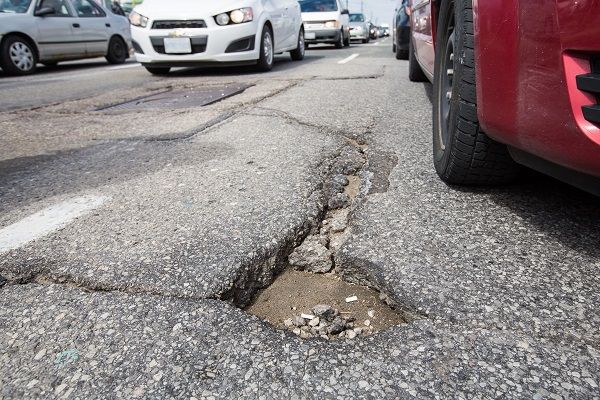
MEDIA RELEASE: After a one-year hiatus, the annual CAA Worst Roads campaign returns
With a renewed focus on education and safety, CAA South Central Ontario (CAA SCO) is proud to announce that following a one-year hiatus due to COVID-19, the annual CAA Worst Roads Campaign is back, and voting is now open. “The campaign is a platform for all road users to highlight which roadway improvements should be prioritized by our different levels of government,” says Raymond Chan, government relations manager CAA SCO. “The campaign gives decision-makers a snapshot of what roads the public perceives are not meeting their expectations.” Over the course of the last year people have changed their transportation habits. More people are cycling or driving their vehicles instead of carpooling and using public transit. CAA believes funding for roadway improvements needs to be consistent to ensure that quality and safety is maintained. “Our roads are essential, they are the arteries used every day to keep workers, goods and services flowing and should be maintained more than ever,” adds Chan. “As people are encouraged to stay home and telework during the pandemic, governments should continue to take advantage of lighter traffic patterns as an opportunity for road repair. These efforts can also be refocused on increasingly popular modes of transportation, such as cycling and walking.” Investing in infrastructure improvements, including the proper maintenance of roads and bridges, is important to the vitality and economic recovery of local communities. CAA continues to advocate for longer-term dedicated infrastructure funding to help municipalities prepare, plan, budget and execute on repair backlogs and capital projects. The success stories over the last 17 years are a result of governments prioritizing infrastructure through multi-year capital investments. Some examples include: 1. Riverdale Drive, Washago Despite appearing on the CAA Worst Roads list for the first time in 2019, the poor road conditions of Riverdale Drive was not new to residents of Severn. After 20 years since the street’s last resurfacing, Council approved $50,000 of prep work for Riverdale Drive led by Ward 5 Councillor Sarah Valiquette. 2. Dufferin Street, Toronto Appearing on the provincial top 10 list annually since 2015, Dufferin Street between Bloor Street and Dundas Street underwent resurfacing from September to November 2018. An estimated 35,000 vehicles travel Dufferin Street daily and the number of commuters is increasing. In response to community concerns, Toronto City Council adopted a motion to expedite studies relating to pedestrian and cyclist safety along Dufferin Street, among other improvements in December 2020. 3. College Road, Windsor The intersection of Campbell and College Avenue underwent sewer, road and water main rehabilitation in May 2019. College Avenue between South Street and Brock Street was repaired in November 2019. CAA is calling on all Ontarians to vote for their Worst Roads today and join the community of drivers, cyclists, transit riders and pedestrians committed to improving Ontario’s roads. Nominations for CAA’s Worst Roads can be cast at caaworstroads.com until April 18. To encourage participants to act on their concerns, they will be entered into a grand prize draw to win free gas for a year, or one of 5 secondary prizes. Once voting closes, CAA will compile a list of the 10 Worst Roads in Ontario, along with the Worst Roads in regions across the province. The regional top five lists will help shine further light on the state of local roads in municipalities across Ontario. CAA will present the list of 2021 Worst Roads to local and provincial officials to help inform future funding and planning decisions. Here is a roundup of Ontario's Top 10 Worst Roads in 2019: 1. Eglinton Avenue East, Toronto 2. Riverdale Drive, Washago 3. Dufferin Street, Toronto 4. County Road 49, Prince Edward 5. Barton Street East, Hamilton 6. Burlington Street East, Hamilton 7. Avondale Road, Belleville 8. Sheppard Avenue East, Toronto 9. Carnegie Beach Road, Scugog 10. Bathurst Street, Toronto


Power Grid Expert Weighs in on Texas Outages And How to Build a Better System
Having run countless simulations and experiments aimed at building a more resilient power grid, Luigi Vanfretti is well acquainted with the weaknesses in the nation’s current system. This expertise was recently featured in a report about the factors that caused massive, ongoing power outages in Texas. Frozen well heads, gas pipes, and other factors contributed to a “perfect storm” of conditions, Vanfretti said. Some politicians and pundits have floated the notion that the catastrophe was primarily due to frozen wind turbines, but according to Vanfretti, an associate professor of electrical, computer, and systems engineering at Rensselaer Polytechnic Institute, the problem is far more complex. Additionally, the electrical grid in Texas is unique in that it has limited connections to neighboring states, which means there are limitations to how much assistance it can receive during a crisis. “It’s about the ability to route the power,” Vanfretti recently told the Times Union. Vanfretti is an expert in power grid modeling, simulation, stability, and control. His research focuses on creating a smarter, cleaner, more reliable power grid that is capable of integrating renewable energy. Within his Analysis Laboratory for Synchrophasor and Electrical Energy Technology (ALSET) Lab, Vanfretti and his team model the power grid and run simulations in order to develop, test, and improve smart inverters, software, and hardware that will be needed to create the smart grid of the future. You can watch him discuss his research here. Vanfretti is available to speak about what contributed to the devastating outages in Texas, as well as the changes and research necessary to create a more resilient power system.


U.S.-Iran Crisis: Outlook and Implications
Executive Summary: The immediate crisis following the death of Iranian general Qassem Soleimani in a U.S. airstrike and Iran’s retaliatory missile strikes against two U.S. airbases appears to have settled down. However, the conditions for a future flare-up remain in place because the underlying conditions have not changed. Going forward, each side is likely to double down on its stated strategic objective, with Iran pushing for an end to U.S. presence in the region and the U.S. pushing for an end to the Iranian nuclear program. Further, the norms that had previously prevented an open exchange of fire between the two sides have been eroded. Why It Matters: The events of January 3rd and 8th represent the first time since the skirmishes of the “Tanker Wars” of 1987-88 that the military forces of the United States and Iran have directly and openly exchanged fire with each other. For the last three decades, the contest between the two states has been a shadow war of proxy conflicts, plausible deniability, and non-military measures. The American decision to strike Soleimani and the Iranian decision to fire missiles in response removed many of the guardrails that have set limits on previous escalations of tensions. The Iranian decision to renounce cooperation with the 2015 nuclear agreement places back into contention an issue that had previously brought the U.S. and Israel to the point of war with Iran in 2012-13. Business Impact: Markets have been largely taking a wait-and-see approach in order to determine the form of Iranian response to Soleimani’s death, and they responded with relief when President Trump signaled that the U.S. would not retaliate. To an extent, uncertainty in the Middle East had already been priced into the markets due to tensions in the second half of 2019. A significant or prolonged conflict would have an obvious negative impact on energy markets and regional economies. In addition, American and Western companies operating internationally or their employees could suffer collateral damage from any future Iranian proxy attacks against visible symbols of U.S. presence overseas. Looking Forward: In the immediate term, the resolution of the crisis represented one of the best possible outcomes: Iran has publicly signaled that the missile launches conducted on January 8th constituted the extent of their military retaliation to Soleimani’s death and President Trump’s White House address acknowledged Iran’s desire to de-escalate and spoke of finding mutually beneficial outcomes with no further mention of military action. Going forward, both Iran and the United States are likely to double down on their desired strategic outcomes. Iran will seek to use all of the levers of its influence to drive the United States from the region, beginning with Iraq but also including indirect pressure on the Gulf states that host U.S. forces. Offensive cyber operations and deniable proxy attacks against civilian infrastructure in the Gulf could be part of that campaign, returning to tactics observed in the past. For its part, the United States will continue its maximum pressure campaign over the Iranian nuclear program, with President Trump promising additional economic sanctions even as he stepped back from military action. Therefore, although both sides appear to be committed to non-military means, the points of tension that caused the most recent crisis are all still present and have arguably increased based on Iran’s increased non-compliance with JCPOA. It remains to be seen whether coming close to the brink of open conflict will have changed the risk tolerance of either side or whether the first acknowledged exchange of fires between the U.S. and Iran for 32 years will usher in a new period of low-level conflict. The View from Tehran: Iran has played Soleimani’s death for maximum strategic benefit. The messaging of the past 96 hours was aimed at various audiences within the country, the region, and around the world. Having been caught on the backfoot by the U.S.’s strike on Soleimani, the Supreme Leader allowed the IRGC to retaliate against U.S. forces in Iraq in a calibrated manner, likely calculating that a strike with limited casualties would satisfy demands for vengeance while not prompting a response. Khamenei’s Decision: Ayatollah Khamenei is an inherently conservative figure and one who is above all else motivated by the priority of regime survival. Given their long-standing personal relationship, there is ample reason to believe that his displays of emotion of Soleimani’s death, including weeping over his coffin during the funeral on January 6th, were genuine and heart-felt. However, his expressed desire for revenge has been tempered by the overarching imperative to avoid a conflict that would have threatened the regime’s hold on power, either from within or without. Rally Around the Flag: Within Iran, the regime is seeking to use Soleimani’s death and their subsequent retaliation to build national unity following a period of significant domestic unrest. This has been emphasized by the extended period of mourning for Soleimani, days-long funeral spectacle, and the invocation of religious and cultural symbols associated with Shi’a martyrs. The death of Soleimani comes on the heels of a series of mass protests in Iran that originally began on November 15th in response to proposed increase in the price of gas, but which have since expanded to a wider challenge to the regime. Media reporting from late December suggested as many as 1,500 Iranian civilians have been killed as part of a regime crackdown on the protests, which have been characterized as the most serious challenge to the regime since the Green Movement of 2009. JCPOA as a Wedge Between U.S. and Europe: Iran announced on January 5th that it would cease compliance with the remaining provisions of the 2015 Joint Comprehensive Plan of Action but would be willing to return to compliance if sanctions are removed. The nuance in Iran’s position highlights the fact that it is continuing to attempt to use the nuclear issue to drive a wedge between European signatories to the agreement and the United States, which unilaterally walked away from the treaty in May 2018. Regime Dynamics: Soleimani was a high-profile figure within Iran, but his outsized influence on Iranian foreign policy also created friction with other stakeholders in the regime, including leaders of the conventional military forces, the ministry of foreign affairs, and the intelligence services. He was one of few genuinely strategic thinkers in the Iranian national security apparatus and the one with the most extensive and deepest connections within the Arab-speaking world. His replacement as commander of the Quds Force is his long-time deputy who will be familiar with the day-to-day operations of the IRGC’s external operations arm but will not have the stature or the network of Soleimani. As a result, other stakeholders may jockey to move into the vacuum created by his death. The View from Washington: The present challenge for the U.S. is how to maintain both a deterrent posture and establishing the means to avoid further escalation. The policy on Iraq going forward will have to balance President Trump’s desire to disengage from the conflict while not creating the appearance of having been pushed out by Iran. Escalate to Deter: President Trump’s decision to kill Soleimani reflected an “escalate to deter” strategy, using a sudden and unexpected escalation of force during a crisis in order to reestablish deterrence after previous provocations in 2019 had gone largely unanswered. However, deterrence is only as good as the last demonstration of a willingness to respond. The decision to not respond to Iran’s retaliatory missile strikes reflected a pragmatic decision to de-escalate. National Security Decision-Making: Nearly three years into his presidency, Donald Trump feels increasingly confident making national security decisions based on his own instincts. The original coterie of experienced national security establishment members such as Jim Mattis and H.R. McMaster who had populated the Situation Room during the early days of the administration have largely resigned or been fired and replaced with individuals of lower profile and/or proven loyalty. Although the mechanisms of the formal interagency process continue to function, President Trump increasingly makes decisions based on a network of informal advisors and media sources. Domestic U.S. Considerations: The decision to launch the strike on Soleimani came during a period of high political tension in Washington, as it had been expected this month that the U.S. Senate would begin a trial in response to articles of impeachment passed by the House of Representatives in December. The Soleimani strike is being taken up by both Trump’s supporters and opponents as evidence of either his credentials as a decisive commander-in-chief or his unsuitability for office, depending on their perspective. Congress has proposed votes to limit President Trump’s independent authority to initiate hostilities with Iran, but this is unlikely to gain traction in the Senate. Separately, the first voting in the Democratic primary is less than one month away, and a sudden shift in focus to national security issues could have results that are difficult to predict, either boosting those with national security credentials (such as former vice president Joe Biden and military veteran Pete Buttigieg), or rallying support among primary voters for anti-war (such as Bernie Sanders). Third-Party Perspectives and Responses: Iraq: The strike at Baghdad International Airport that killed Soleimani also killed the deputy commander of Iraq’s Popular Mobilization Front, a coalition of militias that forms a part of Iraq’s official security apparatus. Iraq’s new Prime Minister Adel Abdul Mahdi has condemned the attack as a “massive breach of sovereignty” and an “aggression on Iraq”. Iraq’s parliament passed a draft law on January 5th calling for the removal of all foreign troops from Iraqi soil, but the law was non-binding and the session had been boycotted by most of the Sunni and Kurdish members of the legislature. Iranian presence has also been the recent target of Iraqi ire, such as in November when a crowd of Iraqis burned down the Iranian consulate in the Shi’a holy city of Najaf, and the Iraqi government will likely try to play both sides against each other to maximize its leverage for military and financial support. Withdrawal from Iraq would mean that the remaining American forces in Syria could no longer be supplied or supported through the western desert of Iraq and would therefore also have to be withdrawn. Iran will likely seek to use all its considerable levers of influence in Iraq to convince the government to see through the expulsion of American forces. The United States leaving Iraq and Syria due to Soleimani’s death would be a fitting legacy from the Iranian perspective and a perverse one from the American perspective given that Soleimani was responsible for the deaths of hundreds of American servicemembers in Iraq (and thousands of Iraqi civilians) through his support for Shi’a militias in the mid-to-late 2000s. Europe: Statements from European capitals emphasized the need for restraint and de-escalation. French President Macron is likely to view this event as further justification for his proposals that the EU develop a defense and security apparatus independent of NATO in order to avoid being entangled by potentially reckless American actions. Iran will likely continue to use this event as an opportunity to drive a wedge between the U.S. and Europe on the nuclear program and other issues, and their chosen retaliation was likely calibrated at least in part to allow them to continue positioning themselves as a responsible actor. For his part, Trump is urging the European signatories to join him in walking away from the JCPOA in order to increase Iran’s international isolation. United Kingdom: The British government has tried to tread a fine line in its responses to the strike, with Prime Minister Johnson calling for de-escalation while also stating that he “will not lament” the fact that Soleimani is dead. The U.K. is likely trying to balance its desire to remain aligned with France and Germany in trying to keep the JCPOA together with its traditional close alliance with the United States and Johnson’s personal relationship with President Trump. Russia: Unsurprisingly, Russian President Vladimir Putin condemned the American strike, which removed a valuable interlocutor for Russian forces in Syria. Russian troops and Iranian-backed militias in Syria had periodically found themselves with diverging interests in their campaign to support the Assad regime, and Soleimani performed a critical function in directing the activities of those militias to ensure that both Russia and Iran achieved their strategic objectives in Syria. A potential American withdrawal from Iraq and Syria would advance Russia’s interest in establishing itself as the indispensable foreign power in resolving the crisis in Syria and within the region more broadly. China: In line with their long-standing principle of non-intervention and their own interest, China condemned the strike, but the response was muted overall. Chinese interests are primarily economic and tied to ensuring a steady supply of petroleum. One of China’s newest and most capable naval destroyers recently participated in trilateral naval exercises with Iran and Russia in the Gulf of Oman. Although such exercises primarily serve a strategic messaging and diplomatic function, they do signal an emerging alignment of interests between the three states that would be significant for the response to any future crises.