
Experts Matter. Find Yours.
Connect for media, speaking, professional opportunities & more.
Cheap Energy Can Be a Bridging Fuel Needed to Get to the Endpoint of Renewable Energy Sooner
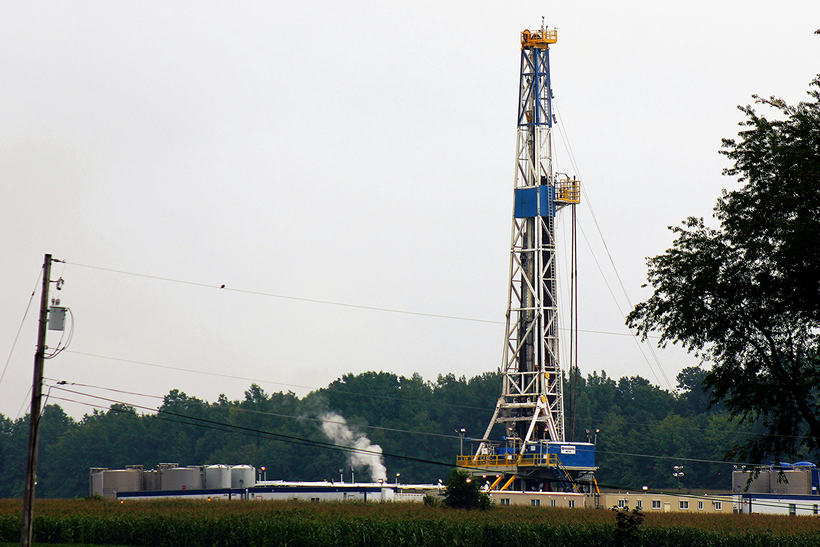
Far from banning fracking, the Biden/Harris ticket appears to be allowing it if not tacitly supporting it. This is not a contradictory stance to their aggressive renewable energy policy, according to Scott Jackson, a visiting professor of chemical and biological engineering at Villanova University's College of Engineering, who previously directed the microbial enhanced oil recovery program at DuPont Corporation. "Rather, it is recognition that cheap energy—especially natural gas produced as a result of fracking—can be a bridging fuel needed to get to the end point of renewable energy sooner," Jackson says. No one can dispute that the share of our energy coming from less efficient/more polluting coal has dropped dramatically despite the current administration’s attempts at supporting the coal industry. The reason is obvious—cleaner burning energy (less CO2 emissions) from gas fired turbine generators make more economic sense. Gas fired turbine generators are economical at a smaller scale and provides an energy source that can be rapidly turned on or off at any time. This helps to counterbalance the intermittency of renewable energy and, in some sense; this has allowed greater adoption of renewable energy. The cheapest energy source on the planet is land based wind power. The market has responded to this and now renewables make up 19 percent of our electricity. This percentage was thought to be impossible just a few years ago. Wind power energy payback time (time needed to recoup the energy invested) is measured in months and not years, and investors understand this. A much greater share of renewables (wind and solar) is very doable and makes economic sense. Jackson notes that development of cheap energy storage technology will help and must be implemented once economies of scale are achieved, however, a national power grid capable of moving energy from the wind- and sun-rich Midwest to the West Coast and East Coast will improve the reliability of renewables to the point where as much as 70% of our electricity can be sourced renewably—without new storage capacity (2018 study by the National Renewable Energy Laboratory). Improvements in battery technologies and economy of scale are starting to drive down the costs of electric transportation and storage. Eventually, natural gas sourced power generation will not be competitive to renewables," notes Jackson. "Despite the current low price of gasoline, in part as a result of fracking used in oil fields, electric cars are far more economical to operate. Companies like BP, Exxon-Mobile and Shell recognize that they are energy companies and are pivoting to more renewable sources of energy. "Ultimately, our government has a responsibility to invest in the technologies of the future that make economic sense—as renewables do—and not support the more costly and outdated fossil fuel industry," says Jackson.


As Canadians continue to stay home during this pandemic, many cars are sitting idle for long stretches of time. Maintaining your car is important whether it’s parked for a long time or in regular use. “Dead batteries, rusty brakes and flat tires can be worrisome leaving a car parked for weeks on end,” says Kaitlynn Furse, director, corporate communications, CAA South Central Ontario (CAA SCO). ”Car owners should put measures in place to avoid unexpected mechanical issues, much like a snowbird would, if cars are sitting idle in the driveway for long periods of time.” CAA SCO car maintenance checklist: Gas up. If your vehicle is going to be idle for more than 30 days, fill the tank up to the brim. This will help prevent moisture from building up in the fuel tank. Add a fuel stabilizer to the tank when full (stabilizers have a shelf life of three months and may help keep the fuel lines and engine from corroding). Protect the battery. It will eventually lose its charge if it isn’t driven at least once every few weeks. A trickle charger or battery tender with an automatic shut-off feature will keep the battery in good condition when the vehicle isn’t being driven. Inflate the tires. You can get flat spots on your tires from the vehicle sitting in one position. If your car is going to be parked and not moving add extra 10 PSI to the tire pressure when it is sitting idle. When you are ready to drive it remove that extra 10 PSI. Clean it well. Protect your paint job by removing acidic bird droppings, corrosive salt or dirt off the paint and take it a step further, polish or wax the exterior. Another item to consider is to check your tires to minimize the likelihood of wheel separation. A wheel separation is the unintended release of any active wheel from a moving vehicle. These incidents occur most commonly during the months of May through August after motorists switch from winter to all season tires. “Wheel separation can be very dangerous, causing, property damage, injuries and even fatalities,” says Furse. “If you are changing your tires at home, please make sure you go the extra step to make sure they are installed properly.” If you are unsure about any part of the installation of a wheel on your vehicle, be sure to take the vehicle to a qualified shop for its seasonal tire change. CAA has compiled a list of Approved Auto Repair Service facilities that have been vetted for quality service standards. Please check with your local facility as business hours for AARS locations may vary during the pandemic.


Find out how sustainable dining at Georgia Southern provides fresh options for students
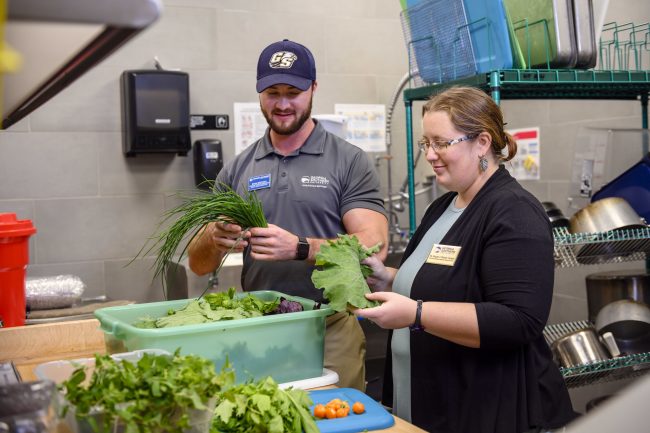
As more and more people are eating out – the expectations of customers of restaurants to be environmentally friendly are ever increasing. However, operating with a reduced carbon footprint all the while being sustainable and profitable are no easy task. That’s where Georgia Southern University is making a difference. The newest restaurant on the Georgia Southern University Armstrong Campus offers diners comfort in knowing that some of the ingredients were grown just a few hundred yards away in the campus’ aquaponics farm in the Sustainable Aquaponics Research Center (SARC). The agriculture and food industry is one of the largest users of water and producers of greenhouse gas emissions, but growing food by using aquaponics, a system of growing produce by using water fertilized by fish, cuts down on both significantly. “SARC produce only travels a quarter mile from where it’s grown,” SARC curator Brigette Brinton said. “Locally grown food offers large advantages in terms of increased sustainability and freshness, and SARC produce is grown organically and using sound ecological principles that minimize water consumption.” Brinton said minimizing emissions and water use does not diminish the quality or taste of the produce. To the contrary, it makes the food taste better because aquaponics produce often has higher concentrations of various compounds that give the foods their flavor, and they are grown in more ideal environments. Brzycki said Georgia Southern wants to expand on using ultra-local, fresh produce and vegetables, as a part of the partnership with the aquaponics farm. “When we consider redesigns of existing or new dining locations on the Armstrong Campus in the future, we want to see how we can incorporate these same principles,” he said. “But for now, Southern Cafe is the flagship unit for the aquaponics partnership, as well as sustainability and healthy eating, of Eagle Dining.” Brinton said she hopes the Southern Cafe will inspire the students, faculty and staff who eat there to make healthier and more sustainable choices in other areas of their lives. “Showcasing local, sustainable produce increases students’ awareness that there are better options, and Georgia Southern is going the extra mile to show them how to start making better choices,” she said. “Each time students see they made a sustainable choice at the Southern Cafe, they’re more likely to choose sustainable options on their own.” Are you a journalist looking to cover this story or learn more about how Georgia Southern University is developing new programs that help traditional industries adapt to a more sustainable and environmentally friendly business model? If so – then let our experts help with your coverage. Simply contact Melanie Simón at 912.344.2904 to arrange an interview.


Proposed Fracking Ban Sent to U.S. Congress
If passed, bills introduced to the United States Congress could prevent federal agencies from issuing permits for expanded and new fracking in the country. Fracking is the use of a high-pressure fluid, being forced into a well to fracture or pulverize the rock next to a wellbore, to provide a pathway for oil and natural gas to flow and collect. "It's important for people to understand what fracking is and what it is not, and having an informed public is paramount in a democratic society," says the College of Engineering’s Scott Jackson, PhD, visiting assistant professor of chemical engineering. "There is a way to assure that oil and gas wells can be safely drilled and fracked with minimal impact on the environment." Fracking—a step in completing the installation of a gas or oil well—was first done in the 1940s as part of well stimulation in "tight" rock formations. Initially, it was done only in sandstone, not the shale that most people have heard about. "It has been used for more than 70 years prior to the shale revolution without controversy," Dr. Jackson says. Fracking and directional drilling are key technologies that have made the shale revolution possible; the ability to economically extract it has only come to fruition because of fracking and directional drilling. "The U.S. is now the world's largest producer of oil and natural gas. The shale revolution has driven the switch of electricity production from coal to a more environmentally friendly natural gas," says Dr. Jackson. Fracking has been controversial, and contentions concerning cariogenic chemicals being injected into "our fresh water" have been voiced by environmentalists, activists and the general public. Dr. Jackson says there is some basis for these statements, such as that water used in fracking has mostly undisclosed chemicals in it and that some of those chemicals may be carcinogenic. Because of this, Dr. Jackson says relaxing government oversight cannot be allowed. "Enforcing existing regulations and implementing and enforcing new regulations can only assure that oil and gas wells can be drilled and fracked safely with minimal impact on the environment."

Part 2: Collaborating with Faculty Experts: A How-To Guide for Marketing Departments & Deans
In my last blog post, I shared some strategies that marketing departments can use to collaborate with their faculty experts (Read Part I). This post will reveal the final five principles that will help you collaborate with your faculty and get better results. 6. Show Quick Wins to Get Momentum As the old saying goes, “nothing succeeds like success.” We all like to back winners. So while you won’t immediately see massive changes across the board on day one, it’s important to show progress. Expert marketing programs deliver significant results over the long run but you must communicate the early wins you achieve in the first few months to create internal momentum. Remember it’s not just about the numbers. It’s just as important to provide qualitative information on the market interactions you are generating for your experts. For instance look at these early indicators: Contribution – Who’s participating in contributing content to your expert center? Look at key types of files such as publications, videos and presentations. Engagement – Also consider sending stats out to your experts showing which profiles get the most amount of web traffic. Other Results – Speak to activities where you used your expert content to do outbound story pitches to media. Also mention coverage you are getting, or speaking engagements that resulted from inquires received from your expert profiles. For instance, one of our ExpertFile clients, very soon after launching their expert center received an inquiry from a major engineering publication for one of their professors, a direct result of their participation in the Expert Center. Communicating this to other faculty drives engagement. Tip: Send out a quick “Leaderboard” email showing the top five or ten experts who rank highest in completed profiles. This public recognition will get noticed. 7. Opt-In your Experts For Various Research, Writing & Speaking Contributions The famous “help me, help you” quote from Jerry Maguire sums up the importance of collaborating effectively with your experts. They are very busy people; meeting them halfway will ensure mutual success. Get some face time: Emails with requests to send information often will go ignored. Instead invest the time to set up a quick meeting at their office to review and update their expert profile to make sure it’s up to date. Locate new projects that are in progress such as publications or speaking engagements and set a date to check-in with them. Identify Opportunities: Identify their key research interests and passions to see where they can help in contributing to the overall content mix. Organize Your Content Contributions: Build out a list of key areas for each expert where they can “opt-in” to contribute to your expert marketing programs. Think about various areas they can help as a researcher, writer, or speaker for both internal and external events. Remember, there are many jobs to be done across campus that go way beyond media interviews. Identify who can write blog posts, contribute to content in a research capacity, or even review story pitches. Track these commitments and follow up with your experts and you will see the payoff. Many experts want to help, but it’s important to approach them and organize your interactions with them in an efficient manner for success. Content planning frameworks are a great way to track this information. 8. Put Your Experts in the Spotlight Want to see better results from your media relations efforts? Organize your experts based on areas of interest. Once you’ve curated that list, you can align your experts with breaking news events and other opportunities on your editorial calendar. Here’s how it looks: Set up a “Topic Cloud”: List all the areas of interest that your faculty experts want to speak on. Make sure the terms you use are relevant to what journalists are searching for on Google. Start at a high level and then drill down for a structured taxonomy of terms. For instance if you have a medical expert who speaks about ebola you also should index them under the term “infectious disease” as journalists also use this search term when looking for sources. Align Your Experts with an Editorial Calendar: An editorial calendar allows you to plan content well ahead of time so you can promote upcoming research, publications and other announcements. Mapping experts to these events in advance will deliver better quality output and engagement. For example, there are always stories that recur every year, things like tornadoes, taxation, gas prices and the like. Preparing for these stories allows you to have your angle ready, along with creative assets such as images and videos that will engage targeted audiences. With this work already done, you will have time to attend to other pressing matters. Get Ready to Pounce on Breaking News: The benefits of real-time marketing and helping journalists write the next paragraph of a breaking story are immense, but this is a game of speed. Matching the right expert to the right media opportunity requires this type of pre-planning to identify who the go-to people are within your organization. 9. Develop a Scorecard: Identify Some The Expert Metrics You want to Measure Here are the categories you need to pay attention to as you evaluate your progress as an organization: Contribution – Show stats on how you are seeing growth in published content assets. Track the growth in areas such as the number of published expert profiles, % completion of profiles and growth of published content in categories such as videos, PowerPoint presentations, and whitepapers. Engagement – Ask your digital team to provide stats on the number of profile views each expert is receiving monthly. Try ranking some of your top experts and send out a note congratulating them. Also try to spot trends such as traffic spikes related to topics that may be of interest to the media. These metrics can help you decide what topics you focus on when producing content or promoting your experts to journalists. Inquiries – Requests to contact your experts can come from a variety of audiences, and all can be valuable for internal departments ranging from media relations and advancement to recruiting. It’s important to evaluate what types of requests you are receiving. You can sort and route these requests more efficiently with an online form. Some suggested categories you can track include: Media Inquiries Speaking Inquiries Expert Witness Inquiries Student or Parent Inquiries (classify by type i.e. Graduate Students, Foreign Students) Donor Inquiries Partner Inquiries Research Collaboration Inquiries Results – While it can be difficult to close the loop on all requests that you generate from your expert marketing efforts, try linking the source of your inquiries back to results. For instance, if you are doing clip reports, highlight specific media coverage that resulted from your efforts. You should also look at other important data such as student inquiries and donor connections that are made through your expert marketing programs. This will help you justify the return on investment and perhaps allow you to secure additional budget and resources from various groups in the organization who benefit. 10. Make Your Experts Feel Special: Don’t Forget Rewards and Incentives Anyone running a successful expert marketing program will tell you that it’s important to embrace some of the “softer” people skills to get results. It is essential to provide feedback and recognition to contributors to keep them motivated to help you. Remember that your experts are in constant demand, so you are competing for their most limited resource – their time. Here are some key things you should consider when working with your experts: Be Visible: Walk the campus and take an active interest in the work your experts are doing. Face-to-face meetings are an important part of enlisting support. Educate Them on Their Value as Experts: Help your experts understand how their contributions can impact areas related to media coverage, student enrolment, donor and alumni relations, and government and corporate sponsorships. Offer Assistance: Help them manage their online presence in your expert center. Make it as simple as possible to update content such as presentations, videos and speaking engagements. Recognize Key Contributions: Send personal notes to experts to thank them for their help. You can also do a shout out via email to a list of key contributors.




D. Tyler McQuade, Ph.D., professor in the Department of Chemical and Life Science Engineering at Virginia Commonwealth University College of Engineering, is principal investigator of a multi-university project seeking to use artificial intelligence to help scientists come up with the perfect molecule for everything from a better shampoo to coatings on advanced microchips. The project is one of the first in the U.S. to be selected for $994,433 in funding as part of a new pilot project of the National Science Foundation (NSF) called the Convergence Accelerator (C-Accel). McQuade and his collaborators will pitch their prototype in March 2020 in a bid for additional funding of up to $5 million over five years. Adam Luxon, a Ph.D. student in the Department of Chemical and Life Science Engineering who has been involved from the beginning, explained it this way: “We want to essentially make the Alexa of chemistry.” Just as Amazon, Google and Netflix use data algorithms to suggest customized predictions, the team plans to build a platform and open knowledge network that can combine and help users make sense of molecular sciences data pulled from a wide range of sources including academia, industry and government. The idea is right in line with the goal of the NSF program: to speed up the transition of convergence research into practice in nationally critical areas such as “Harnessing the Data Revolution.” The team itself reflects expertise across several specialties. Working with McQuade are James K. Ferri, Ph.D., professor in the Department of Chemical and Life Science Engineering; Carol A. Parish, Ph.D., professor of chemistry and the Floyd D. and Elisabeth S. Gottwald Chair in the Department of Chemistry at the University of Richmond; and Adrian E. Roitberg, Ph.D., professor in the Department of Chemistry at University of Florida. Two companies are also involved with the project: Two Six Labs, based in Arlington, Virginia, and Fathom Information Design, based in Boston, Massachusetts. Currently, there is no shared network or central portal where molecular scientists and engineers can harness artificial intelligence and data science tools to build models to support their needs. What’s more, while scientists have been able to depict what elements make up a molecule, how the atoms are arranged in space and what the properties of that molecule are (such as its melting point), there is no standard way to represent — or predict — molecular performance. The team aims to fill these gaps by advancing the concept of a “molecular imprint.” The collaborators will create a new system that represents molecules by combining line-drawing, geometry and quantum chemical calculations into a single, machine-learnable format. They will develop a central platform for collecting data, creating these molecular imprints and developing algorithms for mining the data, and will develop machine learning tools to create performance prediction models. Parish said, “The ability to compute molecular properties using computational techniques, and to dovetail that data with experimental measurements, will generate databases that will produce the most comprehensive results in the molecular sciences. “There are many laboratories around the world working in this space; however, there are few organizational structures available that encourage open sharing of these data for the benefit of the community and the common good. We seek to collaborate with others to provide this structure; an open knowledge network or repository where scientists can deposit their molecular-level experimental and computational data in exchange for user-friendly tools to help manage and query the data.” The initial response to their idea has been strong from potential partners. Ferri and the others have already collected more than a dozen letters from major corporations such as Dow and Merck expressing interest in participating. Also on board are Idaho National Laboratory and Argonne National Laboratory, as well as national chemical engineering and chemistry organizations. McQuade said that chemical engineers in major industries including consumer products and oil and gas producers expend a lot of effort running experiments to determine the molecule they want to use, such as finding the best shampoo additive that doesn’t make babies cry. “The ability to design the properties you want is still more art than science.” The team also plans to develop a toolkit for processing and visualizing the data. Roitberg, whose research focuses include advanced visualization, said this could take the form of a virtual reality realm in which a user could find materials that are soluble in water but not oil, for instance, and then be able to browse for similar materials nearby. “We envision a very interactive platform where the user can explore relations between data and desired material properties,” he said.


United Nations Climate Panel Issues Grim Report
The United Nations Climate Panel released a grim report on September 25, with lead author and French climate scientist Valerie Masson-Delmotte warning, "Climate change is already irreversible. Due to the heat uptake in the ocean, we can't go back." She shared (1) that seas are rising 2.5 times faster than the rate from 1900 to 1990, (2) that from 2006 to 2015, the ice melting from Greenland, Antarctica and the world's mountain glaciers has accelerated and they are now losing 720 billion tons of ice a year and (3) that marine animals are likely to decrease 15%, and catches by fisheries in general are expected to decline 21% to 24%, by the end of the century because of climate change. Villanova's Stephen M. Strader, PhD, a hazards geographer and atmospheric scientist, says because the earth is warming faster than previously thought we have to act now to curb global greenhouse gas emissions. "Unfortunately, there is a momentum to the climate system. Even if we 100% curb global greenhouse gas emissions immediately, we have committed to substantial global warming." Dr. Strader adds that an interesting note in the United Nations report is the indication that climate action is inseparable from sustainable development. The report mentions that an important aspect of climate change effects is their disproportionate impact on the poor and most vulnerable regions of the world. "Building more sustainable communities will not only reduce inequality and vulnerability," he says. "It will also help fight global climate change. They are hand in hand." "Climate change is an existential crisis to human beings everywhere, regardless of where you live," says Dr. Strader. "It is affecting and will continue to have consequences related to shelter, food and water—the basic necessities to sustain life. The lack of action by politicians, policy makers and the general public is alarming given the threat all of humanity is facing. The threat is not just 10 or 50 years from now, but today."


There’s no question about it – our planet has a problem with plastic. Though simple, cheap, convenient and often necessary, the reality is single use and non-reusable plastics like straws, plastic bags, wrapping and most containers are causing problems. There’s no hiding or ignoring the evidence – plastic is everywhere from landfills, to our rivers and streams and even occupying its own land mass in the ocean. Recently Canada proposed a ban on single use plastics to come in to effect in 2021. The country joined the likes of France, Germany, Italy, the U.K. and the European Union who are all implementing similar policies. The United States, however – has not. Here are some facts from the Center for Biological Diversity. Americans use 100 billion plastic bags a year, which require 12 million barrels of oil to manufacture. The average American family takes home almost 1,500 plastic shopping bags a year. According to Waste Management, only 1 percent of plastic bags are returned for recycling. That means that the average family only recycles 15 bags a year; the rest ends up in landfills as litter. Up to 80 percent of ocean plastic pollution enters the ocean from land. 100,000 marine animals are killed by plastic bags annually. One in three leatherback sea turtles have been found with plastic in their stomachs. Plastic bags are used for an average of 12 minutes. It takes 500 (or more) years for a plastic bag to degrade in a landfill. Unfortunately, the bags don't break down completely but instead photo-degrade, becoming microplastics that absorb toxins and continue to pollute the environment There is no doubt plastic is a serious problem in America – but will the country join in? What will it take from an industry point of view? Will costs outweigh the benefit? Is this a matter of regulation and do Americans have the appetite to make this a political issue? There are a lot of questions and that’s where our experts can help. Dr. Beril Toktay is Professor of Operations Management, Brady Family Chairholder and ADVANCE Professor at Georgia Tech’s Scheller College of Business. She’s the founding Faculty Director of the Ray C. Anderson Center for Sustainable Business. She’s an expert in the areas of sustainable operations and supply chain management, with a special focus on the circular economy. Beril is available to speak about this issue with media – simply click on her icon to arrange an interview.


A study conducted ahead of CAA’s Worst Roads campaign underscores how Ontarians feel about the state of their roads. Seventy-one per cent of those surveyed say they are concerned about the condition of roads, while 60 per cent of respondents don’t believe that roads are being repaired in a timely manner. The data reinforces the campaign’s importance, says Raymond Chan, government relations specialist for CAA South Central Ontario (CAA SCO). “The simple act of participating in the CAA Worst Roads campaign can help various levels of government understand what roadway improvements are top of mind for road users, and where improvements could be prioritized.” The study also found that while most regularly see roads in need of repair, 67 per cent of respondents stated they took no action to get them repaired. The CAA Worst Roads campaign is designed to be an easy forum for Ontarians to engage and take action on issues that impact them. “We want to know what roads are seen as pain points for Ontarians. Whether the issue is congestion, potholes, road signage or challenges around pedestrian and cycling safety, CAA wants to hear from you," says Chan. Investing in infrastructure improvements, including the proper maintenance of roads and bridges, is important to the vitality of local communities. CAA continues to advocate for longer-term dedicated infrastructure funding to help municipalities prepare, plan, budget and execute on repair backlogs and capital projects. Repaving and repair work has been completed on many of the roads that have appeared on Ontario’s CAA Worst Roads list. Some examples include: Burlington St. E., Hamilton This Hamilton road has appeared on the annual list since 2008. It received the dubious honour of Ontario's Worst Road in both 2017 and 2018, thanks in part to potholes and crumbling pavement. A total of $3.3 million has been allocated to resurface and replace the lower part of Burlington St. E. with fresh pavement in 2018/2019. Duckworth St., Barrie This Barrie roadway claimed the third spot in the 2018 campaign. The first phase of a $10.3M reconstruction of Duckworth St. began last fall and the second phase will begin this spring. Improvements of Duckworth St. between Melrose Ave. and Bell Farm Rd. are planned for completion in 2020. Dufferin St., Toronto Topping the list from 2012 to 2014, Toronto’s Dufferin St. has continued to appear on the Top 10 list of Ontario’s Worst Roads. As part of the City of Toronto’s Capital Works Program, Dufferin St. from Dundas St. W. to Bloor St. W. was repaved and sections of damaged curb and sidewalk were replaced. CAA SCO is calling on Ontarians to vote for their Worst Road today and join the community of drivers, cyclists and pedestrians committed to improving Ontario’s roads. Nominations for CAA’s Worst Roads can be cast at caaworstroads.com until April 26. To encourage participants to act on their concerns, they will be entered into a grand prize draw to win free gas for a year, or one of 10 secondary prizes. Once voting closes, CAA will compile a list of the 10 worst roads in Ontario, along with the worst roads in regions across the province. The regional top five lists will help shine further light on the state of local roads in municipalities across Ontario. CAA will present the list of 2019 Worst Roads to local and provincial officials to help inform future funding and planning decisions. About the Survey This study was conducted online by Campaign Research between February 15-20, 2019 among a sample of 1,515 Ontario residents who were 18 years of age or older. A probability sample of this size would have a margin of error of +-2.5% 19 times out of 20. About CAA South Central As a leader and advocate for road safety and mobility, CAA South Central Ontario is a not-for-profit auto club which represents the interests of 2 million members. For over a century, CAA has collaborated with communities, police services and government to help keep drivers and their families safe while travelling on our roads.

Baylors Benjamin Franklin Scholars Bring Light to Complex Figure
Founding Father Benjamin Franklin was a complex man. Among his many roles, he was a businessman, entrepreneur, inventor, journalist, author, printer, editor, politician, postmaster, statesman, ambassador and signer of the Declaration of Independence. And even with a treasure trove of accomplishments, sometimes the Franklin legends are bigger than Franklin the man – and it’s taken an army of historians and scholars throughout the centuries to sort it out. As July 4 Independence Day approaches, Baylor University's two Franklin scholars share different perspectives of Franklin, his faith and his business acumen: Thomas S. Kidd, Ph.D., Distinguished Professor of History and associate director of Baylor’s Institute for Studies of Religion Blaine McCormick, Ph.D., associate professor and chair of the management department in Baylor’s Hankamer School of Business Both have penned Franklin books and both have been featured nationally for their research on the Founding Father. Kidd’s 2017 book, “Benjamin Franklin: The Religious Life of a Founding Father,” has received high marks for its analysis of Franklin’s beliefs. From his Puritan upbringing to deism, skepticism and more, the book explores the influences and evolution of faith throughout Franklin’s life. “In today’s polarized political and religious environment, some pundits seek to remake the Founding Fathers in their own image. Benjamin Franklin’s example reveals that the historical truth is often more complicated,” Kidd wrote in a May 2017 column for The Wall Street Journal. McCormick, who wrote “Ben Franklin: America’s Original Entrepreneur,” discovered a passion to study the Founding Father after listening to an audiobook of Franklin’s autobiography. “Franklin could do things as a statesman, and understand things, and achieve things as a statesman, because he had achieved things in the marketplace first,” he said. “I’ve yet to find a better book for businesspeople to learn about how to run a business in the American Experiment. He wrote the autobiography to help train people in the life of business. Many of the principles are still very robust.” And the way he shared those principles (many of which have been misquoted and made into memes through the decades) is important, McCormick said. “Franklin used sentences no longer than a Tweet to train generations of colonial businesspeople,” he said. “They were short. They were memorable. They were high-impact.” ABOUT THOMAS KIDD, PH.D. Thomas S. Kidd, Ph.D., serves as Distinguished Professor of History and associate director of Baylor University’s Institute for Studies of Religion. His books include “Benjamin Franklin: The Religious Lie of a Founding Father, “American Colonial History: Clashing Cultures and Faiths,” “Baptists in America: A History,” “George Whitefield: America’s Spiritual Founding Father,” “Patrick Henry: First Among Patriots,” “God of Liberty: A Religious History of the American Revolution,” “American Christians and Islam” and “The Great Awakening: The Roots of Evangelical Christianity in Colonial America.” He has written for outlets including The Washington Post and The Wall Street Journal. ABOUT BLAINE MCCORMICK, PH.D. Blaine McCormick, Ph.D., serves as chair of the management department in Baylor’s Hankamer School of Business, is a nationally recognized scholar on the business practices of Benjamin Franklin and Thomas Edison. McCormick is interviewed frequently across all forms of media including Forbes, The New York Times, CNN, public radio, and ABC World News Tonight. He often travels to developing countries to teach business lessons to undereducated entrepreneurs using only a bottle of Coca-Cola as a teaching aid. A native Texan, McCormick grew up working in the cotton fields of West Texas. Before joining the Baylor faculty, he worked in Dallas and Plano for ARCO Oil & Gas Company as a human resource management professional. ABOUT BAYLOR UNIVERSITY Baylor University is a private Christian University and a nationally ranked research institution. The University provides a vibrant campus community for more than 17,000 students by blending interdisciplinary research with an international reputation for educational excellence and a faculty commitment to teaching and scholarship. Chartered in 1845 by the Republic of Texas through the efforts of Baptist pioneers, Baylor is the oldest continually operating University in Texas. Located in Waco, Baylor welcomes students from all 50 states and more than 80 countries to study a broad range of degrees among its 12 nationally recognized academic divisions.
