
Experts Matter. Find Yours.
Connect for media, speaking, professional opportunities & more.

Built to Last: What It Takes to Compete Across Generations of World Cups
The 2026 FIFA World Cup is giving fans an unusual view of football history: several of the game’s biggest names are still competing long after most elite careers have ended. Cristiano Ronaldo and Lionel Messi are appearing in their sixth World Cups. Ronaldo has scored twice in this tournament and 10 times overall, while Messi has added six goals in 2026 to reach 19 for his World Cup career. Luka Modrić is playing in his fifth tournament. Neymar and Kevin De Bruyne are each appearing in their fourth. Those numbers say something important about talent. They say even more about durability. Reaching one World Cup is difficult. Returning four, five or six times means surviving nearly two decades of club schedules, injuries, travel, tactical changes and competition from younger players. It also means finding new ways to contribute when the body no longer responds exactly as it once did. That opens up several timely questions for journalists covering this final stage of their careers. Below, experts in sports science, biomechanics, psychology and sports business offer perspective on what it takes to compete across multiple World Cups—and what allows some players to remain influential long after their physical peak. What does it take physically to last this long? The World Cup lasts only a few weeks, but the careers behind it are built over thousands of training sessions and matches. For older players, the challenge is not simply staying fit. It is managing fatigue, recovering faster and avoiding the injury that could end the run. Hofstra exercise physiologist Katie Sell can speak to the less visible work behind these careers: sleep, hydration, nutrition, endurance and the tighter recovery window athletes face as they age. At the University of Delaware, Tom Kaminski brings expertise in soccer injuries, concussions and player safety. He can help explain how accumulated wear, repeated head impacts and return-to-play decisions influence whether a player can continue at the highest level. Texas Christian University’s Peter Weyand, an expert in sprint mechanics and running performance, can discuss what happens to speed and acceleration over time—and which physical qualities can still be protected through training. How do great players change their game? Longevity rarely comes from playing the same way forever. Ronaldo moved from the wing into a more central scoring role. Messi became more selective with his movement. Modrić continued to control matches through timing, positioning and awareness rather than physical dominance. These are not signs that aging players have stopped influencing games. They are signs that influence has changed. Carnegie Mellon biomechanics researcher Eni Halilaj can speak to how athletes adjust their movement patterns, conserve energy and reduce physical strain as they get older, while her colleague Eric Yttri, who studies motor control and decision-making, can explain how anticipation and experience allow veteran players to act earlier and more efficiently. Texas Christian University’s Peter Weyand can also add context on why older players often change positions, reduce repeated sprinting or become more selective about when they make high-intensity runs. Why keep coming back? By the time a player reaches a fourth or fifth World Cup, money and recognition are unlikely to be the main reasons for continuing. The harder question is what keeps an athlete committed after years of success, injuries and public scrutiny—especially when their role may be smaller than it once was. TCU sport psychology expert Robyn Trocchio can speak to motivation, focus and how accomplished athletes continue setting meaningful goals late in their careers. Hofstra’s Genevieve Weber can address performance anxiety, media pressure and the emotional weight of entering what may be a final international tournament. Georgia Southern sport psychologist Brandonn Harris can discuss resilience, confidence and the mental discipline required to recover from injury, disappointment and changing expectations. How should an aging superstar be judged? Goals are easy to count. Leadership, timing and influence are not. A veteran player may no longer dominate every match, but may still shape how teammates prepare, how opponents defend and how supporters respond. For coaches, that creates a difficult balance between reputation, current performance and what an experienced player brings in moments of pressure. At Emory University’s Goizueta Business School, Michael Lewis can discuss the value of global stars beyond the score sheet, including fan interest, brand strength and the attention they bring to a national team. Carnegie Mellon University’s Eric Yttri can speak to the on-field contributions that statistics often miss, including positioning, anticipation and decision-making. Texas Christian University’s Robyn Trocchio can address the leadership side of the story, including the difficult transition from automatic starter to mentor, substitute or situational player. A generation nearing the end The 2026 World Cup may be remembered not only for the players who emerged, but for the ones who were leaving. Ronaldo, Messi, Modrić, Neymar and De Bruyne have played through different tactical eras and alongside multiple generations of teammates. Their longevity was not built on talent alone. It required adaptation, recovery, discipline and a willingness to accept that staying great sometimes means becoming a different kind of player. For reporters, their careers offer a timely way to examine how elite athletes age—and why some remain relevant long after the normal limits of the game suggest they should.

Can One Gene Change the Future of Heart Disease?
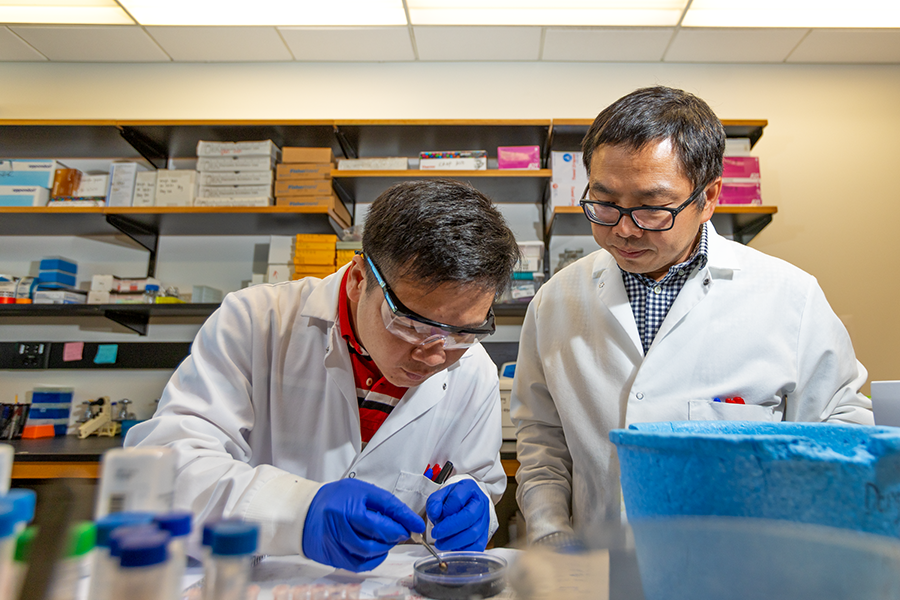
Heart disease remains the world's leading cause of death, but researchers are continuing to uncover the genetic mechanisms that drive it. According to a recent Augusta University Jagwire article highlighting new research, scientists are investigating how a little-studied gene might influence the development of cardiovascular disease and whether it could become a future target for treatment. At the center of the research is Kunzhe Dong, PhD, an investigator at Augusta University's Immunology Center of Georgia, who is examining the role of the SH3BGRL2 gene in cardiovascular cells. While the gene has previously been associated with cancer biology, early findings suggest it might also play an important role in regulating how blood vessels respond to stress and injury. Understanding that relationship could reveal new biological pathways involved in heart disease and identify novel opportunities for precision medicine. The research aims to determine how changes in gene expression affect the function of cardiovascular cells and contribute to disease progression. By better understanding these molecular mechanisms, scientists hope to identify new therapeutic targets and improve the ability to prevent or treat cardiovascular disease before irreversible damage occurs. The work also reflects a broader shift toward precision medicine, where treatments are tailored to the underlying biology of each patient rather than relying solely on traditional risk factors. "This gene is well known in one field, but now we're seeing it's also important in cardiovascular cells." Kunzhe Dong, PhD To learn more about this research and connect with Kunzhe Dong, contact AU's External Communications Team mediarelations@augusta.edu to arrange an interview today.

Can a Mother's ZIP Code Shape a Baby's Future?
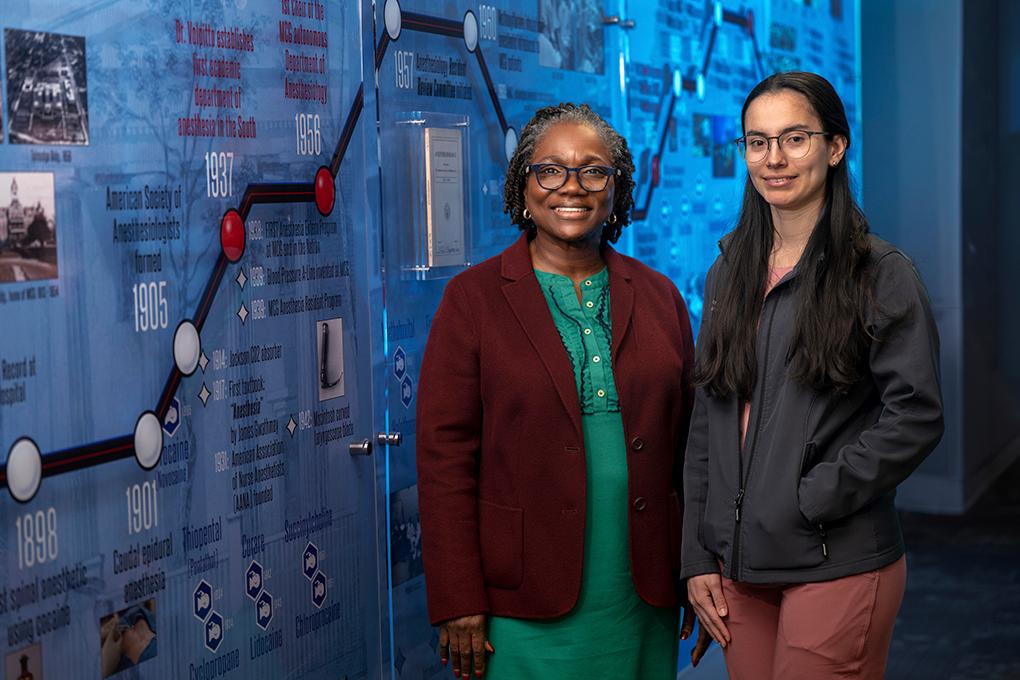
Where an expectant mother lives might reveal important clues about her baby's health before birth. According to a recent Augusta University Jagwire article, researchers at the Medical College of Georgia have found that mapping birth outcomes by ZIP code can help identify communities where mothers and newborns face greater health risks, providing valuable information for healthcare providers and public health officials. The two-part study out of the Department of Anesthesiology and Perioperative Medicine at the Medical College of Georgia at Augusta University, led by Mary Arthur, MD, explored the relationship between neighborhood characteristics and neonatal outcomes. By combining geographic mapping with maternal and infant health data, the researchers identified areas with higher rates of adverse birth outcomes and examined how factors such as access to prenatal care and other social determinants of health might contribute to those disparities. The findings suggest that geographic data can become a valuable tool for improving maternal and infant health. By identifying communities at greater risk, healthcare systems and policymakers can better target prenatal education, outreach programs and healthcare resources to support expectant mothers before complications arise. For journalists covering maternal health, healthcare disparities and public policy, Arthur offers valuable insight into how community-level data can help guide interventions that improve pregnancy outcomes and give more babies a healthier start in life. "The maps make it very easy to visualize those ZIP codes that link to poor neonatal outcomes. They're also helpful for planning strategic interventions to help the people who live in those particular areas in terms of making sure there are outreach programs for mothers in those areas to have access to prenatal care." Mary Arthur, MD To learn more about this important research and connect with Mary Arthur, contact AU's External Communications Team mediarelations@augusta.edu to arrange an interview today.

National Tick Collection Provides Front-Line Defense Against Emerging Health Threats
A recently published article in Grice Connect highlighted the national importance of the U.S. National Tick Collection, housed at Georgia Southern University's Statesboro Campus. Home to more than one million specimens representing nearly every known tick species, the collection serves as a critical resource for researchers, public health agencies, and disease surveillance efforts studying the spread of tick-borne illnesses. The collection, owned by the Smithsonian Institution and curated at Georgia Southern University, is one of the largest and most comprehensive tick collections in the world. Researchers use it to identify emerging threats, track changes in tick populations, and better understand the diseases these parasites can carry. As concerns about Lyme disease and other tick-borne illnesses continue to grow, the collection provides scientists with an invaluable resource for monitoring species distribution, studying disease vectors, and supporting public health preparedness. It also plays an important role in training future researchers in a field where specialized expertise is increasingly needed. Lorenza Beati, Ph.D., is curator of the U.S. National Tick Collection and associate professor at Georgia Southern University. Her research focuses on tick taxonomy, genetics, evolutionary relationships, and the role ticks play in transmitting diseases that affect both humans and animals. View her profile The article underscores the collection's growing importance as researchers work to better understand the complex relationships between ticks, pathogens, wildlife, and human health. As environmental conditions change and tick populations expand into new regions, resources like the U.S. National Tick Collection are helping scientists stay ahead of emerging public health challenges. The collection has been entrusted to Georgia Southern since 1990 and includes more than 1 million specimens and more than 125,000 accessioned lots. Beati said the collection is probably the largest curated tick collection in the world. While she said there may be a larger collection elsewhere, she said Georgia Southern’s collection remains especially important because it is active, used for research, and supported by curatorial work. “By having two curators here, we really keep the collection very active,” Beati said. “We publish a lot, we do a lot of research on our samples. We have visitors coming from all over the world to work with us.” June 13 - Grice Connect Covering? We can help! Lorenza Beati is available to speak with media about tick-borne diseases, tick identification, vector ecology, disease surveillance and the critical role scientific collections play in protecting public health. Her expertise can help audiences better understand the growing impact of ticks on human and animal health, as well as the research efforts underway to address these challenges.



World Cup 2026: Georgia Southern University Experts on the Game Behind the Game
Atlanta is one of the World Cup's biggest host cities. Georgia Southern faculty across economics, health sciences and international studies are ready to speak to the stories behind the tournament. Featured Topic The Atlanta Advantage: Regional Economics of Hosting the World Cup What it means for local businesses, tourism, and the long-term economic legacy of a host city Atlanta's World Cup moment is as much an economic story as a sporting one. Georgia Southern University economics professors Michael Toma, Ph.D., and Anthony Barilla, Ph.D., can speak to tourism revenue, infrastructure investment and what host cities actually gain — and manage —- when the world comes to town. Experts Michael Toma, Ph.D. - Regional Economics and Development Anthony Barilla, Ph.D. - Economics and Public Policy Featured Topic Playing Across a Continent: The Physical Demands of a 48-Team Tournament What elite athletes face competing across climates, time zones and a month-long schedule 48 teams. Multiple cities. Almost no recovery time. Georgia Southern health sciences and kinesiology professor Samuel Wilson, Ph.D., and sports psychologist Brandonn Harris, Ph.D., can explain how a World Cup schedule affects the human body and how elite teams prepare for it. Experts Samuel Wilson, Ph.D. - Health Sciences and Athletic Performance Brandonn Harris, Ph.D. - Kinesiology and Exercise Science Featured Topic More Than a Match: The World Cup as Cultural and Political Exchange How the world's biggest sporting event becomes a stage for diplomacy, identity, and soft power When 48 nations converge on American soil, the game is only part of the story. Political science and international studies expert Christopher M. Brown, Ph.D., can speak to the geopolitical dimensions — national identity, soft power and what it means for the U.S. to host global soccer for the first time in a generation. Experts Christopher M. Brown, Ph.D. - Political Science and International Studies


Georgia Southern recognized by Forbes on list of America’s Best Employers for Company Culture 2026
Georgia Southern University has received high honors from Forbes in recognition of its commitment to institutional culture with the recent announcement of the publication’s list of “America’s Best Employers for Company Culture 2026.” Out of 600 companies on the list, Georgia Southern impressively landed in the top tier at #33. “At Georgia Southern, we prioritize investing in our people, being accountable leaders, and fostering an environment of high performance, evidenced by results aligned with institutional goals and ultimately, student success. It is that alignment and commitment to continuous growth (growing ourselves to grow others) that creates a positive institutional culture at Georgia Southern University,” said Georgia Southern University President Kyle Marrero. “The successful implementation of our strategic plan and the achievement of our institutional goals, aligned with our strategic priorities, are only accomplished if each and every faculty and staff member is actively engaged.” This is the second year Forbes has published the list, and the University was recognized this year for the first time. Representing the education industry, Georgia Southern was second on the list behind Columbia University (#10). Marrero emphasized that persistent efforts to strengthen institutional culture must produce measurable results that positively impact faculty and staff. To support this, the institution tracks its initiatives, evaluates them through ongoing feedback, and uses key performance indicators to assess their effectiveness. “A positive culture is maintained through continuous communication and connecting to the ‘why’ and ‘how,’ empowering the collective intellect to help be part of solving the challenges (solve and evolve),” he added. “We are in this together, always focused on the ‘why’ of student success!” Georgia Southern University has also been recently recognized on the Forbes lists for America’s Best Large Employers 2026 (#171), America’s Best Employers by State 2025 (#58 – Georgia), and America’s Top Colleges 2026 (#243 in Research Universities and #100 in the South). Looking to know about these awards or Georgia Southern University? Simply contact Georgia Southern's Director of Communications Jennifer Wise at jwise@georgiasouthern.edu to arrange an interview today.

Georgia Southern selected as Census Bureau hub
Georgia Southern University’s Statistical Consulting Unit (SCU) in the College of Science and Mathematics has been selected as the Census Bureau Higher Education Consortium – Southern Hub. The partnership places the University as an access point between regional experts and the public to make the vast data of Census reports usable for research, business and individual discovery. SCU director Divine F. Wanduku, Ph.D., says that cooperation is the key element of the program. “We want to facilitate high-level access to this data and the tools to apply it,” noted Wanduku. “We are the liaison between other universities, the government and those who could use this information if they can learn how it works.” As a regional Census hub, Georgia Southern will host a series of webinars. Experts from Georgia Southern, partner universities and the Census Bureau will address specific methods to access and analyze otherwise overwhelming data. Wanduku says the partnership opens up development opportunities for everyone involved. “This will help students prepare for jobs in the federal government or anywhere that uses government data because they get to try it out themselves,” said Wanduku. “It also helps to show how faculty are able to impart knowledge of research and then make recommendations to the Census Bureau about what works. So the federal government helps higher education institutions provide access to the raw material and then we help the Census Bureau by making recommendations on where our research is going and what data is most useful.” Beyond the webinar series, Wanduku sees the partnership as a stepping stone to future collaborations. “This expands our network with everyone from other universities to contractors,” said Wanduku.”We get to meet each other and find out what we’re all working on separately and turn it into projects we can work on together.” Looking to know more about the Census Bureau Higher Education Consortium or Gerogia Southern University? Simply contact Georgia Southern's Director of Communications Jennifer Wise at jwise@georgiasouthern.edu to arrange an interview today.

Georgia Southern University has named Jennifer Schroeder, Ph.D., as dean of the Jack N. Averitt College of Graduate Studies, effective July 1. Schroeder will lead efforts to expand graduate education, enhance student success and strengthen research and workforce alignment across the university. Schroeder joins Georgia Southern from East Texas A&M University, where she serves as dean of the Graduate School, supporting more than 3,000 graduate students across a wide range of programs. Throughout her career, she has focused on improving access to graduate education, strengthening academic programs and building systems that support student success. “Dr. Schroeder brings a strong record of leadership in graduate education and a deep commitment to student success,” said Avinandan Mukherjee, Ph.D., provost and executive vice president for Academic Affairs. “Her collaborative approach, experience in program innovation and focus on aligning graduate education with workforce needs make her an outstanding addition to Georgia Southern. I am confident she will play a key role in advancing our graduate and research programs and expanding opportunities for our students.” Schroeder is recognized for her ability to bring together faculty, staff and institutional partners to create new opportunities for students. During her tenure at East Texas A&M, she helped launch a master’s degree in artificial intelligence and worked across campus to enhance admissions processes, student support services and program development. Her background includes experience as a program coordinator, department head and dean, with academic training in school psychology. Her leadership reflects a commitment to access, quality and innovation in graduate education. “I am excited to begin this new chapter at Georgia Southern University,” said Schroeder. “I’m looking forward to working with faculty, staff and students to build on the university’s strong foundation and advance graduate education to expand opportunity, strengthen research and support student success.” Schroeder’s appointment marks a continued investment in graduate education at Georgia Southern, positioning the University to meet evolving student and workforce needs while strengthening its academic and research mission. Looking to connect with Jennifer Schroeder in person or virtually? Simply contact Georgia Southern's Director of Communications Jennifer Wise at jwise@georgiasouthern.edu to arrange an interview today.

Georgia Southern – East Georgia Campus Athletics joins NAIA
The Georgia Southern University – East Georgia Campus has been officially accepted into the National Association of Intercollegiate Athletics (NAIA), marking a significant milestone in the evolution of athletics on the Swainsboro campus. During its April 12 meeting, the NAIA Council of Presidents approved the application of Georgia Southern University – East Georgia Campus, effective July 1. The institution will begin competition in the Continental Athletic Conference during the 2026–27 academic year. The East Georgia Campus was established through the consolidation of Georgia Southern University and East Georgia State College, with the campus formerly operating as East Georgia State College and competing in the National Junior College Athletic Association (NJCAA). This transition to the NAIA signals a new era of growth and opportunity for student-athletes and the broader campus community. “Acceptance into the National Association of Intercollegiate Athletics marks an exciting new chapter and a defining moment for athletics on the Georgia Southern University – East Georgia Campus,” said Georgia Southern President Kyle Marrero. “As we proudly launch our new identity on the East Georgia Campus in Swainsboro as the Golden Eagles, this milestone reflects both where we are and where we are going. At the heart of this milestone are our student-athletes, and this opportunity expands their ability to compete, grow and represent our campus with pride. This milestone strengthens our ties to institutions committed to excellence, integrity and community, and positions the East Georgia Campus within a vibrant and competitive collegiate athletic community.” Currently, the East Georgia Campus sponsors baseball, men’s basketball, women’s basketball, and softball, with plans to add men’s and women’s cross country beginning this fall. To commemorate this new chapter, Georgia Southern University – East Georgia Campus hosted a public celebration to officially unveil its new Golden Eagles athletics brand, which symbolizes excellence, determination and a bold vision for the future of athletics on the East Georgia Campus. Attendees heard remarks from campus leadership, learned about the inspiration and process behind the Golden Eagles identity, received updates on the campus’s transition to the NAIA, and took part in recognizing the student-athletes who will represent the new identity in competition. Interested in learning more about athletics at Georgia Southern University? Simply contact Georgia Southern's Director of Communications Jennifer Wise at jwise@georgiasouthern.edu to arrange an interview today.
Beyond the Chair: How AI Is Transforming Modern Dentistry
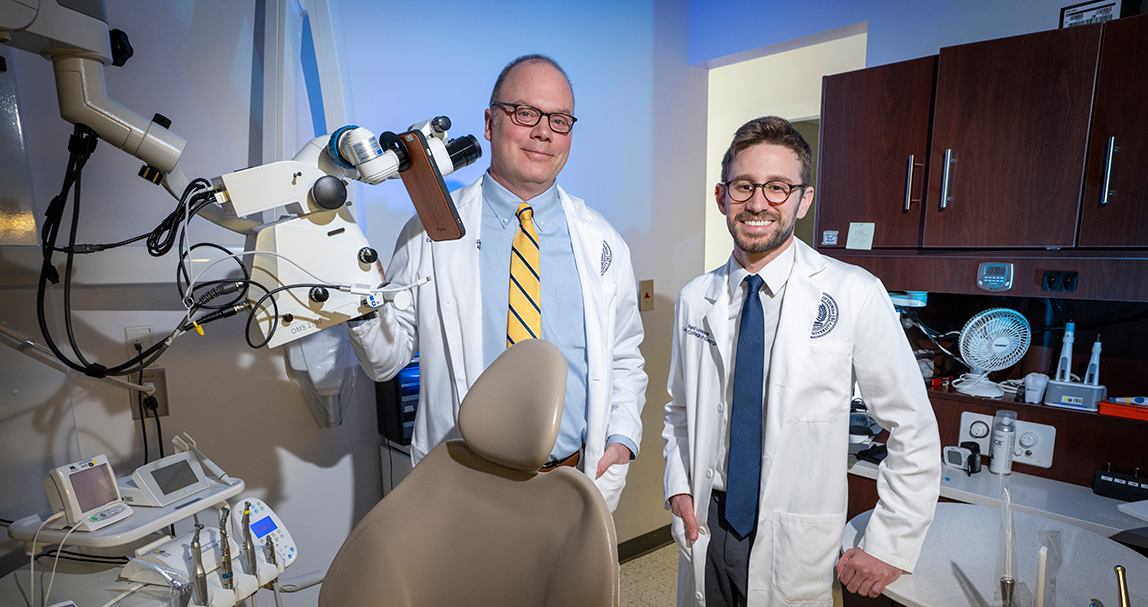
A recently published article from Augusta University’s Jagwire is highlighting how artificial intelligence is rapidly changing the future of dentistry not only in patient care, but also in education, research and clinical decision-making. The article features insights from Theodore Ravenel and third-year dental student Reid Loveless, who discuss both the opportunities and risks associated with AI integration in the profession. Ravenel explains how AI-powered tools are already assisting dentists with cavity detection, orthodontic planning, bone-loss analysis, and treatment forecasting, while also helping researchers process enormous amounts of clinical data more efficiently. He also emphasizes the importance of ethical safeguards, patient privacy and ensuring that AI tools are trained using diverse and accurate datasets. “It is really reshaping dentistry and how we practice dentistry.” Theodore Ravenel, DMD Loveless offers the perspective of a future clinician learning in an increasingly technology-driven environment. He describes how AI-supported educational tools developed by faculty such as Rafael Pacheco are helping students navigate complex patient scenarios, receive immediate feedback, and strengthen clinical reasoning skills. The article also highlights emerging technologies being used at the Dental College of Georgia, including virtual reality simulators and AI chatbots that provide students with real-time evaluations of dental procedures. Researchers such as Zoya Kurago are also leveraging AI to analyze large-scale datasets tied to cancer and oral disease research. Despite the excitement surrounding these advances, the article stresses that AI is intended to support, not replace, human clinicians. Empathy, communication and patient trust remain essential components of quality care. To learn more about how Augusta University is preparing future dental professionals for an AI-driven healthcare landscape, contact Rafael Pacheco at rapacheco@augusta.edu.