
Experts Matter. Find Yours.
Connect for media, speaking, professional opportunities & more.

Tension are rising in Eastern Europe as troops, tanks and weapons are piling up on both sides of the border separating Russia and Ukraine. And with each passing day, the invasion of Ukraine and the possibility of outright war seems to be increasing. Is war inevitable? How did this situation escalate so quickly? Is this a power-play but Vladimir Putin? Should other neighboring countries be worried? And what is the strategic and historical significance of Ukraine when it comes to Russia wanting to invade? How could this affect the U.S.? There's a lot of questions to be answered - and if you are a reporter covering this escalating news story, then let our experts help. Jacek Lubecki, Ph.D., is an associate professor of political science and international studies at Georgia Southern University. He is also expert in Polish and European military history. Lubecki is available to speak with media regarding this topic - simply click on his icon now to arrange an interview today.


Across America it seems deliveries are delayed; shelves are looking increasingly bare and there’s an elevated sense of anxiety when it comes to what lies ahead for America’s economy. All of these important topics are forefront in the minds of many and reporters are covering these stories locally and nationally on a daily basis. It's making news, and that’s why we’ve asked Dr. Richard M. Franza, the Dean of the James M. Hull College of Business at Augusta University, a few quick questions that we’re seeing pop up in media coverage across Georgia. Q 1 - What is causing shortages here at home, especially in grocery stores? “Like most things, it is complicated, not a lot of easy answers, but there are clearly a few things in play here. First, companies have been having a hard time finding workers throughout the supply chain. It starts at the producer level, whether it is meat processing plants or producers of other foods and sundry items, production levels are down due to limitations on workers. Then, there have also been worker issues at the transportation/logistics part of the supply chain. Particularly in the area of trucking. So, even when producers have enough supply, they are having difficulty getting it to the stores. Finally, there are issues at the grocery stores themselves. Both at their distribution locations and the store themselves, they have been short on labor unloading and picking items, again delaying products from getting on the shelves. The problem has gotten worse in the past few weeks due to the COVID spikes due to omicron. While omicron is causing less serious results, it appears to be easier to catch. So, lots of people are getting it, making people have to miss work for five days, putting a further crunch on the labor force.” Q 2 - Is this a problem we are likely to see continue through the first quarter or half of the year? “I am optimistic that we can get past the omicron crunch in the coming weeks (by mid to late February, if not sooner). So, things should get better this quarter. However, this will just put us back to where we were pre-omicron, with still some lingering issues. I am hopeful that as the pandemic evolves into an endemic, things will resemble a more normal environment. While this virus has been unpredictable, I am hopeful that we can return to more normal environment no later than the end of the second quarter.” Q 3 - What we can we expect once the pandemic finally subsides? “I am extremely optimistic concerning our economy post-COVID. We have been pretty resilient to date, so I think if COVID transitions to endemic, I think we will see more spending and more people going to work.” If you’ve got more questions to be answered, or if you’d like to speak with him one on one – then let us help. Dr. Richard M. Franza is available to speak with media about important issues like America’s supply chain and the economy – simply click on his icon now to arrange an interview today.


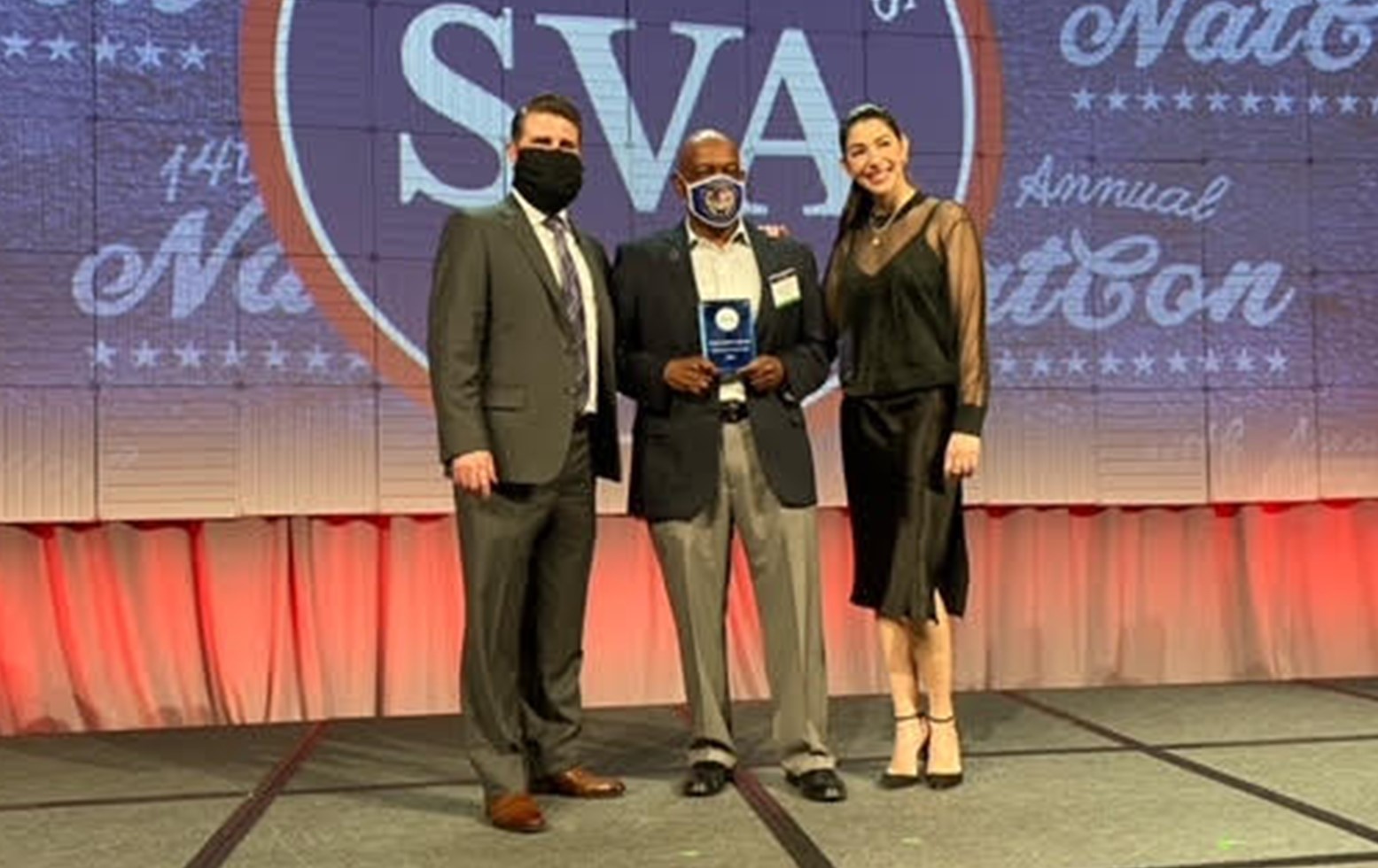
Georgia Southern University was selected as a finalist for the Chapter of the Year awarded by Student Veterans of America (SVA), an organization focused on advocating for and advancing resources for veterans in higher education. The University has SVA chapters on the Statesboro Campus and Armstrong Campus in Savannah, both of which were recognized with the award. “I am so proud of both of our SVA Chapters,” said Col. George Fredrick, Ed.D., director of Military and Veteran Services. “They offer truly outstanding support to our military-connected student population at Eagle Nation.” While this is the first time Georgia Southern has been a contender for this acknowledgement, the University has a tradition of being recognized for its investment in the military community. The Army ROTC program was established in 1980, and has won the MacArthur Award four times since 2009 for being one of the nation’s top ROTC programs. The Military Times publication named Georgia Southern as a Top 15 Best for Vets 4-year school for five consecutive years, including in 2019 when the University was ranked No. 1. Because the University operates near Hunter Army Airfield in Savannah and Fort Stewart in Hinesville, a number of students, faculty and staff are enlisted, retired or spouses of military members. Richelle Keilholz, Ed.D., is the staff advisor for SVA-Armstrong, and she believes this makes the campus community and military community deeply intertwined. “They become part of the campus culture, and I think that’s where you start to see that excellence comes when you have that kind of devotion,” said Keilholz. “You want to see our military service members, our family members and our spouses succeed in the military community and in higher education.” Georgia Southern’s relationship with veterans isn’t common among other universities, said military veteran project coordinator Rudy Duero. Many veterans feel overlooked and are an “untapped resource,” but not at Georgia Southern. “It’s awesome to have a group of individuals at the executive level who care and respect the opinions of the veteran students,” Duero said. “Veterans are being heard and they know that they’re being heard when they have good leadership representing them. The communication is always open.” Georgia Southern is one of five schools to be named a finalist for the award. The University sent a delegation to Orlando to attend the awards ceremony on Jan. 7. Academic and financial resources for veterans looking to pursue a degree can be found here. And if you’re a journalist looking to cover how Georgia Southern is working to support our veterans and the university’s military veteran project – then let us help. Rudy Duero is available to answer your questions - simply reach out to Georgia Southern Director of Communications Jennifer Wise at jwise@georgiasouthern.edu to arrange an interview today.

Georgia leaders to speak as part of Georgia Southern’s 2022 MLK Jr. commemorative events
Rev. Francys Johnson, J.D., (‘01) and Amir-Jamal Touré, J.D., will serve as speakers during Georgia Southern’s 2022 Martin Luther King (MLK) Jr. Celebration Dinners on Jan. 25 in Statesboro and Jan. 26 on the Armstrong Campus in Savannah, respectively. Johnson is a civil rights attorney, public theologian, educator and advocate who succeeded Stacey Abrams and Raphael Warnock as chair of the New Georgia Project. Johnson will speak at the MLK Celebration Dinner on Jan. 25 at 6 p.m. in the Nessmith-Lane Center Ballroom on the Statesboro Campus. Touré is the resident scholar for Geechee Kunda Cultural Center and Museum in Riceboro, Georgia, and a Djeli (chronicler of Gullah Geechee history). He has performed internationally in sharing history and culture and is known for his work in socioeconomic, politics and social justice areas. Touré will speak on Jan. 26 at 6 p.m. in the Student Union Ballroom on the Armstrong Campus in Savannah. During the celebration dinners, the Office of Multicultural Affairs (OMA) will hand out inaugural Drum Major of Justice Awards, which will be given to student leaders and student organizations that OMA leadership determine best exemplify MLK’s commitment to social justice. In addition to the evening events, student, faculty and staff volunteers will join OMA and Office of Leadership and Community Engagement for a weekend of community service from Jan. 15 through Jan. 17 as part of the Eagles in Action: MLK’s Legacy of Service initiative.

Research offers larger implications for health care environments Some of the most dangerous contaminants aren’t visible to the naked eye, but Georgia Southern University researchers are working to protect construction workers from this invisible danger. In the construction world, chronic exposure to crystalline silica, which is present in dust particles created from drilling, grinding and sawing on job sites, can lead to serious medical issues and preventable fatalities. Atin Adhikari, Ph.D, associate professor in Georgia Southern’s Jiann-Ping Hsu College of Public Health, has been awarded a $28,400 grant from Poma 22, LLC, to test new air curtain technology that could protect construction workers from hazardous fine dust particles. As the principal investigator (PI), Adhikari will work with co-PIs Aniruddha Mitra, Ph.D, professor of mechanical engineering, and Saman Hedjazi, Ph.D, assistant professor of civil engineering and construction management, from Georgia Southern’s Allen E. Paulson College of Engineering and Computing. “This research is important and innovative because we will test a revolutionary technology against fine dust exposure in construction sites that integrates a filtered air duct system into a hard hat, creating an air curtain or armor,” said Adhikari. “If we get a promising result, then this technology can be applied against other types of particles including bioparticles present in healthcare work environments.” Graduate research assistant Victoria Clower, who is earning a Master of Public Health in environmental health sciences, values her involvement in life-changing research. “This study of new technology on dust exposure control in construction sites will be very valuable with the quantifiable results showing the effectiveness of the air curtain technology,” she said. “As someone who is interested in occupational health, I am excited to work on a study that may provide an opportunity for other innovations for workplace safety to improve.” The U.S. Department of Labor’s Occupational and Safety Health Administration estimates roughly 2.3 million people in the U.S. are exposed to silica at work. Workers at risk can develop lung cancer, chronic obstructive pulmonary disease (COPD) and kidney disease. In addition, approximately 500 preventable silica-related deaths occur each year. As an environmental public health researcher, Adhikari has published numerous peer-reviewed studies on air quality and filtration. This project will focus on testing a newly developed respiratory protection technology, the Z Flow Pro helmet, which provides a downward draft through the front of the helmet, creating an air curtain in front of the worker’s face. Previous research has found that the air curtain is strong enough to deflect larger, visible particles. Adhikari and his team will conduct comprehensive field testing of this new technology to determine if it is also effective protection against fine particles, providing valuable information and justification on the readiness level of this product to protect construction workers. If you’re a journalist looking to cover this new testing that Georgia Southern is a major part of – then let us help. Atin Adhikari is available to answer your questions - simply reach out to Georgia Southern Director of Communications Jennifer Wise at jwise@georgiasouthern.edu to arrange an interview today.

Function – not fashion. What masks are the best to get behind when facing the risk of Omicron?
Omicron is here and it is spreading like wildfire across America and most of the globe. It’s highly transmissible and easily caught. For more than a year, most Americans have been taking on the simple approach of ‘masking up’ to contain any possible spread. People were using anything from surgical masks, N95s, cloth masks and even gators. Whatever could be used to provide a barrier around one’s nose and mouth. Cloth masks caught on, some even became fashion pieces – but as this most recent wave of COVID has shown, the type of mask is now just as important as the idea of simply covering up and looking good. “Cloth masks and things like that are very comfortable and they have good coverage on the face,” says Rodger D. MacArthur from the Medical College of Georgia. “But they don’t fit so tight and so air and any virus that’s in the air and come through the sides.” MacArthur who brings 20 years experience in the Division of Infectious Diseases at Augusta University says medical surgical masks are best for getting the most protection. "It’s not simply being so close to somebody that you sneeze on them, you splatter them with droplets. It’s in the air we’re breathing.” He just keeps a disposable one folded up in his pocket, but encourages the highest forms of protection you can find. Masks have been a popular and contentious topic during this pandemic and there’s a lot to know about this important topic – and if you are a reporter looking to cover this story – then let our experts help. Dr. Rodger MacArthur is a widely recognized expert in COVID-19, HIV antiretroviral therapy, resistance to antiretroviral drugs, and sepsis. He is available to speak with media – simply click on his icon now to arrange an interview today.

When students collectively save $748,925 in one semester and have easy access to textbooks on the first day of classes, coupled with Georgia Southern’s University Store’s ability to provide lower costs to students and avoid inventory delays, it’s a win-win for the campus community. The University-hosted Day1Access (D1A) program, a digital textbook model in collaboration with top publishers to reduce the cost of required course materials, ensures that all D1A materials are delivered at the lowest possible cost to the student – even lower than buying the material directly from the publisher. “The program itself grew out of the need to lower required materials cost and allow students to acquire that material on the first day of school,” said Derick Robertson, interim director for retail services at Georgia Southern. “Instructors no longer worry if the students have what they need and are ready to teach day one. We have allowed Day1Access to grow organically with instructors who see the benefits in the delivery method. Parents appreciate not having to search for their students’ material elsewhere for the cheapest option. The University Store appreciates the ease of delivery and not waiting on inventory to show up and running out of materials. In the end parents win, instructors win, students win and the University wins.” Through a partnership with Willo Labs, a leading digital resource provider, the program allows students to purchase their course material and have all the resources they need to begin their studies without having to visit the store. Access for all students begins the first day of class, with the option to opt-out of purchasing through the drop/add period. Each course utilizing D1A materials has received approval to digitally deliver required course materials to students from the instructor of that course. “The University Store is always looking to lower costs to students and provide the best service to the students of Georgia Southern University,” said Robertson. “Through Day1Access students have the required material they need at the cheapest price possible. As more departments adopt D1A the savings will continue to grow.” If you’re a journalist looking to learn more about Georgia Southern's digital textbook program– then let us help. The researchers behind this study are available, simply reach out to Georgia Southern Director of Communications Jennifer Wise at jwise@georgiasouthern.edu to arrange an interview today.

Georgia Southern University has established a new research and outreach center, the Institute for Water and Health, to investigate the complex interactions between water and human activities, and protect and restore public health in a changing environment. As part of the University’s focus on public impact research, the center will foster collaboration among scientists, government agencies, industry, nonprofit organizations and communities. Coastal Georgia is the perfect location for such an institute to conduct interdisciplinary research because it lies at the intersection of many social, economic and ecological issues. The center supports the region through research, workforce training for students, and actively involving communities in water resource management decision-making process, said Asli Aslan, Ph.D., associate professor in Georgia Southern’s Jiann-Ping Hsu College of Public Health Department of Biostatistics, Epidemiology and Environmental Health Sciences. Now also director of the Institute for Water and Health, Aslan is a water microbiologist, and her research program bridges ecosystem and human health. She has ongoing funded projects on tracking sources of water pollution and assessing health risks associated with exposure to chemical and microbial contaminants. She works with local communities and nonprofit organizations to encourage water stewardship behaviors. Aslan has served in various federal and state agencies and organizations as an adviser, reviewer, scientific committee member and affiliated faculty. She is also the founder and currently the co-chair of the Water and Health Committee of the American Public Health Association. “We want to create a nationally recognized institution that provides meaningful solutions for community needs,” said Aslan. “Our immediate plan is to develop a coalition with all stakeholders in the region to address issues related to increased water demand, impact of sea-level rise on water resources, and potential emerging contaminants in our urban and rural water infrastructure. We are in the process of establishing a community advisory group consisting of scientists from academic institutions, representatives from local and state governments, community leaders, non-profit organizations and businesses to identify and prioritize community needs in water research and education.” For example, she said, although one in every six households in Georgia has a private well, few residents realize any water testing, treatment or well maintenance is the sole responsibility of the property owner as per the Safe Drinking Water Act. Aslan said the Institute for Water and Health will work with the homeowners to help them recognize potential risks and provide solutions that will keep families safe in the long term. “We also look at sources of contaminants using state-of-the-art-methods. And if you know where the pollution is coming from precisely, it’s easier to go fix that problem once and for all, which has a direct impact on the decision-making process to protect water resources.” she said. These new techniques allow researchers with the institute to provide test results within a few hours, which helps end-users to be informed the same day instead of days where most water testing methods currently take about 48 hours. The implications of these methods are broad, as they can be used to identify pathogens in storm water or in household drinking water pipes; assess how new sustainable water treatment technologies efficiently remove contaminants, or provide same-day results for recreational beach monitoring. “We can do all this fancy research in the lab, but it will be very important for us to go out into the community and talk to people, ask them what their immediate needs – our goal is to involve communities from the very beginning of our research so that we co-develop meaningful solutions that will improve the quality of their everyday lives,” Aslan said. “Our group at Georgia Southern consists of established researchers from multiple disciplines such as environmental education, public health, social and behavioral sciences, environmental and computational engineering, coastal ecology, and we are growing everyday”. Carl L. Reiber, Ph.D., Georgia Southern’s provost and vice president for academic affairs, said the center will pull together faculty from across the University, many of whom have already established themselves as water experts within their own discipline. He expects the center to take a very visible role for the University and is renovating space in Savannah near the Armstrong campus to house the center and its labs. “The Institute for Water and Health will bring to southeast Georgia an awareness of the importance of water quality, water management and how tightly these areas are aligned with our health,” Reiber said. “The public impact of this institute is immeasurable and will ultimately increase the quality of life in our community.” If you're a journalist looking to know more about this topic or are looking to cover - then let us help. Asli Aslan, Ph.D., is a water microbiologist, and her research program bridges ecosystem and human health. She has ongoing funded projects on microbial source tracking, health risk assessment of water resources, and the ecology of pathogens in the aquatic environment. She is available to speak with reporters – simply click her icon now to arrange an interview today.

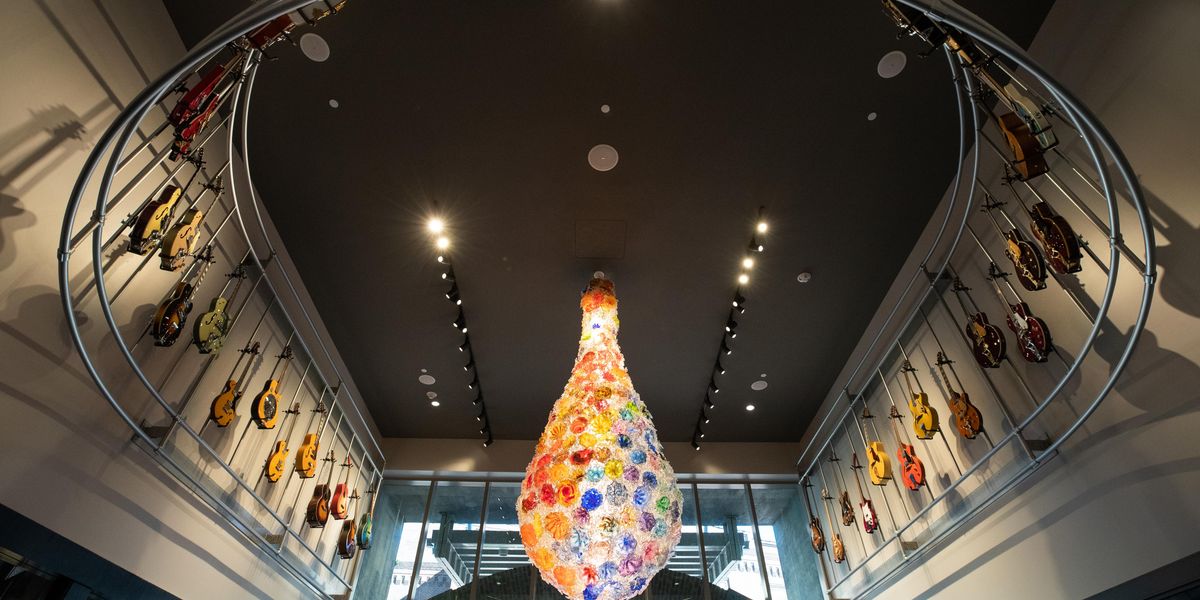
Striking a chord! New Savannah museum tells the storied history of Gretsch instruments
Drums, guitars, history, business and education have come together in a spectacular new interactive museum and exhibit in downtown Savannah that will pique the interest of any music lover. That Great Gretsch Sound! museum is a new destination where Georgia Southern University helps tell the story of a family-owned company that is still regarded as one of the music industry’s most influential and innovative instrument manufacturers. The permanent display of music memorabilia, highlighting more than 135 years of Gretsch instruments, is featured in District Live’s new lobby and performance space on the banks of the Savannah River. The museum is the latest addition to the Plant Riverside District. The museum’s opening was recently featured in Premium Guitar : The exhibit space highlights some of the most popular and unique pieces of Gretsch's historic catalog. The museum lobby features some of the most iconic instruments the company has produced, including the White Falcon™, the Chet Atkins® Country Gentleman®, a Brian Setzer Signature G6120, and a vintage 1963 Jet™ Firebird popularized by AC/DC's Malcolm Young. In the District Live performance hall, visitors will be treated to a visual timeline that will allow them to explore the evolution of Gretsch instruments dating back to the 1920s. Approximately 100 guitars are on display in the exhibit, 48 of which were recently on display in Nashville's Country Music Hall of Fame. The museum was developed through a special partnership between the Fred and Dinah Gretsch School of Music at Georgia Southern University and The Kessler Collection. In addition to the instruments that line the performance hall and upper section of the lobby, the museum features three sound dome displays with original videos that highlight Gretsch history, instrument production, the worldwide community of past and present Gretsch artists from Chet Atkins and George Harrison to Phil Collins, and the family's storied commitment to music education. Several other display cases take guests on a visual journey from Gretsch's beginnings as a local manufacturer of calf-skin drums, banjos, and accordions to one of the most popular and sought-after producers of guitars and drums during the height of the Rock & Roll era. Downtown Savannah is now helping tell that Gretsch story. The Gretsch museum includes Gretsch instruments and storyboards with QR code links to detailed narratives. "We hope this new museum will preserve the long history and legacy of the Gretsch Family and the Gretsch Brand," Dinah Gretsch said. "It is wonderful to share our history with the city of Savannah, the loyal Gretsch fans and all the tourists that will visit the museum." The museum's artifacts were curated and installed by Aaron Phillips, Georgia Southern's project curator for the Fred and Dinah Gretsch Artifacts Collection. Through his research to prepare the museum, he is confident that the Gretsch Museum will provide a unique musical experience. "My goal was to create a space that is expressive, inspirational, and true to the roots of the Gretsch family and community," Phillips said. "I am in awe of how this turned out!" To learn more – the full media release from Georgia Southern is attached below: If you’re a journalist looking to cover That Great Gretsch Sound! – then let us help. Aaron Phillips, Georgia Southern's project curator for the Fred and Dinah Gretsch Artifacts Collection is available, simply reach out to Georgia Southern Director of Communications Jennifer Wise at jwise@georgiasouthern.edu to arrange an interview today.

Recently, the expertise of Georgia Southern University’s researchers was featured in an in-depth piece by Business Insider Magazine. U.S. oncology company OncoTEX has made a significant leap in the future of cancer treatment. A part of the bioscience development portfolio The iQ Group Global, OncoTEX has licensed a gold compound platform technology, AuraTEX, that helps destroy cancer cells by using the body’s immune system. The gold-based compounds enter cancer cells and attack them from the inside. Through this process, the tumours are disrupted, and cancer cells are made visible, causing the human body’s immune response to kick in. With the immune system and gold compounds working together, killer T-cells and the drug destroy the remaining cancer. The futuristic technology was developed in collaboration with the University of Texas at Austin, Georgia Southern University, and Wright State University, before being licensed to OncoTEX. In the coming months, OncoTEX and the University of Texas at Austin will test the gold compounds in rigorous studies to learn more about the treatment and its potential in fighting various forms of cancer. December 16 - Business Insider The full article is attached. And, If you’re a journalist looking to cover this new research that Georgia Southern is a major part of - – then let us help. We have experts available to answer your questions - simply reach out to Georgia Southern Director of Communications Jennifer Wise at jwise@georgiasouthern.edu to arrange an interview today.