
Experts Matter. Find Yours.
Connect for media, speaking, professional opportunities & more.
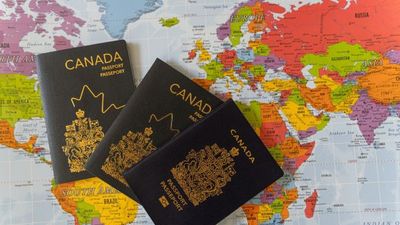
Manitobans are still eager to travel, but how and where they’re going is changing, and so are the risks they may not see coming. New survey findings released as part of CAA Manitoba’s Travel Wise Week show a clear shift toward staying closer to home. Sixty per cent of Manitobans prefer travelling within Canada, while just 20 per cent are planning a trip to the United States. Global uncertainty, rising costs, and changing perceptions about international destinations are influencing those decisions. “We’re seeing more Manitobans choosing Canada because it feels familiar and safe,” said Susan Postma, Regional Manager, CAA Manitoba. “But that sense of comfort can lead people to underestimate the financial risks that can still come with travelling, even within our own borders.” Staying in Canada and Leaving Coverage Behind While Canadians feel confident travelling within their own country, many assume “home turf” means low risk. This misconception leaves millions exposed to unexpected costs when trips don’t go as planned. The survey found that 64 per cent of Canadians did not have travel insurance for their most recent trip within Canada. Provincial health coverage often provides only limited protection when travelling outside your home province, and in some cases, does not cover services such as air ambulances, extended hospital stays, or trip interruption costs. Recent media stories have highlighted Canadians facing unexpected medical bills, emergency transportation costs, or sudden trip changes, all during trips that never left the country. “People are often surprised to learn how quickly expenses can add up if something goes wrong,” says Postma. “A simple injury on a hiking trail or a family emergency back home can turn a short trip into a major financial stress.” With recent geopolitical incidents in Cuba, Mexico and the Middle East, CAA’s Travel Wise Campaign is focused on helping Canadians understand risk, avoid misinformation, and make decisions grounded in facts rather than fear or speculation. Here are some tips: Understand what an “avoid non-essential travel” advisory really means: Travel advisories reflect real-time safety risks, and an “avoid non-essential travel” signal indicates rapidly changing conditions that may change quickly, and support may be limited. Know that advisories can affect your insurance and your exit options: Travelling against government advice can limit your travel insurance, including medical care or emergency evacuation. Coverage must be in place before conditions deteriorate. Flexibility is essential; review cancellation and change policies now: Travellers should proactively confirm cancellation deadlines, refund eligibility, rebooking options for all reservations and understand the limits of credit card protections, employee benefits, and pension coverage benefits. Stay connected to Canada while abroad: Canadians should monitor official updates from Global Affairs Canada and register with the Registration of Canadians Abroad service before departure or while on location if something arises. Rely on reputable sources and be cautious of misinformation online: Canadians should rely on official government sources, established travel organizations, and verified news outlets for travel guidance. Additionally, the CAA Air Passenger Help Guide helps you understand your rights when faced with common flight disruptions, such as delayed or cancelled flights or lost bags. The guide can be found at CAA.ca/AirPassengerHelpGuide. For more information on travel insurance and how to stay protected, visit www.caamanitoba.com/travelwise The online survey was conducted by DIG Insights from September 29 – October 8, 2025, with 2,0210 Canadian travellers aged 25 to 64 who have travelled outside their province of residence in the past three years and plan to travel again in the next five years, out of which 137 travellers were from Manitoba or Saskatchewan. Based on the sample size of n=2,021 and with a confidence level of 95%, the margin of error for this research is +/- 2%.)


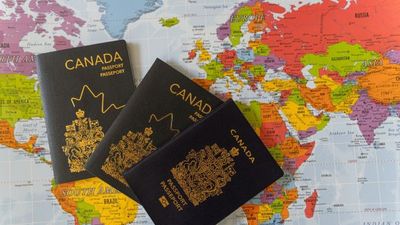
Canadians remain passionate about exploring new destinations, but changing global dynamics are reshaping how and where they travel. According to CAA’s Travel Wise survey, more than half of Canadians (51 per cent) now say geopolitical and economic factors, such as instability abroad, a perception of the U.S. as being less welcoming, and rising travel costs, are influencing where Canadians choose to travel. Shifting Destinations and Attitudes Travel patterns are evolving. The survey conducted in 2025 shows that only 22 per cent of Canadians planned to visit the U.S., an 11 per cent drop from 2024. Instead, many are opting to stay within Canada (40 per cent) or explore international destinations. The perception of the U.S. as less welcoming, coupled with rising travel costs and global instability, is prompting Canadians to reconsider their travel plans. "Canadians are adventurous by nature, but today’s travellers are having to make thoughtful decisions," says Kaitlynn Furse, Director of Corporate Communications. "We’re seeing a clear trend toward exploring closer to home and seeking out new international experiences, all while keeping an eye on safety and value." Travel Insurance: A Critical, Yet Overlooked, Safeguard While Canadians feel confident travelling within their own country, many assume “home turf” means low risk. This misconception leaves millions exposed to unexpected costs when trips don’t go as planned. The survey found that 64 per cent did not have travel insurance on their most recent trip when travelling within Canada. “Recent stories have highlighted Canadians facing unexpected medical bills, trip interruptions, and emergency expenses while travelling within Canada, often because they didn’t realize their regular provincial health coverage or credit card benefits had limits,” says Furse. “If something were to happen, provincial healthcare only partially covers you outside of your home, and sometimes, not at all, covering only basic emergency medical services when travelling in another province.” Among those who travelled uninsured, 44 per cent believed coverage wasn’t needed, and 29 per cent thought their provincial government’s health plan would suffice. However, provincial healthcare only partially covers emergency medical services in other provinces, and sometimes not at all. “One of the biggest misconceptions we see is the idea that travelling within Canada comes with less risk,” says Furse. “Unexpected medical costs, trip interruptions and emergencies can happen anywhere, and many travellers are surprised to learn they’re not fully covered.” With recent geopolitical incidents in Cuba, Mexico and the Middle East, Travel Wise is focused on helping Canadians understand risk, avoid misinformation, and make decisions grounded in facts rather than fear or speculation. Here are some tips: Understand what an “avoid non-essential travel” advisory really means: Travel advisories reflect real-time safety risks, and an “avoid non-essential travel” signal indicates rapidly changing conditions that may change quickly, and support may be limited. Know that advisories can affect your insurance and your exit options: Travelling against government advice can limit your travel insurance, including medical care or emergency evacuation. Coverage must be in place before conditions deteriorate. Flexibility is essential; review cancellation and change policies now: Travellers should proactively confirm cancellation deadlines, refund eligibility, rebooking options for all reservations and understand the limits of credit card protections, employee benefits, and pension coverage benefits. Stay connected to Canada while abroad: Canadians should monitor official updates from Global Affairs Canada and register with the Registration of Canadians Abroad service before departure or while on location if something arises. Rely on reputable sources and be cautious of misinformation online: Canadians should rely on official government sources, established travel organizations, and verified news outlets for travel guidance. For many travellers, cancelled or delayed flights remain a top concern. CAA’s Air Passenger Help Guide offers a straightforward resource for travellers facing disruptions. The online survey was conducted by DIG Insights from September 29 – October 8, 2025, with 2,0210 Canadian travellers aged 25 to 64 who have travelled outside their province of residence in the past three years and plan to travel again in the next five years. Based on the sample size of n=2,021 and with a confidence level of 95%, the margin of error for this research is +/- 2%.)

Strategic Closure of Strait of Hormuz Puts Pressure on U.S., Threatens Global Oil Trade Stability
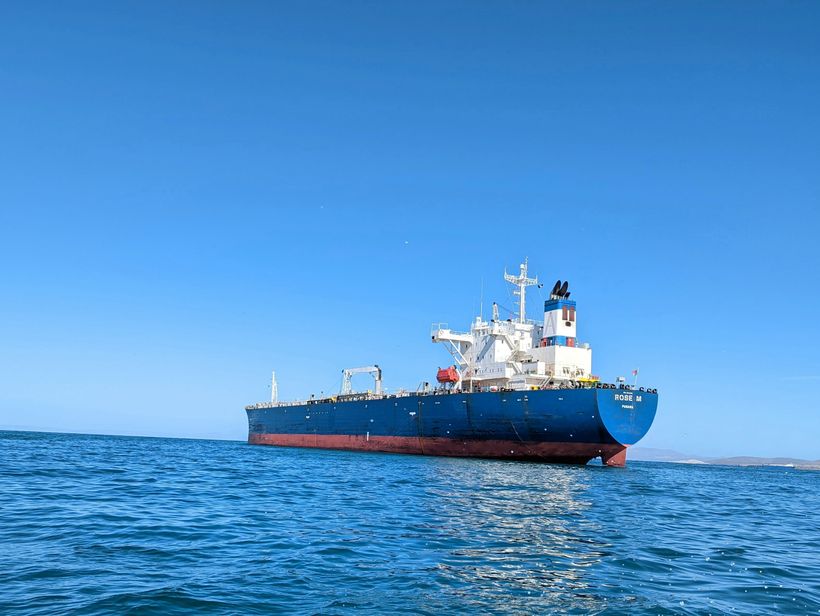
Less than a week after the onset of the war in Iran, and amid escalating conflict in the region, Iran effectively closed the Strait of Hormuz to shipping tankers moving oil from the Middle East by threatening attacks against any vessel who entered the waterway. Thus, the small body of water, which moves a large percentage of the world’s crude oil, has become one of the most discussed places in the world in recent days. Frank Galgano, PhD, is a professor of Geography and the Environment at Villanova University. He is an expert in military and Middle East geography and has also studied global maritime shipping and access to natural resources. Dr. Galgano says there geographic, geopolitical, military and economic factors at play, along with widespread potential consequences, as Iran holds steady on their closure of the strait and the U.S. considers how, or if, it will attempt to help escort oil ships through. Geography and Significance of Strait of Hormuz Situated between Iran to the north and Oman and the United Arab Emirates to the south, the Strait of Hormuz is a narrow shipping lane that connects the Persian Gulf to the Gulf of Oman and, further out, the Arabian Sea. It is one of the most vital chokepoints in the Middle East, along with the Suez Canal, Straits of Tiran, Bab al-Mandab and the Turkish Straits. “Right now, because of oil, it is the most important,” Dr. Galgano said. “Every day, roughly 20 percent of global petrochemical use goes through Hormuz.” The strait itself is barely over 20 nautical miles at its narrowest, but only a small portion of that is shipping lanes. Depth constraints limit shipping to two lanes, each two miles wide, with a two-mile buffer between. “You’re essentially looking at all of that shipping constrained to six nautical miles, and the ships are relatively slow,” Dr. Galgano said. “There are usually about 14-25 tankers every 24 hours transiting the Gulf, so there is always a ship in line." By Iran threatening military action against any oil-carrying ships in Hormuz—and by shipping companies refusing to attempt to traverse it— one-fifth of the global oil trade is essentially cut off indefinitely. That is concerning, given that it takes very little to send global oil prices skyrocketing. Dr. Galgano referenced the 2010-11 Somali pirate issue that caused supertankers—which cost upward of $50,000 a day to operate—to be rerouted. “That alone caused gas prices to raise 10 cents per gallon,” he said. In this case, the biggest impact will be felt throughout Asia, which relies more heavily on oil imports. But the U.S., despite being the second-biggest producer of crude oil last year, will still feel significant effects, since oil is traded globally. “It takes these supertankers eight or 12 days to reach the East Coast from Hormuz,” Dr. Galgano said. “So, a few days later you might see diminished supplies, but there is a critical point where we would face a real shortage.” Attempting to Move Ships Through Hormuz Poses Huge Danger Unlike the Iranian-backed Houthi rebels attacks on Israeli ships and those belonging to its allies in the Red Sea last year, Iran itself has far more sophisticated weapons, along with a strong motive to do whatever it can to put pressure on the U.S. and involved allies. In addition to drones designed for attacking ships—like the ones used by Houthis—Iran also possesses Chinese and Russian anti-ship missiles, according to the professor. “Ships are very vulnerable,” he said, then referencing the 2000 bombing of the USS Cole by Al Qaeda operatives. “That was just two guys in a rubber boat with an explosive device, and it almost sunk the whole ship. If one is carrying oil, it becomes almost like a large fuel bomb.” The United States has weighed the idea of sending a convoy to help escort and protect these ships. They did as much in the late 1980s in Operation Earnest Will, in which President Reagan ordered Kuwaiti supertankers—which were being fired at—to reflag under the U.S. flag so the Navy could legally escort them. But weapons technology has changed, and while U.S. naval ships could certainly defend themselves, “supertankers are slow and it is still an incredibly dangerous operation,” Dr. Galgano said. “The convoy would have to be lucky 100 percent of the time. Iran would only have to be lucky once to hit a ship and cause an immediate fiasco, both physically and in the media.” Global Dependance on Shipped Goods According to Dr. Galgano, between 75 and 90 percent of all items you handle on a day-to-day basis come from inside the hull of a ship: shocks on your car, clothes on your back, or components of your computer. When shipment is disrupted, it can cause supply chain and cost issues. “During the pandemic, Ford was waiting on chips for F-150s, and HP was waiting in chemicals to make ink,” Dr. Galgano said. “Even the ship that got stuck in the Suez Canal a few years ago caused $10 billion in losses per day due to the backup.” For commodities like oil, the indefinite inability to utilize perhaps the most important shipping lanes in the world due to large scale conflict quickly raises the economic stakes to even greater levels. “Iran absolutely knows that, and they see this as a bargaining chip,” Dr. Galgano said. “Cause economic pain to force cessation of the attacks.”


War in Iran: Impact on Oil Prices
As global markets respond to escalating tensions in Iran, energy prices are once again at the center of international concern. For insight into what this conflict could mean for oil markets, consumers and the broader economy, media can turn to Greg Upton, executive director and associate research professor at the LSU Center for Energy Studies. An expert at the intersection of energy and environmental economics, Upton studies how geopolitical disruptions, supply constraints and policy decisions influence oil prices and downstream economic impacts. As instability in the Middle East threatens global supply chains, he can provide context on potential price volatility, implications for Louisiana’s energy sector and what higher crude prices may mean for gasoline costs and inflation in the United States. Upton has contributed to more than 40 academic publications and has presented his research to over 200 industry, government and academic audiences. He has testified before committees in both chambers of the Louisiana Legislature and a subcommittee of the U.S. House of Representatives. A frequent voice in national and local media, Upton has been quoted or cited more than 250 times, including by the The Wall Street Journal, The New York Times, USA Today and NPR. In addition to his research, Upton teaches in LSU’s MBA program and in the Department of Economics and Environmental Sciences, helping prepare the next generation of leaders to navigate complex energy and environmental challenges. For timely, data-driven analysis on the impact of oil price fluctuations amid the ongoing conflict in Iran, Dr. Greg Upton is available for interviews and expert commentary.



Operation Epic Fury: Florida Atlantic's Expert is Ready for Your Questions and Coverage
As tensions surrounding Operation Epic Fury in the Middle East intensifies and the risk of regional escalation grows, Robert G. Rabil, Ph.D., professor of political science at Florida Atlantic University, stands out as one of the most authoritative voices journalists can turn to for clear, strategic analysis. A nationally recognized scholar of Middle Eastern politics, political Islam, terrorism and U.S. foreign policy, Rabil brings decades of research, regional expertise and media experience to breaking developments. He does not simply react to headline, he explains the historical forces, ideological movements and geopolitical calculations driving them. At a time when the conflict’s implications stretch far beyond Iran’s borders, affecting Israel, Gulf states, global energy markets and U.S. national security, Rabil provides critical context on both state and non-state actors shaping events on the ground. Robert Rabil, Ph.D., professor of political science at Florida Atlantic University, is a leading authority on Middle Eastern politics, security, and U.S.–Middle East relations. View his profile Recent media coverage: WINK: Dr. Robert Rabil, a political science professor at Florida Atlantic University, said the attack marks one of the most significant escalations in regional conflict in years. "I would say now the joint attack today is one of the very few, if not the only, as a matter of fact, attack on a country in the Middle East," said Rabil. "And today, as we have seen, I believe that the President has taken the final decision, and he said, Listen, it's about time, mainly, either to change the regime or produce a change within the regime.” ABC News: “What the president has done recently, what he did with Maduro, and the assassination of Soleimani — all of that changes the regime’s behavior,” Rabil said. Rabil said if Iran’s government were to collapse or dramatically change, cooperation with Western nations, including the United States, could resume, especially if Iranians pursue a democratic alternative. The Jerusalem Post Op-Ed - The writer is a professor of political science at Florida Atlantic University. He served as chief of emergency of the Red Cross in East Beirut during Lebanon’s civil war. CNN Robert G. Rabil, Special to CNN Rabil offers measured, informed analysis rooted in decades of scholarship and policy study and can help with key story angles such as: • Iran’s Regime Stability and Internal Pressures How domestic dissent, economic strain and political factions inside Iran influence wartime decision-making. • U.S.–Iran Strategic Calculus What options Washington realistically has, historical precedents shaping current policy, and risks of escalation or miscalculation. • Israel and Regional Security Dynamics How Israel, Saudi Arabia and Gulf states are responding — and whether a broader regional war is possible. • Proxy Warfare and Militant Networks The role of Hezbollah, Hamas and other non-state actors in expanding or containing the conflict. • Iran’s Nuclear Program How the conflict affects nuclear negotiations, deterrence strategy and global security concerns. • Energy Markets and Global Economic Fallout Implications for oil prices, shipping lanes and international economic stability. • Long-Term Regional Realignment Whether this conflict accelerates a reshaping of alliances in the Middle East.


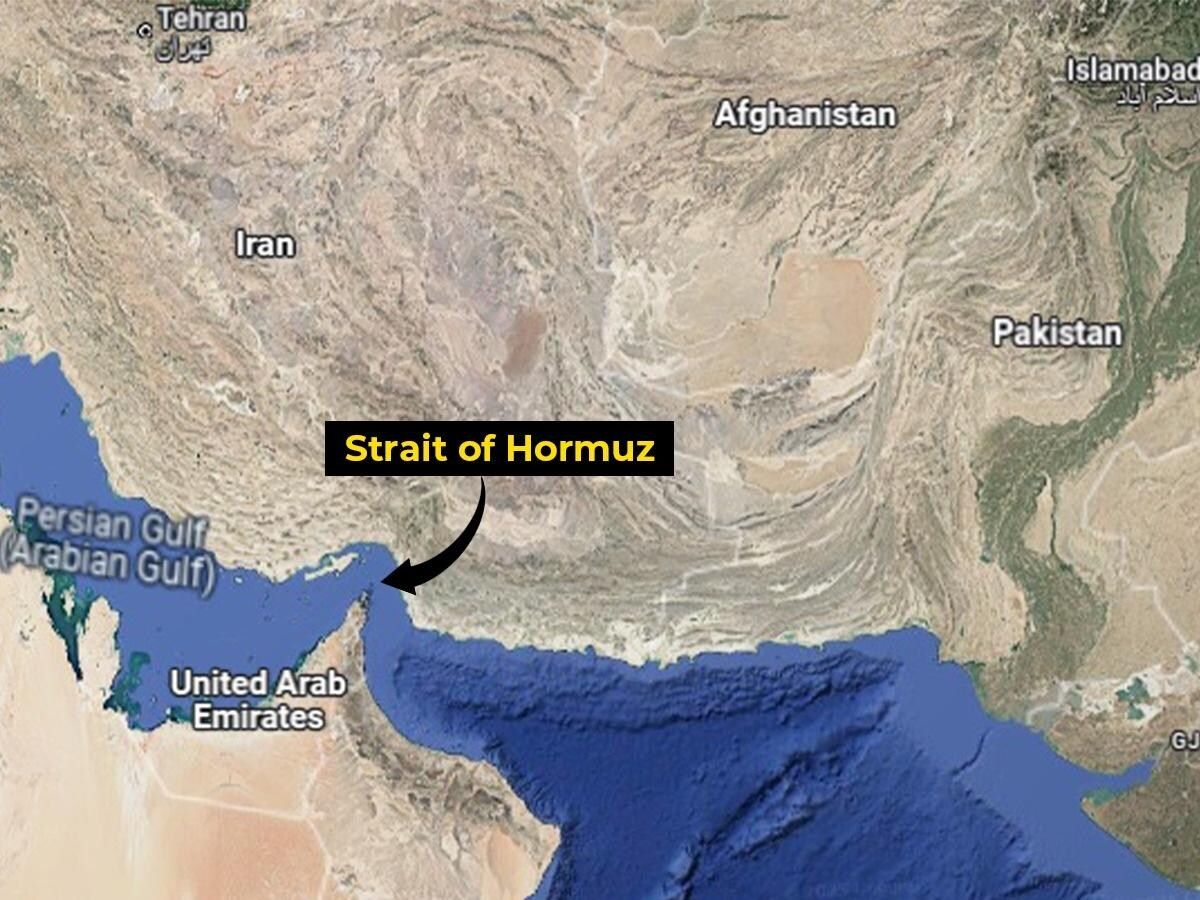
ExpertSpotlight: Why the Strait of Hormuz Matters: The World’s Most Critical Chokepoint
The Strait of Hormuz is one of the most strategically vital waterways on Earth. Just 20 miles wide at its narrowest point, with shipping lanes only a few miles across in each direction, this narrow channel connects the Persian Gulf to the Gulf of Oman and the Arabian Sea. Through it flows roughly one-fifth of the world’s petroleum supply, along with vast quantities of liquefied natural gas, particularly from Qatar. For global markets, the Strait is more than geography, it is a pressure point. Any disruption, even the threat of one, can send oil prices surging and rattle financial markets worldwide. A History Shaped by Empire and Energy For centuries, the Strait served as a maritime corridor linking Mesopotamia, Persia, India, and East Africa. Control over it shifted between regional powers, colonial empires, and eventually modern nation-states. In the 16th century, the Portuguese seized nearby islands to dominate regional trade routes. Later, British naval power asserted influence during the height of imperial shipping dominance. In the 20th century, however, the Strait’s importance expanded dramatically with the rise of oil exports from Gulf states. After the 1979 Iranian Revolution, tensions surrounding the Strait intensified. During the Iran-Iraq War in the 1980s, particularly the so-called “Tanker War” phase, commercial vessels were targeted, highlighting how vulnerable global energy supplies could be. Since then, periodic confrontations between Iran, the United States, and regional powers have kept the Strait at the centre of geopolitical risk. Why It Is So Important Today 1. Energy Security Major oil producers including Saudi Arabia, Iraq, the UAE, Kuwait, and Qatar rely heavily on this route. Even short-term closures could disrupt millions of barrels per day in global supply. 2. Global Economic Stability Because oil is globally traded and priced, disruptions in the Strait impact fuel costs, inflation, shipping, and consumer prices worldwide — including in North America and Europe. 3. Military Strategy The Strait is bordered primarily by Iran to the north and Oman to the south. Iran has periodically threatened to close the passage in response to sanctions or military pressure. The U.S. Navy and allied forces maintain a consistent presence to ensure freedom of navigation. 4. Modern Geopolitical Flashpoint Recent decades have seen drone seizures, tanker detentions, and naval standoffs. Each incident reinforces how fragile global energy logistics can be when concentrated in a single corridor. The Strait as a Symbol of Interdependence The Strait of Hormuz underscores a central truth of globalization: the world’s economies are deeply interconnected and geographically vulnerable. A narrow stretch of water in the Middle East can influence gasoline prices in Ontario, manufacturing costs in Germany, and energy security debates in Asia. It is both a trade artery and a geopolitical lever — a reminder that geography still shapes global power. Expert Angles for Media An expert in geopolitics, energy economics, or maritime security could explore: How vulnerable is the global economy to a prolonged closure? Can alternative pipelines realistically replace Hormuz traffic? What role do regional alliances play in deterring conflict? How does the Strait shape Iran’s negotiating power? What would insurance and shipping markets do in a crisis? The Strait of Hormuz is not simply a map feature — it is one of the world’s most consequential strategic chokepoints. Its stability underpins global energy flows, economic predictability, and international security. If tensions rise there, the world feels it. Our experts can help! Connect with more experts here: www.expertfile.com


Why Nick Cave’s First Public Outdoor Sculpture Found Its Home at Meijer Gardens
The permanent installation of Amalgam (Origin), Nick Cave’s first public outdoor sculpture in the world, marks a major moment for contemporary art in the Midwest and a defining milestone for Frederik Meijer Gardens & Sculpture Park. As the curator who guided the project from concept to completion, Suzanne Ramljak offers essential insight into why this work matters now, how it fits within Cave’s evolving career, and what it signals about the growing role of public art in shaping cultural identity. The sculpture’s installation in October coincides with a pivotal period in Nick Cave’s career. On Feb. 13, he debuted “Nick Cave: Mammoth,” a monumental new body of work on view at the Smithsonian American Art Museum through Jan. 3, 2027. Not only is it Cave's first solo exhibition in Washington, D.C., but it is the museum’s largest ever single-artist commission. And this spring, the Obama Presidential Center in Chicago opens with a major, immersive installation by Cave, placing his work at the center of a national cultural moment. Against this timely backdrop, Meijer Gardens’ installation stands as a quiet but powerful first: the artist’s inaugural permanent outdoor public sculpture. Understanding the Significance of Nick Cave's Work The sculpture reflects the evolution of Nick Cave’s artistic practice, rooted in his groundbreaking Soundsuits series, a body of work first developed in response in the wake of Rodney King’s 1991 assault by police and designed to challenge viewers’ perceptions of identity, race, and community. Over decades, Cave’s work has moved from wearable performance art into public sculpture, allowing his socially engaged visual language to occupy shared civic space. The permanent presence of Amalgam (Origin) at Meijer Gardens highlights the institution’s commitment to showcasing art that resonates with broader cultural dialogues about resilience, protection, and collective identity. “Nick Cave’s art is deeply rooted - in his family, in community, in craft, and in nature. His work is also grounded in concerns of social justice. The power of Amalgam (Origin) stems from this fertile mix; a blend of the personal and communal, exceptional and traditional.” Suzanne Ramljak, Vice President of Collections & Curatorial Affairs, Frederik Meijer Gardens & Sculpture Park Suzanne Ramljak is Vice President of Collections & Curatorial Affairs at Frederik Meijer Gardens & Sculpture Park where she oversees the acquisition, siting and curation of engaging sculptural exhibitions. View her profile The timing also highlights Cave’s deep Midwest ties. He lives and works in Chicago and earned his master's degree at Cranbrook Academy of Art in Bloomfield Hills, Michigan. The Meijer Gardens installation connects those regional roots to a global artistic trajectory, reinforcing the Midwest’s influence on contemporary art at the highest level. Media Attention, Coverage and Cultural Momentum Since the installation was announced and unveiled, the sculpture has drawn significant regional, national and arts-focused media attention, underscoring its cultural weight and public resonance. Coverage has highlighted the work’s monumental scale, its distinction as Nick Cave’s first permanent outdoor public sculpture, and Meijer Gardens’ role as a national destination capable of supporting ambitious and timely contemporary art. Media narratives consistently framed the installation as both a major moment for Grand Rapids’ cultural landscape and a signal of Meijer Gardens’ growing influence within the national arts conversation. The range of coverage points to interest from music, arts, lifestyle, and cultural outlets, suggesting the installation’s appeal to a variety of audiences. That level of attention reflects not only the significance of the work itself, but also the curatorial vision guiding its placement and permanence, a process led by Suzanne Ramljak. Expert Insight: As Curator of Collections and Senior Curator of Sculpture, Ramljak brings expert perspective on: Why Meijer Gardens was the right home for Cave’s first outdoor public sculpture How this work fits within Cave’s broader artistic practice, particularly his engagement with performance, movement, and public space What permanence means in contemporary art, especially for works often associated with temporality and performance How landscape, scale, and audience interaction shape the experience of outdoor sculpture Her expertise situates the installation within both Cave’s career arc and Meijer Gardens’ long-standing commitment to presenting ambitious contemporary sculpture in dialogue with nature.


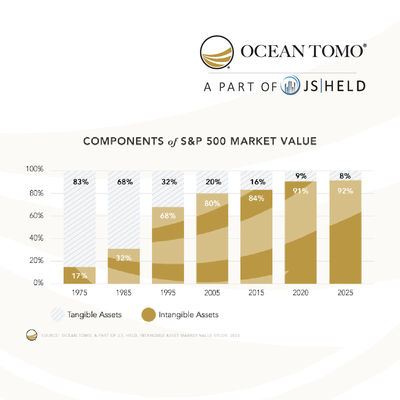
Ocean Tomo Releases 2025 Intangible Asset Market Value Study Results
Global consulting firm J.S. Held announces the release of the Ocean Tomo Intangible Asset Market Value (IAMV) study. With this release, the study now reflects a panel of 50 years of data in the US market and 20 years of data in foreign markets. The study examines the components of market value, specifically the role of intangible assets, across a range of global indexes. IAMV is shown as of calendar year end by subtracting net tangible asset value from market capitalization. Commenting on the Components of S&P 500® Market Value, economic expert and study author Matthew Johnson observes, “the composition of corporate value has undergone a fundamental transformation over the past five decades.” In 1975, tangible assets—property, plant, equipment, inventory, and other physical capital—represented 83% of the market value of companies comprising the S&P 500 index, with intangible assets accounting for only 17%. By the end of 2025, this relationship had completely inverted: intangible assets now constitute approximately 92% of S&P 500 market capitalization, while tangible assets have been reduced to a mere 8%. Johnson adds, “This 75 percentage point shift represents what Ocean Tomo has defined as ‘economic inversion’— a wholesale transformation in the nature of value creation whereby economic worth has migrated from what can be ‘touched’ to what can be ‘thought’." The magnitude and implications of this transformation are comparable to the Industrial Revolution of the 18th and 19th centuries. Just as the Industrial Revolution fundamentally restructured economic activity from agrarian and craft-based production to mechanized manufacturing, the intangible revolution has redefined the sources and measurement of corporate value in the 21st century. Ocean Tomo Co-founder and J.S. Held Chief Intellectual Property Officer, James E. Malackowski observes, “While the Industrial Revolution required a century to unfold fully, the intangible revolution has occurred within a single human lifespan, with particularly rapid acceleration occurring in the 1985-2005 period when intangible asset market value increased from 32% to 79%—a remarkable 47 percentage point surge in just two decades.” The 2020-2025 period deserves special attention: S&P 500 IAMV remained stable at approximately 90% despite the Federal Reserve implementing the most aggressive monetary tightening cycle in four decades. Dr. Nikki Tavasoli, PhD, shares, “Traditional financial theory predicts that intangible-intensive firms should be highly sensitive to interest rate changes due to their long-duration cash flows and limited collateral value.” She adds, “The observed stability challenges this prediction and requires explanation, which we address in a forthcoming paper.” In 2005, the IAMV study was expanded beyond the S&P 500 to explore the components of value in several key international markets. Stock market indexes from Europe, China, Japan, and South Korea were selected and analyzed to determine the comparable role of intangible assets. To learn more about the 2025 Intangible Asset Market Value Study, please visit: Media Contact Kristi L. Stathis, J.S. Held 1 786 833 4864 Kristi.Stathis@JSHeld.com JSHeld.com


Julian Ku Analyzes International Law in Recent Media
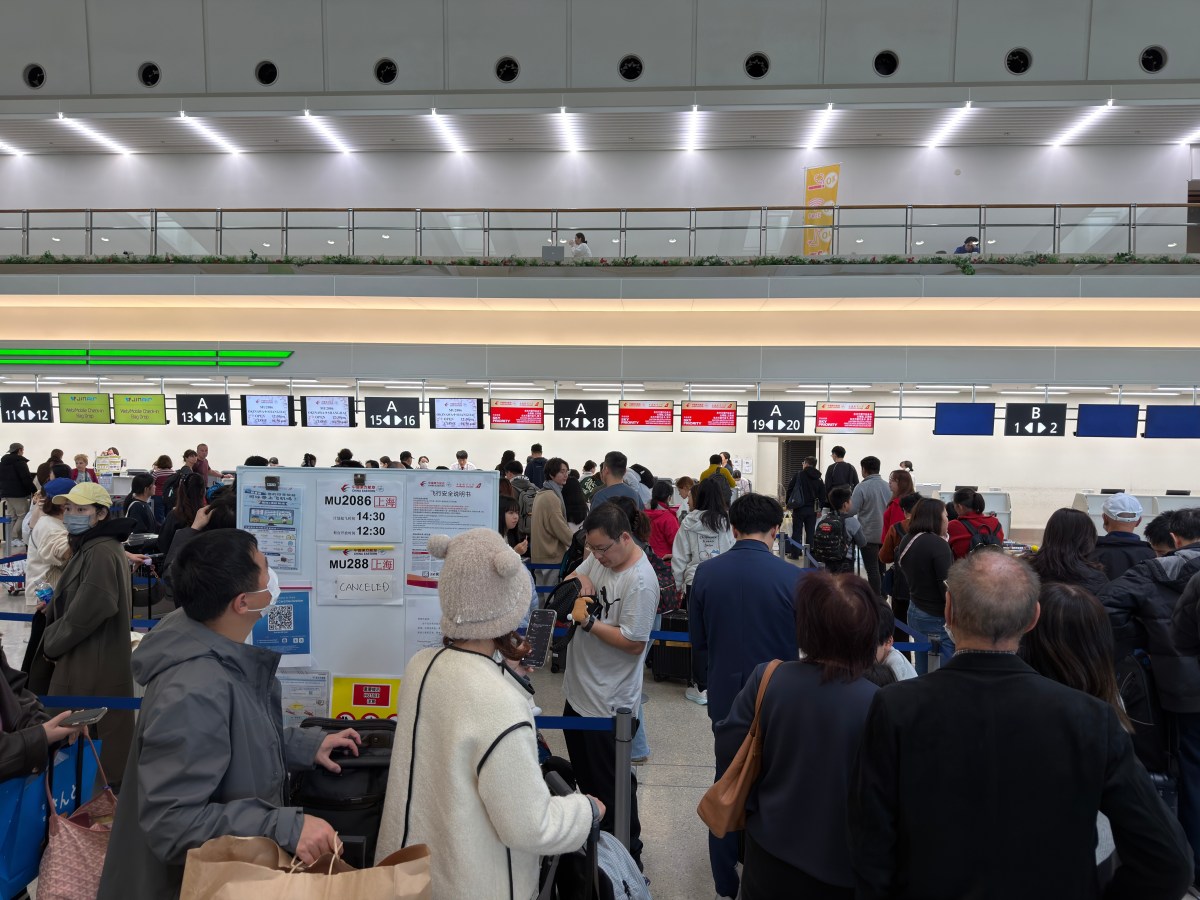
Hofstra Law Professor Julian G. Ku has been featured in multiple news outlets, providing expert legal analysis on global issues and interpretations of international law. In a Newsweek article on China’s cancellation of flights to Japan, Prof. Ku provided commentary on how political pressures could play into fractious China-Japan relations. Prof. Ku also spoke with Dutch daily newspaper Trouw about China’s evolving vision of international law, explaining how Chinese leaders emphasize state sovereignty while downplaying human rights norms — a perspective that resonates in parts of the Global South. In Trouw, he described this selective approach as part of China’s broader effort to reshape the narrative around the postwar legal order. The Maurice A. Deane Distinguished Professor of Constitutional Law at Hofstra Law and Faculty Director of International Programs, Prof. Ku teaches and writes on international and constitutional law.


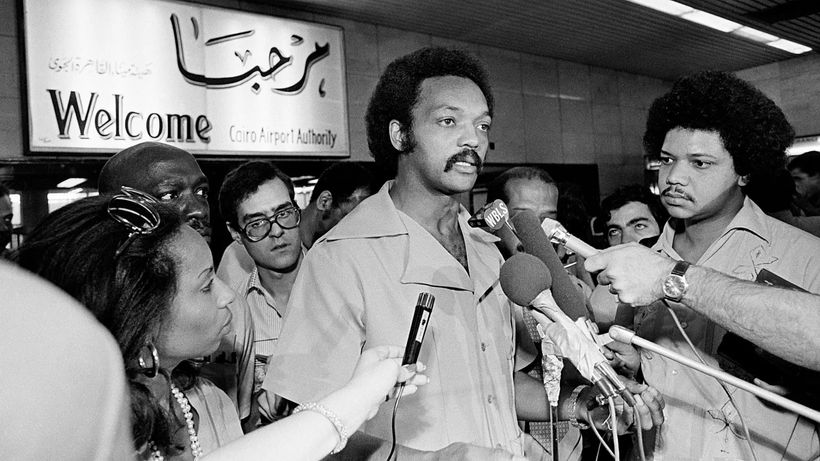
Jesse Jackson: The Activist Who Turned Protest into Political Power
Few figures bridge the worlds of street-level activism and presidential politics like Jesse Jackson. For more than six decades, he has stood at the center of America’s ongoing struggle for racial justice, economic fairness, and political inclusion. His legacy isn’t just historical, it continues to shape today’s debates about voting rights, coalition politics, economic equity, and the power of grassroots organizing. From Civil Rights Foot Soldier to National Leader Jesse Jackson rose to national prominence as a close associate of Martin Luther King Jr., working with the Southern Christian Leadership Conference during the height of the Civil Rights Movement. He was present in Memphis in 1968 during King’s assassination, a moment that profoundly shaped his path forward. After King’s death, Jackson focused on translating civil rights gains into economic opportunity, founding Operation PUSH (People United to Save Humanity), later merging it into the Rainbow PUSH Coalition. His central message: political rights mean little without economic power. The 1984 & 1988 Presidential Campaigns In 1984 and again in 1988, Jackson ran for the Democratic presidential nomination — becoming one of the first Black Americans to mount a serious, nationwide campaign for the presidency. His 1988 campaign was especially historic: He won 11 primaries and caucuses. He finished second in the Democratic race. He built what he called a “Rainbow Coalition” — uniting Black voters, Latinos, labor groups, farmers, progressives, and working-class Americans. Jackson expanded voter registration efforts and brought millions of new voters into the political process, laying groundwork for future candidates, including Barack Obama. Coalition Politics Before It Was a Buzzword Long before diversity became corporate language, Jackson was preaching multiracial, multi-class political alliances. His philosophy emphasized: Economic justice alongside civil rights Voting access and political representation Corporate accountability International human rights engagement He also engaged in diplomatic efforts abroad, including negotiating the release of American hostages in conflict zones — demonstrating how civil rights leaders could operate on the global stage. Controversies and Complexity Jackson’s career was not without controversy. Critics pointed to past inflammatory remarks and political missteps. Yet even his detractors acknowledge his role in permanently expanding the boundaries of American politics. He forced national conversations about race, poverty, and representation — and shifted the Democratic Party’s platform toward broader inclusion. A Legacy That Endures Today’s conversations about: Structural inequality Voter suppression Grassroots political mobilization Multiracial coalition building … all carry echoes of Jackson’s work. Whether viewed as a trailblazer, a bridge between eras, or a polarizing figure, Jesse Jackson helped redefine what political participation looks like in America. Connected with an expert Find more experts here: www.expertfile.com