
Experts Matter. Find Yours.
Connect for media, speaking, professional opportunities & more.

Covering the legacy of Nelson Mandela - let our experts help with your questions and coverage
It was on this day in 1964 - Nelson Mandela is sentenced to life in prison in South Africa. Nelson Mandela's legacy as a champion of freedom, justice, and human rights continues to inspire people worldwide. His life and work are not only historically significant due to his role in ending apartheid in South Africa but also for his broader impact on global movements for equality and social justice. Mandela's relevance today is underscored by ongoing struggles against racism, oppression, and inequality. Reflecting on his contributions offers valuable lessons for current and future generations. Key story angles include: Mandela’s Life and Legacy: Exploring the key milestones of Mandela's life, including his activism, imprisonment, presidency, and post-presidential work. Impact on South African Society: Analyzing how Mandela's efforts to dismantle apartheid and promote reconciliation have shaped modern South Africa. Global Influence: Investigating Mandela's influence on international human rights movements, his role as a global symbol of resistance and peace, and his impact on world leaders. Continued Relevance in Social Justice Movements: Examining how Mandela’s principles and strategies are applied in contemporary struggles against racial injustice, inequality, and political oppression. Personal Stories and Tributes: Sharing personal narratives from those who worked with Mandela, were inspired by him, or were directly impacted by his legacy. Educational and Cultural Contributions: Discussing Mandela's contributions to education, culture, and the promotion of peace, and how his legacy is preserved and taught worldwide. These angles offer journalists a comprehensive framework to explore the historical significance and enduring impact of these pivotal figures and events. Connect with an Expert about the legacy and life of Nelson Mandela: Frederick W. Gooding, Jr. Dr. Ronald E. Moore Professor in Humanities · Texas Christian University David Walton Assistant Professor of History and Director of the Global Black Studies Program · Western Carolina University John Aerni-Flessner Assistant Professor of African History · Michigan State University Stephanie Bangarth Associate Professor, Department of History · King's University College, University of Western Ontario Richard A. Wilson, Ph.D. Gladstein Distinguished Chair of Human Rights and Board of Trustees Distinguished Professor · University of Connecticut To search our full list of experts visit www.expertfile.com Photo credit: Gregory Fullard


From Boring to Brilliant: Writing that Transforms Your Thought Leadership into Must-Read Content
Insights from our Webinar with Author, Rhea Wessel Ask anyone who develops Thought Leadership programs, and they will tell you that experts are essential to a successful program. But experts are busy people. That makes expert engagement strategies a very popular topic with our Comms and Media Relations pros. That’s why we invited Rhea Wessel, Founder of The Institute for Thought Leadership, to join us last week for our ExpertFile webinar. Rhea, a former tech and financial journalist and author of “Write Like a Thought Leader,” has worked with organizations such as Harvard, CFA Institute, Accenture and the Max Planck Institute to help their experts focus on developing unique story angles while getting high-quality work produced. Having seen her in action at last year's IABC Global Conference, speaking to a standing-room-only crowd, I was really impressed by Rhea’s approach. Rhea uses a system that experts and comms teams can use to brainstorm topics and craft story angles that frame expertise and research to make them more compelling. In the session, she showed us how she helps brainstorm and select the best angles for thought-leadership stories using ideas such as “origin” stories, “what if” scenarios, personal-impact stories, and opinion pieces. Experts often have issues with the "dreaded first draft.” The frameworks Rhrea showed us from her book were clever and designed to pragmatically move experts from brainstorming into a writing mode that doesn’t feel forced. Here are some key points I took away from Rhea’s session: Defining Thought Leadership An essential attribute of Thought Leaders is that they share their knowledge for free, using journalistic skills to engage their audience by articulating emerging ideas, steering conversations and influencing others. Finding the Niche Finding and framing thought leadership is not about covering a broad topic. The best topics are often very narrow. And they are best found at the intersection of the expert’s passion, purpose, and big ideas. Think Like a Journalist Write in a conversational tone and include data, quotes & statistics, but not too much. Use short sentences and paragraphs while keeping the story fast-moving. And don’t forget your sense of humor. Spend Time on the Headlines By “thinking like a journalist” and focusing on headlines, one can narrow the focus when examining research and insights to create more clarity. Quoting Author Sean Coyne, Rhea referred to headlines as having the benefit of being an “enabling constraint." "One of the curses of subject matter expertise is that your experts know a lot. They tend to pack a lot [of their knowledge] in, and for a good story, you've got to slice out a narrow bit. That’s the constraint.” Rhea Wessel Time & Place Matters Stories are best anchored in time and place. When you are working with an expert and you want to enrich a story, don’t just think about how they developed their research and insights. Also, think about “where they were” and “when did it happen?” A good origin story explains why an insight is significant for the expert, creating a more emotional, relatable connection for the audience. Frame Your Story Keep it focused on a single yet relevant problem the audience has. Then explain why this matters to your audience and why now. Based on the feedback we received from this session, we'll have Rhea Wessel join us for more conversations on topics related to storytelling. We'd love to know what you think. Details about this session are below: Full Webinar Recording bit.ly/4e9YuWb Presentation Slides To get a copy of the presentation & Templates, just hit the connect button on my profile and let me know. Enjoy!


On this day in 1981, the Centers for Disease Control and Prevention (CDC) reported the first cases of what would later be known as Acquired Immunodeficiency Syndrome (AIDS). This event marks a crucial moment in medical history, heralding the beginning of an epidemic that would profoundly impact millions of lives globally. This topic remains newsworthy due to its lasting implications on public health, medical research, and social stigma. Understanding the evolution of the AIDS crisis provides insights into ongoing challenges in healthcare, policy, and community support. Key story angles that may engage a broad audience include: Historical Overview of the AIDS Epidemic: Tracing the timeline of the AIDS crisis from its early days to the present, highlighting key medical and social milestones. Advancements in HIV/AIDS Treatment and Research: Exploring the breakthroughs in antiretroviral therapies, the search for a cure, and the latest research developments. Public Health Policies and Responses: Analyzing the effectiveness of public health initiatives and policies in managing and preventing HIV/AIDS, including current strategies and future directions. Social and Cultural Impact: Investigating how the AIDS epidemic has influenced societal attitudes, policies towards marginalized communities, and the ongoing fight against stigma and discrimination. Global Perspective: Examining the global impact of HIV/AIDS, comparing responses and outcomes in different regions, and the role of international organizations in combating the epidemic. Personal Stories and Advocacy: Sharing personal narratives of those affected by HIV/AIDS, the role of advocacy groups, and the importance of community support in addressing the epidemic's challenges. These angles provide journalists with a range of perspectives to explore, ensuring comprehensive coverage of the historical, medical, and societal dimensions of the AIDS epidemic. Connect with an Expert about the History of AIDS in America: Dr. Adey Nyamathi Founding Dean and Distinguished Professor of Nursing · UC Irvine Petra Molnar Associate Director · Refugee Law Lab, Osgoode Hall Law School Andrea Benoit Assistant Professor (Adjunct) · Western University David J. Hardy Professor of Psychology | Psychological Science · Loyola Marymount University Valerie Earnshaw Associate Professor, Human Development and Family Sciences · University of Delaware To search our full list of experts visit www.expertfile.com Photo credit: Ehimetalor Akhere Unuabona

The anniversary of the approval of the 19th Amendment marks a pivotal moment in history when women in the United States were granted the right to vote, symbolizing a major victory in the women's suffrage movement. This event is newsworthy because it represents a fundamental shift towards gender equality and has had profound implications for democratic participation and women's rights. Celebrating this milestone also provides an opportunity to reflect on the progress made and the ongoing struggles for gender equity. Key story angles include: Historical Context: Exploring the history and significance of the women's suffrage movement and the efforts leading up to the ratification of the 19th Amendment. Impact on Women's Political Participation: Analyzing how the 19th Amendment has shaped women's involvement in politics and governance over the past century. Contemporary Gender Equality Issues: Investigating current challenges in achieving gender equality in various sectors, including the workplace, education, and politics. Role of Women in Social Movements: Highlighting the contributions of women to various social justice movements and their leadership in advocating for change. Legal and Policy Developments: Reviewing significant legal and policy changes since the 19th Amendment that have advanced or hindered women's rights. Global Perspective: Comparing the women's suffrage movement in the United States with similar movements around the world and their respective impacts on global gender equality. Connect with an Expert about the 19th Amendment and the women's suffrage movement : Carla Bittel Professor of History · Loyola Marymount University Kathy Roberts Forde Professor of Journalism · University of Massachusetts Amherst Catherine Cerulli Director, Susan B. Anthony Center · University of Rochester Christopher M. Curtis Professor of History · Georgia Southern University Mary Anne Trasciatti Professor of Writing Studies and Rhetoric · Hofstra University To search our full list of experts visit www.expertfile.com Photo Credit: Library of Congress

Georgia Southern University’s Business Innovation Group wins international recognition from InBIA
Business Innovation Group team members Dominique Halaby, DPA, Suzanne Hallman and D’Erica Evans accept an award at the InBIA awards ceremony. Georgia Southern University’s Business Innovation Group (BIG) returned home from San Antonio, Texas, with high honors from the International Business Innovation Association (InBIA) during its annual awards ceremony, which recognizes excellence in entrepreneur support. In an awards ceremony held during the 38th annual International Conference on Business Incubation, BIG received four awards including two of the organization’s most prestigious accolades, the Dinah Adkins Award for Non-Technology-Based Entrepreneur Support Organization of the Year, and the Randall M. Whaley Award, which is InBIA’s highest honor. The Statesboro BIG location was named the Mixed-Use Entrepreneur Support Organization of the Year, while the Metter Business Incubator location received the Rural Entrepreneurship Support Organization of the Year. “I am honored that the InBIA recognized our efforts at the Georgia Southern University Business Innovation Group with the highest accolades for the support we offer to entrepreneurs,” said Dominique Halaby, DPA, director of the BIG and associate vice president for innovation. “These awards highlight the hard work the BIG teams put into making our business incubators an incredible resource for budding businesses and furthering our mission to advance the economic growth of our region.” BIG works to build an ecosystem throughout the state of Georgia to help entrepreneurs create, incubate and accelerate their for-profit business enterprises. BIG facilitates access to University resources, creates opportunities for student experiential learning and fosters an environment that supports a growth mindset throughout the state. “Through the InBIA awards program, we celebrate exceptional organizations that catalyze entrepreneurship for their communities,” said President and CEO of InBIA Charles Ross. “Congratulations to the Georgia Southern University Business Innovation Group on their well-deserved recognition. Their commitment to high-quality programming, organizational excellence and community impact is truly inspiring.” InBIA is a global nonprofit empowering entrepreneur support organizations in every U.S. state and in over 30 countries. With over 39 years of experience, InBIA has been a guiding force in providing industry best practices, fostering collaboration, mentorship and the exchange of innovative ideas for entrepreneurs worldwide. InBIA is the go-to organization for business incubators, accelerators, coworking spaces and other entrepreneurship centers. Interested in learning more or looking to talk with Dominique Halaby? Simply click on his icon now to arrange an interview today.


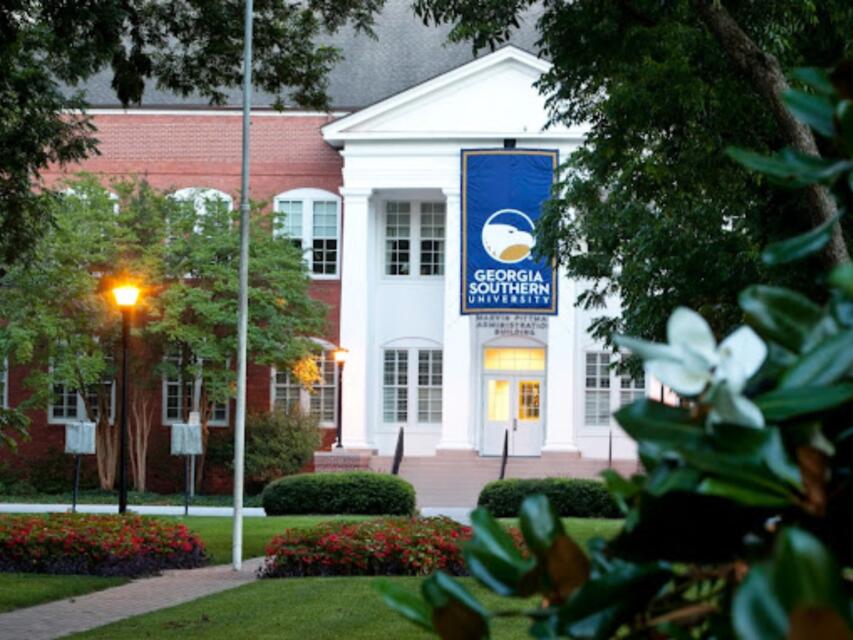
Students at Georgia Southern University now have even more opportunities to excel with the help of two new grants from the National Institute for Student Success (NISS) at Georgia State University totaling up to $600,000. The first is a $500,000 Acceleration Grant that will be distributed to Georgia Southern over the next two years to cover start-up costs for critical implementation steps of an ambitious program that further catalyzes Georgia Southern’s student success outcomes. “As Georgia Southern’s Fall 2024 enrollment continues to increase at record levels through freshman applications and admits, we are pleased to partner with the National Institute for Student Success to reinforce our commitment to providing exceptional student experiences and support that nurtures future leaders and global citizens,” stated Alejandra C. Sosa Pieroni, Ed.D., executive vice president, Division of Enrollment, Marketing and Student Success. “We are steadfast in our commitment to providing comprehensive, coordinated and differentiated student care to ensure every one of our students achieves their educational goals.” Funding through the Acceleration Grant will contribute to Georgia Southern’s existing initiatives to improve graduation rates and student success outcomes through the adoption of a suite of innovative, evidence-based programs. These programs, which deploy tools such as predictive analytics, AI technology, CRM platform, and big data to deliver personalized support to students, have been shown to help universities increase their graduation rates by 50% or more and to reduce discrepancies in graduation rates significantly. The second NISS award to Georgia Southern is the Keep HOPE Alive grant, which offers $100,000 across one year to support students who have lost the HOPE Scholarship as they work to regain eligibility. “We are enthusiastic about our partnership with Georgia Southern and working to deploy strategies that will contribute to substantive improvement in student outcomes,” said Timothy M. Renick, Ph.D., NISS executive director. Housed at Georgia State University, the NISS Acceleration Grants have been awarded to partner institutions that have completed a rigorous diagnostic analysis and have demonstrated a commitment to addressing structural and institutional barriers to the success of their students. Georgia Southern is a member of the second cohort to receive support from the NISS Accelerator Grant program, which launched in 2022. Unique to the Accelerator Grant program is up to three years of implementation coaching, webinars, meetings with expert practitioners and online resources provided by the NISS to support each awardee in implementing the new programs. The NISS coaching model is built on more than a decade of experience at Georgia State University developing and disseminating new approaches to student success that include predictive-analytics-based advising, AI-enhanced chatbots, and data-informed models for distributing financial aid. “These programs have helped Georgia State University increase its graduation rates for its bachelor’s students by 70% and its associate’s students by 300%,” according to Renick. “Black, Hispanic and low-income students now graduate from Georgia State at or above the rate of the student body overall.” The Acceleration Grant program will advance the NISS goal of producing 500,000 additional college graduates across its partner institutions over the next decade. Interested in learning more about this programming at Georgia Southern University or to arrange an interview with Alejandra Sosa Pieroni simply contact Georgia Southern's Director of Communications Jennifer Wise at jwise@georgiasouthern.edu to arrange an interview today.

Approximately 4,200 degrees conferred during Georgia Southern’s 2024 Spring Commencement ceremonies
In May, approximately 4,200 graduates from Georgia Southern University’s Statesboro, Armstrong and Liberty campuses received associate, baccalaureate, masters, specialist and doctoral degrees in five Spring 2024 Commencement ceremonies. Georgia Southern President Kyle Marrero welcomed the graduates and their guests to the ceremonies, held at the Allen E. Paulson Stadium in Statesboro on May 7, 8 and 9, and at the EnMarket Arena in Savannah on May 11. “Graduates, I don’t need to tell you about your unique college journey, which has been challenging,” said Marrero to the crowds. “I am very proud of how, together, we have persevered allowing us to have a successful semester and today, our commencement ceremony. This graduation is a momentous occasion for Georgia Southern University, as well as for all of you. Today, you are part of history at Georgia Southern.” Speakers included: Mackenzie Anderson (’07), global director of Corporate Communications at Nike Alton M. Standifer, Ph.D. (’12, ’14), vice provost for Inclusive Excellence and chief of staff to the provost at the University of Georgia (UGA) Kim Greene, chairman, president and chief executive officer of Georgia Power Chris Ahearn (’09), director of research and trade development for the World Trade Center Savannah Candicee Childs, M.D., (’19) an emerging beacon of inspiration in the fields of medicine and literature. At present, she is a resident physician at Massachusetts General Hospital, the largest teaching hospital of Harvard Medical School, with a focus on child and adolescent psychiatry Anderson opened the graduation ceremonies in Statesboro, following a warm introduction from Marrero, who described her leadership role at Nike. “I’m sure you probably expected me to get up here and say something like, ‘Class of 2024, go out into the world and ‘Just Do It,’” Anderson mused. “But here’s the deal. I don’t have to tell you to just do it because you just did it. You did the impossible by making it through the pandemic. “Today you aren’t just graduating with a degree in whatever is written on your diploma. You’re also graduating with a degree in doing hard things. And today we celebrate you.” She continued, saying that earning a degree in “doing hard things” has no doubt been a challenge, but the graduates will soon find out that this is also their superpower. They produced their own playbook, as unique and rare as they are. How they use the playbook moving forward is up to them — to wit, be curious, be wrong while giving yourself permission to make mistakes, be humble and be persistent. “Launch into the world,” Anderson concluded. “And whether you land just across the street, across the country like me or somewhere around the world, remember where you came from. Today you are etching your name alongside a proud Eagle alumni network of more than 147,000 strong. “It is my honor to be the first to say, ‘Georgia Southern University graduating Class of 2024, welcome to the alumni family.'” Standifer shared his own story as a young man, undecided about going to college while he worked as a cashier. A regular customer, Mr. Paul, continuously asked Standifer about whether he’d attend college, until one day Standifer told him he was going to attend Georgia Southern University. With a wide grin, Mr. Paul congratulated him and handed him a $100 bill. Incredulous, Standifer asked why he’d given him such a large tip. Mr. Paul told him it wasn’t a tip. It was an investment, and he’d continue to mentor Standifer in the following years, and remain a profound influence in his life. “I want to encourage you all to think of the Mr. Paul’s in your life,” Standifer said. “Think of the people who have helped you get to today. And then when you leave here, make the conscious effort that you will be Mr. Paul for someone else.” In Savannah, Ahearn shared his journey of discovery in Georgia Southern’s classrooms where he explored Irish film, an introduction to the United Nations, abnormal psychology, Celtic identity and conflict, psychology and law, and gangs, drugs and criminal justice. “There’s a whole menu of choices for you and experiences for you to choose from to really help you discover who you are, where you fit, what drives you, what gets your creative juices flowing, and what options are out there when you graduate from these key interactions,” Ahearn said. Following, he pursued a master’s in international relations in Ireland that gave him a deeper perspective on how the world operates and how interconnected we all are. Ensuing professional roles in higher education, international networking and fundraising, culminated in his current role at World Trade Center, Savannah. From the stage, Ahearn stressed his key takeaways: network, stay in touch with your classmates, be authentic and perhaps, most importantly, travel. “Go outside your comfort zone,” he encouraged. “Try things you’d never try. Expand your horizons. This is your opportunity to learn about different cultures, to embrace the differences and similarities we share with our fellow global citizens and find common ground.” In closing: “Many of you may stay in the region to leave your impact as this community continues to expand,” Ahearn said. “There are plenty of great employment opportunities at your fingertips. Many of you will leave to follow your careers wherever they take you. But please know that you’re part of this institution’s history. You’ll always be an Eagle, and Georgia Southern will always welcome you home." Interested in learning more about Georgia Southern University? Contact Georgia Southern's Director of Communications Jennifer Wise at jwise@georgiasouthern.edu to arrange an interview today.

It's Pride Month - We have experts who can help with all your coverage.
Pride Month stands as a vital commemoration of the LGBTQ+ community's ongoing fight for equality, acceptance, and visibility. Rooted in the historic Stonewall Riots of 1969, Pride Month not only celebrates the progress made in LGBTQ+ rights but also highlights the persistent struggles faced by the community. This topic is newsworthy due to its significant social, cultural, and political implications, reflecting broader societal issues of human rights, diversity, and inclusion. Furthermore, Pride Month's impact on public discourse, policy changes, and cultural awareness underscores its relevance. Key story angles include: The Evolution of Pride: Tracing the history of Pride Month from the Stonewall Riots to its current global celebrations, and its role in shaping LGBTQ+ rights. Intersectionality in the LGBTQ+ Community: Exploring the experiences and challenges faced by LGBTQ+ individuals who belong to multiple marginalized groups. Policy and Legal Milestones: Reviewing significant legal and policy advancements in LGBTQ+ rights and the ongoing legislative battles. Corporate and Community Engagement: Analyzing how businesses and local communities are participating in Pride Month, including corporate responsibility and support for LGBTQ+ causes. Media Representation: Investigating the portrayal of LGBTQ+ individuals in media and entertainment, and its impact on public perception and acceptance. Mental Health and Well-being: Discussing the mental health challenges within the LGBTQ+ community and the resources available to support them. Connect with an Expert about the History of Pride Month: Margaret Galvan Assistant Professor · University of Florida Genny Beemyn Director of The Stonewall Center · University of Massachusetts Amherst Melanie Wilcox, PhD Assistant Professor and Researcher · Department of Psychological Sciences, the Institute of Public and Preventive Health, and the Department of Psychiatry · Augusta University Emily Fisher Professor · Loyola Marymount University Ryan J. Watson, Ph.D. Ryan J. Watson, Ph.D. Assistant Professor of Human Development and Family Studies · University of Connecticut To search our full list of experts visit www.expertfile.com Photo credit: Sara Rampazzo

Trump now a convicted felon.... let our experts explain this unprecedented situation.
Just six months before the upcoming election, former President Donald Trump has become the first U.S. president to be convicted of a felony, following his involvement in the hush money scandal. A Manhattan jury delivered a guilty verdict on 34 counts, raising profound questions about the implications for Trump's political future, the Republican Party, and the broader landscape of American politics. This unprecedented situation marks a historic moment in American politics, as no former president has ever faced such legal repercussions so close to an election. From constitutional debates to shifts in public opinion, and from international reactions to financial impacts, the scope of the story is immense. Here are several journalistic angles to explore this multifaceted issue: Constitutional implications of a felon running for presidency. Republican Party's internal conflicts after Trump's felony conviction. Public opinion on Trump's candidacy post-conviction. Trump's legal appeals and their impact on his campaign. Media's role in shaping perception of Trump's conviction. International reactions to Trump's felony and candidacy. Trump's campaign strategy adjustments after the conviction. Financial implications for Trump's businesses and fundraising. Historical instances of political candidates facing legal troubles. Impact of Trump's legal issues on down-ballot races. The ramifications of Trump's conviction are vast and unpredictable, potentially reshaping the political landscape in ways that are still unfolding. Let our experts assist with your understanding of this complex and evolving situation. Connect with an Expert about the Trump conviction: John Clinton | Vanderbilt University Abby and Jon Winkelried Professor of Political Science Brian Kalt | Michigan State University Professor of Law & Harold Norris Faculty Scholar Mean Bose | Hofstra University Professor of Political Science, Executive Dean for Public Policy & Public Service Programs Michael Genovese | Loyola Marymount University Professor of Political Science and International Relations, President of Global Policy Institute David RedHawks | University of Delaware Professor and Chair, Political Science Political Science and International Relations Tony Smith | UC Irvine Professor of Political Science James Sample | Hofstra University Professor of Law Todd Collins | WCU Steed Distinguished Professor Mark Caleb Smith | Cedarville University Professor of Political Science Stephen Farnsworth | University of Mary Washington Professor of Political Science and International Affairs To search our full list of experts visit www.expertfile.com

It's National Heat Awareness Day - Our #Experts are Here to Help
As global temperatures continue to rise, Heat Awareness is becoming an increasingly critical issue that affects public health, safety, and infrastructure. This topic is not only newsworthy due to its immediate impact on communities but also because of its connection to broader issues such as climate change, urban planning, and health equity. The importance of Heat Awareness spans across various sectors, providing numerous story angles for journalists to explore: The health risks associated with extreme heat and strategies for prevention and protection The role of urban planning and green infrastructure in mitigating heat island effects The impact of heatwaves on vulnerable populations, including the elderly, children, and low-income communities Technological and innovative solutions for cooling cities and enhancing public resilience The intersection of climate change policies and heat management strategies Public awareness campaigns and community initiatives to promote heat safety As we enter the warmer months, journalists have an opportunity to delve into these multifaceted narratives, highlighting the urgent need for Heat Awareness and the collaborative efforts required to safeguard communities against the growing threat of extreme heat. Connect with an Expert about Heat Awareness: Douglas J. Casa, Ph.D. CEO-Korey Stringer Institute, Board of Trustees Distinguished Professor, Department of Kinesiology · University of Connecticut Mariana Brussoni Associate Professor · University of British Columbia Paul Gordon, Ph.D. Professor of Health, Human Performance and Recreation · Baylor University Dave Hubbard Founder · America's Fitness Coach® To search our full list of experts visit www.expertfile.com Photo Credit: Ibrahim Rifath