
Experts Matter. Find Yours.
Connect for media, speaking, professional opportunities & more.

In High Frequency Trading, Every Nanosecond Counts!
In the financial world of high frequency trading, high-performance computers are duking it out in real time to score on instantaneous profit opportunities that appear and vanish in the blink of an eye. According to Bob Laliberte, Senior Analyst at ESG Global, "It’s critical for HFT organizations to eliminate potential network latencies from the start, by employing advanced, next-generation network platforms that leverage intent-based logic, ultra-low latency (ULL), high availability, and ease of management." Networking giants like Cisco are very aware of this need, and that knowledge fueled their 2020 acquisition of Exablaze, a company specializing in the design and manufacture of devices that can deliver ultra-low latency network performance. "Clearly, this technology infusion will enable a next-generation platform and enhance Cisco’s solid domain expertise in the financial sector", said Laliberte. Delivering near "instantaneous" trading will require a next generation physical network designed to deliver highly predictable end-to-end bandwidth featuring ultra-low latency. "Zero-hop" network designs such as AcceleRoute can achieve this through a bufferless architecture that delivers ultra-low latency approaching that of direct links while eliminating congestion in the network core.

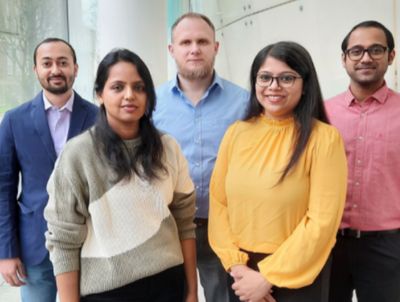
Aston MBA students take top prize at Universities Business Challenge Global Masters 2022
The competition helps develop the skills needed to move into corporate/public sector life The Grand Final took place in Liverpool where 10 teams from different universities competed for the title They were assessed on their team strengths and presented a one-minute pitch on a creative social business idea to an entrepreneur. A team of Aston MBA students has taken the top prize at the Universities Business Challenge (UBC) Global Masters 2022. Team GE7, which included Aishwarya Nagath Menon, Nashit Khalifa, Vasilijs Garbacevics, Divya Krisitipati led by Mithun Joy and mentored by Aston Business School’s Dr Julius Stephan, will receive a trophy on campus on 12 May. The competition offers postgraduate students a unique opportunity to develop the skills that you will need when moving into the working world and consists of 80 teams, drawn from a wide range of UK and Irish universities. The UBC Global Masters is a team-based business simulation event that provides participants with the opportunity to act as a board of directors, who have taken responsibility for improving the performance of a company. The finals took place in Liverpool where 10 teams from different universities, including two from Aston University, competed against each other tasked to run a simulated business under difficult trading conditions and also introduce an innovative idea to link the business to a social or environmental cause. The teams were assessed on their team strengths and presented a one-minute pitch on a creative social business idea to an entrepreneur. Mithun Joy, an Aston MBA student and team winner, said: “I am really proud to be part of the first Aston Business School team to win this competition. “It was a really competitive event against other universities, including the UBC's defending champion.” Clive Kerridge, course director at Aston Business School, said: “Although an Aston University MSc team made the podium in 2022, we are delighted to have our first ever winners of this excellent competition. “Taking part in the UBC Global Masters Challenge has been a great opportunity for our students to apply their theoretical knowledge to a complex, yet highly practical and topical business setting. “It allows for personal and professional development that is intellectually challenging and practically relevant, equipping participants with essential skills. Working in competitive teams enables peer to peer learning and interaction.” Find out more about the competition here.


With an estimated 1.5-million faculty in the US and a near 50,000 growth in UK-based academics in the last decade (to 225,000), universities and colleges have a whole range of interests and expertise on offer. In fact, despite rumours to the contrary, academia is a large and growing global ‘industry’. If you’re responsible for external relations, communications, marketing, civic engagement, knowledge exchange - or any other aspect of external engagement or “connectedness” in a university or college - then the ability to choose which faculty experts you selectively promote and publicise can be a very tough assignment. I’ve had first-hand experience with this. I was once in that very position - trying to keep up with the opportunities and the expectations afforded by 800 academics at just the one mid-sized UK institution where I worked. With the benefit of that firsthand experience and having since worked with more than 100 higher education institutions in the UK, Europe and North America, here are a few observations and also a few tips on how to organize your expertise: Approach #1: The Focus on Expertise Clusters An approach taken by some universities nowadays is to promote their expertise as a group of “grand challenges” or “beacons of excellence” - drawing together as many areas of research expertise under (usually) three or four headings. While identifying “token clusters” of expertise for focus and prioritisation may seem logical, this approach doesn’t really work. It may help with internal politics but it fails to generate enough precision to be relevant to various communities such as the media and industry. Approach #2: Selectively Promoting Key Experts One trap that universities can also fall into is to focus on a small group of academics who appear to be more suitable to promote. The reasoning for this approach is often driven by the need to have a manageable number for internal communications/press office staff to work with. The easy route to take is to just work with academics who are more keen to work with comms staff in promoting their work and who are already at ease in speaking to the media. Selection of experts on these factors, while important, isn’t the optimal way to build up the profile for the institution with key audiences. First off, this approach often doesn’t yield the diversity that audiences such as journalists and potential student and faculty recruits want to see represented. This approach will also miss the mark if it just plays to popular disciplines or hot topics. Being more inclusive to promote a wider range of disciplines and specialized topics is better value all round. Approach #3: The Faculty “Expertise Audit” I’ve seen institutions make many mistakes in positioning their faculty as experts, given it’s a proven way to differentiate brand, build profile and reputation. That’s why I’ve started to work with several universities on what I refer to as a “faculty expertise audit”. This brings a more structured process that helps prioritize key areas of research expertise and identify specialist experts. The audit also looks at the resources and overall capacity that universities have available to support an “expertise marketing” program that optimizes all these elements to significantly boost performance. Start with The Business Case for Expertise At the heart of this more structured, targeted audit approach is ensuring you are generating “return-on-investment” and “value-for-effort.” A good starting point is to ask: Where is the budget coming from? Where is current and expected demand for your programs? When starting this assessment, you have to think longer than a year out. Instead, look very hard and in detail at the next three to five years (the typical cycle of research investment and university strategies) and identify which expertise is most likely to solve the problems and consequential explorations that governments, industry, benefactors/donors, and funding agencies will want to support. I’m not saying that research areas without such sizable levels of predicted investment should be ignored - far from it - but we are in a competitive climate and universities now have to secure ‘orders’ (for applied and contracted expertise) that will ensure institutional sustainability and success. In turn, that success will allow investment in other areas that are socially vital but financially a weaker bet as regarded by funding sources. Having proven where research funding is most available, pressing and externally directed, then the audit is designed to identify and match the institution’s research talent to these requirements. These audits involve shortlisting, enlisting and then coaching the appropriate academic experts. The best results come from one-to-one sessions with academics which create buy-in and yield a more detailed marketing plan to leverage your experts. While more inclusive, this is an efficient process designed to create a “shared roadmap” for where the university and the academic both want to take their expertise. A large part of this roadmap then covers off other important activities such as creating a more discoverable and engaging online presence with enriched academic profiles that perform far better than the traditional “faculty directory.” Keeping online academic profiles fresh, content-rich, jargon-free, and compelling makes the job of expert ‘mining’ so much easier. Developing a sustained program of content with an organized lead generation process is also necessary. These extra steps are where many universities miss the mark. The result is a significant loss of inbound opportunities for research grants, consulting revenues, academic collaborations as well as local and global media coverage. I recently spoke with a Vice Chancellor of a prominent UK University who admitted that they as an institution deserved a failing grade when it came to promoting their faculty research achievements, saying that he “doubted any of their academics would be happy with the way their work was being promoted online.” This is an important aspect of the faculty audit. As a consultative process, it is non-threatening and we’re listening to staff and academics. That not only enriches the information the University has to promote its brand better, it also helps to enlist the support of the academic community who see that the university cares and that it is getting their input to put together a plan – both for the university and for individual academics. The academic is happy (they understand the value for them personally and for their institution); the University is happy (it is able to focus and prioritise its expertise in an evidence-based manner), and Communications and press office staff are happy (they have so more to work with in connecting the work of the University to a variety of local and global communities). The Benefits of A Faculty Audit Having completed many of these, I’ve seen very clearly, the results of a well run Faculty Audit process that without exception yield an excellent return on investment. Here are just some of the benefits to consider: Greater Insights: Gain a deeper understanding of the hidden strengths and opportunities within your academic ranks. Better Planning: A detailed report from a Faculty Audit enables a more strategic approach to planning where faculty research and expertise can support various programs within the University - such as industry engagement, media coverage and recruitment. Building Trust: When conducted by a third-party, a Faculty Audit is seen as more credible and less prone to perceptions of internal bias. More Engaged Faculty: Increased collaboration with faculty is gained through a more consultative process that builds “shared awareness” and enables more proactive support of their research. Increased Capacity: Producing more proactive content with faculty yields better results in terms of media coverage, research engagements, etc. Demonstrate Diversity: A better understanding of expertise that goes beyond the “usual suspects” to engaging a more diverse set of faculty to promote the University. News Coverage: Positioning your faculty and their research in a more relevant way aligns with the interests of the outside world and what's on the mind of outsiders. Less Stress: A more proactive, well structured plan helps everyone to synchronise activities better versus scrambling too much to meet deadlines in the “here and now.” Is a Faculty Audit Right for Your Institution? Here are some key considerations when evaluating the value of a Faculty Audit for your institution. You are ideally suited to undertake a faculty expertise audit if: You have a stretched workload where there's little capacity for proactive comms. You're tending to turn to the same academics for expert commentary in the media or elsewhere. You tend to get complaints (or mild mutterings) about not supporting academics enough. You don't have time to get to know the range of academic experts in your institution - especially new arrivals or eager early career academics. You've adopted an 'inside out approach' rather than one that engages with the interests of the outside world and what's on the mind of outsiders. There's weak management of expectations with the academic community - and a need for clarity and shared pathways for publicity. You're operating too much in the here and now and don't have the time to plan for future events, milestones and opportunities. You want to be more strategic in your comms and engagement - and make a real difference via attracting interest, income and investment. You don't have an integrated approach to comms (where content can be repurposed and recycled). You want more global reach and presence and can exploit digital tools to enable this. Additional Resources Academic Experts and the Media (PDF) This report, based on detailed interviews with some of the most media-experienced academics across the UK and United States draws on their experiences to identify lessons they can share in encouraging other academics to follow in their path. Download the UK Report Here Download the US Report Here The Complete Guide to Expertise Marketing for Higher Education (PDF) Expertise Marketing is the next evolution of content marketing. Build value by mobilizing the hidden people, knowledge and content you already have at your fingertips. This win-win solution not only gives audiences better quality content, but it also lets higher ed organizations show off their smarts. Download Your Copy Click Here for Additional Resources



Aston University MEG scanning facilities used by start-up to launch new brain health service
MEG scanning services at Aston Institute of Health and Neurodevelopment (IHN) have been used to launch the world’s first brain-imaging service to measure and assess brain health. Commercial brain imaging service Myndspan launched a service to assess brain health and identify concussions, with an event at Aston University. Start-up, MYndspan, was founded in 2020 by Caitlin Baltzer, former vice president of operations at functional brain imaging company Croton Healthcare and Janne Huhtala, previously chief executive of MEGIN, the global leader in functional brain imaging. The service was created to support brain health across populations, using cutting edge brain scanning technology to monitor and extend healthy cognitive lifespans. The brain imaging service is powered by a non-invasive brain scanning technology called Magnetoencephalography (MEG), which measures the electrical signals between neurons to form a highly detailed map of brain activity and function. The MEG scanner, which is located in the Aston Institute of Health and Neurodevelopment, at Aston University, identifies and observes functional ‘invisible injuries’ to the brain, such as concussion or PTSD, that can’t be seen from an MRI image of the brain. MYndspan’s service combines MEG scans with gamified tests of cognitive function, which measure a range of mental processes such as attention, memory, and visuospatial processing. Using these two measures of brain health, cognitive function and brain function, MYndspan provides a comprehensive overview, detailed in a thorough, easy-to-understand report of how a person’s brain is behaving and why. Among the service’s first customers are neuroscientist and author Dr Dean Burnett who is using MYndspan to monitor the effect increasing physical activity has on his brain over time and Vicky Macqueen former England Rugby player and chief executive of Didi Rugby, who is using the service to measure her pre-concussion baseline for playing contact sports safely. Through routine monitoring of personal brain activity, MYndspan helps people assess and understand their brain health. This helps to identify issues before symptoms emerge and supports optimal lifestyle and clinical intervention. Its first application is concussion, where the technology can support the recovery of an estimated 3.8 million athletes who experience sports-related concussion annually. Janne Huhtala, MYndspan co-founder said: “MYndspan’s technology can identify concussed brain activity and objectively identify and monitor recovery from a concussion. Currently, individuals are deciding to go back to play based on how they feel – a decision that can have life changing consequences. “We think athletes deserve to have objective information about where they are in their recovery, to make the best and most informed decisions.” MYndspan’s service will be available to the general public at Aston University’s Institute of Health and Neurodevelopment (IHN), an international leader in advanced technology to explore brains, development and healthy behaviours. IHN at Aston University is the first of many planned locations around the world where individuals will be able to access the service. MYndspan co-founder Caitlin Baltzer added: “The brain is hugely complex and exciting, and whilst there is a vast body of research and knowledge already available, there is still so much for us to learn about how it functions and changes over time. “In a world where we can track and optimise every part of our health, and our lives, the brain remains neglected. At MYndspan, we believe that every person has the right to better brain health and this begins with knowing our brains. “We are very excited to launch our brain scanning technology at Aston University as a demonstration for how digital health tools can support brain health and ultimately help more people recover and age better.” Dr Dean Burnett, neuroscientist and author, including of the Guardian blog ‘Brain Flapping’, said: “I'm a big proponent of anything that helps people understand their brains better, and MYndspan's new high-tech but easily accessible approach looks to be extremely useful in that regard.”

Global award for international human resource management expert at Aston Business School
Professor Pawan Budhwar has been recognised by the International Federation of Scholarly Associations of Management (IFSAM) He is a joint recipient of its award for exceptional service to the management field worldwide Professor Budhwar has been recognised for his outstanding leadership. Professor Pawan Budhwar has been named by the International Federation of Scholarly Associations of Management (IFSAM) as a joint recipient of its Award for Exceptional Service to the Management Field Worldwide. Dr Budhwar, a professor of international human resource management and head of Aston Business School, has been recognised for his outstanding leadership in building collegiality, community, and capacity in the British Academy of Management and in the Indian Academy of Management (an affiliate of Academy of Management), where he served as co-founder and first president. Pawan is also an associate pro-vice chancellor international (India), the joint director of Aston India Centre for Applied Research at Aston University and the co-editor-in-chief of Human Resource Management Journal. He received his PhD from Manchester Business School. He has published over 150 articles in leading journals on topics related to human resource management and performance, with a specific focus on India. He has also written and/or co-edited 26 books on HR-related topics for different national and regional contexts. On this occasion, the award, which recognises significant and enduring service to the management scholarly community worldwide, has been jointly bestowed to Professor Budhwar and Professor Emeritus Jean-François Chanlat, PSL Université Paris-Dauphine, France. Professor Budhwar said: “I am truly honoured and humbled to receive this award from the International Federation of Scholarly Associations of Management. It is satisfying to receive an acknowledgement of my on-going service to our academic community from global peers. Thank you IFSAM for considering me for this.”

Aston University psychologists to take part in major study to improve concussion prognosis
Researchers from the Aston Institute of Heath and Neurodevelopment, in the College of Health and Life Sciences at Aston University, are taking part in a major multiple partner study to identify new ways to accurately predict whether patients will develop long-term complications as a consequence of concussion. Experts from the University of Birmingham and the Defence Medical Rehabilitation Centre, in collaboration with Defence Medical Services, are to lead the UK consortium carrying out the study. With year one funded by the Ministry of Defence (£2m) and projected to run over eight years, the multi-faceted study will include a trial involving 400 civilians and 400 military personnel aged over 18 with a new diagnosis of concussion (also known as a mild traumatic brain injury or mTBI) which has resulted in them needing hospital treatment or rehabilitation. At specific time intervals over two years, the participants will take part in nine different areas of research using a variety of medical techniques and assessments to establish if these can be used routinely by medics as ‘biomarkers’ to indicate prognosis and long term impact of concussion. Medical techniques and assessments being trialled include brain imaging and function, analysis of blood and saliva samples, and headache measures, as well as mental health, vision, balance, and cognitive performance. mTBI is common and has been declared a major global public health problem, with 1.4 million hospital visits due to head injury annually in England and Wales - 85% of which are classified as mTBI. It is also estimated that up to 9.5% of UK military personnel with a combat role are diagnosed with mTBI annually. The research will involve 20 University of Birmingham experts working across disciplines, including neurology, psychology, sports medicine, mathematics and academics within the University’s Centre for Human Brain Health, and will be coordinated by Birmingham Clinical Trials Unit. It will also be driven by experts at the Defence Medical Rehabilitation Centre Stanford Hall; Imperial College London; University of Westminster; University of Nottingham; Royal Centre for Defence Medicine; and University Hospitals Coventry & Warwickshire. Dr Caroline Witton, reader in psychology and scientific lead for magnetoencephalography (MEG) at the Aston Institute for Health and Neurodevelopment (IHN), Aston University said: "I am very excited to be part of this landmark study of traumatic brain injury. At IHN we are focussed on improving lives through brain imaging and this work has the potential to help the thousands of people each year who suffer long term disability following a concussion." Dr Jan Novak, lecturer in psychology and MRI lead at Aston University said: "It is outstanding that this prestigious work is being conducted at Aston University’s Institute of Health and Neurodevelopment. We will provide our expertise in brain imaging, prediction of outcomes in patient groups, and credentials in mTBI research to enrich the study. It is hoped that it will build upon existing collaborations with other local institutions and government bodies such as the Ministry of Defence." Alex Sinclair, professor of Neurology at the University of Birmingham and chief investigator of the mTBI-Predict project explained: “Although classified as mild, and many recover, the consequences of concussion can be profound with many patients suffering long-term disability due to persistent headaches, fatigue, imbalance, memory disturbance, and poor mental health including post-traumatic stress disorder, while it can have a significant impact on the economy through loss of working hours and demand on the health system. Identifying those patients most at risk of these disabling consequences is not currently possible. There is therefore a pressing need to develop accurate, reproducible biomarkers of mTBI that are practical for use in a clinical setting and can predict long-term complications. "Our programme of research will deliver a step change in the care of patients with mTBI, enabling a personalised medicine approach to target early intervention for those most in need but also identifying those with a good prognosis who can return rapidly to activities of daily living.” Co-Chief Investigator, Air Vice-Marshall Rich Withnall QHS Director of Defence Healthcare, UK Ministry of Defence said: “I am delighted that the Defence Medical Services, including the Defence Medical Rehabilitation Centre at Stanford Hall, will be working hand-in-glove with class-leading civilian colleagues and the National Rehabilitation Centre Programme. I fully support this ground-breaking research which I am confident will lead to significant clinical innovation to benefit military and civilian patients and have a translational positive impact for sporting activities from grass-roots to elite levels.” Chief Executive of Headway, Peter McCabe said: “We know that even a seemingly minor head injury can have a major impact on a person’s life – and often the lives of those closest to them. This is particularly the case if the brain injury goes undiagnosed or its effects are mistaken for other conditions. The frustration of not having an accurate diagnosis or receiving the right support can be compounded by the lack of a clear recovery pathway or timeline. We therefore welcome this study in the hope that it can advance our understanding of concussion and mTBI.”


MEDIA RELEASE: Voting for the CAA Worst Roads campaign is now open to all Ontarians
Tired of swerving around potholes? Worried about your safety as a cyclist or pedestrian? Voting is now open for the annual CAA Worst Roads campaign and CAA South Central Ontario (CAA SCO) is giving Ontarians the opportunity to voice their concerns about the bad roads in their community. “We know that through CAA’s research, almost three quarters (72 per cent) of Ontarians are venting about the state of our roads to either their spouses, friends or co-workers and not always to local government officials,” says Teresa Di Felice, AVP government and community relations, CAA SCO. “As we kick off another year of the CAA Worst Roads campaign, we are calling on all Ontarians to vote for their Worst Roads today and join the community of drivers, cyclists, transit riders and pedestrians committed to improving Ontario’s roads.” The campaign informs decision-makers across various levels of government which roadway improvements are top of mind for road users, and where improvements could be prioritized. Ontarians can vote on issues ranging from congestion, potholes, poor road signs and the timing of traffic lights to pedestrian and cycling safety. “The key to economic recovery is the investment in roads and supporting infrastructure because when we invest in our roads, we also create jobs,” says Di Felice. “Throughout the pandemic, our roads have been the arteries used every day to keep essential workers, goods and services flowing. Now more than ever, funding for roadway improvements and proper infrastructure needs to be consistent to ensure that quality and safety is maintained for everyone.” According to the 2019 Canadian Infrastructure Report Card, a concerning amount of municipal infrastructure is in poor or very poor condition. The report card also highlights spending $1 on pavement preservation may eliminate or delay spending $6-$10 on costly repairs later. CAA’s research also shows that more than 80 per cent of Ontarians say poor road conditions such as cracks in pavement (89 per cent) and potholes (82 per cent) are still the most common issues in their neighbourhoods. The damage to a vehicle caused by a pothole can range from $300, with some fixes topping $6,000 depending on the make and model of the car. “As the inventory of vehicles continues to remain scarce due to the global semiconductor chip shortage, more people are now trying to hold on to their cars for longer. Not only can poor roads cause damage to vehicles but they also contribute heavily to the wear and tear of tires and increased fuel consumption which is why the maintenance and quality of our roadways is so important.” added Di Felice. Kinga Surma, Ontario’s Minister of Infrastructure echos the importance of investing in quality roadways and infrastructure. “Our government has made a historic investment of an additional $1 billion over the next five years through the Ontario Community Infrastructure Fund (OCIF) that will provide stability and predictability to 424 small, rural and northern communities. This funding will allow them to repair, upgrade, and modernize their critical infrastructure so that they are safer, healthier and more reliable for all. Our government acknowledges the important role that road infrastructure plays in our province, and we recognize the work that the CAA does to engage with our communities to further strengthen Ontario’s critical infrastructure and contribute to the province’s economic growth.” Nominations for CAA’s Worst Roads can be cast at caaworstroads.com until April 19. Once voting is closed, CAA will partner with Ontario Road Builders’ Association (ORBA) to verify and compile a list of the top 10 Worst Roads in Ontario, along with the top five Worst Roads in regions across the province. The regional lists will help shine further light on the state of local roads in municipalities across Ontario. “The goal of the CAA Worst Roads campaign is to get roads repaired in a timely manner by working in partnership with government to invest in road maintenance, repair and replacement,” says Bryan Hocking, CEO, ORBA.” “The Ontario Road Builders’ Association’s role in this campaign is a technical one. We will assess each road on the list, offer a life cycle analysis, and analyze how long the road can last in its current condition and offer an explanation for its deterioration,” added Hocking. CAA will present the list of 2022 Worst Roads to local and provincial officials to help inform future funding and planning decisions.



Market jitters making you anxious? Our expert might have the remedy to calm your nerves.
So far, 2022 has been, in a word, volatile. With the emergence of omicron, supply chain issues choking the economy, inflation the highest it has been in decades and now the war drums beating in Europe, investors are getting nervous and the markets are showing the strain. As political guru James Carville once said, "It's the economy, stupid!" Following that sage advice, Augusta University’s Wendy Habegger is here to offer expert perspective to journalists looking to figure out just what’s going on with the markets and what investors and the public can expect in the coming months. Q: What's the best advice to give people when the stock market is on such a roller coaster ride? “Frankly put, if one can't stomach when the roller coaster drops, don't get on the ride. If one does not have much tolerance for risk, they should not invest in the stock market. If one is already invested in the stock market and breaking into a cold sweat every time they look at their stocks, then they need to take a cash position, meaning cash out of the stock market. The market does not reward anyone based upon their level of anxiety. What good is making gains on stocks if one will turn around and spend those gains treating their ulcers? I liken it to pro sports athletes who don't retire when they are still healthy. What good is all the money they earned if they are only going to be spending it on medical treatments for the rest of their lives? What kind of quality of life is that?" Q: With the market trending down right now, if people can invest, is this the best time to do so? “Whenever the market trends down, it is always a great time to buy stable companies with solid cash flows and certain commodities. Look for those companies and commodities that always do well regardless of what is happening in the economy. But remember my response to the above question. One should do this if and only if they can tolerate risk.” Q: Should people look at safer places to put their money for the time being, and what would some of those places be? “Again, this depends upon their level of risk tolerance. If they are risk tolerant, they should shift into less risky investments. If they are not risk tolerant, cash out and put it in their savings accounts or CDs.” Q: Does the emergency fund rule of thumb still come in to play, maybe now more than ever? “Yes, but I don't go by the standard rule of thumb for emergency savings – having three to six months of expenses saved. I teach students their goal should be to have 12 months of expenses saved. The three to six months rule is obsolete. We saw this with the recession of 2007-09 and with the pandemic. People need to be able to live without employment longer because there is no definitive time frame for when one will find gainful employment and the government should not be relied upon to support the mass population in the meantime. Also, even when the government does provide assistance, not everyone receives it and some still never recover from the aftermath. “ The economy is front and center for just about every American business, investor and household – and if you’re a reporter looking to know more, then let us help. Wendy Habegger is a respected finance expert available to offer advice on making the right money moves during volatile times. If you’re looking to arrange an interview, simply click on her icon now to arrange an interview today.


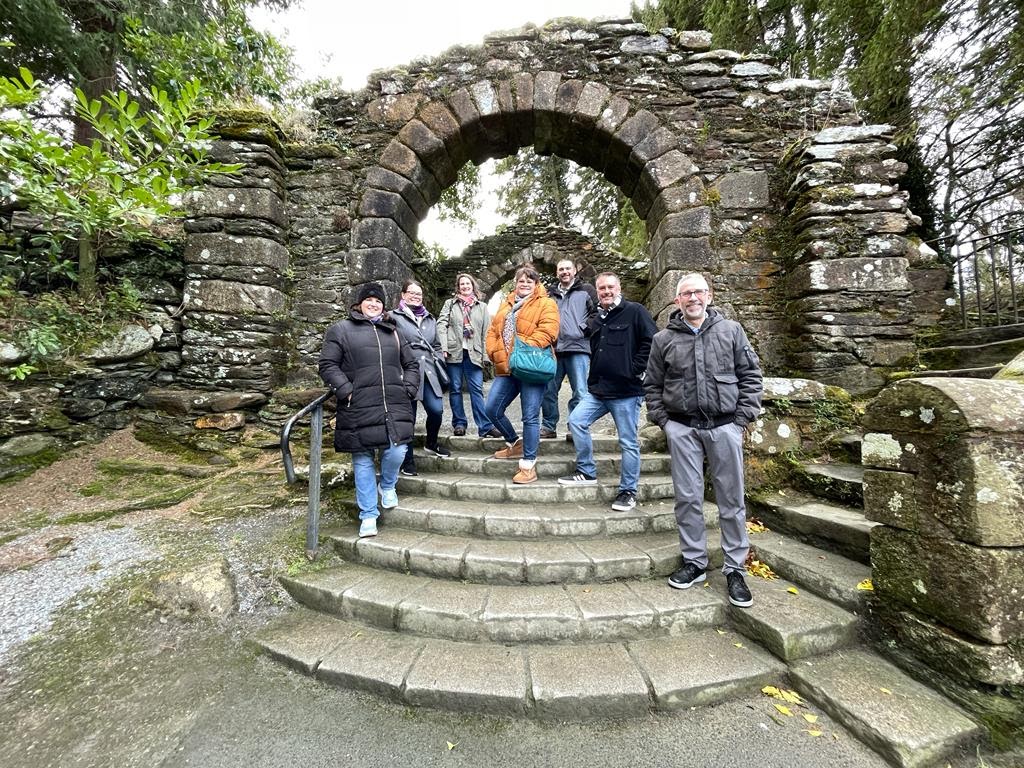
$100K student scholarship pool available for 2022 summer courses in Ireland Six professors from Georgia Southern University’s College of Education (COE) recently broadened their horizons during a trip to Ireland as they learned from and shared insight with instructors and educational leaders in the Wexford County community. Led by Howard Keeley, Ph.D., director of the University’s Center for Irish Research and Teaching, COE faculty traveled to Georgia Southern’s learning center in Wexford, Ireland, to observe Irish educational settings and exchange ideas with local leaders just ahead of a summer study abroad program opportunity for Georgia Southern students in which $100,000 of scholarship funding is available. “The main thing we did was get in front of leaders in the education space in Ireland,” stated Keeley. “We spoke to a number of folks who are either principals or vice principals or, in some way, senior administrators in a variety of schools including all-boys, all-girls, religious, secular and mixed schools.” The group included Catherine Howerter, Ph.D., associate professor of elementary and special education; Kip Sorgen, Ph.D., assistant professor of leadership, technology and human development; Alex Reyes, Ph.D., assistant professor of middle grades and secondary education; Amanda Wall, Ph.D., associate professor of middle grades and secondary education; Betsy Barrow, Ed.D., assistant professor of middle grades and secondary education; and Dan Calhoun, Ph.D., professor of leadership, technology and human development. Reyes, who trains pre-service and in-service teachers to work with culturally and linguistically diverse students, was excited to travel to Wexford after a study abroad program in Czech Republic she spearheaded with Wall was canceled in March 2020 due to the pandemic. Intrigued by Ireland, a plurilingual country, she was curious to see how Wexford’s environment might benefit students culturally. “I thought it was really exciting,” said Reyes. “All of the street signs are in Irish, even though English is the main language spoken. That prioritizing of that cultural heritage is fascinating. It was great to learn that the students in their primary and secondary schools take Irish language and culture as a subject every year.” She was especially motivated by a field trip to an Irish-language school, Meanscoil Gharman, which serves middle and high school students. With the exception of one daily class in English, teachers and students conducted all lessons in Irish. “It was really interesting to see that perspective,” she said. “There has been a revitalization of that culture. I thought that was fascinating to see how that can be handled in school.” In addition, Reyes was duly impressed with the country’s prioritization of social and emotional literacy for children, and the mandated well-being hours that are incorporated into daily school routines as a result of the pandemic. A program that promotes hygiene and an anti-bullying campaign also fit into the wellness curriculum. “It really impressed me that as a nation they prioritize the wellness of students, and how language and cultures can really be supported in a meaningful way,” Reyes said. “It’s affirming to see a proactive approach that has positive outcomes. Now, thinking ahead, we can look at how we can create opportunities for our students to experience this kind of approach.” Sorgen, who teaches in the educational leadership program at Georgia Southern, was interested in Ireland’s professional preparation. “None of them had advanced degrees, like what we offer at Georgia Southern,” noted Sorgen. “Learning about how to be a principal in Ireland is on-the-job training. In Georgia, there are specific educational requirements for our school administrators guided by professional standards. In Ireland, they generally ascend through the ranks, which makes professional mentoring essential to their success. We are exploring ways our educational leadership students could learn from Irish administrators about their experience, specifically with mentoring.” He also foresees the international partnership as a two-way exchange. “Given educational leadership programs are not common in Ireland, our faculty are considering ways in which we could use our expertise to foster leadership development of principals and teachers in Wexford,” said Sorgen. “We would utilize the Georgia Southern Wexford campus to host some of these sessions, furthering Georgia Southern’s relationship within the Wexford community.” Keeley also arranged meetings with education policy makers, including an extended meeting with an Irish congressman who is a representative for the County of Wexford in the Irish national parliament and chairs the joint committee for the Irish equivalent of the House and Senate Committee on education and higher education. “That was a tremendous opportunity for our faculty to talk to somebody at the highest level of government in Ireland, creating Irish state policy on education,” said Keeley. “And I know from the feedback we got from our College of Education colleagues that particularly for those in higher education, that to them was a really useful, next-step experience.” The trip exceeded expectations. “It was a fantastic learning experience for everyone,” said Keeley. “We had lots of high-level and also very practical experiences, and I could see our College of Education team thinking, ‘How can I bring what I’m learning, what I’m experiencing in this moment, into my classroom, into my curriculum, into my prospective study abroad courses in a way to build student success for our Georgia Southern folks.’ I think it was a great visit.” Complementing the faculty’s trip, a COE Irish study abroad program on diverse education in Ireland was recently approved for Summer 2022 and will give education students the opportunity to take one or two courses with the study abroad component. This will be a part of a broader study abroad program in Wexford, presented by the Honors College and the Center for Irish Research and Teaching, with assistance from the Office of the Provost and the Office of Global Engagement. The costs for undergraduate students at Georgia Southern’s Wexford campus will be offset by a $100,000 scholarship fund with awards of $1,000 for each student accepted into the program. “For students traveling to Wexford, Ireland, this summer, we will be able to defray the cost of the program through a generous travel scholarship through the Georgia Southern University Foundation,” said Dustin Anderson, Ph.D., associate provost for Student Success. “The donation makes these the most affordable multi-week programs that we ever have been able to offer.” Keeley is thrilled the gifts from generous donors will enable a number of students to earn valuable global experiences. “For students to have an opportunity to have international lives is powerful, and it’s powerful in ways that sometimes we can’t even predict,” he said. “Just the very fact of being abroad is going to change any of us, right? It can have a really transformative effect to feel a sense that, you know, as a student, ‘I can do this,’ and then a sense after the fact, ‘I did this,’ and just that in itself is educational. Giving students a safe space in Wexford, Ireland, to grow and feel that they are in a sense global citizens and bring the best of America, bring the best of Georgia, bring the best of the states from Savannah to Ireland, and learn to be an ambassador. That’s wonderful.” In addition to the education courses, students will also be able to choose from a Wexford-Savannah honors inquiry and an interdisciplinary program open to all students on human migration with courses in geography, religious studies, public health and a CORE study abroad course. Students interested can learn more about the program by clicking here and can email Kristin Karam in the Office of Global Engagement for more information about the scholarships. Georgia Southern University-Wexford is a global hub for learning housed in a historic building constructed in 1812. The space now features state-of-the-art classrooms and student apartments. Georgia Southern is the first public university in the United States to open an outreach learning facility in Ireland. If you're a reporter looking to know more about this initiative, then let our experts help. Howard Keeley, Ph.D., is the director of the Center for Irish Research and Teaching at Georgia Southern University. He is available - simply click on his icon now to arrange an interview today.


Aston University appoints new Vice-Chancellor
Aston University is delighted to announce that Professor Aleks Subic has been appointed as its next Vice-Chancellor and Chief Executive. He succeeds Professor Alec Cameron, who stepped down after five years in December 2021. He will take up the post in August 2022, until which time Saskia Loer Hansen will continue in her role as Interim Vice-Chancellor. Dame Yve Buckland, Pro-Chancellor of Aston University, said “I am absolutely delighted at Professor Aleks Subic’s appointment. He joins the University at an exciting time and his wide experience of leadership across both academia and industry makes him a perfect fit for Aston University’s needs and ambitions.” Professor Subic said “I feel privileged at being given the opportunity to lead Aston University at this time. The University is renowned for its commitment to graduate employability, translational research and its engagement with business. “I look forward to continuing the momentum built up by Professor Alec Cameron and Saskia Loer Hansen, and I am ambitious to see Aston University continue to build on its reputation for high quality teaching, research and business engagement locally, nationally and internationally.” Saskia Loer Hansen, Interim Vice-Chancellor of Aston University, said “I should like to congratulate Professor Subic warmly on his appointment. His credentials as a leader, both in industry and in higher education, equip him for guiding Aston University to even greater success. “I am sure he will work rigorously to build on our achievements, promote the University worldwide and further strengthen our reputation as a leading university for business and enterprise.” Professor Subic is currently the Deputy Vice-Chancellor (STEM) and Vice President (Digital Innovation) at RMIT University, where he is responsible for leading the STEM College and Digital Innovation portfolio in Australia and globally. Prior to this appointment he was the Deputy Vice-Chancellor (Research & Enterprise) at Swinburne University of Technology, responsible for research, graduate studies, engagement and partnerships, advancement, innovation, enterprise, and commercialisation, leading the research transformation of the university towards top 2% in the world. Before that, he was the Executive Dean of Engineering at RMIT University, one of the largest engineering faculties in Australia, ranked in top 1% in the world and renowned for industry-partnered education and research. Concurrent with his academic appointments, Professor Subic has held notable appointments on the Australian Prime Minister's Industry 4.0 Taskforce and the Australian Advanced Manufacturing Council Leaders Group (Australian Industry Group). Previously he was the Director and Deputy Chair of the Australian Association of Aviation and Aerospace Industries, Director of Oceania Cybersecurity Centre Governing Board, Director of the Society of Automotive Engineers Australasia Board, Director of National Imaging Facility Governing Board, Director of Australian Housing and Urban Research Institute Governing Board, and Director of the Victorian Centre for New Energy Technologies Governing Board. He has served on a number of national and international research committees and expert panels, including as Chair of the European Research Council Expert Panel for Physical Sciences and Engineering, Technology Group of the Global Federation of Competitiveness Councils, Forbes Technology Council, Defence Materials Technology Centre, Editor and Associate Editor of international scholarly journals.