
Experts Matter. Find Yours.
Connect for media, speaking, professional opportunities & more.

Part 1: How Duke University doubled their media hits by showcasing faculty
In the February 2015 issue of CASE Currents, Steve Hartsoe, a Senior Editor at Duke University and former Editor for the Associated Press, shares some powerful strategies for working with experts on campus. This article is a must read for any organization looking to build reputation through more focused media relations. Now you might be thinking that Duke is an already renowned university with an extensive network of media contacts so this stuff is easy for them. Not true. Doubling your media hits isn’t easy for any organization. Duke made some major improvements that set them up as a go-to destination for journalists to find credible, relevant sources. However, even implementing just a few of their ideas could drive some big results for your organization – without having to blow out the size of your marketing team or budget. Spoiler alert. The Duke strategy centers on being more strategic and collaborating better with faculty experts. The best practices that the Duke media relations team employed should inspire any organization that wants to generate more coverage. Whether you are looking for media visibility to help drive student enrolment, alumni giving, or corporate partnerships, there are valuable lessons to be found in this article. For the full article check out the January/February issue of CASE Currents at www.case.org. Please note you will need a subscription to view. So what’s going on at Duke that’s driving all this media coverage? To examine this further, our ExpertFile team weighs in below with the first five major rules of Expert Marketing for Schools and summarizes some insider tips they shared from their experience. Tune in next week for the finale! Rule #1: Organize a Team to Help Focus on Expert Marketing As with most initiatives, it’s vitally important to get the support of senior people in the organization when developing an increased focus on faculty experts. Gaining the support of a group of progressive deans within the school as well as notable faculty can be critical. Appoint a specialized team that can help you establish media visibility as a priority for your school. Build your case for an expert marketing program and ask for their support in developing your plan, then set up some regular meetings and make this team visible on the campus. It will help you develop a sense of collaboration and continuity. Insiders Tip: Duke built a “rapid response team” within their media relations department that had a clearly defined meeting schedule. They met twice a week and kept meetings to just 30 minutes in length. These regular check-ins helped identify breaking news opportunities and inspired a sense of priority and established momentum. Rule #2: Strategize with your Experts It’s amazing how many colleges and universities’ media relations departments we talk with that are disconnected from the interesting research conducted by their faculty. Ironically, it’s this research, as well the academic interests and passions of your faculty that feed the most engaging stories you can tell to the media. Make sure you have a good understanding of current and upcoming research that you can pitch. You should also identify what publications and books are being planned by faculty and see how you can collaborate with them. Insiders Tip: Duke invested the time to meet personally with faculty members to get a deeper understanding of their research and identify relevant topics that could be pitched to the media. They also invited some faculty to media meetings to brainstorm on potential news stories. It’s this kind of contact that helped make faculty more responsive to media opportunities and respond to deadlines. Rule #3: “Opt-In” your Experts for Different Types of Contributions It’s becoming more understood by faculty that media coverage can be a very good thing for their career and their organization. However, be careful of one size fits all approaches in recruiting faculty to contribute their expertise. Contribution from faculty comes in different forms. Faculty can be engaged in a broad spectrum of activities that run from broadcast TV interviews, blogging, and even helping speak at recruiting or alumni events. It’s good practice to create a master checklist of possible engagement types and to take an inventory of what your faculty experts may want to opt-in for. Having this inventory allows you to better plan for content development projects and also ensures that faculty clearly understand the duties that are expected of them in a media relations capacity. Insiders Tip: Duke’s media team recruited their experts for a range of contributions based on the level of interest and comfort level of faculty. And they made it clear that agreeing to be a media source meant responding promptly to incoming media inquiries. Rule #4: Provide Media Training and Support While every campus has it’s faculty “rockstars”, who can rise to the challenge of any breaking news opportunity, many experts on the campus can benefit from some form of media training. It’s critical to your media strategy’s success that you provide the experts with support and opportunities to practice their speaking skills in front of a camera. If you expect more experts to step up to the podium, it’s important to make the investment. However, make sure you design these programs to be engaging and don’t overwhelm your faculty by making them too exhaustive. Often they can be coordinated over lunch or in the early morning before classes start and can be focused on key areas such as: public speaking, blogging tips, video training, and social networking guidelines. Get a sense of where your key gaps are among faculty before you dive in. Also remember these sessions can provide valuable opportunities to shoot video interviews, B-Roll clips and even headshots that can be used to provide media assets for your website, alumni magazine and other properties. Insiders Tip: Duke invests in media training for its faculty experts and administrators offering a two and a half hour media training workshop each year to participating faculty, covering interview techniques via phone, video and social media. Rule #5: Meet Journalists on Their Terms Reporters appreciate media relations contacts that help them get their job done. Operating under tighter breaking news cycles they have less time to discover and research experts. In todays competitive media market what sells papers or builds ratings is often what gets covered. You have to focus your experts on helping journalists tell stories that matter to all those “eyeballs”. The best media relations professionals understand the value in building relationships with journalists. These connections are often essential in establishing your organization as a relevant, trusted source of expert commentary. Given the importance of these relationships, we’re also seeing the renewed popularity of industry conferences hosted by organizations such as the MAKI Network (www.thembasite.com) and Wynne Events – BAM Conference (www.wynneevents.com). These events give schools a unique opportunity to listen to and meet journalists from major news networks. ExpertFile sponsored both MAKI and Wynne events this past year, and we were impressed by the roster of global media attending. Insiders Tip: While Duke still distributes the requisite daily news on campus events and other university happenings, they don’t get mired in all of this content. They also focus a great deal of their activities on expert content that positions their university as a go-to source that is both credible and relevant to a variety of media audiences. READ PART II of How Duke University doubled its media hits by showcasing faculty experts.


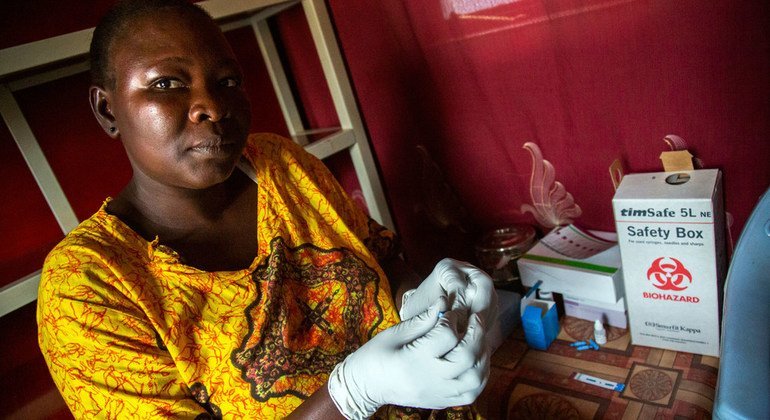
It’s all eyes on Africa as the UN looks to find ways to ensure universal health care for all
It was a historic moment earlier this month as the United Nations and African Union pledged to pursue bolds goals that will strengthen global health and provide health care to all across Africa. “The Memorandum of Understanding we have signed today is an important step towards formalizing the cooperation between WHO and the African Union and to implementing the Addis Ababa Call to Action,” said the WHO chief. “The Addis Ababa Call to Action is a powerful commitment from African Union leaders to increase domestic financing for health, and to hold themselves accountable for that commitment”, he added. Following a political declaration on universal health coverage, which was approved in September by all UN Member States, the General Assembly adopted a global resolution to translate that commitment into reality by legislators in 140 countries. November 18 - UN News It’s indeed a bold declaration and one that will require prevention, infection control and affordable delivery of care. Key UN-AU collaboration specifics Provide technical expertise to the African Medicines Agency and create an environment to foster local production of medicines. Strengthen collaboration between WHO and the Africa Centers for Disease Control and Prevention – with a particular focus on emergency preparedness, to build defenses against epidemics and other health emergencies. Support the implementation of the Addis Ababa Call to Action on universal health coverage and the AU Declaration on Domestic Financing. The prospects are positive, but delivery will be a challenge, and if you are a journalist covering this topic and need an expert source for insight and perspective – let us help. Dr. Saad Bhamla is an Assistant Professor of Chemical & Biomolecular Engineering at the Georgia Tech College of Engineering where he also runs the Bhamla Lab that develops low cost tools for science education and global health. Saad is available to speak to media regarding this topic, simply click on his icon to arrange an interview.



Baylor Study: Fear of Missing Out (FOMO) Plus Social Media Connections Can Equal Happiness
FOMO – aka the “fear of missing out” – can have a positive impact on well-being when it leads to social media use that increases social connections, according to a new Baylor University study. James A. Roberts, Ph.D., The Ben H. Williams Professor of Marketing, and Meredith David, Ph.D., assistant professor of marketing in Baylor’s Hankamer School of Business, coauthored the study, “The Social Media Party: Fear of Missing Out (FOMO), Social Media Intensity, Connection, and Well-Being,” published in the International Journal of Human-Computer Interaction. Roberts and David collaborate often and are nationally recognized experts on the effects of technology and social media on relationships and well-being. For this collaboration, the researchers conducted two studies consisting of 565 college students from a large U.S. university to determine the effect FOMO has on social media use, social connection to others and psychological well-being. FOMO is defined in the study as apprehension that others might be having a rewarding experience from which one is absent. According to Roberts, approximately 75% of young adults struggle with FOMO. “The human need to belong is an innate drive that dictates much of our behavior. Social media capitalizes on this need to belong,” Roberts said. “Social media has a dual nature. It lets us interact with others, which is good, but it also exposes us to more social opportunities than we can take part in that fosters a sense of missing out and inadequacy.” The study found: FOMO is a significant predictor of subjective well-being, and social media intensity had a slight significant effect on well-being. Social media is an omnipresent conduit for attempting to make such connections. It is likely that FOMO encourages the use of social media to stay connected. From the first study of 107 college students, David and Roberts gathered data to measure FOMO, social media intensity and social connection. Although FOMO typically has a negative connotation on social interactions, the study showed that the fear of missing out can lead to greater feelings of social connection. “We found that FOMO might actually have a positive impact on social connection through its impact on social media intensity and attachment,” Roberts said. “FOMO drives our use of social media to connect socially with others. Being socially connected leads to happier people.” The second study of 458 college students used the same measures, but also included an assessment on subjective well-being (happiness). The study tested their complete conceptual model in which subjective well-being is an ultimate outcome of FOMO (through its impact on social media intensity and social connection). Roberts said that social media can be a positive resource to help those with FOMO create social interactions, if it is being used actively through online actions such as posting, liking and commenting. “The problem is that people often turn to social media but use it passively – such as creeping on people or viewing pages without interacting – which can then lead to lower levels of happiness because creeping does not foster social connection,” Roberts said. “FOMO can lead to happier people if it drives people to use social media to connect but not simply to ‘creep’ on others.” ABOUT THE STUDY AND AUTHORS James A. Roberts, Ph.D., The Ben H. Williams Professor of Marketing, and Meredith David, Ph.D., assistant professor of marketing in Baylor University’s Hankamer School of Business, coauthored the study, “The Social Media Party: Fear of Missing Out (FOMO), Social Media Intensity, Connection, and Well-Being,” which is published in the International Journal of Human-Computer Interaction. OTHER RESEARCH BY ROBERTS AND DAVID Cellphones Can Damage Romantic Relationships, Lead to Depression People Who Are “Phone Snubbed” By Others Often Turn To Their Own Phones, Social Media For Acceptance Bosses Who “Phone Snub” Their Employees Risk Losing Trust and Engagement When ‘Religiosity’ Competes with Materialism, Charitable Giving Takes a Hit ABOUT BAYLOR UNIVERSITY Baylor University is a private Christian University and a nationally ranked research institution. The University provides a vibrant campus community for more than 17,000 students by blending interdisciplinary research with an international reputation for educational excellence and a faculty commitment to teaching and scholarship. Chartered in 1845 by the Republic of Texas through the efforts of Baptist pioneers, Baylor is the oldest continually operating University in Texas. Located in Waco, Baylor welcomes students from all 50 states and more than 90 countries to study a broad range of degrees among its 12 nationally recognized academic divisions. ABOUT HANKAMER SCHOOL OF BUSINESS AT BAYLOR UNIVERSITY At Baylor University’s Hankamer School of Business, integrity stands shoulder-to-shoulder with analytic and strategic strengths. The School’s top-ranked programs combine rigorous classroom learning, hands-on experience in the real world, a solid foundation in Christian values and a global outlook. Making up approximately 25 percent of the University’s total enrollment, undergraduate students choose from 16 major areas of study. Graduate students choose from full-time, executive or online MBA or other specialized master’s programs, and Ph.D. programs in Information Systems, Entrepreneurship or Health Services Research. The Business School also has campuses located in Austin and Dallas, Texas. Visit www.baylor.edu/business and follow on Twitter at twitter.com/Baylor_Business.



Locking down your data. Are lawmakers finally waking up to the importance of privacy?
Data collection and data control are becoming international issues. As the lucrative and important pieces of customer data collection become a priority for major tech and software companies – privacy and protection is now emerging as the key issue for international legislators. Just recently, Microsoft had to update several of its agreements with cloud customers and re-classify its role in Europe. Last month, as part of an enquiry that opened earlier this year, the European Data Protection Supervisor (EDPS) expressed 'serious concerns' over whether the relevant contractual terms were compliant with GDPR, and over Microsoft's role as a data processor or data controller for EU institutions. The report followed the publication of a series of papers by the Dutch Ministry of Justice and Security, suggesting that Office 365 was breaching GDPR by collecting 'functional and diagnostics data', including email subject lines and text run through a spell-checker. Microsoft has now acknowledged its position as a data controller - which has a higher bar for ensuring user data - when it comes to the provision of enterprise services. "In the [Online Services Terms] OST update, we will clarify that Microsoft assumes the role of data controller when we process data for specified administrative and operational purposes incident to providing the cloud services covered by this contractual framework, such as Azure, Office 365, Dynamics and Intune," says Julie Brill, Microsoft's corporate vice president for global privacy and regulatory affairs and chief privacy officer. "This subset of data processing serves administrative or operational purposes such as account management; financial reporting; combating cyber attacks on any Microsoft product or service; and complying with our legal obligations." Forbes Magazine – November 18 Data collection and control are becoming big issues on a global scale as more and more governments are looking for consumer protection while companies are seeking the profit that comes from the information customers provide voluntarily and sometimes unwillingly . Are you a reporter covering technology, privacy and data collection and control? Did you know that there is value in the results of spell-checkers and document review tools? If you have questions or need an expert source for insight and perspective – let us help. Dr. Rachel Cummings is an expert in data privacy, algorithmic economics, optimization, statistics, and information theory. Dr. Cummings is available to speak with media regarding data privacy and other topics, simply click on her icon to arrange an interview.


Climate Change: A Direct Threat to Older Adults
Climate change will impact the health of all populations, but older adults are uniquely vulnerable because of the physiological changes of aging. More than half of older adults in the United States live in areas that disproportionately experience the effects of heat waves, forest fires, hurricanes and coastal flooding. Pennsylvania, New York, California, Florida and Texas account for the top five states where older adults are concentrated. Older adults who live in urban areas are vulnerable to heat island effect—the concentration and retention of heat in urban areas compared to rural areas—which places older residents in cities at increased risk of heat related illnesses and death. “Gerontological nurses need to be prepared to address the specific issues of older adults,” says Ruth McDermott-Levy, PhD, director of the Center for Global Health at Villanova University’s M. Louise Fitzpatrick College of Nursing. “We want to help nurses understand climate change and the need for specific interventions to support climate adaptation for the older adult population.” Climate change impacts require modifications in health plans for older adults. Prolonged heat will require greater needs for hydration, but the patient’s other conditions need to be considered as well. Elders with heart disease and renal failure will require astute nursing assessments to monitor the balance of hydration and electrolytes while not leading to fluid overload or electrolyte imbalances in the presence of extreme heat. With their research, practice and influence over policy, gerontological nurses are in an important position to be changemakers by measuring and documenting the harm and impact of climate change on older adults. They can advocate for measures that support older adults in disasters or extreme weather events. Nurse researchers can collaborate with climate scientists and policy makers to develop initiatives and programs that rely on climate and health evidence to support climate mitigation and adaptation for the older adult. “It is everyone’s responsibility to learn about climate change and to participate in slowing the trajectory of climate change,” Dr. McDermott-Levy says.


Impact of Record-Breaking Floods in Venice
Over the last week, Venice, Italy, has been hit with historic flooding. On Sunday, November 17, water levels topped 1.5 meters for the third time since last Tuesday’s 1.87-meter flood, which marked the worst in more than half a century. Venice’s mayor declared a state of emergency and has estimated the flooding damage at hundreds of millions of euros. The flooding is putting some of Venice’s most historic architecture at risk and threatening some of the city’s cultural marvels and priceless artwork. The situation has also renewed the debates around the underwater barrier system—the MOSE flood defense project—that has been under construction for more than 16 years and is not yet operational despite five billion euros of public funding. Luca Cottini, PhD, an associate professor at Villanova University, is a scholar of Italian culture. He recently discussed some of the issues currently facing Venice. “The flooding in Venice makes visible once again not just the fragility of Italian beauty and the vulnerability of Italy’s geography, but also the inadequacy of Italian politics in the prevention and response to natural disasters,” said Dr. Cottini. Dr. Cottini also addressed the city’s tourism and how tourists view the floods. “The situation also illustrates the cynical nature of modern-day global tourism, observing high waters more as an attraction than a tragic event impacting invaluable monuments and the lives of many peoples,” he said.


Baylor Study: What Does It Take to Be an ‘Ideal Daughter?’
Researchers say new study gives voice to daughters and value to their role in the family WACO, Texas (Nov. 11, 2019) – The roles of daughters in the family structure and in society are difficult to define and they’re rarely understood – even by daughters themselves – said Allison Alford, Ph.D., clinical assistant professor of business communication in Baylor University’s Hankamer School of Business. Alford, who served as an editor on the book “Constructing Motherhood and Daughterhood Across the Lifespan,” is the lead author on a new study, “Role Expectations and Role Evaluations in Daughtering: Constructing the Good Daughter,” published in the latest edition of the Journal of Family Communication. “Our research has found that ‘daughtering’ is invisible work that is not often credited, and it’s as unique as the individual women who are doing the work,” Alford said. “This study and subsequent conversations hopefully will bring to light the idea of daughtering. And as more people hear about it and learn about it, then we’ll start to give credit to it and notice it in our own lives.” The study centers on mother-daughter relationships, specifically, and looks at how daughters perceive and define their roles in that relationship. Researchers interviewed 33 women, ages 25-45, who have living mothers under the age of 70. Those age ranges were chosen in order to capture a time period for mothers and daughters with the greatest likelihood that neither individual was the caregiver of the other and both were in relatively good health, the researchers wrote. Expectations of the “Ideal Daughter” Alford said analysis of the interviews with the daughters revealed four themes or role expectations for an “ideal daughter” in relation to her mother: Showing respect Providing protection Eliciting mothering Making time for connection Each of those efforts requires work, and that work often goes unnoticed or is undervalued – even by daughters themselves, Alford said. The study noted that many of the women who were interviewed initially – almost naturally – anticipated talking about their mothers instead of themselves. “When asked to think about themselves as daughters and their communication in the relationship, many found themselves doing so for the very first time,” the researchers wrote. “These women noted that putting the emphasis on themselves and describing their role as adult daughters felt strange or awkward in its newness.” Showing Respect Respect, the study showed, was the most common topic addressed by the daughters. Based on the interviews, a daughter’s respect for her mother could be demonstrated by avoiding conflict, silencing one’s disagreement with her mother, reacting positively to her mother’s messages and supporting her mother’s power position. “Daughters demonstrated respect by adapting their communication to affirm their mothers’ competence or otherwise avoid offending and disregarding them,” the researchers wrote. One woman, identified as Kelsey in the study, said she listens to her mother talk about things she dislikes and sometimes apologizes to her mother even when she doesn’t feel apologetic. “I would never say, ‘Mom, I don’t want to hear it,’ because I would never say that to my mom. Ever. I would listen to her … I would listen to her tell me things I don’t wanna hear all day long, and never tell her,” Kelsey said. Providing Protection A number of the adult daughters interviewed felt there was an expectation that they would actively protect their mothers. This could be a daughter protecting her mother’s wellbeing, protecting her mother from being taken advantage of, or protecting her from the disrespectful actions of others, including siblings. One woman, Sabine, described a time when she had to stand up to her brother because she felt he was taking advantage of their mother’s goodwill. In addition, she said she had to “get after” her mother for not employing boundaries with the brother. The examples in the study illustrated that many daughters were happy to be champions for their mothers, but some noted that it was difficult to be protectors. Eliciting Mothering A number of the daughters who were interviewed said they struggle a bit with their roles as adults – or even as mothers themselves – who still need to engage with their mothers and ask for assistance. Many said they still seek interaction and approval from their mothers as a sense of pride. “When a daughter calls upon her mother for guidance or activates a need for an emotional evaluation such as pride, she is fulfilling her role expectations,” the researchers wrote. One woman, Lottie, said of her mother: “She compliments me as a mother. I think I feel like a good daughter when I feel like I am making her proud and she lets me know that she is proud of me … and I guess that makes me feel like a good daughter.” Connection In their descriptions of “good daughters,” a number of the daughters interviewed said it was important to set aside time to connect with their mothers. This, the study showed, could be anything from talking on the phone, meeting face to face, taking grandchildren to visit or even moving to a home nearby. Sometimes the expectations are stated outright by the mothers, but that’s not always the case, the researchers explained. Changing the Language Alford said her research has shown that the “language” of daughtering is almost nonexistent in social discourse as well as in scholarly or popular works. For example, she said, a daughter who is caring or supportive is often described as being “motherly.” “That’s an example of giving credit to mothers as being the only people who care for others, versus saying that the daughter is a caring person or that she’s supportive,” Alford said. “We want to think of daughtering as its own form of work and responsibility and put a value on that, so we can see the value that we’re putting into our family relationships and family systems.” One desired outcome of research into this area, Alford said, is that daughters will be given a voice and their valuable work within the family will be acknowledged. “The work that daughters do is important and valuable and the more that we talk about it and bring it to light, the more that we will understand what daughters can bring to the relationship and improve the mother-daughter relationship,” she said. ABOUT THE STUDY The study, “Role Expectations and Role Evaluations in Daughtering: Constructing the Good Daughter,” is published in the Journal of Family Communication. Authors are Allison Alford, Ph.D., clinical assistant professor of business communication in Baylor University’s Hankamer School of Business; and Meredith Marko Harrigan, Ph.D., professor of communication at SUNY Geneseo. ABOUT BAYLOR UNIVERSITY Baylor University is a private Christian University and a nationally ranked research institution. The University provides a vibrant campus community for more than 17,000 students by blending interdisciplinary research with an international reputation for educational excellence and a faculty commitment to teaching and scholarship. Chartered in 1845 by the Republic of Texas through the efforts of Baptist pioneers, Baylor is the oldest continually operating University in Texas. Located in Waco, Baylor welcomes students from all 50 states and more than 90 countries to study a broad range of degrees among its 12 nationally recognized academic divisions. ABOUT HANKAMER SCHOOL OF BUSINESS AT BAYLOR UNIVERSITY At Baylor University’s Hankamer School of Business, integrity stands shoulder-to-shoulder with analytic and strategic strengths. The School’s top-ranked programs combine rigorous classroom learning, hands-on experience in the real world, a solid foundation in Christian values and a global outlook. Making up approximately 25 percent of the University’s total enrollment, undergraduate students choose from 16 major areas of study. Graduate students choose from full-time, executive or online MBA or other specialized master’s programs, and Ph.D. programs in Information Systems, Entrepreneurship or Health Services Research. The Business School also has campuses located in Austin and Dallas, Texas. Visit www.baylor.edu/business and follow on Twitter at twitter.com/Baylor_Business.


U.S. economy continues to expand, but at a slower pace, reaching about 2 percent growth in 2020
INDIANAPOLIS -- The U.S. economy will continue to expand for a 12th consecutive year in 2020, but by only about 2 percent and struggling to remain at that level by year's end. Indiana's economic output will be more anemic, growing at a rate of about 1.25 percent, according to a forecast released today by the Indiana University Kelley School of Business. Over the past year, political dysfunction and international trade friction have disrupted supply chains and eroded both consumer and business confidence. U.S. employment has grown during 2019 but will decelerate throughout 2020, well short of 150,000 jobs per month and possibly to about 100,000 by year's end. A tight labor market will continue to be an issue for many companies. "The total number of job openings in the economy peaked in late 2018," said Bill Witte, associate professor emeritus of economics at IU. "Average hours worked have been flat over the past year, and auto sales have been flat for nearly two years. Given the reliance of the U.S. economy on consumer spending, these are disturbing signs. But they are vague signs, and not enough to convince us that the end of the expansion is in sight. "We expect that growth will be weaker than in the past two years, and this outlook is likely a best-case outcome," he added. "There is massive uncertainty in the current situation." The Kelley School presented its forecast this morning to Indianapolis community and business leaders at IUPUI. The Business Outlook Tour panel also will present national, state and local economic forecasts in seven other cities across the state through Nov. 20. Indiana's more meager economic growth expected in 2020 can largely be attributed to the outsized presence of manufacturing and particularly tight labor markets, said Ryan Brewer, associate professor of finance at Indiana University-Purdue University Columbus and author of the panel's Indiana forecast. Manufacturing contracts more rapidly versus other areas of the economy, and tight labor markets limit employers' capacity to grow, he said. Expectations about business investment have fallen short, and corporations have been buying back stock instead of making capital investments. The trade war with China and slowing global expansion have also affected state manufacturers. The world is about to record its slowest economic growth since the financial crisis of 2009. Next year, global growth is projected at 3.4 percent, with downside risks continuing to build. China and the European Union each face structural issues amid tariffs imposed by the United States. Brexit remains unresolved. Recent data from the Institute for Supply Management showed that manufacturing activity has slowed to its lowest rate since the beginning of the Great Recession. Indiana has sought to diversify its economy in recent decades, but manufacturing output represents nearly 28 percent of gross state product. Indiana continues to lead the nation in manufacturing employment, with more than 17 percent of its jobs in that sector. "Constrained by a historically tight labor market, Indiana is expected to experience slow growth in jobs and gross output, along with the possibility for continued rising wages," Brewer said. "With fewer and fewer available people to hire, tightness of the Indiana labor markets will serve as a drag to output and employment growth." The outlook for the Indianapolis-Carmel-Anderson metropolitan statistical area is slightly better, with expected growth between 1.5 and 2 percent. "Indianapolis continues to draw in talent and investment that should help it exceed the overall state level of growth," said Kyle Anderson, clinical assistant professor of business economics. "However, there is risk that weakness in the broader economy, and especially weakness in manufacturing, could make this forecast too optimistic." Other highlights from the forecast: The national and state unemployment rates will hold steady. The nation's rate could be below 4 percent by year's end, and the state will stay at or below full employment through 2020. Inflation will rise and end 2020 close to the Federal Reserve's 2 percent target. The stock market will struggle to get average returns with headwinds from trade, supply chain disruption and policy uncertainty. Earnings continue to exceed expectations, yet lack of definitive trade consensus continues to drive headwinds. Interest rates will remain low. The 10-year Treasury rate should stay below 2 percent and mortgages below 4 percent. Speculative grade bond yields have been rising, indicating increased risk of insolvency for marginal firms. Entry-level wage growth could cause costs to rise, earnings to fall and growth to stagnate for firms heading into 2020. Energy prices will be relatively stable, with average prices similar to those in 2019. Business investment will remain weak, although a little improved from this year. Housing will achieve a meager increase, ending two years of negative growth. Government spending will grow, but much more slowly than the past year, as the impact of the 2018 budget deal ends. The starting point for the forecast is an econometric model of the United States, developed by IU's Center for Econometric Model Research, which analyzes numerous statistics to develop a national forecast for the coming year. A similar econometric model of Indiana provides a corresponding forecast for the state economy based on the national forecast plus data specific to Indiana. A select panel of Kelley faculty members, led by Indiana Business Research Center co-director Timothy Slaper, then adjusts the forecast to reflect additional insights it has on the economic situation. A detailed report on the outlook for 2020 will be published in the winter issue of the Indiana Business Review, available online in December. In addition to predictions about the nation, state and Indianapolis, it also will include forecasts for other Indiana cities and key economic sectors. Presenting the forecast at the Indianapolis Business Outlook Tour event were Phil T. Powell, associate dean of Kelley academic programs at Indianapolis and clinical associate professor of business economics and public policy; Cathy Bonser-Neal, associate professor of finance; and Anderson.


Is the bubble bursting – and does America need to prepare for an economic slowdown?
With every news story about trade, tariffs, interest rates, global instability and political chaos…comes with it a hint that each incident could take a toll on America’s economy. And it seems that sub-plot may be slowly becoming a self-fulfilling prophecy for the current administration in Washington. A recent article in Forbes pointed out that most key indicators seem to be pointing down. Trump’s monthly job results are decelerating Trump’s job growth falling short of Obama’s last six years Wage growth is the lowest in a year September quarter GDPNow forecast lower than June’s 2.0% result It seems as if all of these ingredients combined, a slow down and potential recession or worse could be looming. Are you a journalist covering the short and long-term outlook of America’s economy? If so, let our experts help with your stories and coverage. Jeff Haymond, Ph.D. is Dean, School of Business Administration and a Professor of Economics at Cedarville and is an expert in finance and trade. Dr. Haymond is available to speak with media regarding this topic – simply click on his icon to arrange an interview.



Turkey Launches Military Operation in Syria
President Donald Trump made a surprising move by pulling troops back from the Syria-Turkey border. In response, Turkey launched a military operation in northern Syria on October 9. Samer Abboud, PhD, a professor of Global Interdisciplinary Studies, says he's interested in how the Turkish offensive against the Syrian Democratic Forces (SDF) will impact the Syrian regime's campaign to resume control over all of Syria. "The Turkish decision to intervene has been effectively sanctioned by the tripartite powers (Iran, Turkey and Russia) as was the Russian-led intervention into Idlib that began earlier this year," Dr. Abboud says. "The Turkish government and the Syrian regime have a common interest in eliminating the power of the SDF and the main Kurdish political party (the Democratic Union Party, or PYD) in Syria. This eliminates the threat of a Kurdish autonomous region along Turkey's borders as well as any threats to Syria's territorial integrity. Eliminating the power of the SDF and PYD is one of the few common goals of the Turkish and Syrian governments." Dr. Abboud is able to discuss issues concerning the Syrian geopolitical situation as it relates to the United States or Syria's neighbors.