Experts Matter. Find Yours.
Connect for media, speaking, professional opportunities & more.

“See a gap, fill a gap.” That’s how Jeffrey Klibert, Ph.D., associate director of clinical training in Georgia Southern University’s Doctor of Psychology (PsyD), described the inspiration behind a project designed to extend behavioral health services in rural areas. Filling gaps is something Klibert said has always been a challenge in behavioral health care. This challenge became steeper in the aftermath of the COVID-19 pandemic. “When COVID hit, we saw some really alarming rates of people seeking services, and there just weren’t enough providers to meet that need,” Klibert said. “We saw waitlists that were six months, eight months, sometimes a year long.” Waitlists of this length are a common occurrence in Georgia’s rural areas, where resources are scarce and reported health outcomes are among the worst in the state. Klibert, along with colleagues Lindsey Stone, Ph.D., and Thresha Yancey, Ph.D., and students, is working to improve the situation across 14 rural counties in Georgia, thanks to the renewal of a research and training grant from the Health Resources and Services Administration. Stone and Yancey will supervise the trainees, while Klibert will oversee the entire program. The grant enables quantitative and qualitative research to increase access to behavioral health care in rural areas, while also providing Georgia Southern’s fourth-year PsyD students with hands-on training through local care providers. The ultimate goal is to develop more efficient and effective models for interprofessional, team-based care in areas of the state where it is most needed. “Everybody sees the need. We just need the glue to link everybody together,” Klibert said. “That’s what the program is trying to be. It’s trying to build those bridges to create a more comprehensive system of care.” Students will provide a range of services in collaboration with local care providers, including psychological assessments and therapy for individuals and families. Alex Cudd, a fourth-year PsyD student who joined the program in August, calls the experience “invaluable” and hopes to join the 94% of program alumni who currently provide care in rural settings. “In just a few months, I’ve learned so much about providing well-rounded care,” Cudd said. “I know I’ll carry this training into my career.” CarePartners of Georgia (CPGA), a resiliency- and recovery-based behavioral health agency serving Bulloch, Candler and Emanuel counties, is among the local providers partnering with Georgia Southern. “All the interns we’ve had from Georgia Southern understand the concept of recovery, are trauma-informed and very effective at delivering services,” said CPGA CEO David Crooke. “It’s been mutually beneficial. We are helping them further their education, and they quickly become important members of our team due to the breadth and depth of their knowledge.” Klibert notes that the grant’s initial four-year term brought significant improvements in local healthcare networks and enhanced communication between providers, something he sees as an investment in lasting success. “We’re doing some exciting stuff, but at the end of the day, we are very aware of making sure what we’re doing sticks and that we have the resources to continue care after the grant ends,” Klibert said. Looking to know more about Georgia Southern University's Doctor of Psychology Program or arrange an interview with Jeffrey Klibert — simply contact Georgia Southern's Director of Communications Jennifer Wise at jwise@georgiasouthern.edu to arrange an interview today.


U.S. News: AI Can’t Replace Therapists – But It Can Help Them
For a young adult who is lonely or just needs someone to talk to, an artificial intelligence chatbot can feel like a nonjudgmental best friend, offering encouragement before an interview or consolation after a breakup. AI’s advice seems sincere, thoughtful and even empathic – in short, very human. But when a vulnerable person alludes to thoughts of suicide, AI is not the answer. Not by itself, at least. Recent stories have documented the heartbreak of people dying by suicide after seeking help from chatbots rather than fellow humans. In this way, the ethos of the digital world – sometimes characterized as “move fast and break things” – clashes with the health practitioners’ oath to “first, do no harm.” When humans are being harmed, things must change. As a researcher and licensed therapist with a background in computer science, I am interested in the intersection between technology and mental health, and I understand the technological foundations of AI. When I directed a counseling clinic, I sat with people in their most vulnerable moments. These experiences prompt me to consider the rise of therapy chatbots through both a technical and clinical lens. AI, no matter how advanced, lacks the morality, responsibility and duty of care that humans carry. When someone has suicidal thoughts, they need human professionals to help. With years of training before we are licensed, we have specific ethical protocols to follow when a person reveals thoughts of suicide. Read the full article here:


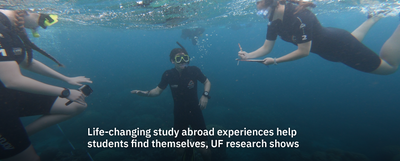
Life-changing study abroad experiences help students find themselves, UF research shows
Studying abroad is about more than just enrichment for college students; it’s often about personal transformation, UF researchers have found. Every year, UF sends nearly 2,600 students overseas to become immersed in diverse cultures, gain international perspectives, and create social bonds with fellow Gators – experiences so profound that UF researchers recently published a study about their long-term impact in Leisure Sciences. And this week, the UF International Center is hosting a Study Abroad Fair from 10 a.m. to 3 p.m. Wednesday, Jan. 29 on the Reitz North Lawn to generate even more interest in these life-changing programs. “You’ve got to look at travel as not a frivolous thing because it’s part of your life story,” said Heather Gibson, Ph.D., a professor in the UF College of Health & Human Performance’s Department of Tourism, Hospitality & Event Management, who co-authored the study. “The impact isn’t just for the semester when they return; it’s now shown to be over 20 years or more. Very few studies focus on this formative phase of adult development, and these emerging adults are very malleable to be shaped. They’re searching for different sources of identity and different directions.” Conducting this research with Gibson was Hongping (HP) Zhang, Ph.D., a UF graduate of 2020 and clinical assistant professor at the University of Tennessee, Knoxville’s Department of Retail, Hospitality, and Tourism Management. Zhang said that, in 2019, tourism literature began focusing on memory theories, but research primarily looked at memorable tourism experiences and how to better attract tourists. Zhang wanted to dive deeper into how travel memories affect a person’s development and identity. This retrospective longitudinal study examined 115 alumni who traveled as part of the College of Health & Human Performance’s South Pacific program, or the Florida Down Under Program, from 2007 to 2019. The program, led by Gibson, brings students to Australia for four weeks, New Zealand for four weeks, and/or Fiji for 10 days to study sustainability, with trips including a snorkeling expedition to the Great Barrier Reef and to Mungalla Station (a land occupied by the Nywaigi Aboriginal Land Corporation). These students’ memories of studying abroad proved to be positive and an “important building block to enhance the existing feeling of self,” Zhang said. For example, one study participant shared that reflecting on her experience in Australia was a conversation starter that sparked an initial social connection with her now husband, who had also traveled to Australia on a separate trip. Other students said the program impacted their travel behaviors such as spending money, as well as their eco-conscious behaviors like using coral-reef-friendly sunscreen. Overall, Gibson believes that experiential learning like studying abroad plays a significant role in helping students find themselves at pivotal times in their lives. In fact, research from the Consortium for Analysis of Student Success through International Education shows that students who participate in study abroad programs may earn higher grades, be more likely to graduate, and be better positioned for the global workforce. “Getting students out of the classroom and pushing them out of their comfort zone is where they learn,” Gibson said. “We need to think about the undergraduate experience as more than earning credits for a degree. Study abroad provides students with friends, experience, and direction, and that’s very crucial, especially at a large university. Study abroad allows students to find their tribe.”

Expanding Comprehensive Cancer Services to Middletown, Delaware
ChristianaCare’s Helen F. Graham Cancer Center & Research Institute is expanding access to high-quality, comprehensive cancer care for residents in Middletown and nearby communities. These services will be offered at the new Middletown Health Center, now under construction and expected to open in May 2027. “Our vision is to expand and grow our services throughout the region so that more patients can access high-quality cancer care close to home,” said Thomas Schwaab, M.D., Ph.D., Bank of America Endowed Medical Director of the Helen F. Graham Cancer Center & Research Institute. “By bringing our full cancer-care team and advanced technology to Middletown, we can provide highly precise, coordinated treatment while maintaining the same high standard of care our patients expect.” The cancer care services offered at the Middletown Health Center will reflect the same high-quality, comprehensive care provided at ChristianaCare’s Helen F. Graham Cancer Center & Research Institute in Newark. Patients will have access to specialists across all major cancer types, supported by the Graham Cancer Center’s participation in the National Cancer Institute Community Oncology Research Program (NCORP), which brings advanced treatments and clinical trials directly to the community. In Middletown, this means coordinated multidisciplinary treatment planning, advanced radiation therapy, infusion services, consultations with oncologists and surgeons, nurse navigation, supportive care, clinical trial participation and both in-person and virtual visit options. Advanced Technology Enhances Precision and Comfort When services open in Middletown, patients will have access to advanced radiation therapy using the Varian TrueBeam linear accelerator, one of the most sophisticated radiation therapy systems available. TrueBeam delivers highly precise, image-guided treatments for a wide range of cancers, allowing physicians to target tumors more accurately while minimizing radiation to healthy tissue. “The TrueBeam system represents a major step forward in how we deliver radiation therapy,” said Adam Raben, M.D., chair of Radiation Oncology at ChristianaCare. “Treatments that once took 30 minutes can now be completed in just a few minutes, with real-time imaging ensuring precision. This means better tumor control, fewer side effects and a more comfortable experience for patients.” A Growing Community with Expanding Health Care Needs Middletown is one of Delaware’s fastest-growing communities, with its population projected to rise 8% by 2029, nearly twice the statewide rate, according to the US Census Bureau. Since 1990, the town’s population has grown more than 550%, and the number of residents age 65 and older has increased 24% since 2020, driving demand for accessible, high-quality health care. With continued growth and an aging population, cancer service demand in Middletown is expected to increase by 11% over the next decade, according to health care forecasts from Sg2, a Vizient company, underscoring the need for expanded local care options. Expanding Access to Meet Future Cancer Care Demand By expanding services in Middletown, ChristianaCare is responding to both the region’s population growth and the increasing need for cancer care. The new site will help patients receive timely diagnosis and treatment while reducing travel time and improving coordination with the full Graham Cancer Center team. “As our community grows, so too does the need for locally accessible, state-of-the-art cancer services,” said Schwaab. “This expansion represents a pivotal investment in the health of the Middletown—Odessa—Townsend corridor and beyond.” $92 Million Investment in Middletown’s Health The $92.3 million Middletown Health Center reflects a deep investment in the health and vitality of the state. It is part of ChristianaCare’s larger plan, announced in July 2025, to invest more than $865 million in Delaware over the next three years. In addition to cancer care, the Middletown Health Center will offer a full range of services, including primary and specialty care, women’s health, behavioral health, cardiovascular care, pediatrics, neurology, imaging, diagnostics and lab testing. The center’s healing environment will also include walking trails and abundant natural light, making high-quality, convenient and coordinated care more accessible and welcoming for patients and families. The 87,000-square-foot Health Center will be located at 621 Middletown Odessa Road, next to ChristianaCare’s existing freestanding emergency department.


Experts share practical guidance for a healthier, happier holiday season
The holiday season is a time of tradition, connection and celebration – but it also brings its own set of challenges, from food safety concerns to emotional stress. University of Delaware experts are available to speak with reporters and provide practical, research-backed guidance to help audiences make the most of the season. Avoid common food safety mistakes Holiday meals are a centerpiece of celebration, but preparing them safely is essential. Diane Oliver, UD Health and Well-being Extension agent, has identified the top five mistakes people make when handling and preparing turkey – and how to avoid them. She can offer timely food safety tips to ensure families enjoy their meals without risk. Protect your mental well-being The holidays can stir up complex emotions as families come together. UD psychology professors Franssy Zablah and Zachary Meehan can provide expert insight into how to maintain mental wellness, manage stress, and set healthy boundaries during holiday gatherings. Find genuine holiday joy Beyond checklists and shopping, how do people actually experience lasting happiness during the holidays? Assistant professor Amit Kumar can share research-backed strategies on pursuing meaningful, authentic joy rather than fleeting holiday pressure. Preserve your decorations for years to come Family ornaments and decorations often carry sentimental value. Art conservation expert Debra Hess Norris can explain how to properly store and care for holiday decorations so they remain vibrant and intact year after year. Connect with these experts All of these University of Delaware experts are available for media interviews and commentary. Reporters and editors interested in speaking with them can reach out to mediarelations@udel.edu for a quick response and support.



How mitochondria shape brain health from childhood to old age
From the first spark of neural development to the challenges of ageing, Dr Lissette Sánchez Aranguren is uncovering how the cell’s powerhouses — mitochondria — hold the key to a healthy brain across the human lifespan. Her pioneering research at Aston University explores how these microscopic energy generators safeguard the brain’s communication network and how their dysfunction may underlie conditions such as dementia, stroke, and neurodevelopmental disorders. Mapping the brain’s energy defence system Dr Sánchez Aranguren’s work focuses on the partnership between brain cells and the blood vessels that nourish them — a relationship maintained by the blood–brain barrier. When mitochondria fail, that protective interface can weaken, allowing harmful molecules to penetrate and trigger inflammation or cell loss. Her team’s studies show that mitochondrial malfunction disrupts the dialogue between neurons and vascular cells, an imbalance seen both in the developing and ageing brain. To counter this, she and her collaborators have engineered a mitochondria-targeted liposome, a nanoscale “bubble” that delivers restorative molecules directly where they are needed most. By re-balancing cellular energy and communication, this innovation could one day reduce brain injury or slow neurodegenerative decline. From heart cells to the human mind Originally trained in cardiovascular science, Dr Sánchez Aranguren became fascinated by how mitochondria regulate energy and stress in blood-vessel cells — insights that ultimately led her toward neuroscience. View her profile here “Mitochondria do much more than produce energy. They send signals that determine how cells communicate and survive.” That realisation inspired her to trace mitochondrial signalling across the continuum of life — linking early brain development to later-life vulnerability. Her research now bridges traditionally separate fields of developmental biology, vascular physiology, and ageing neuroscience, helping identify shared molecular pathways that influence lifelong brain resilience. Global collaboration for a healthier brain Her work thrives on multidisciplinary and international partnerships. At Aston, she collaborates with scientists from Coventry University, Queen’s University Belfast, and the University of Lincoln, alongside research partners in the Netherlands, Italy, Malaysia, and China. Together they integrate chemistry, biology, and computational modelling to understand mitochondrial function from molecule to organism — and translate discoveries into practical therapies. Towards mitochondria-targeted brain therapies The next frontier is refining these mitochondria-targeted nanocarriers to enhance precision and efficacy in preclinical models, while exploring how mitochondrial signals shape the brain’s vascular and neural architecture from infancy through adulthood. Dr Sánchez Aranguren envisions a future where protecting mitochondrial health becomes central to preventing brain disease, shifting medicine from managing symptoms to preserving the brain’s natural defence and repair systems. “If we can protect the cell’s own energy engines,” she says, “we can give the brain its best chance to stay healthy for life.”


UF expert answers questions about local risk of bird flu
Consumers may have noticed the rising price of eggs and even some shortages at grocery stores lately due to H5N1 avian influenza, but as cases of human and animal infections continue to rise, how concerned should you be about the virus? Benjamin Anderson, Ph.D., an assistant professor in the University of Florida College of Public Health and Health Professions’ Department of Environmental and Global Health and lead for UF’s Emerging Pathogens Institute bird flu response team answers some questions about the risk of infection to humans and animals from bird flu and how to protect yourself. Who is at risk? Currently, the Centers for Disease Control and Prevention says the risk to humans is low. “That is correct on an overall level,” Anderson said. There is no human-to-human transmission right now. Anderson said that while there have been an “alarming” number of human cases, the number of infections is still fewer than 100. Of those, most have resulted in mild illness and were in people who had direct exposure to infected animals. So far, there has been only one death attributed to the current outbreak of H5N1, known more commonly as bird flu – a man in Louisiana who was infected by a backyard flock. “We do have a lot of people who keep chickens,” Anderson said. “Because of the situation in Louisiana, this has, I think, piqued the concern even more so among folks who might have backyard poultry to recognize that is a potential pathway for transmission.” If you see a dead chicken, do not touch it or try to investigate yourself. Instead, report it to the Florida Department of Agriculture and Consumer Services. Report dead wildlife, including migratory birds, to the Florida Fish and Wildlife Commission. Anderson said while the risk to the public is currently low, the future risk, including human-to-human transmission that could result in a pandemic, is still uncertain. Right now, he said, “Unless you’re handling poultry or working with or near dairy cattle, where bird flu outbreaks have been ongoing, your risk is relatively low.” Can I catch the virus from my backyard bird feeder? Gainesville is on a major flyway for migratory birds – a draw for birdwatching enthusiasts, particularly in the winter. This may be how bird flu has made its way into backyard flocks, since infected migratory birds shed the virus in their waste. So far, there is no data that suggests bird feeders could pose a significant transmission risk to people, and no reported human cases of bird flu have been traced to feeders. “However, when I say there’s no data, that means there’s no data. It hasn’t been investigated,” Anderson said. Waterfowl such as ducks and geese are more likely to carry the virus than songbirds. But if backyard birdwatchers are concerned, he said, take precautions such as wearing gloves and disinfecting bird feeders. And whether there’s an elevated risk of bird flu or not, always take care to avoid touching bird feces, which can contain salmonella. “Using some common sense, good hygiene practices, is going to be an effective way of protecting yourself,” he said. Are my outdoor cats in danger? Outdoor cats are susceptible to bird flu through exposure to dairy cattle, wild birds and contaminated raw milk. There is also new evidence of some sources of raw cat food being contaminated with H5N1. H5N1 causes severe infection in cats, with neurological symptoms that could mimic rabies. Infected cats may be disoriented, lethargic or disinterested in food. Florida residents can contact the Florida Health Department if they notice these symptoms in their pet. “If you see something unusual, seeking out professional care for that animal is an important thing to do,” Anderson said. As of now, it’s unclear whether cats can transmit the virus to humans, but as it adapts, transmission to other species could become easier and more widespread. What about eggs and poultry from the farmers market? Florida state statutes require sellers to register as a food supplier and meet certain criteria for food handling safety. But the regulations can be unclear to some small, local egg and poultry producers, and others operate under the radar. “I wouldn’t say that if you go to a farmers market, it’s a guarantee that the products you’re buying are produced under the proper regulations,” Anderson said, but the regulations themselves can be unclear. Some things you can do to keep yourself safe are asking the vendor if they’re registered and permitted with the state’s agriculture agency and checking that the products are labeled. Per the statutes, eggs must be refrigerated at all times between packaging and sale to the consumer. And definitely steer clear of raw milk, which has been tied to several human and animal H5N1 infections and always carries a risk of salmonella. “Don’t drink it, and don’t give it to your animals,” Anderson said. Is there a vaccine? How else can I protect myself? There is a vaccine for bird flu. While it isn’t currently being administered to humans in the U.S., Anderson said some agriculture workers in Europe have received it. “There is a potential justification for starting to release some of the stock of the H5N1-specific vaccine,” but it would come with tradeoffs, he said, such as maintaining stockpiles and keeping the vaccine matched well to an evolving virus. In his opinion, though, it makes sense to start the process now, both to protect workers who are already at higher risk of contracting the virus, and to begin collecting data on how well the vaccine is working. The idea that the U.S. should hold off on releasing a vaccine until bird flu becomes a pandemic is contrary to protecting public health, he said, adding that the tipping point for him was seeing the virus start to show up in backyard poultry. “That’s the rationale that I base my opinion off of,” Anderson said.

ChristianaCare Launches Organoid Core to Personalize Cancer Treatment
ChristianaCare’s Cawley Center for Translational Cancer Research has unveiled a first-of-its-kind organoid core in a community cancer center program. The new laboratory facility within the Helen F. Graham Cancer Center & Research Institute grows and tests living, patient-derived tumor models, giving doctors and researchers a faster, more precise way to identify the therapies most likely to work for each patient. This innovation could change how cancer is treated in Delaware and serve as a model for community centers nationwide. There are only a handful of organoid core centers, or “tumor-on-a-chip” programs, in the United States, and ChristianaCare’s is the first within a community cancer center setting. What the Organoid Core Does Tumor organoids are tiny, three-dimensional cultures grown from a patient’s tumor tissue. They preserve the genetic and molecular traits of the original tumor, making them far more accurate than traditional cell lines. “These mini-tumors enable researchers to screen drugs faster, identify new biomarkers and discover which treatments are most likely to work for each patient,” said Thomas Schwaab, M.D., Ph.D., Bank of America Endowed Medical Director of ChristianaCare’s Helen F. Graham Cancer Center and Research Institute. “This core is a bridge between the lab and the clinic. By growing living tumor models from cells of individual patients, we can test real-world drug responses and tailor treatments for them in ways that were not possible before.” How It Advances Patient Care The organoid core strengthens the Cawley Center's research capabilities by enabling drug screening and biomarker discovery. It will bank organoids representing the wide variety of tumors seen in the community, giving scientists a realistic system for testing therapies. ChristianaCare treats more than 70 percent of cancer patients in Delaware, giving researchers unique access to treatment-naïve samples. These are tumor tissues that have not yet been exposed to chemotherapy or other therapies. Studying them provides a more accurate picture of how cancer behaves naturally and how it might respond to new treatments. Bringing a new cancer drug to patients is expensive and risky. Estimates show it can cost $1.3 to $2.8 billion, with up to a third spent on preclinical development, and only about one in 10 compounds ever reach human trials. Traditional mouse models often fail to fully mimic human tumors, making early testing less reliable. By using organoid screening, the Cawley Center can test therapies more accurately, reduce costs and failure rates and move promising treatments into clinical trials faster. Combined with existing tissue collection programs, clinical trial infrastructure and community partnerships, these resources create a direct pathway to bring lab discoveries to patients faster. Turning Point in Translational Research “Our goal is to shorten the distance between discovery and treatment,” said Nicholas J. Petrelli, M.D., director of the Cawley Center. “Too many promising drugs fail because early models do not capture the complexity of real tumors. The organoid core helps solve that problem. We can now test therapies in models that reflect the patients we actually serve.” “This is a turning point for translational research in community health,” said Jennifer Sims Mourtada, Ph.D., associate director at the Cawley Center. “Organoid technology lets us study cancer in a way that feels personal. We are not just looking at data points. We are studying living models of a patient’s tumor, which can reveal how that person’s cancer might behave or respond to treatment. This approach brings science closer to the people it is meant to help.” Looking Ahead In the coming months, the organoid core will focus on building a diverse biobank of tumors common in Delaware. Plans include collaborations with academic institutions, shared access for external researchers, and development of immune-tumor co-culture models. By combining advanced technology, strong community partnerships and direct patient access, ChristianaCare and the Cawley Center are showing how translational cancer research can thrive in a community setting, making breakthroughs not only in the lab but also in patients’ lives.

Avoiding the Reverse Mortgage Reflex
Every once in a while, an industry article really hits the mark. Recently, one did just that—Canadian Mortgage Trends' "Who Uses Mortgage Brokers Today and Why? (Part 2)" gave seniors their own category, not as an afterthought, but as a client segment worthy of attention. Bravo. It's about time someone acknowledged that older Canadians aren't just "another niche." But then… came the reverse mortgage section. Don't get me wrong—it's refreshing to see financial professionals finally acknowledge that Canada's aging population presents both opportunities and complexities. But suggesting that "helping seniors" automatically means "offering a reverse mortgage" is like telling everyone who's thirsty to drink espresso. Some will love it. Others will lie awake at 3 a.m. with regrets. Let's call it what it is: type-casting seniors into a product. The Reverse Mortgage Reflex There's a curious habit in our industry. Mention the word "senior" and watch what happens: eyes light up, marketing decks shuffle, and—as if on cue—the term "reverse mortgage" materializes like a pop-up ad from 2007. It's as if the entire profession has agreed that every retiree with a pulse and property must be yearning to re-mortgage their home. Except… most aren't. Most seniors spent decades teaching their kids to avoid debt and pay off mortgages as quickly as possible CBC Radio. Suggesting they should now joyfully jump back into one to "solve retirement" isn't just unappealing—it's borderline insulting. Here's the truth: no one dreams of retiring into debt. And the numbers bear this out. Debt Levels: While only about a quarter of people over 65 had debt in the late 1990s, that figure has climbed to more than 40% today (Source: CBC News). Anxiety Levels: Nearly 50% of retirees now worry about their debt, according to the Credit Counselling Society. Reverse mortgages can absolutely be valuable tools. The reverse mortgage market has exploded, with over $8.2 billion in outstanding debt as of June 2024—an 18.3% increase from the previous year (Source: MoneySense). But offering one before understanding the client's full picture isn't being a trusted advisor—it's running on sales autopilot. Brokers, You're Better Than This Brokers pride themselves on being client advocates—the ones who shop the market, decode fine print, and find creative solutions when banks can't. The very definition of a broker is someone who matches the right solution to the customer's needs. So why, when it comes to seniors, do many skip the most important part—the needs assessment—and leap straight to the product? It's backwards. While it may seem very simple, a proper financial conversation starts with identifying the problem, then illustrating a solution, and finally defining the intended outcome. • Why does this person need to access equity? • What problem are they really solving? • How do they define "financial comfort" The first step of solution selling isn't talking—it's listening. Start With the Need, Not the Product Before reaching for any rate sheet, it's critical to understand the client's true priorities. According to research from HomeEquity Bank, 9 in 10 Canadians want to age in place and live out their retirement years in the comfort of their home (Source: Canadian Mortgage Trends). But their financial needs are as diverse as their travel insurance policies. The reality is stark: A 2024 survey by the Healthcare of Ontario Pension Plan (HOOPP) found that 39% of Canadians aged 55-64 have less than $5,000 in savings, and 73% have $100,000 or less. More than half of Canadians over 60 who remain in the workforce do so out of financial necessity, not choice (Source: CBC Radio). Ask the right questions: • Do they need to eliminate high-interest debt? • Do they need cash flow to cover rising expenses? • Are they struggling to afford in-home care or medical support? • Do they want income stability—that pension-like feeling—rather than a lump sum? • Do they want to downsize, relocate, or age in place with dignity? Only after understanding the full financial picture can you propose the best, most robust solution. That's not just good practice. That's respectful advising. Solution Selling: Connecting the Dots Here's a classic example: A client walks in with a paid-off home and a stack of monthly bills that feel heavier than the Sunday paper. They're anxious about cash flow but debt-averse. The reflex answer? "Reverse mortgage!" Not so fast. Solution sellers focus on understanding customers' challenges and delivering ideas that address their daily needs, rather than pushing products. When clients can see exactly what they're getting, they make better decisions and advisors earn lasting trust through transparency, not sales pressure. Maybe downsizing to a more manageable property makes sense. Perhaps a small secured line of credit covers the gap without interest compounding as quickly. Maybe an annuity provides steady income with less long-term cost. Or maybe—just maybe—they don't need a mortgage at all. Consider that a $100,000 reverse mortgage balance can grow to $150,000 in just 5 years at current rates, with interest compounding annually. When you solve the real problem (not just the balance sheet), you build lasting trust and genuine loyalty. The Psychology of the Senior Client It's not just about the math; it's about the mindset. Here's where most brokers stumble: they treat all seniors as if they're cut from the same cloth. They're not. Let's get real: seniors aren't a monolithic group. A 55-year-old and an 85-year-old? They're separated by 30+ years of life experience, different communication styles, varying financial literacy, and completely different emotional triggers around money. Cookie-cutter advice doesn't cut it. The best advisors listen first. They ask questions. They assess each client's actual financial situation—not what they assume it is—and then deliver advice that fits that person's life, not some generic "senior strategy." Respect Is the Real Differentiator Understanding a client's lifestyle, fears, and goals isn't just good ethics—it's good business. Seniors have finely tuned radar for sincerity. They can smell a sales pitch faster than a Labrador finds bacon. Want to stand out? Lead with curiosity, not a contract A holistic, solution-based approach positions you as a trusted advisor—not a product pusher. Once you earn that trust, referrals flow like coffee at a church social. From Product Pushing to Purpose Selling Here's the shift our industry needs: Stop viewing seniors as a market. Start viewing them as individuals with layered needs. Solution selling isn't anti-reverse mortgage—it's anti-assumption. It ensures the whole problem gets solved, not just the one that fits your product lineup. Yes, over 25% of Canadians aged 55 and older are considering a reverse mortgage (Source: Canadian Mortgage Trends), and it might eliminate a monthly payment—but if it doesn't solve for cash flow, health costs, or income stability, you've only done half the job. The real opportunity? Elevate the conversation from product placement to purpose-driven advising. Advisors, Reset Your Lens Seniors don't need to be sold. They need to be understood. Give them the dignity of choice, the respect of time, and the power of informed decision-making. When advisors show prospective clients detailed solutions, it allows clients to properly assess the quality of advice and make fully informed decisions, supporting healthy long-term relationships The best brokers—the ones shaping the next chapter of this industry—don't just sell mortgages. They sell confidence, clarity, and control. And that, my friends, is how you truly help Canadians retire hip, fit, and financially free. Want to become an expert on serving the senior demographic? Just message me to be notified about the next opportunity to become a "Certified Equity Advocate" — mastering solution-based advising that transforms how you work with Canada's fastest-growing client segment.


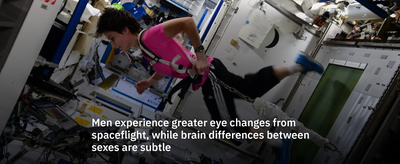
A new study into how spaceflight impacts the human brain and eyes revealed notable sex differences in brain fluid shifts, with female astronauts showing a greater reduction in fluid around the uppermost part of the brain than their male counterparts. Led by Rachael D. Seidler, Ph.D., director of the University of Florida’s Astraeus Space Institute and professor of applied physiology and kinesiology, the study analyzed data from astronauts to determine how factors such as sex, age and body metrics relate to structural brain and eye changes after space travel. The findings, published in August in npj Microgravity, provide key information for protecting astronaut health on long-duration missions to the moon and Mars. This is one of the first studies to look at sex differences in the physiological response to spaceflight. “The data on sex differences in response to spaceflight are scant, given the historically low number of female astronauts.” — Rachael D. Seidler, Ph.D., director of the University of Florida’s Astraeus Space Institute In addition to changes in fluid around the brain, the team also found that a form of eye compression, a hallmark of Spaceflight Associated Neuro-ocular Syndrome known as globe flattening, was the most consistent eye change among crew members. “By far the most prevalent sign of eye changes that we observed was globe flattening, suggesting that this should be the primary monitoring target for ocular health,” Seidler said. “Interestingly, eye changes were more prevalent in males than females.” Globe flattening, when the back of the eyeball becomes slightly indented or pushed inward, might sound minor, but it can have significant effects on vision and raise concerns for long-duration space missions. Surprisingly, there was no strong link between brain structural changes and eye changes, suggesting that the effects on the eyes and brain may arise from distinct mechanisms rather than shared physiological causes. The research underscores UF’s growing leadership in space health science. Through the Astraeus Space Institute, Seidler leads multidisciplinary collaborations that connect neuroscience, physiology and space research to advance human performance and safety in spaceflight. “We used UF's HiPerGator computing cluster for our analyses in this study, enabling us to analyze our data at high speeds,” Seidler said. Read the full study in npj Microgravity.