
Experts Matter. Find Yours.
Connect for media, speaking, professional opportunities & more.

Food is medicine, and this professor has the research to prove it
For more than 20 years, Dr. Allison Karpyn has worked to understand and address food insecurity in America and beyond — studying how communities access healthy food, how policy shapes those opportunities and how local partnerships can make meaningful change. A professor in the University of Delaware’s College of Education and Human Development and co-director of its Center for Research in Education and Social Policy, Karpyn has published extensively on topics including food deserts, healthy corner store initiatives, school nutrition programs and strategies to bring farmer’s markets to underserved areas. Her work, which blends rigorous research with community-based implementation, has appeared in leading journals such as Pediatrics, Preventive Medicine and Health Affairs. Karpyn has also worked directly with nonprofit organizations, government agencies and retailers to pilot and evaluate programs designed to increase access to high-quality food in low-income neighborhoods. Her focus is on actionable, data-informed solutions to persistent challenges — from childhood hunger to structural barriers in the food supply system. Now, Karpyn’s expertise is being tapped as part of Delaware’s new Food is Medicine Committee, a statewide initiative under the Delaware Council on Farm and Food Policy. The committee seeks to connect nutrition and health care to improve outcomes, lower costs and strengthen local food systems — goals that align closely with Karpyn’s career-spanning mission. For journalists exploring food policy, hunger, public health and the future of food access, Karpyn is a key source of insight, research and real-world perspective. She can be contacted by clicking her profile.



School will soon be out for the summer, and many young families are opting to explore the beauty of their own country, travelling to top destinations like Toronto, Vancouver, and Halifax rather than heading south. While many travellers prioritize insurance for international trips, a recent CAA survey found that many people overlook the necessity of travel insurance for domestic travel, often assuming provincial healthcare will have them covered. "Exploring Canada’s breathtaking landscapes is an adventure worth taking, but unexpected travel hiccups don’t stop at the border,” says Susan Postma, regional manager, CAA Manitoba. “Whether it’s a sudden medical emergency or trip disruptions, having the right travel insurance ensures you can focus on making memories." A new national travel survey conducted for CAA reveals that nearly four in ten Canadians (39 per cent) travelled outside their home province without any form of travel insurance during their last trip. Some believed it was unnecessary (45 per cent), others worried about the cost (22 per cent), and 19 per cent took their chances, hoping nothing would go wrong. The reality? Provincial health insurance programs typically cover only basic emergency medical services when travelling in another province. “Many Canadians assume they’re fully protected when travelling within the country, but that’s simply not the case,” says Postma “A minor mishap can become a major expense, whether a broken ankle on a hike or a last-minute interruption.” Here are two unexpected ways travel insurance can help: You break your ankle while hiking on one of Canada’s beautiful nature trails and now need an ambulance or an airlift, crutches, and medication. You’re on vacation but must return unexpectedly because someone at home gets seriously ill. In stressful situations, like when a family member falls ill, it helps to have support when you need it. Trip Cancellation Insurance would cover the flight change fee and help get you back home. According to Orion Travel Insurance, part of the CAA family, the average medical claim cost has risen by 15 per cent annually since 2019, with everything from ear infections to air ambulance services becoming significantly more expensive. Here are ten additional tips to help your trip go smoothly, no matter where you travel. Know the cancellation policies and check limits or restrictions for everything you booked. Make sure you understand any key dates related to cancellations or changes. This includes accommodation, flights, car rentals, tours, and cruises. Check limits or restrictions on credit cards, employee benefits, and pensions to determine if you need additional travel insurance coverage. Make sure all your documentation is in order before you book. It is recommended that passport renewals be completed six months before your planned trip. Your passport should still be valid six months after your travel date, as this is required in several countries. There are varying documentation requirements, so make sure you fully understand what information you need to have ready and in what format. Read up on Government of Canada travel advisories for your destination. Understand the risk level associated with travel to a particular destination by checking the Government of Canada Travel Advice and Advisories website. Individual travel advisories remain on a country-by-country basis. It is important that Ontarians/Manitobans understand the ongoing uncertainty associated with international travel. Speak with your physician to discuss your travel plans. It is important that you speak to your physician to ensure you are up to date with needed travel vaccines and have them prescribe enough medication for the length of your trip. Ensure all the medication you take is packed in your carry-on and in its original bottles with labels intact. Consider purchasing travel insurance at the time of booking your trip. To lock in the best protection, book your travel insurance at the same time you book your trip. Booking Trip Cancellation or Interruption insurance will give you peace of mind that you and your investment are protected. Insurance must be in place before things go wrong for you to benefit from coverage. Get to the airport early. The old standby of being at the airport one hour before takeoff for domestic flights and two hours before international flights no longer apply. CAA recommends arriving at the airport at least two hours before domestic flight departures and at least three for international flights. Stay connected. It is important to have access to trusted, up-to-date information while travelling so you can monitor changing conditions and requirements and adapt accordingly. Bookmark the Global Affairs Canada website before departure and check it regularly while abroad. It is also a good idea to sign up for Registration of Canadians Abroad and stay in touch with a family or friend who knows your travel plans. Find these and more information at caamanitoba.com/travelwise Note emergency contact numbers. Provide your travel agent with contact details while travelling abroad and keep all important phone numbers handy; this includes how to call for help and your travel insurance assistance phone number. It is also a good idea to keep a physical copy of all their reservation information and leave those details with a friend or family member. Protect your ID. Ensure you have a digital and paper version of your Travel insurance wallet card, tickets to various events and attractions, and even your passport. You may also want to leave a copy of the necessary paperwork with family members or friends. Pack your carry-on wisely. Include the most important items, such as your passport/ID, boarding pass, travel itinerary, wallet, phone, charger, medications, toiletries, glasses/contacts, noise-canceling headphones, book/e-reader, snacks, empty water bottle, travel pillow, change of clothes, sweater, socks, pen, and reusable bags, in your carry-on bag. For more information on travel insurance and how to stay protected, visit caamanitoba.com/travelwise Based on the sample size of n=2,005 and with a confidence level of 95%, the margin of error for this research is +/- 2%.)



Mental health risks spike for young LGBTQ+ men of color, new study shows
As Pride Month shines a spotlight on the progress and resilience of LGBTQ+ communities, it also serves as a reminder of the ongoing challenges — especially the toll that stigma continues to take on mental health. A new in Developmental Psychology study from the University of Delaware’s Eric Layland, assistant professor in the College of Education and Human Development, reveals just how urgent the need for tailored mental health support is — particularly for Black, Latinx and Afro-Latinx gay, bisexual and other sexual minority young men. Published during a time when national attention turns toward LGBTQ+ visibility, the study tracks the mental health trajectories of over 400 cisgender men between the ages of 18 and 29, focusing on how experiences of racism, heterosexism, or both — what Layland terms compound stigma — influence patterns of depression and anxiety. The results are stark: participants who experienced frequent racism and heterosexism across relationships and settings showed the earliest and most severe symptoms of anxiety and depression, with mental health challenges peaking during late adolescence and early adulthood. While symptoms tended to decline by age 24, these years — critical for education, identity formation and economic independence — were marked by emotional strain. "This study emphasizes how multiple sources of discrimination converge to impact the mental health of sexual minority men of color," Layland said. The research calls for early, culturally responsive mental health interventions that help young sexual minority men of color cope with stigma and build resilience. Layland’s team points to interventions that not only teach coping skills but also foster connection, celebrate cultural identity and create peer networks for support. Layland, who specializes in LGBTQ+ development and affirmative interventions, underscores the importance of systemic change as well. “We need clinical and community resources that are adapted to address the intersecting discrimination experienced by sexual minority men of color, especially in their late teens in early twenties,” said Layland. Supported by the National Institute on Drug Abuse, the National Institute on Mental Health and UD, this study arrives at a crucial time for researchers, educators and community organizations working to create more inclusive and supportive environments. For journalists covering Pride, mental health, or intersectional equity, Layland’s work offers a powerful, data-driven look at what young LGBTQ+ people of color are facing — and how communities can act to change that story. Journalists can reach Layland by clicking on his profile.

AU research team awarded $4.4 million American Heart Association grant
A research team at Augusta University, led by Jennifer C. Sullivan, PhD, has secured a $4.4 million grant from the American Heart Association to study the risk factors for cardiovascular and kidney diseases and how they impact women. Sullivan’s research center, “Disruptions in cardiorenal free fatty acid metabolism in Cardiovascular Kidney Metabolic Syndrome,” is part of a larger $15 million project titled “Strategically Focused Research Network on Cardiovascular Kidney Metabolic Syndrome: Heterogeneity in Women.” The overarching AHA project is aimed at learning why women may be more likely to develop cardiovascular and kidney diseases due to certain unique risk factors and life stages. Research teams from Massachusetts General Hospital and The Ohio State University were also chosen. “I think this is a huge step for Augusta University as we continue to distinguish ourselves and the research that we have here focused on the health of women,” said Sullivan, dean of The Graduate School. “This grant is particularly impactful as we look to advance and improve the health of women, not just in Georgia, but for the entire country.” According to the Healthy Georgia Report, produced by AU’s School of Public Health, Georgia has the 23rd highest rate of obesity in the United States. Among the women living in the state, 38.3% of them, as well as 37.5% of people living in rural areas, suffer from obesity. “It’s great that we are able to represent the state of Georgia because our state has such a high prevalence for obesity rates,” said Sullivan, who is the director of AU’s SCORE project “Improving awareness of women with hypertension: ROAR (Rural, Obese, At Risk).” “It’s important for us to understand that different populations have distinct needs. You can’t talk about a one-size-fits-all approach to health. This is really about trying to understand how different groups are impacted.” Each center is comprised of three teams, as well as a training component and an area partner. Together, they will explore obesity’s lifetime impact on CKM syndrome through three projects. CKM syndrome is a clinical term that describes the combined health effects of heart disease, kidney disease, diabetes and obesity, which puts people at high risk for heart attack, stroke and heart failure. According to the American Heart Association’s 2025 Heart Disease and Stroke Statistics, about 1 in 3 U.S. adults has at least three components of CKM syndrome, which include high blood pressure, abnormal cholesterol, high blood glucose (sugar), impaired kidney function and excess body weight. The first project is led by Daria Ilatovskaya, PhD, and Justine Abais-Battad, PhD, and will look at aging and Western diet-induced CKMS mechanisms in obesity. Ilatovskaya is an associate professor and the graduate program director for the Doctor of Philosophy in Physiology program, and Abais-Battad is an assistant professor in the Department of Physiology with the Medical College of Georgia at Augusta University. The second component, led by Jessica Faulkner, PhD, an assistant professor in MCG’s Physiology department, will study obesity-associated mechanisms of CKMS in pregnancy. The third project, led by Stephen Coughlin, PhD, with Marlo Vernon, PhD, is looking at CKMS epidemiology, associations with obesity, CVD/CKD. Coughlin is the program director for the Master of Science in Epidemiology and professor of epidemiology in the School of Public Health’s Department of Biostatistics, Data Science, and Epidemiology, while Vernon is an associate professor with MCG’s Georgia Prevention Institute and SPH’s Department of Community and Behavioral Health Sciences. Additionally, the team will talk to women and health care providers from a variety of backgrounds and experiences to assess current knowledge and interest levels in heart health and use that information to develop programs that may help treat and prevent disease. There is also a training director, Alison Kriegel, PhD, a professor in the Department of Physiology, and a core director, Guido Verbeck, PhD, chair and professor of the Department of Chemistry and Biochemistry in the College of Science and Mathematics. “We have a strong blend of clinical epidemiology and basic science, as well as a training component, which we will fill with post-doctoral fellows,” Sullivan said. “Dr. Ilatovskaya, Dr. Faulkner, Dr. Abais-Battad and Dr. Vernon are all a part of our ROAR grant, and, while this isn’t directly related to that program, it allowed us to demonstrate how we are already well positioned to work together to amplify our ability and increase awareness about the importance of the health of women.” The team has over 50 collaborative papers and has secured more than $13 million in collaborative funding to advance the health of women. They also all have experience training fellows and students to continue to expand their reach. “We already have a lot of the infrastructure in place for this kind of cross-disciplinary project, so we leaned very heavily into our connections and the expertise we have here at Augusta University. It’s set up very similar to our ROAR program, so this is something that was really organic in nature,” Sullivan said. The American Heart Association has invested almost $300 million to establish 18 Strategically Focused Research Networks, each aimed at addressing a key strategic issue identified by the association’s volunteer Board of Directors. Prior networks have been studying a wide variety of important topics including, but not limited to, prevention, hypertension, the health of women, heart failure, obesity, vascular disease, atrial fibrillation, arrhythmias/sudden cardiac death, cardiometabolic health/type 2 diabetes, health technology, cardio-oncology, the biological impact of chronic psychosocial stress and the role of inflammation in cardiovascular health. Each network centers around scientific knowledge and knowledge gaps, prevention, diagnosis and treatment of the key research topic. Three to six research centers make up each network, bringing together investigators with expertise in basic, clinical and population/behavioral health science to find new ways to diagnose, treat and prevent heart disease and stroke. Funding scientific research and discovery through initiatives like these awards is a cornerstone of the century-old American Heart Association’s lifesaving mission. The association has now funded more than $5.9 billion in cardiovascular, cerebrovascular and brain health research since 1949, making it the single largest non-government supporter of heart and brain health research in the United States. New knowledge resulting from this funding continues to save lives and directly impact millions of people in every corner of the U.S. and around the world. Looking to know more about the amazing research happening at Augusta? To connect with Dr. Sullivan, simply click on her icon to arrange an interview today.


FAST nanotechnology unveiled at Rome Global Congress by AU scientist
Stephen Hsu, PhD, a professor at the Dental College of Georgia at Augusta University, unveiled his groundbreaking nanotechnology, known as FAST, during a keynote address at the 8th World Congress on Infectious Diseases in Rome, Italy. FAST, or Facilitated Self-Assembling Technology, offers a revolutionary way to convert compounds that are difficult to dissolve in water into stable nanoparticles. This innovation could transform drug development, viral infection prevention, hospital hygiene and more. “FAST takes a completely different approach from traditional nanotechnology,” Hsu explained. “Unlike methods that rely on polymers, metals, surfactants, fat-based carriers or complex engineering processes, FAST allows compounds to self-assemble into nanoparticles with minimal effort. This makes drugs that were once nearly impossible to formulate in water stable, effective and practical for medical and consumer use.” At the heart of this innovation is EC16, or EGCG-palmitate, a lipid-soluble compound derived from green tea. Known for its antioxidant, anticancer, anti-inflammatory and antimicrobial properties, green tea has long been studied but is challenging to use in clinical settings due to stability issues. FAST overcomes these limitations, transforming EC16 and other hydrophobic compounds into water-friendly nanoparticles. “You can’t even tell the particles are there,” said Hsu. “They look just like water. I made several different formulations in one afternoon in my lab. It’s that fast and simple.” A natural solution to global challenges Hsu’s work is the culmination of decades of research and a deeply personal journey. He credits green tea with helping him survive illness during his youth in a labor camp in China. Now, he’s turning its natural properties into cutting-edge therapies with the hope of helping more people. “I’ve been drinking green tea my entire life,” Hsu said. “Now, we’re turning its benefits into medical-grade treatments.” Supported by over $600,000 in NIH grants, Hsu’s team is developing applications like alcohol-free disinfectants and nasal sprays to prevent respiratory virus infections. One promising product is an EC16-based disinfectant that is natural, non-toxic and highly effective against tough pathogens, like norovirus and C. difficile, a bacterium that can cause severe diarrhea. “That’s a big deal for schools, hospitals and places like cruise ships, where these infections spread easily,” he said. Tackling long COVID and beyond Among FAST’s most promising applications is a nasal spray developed to prevent or treat long COVID and other respiratory illnesses. The spray, currently undergoing preclinical testing, targets viral entry points in the nasal mucosa, where infections often begin. “Our goal is to help immunocompromised patients and those with lingering symptoms like brain fog and loss of smell,” Hsu said. “We’ve already seen strong in vitro results against human coronavirus and norovirus.” In addition to nasal and topical treatments, Hsu’s team has developed oral formulations of EC16 that remain stable through the stomach’s acidic environment, critical for treating gastrointestinal viruses and potentially inflammatory bowel diseases like Crohn’s. “We found that even without direct contact with the virus, the EC16 nanoparticles taken by mouth can reduce infection,” Hsu explained. “That’s a major step forward in treatment of digestive tract viral infections.” A platform for the future of medicine FAST isn’t limited to green tea compounds. Hsu’s method can transform a wide range of hydrophobic compounds like cannabidiol, ivermectin, quercetin, procyanidin and retinoic acid, as well as hundreds of existing drugs, into nanoparticle suspensions that are stable and water-friendly. This has huge implications,” said Hsu. “Up to 90% of new drug candidates have poor water solubility and low bioavailability, which limits their effectiveness. With FAST, we can change that.” His lab is already exploring applications in Alzheimer’s research, cancer therapy, oral health and even anti-biofilm coatings to prevent hospital infections. These products, along with the nasal spray, are expected to hit the market this fall. Hsu is currently finalizing publications and preparing patent filings to protect and expand the reach of FAST. While optimistic, he remains cautious. “The results so far are phenomenal. FAST could be a new chapter in how we fight disease and deliver medicine,” Hsu said. Looking to know more about FAST nanotechnology and the research happening at Augusta University? To connect with Dr. Stephen Hsu - simply contact AU's External Communications Team mediarelations@augusta.edu to arrange an interview today.
Augusta University named NIH Specialized Center of Research Excellence on Sex Differences
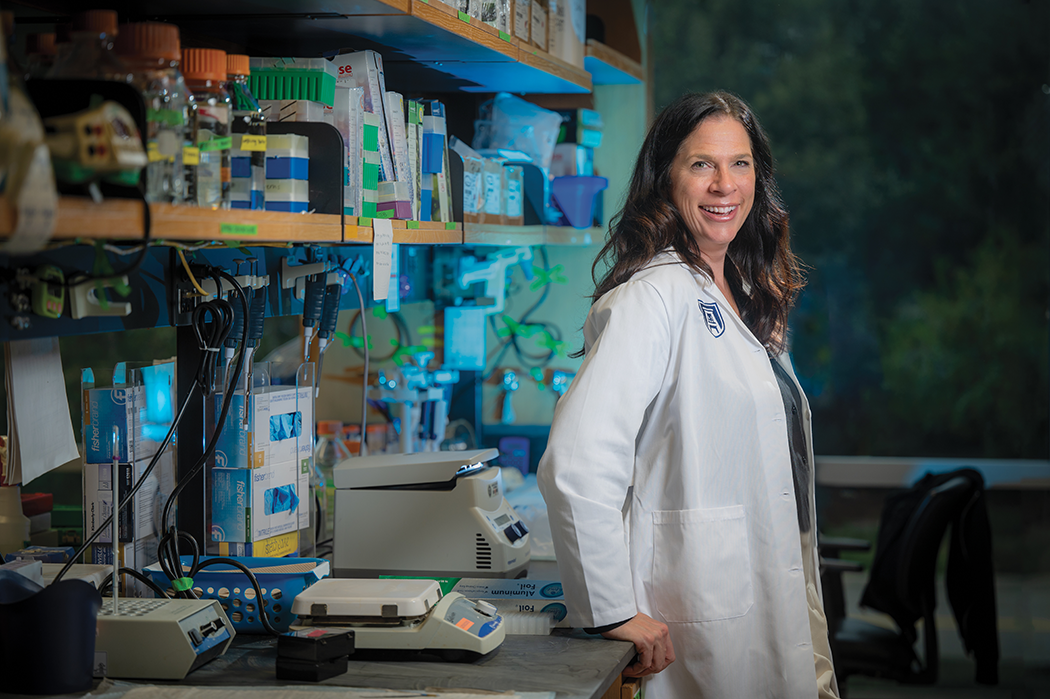
Jennifer C. Sullivan, PhD, dean of The Graduate School at Augusta University, has dedicated her research to better understand why blood pressure increases in hypertension and raising awareness to the dangers of not paying attention to heart health, particularly among women. Throughout her career, Sullivan has been continuously funded by the National Institutes of Health (NIH) and the American Heart Association since becoming a tenure-track faculty member in 2008, and now she has a chance to take her research further after securing a five-year, $7.5 million grant to have Augusta University designated as a Specialized Center of Research Excellence on Sex Differences (SCORE) by the NIH’s Office of Research on Women’s Health. It’s a distinction that places AU among 10 other leaders in research for the field, including Brigham and Women’s Hospital, Cedars-Sinai Medical Center, Emory University, Johns Hopkins University, Massachusetts General Hospital and Harvard Medical School, the Mayo Clinic, the Medical University of South Carolina, the University of Colorado and Yale University. The University of California, Los Angeles has two SCORE programs. “I’m so proud and excited for this opportunity because this has been what I have focused my research program on for my entire career, and to be able to advance it with a program like this, where we can actually build a unique program focused on an area that can make a difference, is just so much fun,” Sullivan said. “Just the fact that Augusta will be included on this list, attached to an organization of the caliber of NIH, will provide opportunities that we’ve never had before, especially for our students and younger researchers.” Sullivan’s SCORE project, “Improving awareness of women with hypertension: ROAR (Rural, Obese, At Risk),” focuses primarily on the fact that, while young women are considered “protected” from hypertension and the associated cardiovascular risk relative to age-matched men, the elimination of hypertension is projected to have a larger impact on cardiovascular disease (CVD) mortality in women. “The group of people with the highest risk of death from hypertension is in the rural South of the U.S., specifically Black women are particularly vulnerable to developing hypertension and CVD,” Sullivan said. According to Sullivan’s research and information available from the American Heart Association (AHA), approximately 19 million deaths were attributed to CVD globally in 2020, an increase of about 20% from 2010. Both Sullivan and the AHA state that cardiovascular disease remains the leading cause of death for both men and women in the United States, and that hypertension is a major modifiable risk factor for CVD. Sullivan said, “It has been suggested that eliminating hypertension would reduce CVD mortality by over 30% in men and 38% in women, but a critical barrier to limiting premature death from CVD is lack of awareness surrounding the risks of CVD. Our overall goal in this new funded project is to transform academic and community understanding of sex as a biological variable in the consideration of hypertension.” The three research projects include Sullivan’s lead project on high fat diets, a project on systemic lupus erythematosus (SLE) disproportionately affects young women led by Erin Taylor, PhD, at the University of Mississippi Medical Center, and another project looking at the role of inflammation and how immune cells are activated in SLE led by Michael Ryan, PhD, at the University of South Carlina’s School of Medicine. But there is more to SCORE than just conducting research. Each SCORE team is also responsible for a career enhancement core and a leadership administrative core. “What really sets these grants apart are the emphasis on the career enhancement and leadership administrative cores. The Career Enhancement Core is designed to be a bit open ended for each SCORE, but in talking to the NIH, what they were most excited about in our project is the community outreach piece we designed. “Our grant includes people across the entire campus, including Augusta University’s Medical College of Georgia, the College of Allied Health Sciences, the College of Education and Human Development and multiple campus partners including some of our sororities on campus and the Center for Writing Excellence,” Sullivan said. “More specifically, the COEHD is able to extend our outreach efforts to our local schools to begin educating children on the importance of screening, and our sororities are obviously connected with other chapters across the southeast which helps us spread our message, as well.” Sullivan notes that, through this portion of the project alone, there will be numerous opportunities to include students from Augusta University’s CAHS, College of Nursing, Department of Kinesiology, the Biomedical Sciences PhD program and the proposed School of Public Health. Marlo Vernon, PhD, associate professor at MCG and researcher for the Georgia Cancer Center, and Amanda Behr, chair of the Medical Illustration Program in CAHS, are also involved in various stages of the project. “The other thing the Career Enhancement Core will do is provide pilot grants to three research projects each year for early-stage investigators. We’ll also be able to fund sabbaticals for graduate students or postdocs to go someplace else and learn cutting edge techniques from other experts, so there is a lot built in that will help us support up-and-coming researchers,” Sullivan said. “We’re now part of this consortium, and they have a once-a-year, in-person meeting at the NIH offices, so we’ll go to that for the first time this year, and what’s neat about it is they’re really promoting young investigators. Each grant can bring up to eight people, the our hope is that we will have the investigators funded by the pilot projects attend next year, giving those folks the opportunity to present and talk to program officers with the NIH and develop a pipeline of investigators committed to studying women’s health and sex as a biological variable.” Sullivan is also looking to designate some of her summer graduate and undergraduate research positions to the project beginning next summer. “The Graduate School already has a summer program to support undergraduates that we will be able to piggyback off of. We have set aside five slots in that program for this that will go to students studying the sex as a biological variable, and the applications for that program, STAR, is already open,” Sullivan said. “We’re also planning a symposium in collaboration with the Physiology Department in April 2024. This is an annual event sponsored by the department, and this year they selected sex differences as the topic, so we are hoping to help increase exposure and attendance.” Looking to know more about the amazing research happening at Augusta? To connect with Jennifer Sullivan, simply click on her icon ow to arrange an interview today.

How ChristianaCare Built a Blueprint for Better Caregiver Health and Lower Costs
By Donna Antenucci, MHA, BSN, RN, and Emily Sahm, EA We know rising health care costs can feel overwhelming for both employers and employees. As Delaware’s largest private employer — with nearly 23,000 employees, spouses and dependents enrolled in our self-funded health plan — ChristianaCare faces these challenges every day. That’s why we’re committed to finding smart, innovative solutions that improve employee health while keeping costs in check. We don’t stop there — ChristianaCare partners with businesses that have an interest in providing high-quality health care for their employees while keeping costs manageable. Prioritizing preventive care The key to a healthier, more resilient workforce is tackling health issues early in order to prevent the need for costly emergency or “rescue” care. By prioritizing prevention and early intervention, we’ve made progress in improving employee health while controlling costs. In 2023, inpatient facility costs for our employees — which include hospital admissions for surgeries, medical treatments and other care requiring overnight stays — dropped by 9%. Wellness incentives and chronic disease management that shifted care to more cost-effective outpatient settings are driving these results. One of ChristianaCare’s differentiators is CareVio®, our care coordination and chronic disease management platform. CareVio provides personalized support to help employees and their families manage conditions and stay on track with preventive care. CareVio’s diabetes program, for example, has delivered remarkable results. Nearly all participants improved their blood sugar levels in 2023, with average A1c reductions of 1.7 points. Enhancing primary care and wellness programs We’ve also focused on encouraging primary care visits through collaboration between our Population Health and Total Rewards teams. Together, we designed a voluntary wellness incentive program that rewards employees and their families for healthy choices, including support for tobacco-cessation programs to help employees quit smoking and lead healthier lives. In 2023, we expanded our wellness incentive program to include primary care visits for employees and their spouses. Over the next eighteen months, primary care utilization increased over 10%, rising from 66% to 77% as of January 2025. Employees who stay connected to primary care catch health problems early and build stronger relationships with their doctors. We’ve launched programs targeting specific health needs. Our breast cancer screening initiative, focused on women ages 52 to 74, increased participation rates from 63% to 72% in 2023, exceeding our target. Additionally, the CareVio metabolic health program is helping a growing number of participants manage complex conditions with tailored support. Flexibility is essential. That’s why we created the Center for Virtual Health, which provides virtual-first primary care to more than 1,200 employees. This program makes high-quality, preventive care more accessible. Employees can fit care into their schedules while maintaining consistent support for their health. We encourage employees to stay up to date on immunizations by offering frequent vaccination events and tying participation to eligibility for the Caregiver Rewards Program payout. By making it easy and rewarding to stay protected, we’re fostering a safer, healthier workplace for everyone. Collaborative networks and cost management In January 2023, we announced the ChristianaCare Clinical Alliance, a new clinically integrated network in partnership with Highmark. Implemented in our employee health plan in July 2024, the network connects ChristianaCare-employed and community clinicians to provide evidence-based, coordinated care. Focused on improving wellness and managing chronic conditions, the Clinical Alliance is helping caregivers and their families stay healthier while reducing costly emergency visits and hospital stays. Employees who choose Clinical Alliance providers also enjoy lower deductibles for their care. Through all these initiatives, we are making a meaningful difference for our caregivers and our costs. In 2023, thanks to our focus on prevention and smarter care delivery, we kept our overall health care cost growth below the national average. Healthier employees lead to lower expenses and a more engaged, productive workforce. By showing that we value employee health, we’re creating a stronger, more resilient workplace. To learn how ChristianaCare can help you provide better care and control costs for your workforce, contact Donna Antenucci at donna.antenucci@christianacare.org. Donna Antenucci is vice president of population health operations for ChristianaCare. Emily Sahm is vice president of Total Rewards for ChristianaCare.



Reclaiming 'Spend': A Retirement Rebellion
June is Pride Month—a celebration of identity, resilience, and the powerful act of reclaiming. Over the years, LGBTQ+ communities have reclaimed words that once marginalized them. “Queer” used to be a slur. Now, it’s a proud badge of honor. Similarly, the Black community has transformed language once used to oppress into expressions of cultural pride and connection. So, here's a thought: What if retirees approached the word “spend” similarly? Yes, you read that right. The psychological Tug-of-War This isn't just about numbers; it’s about narratives. Most retirees have spent their entire adult lives in accumulation mode: save, earn, invest, delay gratification, rinse, and repeat. But retirement flips that formula on its head, and most people weren’t provided with a “mental user guide” for the transition. Now, instead of saving, they’re expected to spend? Without a paycheck? It triggers everything from guilt to fear to a low-grade existential crisis. The Challenge of Saving for an Extended Period Let’s get serious for a moment. The data tells a troubling story: - Canadians over 65 collectively hold $1.5 trillion in home equity (CMHC, 2023) - The average retiree spends just $33,000 per year, despite often having far more resources (StatsCan, 2022) - Nearly 70% of retirees express anxiety about running out of money—despite having significant savings (FCAC, 2022) We’re talking about seniors who could afford dinner out, a trip to Tuscany, or finally buying that electric bike—and instead, they’re clipping coupons and debating the cost of almond milk. Why? Because spending still feels wrong. I Know a Thing or Two About Reclaiming Words As a proud member of the LGBTQ2+ community and a woman who has worked in the traditionally male-dominated world of finance, I’ve had a front-row seat to the power of language, both its ability to uplift and its tendency to wound. There were many boardrooms where I was not only the only woman but also the only gay person, and often the oldest person in the room. I didn’t just have a seat at the table; I had to earn, protect, and sometimes fight to keep it. I’ve learned that words can be weapons, but they can also be amour—if you know how to use them. Reflect on Your Boundaries Take a moment. Have you ever felt prejudged, marginalized, or dismissed? Perhaps it was due to your gender, sexuality, accent, skin colour, culture, or age. It leaves a mark. One way to preserve your dignity is by building a mental toolkit in advance. Prepare a few lines, questions, or quiet comebacks you can use when someone crosses the line—whether they intend to or not. Here are five strategies that helped me stand tall—even at five feet nothing: 1. Humour – A clever remark can defuse tension or highlight bias without confrontation. 2. Wit – A precisely timed comeback can silence a room more effectively than an argument. 3. Over-preparation – Know your stuff inside and out. Knowledge is power. 4. Grace under fire – Not everything deserves your energy. Rise above it when it matters. 5. Vulnerability – A simple “Ouch” or “Did you mean to hurt me?” can be quietly disarming—and deeply human. Let’s Talk About Microaggressions The term microaggression may sound small, but its effects are significant. These are the subtle, often unintentional slights: backhanded compliments, dismissive glances, and “jokes” that aren’t funny. They quietly chip away at your sense of belonging. Dr. Robin DiAngelo’s book White Fragility is a brilliant read on this topic. She explains how early socialization creates bias— “Good guys wear white hats. Bad guys wear black hats.” These unconscious associations become ingrained from an early age. Some people still say, “I’m not racist—I have a Black friend,” or “I’m not homophobic—my cousin is gay.” The truth? Knowing someone from a marginalized group doesn’t exempt you from unconscious bias. It might explain the behaviour, but it doesn’t excuse it. And no, there is no such thing as reverse discrimination. Discrimination operates within systems of power and history. When someone points out a biased comment or unconscious microaggression, they’re not discriminating against you—they’re holding up a mirror. That sting you feel? It’s not oppression. It’s shame—and it’s warranted. It signals that your intentions clashed with your impact. And that’s not a failure; it’s an invitation to grow. Calling it “reverse discrimination” is just a way to dodge discomfort. But real progress comes when we sit with that discomfort and ask: Why did this land the way it did? What am I missing? Because the truth is, being uncomfortable doesn’t mean you’re being attacked. It often means you’re being invited into a deeper understanding—and that’s something worth showing up for. Let’s Reclaim 'Spend' What if we flipped the script? What if spending in retirement was viewed as a badge of honour? Spending on your grandkids’ education, your bucket list adventures or even a high-end patio chair should not come with any shame. You’ve earned this. You’ve planned for this. It’s time to reclaim it. Let’s make “spend” the new “thrive.” Let’s make super-saver syndrome a thing of the past. Let the Parade Begin Imagine it: a Seniors’ Spend Parade. Golden confetti. Wheelchairs with spoilers. Luxury walkers with cupholders and chrome rims. T-shirts that say: - “Proud Spender. Zero Shame.” - “I’m not broke—I’m retired and woke.” - “My equity funds my gelato tour.” Dreams Aren’t Just for the Young What’s the point of spending decades building wealth if you never enjoy it? Reclaiming “spend” isn’t about being reckless—it’s about being intentional. So go ahead—book the trip. Upgrade the sofa. Take the wine tour. You’re not being irresponsible; you’re living the life you’ve earned. And if anyone questions it? Smile and say: “I’m reclaiming the word spend. Care to join the parade?” Sue Don’t Retire…Rewire! 8 Guilt-Free Ways to Spend in Retirement A checklist to help you spend proudly, wisely, and joyfully: ☐ Book the Trip – Travel isn’t a luxury; it’s a memory maker. ☐ Upgrade for Comfort – That recliner? That mattress? Worth every penny. ☐ Gift a Down Payment – Help your kids become homeowners. ☐ Fund a Grandchild’s Dream – Tuition, ballet, a first car—you’re building a legacy. ☐ Outsource the Chores – Pay for help so you can reclaim your time. ☐ Invest in Wellness – Healthy food, massage therapy, yoga. Health is wealth. ☐ Pursue a Passion – From pottery to piloting drones, go for it. ☐ Celebrate Milestones – Anniversaries, birthdays… or Tuesdays. Celebrate always! Want More? If this speaks to you, visit www.retirewithequity.ca and explore more: - From Saver to Spender: Navigating the Retirement Mindset - Money vs. Memories in Retirement - Fear Of Running Out (FORO) Each piece explores the emotional and psychological aspects of retirement—the parts no one talks about at your pension seminar.


A path to fair minerals trade: Researcher champions global trust model
As the world races to build cleaner energy systems and powerful AI technologies, the demand for critical minerals—like lithium, cobalt, and rare earths—is soaring. But with this demand comes rising global tension over who controls these resources. University of Delaware Professor Saleem Ali, an international expert in environmental policy and chair of UD's Department of Geography and Spatial Sciences, is suggesting a new way forward. In a new article published in Science, along with a United Nations policy brief, Ali and his coauthors propose the creation of a Global Minerals Trust. The article notes how the international plan would help countries work together to manage and share critical minerals fairly and sustainably—avoiding political fights, price shocks and environmental damage. “Without a shared framework, we risk deepening global inequalities, triggering unnecessary resource conflicts and undermining our ability to deliver on climate goals,” says Ali, who also leads the Critical Minerals and Inclusive Energy Transition program at the United Nations University Institute for Water, Environment and Health. The proposed Trust would use independent checks—similar to those used in nuclear safety—to make sure countries are meeting environmental and social standards. Each nation would keep control of its own resources but agree to prioritize sales of those minerals at market prices so that they can be used for clean energy infrastructure. The article builds on a TED Talk that Ali gave last year as part of the Rockefeller Foundation's "Big Bets" initiative. Ali is available for interviews on the topic and can be reached by clicking on his profile.


Why Your Experts Might Not Show Up in Google AI Overviews — And How to Fix It
The way we find expert information online is changing fast. With the rise of Google’s AI-generated overviews (formerly called Search Generative Experience), the top spot on the search page no longer goes to the highest-ranking blue link. Instead, AI now summarizes answers using a blend of machine learning, structured data, and trust signals—pulling directly from a variety of select sources across the web. If institutions—whether academic, healthcare, corporate or others—aren't aligning its expert content with these new rules of discovery, your experts may be left out of the conversation altogether. Don't miss being featured in media stories, invited to speak at events, or approached for business and collaboration opportunities. This is the moment to double down on structured data and transparent authorship—because AI-first search is rewarding expert clarity, not just content volume. The following provides a quick breakdown as to how AI Search, Google’s EEAT principles, and Schema.org structured data work together—and what you can do to ensure your expert content...and your experts, gets surfaced, cited, and trusted. What Is EEAT and Why It Matters in AI Search EEAT stands for Experience, Expertise, Authoritativeness, and Trustworthiness—the core framework Google uses to evaluate whether content is reliable and deserves to rank, especially in high-stakes areas like health, education, and finance. In AI-powered summaries, Google doesn’t just look at keywords—it looks for: Real people with demonstrable credentials Clear affiliations with reputable institutions Consistent authorship and transparency Trust signals like citations, bios, and professional history EEAT in Action: Why Schema Markup Is Your AI SEO Power Tool EEAT signals work best when they’re machine-readable—that’s where Schema.org structured data comes in. It acts as a translator between your content and Google’s AI. Schema tags are pieces of structured data that help search engines understand the content and context of your web pages. They translate human-readable information—like author names, job titles, and article types—into machine-readable signals that boost visibility AI overviews and search results. Implementing Schema helps ensure your expert content is eligible for inclusion in AI overviews. Key schema types include: {Person} – for expert bios {ScholarlyArticle}, {Article}, {FAQ} – for authored content {Organization}, {MedicalOrganization}, {EducationalOrganization} – to establish credibility {sameAs} – to reinforce expertise by connecting external profiles (LinkedIn, ORCID, Google Scholar) Schema in Action: AI Overviews Favor Structured, Credible Expert Content Google’s AI overviews are designed to synthesize trustworthy sources—not just surface-level blog posts or SEO-churned pages. That means expert content that is: Authored by named individuals with clear credentials Structured for readability and machine parsing Linked to institutional authority and trust domains If your experts don’t meet these criteria—or if Google’s crawlers can’t understand the relationships between person, organization, and content—your insights may never reach the surface of the AI summary box. How ExpertFile Optimizes for AI-Driven Search AI search is no longer just about keywords—it’s about credibility, structure, and clarity. Institutions that invest in properly structured expert content will not only rank better—they’ll become the source quoted in the next generation of search. ExpertFile is purpose-built to maximize visibility and trust in this new era of AI search. Here’s how: Structured Expert Profiles: Every expert has a dedicated page with rich Person schema, bios, credentials, affiliations, and publication history. Schema-Tagged Content: Articles, media spotlights, and FAQs are marked up using Schema.org types like ScholarlyArticle, FAQPage, and Article. Institutional Credibility: Profiles are embedded within .edu, .org, or corporate domains—reinforcing trust with Google’s algorithms. Cross-Linked Authority: Integration with Google Scholar, LinkedIn, and ORCID ensures a 360° trust profile across the web. Mobile-Ready & Indexed: ExpertFile content is fully indexable and distributed across web and mobile platforms—supporting discoverability everywhere AI pulls from. With ExpertFile, your experts are not just listed—they’re positioned, structured, and ready for the AI spotlight. Learn more about how ExpertFile helps organization's benefit in the new era of AI.

