Experts Matter. Find Yours.
Connect for media, speaking, professional opportunities & more.

Delaware emerges as a test bed for the future of AI in health care
Delaware is positioning itself as a “living lab” where academia, health systems and government collaborate to shape the future of artificial-intelligence-enabled health care. The latest issue of the Delaware Journal of Public Health, guest edited by University of Delaware computer scientists Weisong Shi and Yixiang Deng, brings together 16 articles from researchers, clinicians, policymakers and industry leaders examining how AI and big data are reshaping health care. The issue, debuting this month, balances Delaware-specific topics with broader perspectives, highlighting three levels of impact: what Delaware can expect in the coming years, what other states can learn from Delaware’s approach and how UD research is advancing AI for health through collaborations. “At UD, we don’t work in isolation. We’re working closely with health care systems so that innovation happens together from the beginning,” says Shi, Alumni Distinguished Professor and Chair of UD’s Department of Computer and Information Sciences. Highlights from the issue include: The nation’s first nursing fellowship in robotics – ChristianaCare, Delaware’s largest health system, created an eight-month fellowship to train bedside nurses to conduct applied robotics research. Nurses who completed the program reported higher job satisfaction, improved well-being and greater professional confidence, suggesting programs like this may help retain the bedside workforce and reduce nationwide staffing shortages. Wheelchairs that navigate hospitals on their own – UD researchers developed a prototype autonomous wheelchair that combines onboard sensors and computing with software that interprets spoken directions from users, a step toward moving beyond systems that only work in controlled environments. To operate effectively in health care settings, the researchers say, wheelchairs must be able to navigate crowded hallways, interact with doors and elevators and recover safely when sensors or navigation systems fail. Smarter insulin dosing for type 1 diabetes – Researchers are developing computer models to predict blood sugar (glucose) trends and guide insulin delivery, but must address issues such as noisy data, reliable real-time prediction and the computational limits of wearable devices. A review by UD researchers and colleagues emphasizes the importance of interdisciplinary collaboration, standardized datasets, advances in computational infrastructure and clinical validation to turn these models into practical tools that improve patient care. To interview Shi about AI in health care and the new DJPH issue, click his profile or email MediaRelations@udel.edu. ABOUT WEISONG SHI Weisong Shi is an Alumni Distinguished Professor and Chair of the Department of Computer and Information Sciences at the University of Delaware. He leads the Connected and Autonomous Research Laboratory. He is an internationally renowned expert in edge computing, autonomous driving and connected health. His pioneering paper, “Edge Computing: Vision and Challenges,” has been cited over 10,000 times.



Workplace jargon hurts employee morale, collaboration, study finds
You’ve probably heard it before in a meeting: “Let’s touch base offline to align our bandwidth on this workflow.” Corporate jargon like this is easy to laugh at — but its negative impact in the office can be serious. According to a new study, using too much jargon in the workplace can hurt employees’ ability to process messages, leading them to experience negative feelings and making them feel less confident. In turn, they’re less likely to reach out and ask for or share information with their colleagues. “You need people to be willing to collaborate, share ideas and look for more information if they don't understand something at work,” said Olivia Bullock, Ph.D., an assistant professor of advertising at the University of Florida and co-author of the new study. “And jargon might actually be impeding that information flow across teams.” Age made a difference, though. Older workers had a harder time processing jargon, but were more likely to intend to ask for more information to clarify the message. Younger employees were less likely to seek and share information when confused by jargon. “It gives credence to the idea that younger people are more vulnerable to these workplace dynamics,” Bullock said. “If you're onboarding younger employees, explain everything clearly.” Bullock and her co-author, Tiffany Bisbey, Ph.D., an assistant professor at George Washington University, published their findings Aug. 25 in the International Journal of Business Communication. An expert in communication research, Bullock has long studied jargon’s negative effects for talking about health and science. Then, faced with jargon in her own work, she started to ask how these arcane, technical words might get in the way of a smooth workplace. To find out, Bullock surveyed nearly 2,000 people who were told to imagine they had just started a new job and received an email with important directions. Half had to navigate a jargon-filled message about “intranets” and “EFT” payments. The other half had that jargon translated back into plainer language. The message packed with jargon, not surprisingly, made it harder for people to process the information, which can throw off an entire workday. “It doesn't just make them feel bad about the information they've been given. It makes them feel bad about themselves,” Bullock said. The study then asked people how they would respond to the jargon. The impenetrable language made them feel insecure and less likely to ask for help right when they needed it the most. “They weren’t as willing to collaborate,” Bullock said. “If you can’t ask for more information or share that information downstream, you’re creating silos, and that’s disrupting your workflow and environment.” Having studied jargon for so long, Bullock has one piece of advice for employers and employees alike. “Always reduce jargon,” she said. “The benefit of using jargon doesn’t outweigh the cost.”



With lasers, smoke and a wind tunnel, UF helps federal agency investigate deadly Hurricane Maria
As Floridians brace for hurricanes amid the wild weather of 2025, some University of Florida researchers have their eyes on 2017’s Hurricane Maria, the deadly Category 4 storm that pummeled Puerto Rico. Engineering professor and natural hazards researcher Brian Phillips, Ph.D., is leading UF’s efforts in a Hurricane Maria investigation conducted by the National Institute of Standards and Technology, known as NIST. The goal is increased safety and resilience amid deadly conditions. Maria killed nearly 3,000 people and caused more than $90 billion in damage. Most of the island’s wind sensors and weather stations failed as the storm raged, leaving responders and investigators with few reliable weather measurements. What went wrong? Phillips and UF storm researchers are helping answer that question — and provide safety and structural recommendations — as part of NIST’s Hurricane Maria investigation. The full report will be released in 2026, but NIST recently published preliminary findings; some of the hazard and structural load data was derived from wind tunnel tests at UF's NHERI Experimental Facility in the Powell Family Structure and Materials Laboratory on UF’s East Campus in Gainesville. “Our wind tunnel has a strong reputation in the wind-engineering community for its unique flow control and measurement capabilities We worked with NIST to develop a test campaign to study the wind conditions Puerto Rico’s mountainous terrain and the resulting loads of critical infrastructure,” said Phillips, a civil and coastal engineering professor with UF’s Engineering School of Sustainable Infrastructure & Environment. “UF,” he added, “has one of the premier research wind tunnels in the country and it enables us to pursue impactful research like this.” As part of the NIST investigation, Phillips and his team created 1-to-3100 scale topographic models of regions in Puerto Rico — about 12 kilometers shrunk down to four meters, Phillips said. They set up those models in the wind tunnel and replicated wind flow over the topography. “These initial tests were designed to understand the influence of the complex topography had on the wind,” Phillips said. Flow was measured using velocity probes and particle image velocimetry (PIV). These topographic model tests were followed by 1-to-100 scale tests on models of two hospitals in Puerto Rico. In addition to surface pressure measurements, the team conducted qualitative flow visualization tests using smoke, lasers, and high-speed cameras. “The capabilities of the UF wind tunnel enabled us to investigate the hurricane winds at two different scales,” said NIST’s lead Hurricane Maria investigator, Joseph Main, “so we could measure how the winds were accelerated by Puerto Rico’s mountainous topography and then how those winds translated into loads on critical buildings.” Maria’s flooding blocked roads to hospitals and shelters. The hospitals themselves were heavily damaged by the storm, NIST reported. Reduced access to healthcare was a major factor in the death toll. “It's good to take a step back,” Phillips said about the overall investigation. “Researchers are approaching the disaster from multiple angles, including the better understanding of the hazard, the performance of critical infrastructure, public response and recovery. “This holistic approach is needed to capture the complete picture and maximize what we can learn from the event. UF's primary contribution was understanding the hurricane wind field and the resulting structural loads, which is a critical piece of that puzzle.” In finding infrastructure vulnerabilities, researchers contend the goal is integrating their findings into design standards for Puerto Rico’s unique topography and building codes. The findings also could be valuable to other storm-prone regions with complex topography. NIST launched the investigation in 2018, noting Hurricane Maria “set off a cascade of building and infrastructure failures across Puerto Rico that had lasting impacts on society, including health care, business and education.” “Our goal is to learn from that event to recommend improvements to building codes, standards and practices that will make communities more resilient to hurricanes and other hazards, not just in Puerto Rico but across the United States,” Main said. The complete report is scheduled to be released in 2026, and NIST noted some findings may change before its release. But in July, NIST released some preliminary findings. They include: Peak wind speeds over flat terrain reached 140 mph. They accelerated to over 200 mph in some areas due to the steep hills and mountains. The mountains also intensified the rainfall, which reached 30 inches in some areas. Only three out of 22 weather stations were fully functional during the hurricane. 95.3% of schools on the island lost power for an average of over 100 days. “One important preliminary finding from the study is that emergency preparations work,” NIST reported. “Businesses, schools and hospitals that took specific measures to prepare before Hurricane Maria were able to resume operations more quickly” said Maria Dillard, NIST’s associate lead Hurricane Maria investigator. Preparations included pre-established emergency plans, designated risk mitigation funds and backup power sources.


Retirement Maxxing: How Small Decisions Help You Build a Better Future
The basic idea is to pick a corner of your life and optimize it ruthlessly. Sleep maxxing. Health maxxing. Productivity maxxing. In its more extreme corners, people are attempting to optimize their actual physical features. Go ahead and Google "looksmaxxing" if you are curious and have a strong constitution. One influencer named Clavicular — a 20-year-old from Hoboken who claims to have taken a literal hammer to his face to coax a chiselled jawline — has become the reigning king of this particular rabbit hole. Medical experts would prefer you not try that at home. The Globe and Mail published a comprehensive explainer on the whole phenomenon. The Republican National Committee put out a press release praising Donald Trump for "jobsmaxxing" the economy. The Department of Defence posted a soldier with the caption "lethality maxxing." It has become, as one writer put it, the suffix that just will not quit. Retirement Maxxing: because chin waxing, I mean maxxing, was already taken. And yet, buried beneath all the absurdity, the underlying impulse is not entirely ridiculous. Humans want to optimize things. We always have. The real question is whether we are optimizing the right things. Then, as these things sometimes happen, three articles landed in my inbox in the same week and refused to leave my mind. Maxxing. The psychology of future selves. A golfer named Max Greyserman, who sits just one-tenth of a stroke from the top of his sport. I am not a woman who ignores signs. The connection was obvious once I saw it: retirement might be the most important time to apply this kind of thinking. Not the obsessive version involving ice baths and fourteen supplements before breakfast. The practical version. Thoughtful maxxing that quietly stacks the odds in your favour over decades. Retirement isn't just one decision; it's hundreds made over the years, each guiding your future self toward either financial dignity or a Shaggy tribute tour you never signed up for. The “Shaggy Problem”: How Your Retirement Decisions Today Determine Your Financial Security Tomorrow You remember Shaggy. The reggae artist. Enormous hit. "It Wasn't Me." When it comes to retirement, it absolutely was you. Every decision you make today is writing a letter to your future self. Some of those letters are generous and thoughtful. Others arrive decades later, like a bill you forgot to pay, from a creditor with excellent memory and zero sympathy. The seventy-five-year-old version of you hopes the fifty-five-year-old paid attention. The eighty-five-year-old version would very much like functioning knees, a dignified income, and the ability to say "I planned for this" rather than "I did not think it would go this fast." It went that fast. That's why the most useful habit you can develop right now is what I call the future-self test. Before making a major financial or lifestyle decision, pause and ask: how will this look from the other end? Will I still think this tattoo is a good idea when I’m ninety? Will I regret staying in a house that is too large and too expensive for another decade? Will my future self thank me for delaying CPP, or curse me for taking it early because waiting felt uncomfortable? Or as the Beatles asked rather memorably: “when I'm sixty-four, will you still need me, will you still feed me?” The song is charming. The financial planning version is considerably less so if you have not thought it through. The future-self test is not complicated. It is just the habit of writing better letters. What Sports Analytics Can Teach Us About Smarter Retirement Decisions Speaking of decisions that come back to haunt you, let's discuss probabilities. A recent New York Times article about golfer Max Greyserman stopped me mid-scroll (Lindgren, 2026). Not because of the golf — though the golf is fascinating — but because of what it revealed about the gap between what the data says and what people actually do when the stakes are high. Greyserman's scoring average is less than one-tenth of a stroke per round away from the elite level. One-tenth of a stroke. Not a full swing, a putting mistake, or a collapse on the eighteenth. The difference between obscurity and greatness in pro golf is about the time it takes to find your reading glasses. Which, as we've established, were on your head the entire time. Hockey analytics have demonstrated that teams trailing late in a game should often pull the goalie much earlier than the traditional last-ninety-seconds rule. Research indicates that pulling the goalie around the eight-minute mark can significantly boost the chances of scoring, as the extra attacker alters the odds. However, most coaches still wait until the final minute or two. Why? Because if you pull the goalie at eight minutes and lose badly, it can look like you lost your mind. The math checks out, but the optics are terrifying. Soccer offers a similarly uncomfortable example. A widely cited study analysing thousands of penalty kicks found that about one-third of kicks are aimed straight down the middle of the net, yet goalkeepers stay in the centre only around six percent of the time (Chiappori, Levitt, & Groseclose, 2002). Shooting directly down the middle often provides good odds because the keeper has already committed to diving one way or the other. But if the goalkeeper stays put and makes the save, the kicker seems to have tried to outsmart the odds and failed. The math checks out. The optics, however, are still terrifying. Retirement is filled with these moments. And most people make their decisions based on the optics. Common Retirement Decisions Canadians Get Wrong — And What the Data Actually Says: Working a couple of extra years often delivers significantly better retirement outcomes, yet people retire early because they feel emotionally ready. Delaying CPP can greatly increase guaranteed lifetime income, yet many choose to claim early because waiting seems risky. Downsizing can free up cash and lessen financial stress, yet people stay in large homes because selling feels like giving up. Using home equity wisely can boost retirement income, yet many retirees dismiss this option because of a stigma rooted in outdated beliefs rather than current data. In each case, the emotionally comfortable choice is not the one with the best long-term odds. Fear of loss, fear of regret, fear of looking foolish — those emotions sprint ahead of rational thinking every single time. That is why the future-self test matters. Math is universal, but money is deeply personal, and the goal is to let one inform the other before it is too late. The Psychology of Retirement Saving: Why We Treat Our Future Self Like a Stranger The second New York Times article examined the psychology of how we connect with our future selves (The New York Times, 2026). The findings are humbling. Psychologists have discovered that people often see their future self almost like a stranger, which explains why saving for retirement can seem somewhat punishing. It feels less like helping yourself and more like sending a cheque to someone who shares your cheekbones but whose problems seem distant and abstract. Research led by Hal Hershfield found that when people feel more connected to their future selves, they save more and make consistently better long-term financial decisions (Hershfield, 2011). Retirement planning is not just about spreadsheets and withdrawal rates. It is about being genuinely generous towards the person you are becoming. It is a love letter, written in small decisions, over a very long time. So, write a good one. Your future self is counting on you. How to Optimize Your Retirement: A Practical Framework for Canadians If retirement maxxing were a lifestyle trend — and I am formally proposing that it should be — it wouldn’t involve bone-smashing or extreme jawline enhancement. It would look more like this. Health Maxxing: Why Strength and Mobility Are Financial Assets Move your body. Lift weights now and then. Walk up hills. Muscle strength is one of the most underrated assets for retirement that nobody discusses at dinner parties. Research from the National Institute on Aging confirms that strength training improves mobility, balance, and healthy longevity (National Institute on Aging, 2023). These are the very factors that influence whether your later years feel like a gift or a burden. People hesitate over the cost of a gym membership while ignoring the significant long-term benefit of staying upright, independent, and capable. Skipping exercise to save a few dollars is like stepping over a hundred-dollar bill to find a quarter. As Aunt Equity likes to say: be careful not to get out over your skis. (Yes, that was an exercise metaphor. You’re welcome.) Income Maxxing: How to Build Reliable Cash Flow That Lasts Build reliable income streams so you can sleep at night without one eye on the market. Pensions, annuities, dividends, home equity, and carefully structured withdrawals — these all play a role in a well-crafted retirement income plan. The goal isn’t to maximize a single number – it’s to reduce the worry behind all of them. If your retirement plan currently makes you watch financial news at midnight while eating crackers over the sink, something has gone wrong and we should talk. Purpose Maxxing:Why It Matters for Your Health and Longevity Retirement is not a forty-year holiday. Humans need purpose, connection, and something worth getting out of bed for — especially on days when nobody expects you anywhere and the morning is entirely, terrifyingly yours. NIH research consistently shows that social engagement and a sense of purpose are linked to better health and longer life (National Institute on Aging, 2023). Purpose is what makes a retirement that feels like freedom different from one that feels like a long Sunday afternoon with nowhere to go. Somewhere along the way, society decided that aging meant quietly fading into the background. Retirement is when you finally have permission to dye your hair a vibrant colour, volunteer somewhere meaningful, start a project that genuinely excites you, or do all three at once and totally surprise your grandchildren. Purpose is not optional. It is the foundation. Decision Maxxing: How to Overcome Emotional Bias Use data when the stakes are high. Emotions are useful for choosing dessert but much less reliable for planning a thirty-year income. Don't swat away analytics like a fly at a family picnic just because they suggest something uncomfortable. Run projections. Stress-test your plan. Understand probabilities. Pull the goalie early if the math indicates so, even if it looks odd at the moment. Because appearing odd now and being wrong later are not the same thing. Not even close. The Ending That Brings It All Together: Small Decisions That Compound Over Time Here’s what three articles about “maxxing” our future selves, and golf, taught me about retirement. Clavicular is out there taking a hammer to his face in pursuit of optimization. Max Greyserman is grinding for one-tenth of a stroke. Hal Hershfield is reminding us that we treat our future selves like strangers when we should treat them like people we love. And somewhere between all three of them is the retirement insight that really matters: the best decisions compound quietly. Tiny improvements in health, income strategy, purpose, and decision-making build up into dramatically different outcomes over decades. Not because of one dramatic move, but because of many small, sensible ones made with the future in mind. Your future self isn't a stranger waiting to judge you. They are the person you are intentionally becoming, shaped by every decision you make today. Perform the future-self test before making risky decisions like pulling the goalie, shooting down the middle, or getting a tattoo that might lead to an awkward chat with your colonoscopy technician (this is for you, JK). Consider whether your fifty-five-year-old self is being kind to your seventy-five-year-old self. Look at what the data says, not just what feels right. Retirement maxxing isn't about perfection. It's about making small, sensible decisions consistently and thoughtfully over time. Think of it as compound interest for your future self. Einstein allegedly called compounding the most powerful force in the universe. He was talking about money, but he might as well have been talking about the small, steady choices that create a retirement worth living. Your future self will be deeply grateful—having functional knees, a dignified income, and a tattoo they still absolutely love. And when you turn sixty-four, and someone asks how you got there so gracefully, you won't need to channel your inner Shaggy. You just smile and say: It was me! Sue Don’t Retire…ReWire! P.S. Aunt Equity approves. Ready to start retirement maxxing? Here are two things you can do today. Run the future-self test on one financial decision you have been avoiding. Just one. Write down what your seventy-five-year-old self would think of the choice you are leaning toward. You might be surprised what comes up. Move your body and find your people. Join a pickleball club, a walking group, a trivia night, or a bridge league. Laugh often. Sweat occasionally. Your future self needs both, and your colonoscopy technician will be thrilled. Want more insights like this? Subscribe to my free newsletter here, where I share practical strategies, real-world stories, and straight talk about navigating retirement with confidence—not confusion. Plus, all subscribers get exclusive early access to advance chapters from my upcoming book. For Canadians 55+: Get actionable advice on making your home equity work for you, understanding your options, and living retirement on your terms. For Mortgage Brokers and Financial Professionals: Learn how to become the trusted advisor your 55+ clients desperately need (and will refer to everyone they know). This isn't just another revenue stream—it's your opportunity to build lasting relationships in Canada's fastest-growing demographic.



Reading for pleasure in free fall: New study finds 40% drop over two decades
A sweeping new study from the University of Florida and University College London has found that daily reading for pleasure in the United States has declined by more than 40% over the last 20 years — raising urgent questions about the cultural, educational and health consequences of a nation reading less. Published today in the journal iScience, the study analyzed data from over 236,000 Americans who participated in the American Time Use Survey between 2003 and 2023. The findings suggest a fundamental cultural shift: fewer people are carving out time in their day to read for enjoyment. “This is not just a small dip — it’s a sustained, steady decline of about 3% per year,” said Jill Sonke, Ph.D., director of research initiatives at the UF Center for Arts in Medicine and co-director of the EpiArts Lab, a National Endowment for the Arts research lab at UF in partnership with University College London. “It’s significant, and it’s deeply concerning.” Who’s reading and who isn’t The decline wasn’t evenly spread across the population. Researchers found steeper drops among Black Americans than white Americans, people with lower income or educational attainment, and those in rural (versus metropolitan) areas — highlighting deepening disparities in reading access and habits. “While people with higher education levels and women are still more likely to read, even among these groups, we’re seeing shifts,” said Jessica Bone, Ph.D., senior research fellow in statistics and epidemiology at University College London. “And among those who do read, the time spent reading has increased slightly, which may suggest a polarization, where some people are reading more while many have stopped reading altogether.” The researchers also noted some more promising findings, including that reading with children did not change over the last 20 years. However, reading with children was a lot less common than reading for pleasure, which is concerning given that this activity is tied to early literacy development, academic success and family bonding, Bone said. Why it matters Reading for pleasure has long been recognized not just as a tool for education, but as a means of supporting mental health, empathy, creativity and lifelong learning. The EpiArts Lab, which uses large data sets to examine links between the arts and health, has previously identified clear associations between creative engagement and well-being. “Reading has historically been a low-barrier, high-impact way to engage creatively and improve quality of life,” Sonke said. “When we lose one of the simplest tools in our public health toolkit, it’s a serious loss.” The American Time Use Survey offers a unique window into these trends. “We’re working with incredibly detailed data about how people spend their days,” Bone said. “And because it’s a representative sample of U.S. residents in private households, we can look not just at the national trend, but at how it plays out across different communities.” Why are Americans reading less? While causes were not part of the study, the researchers point to multiple potential factors, including the rise of digital media, growing economic pressures, shrinking leisure time and uneven access to books and libraries. “Our digital culture is certainly part of the story,” Sonke said. “But there are also structural issues — limited access to reading materials, economic insecurity and a national decline in leisure time. If you’re working multiple jobs or dealing with transportation barriers in a rural area, a trip to the library may just not be feasible.” What can be done? The study’s authors say that interventions could help slow or reverse the trend, but they need to be strategic. “Reading with children is one of the most promising avenues,” said Daisy Fancourt, Ph.D., a professor of psychology and epidemiology at University College London and co-director of the EpiArts Lab. “It supports not only language and literacy, but empathy, social bonding, emotional development and school readiness.” Bone added that creating more community-centered reading opportunities could also help: “Ideally, we’d make local libraries more accessible and attractive, encourage book groups, and make reading a more social and supported activity — not just something done in isolation.” The study underscores the importance of valuing and protecting access to the arts — not only as a matter of culture, but as a matter of public health. “Reading has always been one of the more accessible ways to support well-being,” Fancourt said. “To see this kind of decline is concerning because the research is clear: reading is a vital health-enhancing behavior for every group within society, with benefits across the life-course.”


AI in the classroom: What parents need to know
As students return to classrooms, Maya Israel, professor of educational technology and computer science education at the University of Florida, shares insights on best practices for AI use for students in K-12. She also serves as the director of CSEveryone Center for Computer Science Education at UF, a program created to boost teachers’ capabilities around computer science and AI in education. Israel also leads the Florida K-12 Education Task Force, a group committed to empowering educators, students, families and administrators by harnessing the transformative potential of AI in K-12 classrooms, prioritizing safety, privacy, access and fairness. How are K–12 students using AI in classrooms? There is a wide range of approaches that students are using AI in classrooms. It depends on several factors including district policies, student age and the teacher’s instructional goals. Some districts restrict AI to only teacher use, such as creating custom reading passages for younger students. Others allow older students to use tools to check grammar, create visuals or run science simulations. Even then, skilled teachers frame AI as one tool, not a replacement for student thinking and effort. What are examples of age-appropriate tools that enhance learning? AI tools can be used to either enhance or erode learner agency and critical thinking. It is up to the educators to consider how these tools can be used appropriately. It is critical to use AI tools in a manner that supports learning, creativity and problem solving rather than bypass critical thinking. For example, Canva lets students create infographics, posters and videos to show understanding. Google’s Teachable Machine helps students learn AI concepts by training their own image-recognition models. These types of AI-augmented tools work best when they are embedded into activities such as project-based learning, where AI supports learning and critical thinking. How do teachers ensure AI supports core skills? While AI can be incredibly helpful in supporting learning, it should not be a shortcut that allows students to bypass learning. Teachers should design learning opportunities that integrate AI in a manner that encourages critical thinking. For example, if students are using AI to support their mathematical understanding, teachers should ask them to explain their reasoning, engage in discussions and attempt to solve problems in different ways. Teachers can ask students questions like, “Does that answer make sense based on what you know?” or “Why do you think [said AI tool] made that suggestion?” This type of reflection reinforces the message that learning does not happen through getting fast answers. Learning happens through exploration, productive struggle and collaboration. Many parents worry that using AI might make students too dependent on technology. How do educators address that concern? This is a very valid concern. Over-reliance on AI can erode independence and critical thinking, that’s why teachers should be intentional in how they use AI for teaching and learning. Educators can address this concern by communicating with parents their policies and approaches to using AI with students. This approach can include providing clear expectations of when AI is used, designing assignments that require critical thinking, personal reflection and reasoning and teaching students the metacognitive skills to self-assess how and when to use AI so that it is used to support learning rather than as a crutch. How do schools ensure that students still develop original thinking and creativity when using AI for assignments or projects? In the age of AI, there is the need to be even more intentional designing learning experiences where students engage in creative and critical thinking. One of the best practices that have shown to support this is the use of project-based learning, where students must create, iterate and evaluate ideas based on feedback from their peers and teachers. AI can help students gather ideas or organize research, but the students must ask the questions, synthesize information and produce original ideas. Assessment and rubrics should emphasize skills such as reasoning, process and creativity rather than just focusing on the final product. That way, although AI can play a role in instruction, the goal is to design instructional activities that move beyond what the AI can do. How do educators help students understand when it’s appropriate to use AI in their schoolwork? In the age of AI, educators should help students develop the skills to be original thinkers who can use AI thoughtfully and responsibly. Educators can help students understand when to use AI in their school work by directly embedding AI literacy into their instruction. AI literacy includes having discussions about the capabilities and limitations of AI, ethical considerations and the importance of students’ agency and original thoughts. Additionally, clear guidelines and policies help students navigate some of the gray areas of AI usage. What guidance should parents give at home? There are several key messages that parents should give their children about the use of AI. The most important message is that even though AI is powerful, it does not replace their judgement, creativity or empathy. Even though AI can provide fast answers, it is important for students to learn the skills themselves. Another key message is to know the rules about AI in the classroom. Parents should speak with their students about the mental health implications of over-reliance on AI. When students turn to AI-augmented tools for every answer or idea, they can gradually lose confidence in their own problem-solving abilities. Instead, students should learn how to use AI in ways that strengthen their skills and build independence.

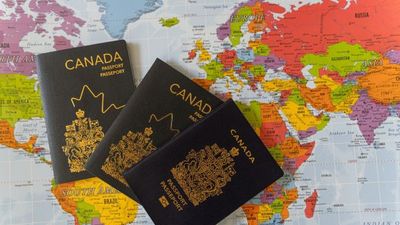
Manitobans are still eager to travel, but how and where they’re going is changing, and so are the risks they may not see coming. New survey findings released as part of CAA Manitoba’s Travel Wise Week show a clear shift toward staying closer to home. Sixty per cent of Manitobans prefer travelling within Canada, while just 20 per cent are planning a trip to the United States. Global uncertainty, rising costs, and changing perceptions about international destinations are influencing those decisions. “We’re seeing more Manitobans choosing Canada because it feels familiar and safe,” said Susan Postma, Regional Manager, CAA Manitoba. “But that sense of comfort can lead people to underestimate the financial risks that can still come with travelling, even within our own borders.” Staying in Canada and Leaving Coverage Behind While Canadians feel confident travelling within their own country, many assume “home turf” means low risk. This misconception leaves millions exposed to unexpected costs when trips don’t go as planned. The survey found that 64 per cent of Canadians did not have travel insurance for their most recent trip within Canada. Provincial health coverage often provides only limited protection when travelling outside your home province, and in some cases, does not cover services such as air ambulances, extended hospital stays, or trip interruption costs. Recent media stories have highlighted Canadians facing unexpected medical bills, emergency transportation costs, or sudden trip changes, all during trips that never left the country. “People are often surprised to learn how quickly expenses can add up if something goes wrong,” says Postma. “A simple injury on a hiking trail or a family emergency back home can turn a short trip into a major financial stress.” With recent geopolitical incidents in Cuba, Mexico and the Middle East, CAA’s Travel Wise Campaign is focused on helping Canadians understand risk, avoid misinformation, and make decisions grounded in facts rather than fear or speculation. Here are some tips: Understand what an “avoid non-essential travel” advisory really means: Travel advisories reflect real-time safety risks, and an “avoid non-essential travel” signal indicates rapidly changing conditions that may change quickly, and support may be limited. Know that advisories can affect your insurance and your exit options: Travelling against government advice can limit your travel insurance, including medical care or emergency evacuation. Coverage must be in place before conditions deteriorate. Flexibility is essential; review cancellation and change policies now: Travellers should proactively confirm cancellation deadlines, refund eligibility, rebooking options for all reservations and understand the limits of credit card protections, employee benefits, and pension coverage benefits. Stay connected to Canada while abroad: Canadians should monitor official updates from Global Affairs Canada and register with the Registration of Canadians Abroad service before departure or while on location if something arises. Rely on reputable sources and be cautious of misinformation online: Canadians should rely on official government sources, established travel organizations, and verified news outlets for travel guidance. Additionally, the CAA Air Passenger Help Guide helps you understand your rights when faced with common flight disruptions, such as delayed or cancelled flights or lost bags. The guide can be found at CAA.ca/AirPassengerHelpGuide. For more information on travel insurance and how to stay protected, visit www.caamanitoba.com/travelwise The online survey was conducted by DIG Insights from September 29 – October 8, 2025, with 2,0210 Canadian travellers aged 25 to 64 who have travelled outside their province of residence in the past three years and plan to travel again in the next five years, out of which 137 travellers were from Manitoba or Saskatchewan. Based on the sample size of n=2,021 and with a confidence level of 95%, the margin of error for this research is +/- 2%.)


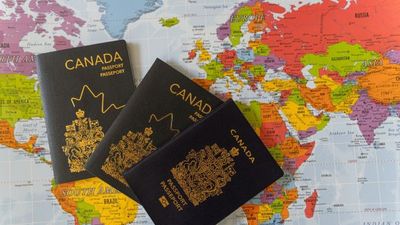
Canadians remain passionate about exploring new destinations, but changing global dynamics are reshaping how and where they travel. According to CAA’s Travel Wise survey, more than half of Canadians (51 per cent) now say geopolitical and economic factors, such as instability abroad, a perception of the U.S. as being less welcoming, and rising travel costs, are influencing where Canadians choose to travel. Shifting Destinations and Attitudes Travel patterns are evolving. The survey conducted in 2025 shows that only 22 per cent of Canadians planned to visit the U.S., an 11 per cent drop from 2024. Instead, many are opting to stay within Canada (40 per cent) or explore international destinations. The perception of the U.S. as less welcoming, coupled with rising travel costs and global instability, is prompting Canadians to reconsider their travel plans. "Canadians are adventurous by nature, but today’s travellers are having to make thoughtful decisions," says Kaitlynn Furse, Director of Corporate Communications. "We’re seeing a clear trend toward exploring closer to home and seeking out new international experiences, all while keeping an eye on safety and value." Travel Insurance: A Critical, Yet Overlooked, Safeguard While Canadians feel confident travelling within their own country, many assume “home turf” means low risk. This misconception leaves millions exposed to unexpected costs when trips don’t go as planned. The survey found that 64 per cent did not have travel insurance on their most recent trip when travelling within Canada. “Recent stories have highlighted Canadians facing unexpected medical bills, trip interruptions, and emergency expenses while travelling within Canada, often because they didn’t realize their regular provincial health coverage or credit card benefits had limits,” says Furse. “If something were to happen, provincial healthcare only partially covers you outside of your home, and sometimes, not at all, covering only basic emergency medical services when travelling in another province.” Among those who travelled uninsured, 44 per cent believed coverage wasn’t needed, and 29 per cent thought their provincial government’s health plan would suffice. However, provincial healthcare only partially covers emergency medical services in other provinces, and sometimes not at all. “One of the biggest misconceptions we see is the idea that travelling within Canada comes with less risk,” says Furse. “Unexpected medical costs, trip interruptions and emergencies can happen anywhere, and many travellers are surprised to learn they’re not fully covered.” With recent geopolitical incidents in Cuba, Mexico and the Middle East, Travel Wise is focused on helping Canadians understand risk, avoid misinformation, and make decisions grounded in facts rather than fear or speculation. Here are some tips: Understand what an “avoid non-essential travel” advisory really means: Travel advisories reflect real-time safety risks, and an “avoid non-essential travel” signal indicates rapidly changing conditions that may change quickly, and support may be limited. Know that advisories can affect your insurance and your exit options: Travelling against government advice can limit your travel insurance, including medical care or emergency evacuation. Coverage must be in place before conditions deteriorate. Flexibility is essential; review cancellation and change policies now: Travellers should proactively confirm cancellation deadlines, refund eligibility, rebooking options for all reservations and understand the limits of credit card protections, employee benefits, and pension coverage benefits. Stay connected to Canada while abroad: Canadians should monitor official updates from Global Affairs Canada and register with the Registration of Canadians Abroad service before departure or while on location if something arises. Rely on reputable sources and be cautious of misinformation online: Canadians should rely on official government sources, established travel organizations, and verified news outlets for travel guidance. For many travellers, cancelled or delayed flights remain a top concern. CAA’s Air Passenger Help Guide offers a straightforward resource for travellers facing disruptions. The online survey was conducted by DIG Insights from September 29 – October 8, 2025, with 2,0210 Canadian travellers aged 25 to 64 who have travelled outside their province of residence in the past three years and plan to travel again in the next five years. Based on the sample size of n=2,021 and with a confidence level of 95%, the margin of error for this research is +/- 2%.)

VCU College of Engineering receives $600,000 for AI-driven cybersecurity research
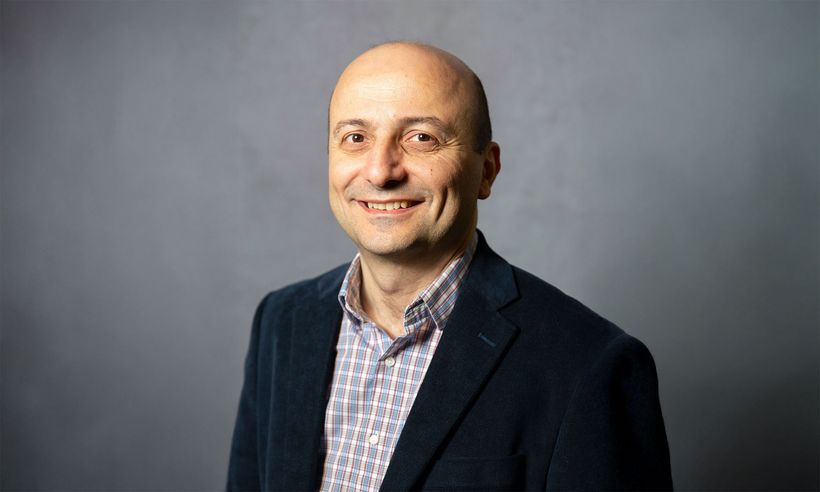
To advance AI-enabled cybersecurity research, the National Science Foundation (NSF) presented Kemal Akkaya, Ph.D., professor and chair of the Department of Computer Science, with a $600,000 grant through the organization’s Cybersecurity Innovation for Cyberinfrastructure program. Akkaya’s three-year project will explore how large language models (LLMs) can automate packet labeling for intrusion detection systems. “From transportation and healthcare to finance, improving the accuracy of machine learning algorithms used to defend the networks that underpin these sectors’ cyberinfrastructure is critical for protecting them from cyberattacks. Strengthening these defenses helps ensure the reliability and security of the essential services people rely on every day,” said Akkaya. Intrusion detection systems monitor network traffic to identify suspicious or malicious activity. These systems rely on machine learning models trained on large volumes of accurately labeled data. Producing those datasets, however, is time intensive and often requires expert cybersecurity knowledge. As digital systems increasingly power transportation, health care, finance and communication, the volume and sophistication of cyber attacks continue to grow. At the same time, artificial intelligence is reshaping how both attackers and defenders operate. Improving how quickly and accurately security systems can be trained is critical to protecting the infrastructure that supports daily life. Akkaya’s project will investigate how generative AI can help address this challenge. The team will fine tune open-source large language models using network data, threat signatures and expert annotations. Model accuracy will be strengthened through retrieval-augmented refinement, ensemble modeling and human-in-the-loop verification. Labeled datasets will be released in stages to support the development and evaluation of cybersecurity models. Using data from AmLight, an international research and education network operated by Florida International University (FIU), the project includes collaboration with researchers from FIU. The award strengthens VCU’s growing leadership in AI-enabled cybersecurity research and provides hands-on research training for graduate students. Resulting datasets from this work will support machine learning education for undergraduate students.


The AI In Action Symposium, hosted by the LSU E. J. Ourso College of Business, brings together expert voices at the heart of the AI revolution to explore how they have successfully navigated this evolving landscape. The 2026 symposium focuses on the practical implications of AI in business, including hiring AI-ready talent, ensuring responsible and ethical use, and exploring the challenges of implementing AI across both large enterprises and small startups. Speakers Attendees will hear from Louisiana leaders and national AI experts, including… Secretary Bruce Greenstein of the Louisiana Department of Health April Wiley, Senior Vice President at Community Coffee Robert Veit and Julian Tandler from Scale Team Six, a San Francisco-based business accelerator Dr. Tonya Jagneaux, who leads medical analytics at the Franciscan Missionaries of Our Lady Health System (FMOLHS) Hunter Thevis, president and co-founder of Lafayette-based S1 Technology …and many more! Details March 20, 2026, 8:00 a.m. – 1:00 p.m. Registration deadline is March 15. Held on the LSU A&M Campus, in the LSU Student Union Register at lsu.edu/business/ai-symposium Discount available for LSU System employees