
Experts Matter. Find Yours.
Connect for media, speaking, professional opportunities & more.
#Expert Podcasts: How CARF Accreditation supports development and adds value
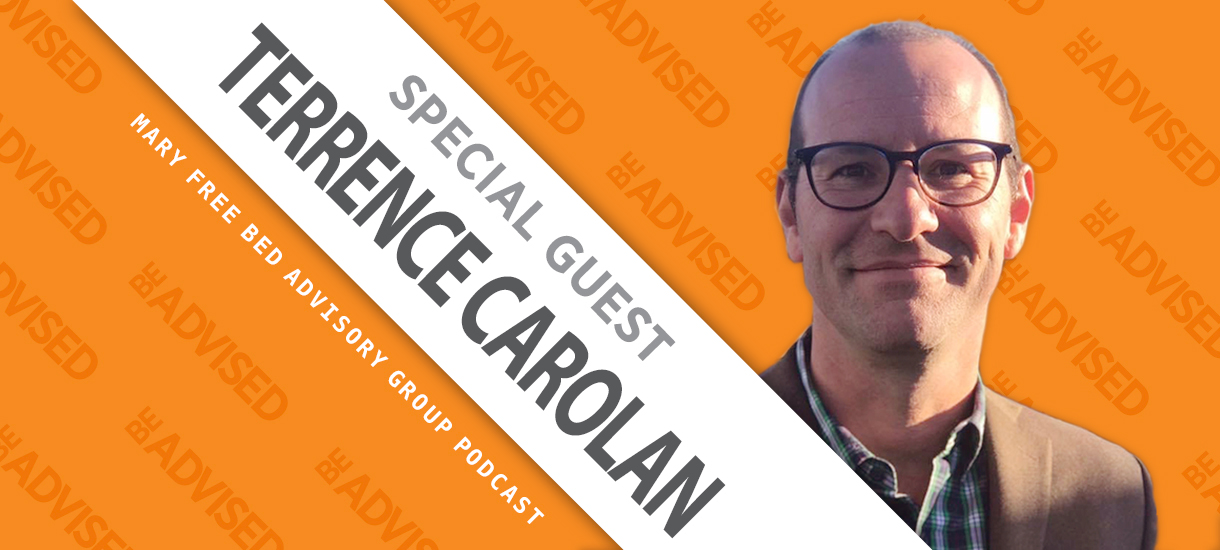
Thinking about accreditation for your rehabilitation facility? The newest Be Advised podcast is for you. Mary Free Bed’s Advisory Group podcast, Be Advised, is diving into the benefits of CARF Accreditation for health and human service organizations. The Commission on Accreditation of Rehabilitation Facilities (CARF) has been accrediting organizations since 1966. The guest for this episode is Terrence Carolan, managing director of the Medical Rehabilitation and Aging Services for CARF International. Carolan has more than 20 years of experience in the field of medical rehabilitation as an administrator, provider, and educator. He holds two master’s degrees, one in physical therapy and one in business administration. Before joining CARF as the managing director, Terrence was a CARF surveyor for more than 10 years. In his managing director role, Terrence oversees CARF’s medical rehabilitation area which includes standards for: Comprehensive Integrated Inpatient Rehabilitation Program Outpatient Medical Rehabilitation Program Residential Rehabilitation Program Home and Community Services Concussion Rehabilitation Program Interdisciplinary Pain Rehabilitation Program Occupational Rehabilitation Program Occupational Rehabilitation Program–Comprehensive Services Vocational Services Independent Evaluation Services Case Management CARF also accredits specialty programs in the areas of: Pediatrics Amputation Brain injury Cancer Spinal Cord Injury Stroke Be Advised is hosted by Joyal Pavey, vice president of the Mary Free Bed Advisory Group. On this episode of Be Advised, Joyal and Terrence discuss: What makes CARF unique? The national and international span of CARF Common questions about the accreditation process Advice for first time accreditation What’s next for CARF in the coming five years You can check out the podcast here: Looking to know more about accreditation or connect with Terrence? View his profile below to arrange an interview today.


#Expert Podcasts: CARF Accreditation is a process, not an event
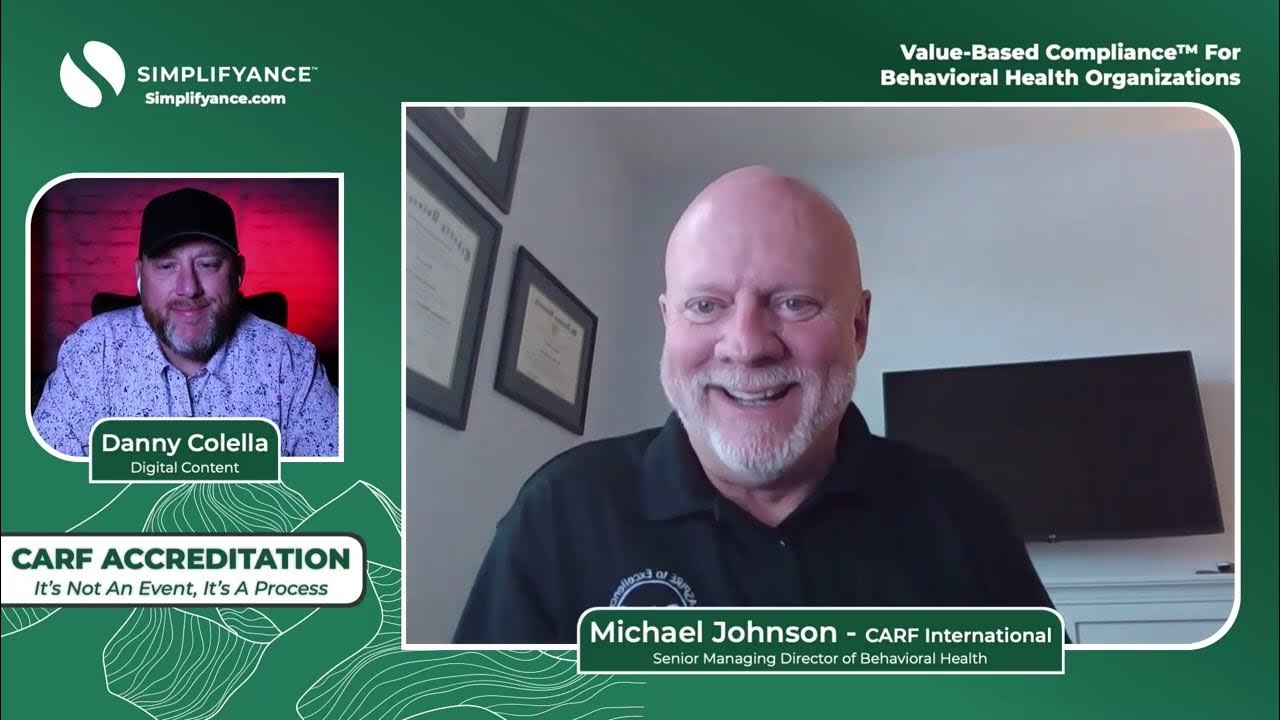
Recently, CARF International's Michael Johnson sat down with Simplifyance™ for a great conversation of all things accreditation. The podcast link is provided below. Simplifyance™ had the privilege of speaking with Michael Johnson, Senior Managing Director of Behavioral Health for CARF International. We delved into the world of accreditation, discussing its immense value, the supportive process for organizations during surveys, and uncovering key best practices. CARF is renowned for its commitment to ensuring excellence in healthcare delivery and service outcomes. Michael shared valuable insights into the accreditation process and shed light on how CARF assists organizations in achieving survey success. Michael emphasized the importance of person-centered care, evidence-based practices, and fostering a culture of accountability and learning. These elements are crucial in driving positive outcomes and delivering compassionate, effective care to those in need. And if you're a interested in knowing more about accreditation or the work CARF International does — let us help with your questions. Michael Johnson is Senior Managing Director of Behavioral Health at CARF and is an expert in treatment strategies for mental health and substance use disorder. View his profile below to arrange an interview today.


National Vietnam Veterans Day | Media Advisory
Tomorrow is National Vietnam Veterans Day commemorates the sacrifices of Vietnam veterans and their families, reflecting on the complex legacy of the Vietnam War. This observance not only serves as a reminder of the past but also fosters dialogue on veterans' affairs, mental health, and the evolving understanding of war's impact on society. Delving into this topic provides an opportunity to explore: The historical context and legacy of the Vietnam War Mental health support for veterans The evolution of veterans' benefits over time Public perceptions of the Vietnam War and its veterans The role of education in preserving the history of the Vietnam War Connect with an Expert about National Vietnam Veterans Day For journalists seeking research or insights for their coverage about the Vietnam War and Veterans in America, here is a select list of experts from our database. To search our full list of experts visit www.expertfile.com Christian Appy Professor of History and Director of the Ellsberg Initiative for Peace and Democracy – University of Massachusetts Amherst Kara Dixon Vuic LCpl. Benjamin W. Schmidt Professor of War, Conflict, and Society in 20th-Century America – Texas Christian University Neil Maher Professor – New Jersey Institute of Technology Thomas Schwartz Distinguished Professor of History – Vanderbilt University Lawrence A. Tritle Professor Emeritus of History – Loyola Marymount University Photo Credit: Caleb Fisher


Aston University research centre to focus on using AI to improve lives
• New centre specifically focuses on using AI to improve society • Current research is designed to improve transport, health and industry • “There have been a lot of reports focusing on the negative use of AI...this is why the centre is so important now.” Aston University researchers have marked the opening of a new centre which focuses on harnessing artificial intelligence (AI) to improve people’s lives. The Aston Centre for Artificial Intelligence Research and Application (ACAIRA) has been set up to become a West Midlands hub for the use of AI to benefit of society. Following its official opening, the academics leading it are looking to work with organisations and the public. Director Professor Anikó Ekárt said: “There have been a lot of reports focusing on the negative use of AI and subsequent fear of AI. This is why the centre is so important now, as we aim to achieve trustworthy, ethical and sustainable AI solutions for the future, by co-designing them with stakeholders.” Deputy director Dr Ulysses Bernardet added: “We work with local, national and international institutions from academia, industry, and the public sector, expanding Aston University’s external reach in AI research and application. “ACAIRA will benefit our students enormously by training them to become the next generation of AI practitioners and researchers equipped for future challenges.” The centre is already involved in various projects that use AI to solve some of society’s challenges. A collaboration with Legrand Care aims to extend and improve independent living conditions for older people by using AI to analyse data collected through home sensors which detect decline in wellbeing. This allows care professionals to change and improve individuals’ support plans whenever needed. A project with engineering firm Lanemark aims to reduce the carbon footprint of industrial gas burners by exploring new, more sustainable fuel mixes. Other projects include work with asbestos consultancy Thames Laboratories which will lead to reduced costs, emissions, enhanced productivity and improved resident satisfaction in social housing repairs and a partnership with transport safety consultancy Agilysis to produce an air quality prediction tool which uses live data to improve transport planning decisions. The centre is part of the University’s College of Engineering and Physical Sciences and its official launch took place on the University campus on 29 February. The event included a talk by the chair of West Midlands AI and Future Tech Forum, Dr Chris Meah. He introduced the vision for AI within the West Midlands and the importance of bringing together academics, industry and the public. Current research in sectors such as traffic management, social robotics, bioinformatics, health, and virtual humans was highlighted, followed by industry talks from companies Smart Transport Hub, Majestic, DRPG and Proximity Data Centres. The centre’s academics work closely with West Midlands AI and Future Tech Forum and host the regular BrumAI Meetup. About Aston University For over a century, Aston University’s enduring purpose has been to make our world a better place through education, research and innovation, by enabling our students to succeed in work and life, and by supporting our communities to thrive economically, socially and culturally. Aston University’s history has been intertwined with the history of Birmingham, a remarkable city that once was the heartland of the Industrial Revolution and the manufacturing powerhouse of the world. Born out of the First Industrial Revolution, Aston University has a proud and distinct heritage dating back to our formation as the School of Metallurgy in 1875, the first UK College of Technology in 1951, gaining university status by Royal Charter in 1966, and becoming The Guardian University of the Year in 2020. Building on our outstanding past, we are now defining our place and role in the Fourth Industrial Revolution (and beyond) within a rapidly changing world. For media inquiries in relation to this release, contact Nicola Jones, Press and Communications Manager, on (+44) 7825 342091 or email: n.jones6@aston.ac.uk


Batter Up! Major League Baseball Season Begins Tomorrow! | Media Advisory
The start of the Major League Baseball season is more than just America's favorite pastime returning; it's a cultural event that ties into themes of community, nostalgia, and the ever-evolving narrative of sports in society. Like every big league, the start of the season speaks to the unity and division that sports can create, the economics of professional leagues, and the role of athletes in social movements. Possible story angles include: The economic impact of MLB on local communities Innovations in sports technology and data analytics The role of sports in bridging cultural divides MLB's response to social justice issues Health and safety protocols in professional sports Gambling, is it a growing problem for athletes? Connect with an Expert about Major League Baseball For journalists seeking research or insights for their coverage about the MLB and the economics behind professional baseball, here is a select list of experts from our database. To search our full list of experts visit www.expertfile.com Curt Smith Senior Lecturer – University of Rochester Christina Gipson Assistant Professor of Sport Management – Georgia Southern University Greg Stewart, MD W. Kennon McWilliams Professor of Sports Medicine – Tulane University Photo Credit: Michael Lewis Professor of Marketing; Faculty Director, Emory Marketing Analytics Center · Emory University, Goizueta Business School Lisa Pike Masteralexis Senior Associate Dean and Professor of Sport Management – University of Massachusetts Amherst Photo Credit: Joshua Peacock

Rethinking Caregiving Support for the Sandwich Generation
The "sandwich generation" refers to adults who are simultaneously caring for their children as well as older parents or relatives. This places unique strains on caregivers, who must balance their family responsibilities with work and their own self-care. As Guy Weissinger, PhD, MPhil, RN, the Diane Foley Parrett Endowed Assistant Professor at Villanova University's M. Louise Fitzpatrick College of Nursing, notes, many feel like they are being "shortchanged" on both sides—unable to fully support their children or their aging relatives. The result is stress, guilt and difficult decisions about how to allocate limited time and resources. "Hard decisions are also a psychological tax," Dr. Weissinger says. "You have to use the resource of time and brain energy to weigh the options, so it compounds on itself every time they intersect. And that's complicated and hard." These challenges have only increased due to larger societal shifts, according to Melissa O'Connor, PhD, MBA, RN, FGSA, FAAN, the M. Louise Fitzpatrick Endowed Professor in Community and Home Health Nursing in the College of Nursing. "For the first time in the history of the world, older adults will outnumber children in the United States by 2035," said Dr. O'Connor. This rise in numbers of older adults foreshadows a looming caregiving crisis, as more seniors will require care without enough nurses and family caregivers to meet the need. The sandwich generation can also feel overwhelmed due to lack of training in managing complex care needs. As Dr. O'Connor states, there is "no caregiver school"—instead it's "baptism by fire." Learning wound care, managing feeding tubes, giving medications and handling dementia behaviors on the fly can take an emotional toll. Caregiver stress and burnout have also been linked to declines in physical and mental health, and financial strain, as well as increased elder abuse (though unintentional), she says. Dr. O'Connor believes that home health services can serve as a critical resource for supporting overwhelmed sandwich generation caregivers. Home health nurses, aides, therapists and social workers can provide skilled care, educate family members, assess safety and coordinate services. "Home health can make or break someone's success at staying home,” Dr. O'Connor says. "It can also make or break the stress levels of patients and caregivers. If caregivers have support, they can do a really good job." However, misconceptions about home health care persist. Many do not understand what home health services entail or worry about strangers entering their home. Although refusing home health may seem like the safer option to some, the consequences of caregivers trying to provide care without assistance can be dire. Isolated and overwhelmed caregivers who don't have support oftentimes end up seeing their older adult parents experience health declines that necessitate nursing home placement, which takes a financial toll on families as well. From Dr. Weissinger's perspective, the caregiving crisis is a "family and a systems issue." "This is a systematic problem, so we need policy changes at the state, national and organizational levels to address it. We can't solve society-level problems through individual responses," he says. Supporting caregivers and easing this crisis will require policy changes at the highest levels along with a societal shift in how we view and assist caregivers. Though individual families feel the squeeze, truly addressing the caregiving crisis demands broad, systemic solutions. With an aging population, the need for action in the form of policy change is more urgent than ever.


What Happened to Haiti to Make it a Perpetual Failed State? | Media Advisory
Haiti's prolonged struggle with political instability, economic hardship, and natural disasters raises critical questions about international aid, governance, and the path to sustainable development. This topic is not just newsworthy for its historical complexity but also for its implications on human rights, regional stability, and global efforts to address poverty and inequality. Haiti's story prompts a deeper examination of: The impact of foreign intervention and aid Political corruption and its effects on governance Economic policies and their role in sustainable development Social movements and the fight for democracy Environmental degradation and resilience Connect with an Expert about What Happened to Haiti to Make it a Perpetual Failed State? For journalists seeking research or insights for their coverage about the ongoing crisis in Haiti, here is a select list of experts from our database. To search our full list of experts, visit www.expertfile.com Ken Keen Associate Professor in the Practice of Organization & Management; Associate Dean for Leadership; Lieutenant General, USA (Retired) – Emory University, Goizueta Business Robert Fuller, M.D., FACEP UConn Health Chairman of Emergency Medicine – University of Connecticut Benjamin Hebblethwaite Associate Professor in the Department of Languages, Literatures and Cultures – University of Florida Paul Kramer Associate Professor of History – Vanderbilt University Photo credit: Heather Suggitt

Research finds video games improve mobility for children with autism
University of Delaware professor Anjana Bhat has a long history of finding creative ways to keep autistic children engaged with the added benefit of improving their flexibility and gross motor skills. She’s used dance and play in the past but is now testing video games to see if they’re a viable intervention to promote movement in this population. Bhat and her team in the Move to 2 Learn Innovation Lab at UD's STAR Campus have been using Ring Fit on Nintendo Switch to help children with autism get their daily dose of exercise. “Children love video games, and they’re fun,” said Bhat, professor of physical therapy in UD's College of Health Sciences. “But there’s also a lot of evidence that video games with an exercise component have positive effects on cognition, social interactions and general physical activity levels.” She added that children with autism have a predilection for technology with a love of computers and robots, but exergaming hasn’t been studied in this population. “Technologies that have been tested and studied in children with autism mainly target sedentary functions that look at improvement in executive function and decision-making, but not necessarily exergaming,” Bhat said. “Exergaming has been studied in older populations and healthy children, but not so much in children with autism, so this study is unique.” After testing the intervention on a dozen children with autism over eight weeks, the consensus is that it works. “I’ve never seen anything grab their attention so much. Across the board, this tool is far more engaging than any other tool we’ve used before, including music and movement, yoga, general exercise, and outdoor play, which do not always work for every child,” Bhat said. “With exergaming and the variety of content that exists, most children remain engaged, and that’s what’s so unusual about this intervention compared to past interventions.” Games like tennis, volleyball, badminton, golf, sword fighting and bowling focus on the upper extremities, while soccer focuses on the lower extremities. Bhat receives accurate measures of improvement in a child’s ability through accelerometers in the video game controllers. “This is one place where children with autism shine,” Bhat said. “Their visual learning and sensory enhancements help them excel. This gives them a sense of self-efficacy and self-assurance that — they’re good at this,” she said. “It also gives them a sense of connection to the community because they can make friends and feel empowered. Video games are a great equalizer.” Bhat’s innovative pilot study was funded through a $50,000 award from the donor-created Maggie E. Neumann Health Sciences Research Fund, which targets research and innovation that aims to improve the lives of people with disabilities. Equipped with data from this study, Bhat hopes to expand access to the intervention and test it in the community. It’s already available at D-Fit Plus, an inclusive fitness center in New Castle that aims to help those with special needs explore fitness to build social skills and confidence, grow cognition, and manage stress. “It’s relatively low cost,” Bhat said. “Another advantage of this intervention is that you don’t need a highly skilled person present to work the intervention because the game leads the activity, making it accessible if embedded in the community.” This also provides a social outlet for the child’s parents. “Community settings bring a sense of connection for the child’s parents, who are always looking for community-based activities, and many environments aren’t suitable for children with autism,” Bhat said. “Many environments are too noisy or distracting. Exergaming removes those barriers and allows the child to engage with the game and maybe another partner.” Bhat’s previously published research has shown that 80% of people with autism face motor challenges. Her research is so compelling that she’s made a case to change the definition of autism to include motor impairments so those on the spectrum can get the proper physical therapy or gross motor interventions that could dramatically improve their quality of life.


Cancer Diagnosis and Prevention Breakthroughs | Media Advisory
With two cancer diagnoses in the Royal family - cancer is regrettably a trending topic but also a vitally important one for everyone. In the ongoing battle against cancer, recent advancements in diagnosis and prevention offer promising avenues for both medical practitioners and the general public. With cancer being one of the leading causes of death globally, developments in this field not only hold significant importance for healthcare but also for individuals and families impacted by the disease. Here's why this matters and potential story angles: Why it Matters: Health Impact: Improved diagnostic tools and preventive measures can lead to earlier detection and more effective treatment options, potentially saving lives. Economic Implications: The economic burden of cancer treatment on individuals, families, and healthcare systems underscores the importance of preventative measures and early detection. Public Health: Addressing cancer at the diagnostic and prevention stages contributes to broader public health initiatives, reducing the overall incidence and mortality rates. Story Angles: Breakthrough Technologies: Explore innovative diagnostic technologies such as liquid biopsies or AI-driven imaging systems transforming cancer detection. Lifestyle and Prevention: Investigate lifestyle factors, from diet and exercise to environmental exposures, and their role in cancer prevention. Genetic Research: Cover advancements in genetic testing and personalized medicine, offering insights into individual risk factors and tailored prevention strategies. Access to Care: Examine disparities in access to cancer screening and prevention measures, particularly among underserved communities. Survivor Stories: Highlight stories of individuals who have benefited from early detection or preventive interventions, offering hope and inspiration. Policy and Advocacy: Discuss the role of policy initiatives and advocacy efforts in promoting cancer prevention strategies and ensuring equitable access to screening and diagnostic services. Connect with an Expert about Cancer Diagnosis and Prevention Breakthroughs For journalists seeking research or insights for their coverage about Cancer Diagnosis and Prevention Breakthroughs here is a select list of experts from our database. To search our full list of experts, visit www.expertfile.com Anna McDaniel Dean of the College of Nursing – University of Florida Jorge Cortes Director, Georgia Cancer Center – Augusta University Nicholas J. Petrelli Bank of America endowed medical director of the Helen F. Graham Cancer Center and Research Institute – ChristianaCare Katherine Reeves Professor of Epidemiology and Associate Dean of Graduate and Professional Studies, School of Public Health and Health Sciences – University of Massachusetts Amherst Nicole Onetto Deputy Director and Chief Scientific Officer – Ontario Institute for Cancer Research Photo Credit: National Cancer Institute

How Vulnerable Are America’s Water Systems to Outside Attack? | Media Advisory
The security of America's water systems is an issue of national importance, touching on the well-being and safety of millions. This topic gains urgency as it ties into broader concerns about infrastructure vulnerability, cyber-terrorism, and the readiness of public utilities to handle emerging threats. In light of recent breaches and heightened geopolitical tensions, the resilience of these essential systems is not just a matter of public safety but also of national security. Exploring this issue offers insights into: Cybersecurity measures for water supply systems The impact of climate change on water system resilience Federal and state responses to infrastructure threats Public health implications of water system breaches The role of technology in safeguarding against attacks Connect with an Expert about the Security of America's Water Systems For journalists seeking research or insights for their coverage about the Security of America's Water Systems, here is a select list of experts from our database. To search our full list of experts, visit www.expertfile.com Seth Hamman Director, Center for the Advancement of Cybersecurity and Associate Professor of Cyber Operations and Computer Science - Cedarville University David Bader Distinguished Professor, Data Science · New Jersey Institute of Technology Vladlena Benson Professor of Cybersecurity Management · Aston University William Hatcher Chair of the Department of Social Sciences · Augusta University TJ O’Connor, LTC (Ret.) Assistant Professor, Cybersecurity Program Chair | Computer Engineering and Sciences · Florida Tech Photo by: Adi Goldstein