
Experts Matter. Find Yours.
Connect for media, speaking, professional opportunities & more.

(WILMINGTON, Del. – June 22, 2023) For a fourth year in a row, Modern Healthcare has recognized ChristianaCare President and CEO Janice E. Nevin, M.D., MPH, as one of the nation’s 50 Most Influential Clinical Executives. The publication praised her and ChristianaCare for the innovative work being done to extend the reach of the health system via new offerings, including Hospital Care at Home, ChristianaCare Business Health Solutions and Virtual Primary Care. “Dr. Nevin has a bold, courageous and clear-eyed vision for the future of health care regionally and nationally,” said Nicholas Marsini, chair of the Board of Directors of ChristianaCare. “In service of our system’s vision of creating health together so that every person can flourish, she has committed ChristianaCare to transforming care delivery by aspiring to keep people healthy at home, radically simplify access and much more.” Dr. Nevin has led ChristianaCare since 2014. Under her leadership the health system has experienced substantial growth and maintained a high level of quality and safe care. In addition to numerous other accolades, Healthgrades has continually recognized ChristianaCare as one of America’s Top 50 Hospitals, and Forbes has repeatedly called ChristianaCare one of the country’s best health systems to work for. Modern Healthcare’s annual list of the most influential clinical executives honors currently or previously licensed clinicians in executive roles who are deemed by their peers and the senior editors of Modern Healthcare to be paving the way to better health through their executive responsibility, leadership qualities, innovation, community service and achievements inside and outside of their respective organizations. “These executives are broadening access to care through expansion and embracing digital tools to make their operations more efficient and their patients more connected,” said Mary Ellen Podmolik, editor-in-chief of Modern Healthcare. “They also are tackling workforce challenges by developing strategies to attract newcomers to the field. The complete list is included Modern Healthcare’s June 19 issue with awardee profiles available at www.modernhealthcare.com/50mostinfluential. About ChristianaCare Headquartered in Wilmington, Delaware, ChristianaCare is one of the country’s most dynamic health care organizations, centered on improving health outcomes, making high-quality care more accessible and lowering health care costs. ChristianaCare includes an extensive network of primary care and outpatient services, home health care, urgent care centers, three hospitals (1,299 beds), a freestanding emergency department, a Level I trauma center and a Level III neonatal intensive care unit, a comprehensive stroke center and regional centers of excellence in heart and vascular care, cancer care and women’s health. It also includes the pioneering Gene Editing Institute. ChristianaCare is nationally recognized as a great place to work, rated by Forbes as the 5th best health system to work for in the United States and by IDG Computerworld as one of the nation’s Best Places to Work in IT. ChristianaCare is rated by HealthGrades as one of America’s 50 Best Hospitals and continually ranked among the nation’s best by U.S. News & World Report, Newsweek and other national quality ratings. ChristianaCare is a nonprofit teaching health system with more than 260 residents and fellows. With its groundbreaking Center for Virtual Health and a focus on population health and value-based care, ChristianaCare is shaping the future of health care. About Modern Healthcare Modern Healthcare is the most trusted business news and information brand in the healthcare industry. Modern Healthcare empowers healthcare leaders and influencers to make timely and informed business decisions. To learn more or subscribe, go to www.modernhealthcare.com/subscriptions.


ChristianaCare ranked as 81st best hospital in the United States and the only health system in Delaware to make the list For the fifth consecutive year, ChristianaCare has earned a spot in Newsweek’s exclusive list of the World’s Best Hospitals – United States, recognized for consistently being at the forefront in care, research and innovation. “Receiving this honor year after year is a testament to the work ChristianaCare caregivers do each day to create health together so that every person can flourish,” said ChristianaCare President & CEO Janice E. Nevin, M.D., MPH. “At its core our mission is a simple, yet profound, one. We take care of people. And I am so proud of everyone in this organization for what five-straight years of being called one of the World’s Best Hospitals says about the exceptional quality of the care we provide.” Headquartered in Wilmington, Del., ChristianaCare ranked 81st in the United States in the annual list that ranks 2,300 hospitals in 28 countries. “ChristianaCare has gained a global reputation thanks to our unwavering focus to provide expert, high-quality care,” said Kert Anzilotti, M.D., MBA, chief medical officer at ChristianaCare. “This award belongs to all our caregivers, who continuously seek new knowledge, are true to their word and are committed to delivering exceptional care to every patient we serve.” Compiled by Newsweek and the global data firm Statista, the lists are based on the following data sources: Recommendations from tens of thousands of doctors, health care professionals and managers across the world. The survey asked participants to recommend hospitals in their own country as well as in other countries. The survey did not permit recommendations of the health professional’s own hospital. Patient surveys originating from publicly available data that included areas such as their general satisfaction with the hospital and their satisfaction with their medical care. Hospital quality metrics such as data on the quality of care for specific treatments, data on hygiene measures and patient safety, and data on clinician-patient ratios. The Patient Reported Outcome Measures (PROM) surveys, which are standardized, validated questionnaires completed by patients to measure their well-being and quality of life. The recognition by Newsweek echoes other quality recognitions that ChristianaCare has received during the past 12 months: For the third consecutive year, Healthgrades named ChristianaCare one of America’s 50 Best Hospitals for 2023. Healthgrades also ranked ChristianaCare as one of America’s 50 Best Hospitals for five service lines: cardiac care, coronary intervention, joint replacement, spine surgery and gastrointestinal surgery. For the seventh consecutive year, the College of Healthcare Information Management Executives named ChristianaCare a Most Wired Health Care Technology Leader. U.S. News & World Report rated ChristianaCare as the No. 42 hospital in the nation for obstetrics and gynecology and a High Performing Hospital for Maternity. U.S. News & World Report also rated ChristianaCare as high-performing in orthopedics. For the second consecutive year, Forbes ranked ChristianaCare as one of the Best Employers for Diversity and Inclusion in the United States. The Human Rights Campaign Foundation gave ChristianaCare’s Christiana Hospital and Wilmington Hospital the top score in the Human Rights Campaign Foundation’s most recent Healthcare Equality Index.

Expert comment on new NHS childhood obesity clinics
Dr Duane Mellor, Senior Teaching Fellow, Centre for Health & Society Aston Medical School and Associate Dean Public Engagement is available for comment on new NHS childhood obesity clinics "It would be about supporting the whole person living with obesity alongside their family. It is important that higher body weight is not a choice, but the result of biology and our modern environment. Families and young people need support to make healthier lifestyle choices easier. We need to focus on kind and effective ways to improve health, weight change is just a product when health behaviours change and should not be seen as the only or main aim." For more details contact Nicola Jones Press and Communications Manager 07825 342091 or n.jones6@aston.ac.uk


ChristianaCare Earns IABC Gold Quill Award for Innovation in Media Relations
ExpertFile-powered “Our Experts” site wins top international industry award for program that helps journalists reach health experts – fast ChristianaCare, with its collaborative partner ExpertFile, has been recognized with a 2023 Gold Quill Award from the International Association of Business Communicators (IABC) for its “Our Experts” media database. Designed to easily and quickly connect journalists to subject-matter experts, this online resource has been recognized with the top prize — “Award of Excellence” in the Communications Management, Media Relations category. “Good communication is foundational to our mission of serving as expert, caring partners in the health of our neighbors,” said Karen Browne, vice president of marketing and communications at ChristianaCare. “Through the development of our online database as a resource for journalists, we are making our experts more accessible to provide timely, accurate health information to the diverse communities we serve.” The IABC Gold Quill Awards showcase business communication excellence and are among the most prestigious awards programs in the communications industry. Each entry is scored independently by evaluators who judge the award submission on criteria that include stakeholder analysis, strategic and tactical planning, quality of execution and measurable results. “It’s impressive to see how ChristianaCare has reimagined how it can more proactively serve the community by being more approachable to journalists,” said Peter Evans, co-founder and CEO of ExpertFile. “We’re excited to share this prestigious industry award with them.” ChristianaCare’s innovation was driven out of a desire to improve the reach, impact and efficiency of its media relations efforts — amid rapidly increasing demand — without the need to add more resources. In just two years, ChristianaCare’s “Our Experts” media database has received more than 20,000 online visits and helped to generate more than 200 news stories. The IABC Gold Quill Awards showcase business communication excellence and are among the most prestigious awards programs in the communications industry. Each entry is scored independently by evaluators who judge the award submission on criteria that include stakeholder analysis, strategic and tactical planning, quality of execution and measurable results. “It’s impressive to see how ChristianaCare has reimagined how it can more proactively serve the community by being more approachable to journalists,” said Peter Evans, co-founder and CEO of ExpertFile. “We’re excited to share this prestigious industry award with them.” ChristianaCare’s innovation was driven out of a desire to improve the reach, impact and efficiency of its media relations efforts — amid rapidly increasing demand — without the need to add more resources. In just two years, ChristianaCare’s “Our Experts” media database has received more than 20,000 online visits and helped to generate more than 200 news stories. Powered by the ExpertFile software platform, the ChristianaCare “Our Experts” site provides a digital media toolkit with advanced search and digital content features to help journalists discover experts and access resources that make it easier for them to complete stories and meet their deadlines. Nearly 140 ChristianaCare experts are featured in the database today, and that figure continues to grow. On the heels of the success of “Our Experts,” ChristianaCare is planning to launch later this year a new Speakers Bureau that will leverage the ExpertFile technology to strengthen and support local community engagement. “As a nonprofit health care organization, ChristianaCare makes it a priority to ensure we’re using our resources wisely and effectively,” said Shane Hoffman, communications director. “By using technology to streamline processes and make it easier to connect our experts to the media and community organizations who need their expertise, we’re working smarter — not harder — in service of our mission.”

Georgia Southern professor earns Fulbright US Scholar Award for 2023-2024
A noted Georgia Southern University public health professor has earned a Fulbright U.S. Scholar Program award in All Disciplines to Latvia for the 2023-2024 academic year from the U.S. Department of State and the Fulbright Foreign Scholarship Board. Yelena N. Tarasenko, DrPH, is a professor in the Department of Biostatistics, Epidemiology and Environmental Health Sciences at Georgia Southern’s Jiann-Ping Hsu College of Public Health. Her Fulbright project is titled “Strengthening research and teaching capacity in cancer prevention globally.” She will collaborate with personnel and students at the Faculty of Medicine and Institute of Clinical and Preventive Medicine at the University of Latvia, as well as colleagues at the International Agency for Research on Cancer to help improve cancer care coordination and screening in Latvia and 14 European countries participating in the “Towards gastric cancer screening implementation in the European Union” project. Given Tarasenko’s expertise in legal and cancer epidemiology, she will engage in (i) implementation research focused on cancer screening and patient navigation, and (ii) teaching activities focused on fostering research productivity (e.g., guest lecturing, curriculum development, advising, and mentoring). Tarasenko is among more than 800 U.S. citizens who will teach or conduct research abroad for the 2023-2024 academic year through the Fulbright U.S. Scholar Program. Fulbright scholars engage in cutting-edge research and expand their professional networks, often continuing research collaborations started abroad and laying the groundwork for forging future partnerships between institutions. Upon returning to their home countries, institutions, labs and classrooms, they share their stories and often become active supporters of international exchange, inviting foreign scholars to campus and encouraging colleagues and students to go abroad. As Fulbright Scholar alumni, their careers are enriched by joining a network of thousands of esteemed scholars, many of whom are leaders in their fields. Notable Fulbright alumni include 62 Nobel Prize laureates, 89 Pulitzer Prize recipients, 78 MacArthur Fellows and 41 who have served as a head of state or government. Since 1946, the Fulbright Program has provided more than 400,000 participants from over 160 countries – chosen for their academic merit and leadership potential – with the opportunity to exchange ideas and contribute to finding solutions to challenges facing our communities and our world. “This is a wonderful validation of Dr. Tarasenko’s scholarship and expertise, and another example of Georgia’s Southern’s expanding reputation for public-impact research,” said Carl Reiber, Ph.D., Georgia Southern University provost and vice president for academic affairs. “Fulbright scholars are among the world’s most talented academicians, and we congratulate Dr. Tarasenko for this achievement.” More than 800 U.S. scholars — faculty members, artists, and professionals from all backgrounds — teach or conduct research overseas through the Fulbright U.S. Scholar Program annually. In addition, over 2,000 U.S. students, artists, and early career professionals from all backgrounds in more than 100 different fields of study receive Fulbright U.S. Student Program awards annually to study, teach English, and conduct research overseas. “I’m excited to help expand our expertise on global health and develop a relationship with the only classical university in Latvia,” Tarasenko said. “This proposed project meets the university’s strategic pillars, as its leadership looks for ways to create and encourages opportunities for the exchange of teaching, research, scholarship, and professional development. It also meets the Jiann-Ping Hsu College of Public Health’s values and goals in terms of thinking globally and acting locally.” The Fulbright Program is the U.S. government’s flagship international educational exchange program and is supported by the people of the United States and partner countries around the world. The Fulbright Program is funded through an annual appropriation made by the U.S. Congress to the U.S. Department of State’s Bureau of Educational and Cultural Affairs. Participating governments and host institutions, corporations, and foundations around the world also provide direct and indirect support to the Program. In the United States, the Institute of International Education supports the implementation of the Fulbright U.S. Student and Scholar Programs on behalf of the U.S. Department of State, including conducting an annual competition for the scholarships. For more information about the Fulbright Program, visit https://fulbrightprogram.org. To connect with Yelena N. Tarasenko — simply reach out to Georgia Southern's Director of Communications Jennifer Wise at jwise@georgiasouthern.edu to arrange an interview today.


The Loneliness Epidemic: Fathoming Feelings and Emotions
Last month, United States surgeon general Vivek Murthy released an advisory to address a budding "public health crisis." The culprit is not immediately visible, like the shutdown-spurring COVID-19 pandemic, but it is currently affecting nearly half of all adults in the U.S. It's our widespread senses of loneliness and isolation, and Murthy says addressing these feelings is "critical" to addressing issues of mental health in America. Assistant professor Guy Weissinger, PhD, MPhil, RN, is a nurse, scientist and educator focusing on mental health and health systems at Villanova University's M. Louise Fitzpatrick College of Nursing. Dr. Weissinger believes, despite the difficult nature of navigating unseen nemeses, there are ways to quell this epidemic and save lives. Q: Why is the feeling of loneliness now seen as a crisis? Dr. Weissinger: It's important to understand that loneliness is not just a person not having friends or not having good relationships. Loneliness is a feeling, the sense that one is distant from others while yearning to feel connected. These two sides make loneliness hard to understand sometimes because there are people who are happy with low amounts of social engagement and there are people who feel lonely even when they are surrounded by friends. Like hunger saying it's time to eat, loneliness is a message that we are not fulfilling a social and psychological need—and it's a big problem because so many parts of our mental and physical health are tied to having active social engagement. Q: In an increasingly connected world, why are these feelings of isolation also increasing? DW: Interacting with other people doesn't actually make us less lonely, especially through things like social media. A sense of being emotionally close to others—reciprocity of attention and care—is what makes people less lonely. It's clear that people are spending less time focused on social relationships than in the past. The "connection" that we have through social media is not the connection that addresses our deeper psychological needs. Upvotes and clicks feel good, but they do not make us feel understood and appreciated for our whole selves. In-depth conversations, shared projects and laughing about inside jokes—the kind of things that happen over extended interactions—are what actually make us feel less lonely. This isn't to say that people don't connect and get less lonely when they engage digitally. It's about the quality and depth of interactions, not the modality. Q: What are some ways loneliness and isolation can be addressed? DW: If you are lonely, reach out to someone. Often, we wait for others to initiate because we don't want to be a bother or fear rejection. If they say no, move on to another person. It's hard not to take it personally, but if you are feeling lonely, the worst thing to do is to dwell on why it's hard to schedule with "Friend A" and instead focus on finding another person to connect with. And when you are with people, try to focus your attention on them. Put away your phone or other distractions and ask open-ended questions like, "What's the best thing that happened this week?" or "How has [thing you know they enjoy] been recently?" Even if it's not a person that you are super close to, both listening to them and opening up yourself helps you feel more connected. If you are worried that someone else is lonely, ask them to do something, especially if it's something you know they like. Asking a person who loves movies to go see a movie with you will make them feel like you care more than asking them to a yarn festival, even if you'd prefer the yarn festival. Dr. Weissinger says people who report that they have a regular social connection with others, especially in person, are more physically active, less likely to be depressed and are better able to better navigate difficult circumstances. "While we often talk about resilience as being an individual trait, having good social support is one of the most powerful kinds of resilience," mentions Dr. Weissinger. "When times are hard, we can rely on our friends, family and larger social network to help with problem solving, resources, emotional support and even just simple distraction." Dr. Weissinger says that a crisis as large as loneliness and isolation can't be solved through the recommendations of one person, but says connection and unity are key to fighting back against this epidemic. "People with more and more varied connections don't have simpler lives or less bad things happen to them, but they get through them easier because they can rely on others to help them manage in the ways they need."


Program addresses disparities in breast cancer between Black and white women ChristianaCare’s Helen F. Graham Cancer Center & Research Institute is partnering with Susan G. Komen®, the world’s leading breast cancer organization, in an expansion of Komen’s screening and diagnostics program to income-eligible residents of Delaware. Under the program, Delaware women who meet income qualifications will be able to access no-cost breast cancer screening mammograms and necessary diagnostic follow-up tests. Once approved by Susan G. Komen for care, they can select ChristianaCare for services. ChristianaCare is one of 20 health systems nationwide partnering with Susan G. Komen in the program, which seeks to reduce disparities in areas where the breast cancer mortality gap between Black and white women is the greatest. “The Graham Cancer Center is proud of its longstanding partnership with Susan G. Komen to bring breast cancer screenings to our community and to reduce disparities and save lives,” said Nicholas Petrelli, M.D., Bank of America endowed medical director of the Helen F. Graham Cancer Center & Research Institute. “This new partnership with Komen is an innovative way that we are stronger together as we continue to reduce barriers to care and help more Delaware women access timely breast imaging and treatment,” he said. “The screening and diagnostics program is critical for individuals who may have been putting off their breast cancer screening due to concerns about cost,” said Nora Katurakes, RN, OCN, manager of the Graham Cancer Center’s Community Outreach & Education program. “Early detection saves lives, and cost should not be a barrier to accessing high-quality health care services for anyone in need. This program seeks to achieve health equity for all.” “Early detection saves lives, and cost should not be a barrier to accessing high-quality health care services for anyone in need,” said Nora Katurakes, RN, OCN, manager of Community Outreach and Education According to the Delaware Division of Public Health, breast cancer is the most common cancer diagnosed among women in Delaware, and Black women are disproportionately more affected by breast cancer than white and Hispanic women and have a higher mortality rate. In addition, Black women in Delaware have among the highest incidence rates in the U.S. of triple negative breast cancer, an aggressive form of the disease that is harder to treat and more likely to return. The Komen screening and diagnostics program is a service provided through the Komen Patient Care Center. Last year, Susan G. Komen provided nearly 3,000 screening and diagnostics services. Komen hopes to serve another 3,000 individuals in 2023. To be eligible for the program, individuals must have a current annual household income at or below 300% of the Federal Poverty Level. For one person that is $43,740. A two-person family must have a $59,160 household income to be eligible. The Tatiana Copeland Breast Center at the Helen F. Graham Cancer Center & Research Institute is one of the few facilities in the region devoted exclusively to breast care, diagnosis and treatment, and was the first center in the state to offer high-definition 3D mammography imaging. About Breast Cancer Screening Screening mammography tests are used to find breast cancer before it causes any warning signs or symptoms. Regular screening tests along with follow-up tests and treatment, if diagnosed, reduce an individual’s chance of dying from breast cancer. Mammography is a test that uses X-rays to create images of the breast. These images are called mammograms. A radiologist trained to read mammograms studies the images and looks for signs of breast cancer. A mammogram may show: No signs of breast cancer. A benign (not cancer) condition or other change that does not suggest cancer. An abnormal finding that needs follow-up tests to rule out cancer. Income eligible people seeking access to a breast cancer screening mammogram or diagnostic service should contact the Komen Breast Care Helpline at 1-877-465-6636 or helpline@komen.org to learn more. Individuals who would like more information about breast cancer screening in Delaware can also call ChristianaCare Community Health Outreach & Education at 302-623-4661.

Georgia Southern adding two engineering doctorates this fall
Georgia Southern University is launching two new engineering doctorates – a Ph.D. in applied computing degree and a Ph.D. in engineering – after approval of the programs this week from the University System of Georgia’s Board of Regents. With almost 4,000 students in its programs, Georgia Southern’s Allen E. Paulson College of Engineering and Computing identified the need for the new graduate degrees to sustain growth in the discipline, continue to aid workforce development in the region, add substantially to the university’s research capabilities, and provide additional teacher-scholars for Georgia. “In line with Georgia Southern’s Strategic pillars, the new Ph.D. programs will greatly enhance the University’s research capabilities and further advance key partnerships in the region,” said Carl Reiber, Ph.D., Georgia Southern’s provost and vice president for academic affairs. “A strong Ph.D. program improves faculty recruiting and is a prerequisite for applying for research grants from sources such as the National Science Foundation, the National Institutes of Health, the Department of Energy and the Department of Defense.” The proposed engineering Ph.D. program will have concentrations in civil, electrical, advanced manufacturing and mechanical engineering, and will fuel future multidisciplinary research synergies with other departments and centers within Georgia Southern in fields such as natural sciences, environmental sustainability, public health and education. Greater scholarly collaborations with sister institutions within the university system and beyond are also envisioned. The Ph.D. in engineering program will have a positive impact on the economic and technological development of Southeast Georgia, contributing significantly to the growth of the I-16 technology corridor. The Ph.D. in applied computing degree program will be offered jointly by the Department of Computer Science and the Department of Information Technology within the Allen E. Paulson College of Engineering and Computing at Georgia Southern Universit. The program will provide students with the requisite foundation to conduct basic and applied research to solve advanced technical problems in computing foundations, cybersecurity and machine learning. The program aims to promote the education of individuals who will become exceptional researchers, high-quality post-secondary educators, and innovative leaders and entrepreneurs in the field of applied computing. It will advance research and the generation of new knowledge in applied computing and support the growing knowledge-based economy in Southeast Georgia. The mission of the Ph.D. in applied computing degree program is to ensure student, graduate and faculty success by preparing graduates with the skills and depth of knowledge to advance the computing disciplines through application and scholarship. It will mentor students who will support faculty in their scholarly pursuits as they prepare to assume professional computing and computing-related positions that utilize their applied technical skills, problem-solving aptitude and scholarly abilities upon graduation. “The addition of these two new degree programs is part of Georgia Southern University’s commitment to be a world-class institution that provides a population of advanced graduates who can contribute to regional economic development and public-impact research,” Reiber said. “The programs will enhance the vitality and growth of the bachelor’s and master’s computer science and information technology degree programs by expanding the academic and research missions of the Allen E. Paulson College of Engineering and Computing." For more information about these new engineering doctorates coming to Georgia Southern this fall research or to speak with Carl Reiber, Ph.D., Georgia Southern’s provost and vice president for academic affairs — simply reach out to Georgia Southern's Director of Communications Jennifer Wise at jwise@georgiasouthern.edu to arrange an interview today.

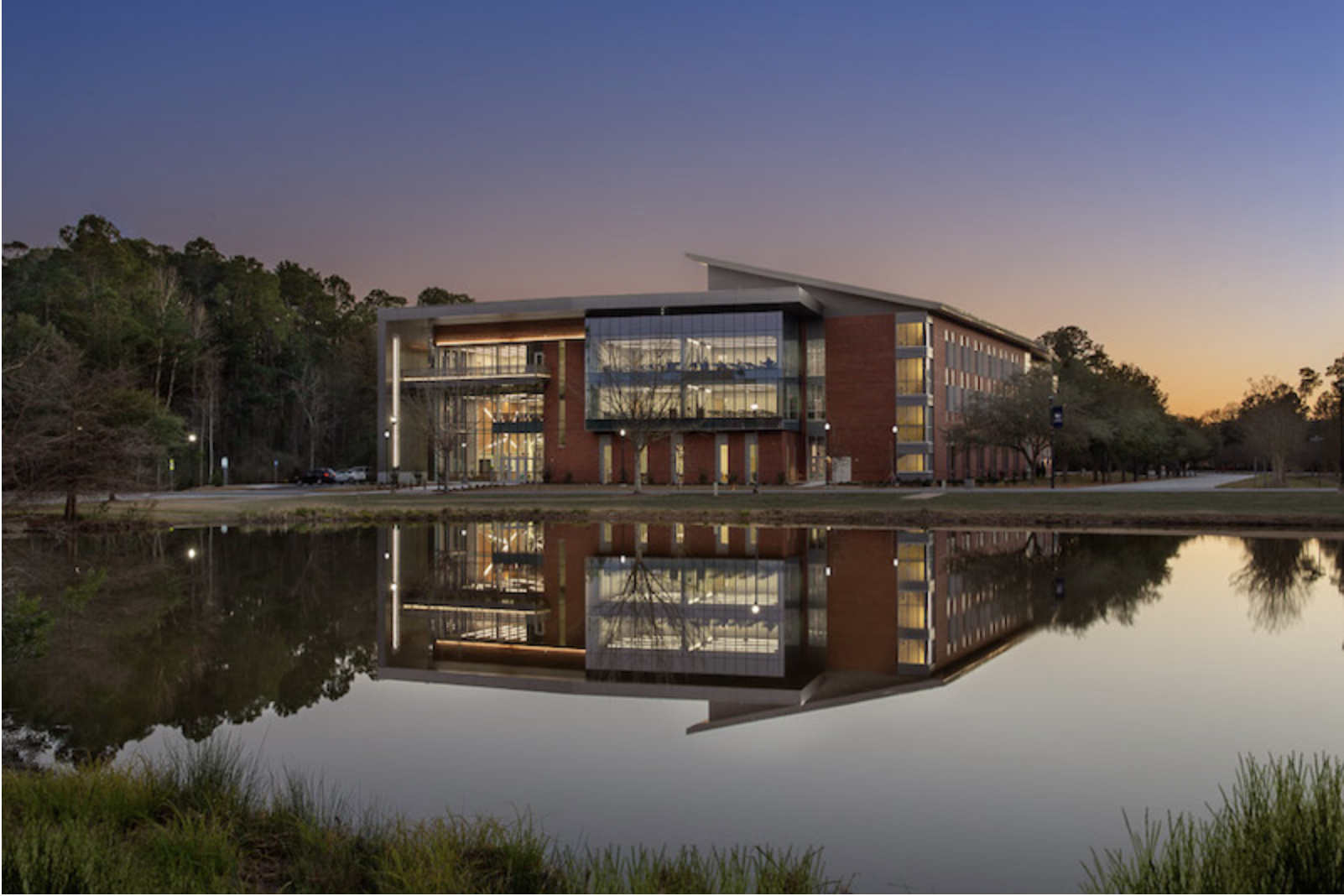
Health Professions Academic Building on the Armstrong Campus in Savannah Georgia’s only public medical school has received funding approval to open a new four-year campus in Savannah, an expansion that will provide greater access to education and training for medical students and ease the state’s ongoing shortage of physicians. The new campus of Augusta University’s Medical College of Georgia (MCG) is expected to enroll its first students on the Armstrong Campus of Georgia Southern University by Fall 2024, pending approval by the Liaison Committee on Medical Education, the accrediting body for medical schools in the U.S. and Canada. The campus will be located in the existing Armstrong Center and the Health Professions Academic Building of Georgia Southern’s Waters College of Health Professions. Located down the street from Savannah’s St. Joseph’s Hospital, it would be MCG’s third four-year campus in Georgia. The MCG educational experience is anchored at its main campus in Augusta, with another four-year campus located in Athens in partnership with the University of Georgia. “Georgia ranks 40th in the nation for both the number of active physicians and the number of primary care doctors,” Georgia House Speaker Jon Burns said. “Georgians experience this reality every day. Increasing opportunities within the University System of Georgia allows Augusta University’s Medical College of Georgia to educate and train more students and meets a clear need to make sure our communities receive better health care. Georgia needs more doctors, and I’m proud we are making this investment in our future.” The Board of Regents of the University System of Georgia (USG) on Tuesday approved $1.7 million for renovations at Georgia Southern’s Armstrong Campus to help make the new campus a reality. The money was included in the fiscal year 2024 state budget passed earlier this year by the Georgia General Assembly and signed by Gov. Brian Kemp on May 5. “We’re grateful to Governor Kemp, Speaker Burns, Lt. Gov. Jones and the General Assembly for their support in helping MCG and the university system expand one of the best public medical colleges in the nation and help get more doctors into our local communities,” USG Chancellor Sonny Perdue said. Four-year campuses provide the full spectrum of medical education, from basic sciences to clinical experiences. “This campus expansion is a momentous milestone for Augusta University and the Medical College of Georgia, standing as a testament to the unwavering support we have received from Speaker Burns, state Rep. Butch Parrish, Governor Kemp, the entire General Assembly and Chancellor Perdue,” said Augusta University President Brooks A. Keel, PhD. “Through this collaboration, we are forging a brighter future for health care in Georgia and fulfilling our shared commitment to producing more doctors for our state. I extend my deepest gratitude to all those who have championed this vision, including St. Joseph’s/Candler Health System, whose exceptional partnership has provided invaluable clinical experiences for our students. Together, we are bolstering the state’s medical community and strengthening Southeast Georgia’s access to quality health care.” MCG’s statewide educational model also has students learning at two-year, clinically focused regional campuses in every corner of the state, including the Southeast Campus, established in 2011 and based at St. Joseph’s/Candler in Savannah, and Southeast Georgia Health System in Brunswick. Other regional campuses include the Southwest Campus based in Albany and the Northwest Campus based in Rome. “This partnership with Augusta University and the Medical College of Georgia is another example of how together, the governor, our legislators, the University System of Georgia and Georgia Southern University are collaborating to meet the growing needs of Southeast Georgia,” added Georgia Southern University President Kyle Marrero. “These programs on our Savannah campus further Armstrong’s history of being a leader in training health care professionals and complement our efforts to expand nursing education and develop our future physician assistant program.” Through this partnership, Georgia Southern is providing approximately 23,000 square feet of instructional and lab space in its Armstrong Center and the Waters College of Health Professions’ Health Professions Academic Building. This includes 10,000 square feet of dedicated student group workspace and faculty and staff offices and 13,000 square feet of shared anatomy lab and large classroom space. The renovations include the creation of a new anatomy lab within the Health Professions Building, as well as minor renovations and new furniture, fixtures and equipment for the student group workspace and faculty and staff offices. The new campus would allow MCG to accept 40 more students per year, increasing its class size, already one of the nation’s largest, to 304 students per class. “As the state’s only public medical school, it is both our responsibility and commitment to produce more doctors for Georgia, and this growth in our class size is one way we can fulfill what I consider to be our most critical mission” said MCG Dean David Hess, MD. “This expansion would not be possible without the support of Governor Kemp, the Georgia Legislature, the University System of Georgia, Augusta University President Brooks Keel, and our colleagues at Georgia Southern University. I am also thankful for the unwavering support of St. Joseph’s/Candler Health System, including its CEO Paul Hinchey and chief medical officer Dr. Julia Mikell, a 1976 MCG graduate. Physicians and staff at St. Joseph’s/Candler have been exceptional educational partners, serving as a home base for our Southeast Campus, and providing rich clinical experiences for our third- and fourth-year students, for well over a decade. I know that commitment will extend to students at this new four-year campus.” “This is a sentinel event not only for the future of health care in Georgia, but also for Savannah and the region,” added Paul P. Hinchey, president and CEO of St. Joseph’s/Candler. “We have had a great relationship with MCG for more than a decade and our physicians have been instrumental as faculty in teaching third- and fourth-year students in Savannah. SJ/C has also served as a longstanding clinical site for nursing students from Georgia Southern and from the Armstrong campus. Creating a four-year medical school campus in Savannah will strengthen the medical community in Savannah and throughout Southeast Georgia. I want to thank Speaker Burns, Dr. Hess and the University System of Georgia for making this great vision a reality.” “I am excited to help build a campus that will continue MCG’s mission of educating the next generation of physicians,” said Elizabeth Gray, MD, associate dean at MCG’s Southeast Campus, based in Savannah and Brunswick. “I am confident that Georgia Southern will be an exceptional educational partner, and am excited to continue working with the leadership, physicians and staff at our longtime partners St. Joseph’s/Candler to help increase the number of physicians in this area of the state and beyond.” Interested in learning more? For more information about this exciting new development — simply reach out to Georgia Southern's Director of Communications Jennifer Wise at jwise@georgiasouthern.edu to arrange an interview today.

Why does Alabama have more gun deaths than New York? UConn expert explains.
Only five million people live in Alabama, but the state has the fourth highest firearms death rate in the country. In 2021, the state had 26.4 firearm deaths per 100,000 people, according to the Centers for Disease Control and Prevention. Compared to New York -- a state with about 20 million people and a rate of 5.4 gun deaths per 100,000 in 2021 -- the question becomes: Why does such a small state rank so high for gun violence? UConn expert Kerri Raissian offered perspective and insight on the causes and reasons why these tragic incidents occur in specific regions and states more often across America in an interview with the Alabama Reflector: A 2019 brief published by the Rockefeller Institute of Government, a nonprofit research center for the State University of New York (SUNY) system, said universal background checks, concealed carry permits and laws prohibiting people who have committed violent misdemeanors reduce gun homicides. “One policy that has come up against legal challenges recently has been not allowing people under the age of 21 years old to have certain guns or types of weapons,” Raissian said. “It is helpful. That age group has the highest risk of perpetuating homicides of any age group in the U.S.” Social policies can also deter gun violence. “It is laws, it is access to guns, it is also poverty,” Raissian said. “We have a lot of evidence that laws that you wouldn’t think have anything to do with gun violence, like Medicaid access, summer school for kids, employment opportunities for kids, are really good at reducing gun violence.” Raissian cited a randomized controlled trial of a youth summer employment program that was established in Chicago that had reduced incidents of gun violence compared to a control group. “It is not just about keeping them busy because these differences persist,” Raissian said. “It is also learning conflict resolution. It is also learning communication skills — all those things that come from employment and positive interactions tend to reduce violence of any form.” But Raissian and Grant Reeher, a professor of political science at Syracuse University, both said no single law will solve the issues of gun violence. The full article is attached above, and well worth the read. Kerri Raissian is an associate professor in the School of Public Policy at the University of Connecticut, director of the University of Connecticut's UConn’s Center for Advancing Research, Methods, and Scholarship (ARMS) in Gun Violence Prevention, and co-director of the Institute for Collaboration on Health, Intervention, and Policy (InCHIP) Gun Violence Prevention Research Interest Group. She is available to speak to media about this important topic - simply click on her icon now to arrange an interview today.
