Experts Matter. Find Yours.
Connect for media, speaking, professional opportunities & more.

ENLIGHTENing the Holidays: How Meijer Gardens Turned Art and Nature Into a Year-Round Attraction
With the completion of its second season, ENLIGHTEN at Meijer Gardens has moved beyond the idea of a seasonal attraction to become a defining example of how cultural institutions can transform the off-season into a destination experience. The program’s exceptional year-over-year growth, combined with national recognition in only its second year, signals a turning point in how Meijer Gardens engages audiences year-round. At the center of that evolution is Carol Kendra, whose leadership perspective connects ENLIGHTEN’s creative ambition, production scale, and audience growth to a broader strategy of experiential cultural programming. As Chief Operating Officer at Frederik Meijer Gardens & Sculpture Park, Carol Kendra provides strategic oversight for daily operations, guest experience, programming and long-term planning across the organization’s 158-acre campus. It washer leadership and strategic vision helped shape ENLIGHTEN from concept to a growing cultural phenomenon. View her profile Meijer Gardens has long been active outside traditional peak seasons, regularly hosting programs such as Fall at Meijer Gardens, Spring at Meijer Gardens, and its longstanding holiday tradition University of Michigan Health-West: Christmas & Holiday Traditions. These initiatives established a foundation for shoulder-season engagement and demonstrated that audiences were willing to experience the Gardens beyond summer months. ENLIGHTEN marked a deliberate step forward, not simply another seasonal offering, but a fully immersive evening experience that invited visitors to experience Meijer Gardens in a new way during the winter months, using light, sound, and landscape to create a sense of wonder and discovery. The annual event has also garnered attention from media across the country: Taking the Experience to the Next Level What distinguishes ENLIGHTEN is its production and experiential ambition. The program was produced in collaboration with Lightswitch and Upstaging, firms recognized internationally for creating world-class immersive environments and technically sophisticated experiences. Their portfolios include large-scale botanical light installations, major theme park productions, and live and recorded projects for globally recognized, award-winning artists. That expertise elevated ENLIGHTEN into a carefully choreographed, multi-sensory journey that integrates light, sound, landscape, and movement in a way that complements — rather than overwhelms — Meijer Gardens’ art and horticulture. This approach reflects a deliberate investment in experience design, audience flow, and emotional impact. The result is an experience that: Extends engagement well beyond traditional daylight hours Encourages repeat visits across a single season Attracts audiences who may be new to Meijer Gardens ENLIGHTEN reflects how cultural institutions are responding to changing audience expectations. Visitors are increasingly seeking experiences that are immersive, emotionally resonant, and worth traveling for — even during traditionally slower seasons. By building on its history of seasonal programming and elevating it through design, technology, and collaboration, Meijer Gardens demonstrates how institutions can grow without losing authenticity. Expert Insight: As a senior leader involved in shaping Meijer Gardens’ visitor experiences and institutional strategy, Carol Kendra brings expert insight into: How ENLIGHTEN was conceived as both an artistic and operational response to seasonality Why immersive seasonal experiences resonate with broad, multigenerational audiences How art and horticulture can be activated together What measurable growth means for long-term institutional planning and cultural relevance Her perspective helps journalists and industry professionals understand ENLIGHTEN not simply as a holiday event, but as a case study in cultural innovation and audience development.


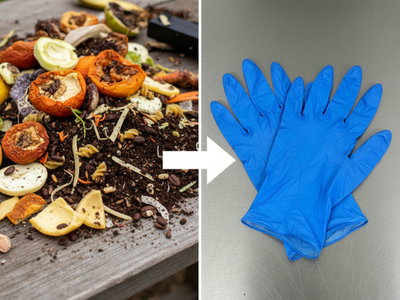
New research partnership to develop biodegradable gloves from food waste for healthcare sector
Knowledge Transfer Partnership between Aston University and PFE Medical to develop a biodegradable clinical glove from food waste The gloves will provide a low-cost, convenient and sustainable alternative to the 1.4bn disposable gloves used in the NHS each year The innovation will reduce clinical waste and costs and help the NHS reach its net zero goals. Aston University and Midlands-based company PFE Medical are teaming up to create biodegradable gloves made from food waste for use in the NHS. They will offer a low-cost, convenient alternative to disposable gloves without compromising patient safety. More than 1.4bn disposable gloves are used by the NHS each year. They create large volumes of clinical waste which has both an environmental and economic cost. The Knowledge Transfer Partnership (KTP) project will develop a more sustainable alternative made from polymers derived from food waste such as orange peel, able to degrade naturally. The gloves will initially be for use during low-risk tasks such as ultrasound scans, rather than in more critical situations such as operating theatres. The gloves would be designed to not only reduce clinical waste and costs in the NHS, but also carbon emissions, helping the NHS reach its goal to be the world’s first net-zero health service. With most personal protective equipment (PPE) currently sourced from Chinese manufacturers, the goal is to develop a biodegradable glove that can be manufactured using a UK supply chain. The challenging project draws on Aston University’s expertise in sustainable polymer chemistry, centred at Aston Institute for Membrane Excellence (AIME). Aston University has one of the largest research groups of polymer chemists in the UK. The project will be led at the University by Professor Paul Topham, director of AIME, and Dr James Wilson, AIME associate member. The research team have chosen to focus on polymers from food waste in order to ensure that the final product can be manufactured sustainably. Most polymers are currently made from petroleum. Polymers made from food waste, ranging from fruit waste to corn or dairy products, have the potential for antioxidant and antibacterial properties if designed appropriately. The team will manipulate the polymer molecules so that they include the right monomers (the smaller units which make up the molecules) in the right location to achieve the properties they require. Critical to the success of the project will be PFE Medical’s commercial and clinical experience of taking new innovations into medical use. It will be the third KTP between Aston University and PFE, following on from successful projects to develop an automated endoscope cleaner, now in use across University Hospitals Birmingham NHS Foundation Trust (UHB). Professor Topham said: “At Aston University, we have a long history of working with industry, of translating fundamental research into solutions for real world problems. This project with PFE Medical provides us with that route, to take our science and engineering and make a difference to peoples’ lives. That’s exactly where, as researchers, we want to be.” Rob Hartley, CEO of PFE Medical, said: “Our previous KTP with Aston University was a phenomenal success, thanks to the brilliant team we had on board. I’m just as excited by this project, which is looking to solve an equally long-standing problem. If we can achieve our goal, then the implications are huge, going far beyond the NHS to all the other situations where people are wearing disposable gloves.” KTPs, funded by Innovate UK, are collaborations between a business, a university and a highly qualified research associate. The UK-wide programme helps businesses to improve their competitiveness and productivity through the better use of knowledge, technology and skills. Aston University is a sector-leading KTP provider, ranked first for project quality, and joint first for the volume of active projects. For further details about this KTP, visit the webpage: www.aston.ac.uk/business/collaborate-with-us/knowledge-transfer-partnership/at-work/pfe-medical.


Why homelessness is more than a housing issue for students
More than 4,400 students in Delaware were identified as experiencing homelessness during the 2022–23 school year, a number that continues to rise. Ann M. Aviles, associate professor in the University of Delaware’s College of Education and Human Development, studies education equity, social policy and services for children and families. She is co-author of a new book, "Serving Students Who Are Homeless: A Resource Guide for Schools, Districts, Educational Leaders, and Community Partners", which offers practical guidance for educators navigating the challenges of student homelessness. Nationwide, more than 1.3 million school-aged children experience homelessness annually. While housing instability is often viewed as a social services issue, research shows it has direct and profound consequences for student learning, engagement and well-being. Housing instability affects every aspect of a student’s daily life. Students may be worried about where they will sleep, whether they will have food or how they’ll get home after school. That uncertainty makes it much harder to focus on learning, Aviles said. A key recommendation in Aviles’ new book is stronger collaboration between schools and community organizations. She encourages districts to develop community resource maps that identify local food pantries, shelters, health providers and other support services. She also emphasizes the importance of public understanding of homelessness as a systemic issue shaped by policy, affordability and access to services. To speak with Aviles further, email mediarelations@udel.edu.

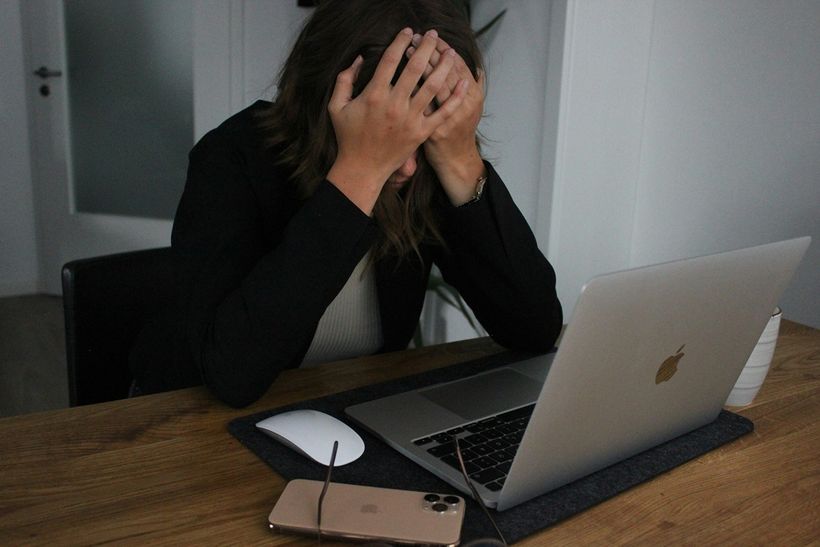
Always On, Never Present: How Work Takes Over Your Life
In many workplaces, being “good at your job” has quietly become synonymous with being constantly reachable. Slack on the laptop, email on the phone, DMs on every platform and a creeping expectation that you’ll answer “just one more thing” at night, on weekends, and even on vacation. Psychotherapist Harshi Sritharan, MSW, RSW and Offline.now founder Eli Singer say this culture is pushing knowledge workers into a state of continuous partial attention: always connected, never fully present. “Most of my high-performing clients don’t have a time-management problem,” says Sritharan. “They have a boundary problem — and their phones are the device enforcing it. Every ping is a tiny dose of dopamine and a tiny spike of stress, and their nervous system never really shuts off.” Research on digital and media multitasking backs up what she sees clinically. Studies have linked frequent task-switching between apps and notifications to: Reduced sustained attention and working memory Slower task performance and more errors Greater mental fatigue and perceived stress Neuroscience and cognition papers also describe how multitasking conditions the brain to seek novelty and micro-rewards, making it harder to tolerate the “boredom” of deep work — exactly the kind of focus most knowledge jobs actually require. Singer argues that the issue isn’t just individual burnout; it’s organizational self-sabotage. Offline.now’s behavioral data show that people now spend about 10 of their 16 waking hours on screens — roughly 63% of the day — and that 8 in 10 want a healthier relationship with tech but feel too overwhelmed to know where to start. “We’ve built workplaces that confuse constant availability with value,” Singer says. “But when you look at the cognitive science, an always-on culture is actually an anti-productivity policy. ‘Do Not Disturb’ isn’t a luxury — it’s the competitive advantage most teams are missing.” The term “continuous partial attention” coined to describe the state of being perpetually attuned to the possibility of new information has been linked in emerging research and commentary to chronic stress, shallow thinking, and emotional exhaustion in modern knowledge work. “The moment you stop treating rest and focus as perks and start treating them as infrastructure, everything changes,” Singer says. “Teams ship better work, people make fewer mistakes, and employees don’t feel like they have to burn their nervous system to keep their job.” For journalists covering work culture, productivity, burnout, or the future of work, this story connects the dots between work apps, multitasking science and mental health and offers a concrete alternative to the “always on” norm. Featured Experts Harshi Sritharan, MSW, RSW – Psychotherapist specializing in ADHD, anxiety, burnout and digital dependency. She helps high-achieving professionals understand how constant notifications, late-night work and screen habits disrupt dopamine, sleep, and emotional regulation — and what sustainable boundaries actually look like. Eli Singer – Founder of Offline.now and author of Offline.now: A Practical Guide to Healthy Digital Balance. He brings proprietary behavioral data on digital overwhelm, the Offline.now Matrix framework, and case examples of organizations reframing “Do Not Disturb” as a strategic asset, not a sign of disengagement. Expert interviews can be arranged through the Offline.now media team.



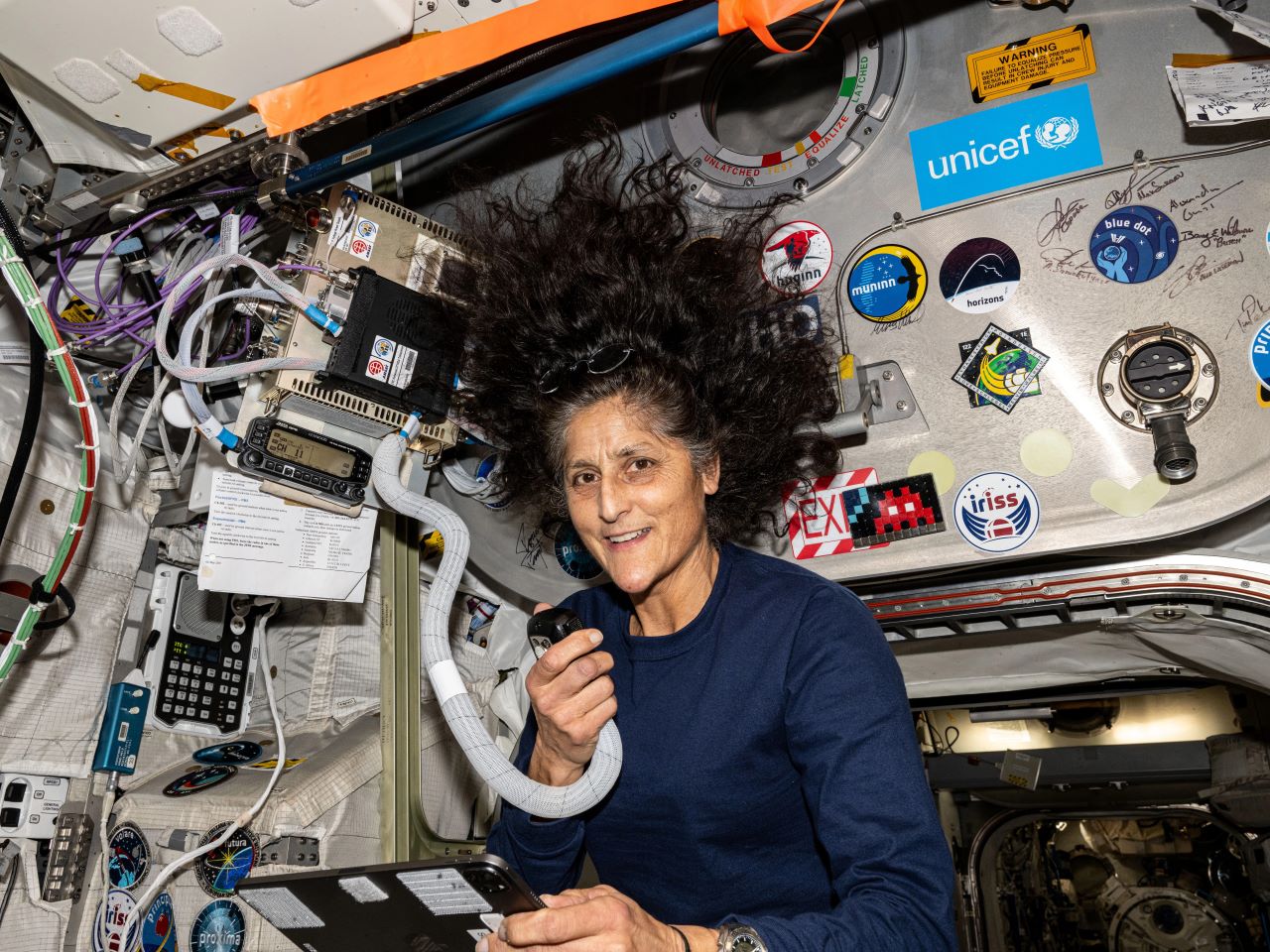
The health challenges astronauts Butch Wilmore and Suni Williams face after 9 months in space
On June 5, 2024, astronauts Butch Wilmore and Suni Williams embarked on a brief mission to the International Space Station. But equipment failures turned what was supposed to be an eight-day trip into a grueling 9 month spaceflight. This week, Wilmore and Williams finally returned to Earth. While their safe return is cause for celebration, the journey doesn’t end when astronauts touch down on Earth. They now face the significant task of recovering from the physical and psychological toll of long-duration spaceflight. As part of the University of Florida’s ongoing research into astronaut health, Rachael Seidler, Ph.D., a leading expert in spaceflight-associated health changes, is studying the long-term effects of space travel on astronauts’ brains and bodies. Seidler’s research focuses on understanding how the central nervous system and brain structure adapt to the challenges of space travel, as well as how these changes affect performance, balance, and mobility once astronauts return to Earth. “While the physical and psychological challenges astronauts face after returning from long-duration space missions are well-documented, the research we do at UF is helping us understand the intricacies of their recovery process,” said Seidler, deputy director of the Astraeus Space Institute at UF. “By following astronauts like Butch and Suni before, during, and after their missions, we can track how the human body responds to the extreme conditions of space.” Behavioral and Brain Changes Post-Flight Seidler’s research tracks astronauts’ physical and neurological recovery by observing them both during their missions and after they return. "One of the most immediate challenges astronauts face when they return to Earth is mobility and balance. These issues often recover more quickly compared to others, but it takes time for astronauts to readjust to gravity,” Seidler said. "The balance, mobility, and walking difficulties astronauts experience during the first weeks back are typically resolved in a short period, but brain function and structure require longer recovery periods." Seidler’s research indicates that astronauts’ brains exhibit compensation when they return to Earth following spaceflight. This compensation occurs through the recruitment of additional neural pathways in order to return to their preflight performance levels. However, the recovery of brain function is a gradual process. "This brain functional compensation is typically no longer observed within one to six months post-flight," Seidler said. However, not all changes are reversible. "Brain structural changes, particularly related to fluid shifts in space, show little to no recovery even after six months to a year," Seidler said. Two significant structural changes include the brain physically sitting higher in the skull and the expansion of the brain’s ventricles — fluid-filled cavities in the brain — which can increase in volume by 25% or more. These changes are thought to result from the fluid shifts caused by microgravity, and they present long-term health considerations for astronauts. Long-Term Health Effects: Understanding the Impact As Wilmore and Williams embark on their recovery journey, the long-term impact of these changes becomes a critical focus for researchers like Seidler. "The long-term health impacts are crucial to understand because they could affect how astronauts recover and perform in their daily lives post-mission," she said. Seidler’s team at UF is conducting a new study in which they are tracking astronauts for up to five years post-flight to better understand these long-term effects. "We’ve had astronauts in space for up to a year, and we know how to manage their physical health during those missions," Seidler said. "But the effects of space on the brain and body extend beyond the mission, and our work helps inform strategies to manage recovery." Collaborating with NASA and Studying Spaceflight-Associated Neuro-Ocular Syndrome Seidler's work is also part of a broader collaboration with NASA and other scientists to assess astronaut long-term health. The project is particularly focused on Spaceflight-Associated Neuro-Ocular Syndrome, which affects up to 70% of astronauts. This condition involves structural changes to the eye and optic nerve, leading to vision problems that may impact astronauts’ function. "Neuropsychological assessments can help to measure astronauts’ brain health, while studies of the ocular system help identify potential vision issues that may arise during and after long-duration space missions," she said. Simulating Space Conditions on Earth In addition to studying astronauts on Earth and in space, Seidler’s team conducts experiments to simulate the effects of spaceflight on human physiology. The UF lab runs experiments in head-down tilt bed rest studies, which keep participants lying down for weeks to months at a time to simulate the lack of gravity. "This type of study helps us understand how fluid shifts in the body during space travel affect mobility, balance, and brain structure," Seidler explained. "In addition, other publications have reported that astronauts describe that vestibular galvanic stimulation feels similar to what they experience when they first arrive in space and when they return to Earth. We have equipment to induce these effects in the lab." Looking Toward the Future As space missions continue to grow longer and more complex, UF’s research is more important than ever. "We’re studying these issues now to ensure that future astronauts are prepared for the physical and cognitive challenges that await them in deep space," Seidler said.


Researchers work to reduce excessive noise in Florida cities
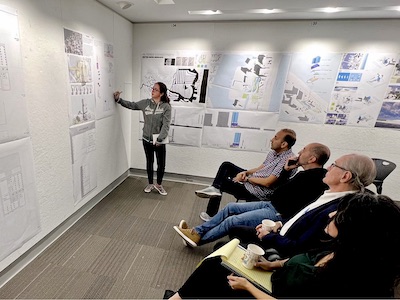
Excessive noise, or noise pollution, in cities has been linked in multiple studies to increased stress, sleep disturbances, and long-term health problems. Researchers from the University of Florida are on a mission to quiet things down, working with local governments and a private firm to improve both public health and urban living. Enter Martin Gold, an associate professor from UF’s School of Architecture, and his team of students. They recently partnered with Siebein Acoustic, a soundscape design firm that specializes in architectural and environmental acoustics. The team visited Fort Lauderdale, one of Florida’s busiest cities, known both as a party destination and a mecca for retirees. The team studied areas throughout downtown and by the beach to provide recommendations for reducing the impact of sound in the city at large. To inform their work, researchers recruited participants to walk the city and report on their observations about sound and sights, took photo documentation, acoustic measurements, geographical measurements and analyzed municipal code studies. The team proposed different improvement strategies including: Using vertical distance by requiring residential high-rise construction to limit residences in the lower floors of buildings. Limiting sound levels at windows or balconies of residential units. Building envelope systems, which are the building components that separate the indoors from the outdoors, that limit sound transmission and absorb sound. Designing new construction so buildings absorb and diffuse the sounds striking them rather than reflecting and subsequently amplifying the sounds or focusing the sounds in particular areas. Strategic zoning to incentivize designs along arterial corridors that fill the sites and provide acoustic barriers to the residential neighborhoods behind them. “We need to take a closer look at how we are designing the next generation of urban environments. There’s a lot we can do with soundscape architecture to positively impact issues moving forward.” —Martin Gold, associate professor from UF’s School of Architecture The findings and recommendations were presented at the International Congress and Exposition on Noise Control Engineering in Nantes, France. Gold and his students are currently surveying an area of Clearwater and plan to study more cities around the state and offer recommendations for reducing noise.

ExpertSpotlight: Why Hangovers Hurt (and Why Almost Everyone Gets Them Wrong)
The hangover is the ultimate party plot twist: a night of celebration followed by a morning of regret. Headache, nausea, fatigue, brain fog, these aren’t random punishments for having fun. They’re your body’s way of saying it’s been busy processing alcohol, which acts as a diuretic (hello dehydration), irritates the stomach lining, disrupts sleep, and triggers inflammation. Even “just a few drinks” can tip that balance, especially when sleep is short and water is scarce. One of the biggest myths is that hangovers are all about dehydration. Water helps, but it’s only part of the story. Alcohol breaks down into acetaldehyde, a toxic byproduct that contributes to headaches and nausea. It also messes with blood sugar, expands blood vessels, and fragments REM sleep, which is why you can wake up exhausted even after eight hours in bed. Darker drinks often get blamed too; while congeners (chemical byproducts in darker alcohols) can make symptoms worse for some people, quantity and timing usually matter more than color. Then there’s the cure-all folklore: greasy breakfasts, hair of the dog, miracle supplements. Some comfort foods can help stabilize blood sugar, and anti-inflammatory foods may take the edge off, but no remedy truly “cures” a hangover once it’s underway. Time, hydration, light food, and rest remain the most reliable fixes. Prevention, of course, is king: pacing drinks, alternating with water, eating beforehand, and prioritizing sleep do far more than any next-morning hack. Journalists covering health, lifestyle, or New Year’s recovery stories: connect with experts who can explain the real science behind hangovers, what actually works, what’s wishful thinking, and how our bodies respond to alcohol. Whether you’re debunking myths or offering evidence-based tips, expert insight can turn morning-after misery into a smarter story. Find your expert here: www.expertfile.com


A Snapshot of the Local Economy: Simon Medcalfe on Growth, Risk, and What Comes Next
At Augusta University’s annual Economic Forecast Breakfast hosted by the James M. Hull College of Business, Simon Medcalfe, PhD, offered a grounded, data-driven look at how the local economy is performing — and what lies ahead. Speaking to business leaders, students and community stakeholders, Medcalfe emphasized the importance of distinguishing real economic growth from inflation-driven gains, noting that while the Augusta region continues to grow, it does so at a measured pace compared to national averages. His presentation framed the local economy as stable and resilient, but not immune to broader forces shaping the U.S. outlook. A key theme of Medcalfe’s remarks was the role of research, innovation and education in sustaining long-term economic health. He pointed to strong gains in research and development across Georgia and highlighted how university-based research directly contributes to regional economic output. According to Medcalfe, investment in knowledge creation remains one of the most reliable drivers of growth, reinforcing the value of higher education institutions as economic anchors. Simon Medcalfe, PhD, is an economist with an emphasis on sports economics, social determinants of health, and the local economy. View his profile At the same time, Medcalfe cautioned against complacency. While regional fundamentals remain solid, he stressed that uncertainty at the national level continues to pose risks. “However, uncertainty abounds in national macroeconomic policy that could negatively impact growth next year,” Medcalfe said, underscoring how unresolved fiscal decisions and policy shifts can ripple down to local economies. Still, his overall outlook balanced realism with optimism. Medcalfe concluded that the Augusta region — and Georgia more broadly — is positioned to weather uncertainty thanks to diversification, investment in early education, and continued research activity. “Overall, Augusta and Georgia are positioned well for economic growth in 2026 with a strong commitment to early childhood education, a diversified labor market and strong research and development,” he said. View the full article 'Annual Economic Forecast Breakfast offers snapshot of the local economy' here: For journalists covering regional economics, workforce development, higher education, or policy-driven growth trends, Simon Medcalfe, PhD, offers clear-eyed analysis rooted in data — and an ability to translate complex economic signals into insight that matters locally. Simon is available to speak with media - simply click on his icon now to arrange an interview today.



Can You Reboot Your Family’s Screen Rules Before Going Back to School?
As kids head back to school after the holidays, many parents notice the same pattern: bedtimes drifted, screens crept into bedrooms, and mornings feel like a battle. Executive Function Coach Craig Selinger and Personal Development Coach Mark Diamond, both experts in the Offline.now directory, say the answer is yes; but only if families treat the last week of break as a “tech reset,” not just a scramble for school supplies. Selinger points out that today’s devices are structurally different from the TV many parents grew up with: “Phones and tablets are more addicting than the old living-room TV. There’s no natural ending — no episode, no credits, no ‘we’re done now.’ When the ‘TV’ lives in your child’s pocket, transitions to homework or sleep become a lot harder.” That matters because late-night screen habits have real consequences in the classroom. Reviews of adolescent media use consistently link bedtime and late-evening screen time with shorter sleep, poorer sleep quality, and worse next-day functioning; including attention, memory and mood that kids need to learn. On top of that, education and cognition research shows that media multitasking: juggling schoolwork with notifications, chats, and apps is associated with reduced sustained attention and weaker academic performance. Diamond, who ran a tech-free summer camp for 25 years, has seen how quickly kids’ brains and behavior respond when screens are dialed down and real-world activity is dialed up: “At camp, we watched kids go from anxious and distracted to confident and connected in a matter of days — without phones. Outdoor play, hands-on projects, chores, even just walking and talking with friends reset their mood and focus in a way no app can.” “Micro-routines make a macro difference,” says Diamond. “If you reclaim just an hour a day from screens for real-world activity, most kids feel the change in their bodies and brains within a week.” Selinger adds that the reset only sticks when adults go first: “You can’t tell a teen to stop scrolling at 11 p.m. while you’re answering work email in bed. Kids are watching how we transition off our own screens. If parents lead by example, the new school rules stop feeling like punishment and start feeling like the new normal.” For journalists covering back-to-school, kids’ mental health, learning and technology, this story connects the dots between holiday screen creep, sleep, attention, and how a simple, family-led “tech reset week” can set kids up to actually learn once they’re back in class. Featured Experts Craig Selinger, M.S., CCC-SLP – Executive Function Coach and child development specialist (Brooklyn Letters). He focuses on how kids actually learn, and how digital dependency, sleep loss and multitasking erode attention and academic skills. Mark Diamond – Personal Development Coach and former director of a tech-free summer camp. He specializes in outdoor wellness, behavior change, and helping families translate “camp magic” into everyday routines at home. Expert interviews can be arranged through the Offline.now media team.


AI-driven software is 96% accurate at diagnosing Parkinson's
Existing research indicates that the accuracy of a Parkinson’s disease diagnosis hovers between 55% and 78% in the first five years of assessment. That’s partly because Parkinson’s sibling movement disorders share similarities, sometimes making a definitive diagnosis initially difficult. Although Parkinson’s disease is a well-recognized illness, the term can refer to a variety of conditions, ranging from idiopathic Parkinson’s, the most common type, to other movement disorders like multiple system atrophy Parkinsonian variant and progressive supranuclear palsy. Each shares motor and nonmotor features, like changes in gait — but possess a distinct pathology and prognosis. Roughly one in four patients, or even one in two patients, is misdiagnosed. Now, researchers at the University of Florida and the UF Health Norman Fixel Institute for Neurological Diseases have developed a new kind of software that will help clinicians differentially diagnose Parkinson’s disease and related conditions, reducing diagnostic time and increasing precision beyond 96%. The study was published recently in JAMA Neurology and was funded by the National Institutes of Health. “In many cases, MRI manufacturers don’t communicate with each other due to marketplace competition,” said David Vaillancourt, Ph.D., chair and a professor in the UF Department of Applied Physiology and Kinesiology. “They all have their own software and their own sequences. Here, we’ve developed novel software that works across all of them.” Although there is no substitute for the human element of diagnosis, even the most experienced physicians who specialize in movement disorder diagnoses can benefit from a tool to increase diagnostic efficacy between different disorders, Vaillancourt said. The software, Automated Imaging Differentiation for Parkinsonism, or AIDP, is an automated MRI processing and machine learning software that features a noninvasive biomarker technique. Using diffusion-weighted MRI, which measures how water molecules diffuse in the brain, the team can identify where neurodegeneration is occurring. Then, the machine learning algorithm, rigorously tested against in-person clinic diagnoses, analyzes the brain scan and provides the clinician with the results, indicating one of the different types of Parkinson’s. The study was conducted across 21 sites, 19 of them in the United States and two in Canada. “This is an instance where the innovation between technology and artificial intelligence has been proven to enhance diagnostic precision, allowing us the opportunity to further improve treatment for patients with Parkinson’s disease,” said Michael Okun, M.D., medical adviser to the Parkinson’s Foundation and director of the Norman Fixel Institute for Neurological Diseases at UF Health. “We look forward to seeing how this innovation can further impact the Parkinson’s community and advance our shared goal of better outcomes for all.” The team’s next step is obtaining approval from the U.S. Food and Drug Administration. “This effort truly highlights the importance of interdisciplinary collaboration,” said Angelos Barmpoutis, Ph.D., a professor at the Digital Worlds Institute at UF. “Thanks to the combined medical expertise, scientific expertise and technological expertise, we were able to accomplish a goal that will change the lives of countless individuals.” Vaillancourt and Barmpoutis are partial owners of a company called Neuropacs whose goal is to bring this software forward, improving both patient care and clinical trials where it might be used.