
Experts Matter. Find Yours.
Connect for media, speaking, professional opportunities & more.

Trump’s reaction to defeat further confirms urgency for school focus on social-emotional skills
Sandra Chafouleas, psychologist and behavioral health expert from the University of Connecticut, weighs in: Imagine what would happen if a preschooler didn’t “use their words” when they got upset about sharing, instead stomping around yelling while adults simply observed in silence. Think about what the school climate would feel like if a student punched another during recess while others watched without seeking help. Now consider the actions – and inactions – by Donald Trump on January 6 as the electoral vote counts occurred at the U.S. Capitol. Those behaviors show a desperate need for social emotional learning. According to the Collaborative for Academic, Social, and Emotional Learning (CASEL), social emotional learning involves five core competencies: self-awareness, self-management, social awareness, relationship skills, and responsible decision-making. Trump did not demonstrate these competencies when the election didn’t go the way he wanted. Connecting these school scenarios and Trump’s behaviors is not intended to contribute to the ever-mounting list of recommended consequences that could result from his fueling the insurrection that our nation has just experienced. It does bear noting, however, that if Trump were a Black teenager, he most certainly would have received exclusionary disciplinary action such as suspension and perhaps even expulsion from school. The purpose in connecting the two scenarios is to draw energies toward actions that propel us forward in bridging a divided nation. The responsibility for forward movement falls to future generations, which means it is critical that we pay attention to what happens in schools right now. We need to demand that policies and practice — and necessary resources — are put in place to strengthen school capacity to support students on their path to holding responsibility for democracy. Many excellent resources have quickly appeared to assist educators in teaching about the insurrection. Discussion guides are available to facilitate defining key terms, contrasting events through a social justice lens, and comparing justifications for action using fact checking. Other resources have been released that help adults talk about violence and support emotional safety of kids. What seems to be less prominent, however, is a direct connection to the social, emotional, and behavioral skills that we have just witnessed are missing. Education systems have begun the work of acknowledging their historic roles in contributing to exclusion, inequity, and intolerance of differences. Educators are working hard to turn the tide toward promising alternative approaches. Prominent among those approaches is a focus on social emotional skills. In either classroom scenario above, educators would be jumping into discussion about what supports are needed to address student needs. Social and emotional well-being fulfills us throughout every stage of life – integrating those skills should be in all that we do as adults to model, teach, and give feedback to our children. Of course schools must teach academic content areas and have high expectations, but there is tremendous potential to increase capacity to embed exploration, active practice, and positive feedback about social and emotional skills within each corner of the day. As one example, history professor Kellie Carter Jackson writes about challenges in teaching violence in political history. The author describes the need to question how political violence should be labeled, which could reveal an expression of unmet need by marginalized people. Learning through this analysis offers social and emotional parallels, such as examining biases, recognizing emotions, and examining integrity. As another, Facing History and Ourselves offers a classroom resource specific to the insurrection. Activities reference principles of social and emotional learning, such as steps for educators to practice self-awareness and relationship skills by examining their own emotions and perspectives. Student self-management and social awareness builds through reflection activity that builds civic agency. All of these examples offer incredible opportunity in social and emotional learning that could be advanced with more explicit connection. Entrenching social and emotional learning within the school day beyond this immediate teachable moment also is needed to enable sustained effort. CASEL identifies adults as key to social emotional strategies that will maintain safe, supportive, and equitable learning environments for this moment in history. To do so requires a strong collection of social, emotional, and behavioral education policies and practices. Responsibility for urgently resourcing this collection rests within each of us, right now, to ensure future generations who can and do take part in a resilient democratic nation. Dr. Chafouleas is licensed psychologist and Distinguished Professor, with expertise in school psychology and school mental health at the University of Connecticut’s Neag School of Education. If you’re a reporter looking to speak with Dr. Chafouleas about this topic – let us help. Simply click on her icon to arrange an interview today.


Are vaccine passports legal in a post-COVID-19 era? Let our experts explain
As America and the world look to slowly round the corner of the safety measures enacted during the COVID-19 pandemic, the new coronavirus vaccines are giving hope of an eventual return to normal. However, with an active anti-vaccination movement afoot and many still skeptical of getting that essential poke in the arm, the World Health Organization said some government officials are suggesting the idea of vaccine passports. A simple piece of identification would end the uncertainty that comes with travel, work and the much sought-after leisure that often means crowded places and smaller spaces. The idea has already caught on in countries in Europe and South America. It may be the safety blanket many seek, but are vaccine passports actually legal? It is a question that’s beginning to get serious coverage. “Having proof of vaccination can be essential for a number of sectors other than health, but we cannot overlook the potential discriminatory consequences that may arise,” said Dr. William Hatcher, an expert in public policy and interim chair of the Department of Social Sciences at Augusta University. Another idea being floated is immunity passports, but Hatcher suggests¬ allowing only people with immunity to work might disadvantage those who haven’t gotten sick or those without the antibodies to prove it. It’s as if, in the eyes of their employer, their lack of infection constitutes a disability. The inequality that immunity passports could foster in these situations may be illegal under the Americans with Disabilities Act. There are also other ethical, practical, and cultural aspects to consider as well. If you are covering this emerging topic and are looking to know more, our experts can help. Dr. Hatcher is a professor of political science and interim chair of Augusta University’s Department of Social Sciences. He is an expert in the areas of public administration and social, economic, and political institutions in local communities. Hatcher is available to speak with media regarding the concept of vaccination and immunity passports. To arrange an interview, simply click on his name.



Is hospital advertising actually good for our health?
Hospitals and healthcare organizations in the U.S. spend $1.5 billion on advertising every year. It’s a topic that provokes lively debate and a certain amount of controversy. Medical bodies, policy makers, and scholars alike question the ethics and efficacy of using (constrained) budgets to promote hospitals to patients. Diwas KC, professor of information systems & operations management at Emory University’s Goizueta Business School, and Tongil Kim, an assistant professor of management at Naveen Jindal School of Management in Texas, conducted a large-scale study of hospitals and patients in the state of Massachusetts to better understand the impact of hospital advertising. What they found is striking: Not only does television advertising work, it significantly drives demand, attracting patients living far from the hospital and beyond its regular area. And that’s not all. KC and Kim discovered that limiting hospital advertising or imposing an outright ban, as some groups have called for, might actually have serious negative effects on patient healthcare. “There has been a lot of discussion about banning advertising over recent years because of uncertainties around wasting money and resources,” KC said. In the paper “Impact of hospital advertising on patient demand and outcomes,” KC shows that there is a correlation between the amount spent on TV advertising and the quality of the hospital in question. Healthcare facilities that invest more in advertising tend to be “better” hospitals, he adds; they offer higher caliber care and services and, as such, they see much lower patient readmission rates—a key quality metric in healthcare. To get to these insights, KC and Kim looked at more than 220,000 individual patient visits to hospitals in the state of Massachusetts over a 24-month period. Among the data they collected were things like hospital type, location, and dollars spent on advertising. Patients were documented in terms of medical conditions, insurance, zip codes (to determine residence), and median household income. They were able to contrast those hospitals that invested in television advertising and those that did not. With the former, they uncovered a significant uptick in patient visits, with people coming from far further afield. This was particularly true of wealthier patients. Then there’s the question of patient outcomes. Here the data showed unequivocally that it’s the high-quality, low-readmission hospitals that advertise more—something that KC attributes to the natural tendency to get “more bang for the advertising buck when the quality of your product or service is better.” As for banning advertising, this would negatively impact these hospitals, he argues, limiting their ability to attract patients. It could also lead to an increase in population-level readmission rates. “Patient readmission rates are one of the key metrics along with mortality rates that tell us how well a healthcare facility is working,” said KC. “If a patient gets discharged but has to come back to a hospital in, say, 30 days, unless it’s a chronic condition or ongoing treatment, it’s a good indication that the patient didn’t get the level of care they should have the first time.” Indeed, “when we looked at all of the data, we found that the hospitals where there were fewest revisit rates were those that advertised more,” he said. KC finds that a blanket ban on hospital advertising could lead to an extra 1.2 readmissions for every 100 patients discharged. It’s a significant and “surprising” finding. And one that should inform the debate around healthcare advertising spend in the U.S. “There’s also the idea that this is a zero-sum game because if a patient doesn’t go to hospital A, they’re just going to go to hospital B—the one that advertises more—splitting the pie in different ways but not increasing that pie,” KC said. “What our study finds is that yes, advertising does draw patients away from one facility and towards another, but that the latter generally delivers better patient outcomes,” he said. “So, there is a social welfare benefit right there that suggests that you should not ban hospital advertising. There are real health benefits in allowing [advertising] to happen.” If you are a journalist looking to cover this topic - then let our experts help. Diwas KC is a Professor of Information Systems & Operations Management at Emory University’s Goizueta Business School. He is an expert in the areas of Data Analytics, Operations, and Healthcare. If you are interesting in arranging an interview - simply click on his icon to set up a time today.



The initial doses of the first approved COVID-19 vaccine are here, and health care workers are part of the group that’s getting it first. One of them is Dr. David Banach, UConn Health infectious diseases physician and hospital epidemiologist, who sees the vaccine not only as a major breakthrough in the fight to end the pandemic, but also as an opportunity for his clinical colleagues to lead that effort and set the tone for the rest of the world. Here are some key facts about the COVID-19 vaccine, with Dr. Banach providing explanations of each: The COVID-19 vaccine won’t infect you with COVID-19. “There is no live virus in this vaccine, so you can’t actually get infected with SARS-CoV-2 from the vaccine. What this vaccine has is messenger RNA, which is a little bit of genetic code that allows the body’s natural machinery to make the protein that will generate an immune response." You may actually want some side effects from the COVID-19 vaccine. “You might get some soreness at the injection site, maybe some fatigue for a day or two, but that can be a good thing, a sign your body is making that immune response. That’s what is going to protect you in the future if you get exposed to the virus. The data from the clinical trials show the side effects – the soreness, fatigue, in some cases a short-lived fever – occur the first few days afterwards, and the rate of serious side effects is extraordinarily low for this vaccine.” The vaccine was developed relatively quickly, but not by compromising the scientific process. “When you look at Operation Warp Speed and how this process moved really quickly, that was really focused on the research and development piece and the manufacturing piece. Importantly, the phase 3 clinical trial was not rushed. This is the same type of clinical trial that we would do for any other vaccine. We followed people for at least two months. The clinical trials were huge, and they had diverse populations. So that part of the whole process wasn’t rushed at all, and that’s the most important part.” Don’t throw out those masks just yet. “We know this vaccine prevents people from developing symptomatic and severe COVID infection. I think what we don’t know is the effect it’s going to have on viral transmission, including asymptomatic shedding of virus. For instance, people who get the vaccine might still potentially shed virus, potentially at a lower level. The vaccine will prevent them from actually becoming ill, but vaccinated individuals might still be able to have virus in their nose and their respiratory system. Immunity from the vaccine is not instantaneous. “The COVID-19 vaccine clinical trials using the Pfizer-BioNTech and Moderna mRNA vaccines were designed using a two-dose series in order to generate the optimal level of protection from the vaccine. That’s why getting both doses of the vaccine is essential. Although there is likely some individual variability, immunity may not be optimal until several days after the second dose. The phase 3 clinical trials used a period of at least one-to-two weeks after the second dose as a marker of immunity during which they were able to demonstrate the efficacy of the vaccines in protecting against COVID-19 infection.” Dr. David Banach is one of the lead experts on COVID-19 in America. He is available to speak with media regarding the vaccination and what the future holds with regards to COVID-19. To book an interview – simply click on his icon and arrange a time now.

A Highly Skilled Healthcare Workforce Could Be in Jeopardy From COVID-19
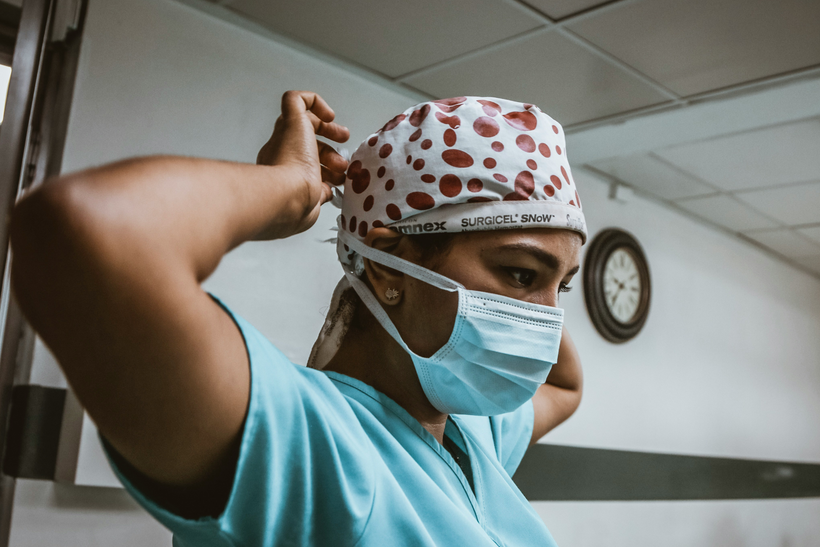
While all healthcare professionals have stepped up during the COVID-19 pandemic and are essential to providing quality care, registered nurses are with patients 24/7 and provide essential, consistent surveillance, often being the first to take immediate action and alert colleagues in order to save patients. “I cannot stress enough that it is not about beds and space, it is about having a high-quality and properly educated workforce to care for the patients in those beds and spaces,” says Donna Havens, PhD, RN, FAAN, Connelly Endowed Dean and Professor of the M. Louise Fitzpatrick College of Nursing, who adds that the process depends on a highly skilled workforce. Though in some cases, because of the growing shortage across the nation during the pandemic, members of the workforce may not have the skills or experience to care for patients in the settings in which they may have been placed during the pandemic. Nurses who typically work in one particular clinical setting, e.g., pediatrics, may now be asked to provide care to adult intensive care unit (ICU) patients with very little education, if any, regarding the particulars of caring for this population. This may impact the quality of care—as well as increase distress and burnout among the workforce. The number of hospitalized patients is growing exponentially each day, and the healthcare workforce is expressing growing concern, distress, disappointment and anger about the numerous issues and challenges within the healthcare settings—as well as in regard to the general population disregarding healthcare experts’ and scientists’ guidance to adhere to practices that will mitigate the spread of the virus. Media coverage is articulating the workforce’s dismay and their calls for help—because they are tired, burned out and facing a struggle to go to work. While some traveling healthcare professionals, who practice by accepting assignments as temporary reinforcements across the country, were being sent to hot spots earlier in the pandemic, there are so many hot spots across the country today that this may no longer be a solution to ameliorate the shortage of quality care providers. Havens and colleagues at Villanova’s M. Louise Fitzpatrick College of Nursing launched a national 20-year study in May—the CHAMPS study—to explore the emotional and physical wellbeing of the healthcare workforce and those who support care. Their early findings document high levels of depression, stress and sleep issues. “Not only is the healthcare workforce growing tired, distressed and burned out, but many are also becoming ill themselves—many dying of COVID-19. This is demoralizing and severely impacts the number available to provide care. Some of the respondents from the CHAMPS study describe caring for healthcare colleagues who died from COVID while they were caring for them.” The World Health Organization designated 2020 as the Year of the Nurse and Midwife, and 2020 is also the 200th birthday of Florence Nightingale, who founded the nursing profession. “How ironic that during this time, nurses find themselves working in surge hospitals in tents, basketball arenas, parking garages and so forth, just as Nightingale’s early career was spent implementing processes to improve sanitation and hygiene,” says Havens.


Top Germicidal UV Lighting Questions Answered
Amid the COVID-19 pandemic, germicidal lighting has been eyed for indoor disinfection. Bob Karlicek, the director of the Lighting Enabled Systems and Applications (LESA) Center at Rensselaer Polytechnic Institute led a team of engineers who designed and built a UVC system to disinfect masks for reuse. In addition, he has been answering some of the biggest questions people have surrounding this potential tool in the current global public health crisis. These are a few examples: 1. Can UVC radiation kill SARS CoV 2? Yes, several groups have demonstrated that UVC radiation can quickly deactivate the SARS CoV 2 virus that causes COVID-19. To be effective, however, the delivery dose needs to be high enough and the required dose depends on several environmental factors (surface or airborne, relative humidity, and other environmental factors) that impact the delivery of UVC radiation to the virus’ RNA. The higher the dose, the faster the process, and the greater the percentage of virus deactivated. 2. Can UVC LEDs be used for germicidal applications? Absolutely, and there is considerable published evidence for the effectiveness of UVC LEDs in germicidal applications including SARS CoV 2. Also, the output power, reliability and cost-effectiveness of UVC LED solutions are continually improving with continuing research on the design and manufacturing of UVC LEDs. Note that both UVC mercury lamps (254 nm) and UVC LEDs have lifetimes that are considerably shorter than LEDs used in solid-state lighting, so that should be factored into the design of GUV systems using either technology. 3. How can UVC sources be used safely around people? So long as humans are not in the direct line for exposure to the UVC radiation there should be no issues. Ordinarily, UVC systems are used only when people are not present or in disinfecting air (either inside of ductwork of HVAC systems or with specially designed optics to irradiate the upper portions of room-air) with little or no radiation to the people below. Some UVC lamps come with presence detection systems that turn off when persons approach, but these systems will have to have very low false-negative error rates (turning on when the system falsely thinks that people are not present). You can read more questions and answers here. If you'd like to interview Robert Karlicek, please click on his ExpertFile profile.


COVID-19 has raised the stakes for boards, argues Brunswick’s Paddy McGuinness, former UK Deputy National Security Adviser. We now live with COVID-19. Fewer business leaders are making the mistake of talking about “post-COVID” or “when this is over.” The better of them have factored in COVID-19 related constraints to their medium-term plans and are even thinking about how the world may change in the long-term. They are building capacity to take advantage of an early recovery within months, yet they are modeling and encouraging grit for current and indeed harder conditions to last much longer. In the past, when health emergencies—say the Spanish Flu pandemic of a century ago—subsided, there was a greater return to economic normality than had been expected during the crisis. Extreme events often heighten or even distort our perception of wider risks. That old journalistic cliché “one thing is certain, nothing will be the same again” is rarely true. But the pandemic has created the expectation that businesses will be resilient—that they will be able to respond to an event and recover to the state prior to the event, incorporating the lessons learned into business practice. Many business leaders feel they have not done too badly responding to a once-in-a-hundred-years event. Business Continuity Plans (BCPs), which were understandably sketchy for pandemics, were pulled out of second-line risk management and owned and improved in real-time by executive committees. The transition to remote working and, at least in Asia and some of Europe, the gradual return to offices again, has been managed. Services and even vital production have been maintained. Leaders have absorbed the personal and collective strain of this. Good reason then for some satisfaction as they delegate certain COVID-19 responses and focus on the economic tsunami that follows the pandemic. The public seems to largely agree with business leaders’ assessments. While many national and scientific leaders find themselves beset by “blamestorming,” corporate executives have been given more slack. They weren’t expected to have foreseen a pandemic. Their sometimes scrabbling responses are understood. However, behind this lucky pass lurks an expectation that businesses will now be more prepared for crises and foreseeable risks. Resilience cannot be relegated to BCPs and traditional risk-management structures. It is categorically a board issue—regulators, lawyers, politicians and the public say so. The reputations of individual board members and the collective are at stake. Think how fast leaders have been expected to respond to the issues raised by the Black Lives Matter movement. Alacrity will be required. The speed and scale of decisions in response to the pandemic leaves board committees playing catch up to assure themselves that risks have been managed. The move to working from home has been rapid, so too the digitization of the business. Some see these as new, streamlined ways of working, yet the negative consequences are not yet fully apparent. Working from home, for instance, is attractive to some employees as well as chief financial officers, who may relish the chance to reduce fixed costs. Concerns about the impact on the coherence of the business’s culture, its productivity and innovation, the security of data held at home, hardships for those in difficult home conditions, and, indeed, the needs of the younger demographic who seem to favor a return to the office, need to be given due consideration. It may be a case of “decide in haste, repent at leisure.” Resilience is categorically a board issue—regulators, lawyers, politicians and the public say so. The reputations of individual board members and the collective are at stake. Boards also need assurance that the business has regained its balance and can manage parallel or interrelated crises. In recent weeks we have been helping several clients respond to major cyber events unrelated to the COVID-19 outbreak. They have probably needed more external support than otherwise because their leadership capacity was inevitably denuded by pandemic response. And they have benefitted from us already knowing each other and having experience of how to work together in crisis. After the Great Financial Crash there was a heavy focus on balance-sheet resilience and having the requisite finance skills on boards. Business leaders are now beset by advice on the heightened obligation to be resilient in much a broader sense of the word. Regulators, lawyers and risk consultants are sharing checklists of factors for executive committees to take into account when managing risks and for boards to oversee. The challenge here is defining what changes your specific business needs and how to actually bring those about. Shareholders will be expecting a judicious move away from “just in time” systems to ones that can endure foreseeable risks. This isn’t just about potential legal liability or reputational risk. This is about setting your business culture for success. Undermanage risks and the business is wide open to damage from foreseeable shocks with all the loss of confidence and capability that follows. Overmanage and the business losses its competitive edge just when there is opportunity in the recovery. In order to track broader resilience, boards and their committees will need access to a wider set of skills and insight. Board membership emerges as an obvious area of focus. Yet each board will take more time and belonging to too many—“over boarding”—may well be unacceptable. Risk methodology and information flows will also have to be reviewed, alongside how to strengthen board members’ awareness and skills. Before the pandemic, chairs and CEOs were already wrestling with this for their difficult-to-price risks, such as data, technology risks and cyber. Individual experts on boards created siloed responsibility for what should have been a shared risk. A focus on process and method often led to a focus on the management, rather than genuine oversight of, risks. External advice didn’t always help (as we have learned from the plethora of competing advice around COVID-19). No single intervention will meet the new standard for resilience. Nor will simple prescription. A broader and more articulated approach is required if governance is to maintain stakeholder confidence and corporate reputation.



Resilience in the Face of COVID-19
Brunswick Senior Advisor Paddy McGuinness, former UK Deputy National Security Adviser, on how businesses can chart a course amid the fear and uncertainty. We are all becoming more familiar with this disease than we care to be—and may become yet more so. Still uncertainty remains. It began even with the terminology. Coronavirus is a descriptor, a general term. Under the microscope, the virus has crown-like spikes, hence corona. The common cold and variances of it are coronaviruses. COVID-19 (as in Corona Virus Disease 2019) is the effect that this particular coronavirus has on the human being—that’s the disease the world’s grappling with. That’s the distinction between the two terms. We’ve now spoken to more than 150 clients about their situation. That has given us a broad view of the corporate response across affected geographies from Asia, through the Middle East and Europe to the Americas, a window into how those responses have played out and the challenges continually unfolding. Here’s what we’ve been advising our clients: First, develop a single view that’s grounded in professional, well-sourced information. In government we called this “a commonly recognized information picture.” That view has to be based on the responsible medical experts: the World Health Organization, the Center for Disease Control, Public Health England and similar bodies. You do not get it from the newspapers, from social media, from friends, or even your local medic. You operate on the basis of informed medical and public health advice. The current vocal challenge to that advice in Europe and the US is not reason to depart from it as your foundation for the actions you take. A leadership team needs to develop the discipline to clarify that generic narrative into a specific frame for their business context and then operate within it. It’s dangerous for leaders to start pretending they’re epidemiologists. Have a single view and stick to it. I’ve been on calls with leadership teams where there’s agreement on that view and then someone says, “But I read that the disease ...” Don’t go there. Don’t work on that basis. The uncertainty is difficult enough to deal with. Don’t add to it. You will be focused first on the safety—the human consequences—of your course of action and then on the resilience of your business. That may cause you to anticipate some of the “Non Pharmaceutical Interventions” that government makes. Brunswick has. Having established your position, think through how you’re going to communicate it to employees, customers, and investors. What about your suppliers and regulators? How might you engage with local public health officials and local authorities? Exaggeration and understatement are equally unhelpful. These engagements need to be tailored, yet aligned within your broader narrative. Leaders also need to plan for reasonable worst-case scenarios. Covid-19 has already spread in a way that we hoped wouldn’t happen, and in a way that standard business continuity planning doesn’t cover. Now, many in the workforce have to work from home. Among other considerations, that produces additional cyber and data vulnerability. What if schools close and your employees have children at home they have to look after? What will your IT capabilities be if 20 to 40 percent of your team is incapacitated at any one time during the peak period? Are your HR teams prepared to deal with the most unfortunate case, where employees or their close relatives pass away? In extreme times, it can be tempting to take extreme positions. A lesson of crises is never to enter into something without knowing how you’re going to get out of it, how to reverse it. If companies are going to start shutting down their operations, how are they going to open again? On what justification? Taking fixed positions amid great uncertainty can prove restrictive—or counterproductive—when circumstances change. Resilience is the ability to respond and recover to the state prior to the event, having learned the lessons of the event. Respond and recover—that’s the long-term goal here. Covid-19 will pass. We know from other pandemics that recovery does come. How can you position yourself to take advantage of that recovery, to get back with speed and strength? Because some companies will. Now more than ever senior leaders need to talk about how things will be the other side of the crisis and to describe signs of recovery. This is easiest for enterprises with transnational reach. They recount what is happening in Asia as the disease passes so that European and US stakeholders can see beyond the immediate demands of emergency response. On a personal level, stick close to the medical experts and the people who know what they’re talking about. I may well get Covid-19 here in the United Kingdom. I assume that, like the vast majority of healthy people who get it, I will experience mild to moderate symptoms and recover just fine. If I don’t, I want health services to be available. I want the spread to be managed at sustainable levels, so I am doing what Government asks of me and avoiding all but essential contact with others and unnecessary travel. I expect that more will be asked of me, my family and colleagues before we are through this. I wouldn’t let Covid-19 overwhelm you in your daily life, given what we know. That’s certainly my intention: carry on with as much normality as possible, support others and use the unexpected circumstances to prepare for the recovery phase which will come.

Criminals are opportunists, and the COVID-19 global onslaught has brought with it not just health threats but cybersecurity risks, too. Within weeks of the COVID-19 outbreak, hackers have already commandeered the virus to unleash cyberattacks, sending emails purporting to provide coronavirus guidance laced with cyberattack software. In one more alarming case, they appear to have attacked a hospital and forced it to cancel operations and take key systems offline. As the outbreak continues to intensify, the UK National Cyber Security Centre (NCSC) warned that the volume of these attacks will likely increase, pointing to the increased registration of coronavirus-related webpages. Criminals are opportunists, and the COVID-19 global onslaught has brought with it not just health threats but cybersecurity risks, too. As companies move to protect the health of their workforce, it’s also important to protect the systems they’re using to run their businesses. It’s especially important for hospitals to shore-up their cyber defenses. If they don’t, just as they are racing to respond to COVID-19, they could face situations like University Hospital Brno in the Czech Republic, which earlier this month was forced to divert patients and cancel planned operations while it worked to address an attack. The most likely cyber threats are email “phishing” campaigns that use the coronavirus as a lure to get the recipient to open an attachment that contains malware. According to the NCSC, such “phishing” attempts are happening on a global scale in multiple countries, which has led to both a theft of money and sensitive data. Similarly, known hacker groups have been launching websites purporting to sell masks or other safety-related measures for coronavirus, possibly to use them as another vector for cyberattacks. The NCSC has also cautioned that these attacks are “versatile and can be conducted through various media, adapted to different sectors and monetized via multiple means, including ransomware, credential theft, bitcoin or fraud.” The cybersecurity firm ProofPoint has seen a rise in these cyberattack emails with COVID-19 themes since January. Both ProofPoint and IBM’s X-Force cybersecurity unit identified a campaign that targeted users in Japan with an email masquerading as a coronavirus information email that carries with it a potent type of cybercrime software. In the US, the Secret Service recently warned of scams from online criminals posing as sellers of high-demand medical supplies to prevent coronavirus. They’ll require payment upfront and not send the products. Cyber criminals have also been posing as the World Health Organization and the US Centers for Disease Control and Prevention (CDC), sending fraudulent emails from the former and “creating domain names similar to the CDC’s web address to request passwords and even bitcoin donations to fund a vaccine” for the latter. In addition to the use of the coronavirus as a cyberattack vector, the growing need for working remotely to mitigate the spread of COVID-19 has increased companies’ exposure to cyber threats. The increase in remote work creates more opportunities for hackers to make inroads from less secure locations. Companies should also ensure they can provide adequate security when their whole workforce is remote. They should quickly work through the security implications of workers choosing to switch to insecure personal devices. With national-level pressures on home broadband, staff will also resort to mobile hotspots, which are often less secure. And enabling remote connectivity at scale, with the right security configurations, can be a challenge even with months of preparation time. A recent US Department of Homeland Security COVID-19 cybersecurity notice pointed to the importance of making sure that security measures are up to date for companies’ remote access systems. Additional measures to consider include enabling multifactor authentication—which can require two or more steps to verify a user’s identity before granting access to corporate networks. The NCSC is also working to identify malicious sites responsible for phishing and cyberattack software. A final looming cyberthreat related to Covid-19 is disinformation. The World Health Organization and other agencies have for months been combatting disinformation campaigns spreading false information about the origins of and treatments for COVID-19—reports that seed more confusion and increase risks to society. All of that means that computer virus risks are emerging as the biological virus spreads—and both are a threat to business. Cyber risk mitigation efforts should account for the different ways that a company can be affected, including impacts on the technical, operational, legal and reputational aspects of a business. Often, the reputational effects of a cyberattack are more significant than direct the business or technical impact. To mitigate all of the potential impacts of cyberattacks taking advantage of the Covid-19 outbreak, companies should: Review and update crisis and cybersecurity response plans, and ensure internal and external communications response plans are robust. Confirm that members of the crisis management team understand their roles and responsibilities. Make sure all communications channels have the latest security patches. Review and update access controls, particularly when remote access is used heavily, to make sure that only those who require access to sensitive systems to do their jobs have it. Take extra care when handling medical information. For companies managing employees who have contracted Covid-19, it’s important that personal health information is handled with strong security measures, including encryption. Educate employees about the cyber risks that may attempt to capitalize on fear of the Covid-19 virus—whether it be phishing email or disinformation. Covid-19 poses a number of short- and long-term challenges to business resilience, and the virus’s trajectory is quick and unpredictable. But it’s possible to anticipate and mitigate a number of the cyber threats that will try to ride the virus’s coattails. The companies that do will be more resilient and better positioned to withstand the direct health and operational effects of the virus.


Experts available to discuss the 2020 election challenges
When voters cast their ballots across this country to participate in the Nov. 3 election, their votes — much like many of the events of 2020 — were like no other. Below are a few of the news stories to consider for your coverage of the 2020 presidential election. Clarifying the Electoral College and the popular vote As votes filtered in on election night, both presidential campaigns were focused on the number 270, the total of Electoral College votes needed to win the White House. Schedule an interview with American politics expert Dr. Gregg Murray to learn how a candidate can win the popular vote and another wins the electoral vote and presidency. To arrange an interview with Dr. Murray - simply click on his icon now to arrange a time. COVID-19’s impact on the 2020 presidential election Speculations are growing on how the COVID-19 pandemic influenced voters’ decisions. Schedule an interview with Dr. Mary-Kate Lizotte, an expert in public opinion and political science professor in Augusta University’s Department of Social Sciences, to gain more insight into how the health crisis may have deepened already wide differences among Americans. To arrange an interview with Dr. Lizotte - simply click on her icon now to arrange a time. View a complete list of our experts available for your coverage of the 2020 presidential election. CONTACT: Lisa Kaylor, 706-522-3023, lkaylor@augusta.edu Teleconferencing and phone interview opportunities are available for these story ideas. Call 706-522-3023 to schedule an interview on any of these topics. Also, check out the Augusta University Expert Center to view a complete list of our experts.

