
Experts Matter. Find Yours.
Connect for media, speaking, professional opportunities & more.
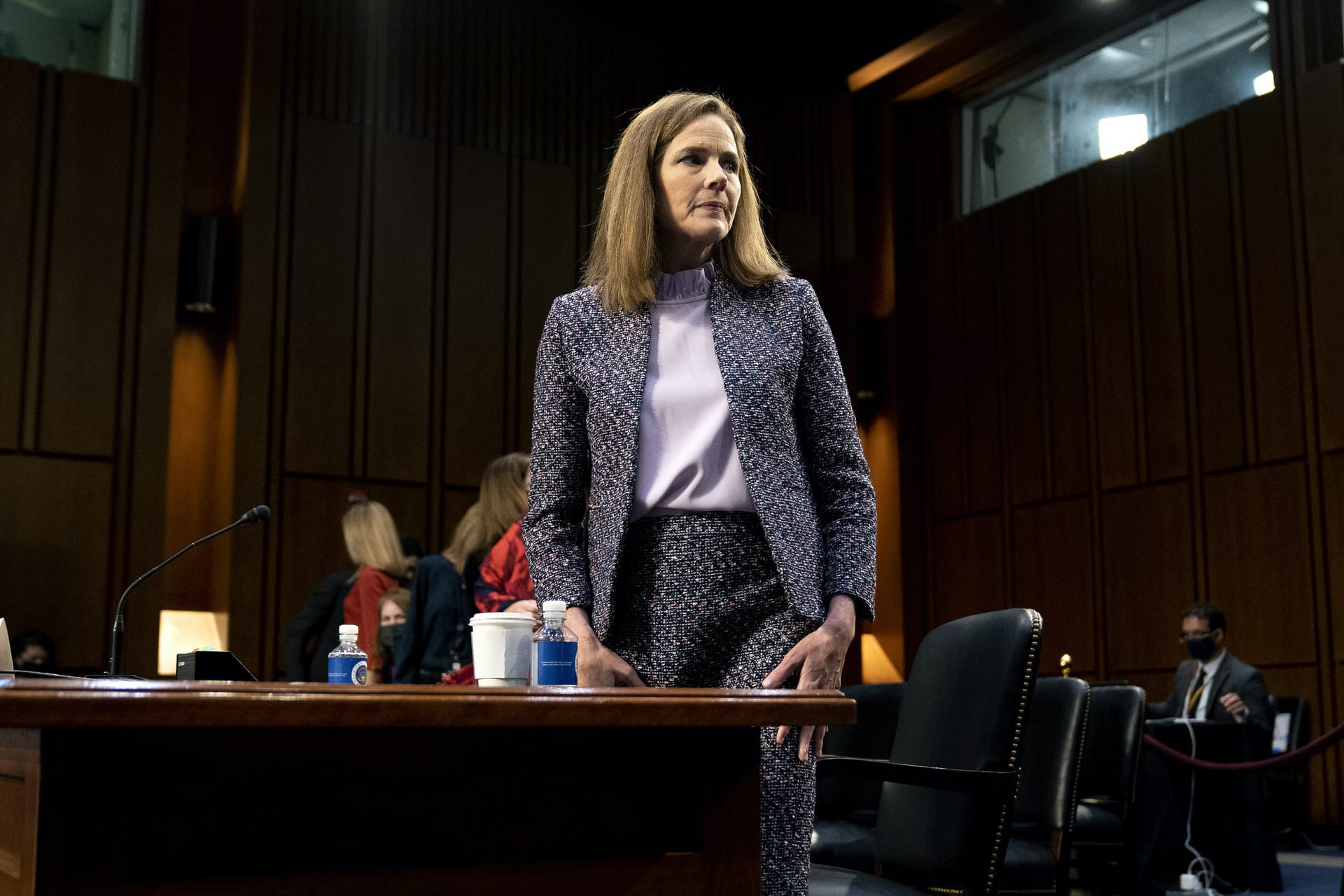
How will the newest pick to the Supreme Court impact America for decades to come?
It was quick, controversial and the outcome was all but obvious once set into motion, but this week Amy Coney Barret t became the youngest female sworn in as a Supreme Court Justice. A sitting judge, a former professor at Notre Dame Law School and mother of seven became President Donald Trump’s third appointee to America’s highest court during his term. The confirmation has left Democrats concerned that the now conservative make-up may sway some very important upcoming decisions. Barrett's confirmation has left Democrats concerned about the fate of the nation's health care law, the Affordable Care Act, and Roe v. Wade, the landmark decision allowing women to have access to abortions. The court will be hearing a case on the constitutionality of the ACA's individual mandate in November. Barrett could also end up weighing in on a general election-related case involving the man who nominated her, should the results of the race between President Trump and Joe Biden come before the Supreme Court. October 26 - CBS News In an election that may see several lawsuits about voting, mail-in ballots and other key elements that could decide the fate of a state or even the presidential election – the Supreme Court where Donald Trump may have a say indecisions and outcomes. If you are a journalist covering this ongoing story, that’s where our experts on this topic can help. Dr. Martha Ginn, professor of political science at Augusta University, is an expert on the judicial process, constitutional law and the U.S. Supreme Court. Dr. Ginn is available to speak with media about this topic – simply click on her icon now to arrange an interview today.

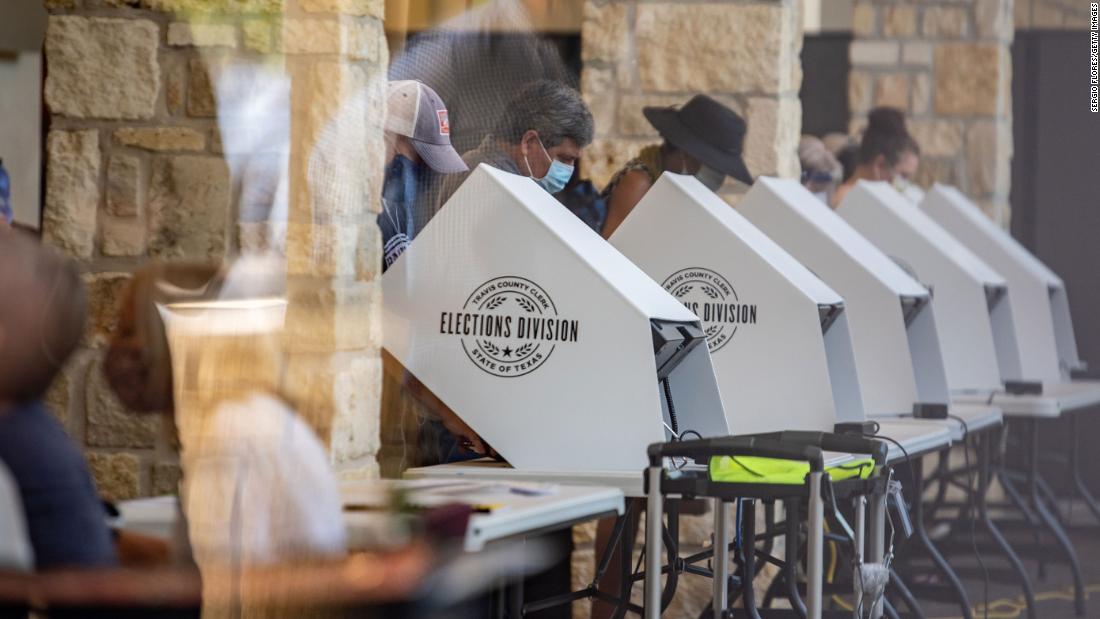
It’s finally here. The campaigns are on their final push and as of Tuesday night – the results will start rolling in. This has been one of the most unique elections in modern history. A divisive and bitter campaign fought during a global health crisis. Texas, which has 38 electoral college votes, second only to California in number – may be in play. Though Texas has not swung blue since 1976, Tuesday night a lot of eyes will be watching Texas to see what role it takes in deciding the outcome of the election. If you are a reporter covering the election in Texas, the key issues in the state and what motivates it to vote for either candidate – then let our experts help. Jim Riddlesperger is professor of Political Science at TCU and focuses on American politics, with emphasis in the presidency, Congress, and Texas politics. Professor Adam Schiffer writes and speaks on media bias, presidential nomination contests, political news, elections, and public opinion. Both are available to speak with media – simply click on either expert’s icon to book an interview today.


As battle-weary Americans struggle to emerge from the anxiety and worry of COVID-19, there might be even more bad news around the corner this fall for parents of young children. The U.S. Centers for Disease Control and Prevention (CDC) is sounding the alarm now about increased cases of acute flaccid myelitis (AFM) in the coming fall. It is of a rare but serious polio-like condition that surfaces every two years and children under five are its main target. On average, patients during the last outbreak in 2018 were aged 5 years old. Limb weakness and paralysis is the most common symptom of the condition which affects the nerve cells in the gray matter of the spinal cord. Others include a fever, pain, or numbness in one or more limbs, problems walking normally, a headache, back or neck pain, issues with swallowing or talking, and weakness in the face or neck. Patients may also have had a recent or current respiratory illness. August 05 - Newsweek In what has already been a harrowing year, it looks like there may be another serious health concern on the horizon. And if you are an expert covering children’s health the potential for acute flaccid myelitis to peak in 2020 – then let our experts help. Dr. Elizabeth Sekul is a highly acclaimed pediatric neurologist specializing in electrodiagnostic medicine and neuromuscular diseases. She also works as an associate professor at the Medical College of Georgia's Department of Neurology and the Department of Pediatrics and Child Neurology. If you are a journalist looking to book an interview – simply click on Dr. Sekul’s icon and arrange a time today.

Georgia Southern University saw a significant increase in grant and contract funding awarded to its faculty for research in the 2020 fiscal year. Georgia Southern faculty and staff received 144 awards totaling $10.7 million, which represents nearly a 67% increase over the previous year. The University received $6.4 million in FY2019 and $5.6 million in FY2018. This year marks the first time that faculty-led research at Georgia Southern broke the $10 million threshold. Vice Provost for Research Christopher Curtis, Ph.D., praised the faculty for their achievements. “These are highly competitive awards from the state, the federal government and private enterprises,” he said. “To grow our research portfolio in a national environment of diminishing funding is truly remarkable and a testament to the intellectual firepower and creativity of our professors. Georgia Southern is a Public Impact Research university, which means that the success of these researchers will be felt well beyond the confines of the University and will extend across the region.” Faculty engage in research that contributes significantly to the University’s $1.4 billion economic impact on the coastal region and that makes Georgia Southern a leading Public Impact Research university in the Southeast. The Allen E. Paulson College of Engineering and Computing, the College of Science and Mathematics and the Jiann-Ping Hsu College of Public Health each received over $2 million in sponsored awards in FY2020. If you have any questions about the faculty research being conducted at Georgia Southern University, or if you are a journalist looking to cover this topic - let us help. Christopher Curtis is the Vice Provost for Research at Georgia Southern University. Simply click on his icon to arrange an interview today.


A new program being offered by the Waters College of Health Professions at Georgia Southern University is helping soldiers with the 3rd Infantry Division (ID) rank up their readiness by offering a new Tactical Athlete Certificate (TAC) program. This program is designed to help soldiers improve their performance, avoid musculoskeletal injuries in physical training, receive college credits and points toward promotions. The program comprises three courses including a basic course, trainer course and programming course. “The Tactical Athlete Certificate is a beneficial program for both the military as a whole and the individual soldier,” said Nancy Henderson, Ph.D., assistant professor in the Department of Rehabilitation Sciences. “The military gains more knowledgeable soldiers who can develop science-based and comprehensive physical training plans, and the individual soldier benefits by receiving college credits, which can help them as they advance in their military careers.” Each course is a three-week hybrid course with two weeks online and one week of face-to-face instruction and could be completed in one semester. Institutional fees are waived for active-duty military, and the admissions process does not require a minimum GPA or SAT/ACT score. If you are a journalist and are looking to cover this topic or learn more about how Georgia Southern University is working with the armed forces, the let us help with your stories. Dr. Nancy Henderson is an assistant professor in the Department of Rehabilitation Sciences at Georgia Southern University. She is an expert in injury prevention, running form and assessing meaningful change of interventions. Nancy is available to speak with media regarding this topic – simply click on her icon to arrange an interview.

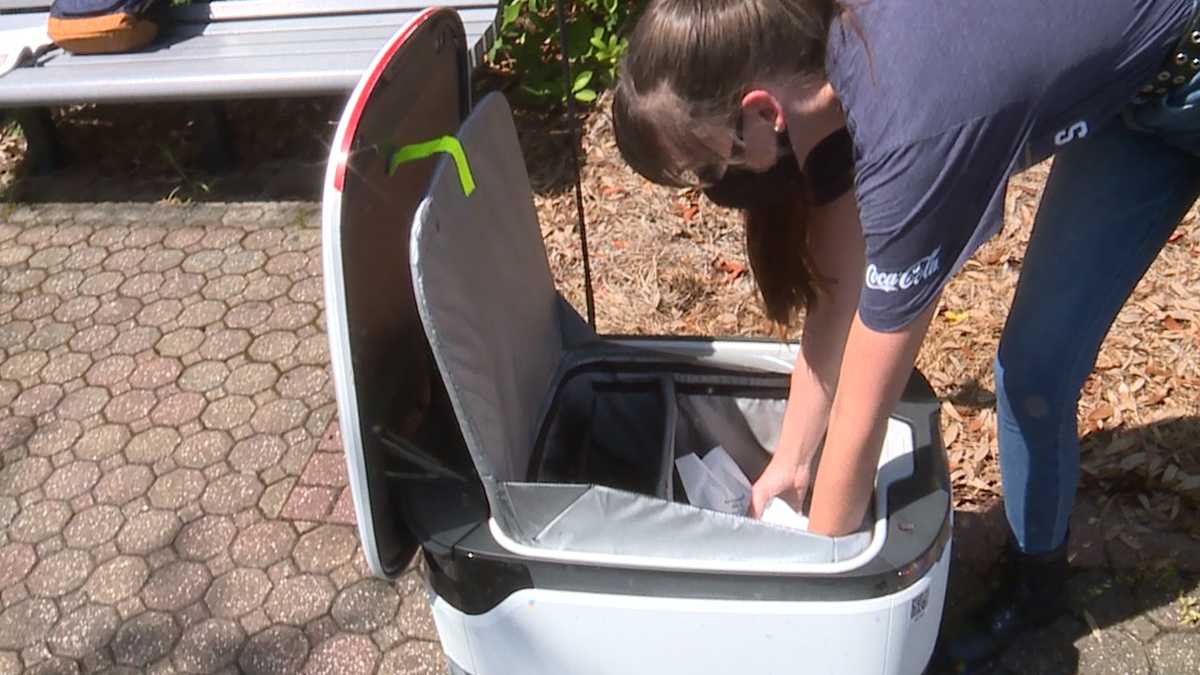
Six-wheeled robots independently navigating the streets and sidewalks on Georgia Southern’s Statesboro Campus may look a little strange. But it will soon be commonplace as these ground robots, which look like a cooler on wheels, have been mapping routes to campus locations in preparation for contactless food delivery this fall. Thanks to a partnership with Starship Technologies, Georgia Southern is the first university in the state to provide faculty, staff, and students with 20 autonomous delivery robots to deliver food from on-campus dining locations to designated pickup locations. Since August, Starship’s robots have been delivering food ordered on the Starship app from University dining facilities and places such as Starbucks, Market Street Deli and Sushi with Gusto to patrons around campus. The robots, which are energy efficient, can have their location and delivery time tracked by recipients through the app. They can also maneuver around obstacles such as pedestrians. “My hope is that it brings a sense of enhanced safety and convenience to our students,” said Clint Bridges, IT Business Owner at Georgia Southern University. “While we are all living through the COVID-19 pandemic, we are hoping that the robots will allow for easier social distancing. The fact that students can order a meal from their residence hall room and have it delivered by an automated delivery vehicle keeps them close to home where they can feel the most at ease and still enjoy a meal from one of our dining locations on campus.” Starship Technologies officials say the robots have been proven to be popular. “Students are looking for ways to get food delivered in the safest and most convenient way possible at the moment,” said Ryan Tuohy, senior vice president of Business Development at Starship Technologies. “Our robots are fast, friendly and help make life a little bit easier, especially in these challenging times.” If you are journalist and would like to know more about how Georgia Southern is constantly innovating and discovering new ways to safely enhance the on-campus experience for students - simply reach out to Georgia Southern Director of Communications Jennifer Wise at jwise@georgiasouthern.edu to learn more and arrange an interview today.

Georgia Southern University President Kyle Marrero delivered a virtual State of the University fall 2020 address to faculty and staff, broadcast live from the Performing Arts Center on the Statesboro Campus on Aug. 12. Maxing out with 1,507 viewers at one point, University members tuned in from remote locations to hear the president discuss how Georgia Southern is successfully adapting during extraordinarily difficult times and will continue to be nimble during the fall semester. “We are being asked to be innovative, flexible, nimble and willing to adapt and change,” Marrero said after welcoming all back to the three campuses. “And I want to thank you. You all have been tremendous, remarkable, heroic even, as we made it through these times and as we navigate through these uncertain times.” Marrero touted the herculean efforts of faculty and staff, who maintained the integrity of the University’s five pillars — student success, teaching and research, inclusive excellence, operational efficiency, effectiveness and sustainability, and community engagement, in the midst of a pandemic that caused the University to move fully online in March. He cited specific examples of performance excellence since March with the following collective efforts: Moved more than 5,000 classes to fully online to complete the Spring 2020 Semester; Delivered summer term fully online while seeing credit-hour generation move up by more than 4%, compared to the Summer 2019 Semester; Moved 4,600 students out of housing and provided support for more than 100 students who remained on campus; Refunded almost $11 million in housing, dining and fees to students; Held virtual Spring 2020 Commencement, viewed by more than 100,000 worldwide; Provided more than $11 million in CARES Act grant funding directly to students; Developed and began implementation of Initial Return to Campus and Return to Campus Plans, based on input from more than 130 faculty staff across campus and public health guidance from the Centers for Disease Control and Prevention and the Georgia Department of Public Health; Modeled a 14% state budget reduction for FY21, then completed a 10% realized reduction, totaling $14.2 million; Developed and implemented flexible and remote work processes; Assessed and modified almost 5,000 courses for fall 2020; Prepared campus with signage, cloth face coverings, face shields, PPE, hand sanitizer stations; Formed and implemented the CARES Service Center; Continued communication, coordination and monitoring of community health care providers, public/private schools, municipalities and agencies. Marrero also presented August figures showing that fall 2020 enrollment looks strong compared to this same time last year, however, he was quick to note that the figures may fluctuate based on various factors throughout the semester. Final fall enrollment figures will be released in October. “We can continue to move forward,” he said. “We can continue to elevate and live our mission and our vision and our values even in these times. We will adapt, we’ll be nimble and we’ll ensure that every day that the public health and safety of our faculty, staff, students and our community is of paramount importance. “I am confident that we are ready as we can be and together we’ll assess and navigate the entirety of the fall semester with the goal and outcome of our students being successful. As a whole Georgia Southern University can make it through this together.” If you are journalist and would like to know more about Georgia Southern university and how it is succeeding during COVID-19, simply reach out to Georgia Southern Director of Communications Jennifer Wise at jwise@georgiasouthern.edu to arrange an interview today.

Let Your Brain Rest: Boredom Can Be Good For Your Health
The human brain is a powerful tool. Always on, the brain is thinking and dealing with decisions and stressors and subconscious activities. But as much as the human brain function has a large capacity, it also has limits. Alicia Walf, a neuroscientist and a senior lecturer in the Department of Cognitive Science at Rensselaer Polytechnic Institute, says it is critical for brain health to let yourself be bored from time to time. Being bored can improve social connections. When neuroscientists do studies looking at brain activity they often compare what areas are “on” when people do a specific cognitive task and when they are told to do nothing. Remarkably, there is extensive activity in the do nothing part of the experiment. This has led social neuroscientists to discover that we have what is called a default mode network, many brain regions that are on by default, or when we are not doing other things. It also turns out that when we are not busy with other thoughts and activities, we focus inward as well as on social interactions. Being bored can help foster creativity. Many scientists and artists have reported being inspired or solving a complex problem when they have actually stopped thinking about it. This eureka moment is called insight. Neuroscientists have shown different patterns of brain activity when people solve problems compared to by working through them step-by-step. Even the ancient Greek Archimedes is known to come up with his major finding relating to displacement of water while taking a bath. Additionally, being bored can improve overall brain health. During exciting times, the brain releases a chemical called dopamine which is associated with feeling good. When the brain has fallen into a predictable, monotonous pattern, many people feel bored, even depressed. This might be because we have lower levels of dopamine. One approach is to retrain the brain to actually enjoy these less exciting, and perhaps boring, times. Especially when we are young, our brains are able to adapt to new ways to think and behave. “Give boredom a try and see what your brain comes up with,” says Walf.


A record number of female candidates are running in 2020
It’s been a full century since the 19th Amendment was passed in the United States, giving women the right to vote. This year, women are not only casting their ballots - they're appearing on them in record numbers. A record number of women are running for Congress this year, boosted in part by a surge of Republican women seeking office in a party struggling to regain lost ground with female voters. The influx adds to the advances female candidates — mostly Democrats — made in the 2018 midterm election that helped reshape the makeup of Congress. It also has echoes in the presidential race, based on voting patterns from two years ago and Democrat Joe Biden’s lead in polls over President Donald Trump among female voters. Biden has vowed to pick a woman as running mate. As of July 1, 574 women had filed to run in primaries for U.S. House seats, topping the record 476 from two years ago, according to data compiled by the center. Another 58 women filed to run for the Senate, compared with 53 in 2018. In all, that’s a 20% increase in women making congressional bids. July 13 – Providence Journal It is an impressive number and one every American should be proud of. But there are a few questions that still need to be asked. With close to 220 GOP women vying for a seat in Congress – has the party that traditionally does not have the support of women voters finally changed its course? Are female candidates motivated by the need to change when it comes to key issues like health care, the environment, and the economy? If you are a journalist looking to cover the increased number of females running for elected office this November – then let our experts help. Dr. Rosalyn Cooperman, associate professor of political science at the University of Mary Washington and member of Gender Watch 2018, is an expert on women in politics. She is available to speak with media regarding this topic – simply click on her icon to arrange an interview.



Chatbots can ease medical providers' burden, offer trusted guidance to those with COVID-19 symptoms
COVID-19 has placed tremendous pressure on health care systems, not only for critical care but also from an anxious public looking for answers. Research from the Indiana University Kelley School of Business found that chatbots -- software applications that conduct online chats via text or text-to-speech -- working for reputable organizations can ease the burden on medical providers and offer trusted guidance to those with symptoms. Researchers conducted an online experiment with 371 participants who viewed a COVID-19 screening session between a hotline agent -- chatbot or human -- and a user with mild or severe symptoms. They studied whether chatbots were seen as being persuasive, providing satisfying information that likely would be followed. Their results showed a slight negative bias against chatbots' ability, perhaps due to recent press reports. When the perceived ability is the same, however, participants reported that they viewed chatbots more positively than human agents, which is good news for health care organizations struggling to meet user demand for screening services. "The primary factor driving user response to screening hotlines -- human or chatbot -- is perceptions of the agent's ability," said Alan Dennis, the John T. Chambers Chair of Internet Systems at Kelley and corresponding author of the paper, "User reactions to COVID-19 screening chatbots from reputable providers." "When ability is the same, users view chatbots no differently or more positively than human agents." Other authors on the paper, forthcoming in the Journal of the American Medical Informatics Association, are Antino Kim, assistant professor of operations and decision technologies at Kelley; and Sezgin Ayabakan, assistant professor of management information systems, and doctoral candidate Mohammad Rahimi, both at Temple University's Fox School of Business. Even before the pandemic, chatbots were identified as a technology that could speed up how people interact with researchers and find medical information online. "Chatbots are scalable, so they can meet an unexpected surge in demand when there is a shortage of qualified human agents," Dennis, Kim and their co-authors wrote, adding that chatbots "can provide round-the-clock service at a low operational cost. "This positive response may be because users feel more comfortable disclosing information to a chatbot, especially socially undesirable information, because a chatbot makes no judgment," researchers wrote. "The CDC, the World Health Organization, UNICEF and other health organizations caution that the COVID-19 outbreak has provoked social stigma and discriminatory behaviors against people of certain ethnic backgrounds, as well as those perceived to have been in contact with the virus. This is truly an unfortunate situation, and perhaps chatbots can assist those who are hesitant to seek help because of the stigma." The primary factor driving perceptions of ability was the user's trust in the provider of the screening hotline. "Proactively informing users of the chatbot's ability is important," the authors wrote. "Users need to understand that chatbots use the same up-to-date knowledge base and follow the same set of screening protocols as human agents. ... Because trust in the provider strongly influences perceptions of ability, building on the organization's reputation may also prove useful."
