
Experts Matter. Find Yours.
Connect for media, speaking, professional opportunities & more.

What's Ahead for California's Gig Workers?
A new law is set to take effect in California on January 1 that could significantly shift the landscape for the "gig economy" and freelancers across the state: Assembly Bill 5 (or AB 5) will require businesses to reclassify workers like ridesharing and food app delivery drivers as employees and not contractors, giving them access to minimum wage and benefits such as overtime, workers' compensation and health insurance. Another group that's targeted in the legislation are freelance journalists. (Vox Media, the parent company of sports site SB Nation, has already taken action and laid off hundreds of freelancers before the law goes into effect.) Villanova University professor Cheryl Carleton, PhD, is an expert on labor economics and the workforce who, in conjunction with Mary Kelly, PhD, recently published research on alternative work arrangements and job satisfaction. "By making them regular employees of the company, workers that firms do hire would gain some benefits, and the government may gain some unemployment insurance payments," Dr. Carleton said about California's AB 5 legislation. "Such a law may be great for them. However, other workers will be worse off because they will be losing just what they wanted—the ability to work when and where they want." "Some of these workers may already have needed benefits through a spouse or significant other or through another job," she continued. "Perhaps they are retired and already have access to those benefits. Still, other workers may not be able to take a regular job with its rigid hours, so they will not be able to work at all." Dr. Carleton also noted that there is a larger issue about how benefits are provided in our economy. "Benefits such as medical insurance, pensions and sick and disability leave are provided through one's place of employment. To the extent that these other working arrangements are growing in popularity, the best approach may be for us to rethink how such benefits are offered," she shared. "It may be that more should be offered by the government to citizens, which then would allow them the ability to choose the job(s) they want that fill the needs they have." To speak with Dr. Carleton or Dr. Kelly, please click on the "View Profile" links featured on this page.



2020 is going to be the year of politics – let Stephen Farnsworth be the expert you call first when you’re covering it. Like the final act in a great Shakespearean play – 2020 looks to be a year of tragedy, irony, comedy and intrigue. We can expect betrayal, vengeance, protagonists, antagonists, heroes and villains. With impeachment hearings, the DNC primaries, summer conventions, trade deals and the election that promises to be an epic display of speeches and stumping as well as vicious and vitriolic attacks. Dr. Stephen Farnsworth is a sought-after political commentator on subjects ranging from presidential politics to the local Virginia congressional races. He has been widely featured in national media, including The Washington Post, Reuters, The Chicago Tribune and MSNBC. He is author or co-author of six books on presidential communication. His latest work, 'Late Night with Trump Political Humor and the American Presidency' shows how late-night political humor, have responded to the Trump presidency. Employing a dataset of more than 100,000 late night jokes going back decades, Farnsworth and S. Robert Lichter discuss how the treatment of Trump differs from previous presidents, and how the Trump era is likely to shape the future of political humor. Stephen is available to speak with media – simply click on his icon to arrange an interview today.



It may be the most wonderful time of the year, but for those delivering packages to houses and homes across America this holiday season it’s also the busiest one. In fact, it’s expected that Amazon alone will ship close to 300 million packages for Christmas. Customers want their purchases quicker and cheaper and it’s changing how the landscape works. It's estimated that free shipping will cost Amazon more than a billion dollars this quarter alone. This explains why shippers are looking at some radical new technologies to cut the cost of the last mile – and this is not just limited to the retail shopping industry. “Technology-driven innovations such as delivery drones or driverless vehicles not only facilitate last-mile delivery, they help with the inclusion of new sets of “customers, especially those in remote locations or rural areas with poor infrastructure, says Morvarid Rahmani, assistant professor of Operations Management at Scheller College of Business at Georgia Institute of Technology. For instance, companies like UPS, CVS, and WakeMed are exploring the idea of drugs and other health-related items being delivered by drones. In a first, collaboration between the FAA and UPS partner Matternet made deliveries from a CVS pharmacy in Cary, North Carolina as well a customer’s retirement community in November. Rahmani thinks this type of delivery shows promise. “Using drones to deliver medical packages can give rural communities access to products and medical supplies, which they would not be able to access otherwise. This delivery model is a way of incorporating social concerns and conditions of underserved populations into business practices. Using drones to deliver medial packages is a great example of collaboration between a governmental agency and for-profit companies, which is toward the dual goals of promoting efficiency and inclusion,” she notes. So, while most consumers are coming to terms with drone technology as a means for the Amazons of the world to replace it’s fleet of trucks, many customers are seeing the future of receiving essential, potentially life-saving drugs to their doorstep. “These technologies enable inclusive retailing and distribution for large (excluded) communities all over the world, says Rahmani. “Successful implementation of inclusive business practices requires collaboration of for-profit firms with the public sector, civil society organizations, and communities”.CBS News - December 15, 2019 Morvarid Rahmani is an Assistant Professor of Operations Management at Scheller College of Business at Georgia Tech. She is an expert in the areas of research is on collaboration in work processes such as new product development, management/IT consulting, and education. Dr. Rahmani is available to speak with media regarding this topic – simple click on her icon to arrange an interview. About Scheller College of Business The Georgia Tech Scheller College of Business is located in a state-of-the-art building in Georgia Tech’s vibrant Technology Square, the core of the Atlanta’s high-tech business community. The College offers an internationally recognized business education, including full-time, evening, and executive MBA options as well as undergraduate and Ph.D. degrees, to approximately 2,000 degree-seeking students each year. Scheller College collaborates across Georgia Tech to offer joint MS degrees in quantitative and computational finance and business analytics. Custom and open enrollment programs for executives and professionals are offered through the Huang Executive Education Center, located within the College. Interdisciplinary centers for teaching and research within the College enrich the educational experience, the campus and the community by providing a direct connection with the real world. They fuel collaborative teaching and research in some of the most relevant areas in business today: leadership, innovation, sustainability, the global enterprise, and business ethics. For more information, contact media@scheller.gatech.edu


It's time to face the reality about the future of artificial intelligence
According to research from International Data Corporation, revenues for big data and business analytics solutions are forecasted to reach $260 billion in 2022. An increase in the use of artificial intelligence (AI) will result in $2.9 trillion of business value by 2030, according to a study by Gartner. “Progressive thinking businesses and organizations cannot afford to ignore the growing applications of artificial intelligence (AI) and data analytics,” says Michael Ratajczyk, the program director for B.A. and M.S. Business Intelligence and Data Analytics programs at Saint Mary’s University of Minnesota. “Sometimes machines can do it better than humans. As people say, machines don’t sleep, they don’t take vacation, they don’t get sick, and they don’t go on camping trips. They do what they’re told and a machine can do the work with far more precision — and without 20 years of training.” AI is here to stay, and it will be up to businesses and humans to adapt, adopt, and adjust to the future — especially in the areas of agriculture, transportation, and health care, where there is great potential for growth. “Businesses can’t afford to ignore AI to remain competitive, and students can’t afford to not keep up with AI trends either,” according to Ratajczyk. “Soon AI will be addressed in all business classes. It’s true that sometimes people can be replaced by machines, and that can be good for businesses and bad for employees. There will always be a need for those who can program AI software, and to prepare, analyze, interpret the data and, importantly, there needs to be a balance between technology and the human touch.” There’s a lot to learn about AI and how it will play a role in very near future. So, if you are a reporter covering this topic — then let our experts help. Michael Ratajczyk works with both undergraduate and graduate business intelligence and data analytics students at Saint Mary’s University. He’s an expert in the field and is available to help with any of your coverage or questions. To book an interview with Michael, simply click on his icon to arrange a time.


Working with Faculty Experts to Build Reputation and Market Visibility
The Baylor University Playbook Featured in CASE Currents Magazine PHOTO CREDIT: BAYLOR UNIVERSITY MEDIA COMMUNICATIONS As traditional and social media organizations such as Facebook race to expose and disrupt the onslaught of “fake news”, a major opportunity exists for higher education institutions to more prominently feature their research and expert opinion to quell this steady flow of misinformation. We know that the gold standard of news reports and social media posts are substantiated with expert research and opinion. What gets in the way of comprehensive reporting and dialogue? It’s often the lack of input from great institutions and their experts. More than ever, traditional media organizations need to provide a steady flow of credible information to trump the influx of unsubstantiated content. But the media (from local mainstream editors to award-winning international investigative journalists) struggle with big challenges: growing editorial demands, small budgets, little time, limits to accessing information – all restricting their ability to pursue new research, data and expertise. So how do they get around this and cut through the clutter? A lot of the responsibility falls on organizations to be more approachable to journalists to help them with expert sources. Schools doing this well are already boosting their reputation with media and other key audiences by showing the relevance of their institution and faculty. In this month’s CASE Currents magazine, a feature article titled “Are Your Professors Ready for Their Close-Up?” Eric Eckert, Baylor University’s Assistant Director of Media Communications and Faculty Development, shares with other institutions the process his team took to prepare its faculty experts for the media spotlight with an in-house training program and the necessary tools to succeed. the Baylor playbook is a great read for any organization looking to boost media coverage and build reputation. Eckert, whose list of responsibilities at the university includes “Faculty Experts”, notes: “We demonstrate our commitment to this program by investing in tools that spread awareness of our researchers’ work. In addition to the time we devote to training and promoting our faculty members, in 2017 our office started using ExpertFile, a content marketing platform that includes the capability to create dynamic faculty profiles that expose our professors to a wider audience of journalists. We can also manage media inquiries through the platform. The software has reduced the time we spend updating faculty profiles. We can quickly add photos, videos, and links to an expert’s media hits and create faculty spotlights—a feature that helps us rapidly promote a professor’s expertise to take advantage of breaking news.” ExpertFile worked with Baylor to develop a searchable platform and content placements for their experts integrated into the Baylor website. To extend the reach beyond the website, Its experts are now also synchronized with the ExpertFile global experts directory and are also visible to thousands of newsrooms throughout the world through our partnerships with the Associated Press and Dejero. Eckert goes on to explain his organization’s use and success with ExpertFile Spotlight. Spotlight is a unique content hub solution that is growing in popularity with marketing teams looking to quickly feature their experts in the context of breaking news, emerging stories, valuable research and newsworthy events. Virtually all of our clients are seeing the importance of providing relevant story angles that can be produced to help journalists on same day deadlines. Eckert goes on to speak of his experience with Spotlights: “In September 2017, we created a spotlight to distribute a Baylor law professor’s comments on President Donald Trump’s decision to withdraw authorization for the Deferred Action for Childhood Arrivals program. A media inquiry received through ExpertFile resulted in a guest appearance on a nationally syndicated radio program in Canada.” Other coverage generated recently by the Baylor team includes: Are you ‘phubbing’ right now? What it is and why science says it’s bad for your relationships The Washington Post You might be cheating on your spouse with your smartphone The Toronto Star Four bad habits that executives should nix The Economist Can ‘bedtime’ teas really help you fall asleep faster? Women’s Health The better way to take a break Fast Company The profile that experts develop through thought out programs such as Baylor’s can extend well beyond media to other key stakeholders, including potential research partners, funders, event organizers, student enrollment and employee recruitment. How are your marketing, communications and media relations’ teams working with your experts across the campus to build market visibility and reputation for your institution? We’d like to know. For more information on how ExpertFile Spotlight works or to read more success stories please drop me a line at Deanne Taenzer at dtaenzer@expertfile.com



Media Training Can You Afford NOT to Be Prepared When Reporters Come Calling?
Want to see someone in a respected position of power throw away a career in all of about two minutes? Stephen Duckett was an expert in his field. Respected globally. Until this… Watch this exchange Duckett wasn’t prepared to deal with media. He paid a serious professional price and left a lesson for us all to learn from. In fact, his exchange is used by a lot of media trainers on exactly what not to do in a crisis situation. As a former news producer, I remember scrambling to find an expert opinion or perspective when news was breaking. If a story required explanation and when it was beyond the grasp of even the brightest of reporters we needed the help of supporting sources. They were critical in helping explain, validate, and ideally, break down just what was going on to our audiences at home. When an outbreak struck, we needed an epidemiologist. When a rare earthquake shook the region, the search for a seismologist was on. Finding the expert wasn’t usually the problem. We had local universities, colleges, and health care facilities within arm’s reach. However, finding an expert who could effectively speak on camera often was. Our goal was to keep people from turning the channel – so boring, highly technical speaking experts simply wouldn’t do it for us. When I worked in TV, we needed someone who could explain a complex subject, in layman’s terms, and in sound bites of about 15 seconds. It may not seem like much, but it is a lot to ask. Explaining high level content is not easy, but the reality is that your audience needs complex subjects explained in the simplest of ways. To do this right, it requires understanding the roles and goals of media and media training. Anyone who will be representing an organization, institution, or corporation needs some form of coaching. It’s a must-have requirement for most CEOs and politicians. Turn on your news at just about any hour of the day, and you can easily tell who has been properly prepared and trained and who hasn’t. It doesn’t happen organically. It takes work. It takes expert coaching. Media-friendly speakers bolster credibility and get noticed. In times of a crisis, a trained speaker may be the missing piece that can make or break a situation a reputation. Those who are not trained stick out—in a very bad way. They stammer, evade questions, ramble and are usually incoherent. If the task is mainly to describe a current situation, an untrained expert may ramble or speak hundreds of feet over the head of the average person. If there’s a crisis at hand—a tragedy, a scandal, a lawsuit or worse—an untrained speaker risks making a bad situation worse. Take a look back to July of 2013—an out-of-control train carrying crude oil exploded, destroying the downtown section of Lac Megantic, in Quebec, Canada. Thirty buildings were leveled, killing 47 people. In this small town, everybody knew somebody who was killed. Edward Burkhardt, president of Montreal, Maine & Atlantic Railway Inc. arrived shortly after the explosion. He was the near-perfect storm—an untrained, and likely uncoachable leader. He was clearly in distress, rattled, arrogant, and unprepared. He fixed blame at the worst possible time, blaming the train’s engineer and the local fire department. A journalist asked how much he was worth. A town is destroyed, the world is watching, close to four dozen people are dead, and his reply was, “I’m worth a lot less now than I was last week.” Proper media training and coaching would not have prevented the horrible tragedy, but knowing how to speak during such a high-stress situation and knowing what questions to expect might have mitigated the visceral reaction of residents, industry and government officials. As it stands, Edward Burkhardt and the company, no matter how successful either had been in the past, are now forever associated with that interview. Conway Fraser worked for the Canadian Broadcasting Corporation for almost 20 years. He’s a Gemini award-winning journalist who worked as a national reporter and investigative journalist. These days, he specializes in strategic and crisis communications as well as media coaching. Conway’s worked with some of Canada’s top corporate executives, academic leaders, and politicians. In both journalism and in PR, he has seen executives who have spent decades building a reputation only to have it destroyed in moments because they weren’t prepared to deal with the media. They’ve either never received media coaching or, Conway says, have taken mandatory training but were never further invested in. In other words, he says, they thought they didn’t need media training and were only taking it to appease the Board or ownership. “Proper media coaching isn’t just about knowing how to spew a main message, use effective body language or bridge away from challenging questions,” Conway says, “In my sessions I also teach my clients about the media, what their job is like, what a day is like for a reporter, what they need from you and how to respect their role. If anyone doubts the value of that, they’re playing with fire. Ask Stephen Duckett.” Natalie Duddridge is a reporter for NY1. I worked with Natalie years ago in Canada at the start of her career. Natalie’s talent as a journalist has taken her to Ottawa (Canada’s capital), Toronto, and most recently, New York. New York sits at the top (sorry L.A.) of media markets in the United States. It has a huge audience of about 10 million people and it is hands down the most competitive media game on the continent. Reporters in these markets never get to rest. They’re either chasing stories, or when they are covering a story they had better have an angle, source, or expert that the others do not. And when you are in a race with at least six other news outlets, standing out isn’t easy. Finding experts and having them ‘camera’ or ‘microphone’ ready is a must. As Natalie explained to me, getting an expert for a story is absolutely crucial. In a market as diverse as New York City, those experts can range from police to politicians, to health and education officials, to scientists and artists. Natalie also lent some great perspective on just how a reporter puts together a story and how your expert needs to know that news is also about storytelling and not just details. “Last week I did a story about the heroin epidemic plaguing the Borough of Staten Island,” Natalie explained. “We like to begin our stories with a human element, in this case a recovering drug addict. In addition to his personal opinions and insight about how to prevent and slow the opioid crisis in the region, we also reached out to the local Drug Rehabilitation Center and interviewed a doctor as well as a therapist. We also interviewed the Staten Island District Attorney about the work he’s doing with New York State Governor to get more dollars for a drug task force to do everything from put more money into preventative education, build rehab centers, add police, fund additional assistant district attorneys to process criminal cases.” If you were counting, you can see she spoke with three key experts on the subject of the story. Each was essential in the reporting process. “For this story we featured several different experts on varying opinions on how this current drug crisis should be dealt with. All of the facts, stats and data for this story were based on the officials and experts we contacted.” Being prepared and knowing what the reporter wants are also ideal elements in conveying the right message. For TV, short, smart, and to-the-point responses work best. “We need a 10 to 15 second sound bite that is ideally informative and clear, and in some cases entertaining,” Duddridge told me. “When I am making calls to experts, I essentially do a pre-interview over the phone to hear how clearly they can explain a topic. If they are great at breaking down studies and terms into focused ideas that are concise and fit into a two-minute story, our job as reporters is so much easier.” A win/win scenario. Your message is delivered, your institution and experts are promoted and the reporter files a great story. It all seems simple. But it’s not. It takes training and preparation. If you are going to offer up your experts for an interview, they need to be ready. Media training takes time, it costs money – but it’s an investment in your staff and your institution. As we learned from the example above, not knowing how to answer, interact, and respond to media can be devastating. Performing under pressure only succeeds with practice and training. If your experts are media trained the reward will always outweigh the risk. Here are a few tips: Get media trained – Use a professional media coach. It costs money, but the professional development, readiness, comfort, and ability to deliver will pay off ten-fold. Media-friendly experts get noticed – When your expert is on the news, people see them. They are representing your institution, so think about what this means for your credibility and recruiting potential. You never get a second chance at a first impression – An old, clichéd saying, but it’s true. A weak speaker who comes across poorly imprints a negative impression on viewers, peers and your institution as a whole. It’s amateur hour, and it doesn’t need to be. Friends for life – Once you prove yourself as a worthy and media-friendly source, the media will keep coming back. Experts who can provide journalists with the information, perspective, and sound bites they need are not only appreciated but noticed and remembered by all media. Once you have established yourself as a reliable source, expect the reporters to come calling time and time again. Dividends – Every story where your expert looks good is positive earned media. Getting on NBC, CBS, FOX or any other nightly newscast is a huge win for your Communications Department. It’s exposure, promotion, and advertising—and it’s free.


Showcase Your Experts to Generate Media Attention and Grow Business
This blog was initially posted by our friend David Meerman Scott on his blog, read it here Some of your most important assets for securing interest in the media as well as educating your buyers are the experts who work at your organization. As a part of a virtual newsroom or other appropriate place on your site and blog, highlighting your employees is a great way to generate attention. When reporters are looking to quote someone in a story, having a name, photo, bio, and examples of content makes it much more likely they will want to conduct an interview. This is especially true when you are newsjacking. Similarly, when buyers are exposed to the smart people employed at your company, they will be more likely to trust and want to do business with you. Yet most companies feature only the senior management team on the site, not those with particular and interesting expertise. University of Ontario Institute of Technology shines spotlight on faculty researchers For example, the University of Ontario Institute of Technology (UOIT), a public research university located in Oshawa, just outside Toronto, was founded in 2002. That makes it one of Canada’s newest universities. With an enrollment of more than 10,000 students, UOIT offers a range of undergraduate programs, plus graduate programs in science, engineering, health, and information technology. But because it is such a new institution, the marketers and public affairs people at UOIT have to work extra hard to make sure that potential students, donors, partners, and other constituents know about the school. Unlike other universities, UOIT cannot rely on decades of families that send their children and grandchildren to the institution and support it with financial contributions. So one way the school reaches out to new audiences is by promoting with the media the many faculty experts who teach and do research at UOIT. “We focus on the experts within the institution,” John MacMillan, director of communications and marketing at UOIT told me. “We have very few resources, but we have a lot of really interesting people who are focused on very exciting things, like using big data and looking at issues of disability and how it relates to the insurance industry, among other things. We are able to reach the media and people who are organizing conferences or booking speaking engagements.” MacMillan uses the ExpertFile software platform as a way to easily showcase UOIT thought leaders in what they call their Expert Centre. He publishes, promotes, and measures the expert content as a tool to engage business prospects, media, and conference organizers. “We needed to have a way of getting out those important stories that we know are of interest to media, to producers, to editors, but also in many ways to partners, to institutions that might be interested in working with us,” MacMillan says. “And we needed to have a way that did a better job of telling our story to those various groups.” MacMillan started with 26 profiles for faculty in the Expert Centre, and is steadily expanding to a planned goal of 200 profiles. He says that an ideal expert is one who is already comfortable with digital technology. “We’re amplifying the presence of each of those faculty members—whether they are involved in multimedia, whether they have their own websites, or whether they have their own followings—and presenting them in a way that gets some response. Part of their success as faculty members lies in establishing their bona fides with granting authorities or with the government or with others. The Expert Centre augments their legitimacy.” Adding credibility to your newsjacking efforts Having profiles available to the media also helps your newsjacking efforts. When you comment on something that’s newsworthy and a reporter finds it via search, they often want to know biographical information on the person before they quote them. Having a link to the bio of the author of that timely blog post is a great way to add credibility and to increase the liklihood of being quoted. As an example of the action that can come from an Expert Centre profile, MacMillan cites Dr. Isabel Pedersen, an associate professor at UOIT and Canada research chair in Digital Life, Media, and Culture. “She focuses on a sociological perspective of wearable computing devices,” he says. “Her research looks into questions like: ‘When we wear gadgets on our body, how will that shift the reality for us? How will it change the way we interact with other people? How will it allow us to participate in digital culture?’ She is one of the early profiles that we created because she is one of our Canada Research chairs, a distinguished researcher who is working on an area of particular national and international importance.” Dr. Pedersen’s Expert Centre profile contains her bio, photo, links to her Twitter and Google Plus feeds, and a list of past speaking engagements, as well as video content, previews of her book Ready to Wear, and articles she has published. The profile attracted the attention of a reporter from IEEE Spectrum magazine, the publication of the world’s largest professional association dedicated to advancing technological innovation and excellence. “They were working on a story about wearable technology, and they wanted to interview her,” MacMillan says. “That’s a magazine from the U.S. that has a much broader readership than anything we’d be able to position her for, and it came along as a result of somebody seeing her profile and deciding that they wanted to speak with her. That’s an example of where we’ve been able to use our resources in a very efficient way, in a manner that gets a story out well beyond our own physical boundaries and that tells about the uniqueness of the work that’s going on at this university.” A lesson learned from the early days of the UOIT Expert Centre was the importance of having the profiles appear in a consistent voice. “When we started out, our assumption was that the individual faculty members or individual experts would develop their own profiles,” MacMillan says. “We realized that would result in a lack of consistency, so we hired a writer, and her job was specifically to interview our experts and to create a story for each of those experts so that when someone does look at this, they’re looking at a consistent story, a consistent tone, and a consistent brand for the university. I’ve learned from creating our Expert Centre that I share some one of the same challenges as faculty members: if you don’t manage your digital presence actively, someone will do it for you. I like to think that our Expert Centre has helped our faculty to curate their digital content as much as it’s helped our university to strengthen its brand.” The ExpertFile platform Your employees are a great resource for generating interest in the media as well as a way to show potential customers and partners that you are doing interesting work. Showcasing them is easier with the ExpertFile platform, a SaaS application that helps organizations make their experts more visible. In my mind, ExpertFile is to showcasing people what HubSpot is to showcasing content. What’s traditionally held many organizations back is that until now, there hasn’t been an online platform to simply organize the growing base of expert content that is being produced across organizations every day. Yet this content is what many audiences are looking for. They want to easily reference everything from biographies to speaking engagements, to social feeds and multimedia assets. “Experts are a great way to humanize an organization and make it more approachable, yet many marketers struggle with how to best showcase these people online,” notes Peter Evans, founder and CEO of ExpertFile. “Adding expert profiles to various sections of your website such as your media room is an ideal way to create more engagement on your site and drive valuable speaking, media and customer inquiries. Experts are quickly becoming the new frontier for content marketing.” Disclosure: I am on the advisory boards of both HubSpot and ExpertFile. Peter Evans, ExpertFile CEO, is a friend.
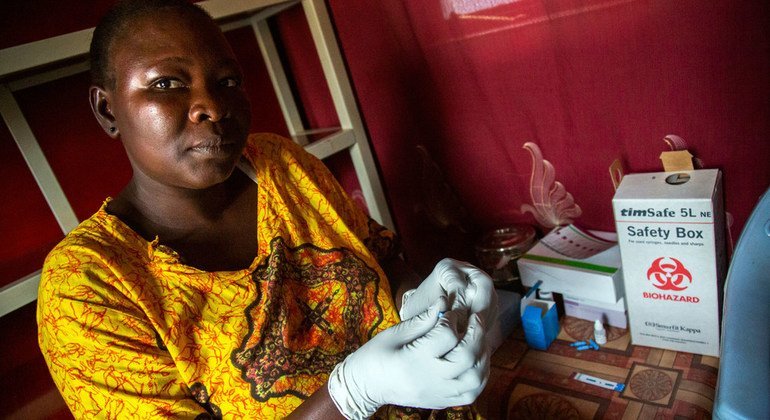
It’s all eyes on Africa as the UN looks to find ways to ensure universal health care for all
It was a historic moment earlier this month as the United Nations and African Union pledged to pursue bolds goals that will strengthen global health and provide health care to all across Africa. “The Memorandum of Understanding we have signed today is an important step towards formalizing the cooperation between WHO and the African Union and to implementing the Addis Ababa Call to Action,” said the WHO chief. “The Addis Ababa Call to Action is a powerful commitment from African Union leaders to increase domestic financing for health, and to hold themselves accountable for that commitment”, he added. Following a political declaration on universal health coverage, which was approved in September by all UN Member States, the General Assembly adopted a global resolution to translate that commitment into reality by legislators in 140 countries. November 18 - UN News It’s indeed a bold declaration and one that will require prevention, infection control and affordable delivery of care. Key UN-AU collaboration specifics Provide technical expertise to the African Medicines Agency and create an environment to foster local production of medicines. Strengthen collaboration between WHO and the Africa Centers for Disease Control and Prevention – with a particular focus on emergency preparedness, to build defenses against epidemics and other health emergencies. Support the implementation of the Addis Ababa Call to Action on universal health coverage and the AU Declaration on Domestic Financing. The prospects are positive, but delivery will be a challenge, and if you are a journalist covering this topic and need an expert source for insight and perspective – let us help. Dr. Saad Bhamla is an Assistant Professor of Chemical & Biomolecular Engineering at the Georgia Tech College of Engineering where he also runs the Bhamla Lab that develops low cost tools for science education and global health. Saad is available to speak to media regarding this topic, simply click on his icon to arrange an interview.



CRISPR is the genetic game changer – but are we ready?
CRISPR is here to stay – and the daily advances of this technology and stem cell therapy seem to be moving at a near exponential speed. “CRISPR Therapeutics of Zug, Switzerland, reported that one patient with sickle cell anemia and another with beta thalassemia appear to have benefited from the same CRISPR-based intervention for up to 9 months, STAT reports. (The company gave STAT an early look at the data but did not allow outside commenters to see the results.) Before the treatment, both patients required multiple infusions each year of red blood cells. CRISPR Therapeutics, collaborating with Vertex Pharmaceuticals, removed blood stem cells from their bodies and modified them with CRISPR to knock out a gene that shuts down production of fetal hemoglobin. When the edited cells were put back in each patient’s body through a stem cell transplant—which required a toxic chemotherapy to kill their own stem cells—both people produced high levels of fetal hemoglobin and no longer needed transfusions.” November 19 – Science Mag CRISPR and how it will shape the future of genetics, health care and society are the subject of great debate, hope and concern and if you are a journalist covering this topic and need an expert source for insight and perspective – let us help. Dr. Michael Davis researches cardiac regeneration, stem cell therapy and preservation at the Georgia Tech College of Engineering where he also is the Associate Chair for Graduate Studies in Biomedical Engineering. Michael is available to speak to media regarding this topic, simply click on his icon to arrange an interview.


Baylor Study: Fear of Missing Out (FOMO) Plus Social Media Connections Can Equal Happiness
FOMO – aka the “fear of missing out” – can have a positive impact on well-being when it leads to social media use that increases social connections, according to a new Baylor University study. James A. Roberts, Ph.D., The Ben H. Williams Professor of Marketing, and Meredith David, Ph.D., assistant professor of marketing in Baylor’s Hankamer School of Business, coauthored the study, “The Social Media Party: Fear of Missing Out (FOMO), Social Media Intensity, Connection, and Well-Being,” published in the International Journal of Human-Computer Interaction. Roberts and David collaborate often and are nationally recognized experts on the effects of technology and social media on relationships and well-being. For this collaboration, the researchers conducted two studies consisting of 565 college students from a large U.S. university to determine the effect FOMO has on social media use, social connection to others and psychological well-being. FOMO is defined in the study as apprehension that others might be having a rewarding experience from which one is absent. According to Roberts, approximately 75% of young adults struggle with FOMO. “The human need to belong is an innate drive that dictates much of our behavior. Social media capitalizes on this need to belong,” Roberts said. “Social media has a dual nature. It lets us interact with others, which is good, but it also exposes us to more social opportunities than we can take part in that fosters a sense of missing out and inadequacy.” The study found: FOMO is a significant predictor of subjective well-being, and social media intensity had a slight significant effect on well-being. Social media is an omnipresent conduit for attempting to make such connections. It is likely that FOMO encourages the use of social media to stay connected. From the first study of 107 college students, David and Roberts gathered data to measure FOMO, social media intensity and social connection. Although FOMO typically has a negative connotation on social interactions, the study showed that the fear of missing out can lead to greater feelings of social connection. “We found that FOMO might actually have a positive impact on social connection through its impact on social media intensity and attachment,” Roberts said. “FOMO drives our use of social media to connect socially with others. Being socially connected leads to happier people.” The second study of 458 college students used the same measures, but also included an assessment on subjective well-being (happiness). The study tested their complete conceptual model in which subjective well-being is an ultimate outcome of FOMO (through its impact on social media intensity and social connection). Roberts said that social media can be a positive resource to help those with FOMO create social interactions, if it is being used actively through online actions such as posting, liking and commenting. “The problem is that people often turn to social media but use it passively – such as creeping on people or viewing pages without interacting – which can then lead to lower levels of happiness because creeping does not foster social connection,” Roberts said. “FOMO can lead to happier people if it drives people to use social media to connect but not simply to ‘creep’ on others.” ABOUT THE STUDY AND AUTHORS James A. Roberts, Ph.D., The Ben H. Williams Professor of Marketing, and Meredith David, Ph.D., assistant professor of marketing in Baylor University’s Hankamer School of Business, coauthored the study, “The Social Media Party: Fear of Missing Out (FOMO), Social Media Intensity, Connection, and Well-Being,” which is published in the International Journal of Human-Computer Interaction. OTHER RESEARCH BY ROBERTS AND DAVID Cellphones Can Damage Romantic Relationships, Lead to Depression People Who Are “Phone Snubbed” By Others Often Turn To Their Own Phones, Social Media For Acceptance Bosses Who “Phone Snub” Their Employees Risk Losing Trust and Engagement When ‘Religiosity’ Competes with Materialism, Charitable Giving Takes a Hit ABOUT BAYLOR UNIVERSITY Baylor University is a private Christian University and a nationally ranked research institution. The University provides a vibrant campus community for more than 17,000 students by blending interdisciplinary research with an international reputation for educational excellence and a faculty commitment to teaching and scholarship. Chartered in 1845 by the Republic of Texas through the efforts of Baptist pioneers, Baylor is the oldest continually operating University in Texas. Located in Waco, Baylor welcomes students from all 50 states and more than 90 countries to study a broad range of degrees among its 12 nationally recognized academic divisions. ABOUT HANKAMER SCHOOL OF BUSINESS AT BAYLOR UNIVERSITY At Baylor University’s Hankamer School of Business, integrity stands shoulder-to-shoulder with analytic and strategic strengths. The School’s top-ranked programs combine rigorous classroom learning, hands-on experience in the real world, a solid foundation in Christian values and a global outlook. Making up approximately 25 percent of the University’s total enrollment, undergraduate students choose from 16 major areas of study. Graduate students choose from full-time, executive or online MBA or other specialized master’s programs, and Ph.D. programs in Information Systems, Entrepreneurship or Health Services Research. The Business School also has campuses located in Austin and Dallas, Texas. Visit www.baylor.edu/business and follow on Twitter at twitter.com/Baylor_Business.


