
Experts Matter. Find Yours.
Connect for media, speaking, professional opportunities & more.
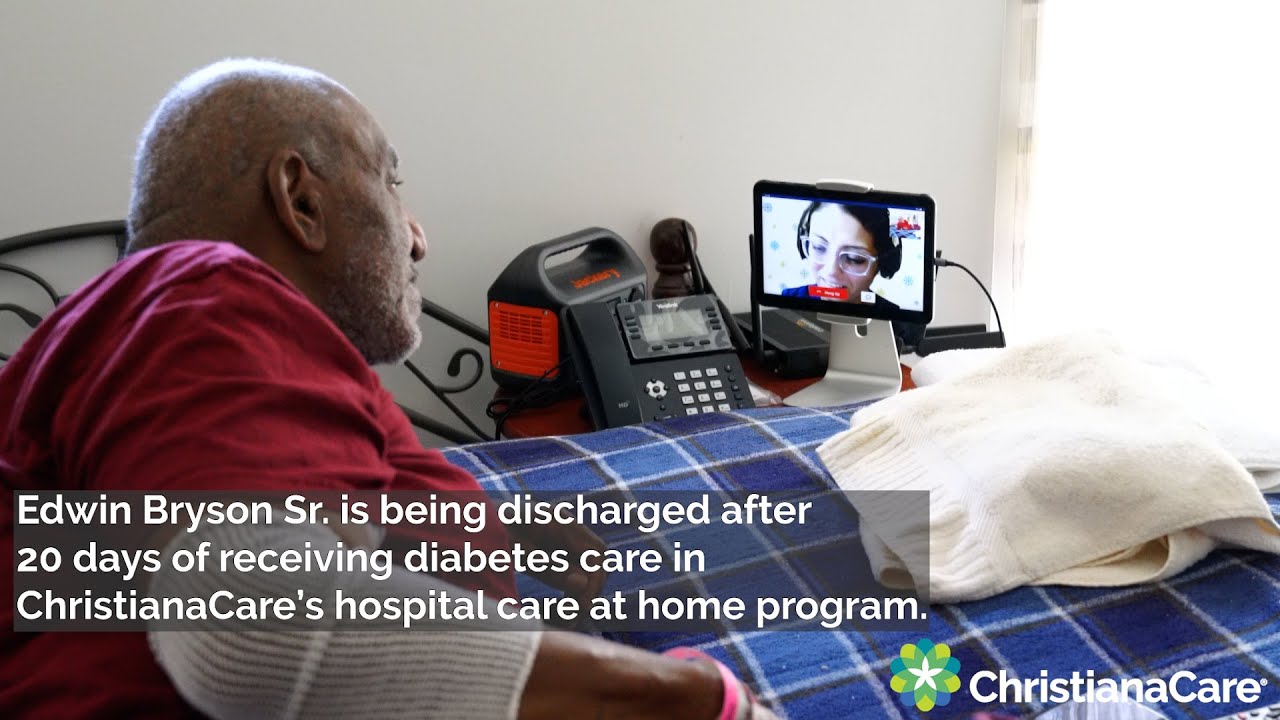
As he arrived at ChristianaCare’s emergency department because of diabetes complications that were causing excruciating pain in his left foot, Edwin Bryson Sr., 71, of Wilmington, Del., had resigned himself to what seemed inevitable—he was going to need hospitalization. But he was surprised when his care team offered him the chance to get the hospital care he needed in the place he likes best — his own apartment. For 20 days, Bryson was a patient in the ChristianaCare hospital care at home program, which offers in-home services to patients who would otherwise require inpatient hospitalization. Daily, members of his care team visited his home to take his vital signs, give him medication and assist him with getting dressed. They also helped with additional tasks to improve his overall health and safety, such as buying an extra lamp and flashlights to ensure the lighting in his home was adequate for his safety, and assisting him with ordering food. “It was a good feeling to be at home,” Bryson said. “My friends would knock on my door and make sure I was OK. My son and my nephews could stop to see me when they felt like it or had the time. They always say, ‘There’s no place like home,’ and it’s true. All I do is hit the button and a nurse comes on to assist me with anything I need and check on my vitals. It was 24-hour service here, just like I was in the hospital.” ChristianaCare has admitted and cared for more than a dozen patients in the hospital care at home program since it launched in December 2021, designed in partnership with the Medically Home Group Inc. The program, which offers the highest level of in-home acute care in Delaware, combines virtual and in-person care provided by a team of physicians, nurse practitioners, registered nurses and other providers. In-person and virtual visits from the health care team, along with mobile imaging and lab services, delivery services for meals and nutrition, and pharmacy medication and management, mean a patient doesn’t need to leave home to get better. Virtual technology and home health equipment brought into the patient’s home ensure round-the-clock monitoring and care that mirrors a traditional hospital setting. “One of the things we’ve learned in a short time about the hospital care at home program is how patient-centered this approach is and how we’re able to customize the care we deliver,” said Sarah Schenck, M.D., medical director of the program. “Most of the things we can do in the hospital we can also do at home. And it turns out patients really prefer that venue. They’re in their own home with their loved ones, their pets, sleeping in their own bed and eating their own food.” Currently, to be considered for hospital care at home, patients must live within 25 miles of Christiana and Wilmington hospitals. Patients who come to the emergency department with common chronic conditions such as congestive heart failure, respiratory ailments, diabetes complications and infections like pneumonia, are eligible for consideration. All hospital care at home patients receive a technology kit that connects them to the command center, powered by the ChristianaCare Center for Virtual Health. With a touch of a button, patients can access an expert team of ChristianaCare physicians and nurses. When patients are well enough to be discharged, the care team collaborates with the patient’s primary care physician to ensure a seamless transition. ChristianaCare joins an elite group of health systems nationwide offering at-home hospital care. Clinical research studies comparing patients in traditional hospitals with patients who received hospital-level care at home have found those who received in-home care experienced fewer readmissions, lower mortality rates, reduced falls and lower costs. “Patient satisfaction is really high with this program,” said Steaphine Taggart, director of operations for the program. “There’s more caregiver interaction with families because they are allowed to come into the home. And overall, there’s more patient-centered care and delivery because it’s in the home,” Registered nurse Mary Pat McCabe has treated patients for 17 years. Working in the hospital care at home command center, she has the opportunity to be even more personable in the virtual setting than a traditional inpatient encounter. “You get to know them and their family members and if they have a pet. You can see into their home and get more of a feel for who they are,” McCabe said. Dr. Schenck said hospital care at home is an exciting example of how new, innovative models of care can improve patient outcomes, reduce costs and transform care. “It’s really foundational for the future of health care delivery. This is our first step, but it’s definitely going to grow,” she said. For Bryson, who was recently discharged, it’s even simpler: “You get better, get back out there and get back into life again.”


Bowel or fecal incontinence, according to the Mayo Clinic, “is the inability to control bowel movements, causing stool (feces) to leak unexpectedly from the rectum. Also called bowel incontinence, fecal incontinence ranges from an occasional leakage of stool while passing gas to a complete loss of bowel control. Common causes of fecal incontinence include diarrhea, constipation, and muscle or nerve damage. The muscle or nerve damage may be associated with aging or with giving birth.” Dr. Satish Rao is a seasoned gastroenterologist and an expert in digestive health, particularly the brain-gut connection. Rao, a professor of medicine at the Medical College of Georgia at Augusta University, recently offered a Q&A on the topic of fecal incontinence with the journal Gastroenterology & Hepatology. What is the prevalence of fecal incontinence in the adult population? Surveys have indicated a prevalence of approximately 9% to 10% in the United States. A recent study reported a 14% prevalence, although this study was Internet-based and, thus, may not have included many elderly patients, as they may not be as computer-savvy as younger patients. It is safe to say that one in seven Americans currently suffers from fecal incontinence. Prevalence appears to be equal in men and women, although women outnumber men almost three to one when it comes to gastroenterology clinic visits and health care-seeking. Men may be too embarrassed to bring the issue of fecal incontinence to the attention of a physician, but when asked about it, they will admit and discuss it. Also, extracting information from a patient about fecal incontinence depends on how the question is asked. Asking patients whether they have daily leakage vs whether they ever have had leakage or have had leakage in the past month will elicit different responses that a clinician may interpret differently. It is important to remember that leakage is not a physiologic event that a healthy adult should have at any time, even once a month or once a year. Not having the capacity to control bowel evacuation or having leakage unaware of its occurrence signals an abnormality. What are notable risk factors for fecal incontinence? In women, pregnancy can be a risk factor, particularly if giving birth involves pelvic tissue damage, such as injury inflicted by forceps use or the unfortunate occurrence of a significant tear. Neurologic or back injuries are other common risk factors. Also, chronic diarrhea can progress to fecal incontinence owing to severe irritation of the rectum or irritants in stool. Further, any condition that changes the ability of rectal capacity can result in fecal incontinence. These circumstances can include surgery or radiation to the rectal area. Hear from a patient and learn more about Rao's research using magnetic stimulation to treat fecal incontinence. What treatment modalities are currently available? Simple, conservative treatment consists of educating patients about fecal incontinence and instructing them to avoid precipitating events. For example, although many people love to have a meal followed by a cup of coffee and a walk, such a sequence of activities is ill-advised for an incontinent patient: the meal provokes a gastric-colonic response, coffee is a powerful colonic stimulant, and exercise also stimulates motility. This triad creates the perfect storm for a stool leakage or accident while the patient is out on the after-dinner walk. Antidiarrheal therapies can be very effective but only in approximately 15% to 20% of patients. Another treatment is biofeedback, which can correct muscle weakness using behavioral techniques. Biofeedback provides resolution in approximately 50% to 70% of patients. The traditional model of office-based biofeedback requires that the patient make 6 or even up to 10 visits to a specialty clinic. This may mean that some patients must drive very long distances to an appropriate care facility that is staffed with trained personnel or physical therapists. This scenario presents a significant challenge for many patients, which is increasingly being recognized by health care professionals and researchers. Good devices for home-based biofeedback have been scarce; however, such a device was recently approved by the US Food and Drug Administration. The research center at Augusta University has tested it in a clinical trial setting and found it to be quite effective as a home biofeedback treatment. Dextranomer is another treatment modality. It involves injection of small beads of dextran polymers into the anorectal region. The beads form a protective cuff or a buffer to stop stool leakage. Another treatment modality is sacral nerve stimulation using the Medtronic InterStim system. The patient is outfitted with a pacemaker-like device with wires that continuously stimulate the sacral nerves that control stool events. In the case of a torn muscle, suturing the torn ends to reduce the size of the anorectal opening is usually useful for women postpartum, although the effect may not be sustained in the long term. What emerging treatments and research should clinicians be aware of? One emerging treatment developed at Augusta University’s Clinical Research Center is called translumbosacral neuromodulation therapy (TNT). TNT is similar to TAMS and involves the fecal delivery of magnetic energy through an insulated coil to the lumbosacral nerves that regulate anorectal function. The pulses generated are of the same strength as those of magnetic resonance imaging. The team at Augusta University’s research center has shown that TNT mechanistically improves nerve function and substantively improves stool leakage. A sham-controlled study and long-term study are currently underway at Augusta University and Harvard University’s Massachusetts General Hospital. These studies are being sponsored by the National Institute of Diabetes and Digestive and Kidney Diseases. A multicenter study sponsored by the National Institutes of Health that the team at Augusta University also is involved with is the FIT (Fecal Incontinence Treatment) trial. This randomized study compares biofeedback with dextranomer injection. Also, as mentioned, tools are becoming available for home biofeedback that should allow many more affected patients to receive treatment because they can do so in the comfort of their own home. The research center at Augusta University is working on a novel home biofeedback protocol for the treatment of constipation and fecal incontinence. Thus, novel noninvasive tools are emerging for fecal incontinence. The repertoire of current and emerging tools holds the promise of improved outcomes for patients with fecal incontinence. Rao is also the founder of the Augusta University Digestive Health Center. He is available to speak to media regarding any aspect of digestive health -- simply click on his icon now to arrange an interview today.


Aston Institute of Health and Neurodevelopment launches livestreamed public lecture series
The Aston Institute of Health and Neurodevelopment (IHN) are to host their first livestreamed public lecture in a new series: Molecules to Minds on Aston University’s digital channel - Aston Originals on Wednesday 16 February 2022. The livestream will see Dr Rachel Shaw present her lecture ‘Understanding and improving staff wellbeing in paediatric intensive care: A partnership between Birmingham Women’s & Children’s NHS Foundation NHS Trust & Aston University to prioritise workplace wellbeing’. Dr Shaw will present the findings of a project in which she investigated the wellbeing of staff working in the Paediatric Intensive Care Unit (PICU) at Birmingham Children’s Hospital. The research was funded by Birmingham Women’s & Children’s NHS Foundation NHS Trust Paediatric Intensive Care Charities. She said: “There is a lot of evidence finding that levels of stress, burnout and symptoms of post-traumatic stress are higher among staff working in paediatric intensive care than in groups of other healthcare professionals. “The Covid-19 pandemic has only further highlighted the need to care for our healthcare staff to improve their own wellbeing, but also, so that they are able to better care for their patients.” Dr Shaw will present her findings of what wellbeing means to PICU staff, the kinds of challenges to their wellbeing they experience at work and at home, the things that hinder their wellbeing in those situations and the things that can help. The one hour livestream will include a Q&A and a roundtable discussion with clinical colleagues from Birmingham Children’s Hospital, looking at key learnings taken both professionally & personally from the project, concluding with next steps and hopes for the future. Dr Shaw added: “We plan to use staff wish lists, together with psychological evidence about what is likely to be successful, to make proposals for what might create working environments that are conducive to workforce wellbeing to create better, sustainable support for PICU staff in the future.” The live stream will take place at 16:00 – 17:00 GMT on Wednesday 16 February, you can register for the event on Eventbrite.


Free masks are coming - here's what you need to know
As stores across America prepare to receive "the largest deployment of personal protective equipment in U.S. history," UConn epidemiologist Dr. David Banach is answering the questions about N95 respirators, how they work, and how to use them properly in a new interview with Buzzfeed news: There are several different types and shapes of N95s; some look like duck bills, others like domes, and several have three panels. The main difference between nonsurgical and surgical N95s is that the latter are also fluid resistant to protect doctors and nurses from blood and other bodily fluid sprays, Dr. David Banach, an infectious disease physician and hospital epidemiologist at UConn Health of the University of Connecticut, told BuzzFeed News. ****** N95 respirators are regulated by the US with standards set by the National Institute for Occupational Safety and Health (NIOSH), while KN95s (and KF94s and others) follow international standards, meaning they also should screen out about 95% of germs and particles, but their effectiveness can vary between brands sold in the US. That’s why Banach advises extra caution if you choose to wear these masks. ****** N95 respirators do expire, Banach said, but it’s usually several years after they are made. As long as you store your N95s according to its box instructions, you’ll be fine — unless you’re saving them for the next inevitable pandemic. Dr. David Banach is an expert on infectious diseases and epidemiology and is a leading expert on COVID-19 in America. To book an interview with Dr. Banach, click on his icon today.


New £1.5 million healthcare simulation facilities to open at Aston University
New clinical simulation facilities for medical, pharmacy and optometry students are set to open in 2022 Including an ocular simulation unit facility which will be the only one in Europe, as part of further investment in clinical facilities in the College of Health and Life Sciences at Aston University. The facilities are part funded by the Office for Students which awarded the University £806,226 to set up a ‘high fidelity’ simulation A&E room with further expenditure by Aston University on an ocular simulation unit. Aston Medical and Pharmacy School students will be able to practise in emergency settings using high quality manikins where they will simulate treating patients for acute conditions such as a heart attack or learning how to intubate a patient onto a ventilator. The high-fidelity acute care simulation room will be equipped with recording facilities, a debrief room and control room. The funding will allow for the purchase of other training equipment such as a hospital grade bed and single task trainer simulation equipment. For example, male and female catheterisation models, pelvic and rectal trainers, venepuncture arms, breast trainers and abdominal trainers. Professor Liz Moores, deputy dean of the College of Health and Life Sciences, said: “We are really excited to have the support from both the Office for Students and Aston University in building these state-of-the-art facilities for our students and can’t wait to start using them. “The acute care simulation room will allow us to simulate a variety of emergency resuscitation scenarios that are very difficult to teach in real life situations, such as heart attacks, acute breathlessness and severe allergic reaction and will be of great value in training students of medicine and pharmacy.” Students in the School of Optometry will also be equipped with simulation facilities to carry out treatment on patients. Professor James Wolffsohn, head of the School of Optometry said: “The ocular simulation facility at Aston University will be unique in Europe, allowing students to refine their skills in examining the health of the front and back of the eyes and to experience a wide range of eye disease. “One of the simulators even allows them to utilise their smartphone to practice at home. They can gain direct feedback and be assessed by the simulators, allowing more flexible, diverse and intensive learning than can be achieved with clinical practice placements.” It is hoped these facilities will help plug some of the gaps in clinical placements that are currently affecting students since the COVID-19 pandemic. As a result of the pandemic, alternative ways are being explored to gain high quality authentic ‘clinical’ experiences, whilst not exposing patients, staff, or students, to risk. The health crisis has also increased pressure on the NHS creating a need for alternative but appropriate training facilities, to ensure that students are fully prepared for the medical profession. The simulation facilities are due to be open in time for the September 2022 intake of students.

It was a tragic day in America this week as a 15-year-old is in custody after allegedly opening fire on a school in Oxford, Michigan, which left three teenagers dead and at least eight more wounded by the gunfire. Three students were killed in the attack at the school some 40 miles north of downtown Detroit -- Madisyn Baldwin, 17; Tate Myre, 16; and Hana St. Juliana, 14, authorities said. Myre died in a patrol car while a deputy was taking him to a hospital, Bouchard said. Eight others -- seven students and a teacher -- were shot, Bouchard said. Two were in critical condition Wednesday morning, he said. Among the wounded were a 14-year-old girl who was on a ventilator following surgery, Bouchard said Tuesday night. A 14-year-old boy also had a gunshot wound to the jaw and head, while the teacher who was shot had been discharged. The attack was the deadliest US school shooting since eight students and two teachers were slain in May 2018 at Texas' Santa Fe High School, according to Education Week. There have been 28 school shootings this year -- 20 since August 1 -- by its tally. December 01 - CNN Many are wondering how students, teachers, first responders and families grapple with incidents with this level of trauma and horror. If you are a reporter looking to cover the issues survivors of mass-shooting events might face, then let us help. Dr. Laura Wilson is a clinical psychologist whose expertise focuses on post-trauma functioning, particularly in survivors of sexual violence or mass trauma (e.g., terrorism, mass shootings, combat). Her research interests extend to predictors of violence and aggression, including psychophysiological and personality factors, as well as indicators of PTSD following mass trauma, long-term functioning among first responders, outcomes among survivors of sexual violence and the influence of media on mental illness stigma. Dr. Wilson is available to speak with media, simply click on her icon to arrange an interview today.



With mask wearing and social distancing on the decline and the cold and flu season upon us, researchers have developed a viral panel that enables the simultaneous testing for SARS-CoV-2 along with numerous common respiratory viruses, that tells us whether other viruses also are at play in patients hard hit by COVID. This new genetic epidemiology tool that provides detailed genetic information about the viruses present when packaged with a molecular immunology model called Nextstrain also enables researchers to assess the novel viral variants that are circulating in a state or nation and patterns for their spread with the goal of helping predict and mitigate future outbreaks, says Dr. Ravindra Kolhe, director of the Georgia Esoteric and Molecular Laboratory, or GEM Lab, at the Medical College of Georgia at Augusta University. Deficits in SARS-CoV-2 monitoring and keeping tabs on other co-circulating respiratory viruses have been public health challenges during the pandemic, Kolhe and his colleagues report in the journal Viruses. Coinfection is a reality, Kolhe says with these respiratory viruses that we unwittingly transmit through the air when we cough, sneeze, even talk, particularly when we are in close quarters for long periods like hospitals, nursing homes, schools and potentially even our workplace. Another reality is that coinfections can have the compounding effect of worsening symptoms and outcomes, much as we have all heard that co-morbid conditions like diabetes and hypertension can do, he says. Particularly when patients are not doing well, looking for other respiratory viruses with the new panel could help provide insight on why and possibly new directions on how to help, he says. The more expansive panel is more expensive than straight COVID testing, which will remain the frontline test in this pandemic, Kolhe predicts. While the cold and flu season were essentially a wash last year because of COVID precautions like mask wearing — in fact the coinfection rate in the group they studied was under 1% — he and others are concerned the cold and flu season now upon us will be very different even with vaccination initiatives for both COVID and the flu. We’ve attached the full article – and it is well worth reading given the timing of flu season and another potential wave of COVID emerging globally. This is a fascinating topic and if you are a journalist covering the latest advancements in the effort to contain and eradicate COVID-19 – then let our leading experts help with your coverage and questions. Ravindra Kolhe is a Molecular and Genetic Pathologist, involved in identifying and validating cutting-edge platforms for diagnostic medicine. He’s also the Director of the Georgia Esoteric & Molecular Laboratory at Augusta University. If you are looking to arrange an interview with Dr. Kolhe – simply click on his icon now to find a time to talk today.


New £2.8 million MRI scanner installed at Aston Institute of Health and Neurodevelopment
Installation of a new £2.8 million MRI scanner is due to start at Aston University in the Institute of Health and Neurodevelopment (IHN) to replace the existing ageing unit in the Day Hospital on campus. The state-of-the-art facility will be installed over a period of four months, including work being undertaken to remove the old machine from the building. This will involve several complex crane lifts outside the Day Hospital to remove the existing scanner. The internal spaces will then be refurbished before the new scanner is lifted into the building in February 2022. The new Siemens MAGNETOM Prisma 3T MRI scanner will enhance the world-class neuroimaging research facilities within the Institute. Currently Aston University researchers use advanced neuroimaging techniques to discover biomarkers of brain health in children with neurological disease. By detecting those biomarkers, researchers are able to determine those who are at risk of longer term poor cognitive, behavioural and health outcomes with the goal/vision of providing early support to those children who need it most. The new scanner will also enable the Institute to provide the most recent innovations in MRI for patients visiting through the clinical service: Aston University Imaging. Patients visiting for MRI scans come through private referrals, as well as from local institutions such as the Birmingham Royal Ballet and Aston Villa football club. Professor Jackie Blissett, co-director, Aston Institute of Health and Neurodevelopment (IHN), said: “The installation of our new MRI scanner is tremendously exciting. This state-of-the-art equipment is core to our child-focused research programme that delivers a new understanding of development and disease and the interventions that will make a difference.”

ChristianaCare Named a “Most Wired” Health Care Technology Leader for 6th Consecutive Year
ChristianaCare Recognized as one of the Nation’s Best in Both Ambulatory and Hospital Care (WILMINGTON, Del. – Oct. 29, 2021) For the sixth consecutive year, ChristianaCare has earned the “Most Wired” designation from the College of Healthcare Information Management Executives (CHIME), which assesses how effectively health care organizations apply core and advanced technologies to improve health and care in their communities. ChristianaCare was recognized with a Performance Excellence Award for Most Wired’s acute and ambulatory categories. That level is reserved only for organizations that are considered leaders in health care technology who “actively push the industry forward.” The recognition affirms that not only has ChristianaCare implemented advanced technologies, but it leverages those technologies in innovative ways. And it also has encouraged deep adoption of these technologies across the entire health system. “Throughout the COVID-19 pandemic, patients and providers have experienced the power of virtual care and the ability for data and technology to improve the health care experience,” said ChristianaCare President and CEO Janice E. Nevin, M.D., MPH. “At ChristianaCare, we believe now is the moment to transform our health care system to a new model of care that doesn’t stop between appointments—it’s continuous, data-driven and technology-enabled. We’re proud to be recognized as a leader in health care innovation, as we work to achieve better health at lower costs.” “We are driving digital into the core of our existing operations and simultaneously creating new digital product offerings,” said Randy Gaboriault, MS, MBA, chief digital and information officer at ChristianaCare. “The concept of the visit as the primary point of interaction between patient and doctor is obsolete. Our unique care foundation is continuous, digital and in the home, driving care with data and producing engagement actions between the visits. Our goal is for the care team, supported by artificial intelligence within the workflow, to determine the next best action for each patient.” The recognition is the latest accolade that highlights ChristianaCare’s success in creating exceptional experiences for its patients and consumers through personalized, proactive communication, which enables people to use the channels that they prefer in order to easily access care. This success was recently illustrated through ChristianaCare’s integration of clinical data with its new customer relationship management (CRM) system, which enabled ChristianaCare to scale and automate outreach to patients due for important preventive health checks. Through this effort and the new capabilities, ChristianaCare initiated patient and consumer outreach to address two common gaps in care – annual wellness checkups and breast cancer screenings. Continuous and automatic, the outreach within weeks resolved 11% of the gaps in annual wellness checkups, and 8% of the gaps in breast cancer screenings. “Success here stems from our commitment to continuously look for opportunities to innovate, from which we can more quickly and effectively partner with each individual on their path toward optimal health, even as we explore new ways to push the boundaries of how technology can further improve the health of our community,” said Lynne McCone, vice president of IT Application Services at ChristianaCare. The 2021 Digital Health Most Wired program assessed the adoption, integration and impact of technologies in health care organizations at all stages of development, from early development to industry-leading. Each participating organization received a customized benchmarking report, an overall score and scores for individual levels in eight segments: infrastructure; security; business/disaster recovery; administrative/supply chain; analytics/data management; interoperability/population health; patient engagement; and clinical quality/safety. Participants can use the report and scores to identify strengths and opportunities for improvement. Participants also received certification based on their overall performance. “Digital transformation in healthcare has accelerated to an unprecedented level since 2020, and the next few years will bring a wave of innovation that empowers healthcare consumers and will astound the industry,” said CHIME President and CEO Russell P. Branzell. “The Digital Health Most Wired program recognizes the outstanding digital leaders who have paved the way for this imminent revolution in healthcare. Their trailblazing commitment to rapid transformation has set an example for the entire industry in how to pursue a leadership vision with determination, brilliant planning and courage to overcome all challenges.” About ChristianaCare Headquartered in Wilmington, Delaware, ChristianaCare is one of the country’s most dynamic health care organizations, centered on improving health outcomes, making high-quality care more accessible and lowering health care costs. ChristianaCare includes an extensive network of primary care and outpatient services, home health care, urgent care centers, three hospitals (1,299 beds), a freestanding emergency department, a Level I trauma center and a Level III neonatal intensive care unit, a comprehensive stroke center and regional centers of excellence in heart and vascular care, cancer care and women’s health. It also includes the pioneering Gene Editing Institute. ChristianaCare is nationally recognized as a great place to work, rated by Forbes as the 5th best health system to work for in the United States and by IDG Computerworld as one of the nation’s Best Places to Work in IT. ChristianaCare is rated by HealthGrades as one of America’s 50 Best Hospitals and continually ranked among the nation’s best by Newsweek and other national quality ratings. ChristianaCare is a nonprofit teaching health system with more than 260 residents and fellows. With its groundbreaking Center for Virtual Health and a focus on population health and value-based care, ChristianaCare is shaping the future of health care.


What can America expect as supply chain issues leave the auto industry stuck in park?
America’s auto industry is slowing down – and this time the main source is not a matter of labor issues or a lack of customers. This time this crisis, like those plaguing so many other industries lies in the tangled web of supply chain issues that is challenging manufacturing, industries and economies across America and the continent. In the United States, the auto industry has been hit particularly hard. The nation’s largest automaker and the rest of the global auto industry have been sporadically shutting down plants since late last year due to the semiconductor shortage, which has cut supplies on dealer lots and driven new vehicle prices to record levels. To be sure, production still isn’t back to normal because some of the factories will only run on one shift per day. Phil Amsrud, senior principal analyst for IHS Markit who studies the chip market, said GM’s move is a good sign, but doesn’t signal the end of the chip shortage. “It’s just not a sign that the patient is through all the rough spots and it’s a matter of weeks before they’re released from the hospital,” he said. October 22 - Associated Press There has been a lot of coverage, and a lot of questions asked as to how this happened and what it will take to untangle the mess. And that’s where experts from Augusta can help with coverage. "There are several factors but the main themes are suppliers inability to react to the increased demand, and governmental policies and responses,” explains Dr. Mark Thompson an economist and expert regarding the industrial issues facing America. “When COVID initially hit, demand dropped considerably. As it relates to the shortage of computer chips, what do you think consumers were demanding during the early phase of COVID...computers, laptops, handheld devices, etc. Technology companies responded and chip manufacturers switch to produce these items. Now, as consumers demand for new cars pick up, there is a shortage of the chips necessary for new cars. As it relates to government intervention, the stimulus has also increased demand for various goods and services furthering the shortage." As for how long will it take for America to see the supply chain replenished? "Good guess,” says Thompson. "I would say that we should expect to continue to see these shortages through the rest of 2021 and part of the way in 2022." If you’re a journalist covering the ongoing supply-chain issues – then let our experts help with your stories. Dr. Mark Thompson is an economist with highly accomplished work in business conditions, risk analysis, energy and the healthcare industry. Dr. Thompson is available to speak with media regarding the economic and industrial issues facing America during this supply chain crisis - simply click on his icon now to arrange an interview today.
