
Experts Matter. Find Yours.
Connect for media, speaking, professional opportunities & more.

ChristianaCare Earns Third Consecutive Apex Recognition Award for Excellence in Respiratory Care
ChristianaCare one of only nine health systems to receive the honor for three consecutive terms For exceptional care in ensuring patients are able to easily breathe during their hospital stay, ChristianaCare has earned its third consecutive Apex Award in the Acute Hospital category. Conferred by the American Association for Respiratory Care (AARC), the award recognizes ChristianaCare for its “exemplary demonstration of best practices in respiratory care.” ChristianaCare is one of only 18 health systems nationwide to earn this award and one of just nine to receive the honor for at least three consecutive terms. As a key component of hospital care, respiratory care is an important contributor to the overall quality and safety of a hospital. For patients and their families, ChristianaCare’s continuing recognition in this category is further reassurance that the health system’s quality is among the best in the nation. “At ChristianaCare, we commit to being exceptional today and even better tomorrow,” said John S. Emberger, BS, RRT-AACS, FAARC, CPHQ, director of Respiratory Care at ChristianaCare. “This recognition belongs to all the respiratory therapists on our team. They are committed to following evidence-based practices and to ensuring that every action they take is safe. It’s a deep privilege to lead a team so committed to our organization’s core values of love and excellence.” ChristianaCare’s respiratory team comprises nearly 150 caregivers who provide respiratory care within hospitals and outpatient settings and manage the mechanical ventilators and artificial airways used to help ICU patients breathe. To support continuous improvement, the team rigorously measures and tracks quality, patient satisfaction, safety and operational performance. That work has made an impact that extends beyond ChristianaCare; for example, the respiratory team’s success in standardizing practices to reduce infections and inflammations that can occur in patients on ventilators was published in the peer-reviewed journal Respiratory Care. Another key ingredient to the team’s success has been its ability to attract and retain top talent. ChristianaCare’s respiratory department is set up with clinical career ladders that provide the opportunity for caregivers to broaden their skills and responsibilities through their participation in quality improvement projects. “Our respiratory therapists are always seeking ways to improve and grow,” said Michael Benninghoff, DO, MS, section chief for Medical Critical Care, and the medical director of respiratory care at ChristianaCare. “They have played a significant role in helping our ICUs achieve excellent outcomes in caring for many of our sickest patients. They measure their performance and continuously look for ways to innovate.” The Apex Recognition Award was developed in 2017 as a way for the AARC to recognize respiratory care departments that demonstrate high quality care. “Respiratory care departments dedicate themselves to delivering excellent care for patients everywhere. They are a vital component to a patient’s care team, making a positive impact for the quality of patient care,” said AARC President Carl Hinkson, MSc, RRT, RRT-ACCS, RRT-NPS, FAARC. “Earning the Apex Recognition award is a tremendous honor. It shows how these teams reach high standards and bring their specialized skills to their health care colleagues. Congratulations to ChristianaCare as one of our 2023-2024 Apex Recognition Award recipients.”




Candida auris: The deadly fungus is spreading and proving difficult to fight
Candida auris is making headlines - and for all the wrong reasons. The fungus can lead to severe infections causing long term health issues and even death. Recently, Fox News in Los Angeles was covering this emerging threat and reached out to Augusta University's Dr. Jose Vazquez for his expert insight and opinion. Here's the piece: The Centers for Disease Control & Prevention says Candida auris, or C. auris, is an emerging health threat, a type of fungus can cause severe, potentially life-threatening infections in people hospitalized with compromised immune systems. Dr. Jose Vasquez, chief of infectious diseases at the Medical College of Georgia at Augusta University, says there are several reasons for concern about this fungus. "The biggest fear is that it is multi-drug resistant," he says. "So, it is resistant to many different drugs." The CDC says most C. auris infections respond to antifungal medication, but some do not. Vasquez says C. auris is also hard to detect without highly specialized lab equipment that many hospitals do not have. And, he says, it is hard to stop the fungus once it gets into a hospital setting, such as an ICU or nursing care facility. C. auris can live on a person's skin without causing symptoms, allowing it to be transmitted from one person to another, or to get into a patient's body through contaminated surfaces or medical equipment like mechanical ventilators, feeding tubes and central lines. 'It is one of the Candidas that lives the longest on a surface, and we're talking about weeks," he sys. "So it can live there, dry and desiccated. Once it gets there, it kind of sets up shop, and it is very, very difficult to eradicate." The rest of the news story is attached: Looking to know more? That’s where Augusta University can help. Dr. Jose Vazquez, division chief and professor of Medicine at the Medical College of Georgia, is an expert in the realm of infectious diseases. He studies and treats infectious diseases, including antibiotic-resistant superbugs and fungal infections. He has been a reliable source for local, statewide and national media regarding the coronavirus outbreak. Dr. Vazquez is available to speak with media regarding this topic – simply click on his icon to arrange an interview.


ChristianaCare Will Open Neighborhood Hospital at Its West Grove Campus
Plans for emergency and inpatient care follow extensive planning and community listening sessions ChristianaCare today provided new details about its plans to restore needed health care services to the southern Chester County, Pennsylvania, community at its West Grove campus, formerly Jennersville Hospital. ChristianaCare will open a neighborhood hospital that includes 10 emergency department beds and 10 inpatient beds. The neighborhood hospital will offer emergency care and behavioral health emergency care and provide diagnostic capabilities including ultrasound, computed tomography (CT), X-ray and laboratory services. The emergency department will treat common emergency care needs such as falls, injuries, heart attacks and strokes. Additionally, the hospital will benefit from access to ChristianaCare’s large network of specialists and support services — such as neurology and cardiology — through virtual consults. “We are excited to share our plans to restore important local health care resources to the southern Chester County community,” said Janice Nevin, M.D., MPH, ChristianaCare president and CEO. “We are committed to our neighbors in southern Chester County for the long-term, serving them as expert, caring partners in their health.” ChristianaCare’s plans for a neighborhood hospital meet the Pennsylvania Department of Health’s requirements for a micro-hospital, which must have a minimum of 10 inpatient beds and 10 emergency department treatment rooms and offer imaging services on-site. “After listening to the needs of the community and an extensive review of historical and projected demographic data, we believe this neighborhood hospital model will provide the right mix of health care services for the West Grove campus in a way that is sustainable and meets the community’s most immediate needs today,” said Heather Farley, M.D., chief wellness officer for ChristianaCare and the clinical leader for the West Grove planning. “It also sets us up to grow in meeting more of the community’s needs in the future.” ChristianaCare anticipates an opening date in late 2024, although the date is subject to change due to the significant work that will be required to renovate the facility to bring it up to current standards, including the build-out of an entirely new information technology infrastructure. Last year, ChristianaCare received funding from Chester County and the Commonwealth of Pennsylvania totaling $5 million to assist in facility upgrades. ChristianaCare already serves residents of southern Chester County. Since 2020, ChristianaCare has provided primary care in three practices that are located in Jennersville, West Grove and Kennett Square. The West Grove practice has recently brought on additional providers and will soon begin offering virtual visits with ChristianaCare specialists. Combined, these three practices are now the “medical home” for 22,000 residents in these communities. ChristianaCare finalized the purchase of its West Grove campus from Tower Health in June 2022. The hospital has been closed since Dec. 31, 2021.

How Teleradiology Improves ER Efficiency & Patient Care
Is your ER efficiency where you need it to be? Learn how radiology collaboration services from RealTime Medical have improved ER efficiency and patient care from Tabitha Kearney, VP Clinical Services, Deep River & District Hospital. Learn how radiology collaboration services have improved ER efficiency and patient experience from Tabitha Kearney, VP Clinical Services, Deep River & District Hospital. Learn more here: https://realtimemedical.com/radiology-services/ #radiology #teleradiology #diagnosticimaging


Optometry professor recognised for excellence in research at awards ceremony
Professor James Wolffsohn recognised for research excellence at London awards ceremony Professor Wolffsohn specialises in myopia management, dry eye disease and contact lenses research Excellence in eye care event is hosted by the Association of Optometrists. A world leading optometrist from Aston University has been recognised for his research excellence in the field of optometry specialising in myopia management, dry eye disease and contact lenses research. Professor James Wolffsohn was the recipient of the Recognising Research Excellence award on Sunday (26 February) at the Excellence in eye care event in London - hosted by the Association of Optometrists. Professor Wolffsohn, who is also the head of the School of Optometry said: “I was very surprised and truly honoured. It is lovely to have my research recognised.” “I have always been driven by wanting to know more. I think research is important because you want healthcare professionals to be working at the cutting edge and using techniques that are proven to work without bias.” James’s first experience of research occurred during his pre-reg placement at Moorfields Eye Hospital. He said: “They had a project on automatic teller machines – bank machines were fairly new and we were working for a major bank on the optimum colour combinations for people with visual impairment.” James went on to complete his doctorate in ocular motor research at Cardiff University, before travelling to Australia to work as a researcher at the University of Melbourne. During this time, Professor Wolffsohn continued to work in practice and would fly into the outback to provide low vision services to remote communities. Since returning to Aston University in 2000, he has worked in a variety of different academic roles – including as head of department across three different disciplines. “I will rarely turn down a collaborative proposal if there is an opportunity to make a difference to evidence-based clinical practice,” Wolffsohn said. James is also passionate about ensuring that scientific discoveries result in tangible change for patients. Three spin-out companies have been developed on the basis of research he has contributed to at Aston University. Alongside research and academic roles, Professor Wolffsohn continues to work a half-day in clinic each week. He has also played an influential role in spearheading consensus among the profession on evolving scientific fields, from myopia management to dry eye disease. James led the diagnostic committee for the Tear Film & Ocular Surface Society DEWS II report and chaired the Contact Lens Evidence-based Academic reports of the British Contact Lens Association. For more information about the School of Optometry and the Vision Sciences Research Group please visit our website.


Why Grand River & St. Mary’s General Hospital Runs the RealTime Medical Platform?
What makes for a good DI partner company? Learn about how Dr. Darren Knibutat and the team at Grand River & St. Mary’s General Hospital are implementing RealTime’s radiology collaboration services to help manage a demanding workload, hold the line on costs and deliver improved patient care. Full interview here: https://youtu.be/lScHwliTnXY Learn more here: https://realtimemedical.com/radiology-services/ #peerlearning #radiology #teleradiology #qualityofcare #radiologyreimagined #radiologyproductivity #workloadbalancing #diagnosticimaging #patientcare #radiologysolutions

How Teleradiology Reduces Return Patient Visits
Can your ER afford unnecessary return patient visits? Learn how radiology collaboration services have improved ER efficiency and patient experience from Tabitha Kearney, VP Clinical Services, Deep River & District Hospital. Watch our interview with Tabitha Kearney, VP of Clinical Services, Deep River & District Hospital, to learn how teleradiology helps reduces return patient visits. Learn more: https://realtimemedical.com/radiology-services/ Find the full interview here: https://youtu.be/Vc5I0E8FkM8 #peerlearning #radiology #teleradiology #QualityofCare #radiologyreimagined #radiologyproductivity #workloadbalancing #diagnosticimaging #patientcare #radiologysolutions
Aston University turns red to highlight World Encephalitis Day
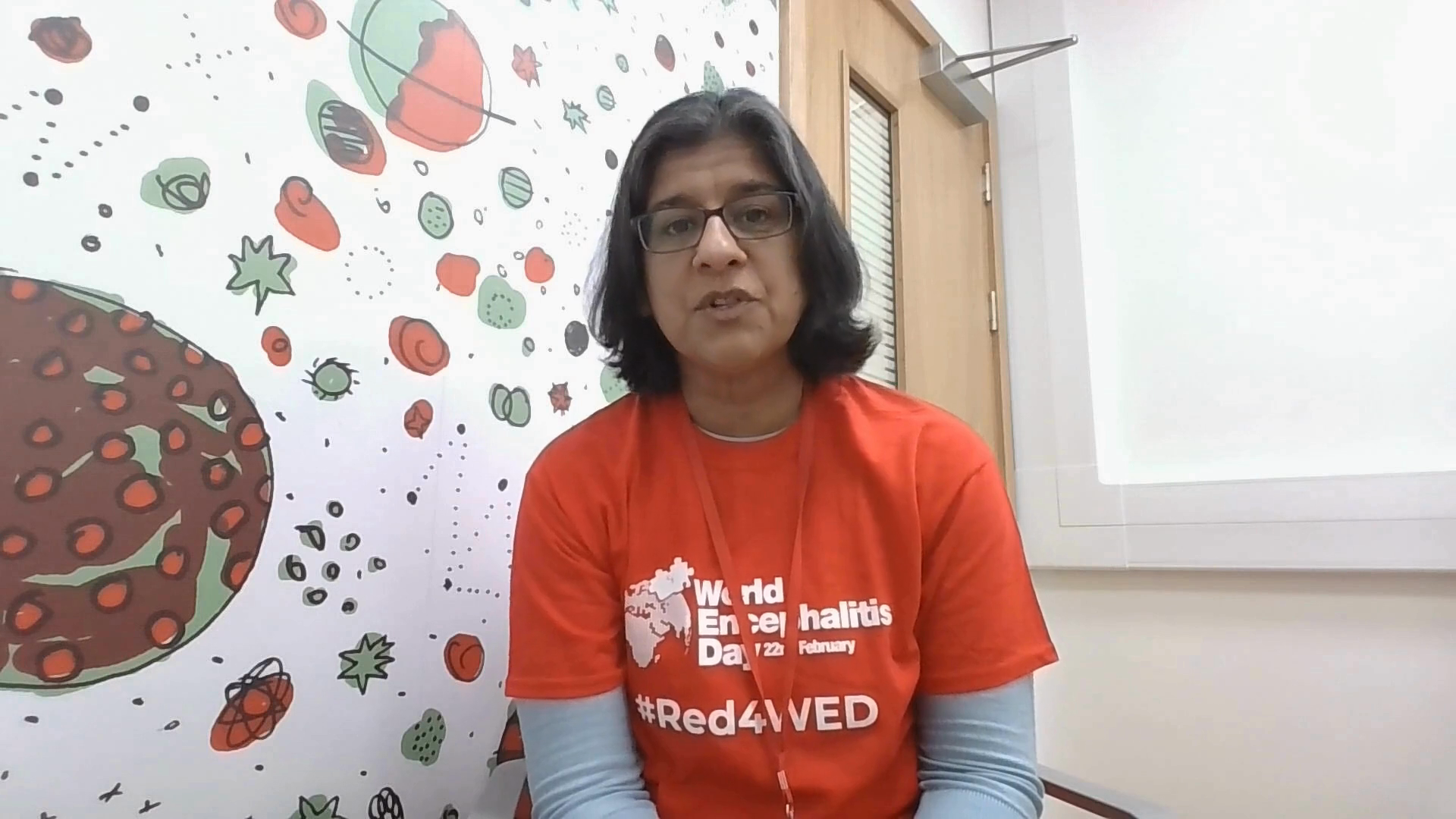
• Aston Institute of Health and Neurodevelopment (IHN) researchers support World Encephalitis Day on 22 February • Aston University library will be lit up in red – the official campaign colour • Staff and students are encouraged to wear red and tweet their photos in support of the campaign Researchers and staff at Aston Institute of Health and Neurodevelopment (IHN) are marking World Encephalitis Day (22 February) by lighting up the Aston University library on its campus near Birmingham city centre. The library will be lit up in red – the official colour of the campaign - to support and raise awareness of encephalitis and all those affected by the condition. The global awareness campaign, introduced by the charity the Encephalitis Society, is based on the theme of Code Red – an emergency alert code used in hospitals. Encephalitis is inflammation of the brain. It is caused either by an infection invading the brain or through the immune system attacking the brain in error. According to the Encephalitis Society, anyone at any age can develop the condition, with up to 6,000 cases in the UK each year and potentially hundreds of thousands worldwide. In the USA there were approximately 250,000 patients admitted to hospital with a diagnosis of encephalitis in the last decade. Researchers at Aston Institute of Health and Neurodevelopment are working closely with patients affected by the disease through their child-focused research programme. Dr Sukhvir Wright, honorary consultant neurologist at Birmingham Children's Hospital, and Wellcome Trust clinical research career development fellow at IHN, said: “IHN researchers know first-hand what children and families affected by encephalitis go through on a daily basis. That’s why we are fighting to answer the questions that matter most to this community through our work. “Our research includes, developing disease models to help try and improve treatments. We do brain imaging to identify biomarkers that might help predict outcomes and at the bedside of our patients we contribute up-to-date practical information and support for children and their families. This work is carried out closely in partnership with the Encephalitis Society.” As part of the awareness campaign IHN researchers are calling upon staff and students to show their support by wearing red on Wednesday 22 February - and share their pictures on social media. Please use the hashtags #Red4WED #WorldEncephalitisDay #TeamAston and remember to tag @Aston_IHN. For more information about Aston Institute of Health and Neurodevelopment (IHN) please visit our website.


Late last year, America was gripped with a shortage of frightening proportions and potential deadly consequences - baby formula was all but gone from store shelves and near impossible to find. Parents were panicked, newborns needed to eat and the government became desperate to source, import and distribute the baby formula to nervous mothers and children in need of nutrition. It's a topic that captured global attention and recently UMW's Sushma Subramanian - a journalist and assistant professor - looked to explain what was happening and how country's like Brazil might have found the natural way to solve this problem. Here's an excerpt from her piece in National Geographic: Five days after the early delivery of her baby last month at a municipal hospital, Talita Alves Araújo Lourenço sat in a chair while a nurse helped her express breast milk into a glass jar. Araújo, 20, had given birth at 32 weeks; she had known early delivery was likely because she had been diagnosed with preeclampsia. At first, her baby could only drink her milk through a tube, but even after developing the strength and coordination to feed from her breast, Araújo was producing too much. The nurse was helping her to empty her breasts so they would feel more comfortable and to donate the extra milk. “To know that my milk could be saving someone is very important to me,” says Araújo. While the ongoing formula shortage that began in February 2022 affected families of infants who couldn't find supplies at the store, it also renewed interest in donation of breast milk to milk banks that supply it to hospitals for vulnerable newborns. Brazil is widely considered the world’s leading example of milk banking because of a program started in the 1980s that combined promotion and training in breastfeeding with donation. The country today runs 228 of the world’s approximately 750 human milk banks. The United States, by comparison, has 28 that are members of the Human Milk Banking Association of North America. January 2023, National Geographic Magazine The rest of the article is attached and is well worth the read. If you are a journalist looking to speak with Sushma Subramanian about her latest book, then let us help. Simply click on Sushma’s icon now to arrange a time and interview. How breast milk banks could avert the next formula crisis (National Geographic) Sushma Subramanian, associate professor of journalism, published a story in National Geographic on how Brazil has become the world’s leader in breast milk banking, inspiring similar programs in other countries. https://www.nationalgeographic.com/science/article/brazil-breast-milk-banking-program-formula-crisis



Researchers find mechanical stimulation could be used to help improve balance control The findings provide new information on whole-body vibration applications Paves the way for research on the interaction between the central nervous system and peripheral muscles. Mechanical vibrations could help improve our muscles and our balance control, according to research at Aston University. Researchers in the College of Engineering and Physical Sciences have examined the effect of stimulation on muscle spindles which ‘speak’ to the central nervous system to help keep us upright and walk straight. Their results provide new perspectives on whole-body vibration applications, paving the way for future research on the interaction between the central nervous system and the peripheral muscles. The research could in future be applied to improve balance in older people and help reduce falls, this could be applied through either wearable devices or with a daily session of stimulation. Hip fractures alone account for 1.8 million hospital bed days and £1.1 billion in hospital costs every year, excluding the high cost of social care. Another potential benefit of the research is that this type of stimulation could be applied to athletes to decrease their muscle reaction times. The goal of the study was to find out if mechanical vibrations can improve the way our bodies process and react to small body oscillations. Seventeen young male and female adult volunteers aged between 20 and 28 years old stood individually on platforms, similar to vibrating plates found in gyms, which caused leg muscle contractions. Calf muscles were targeted as the muscles whose action contribute the most to maintaining a stable upright posture. The researchers stimulated their calves with a frequency of 30Hz and recorded four one-minute trials of undisturbed balance to take a baseline measure and compared the readings to measurements taken after the stimulation. After conducting the experiment, they found that their balance seemed to have improved. The research, Sensorimotor recalibration of postural control strategies occurs after whole body vibration, was led by Dr Antonio Fratini, senior lecturer in mechanical, biomedical & design engineering, and PhD student Isotta Rigoni, and has been published in Scientific Reports – Nature. Dr Fratini said: “We’re excited by our results as they could have a beneficial effect on the health and quality of life of a large number of people. “Our results indicate that whole body vibration challenges balance at first, triggering a bigger effort to control the upright stance and shifting muscle modulation toward supraspinal control, resulting in a recalibration of muscle recruitment. The neuromuscular system seems to recover from such disruption and regain control over a longer time interval.” “Indeed, while muscle recruitment and cortical effort appear unaltered over the long term, the balance seems not only restored but also improved, besides the still clearly affected calf muscles.” For more information about our research or studying in the College of Engineering and Physical Sciences please visit our website.
