
Experts Matter. Find Yours.
Connect for media, speaking, professional opportunities & more.

The Fed Just Cut interest Rates - What's Mean for Americans and What Does it Say about the Economy?
For the first time since December interest rates are being cut and all indicators point to even more signaled more cuts coming this year. The reactions so far have been mixed. The markets held steady but made no bold moves. And the opinions on how this will impact housing and home sales was also mixed with President Trump raving that housing will "soar" and others concerned about volatility. The announcement is getting a lot of media attention with reporters looking for angles, answers and what to expect for the future. And to get those answers - they need experts who understand every aspect of the economy. Dr. Jared Pincin's primary research interests explore the intersection of public choice economics with foreign aid as well as issues in sports economics. Pincin has published in popular publications such as The Hill, Real Clear Markets, Foxnews.com, and USA Today and scholarly journals such as Oxford Development Studies, Applied Economic Letters, and the Journal of Sport and Social Issues. View his profile here Dr. Haymond joined the faculty at Cedarville University in 2010 after a 29-year career in the United States Air Force. He taught at the United States Air Force Academy and was an Air Force Fellow at The Brookings Institution. His research has been published in scholarly journals such as the Quarterly Journal of Austrian Economics, Public Choice, the Journal of Public Choice and Public Finance, and Journal of Faith and Economics. His current research interests include economics and religion, as well as monetary theory. View his profile here Looking to know more? We can help. Jared Pincin and Jeff Haymond are both available to speak with media - simply click on either expert's icon to arrange an interview today.


Before you scroll past thinking, “Oh, another scam alert,” please pause. This isn’t your average “don’t answer spam calls” notice. What follows is an examination of the growing sophistication of grandparent scams—complete with call centers, scripts, and even AI voice cloning. More importantly, it’s about how to protect yourself and, especially, the older members of your family. Read on—not just for awareness, but for fundamental tools to keep your loved ones safe. Even Elvis Isn't Safe From Scammers You know the world has gone topsy-turvy when even the King of Rock 'n' Roll isn't immune to fraud. I've written before about the recent attempt to scam Elvis Presley's Graceland estate, but a recent story about senior fraud really got my blood boiling. U.S. authorities in Boston just charged 13 people connected to what I can only describe as a "grandparent scam industrial complex" – a sophisticated operation that bilked over 400 elderly Americans out of more than $5 million. These weren't your run-of-the-mill phone scammers calling from their basement. Oh no. These criminals were running call centers with scripts, managers, and daily money-making leaderboards like they were selling insurance, not breaking hearts. The math alone should make you furious: $5 million divided by 400 victims equals about $12,500 per person. That's not pocket change – that's someone's emergency fund, their vacation savings, or money they've been carefully setting aside for healthcare costs. The Grandparent Scam: Emotional Manipulation 101 If you're not familiar with grandparent scams, buckle up. These predators have turned family love into their business model, and they're disgustingly good at it. Here's their playbook: Step 1: The Panic Call – "Grandma, it's me! I'm in jail and need bail money RIGHT NOW!" Step 2: The Identity Theft – Using social media details (yes, those cute Facebook posts about little Johnny's soccer game), they sound convincingly like your grandchild. Some are even using AI voice-cloning technology. Step 3: The Time Crunch – Everything's an emergency. No time to think, no time to verify. Just panic and send money. Real emergencies, by the way, allow time for a phone call to confirm details. Step 4: The Collection – Cash via courier, rideshare driver pickup, wire transfers, even Bitcoin. Anything except the legitimate ways actual legal systems collect bail money (spoiler alert: the good guys don't send Uber drivers to your house). The Boston Grandparent Fraud Case: Scamming at Scale The level of organization in this Boston case reads like a twisted business manual. These criminals weren't just winging it – they had: • Dedicated "Opener" staff who made initial contact with victims • Specialized "Closers" who pretended to be lawyers demanding payment • Management training programs for their scam employees • Daily performance systems (because nothing says "organized crime" quite like gamifying elderly financial abuse) A number of things bothered me about this case The fraudsters got over $5 million from 400 victims. The simple math shows that, on average, each victim would have lost $12,500 – that’s not “walking around” money. I suspect many would have had to tap into a variety of savings accounts or possibly borrow from others to source funds on short notice. This creates an extra degree of hardship for victims who are struggling to manage on a fixed income. The average age of the victims was 84. This breaks my heart. The oldest in this cohort are especially vulnerable. At this age, many seniors live alone or are more isolated, making them easier prey for these deceitful tactics. Many of them are still uninformed about how these scams operate. The scammers showed a very high level of sophistication. According to court documents from the U.S. Department of Justice, District of Massachusetts (2025), the scammers operated a sophisticated “call center” with technology at multiple sites, enabling them to place a massive number of calls to unsuspecting victims. • These scams would begin with an “Opener” employee, who would call victims and read a script (see below) pretending to be a grandson or granddaughter who was in an accident. • Then, a “Closer” would allegedly follow up with another call, pretending to be their grandchild’s attorney, asking for a sum of money to pay for their grandchild’s fees due to the accident. Each of these call center locations had managers overseeing staff who trained, supervised, and paid employees. The most sickening part? They kept detailed records of how much money they stole each day, treating vulnerable seniors like ATM machines with feelings. Here is an actual photo of their “Leaderboard” taken as evidence in the Boston case. When it came to handling cash, they also had a plan for that. Most often, they used unsuspecting rideshare drivers whom they ordered to do a package pickup at the victim’s house. And these heartless criminals often went back for seconds and thirds. Using lines designed to trigger seniors into emptying their bank accounts. They would say things like "Oh, there's been a mix-up," or "A pregnant woman's baby was lost in the crash" – any lie to squeeze more money from people who'd already been devastated once. Now, I’ve been in enough boardrooms to know that leaderboards usually track sales of widgets, mortgages, or, at worst, how many stale muffins are left in the breakroom. But imagine walking into work and your boss says, “Congratulations, you scammed the most grandmas today—you win Employee of the Month!” That’s not just evil, it’s the kind of thing that should earn you a permanent bunk bed in a tiny jail cell. And using Uber drivers to pick up cash? Please. The only thing Uber should be picking up is takeout and slightly tipsy people at 11 p.m.—not Grandma’s retirement savings. Some of These Scams Are Coming From Inside Canada Here's where this story hits close to home. While we might imagine these scams operating from some far-off location, some of the biggest operations have been running right here in Canada. In March 2025, Montreal police arrested 23 people connected to a massive network that allegedly defrauded seniors across 40 U.S. states of $30 million over three years. The suspected ringleader, Montreal developer Gareth West, allegedly ran call centers from Quebec properties and laundered the proceeds into luxury real estate. West remains at large, proving that sometimes the worst criminals are hiding in plain sight in Canadian suburbs. The Canadian Reality Check According to the Canadian Anti-Fraud Centre, emergency or 'grandparent scams' have become one of the fastest-growing crimes targeting seniors in Canada, with reported losses rising from $2.4 million in 2021 to over $11.3 million in 2023. Here's where it gets even more interesting. Those figures are just the losses for gradparent fraud that are reported – experts estimate the true losses are at least ten times higher since only 5-10% of fraud victims come forward. Let that sink in: we could be looking at over $100 million in actual losses annually in Canada alone. Here’s the part that really stings: no one is exempt. Not me, not you, not even that friend who insists they “don’t answer unknown numbers.” (Sure, Jan. We all know you still pick up when it says “potential spam.”) This isn’t just about losing money—it’s about losing confidence. The shame, the self-doubt, and the “How could I fall for that?” spiral are often worse than the financial loss. I’ve seen strong, capable people withdraw after being scammed, too embarrassed to tell their own families. And honestly—I get the same chill when I read these stories: Would I have caught it in time? It’s a reminder that vigilance is like flossing—we all know we should do it daily, and yet… sometimes we forget until it hurts. Supporting an Elder Who’s Been Scammed Here’s where we need to step up as families and communities Practical Support: • Help them file a report with the police and the Canadian Anti-Fraud Centre. • Contact their bank to determine if the funds can be recovered. • Lock down social media and adjust privacy settings so future scammers have less ammunition. Emotional Support: • Listen without judgment. Don’t say, “I would never have fallen for that.” (Trust me—you might.) or “you know better, Granddad”. • Normalize the experience: this can happen to anyone. If AI can clone voices and manipulate emotions, it’s not about intelligence—it’s about being human. • Follow up regularly. Shame makes people pull back, so check in to ensure they’re not withdrawing or losing confidence. Your Family’s Fraud Fighting Toolkit Look, I've spent over 30 years in the financial industry, and I can tell you that preventing fraud is always easier than recovering from it. Here's your family's defence strategy: The P-A-U-S-E Method Pause – Don't act immediately, no matter how urgent the request sounds. Ask questions only family members would immediately know ("What's Mom's maiden name?") Use known phone numbers to call your grandchild directly and verify information Set up systems to protect family members (like a secret family password) Explain to others – share this information widely with all family members Know the Red Flags • Demands for immediate action (real emergencies allow verification time) • Requests for secrecy ("Don't tell Mom and Dad!") • Payment via courier, rideshare, wire transfer, or cryptocurrency • Emotional manipulation ("I'm so scared, Grandma!") • Any request for cash payment to resolve legal issues Family Password System Set up a secret word or phrase that only your family knows. Make it something memorable but not guessable from social media. "Fluffy" (your childhood dog) is better than a pet name you posted on a recent social media post. What to Do If You're Targeted Stop. Don't. Send. Money. Instead: • Hang up immediately • Call your local police to file a report • Report to the Canadian Anti-Fraud Centre: 1-888-495-8501 or visit antifraudcentre-centreantifraude.ca • If you've already sent money, contact your bank immediately • Tell other family members what happened – you're not the only target These criminals exploit the most powerful human emotions: love, fear, and the desire to protect our families. They've turned grandparents' natural instinct to help their grandchildren into a multi-million-dollar crime operation. But here's what they're banking on (pun intended): that we'll be too embarrassed to talk about it, too confused to verify it, and too panicked to think clearly. Don't give them that satisfaction. Remember, the average age of victims in the Boston case was 84. These aren't people who have time to recover from financial mistakes. Every dollar stolen from a senior is a dollar that won't be there for healthcare, housing, or basic dignity in their final years. We Can Fight Back Knowledge is power, and conversation offers protection. The more we discuss these scams openly – around dinner tables, in community centres, at family gatherings – the more we hinder these criminals from succeeding. Share this post with the seniors in your life. Not because they're naive, but because they're caring. And because caring people deserve to know how heartless criminals are trying to exploit their love. What is your family doing to protect against fraud? What are your strategies and ideas for keeping our loved ones safe? I’m also particularly interested in what financial institutions and various government agencies are doing these days to combat fraud and protect this vulnerable group. As I research this topic more, I’d love to hear from you. Remember: Real grandchildren in genuine emergencies can wait five minutes for you to confirm who you're talking to. Scammers can't. Helpful Resources: • Canadian Anti-Fraud Centre: 1-888-495-8501 • Report online: antifraudcentre-centreantifraude.ca • For more retirement security tips, visit retirewithequity.ca Stay safe. Don't Retire - Rewire! Sue


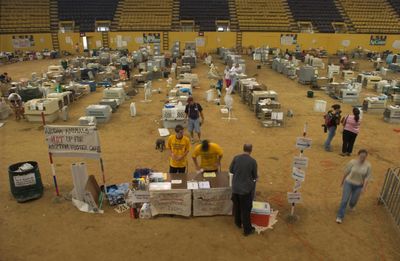
LSU Veterinary Teams Recall Courage, Loss, and Lasting Change from Hurricane Katrina Animal Rescues
From that tragedy came transformative change, with new animal evacuation protocols and policies, including the creation of the federal Pet Evacuation and Transportation Standards (PETS) Act, which requires state and local disaster plans to include provisions for pets and service animals. LSU School of Veterinary Medicine played a pivotal role in this evolution. In the days and months after Katrina, LSU Vet Med faculty, staff, and students worked alongside state officials, military units, and volunteers from across the nation to rescue, treat, and shelter thousands of animals. Two decades later, Katrina’s scars remain, but so does the resilience of the people and animals who lived through it. Their stories serve as a reminder that in even the darkest moments, compassion can spark lasting change. Rescue in a War Zone Dr. Jenny Sones (then veterinary student): I had been working at LSU Vet Med for five years when Katrina hit. LSU Vet Med put out an ‘all hands on deck’ call to employees. All of our hospital wards were turned into an ER. We opened our homes to complete strangers who came to help. It was organized chaos. Many animals came to us looking like corpses with a heartbeat because they’d been in the flood waters so long. I worked all day at LSU Vet Med, where we saw the sickest, most injured patients, and worked at Lamar Dixon evenings and weekends. Twenty years later, the images are so vivid in my mind. I took a horse trailer on a rescue mission into New Orleans with two students and a state veterinarian escort one week after Katrina hit. The scene looked like a war zone, helicopters everywhere, buildings burning, gunshot sounds. Every area we saw was looted. The stench was awful. There were people on the overpasses who had been there for a week. We were there to rescue animals. Military, Louisiana National Guard, and police brought the animals to us where our trailer was parked on an overpass. We picked up a few strays on our way out. The animals we rescued were so scared. Some had been in the flood waters a long time and were soaking wet and foul smelling. Their skin was sloughing off and they were emaciated. Amazingly, none of the dogs, cats, or horses were aggressive—maybe because they were in shock or they were grateful. We treated them all at Lamar Dixon, washed them with Dawn dishwashing soap and applied betadine. Sick ones were transported by trailer to LSU Vet Med. They were very dark times and very good times too. We were able to get the New Orleans French Quarter mules out to Lamar Dixon. Their caretaker crew stayed with them. They hooked up the mules, still in good shape because they weren’t in the flood waters, and they gave workers short rides around the Lamar Dixon grounds. It was such rewarding work. We were exhausted but in the best way. It would have been easy to get caught up in the devastation if we didn’t focus on our purpose to help animals. You can’t fix everything, but you can fix what’s in front of you. If you can survive the devastation of Katrina, you can survive anything. From Classroom to Crisis Dr. Jenny Sones (then veterinary student): In August 2005, I was starting my second year of veterinary school at LSU. I had no idea that life was about to change so drastically. School was cancelled, and electricity was out most places except at the vet school. My colleagues set up temporary housing in our study rooms and other places throughout the vet school. We then began to learn of the effects of Katrina on our veterinary species—dogs, cats, horses, and more. These precious creatures were the reason why we studied, crammed, and signed up to endure the rigors of veterinary school. It was time to close the books and help! Although we were not licensed veterinarians yet, we were keen to provide aid in any way we could. I, along with lots of my classmates, volunteered at Parker Coliseum on the LSU campus, where displaced small animals were seeking refuge, and at Lamar Dixon, which became the shelter for large animals and small animals. We spend many hours doing anything we could, cleaning litter boxes, refilling water bowls, changing bedding, administering medications, and assisting the heroic volunteer veterinarians working tirelessly to treat the injured, sick, and rescued. Lots of important lessons were learned during Katrina. Many animals were not reunited with their owners. That's when I learned the value of microchipping to permanently identify animals, gained an appreciation for animal search and rescue, and the value of quick response. (Sones is now CSU Equine Reproduction Laboratory reproduction specialist.) Mapping Rescues by Hand Ashley Stokes (former faculty member): It was unlike anything I’ve ever experienced. I was researching and teaching at LSU Vet Med in 2005. LSU Vet Med stepped up in so many ways. We started receiving calls from citizens and local authorities at the vet school almost immediately after the storm. They needed help with resources—animal rescue, food, and water. They had to leave New Orleans quickly. I particularly remember a call from someone from south of Belle Chase, La., who had left horses, cattle, and two dogs in the house and needed help. It was surreal to see the devastation, houses floating, there in the Delta. We were making real-time decisions to help their animals. They’d lost so much, and for some, their animals were all they had left. We put a paper map of Louisiana on the wall and put pins in the locations that called for assistance. We covered all of New Orleans and surrounding areas, including the north shore and extending west to Baton Rouge. We took the callers’ information and sent teams of staff, students, and volunteers to different locations with donated trailers, hay, water, and other resources for rescue. We continued rescues for months after the storm. We were there for people for the long haul. The whole experience was transformational in my life. What I learned from Katrina became part of my own career and what I continue to do. There were beautiful moments, especially seeing how resilient and helpful people could be. I saw every day how the community came together and were absolute bright lights. Positive came from tragedy. (Stokes is now dean of UC Davis College of Agricultural & Environmental Sciences.) The Boxer on the Third Floor Dr. Neil Henderson (alumnus): When Katrina hit, the Louisiana Veterinary Medical Association sent out a request for help from veterinarians. I got to the Lamar Dixon Center on Day 5 after Katrina hit. St. Bernard Parish was where I spent most of my time helping. It was literally destroyed. One day, while we were making our rounds, a man came running up to me and said that he just remembered that while the storm was coming through—he was on the third story of a building looking out of the window—he noticed a dog swimming around frantically with nowhere to go. He opened a window for it with the hopes that it would swim inside the building to safety. Seven or eight days later, with the temperature well into the upper 90s, the man came up to me and asked me to go into the building to see if I could find the dog. I did not have much hope but went anyway. There, on the third floor of the building, I found the dog, a boxer, alive. She was in surprisingly good shape. The man was ecstatic to see the dog and could not believe that it made it inside the building to safety. I stayed for five days helping animals, and my late father (Dr. Robert Henderson, class of 1977) came after that for five more days. (Henderson is the owner of the Pine Ridge Veterinary Center in Stonewall, La.) Article originally posted here.


The Canadian Housing Market is a Mess
The Social Contract is Broken—And We Forgot to Tell Our Kids There was a time in Canada when the rules seemed straightforward: work hard, stick to the plan, and your kids would have an even better future than you did. That was the unspoken social contract—not legally binding, but deeply believed. A handshake between generations, sealed with maple syrup and mutual optimism. You purchased a modest home, stayed with one employer for 30 years, and retired with a gold watch, a pension, and a house you owned outright. Life wasn’t flashy, but it was fair. And your kids? They would climb even higher. Well… about that! The Housing Market: From Stepping Stone to Stumbling Block Homeownership used to be a rite of passage. Now it feels more like winning The Amazing Race: Toronto Edition. According to Statistics Canada housing data, in 1990, the average Canadian home sold for approximately $215,000. Fast-forward to late 2023–early 2024, and that number has ballooned to around $670,000–$700,000 on average —a more than 200–225% increase in just over three decades. Meanwhile, wages didn’t get the memo. Since 1990, they’ve only doubled. So, while home prices soared, incomes shifted to the kitchen for more instant noodles. It's not just a gap—it’s a canyon. Sure, there was a housing correction in the early ’90s. But if you’re under 40, you’ve never seen a price drop—only stable prices (on a good day). Meanwhile, boomers and older Gen Xers bought homes when down payments didn’t require a GoFundMe page. Boomers Rode the Rocket—Then Pulled Up the Ladder Let’s be honest: we did quite well. If you purchased property in the ’70s, ’80s, or ’90s, you benefited from a wave of equity that transformed retirement into a cruise ship brochure. For many, the house became the largest—and only—source of real wealth. We got used to it. Then we got protective. Then... well, a bit smug. • NIMBYism? Guilty. • Zoning restrictions? Voted yes. • Capital gains reform? Over my arthritic body. • Preferred Pronouns – Me, Myself and I We feared anything that could lower our property values. A 25% correction? Not in my golden years! But that might be what it takes to give our kids a fair shot. We told them to "work hard," then quietly reinforced a game they couldn’t win. We Told Them to Hustle—Then Rigged the Game Today’s young Canadians aren’t lazy; they’re exhausted. They’ve done everything we asked—degrees, careers, even side hustles—and still can’t afford a 500-square-foot shoebox in Toronto without cashing in their RRSPs or moving back into our basements. By the way, they’re doing this—not because they missed us, but because rent is eating up half their paycheque and still asking for dessert. Even worse? Many are looking abroad, not for a gap year, but for an economy in which they can participate—one where they might be able to afford a home and groceries in the same month. If the best and brightest are quietly packing their bags, it’s not wanderlust; it’s a policy failure. There’s now a whole ecosystem catalyzed by everything from consultants to cloud-based software and payment platforms that has aided a global movement of “creative-class” digital nomads. For those who want a more affordable cost of living and have the skills necessary to work remotely, this generation has options to move. In "Intelligent Money," author Chris Skinner envisions a future where AI-powered financial systems won’t just advise against homeownership—they’ll actively discourage it. Why commit to mortgage debt when you can rent flexibly, invest digitally, and maintain liquidity in your life? Not a dream, but a necessity. We told them to pull up their socks. They’re wondering if we sold their shoes. What Happened to Profit Sharing? Remember when companies used to share their success? Microsoft, Google, and yes, still Costco, offered profit-sharing or stock options that turned employees into unexpected millionaires. It wasn’t charity; it was a fair deal. Then gig work emerged, HR departments disappeared, and the only thing we shared was burnout. We need to restore fairness—perhaps even incentivize companies that value loyalty. Renter Equity Accounts: A Radical Concept—Equity You're not building wealth if rent is more than 30% of your income. You’re funding someone else’s retirement. So, here’s a thought: when rent exceeds 30%, why don’t we match the excess—25% to 50%—and deposit it into a locked “Renter Equity Account”? It grows tax-free and can be used for: • A down payment • Retirement savings • Student debt relief • Emergency funds Employers could contribute to REA plans. Governments could provide incentives, and renters could finally receive more than just a rent receipt and a pat on the back. It's Time for Bold, Practical Ideas We can’t rewind to 1990. (Although the fashion world is trying.) But we can fix what’s broken: Let Canadians earn their first $250,000 tax-free, provided it is used for a down payment or to eliminate student loans. That’s helping reduce overall debt. Ensure zoning reform is effective by linking federal infrastructure funding to genuine housing development. Establish public wealth tools - TFSA-style accounts for low-wealth, high-effort Canadians. Forgive student loans for public service, specifically for individuals filling positions such as nurses, teachers, early childhood educators, and tradespeople, with added incentives for those relocating to underserved areas. Invest in them, and they will reinvest in us. What Families Can Do—Right Now No, you can’t rewrite national policy from the kitchen table. (Unless you’re Chrystia Freeland.) But here’s what you can do: Start a down payment fund—consider using a TFSA or an investment account to help your kids build capital. Create an ADU—laneway homes, granny suites, legal basement rentals. Housing and support combined. Access your home equity—HELOCs or reverse mortgages can be lifelines, not luxury options. Create a rent-to-own family plan—turn monthly rent into future equity. Discuss finances—share your successes, warn against mistakes, and share the financial knowledge you’ve gained from hard lessons. An Apology—from the Heart To our kids and to the next generation, we should say we’re sorry. We didn’t plan for this outcome. We assumed the paths we walked would still be open for you, that the same rules would still apply, and that equity would be available to all. We forgot that a contract—even an unspoken one—still needs to be honoured. But it’s not too late. We can speak out. We can share our thoughts. We can change the policies, shift the mindsets, and reopen the doors that have been closed, because the future of this country shouldn’t be something you have to leave to find. Let’s fix this. So, you can stay. And thrive. And lead. Let’s rebuild the contract together. Deal? Don’t Retire … Re-Wire! Sue

Alcatraz Island, once home to America’s most infamous prison, remains a powerful symbol in the nation’s historical, cultural, and political landscape. Originally a military fortification before becoming a federal penitentiary, Alcatraz gained notoriety for housing high-profile criminals like Al Capone and “Machine Gun” Kelly. Yet its legacy extends far beyond crime and punishment—it was also the site of a landmark Indigenous occupation that helped spark a national conversation about Native rights. Today, Alcatraz continues to fascinate as a tourist destination, a case study in penal reform, and a platform for telling underrepresented stories. Journalists looking to explore the island’s rich past and present may consider: The transformation of Alcatraz from military post to maximum-security prison Daily life behind bars and profiles of the prison’s most infamous inmates The 1969–1971 Indigenous occupation and its impact on Native American activism Alcatraz’s role in shaping modern conversations about incarceration and justice reform The cultural legacy of Alcatraz in film, literature, and popular imagination How the National Park Service is preserving and interpreting the island’s layered history Alcatraz offers more than just a tale of escape—it’s a gateway into deeper stories of resistance, rehabilitation, and remembrance. Connect with an expert about Alcatraz: To search our full list of experts visit www.expertfile.com


What's Your Retirement Plan B?
Chances are, you have seen the ups and downs in the financial markets, which can really cause seniors a lot of anxiety when looking at those portfolio statements. Add to that the ripple effects of the Canada-U.S. trade war, and it’s more essential than ever to have a Plan B. The Trade War Is Personal The Canada-U.S. trade tensions may appear to be a political issue, but their repercussions are directly impacting kitchen tables across the country. Inflation is increasing the cost of everyday essentials, while investments—on which many retirees depend for income—are suffering. For those who cannot easily re-enter the workforce, this situation is more than just inconvenient. It’s stressful. Withdrawing investments during a market dip can permanently reduce your savings. Meanwhile, rising prices on everything from apples to arthritis medication stretch fixed incomes thinner than ever. This isn’t just about budgeting anymore —it's about building a wise financial safety net. Plan B Matters More in Retirement You’ve worked hard to reach this point. Retirement should be about freedom, not fear. However, having a backup plan is essential since there are limited ways to generate new income. Think of Plan B as your financial airbag — something you hope you never need, but you're grateful it's there when life encounters a bump. And let’s be honest: even the most well-padded retirement can use a little backup when the economy’s doing somersaults. The Simple Economics of Cashflow Managing your finances boils down to a straightforward equation: money in versus money out. Think of it as balancing a seesaw—on one side, you have your income (cash in), and on the other, your expenses (cash out). For seniors, especially those on a fixed income, keeping this balance is crucial. Boosting Your Income Even in retirement, there are ways to add a little extra to your “money in” side. This could be through part-time work, turning a hobby into a small business, or renting out unused space in your home. Every additional dollar earned can provide more breathing room in your budget. Another option for many Canadians, is right under their feet—their homes. Home equity can be a powerful tool, giving them access to funds without selling or downsizing. Here are some practical options you may want to consider: Home Equity Line of Credit (HELOC): If you qualify, a HELOC offers flexible access to funds and charges interest only on the amount you use. It’s perfect for short-term needs or emergency access. Remember, you’ll need to make monthly payments and provide proof of income to qualify. Manulife One is a creative and customizable solution that combines your mortgage, income, and savings into a single account. It allows you to borrow against your home with greater flexibility. Payments are required but can be made within the available limit. Qualifying is similar to a HELOC. Reverse Mortgage: For homeowners aged 55 and older, a reverse mortgage allows you to access your home equity without the need for monthly payments. The loan is repaid when you sell or move, providing you with freedom and cash flow while remaining in your home. These tools can help ensure you're not forced to withdraw from investments during market downturns, letting your money recover while you stay comfortable. Trimming Your Expenses On the flip side, reducing your “money out” can be equally, if not more, effective. Perhaps you have subscriptions you no longer use for streaming services or mobile phone plans. Or you find you are purchasing too many items at the store because you aren’t preparing a list. Or you are dining out multiple times a week. Remember, every dollar you don’t spend is a dollar saved. Let’s unpack this a bit more, looking at this from a tax perspective Understanding the After-Tax Advantage of Cost Reduction For seniors supplementing their income with part-time work, it’s crucial to recognize that reducing expenses can be more impactful than earning additional income, primarily due to the effects of taxation. For example, let’s consider part-time income at a marginal tax rate of 30%. -------------------------------------------------------------------------------------------------- • To have an extra $100 in your pocket after taxes, you’d need to earn approximately $142.86 before taxes. This is because 30% of $142.86 is $42.86, leaving you with $100 after tax. • Conversely, if you reduce your expenses by $100, you effectively save the full amount. There’s no tax on money you don’t spend. Why This Matters: Every dollar saved is equivalent to more than a dollar earned when considering taxes. This means that focusing on cost-saving measures can be a more efficient strategy for improving your financial situation than seeking additional taxable income. 3 Major Strategies to Help You Cut Costs Budgeting: Prioritize identifying and eliminating unnecessary expenses. Regularly review subscriptions, dining habits, and utility plans to find areas where you can cut back. Smart Shopping: Utilize discounts, loyalty programs, and bulk purchasing options to reduce spending on essentials. Tax Planning: Be aware of how additional income might affect your tax bracket and eligibility for income-tested benefits. Sometimes, earning more can inadvertently reduce certain government benefits. Saving Smart – Some Tips to Get Started Your Plan B doesn’t have to focus solely on earning more income or borrowing. Sometimes, the best backup plan begins with cutting the extras. Think of it as being retro cool — just like you were before it became trendy. Tip #1: Rethink Dining Out - A Once-A-Week Treat, Not a Routine I love to dine out. It’s great to leave the cooking to someone else, especially after a busy day. But this is also one of the fastest ways to drain your budget. In Toronto, the average cost of a casual dinner for two with wine is around $90–$120. Opt for a more upscale spot? You’re likely looking at $150+ after tax and tip. Savings Tips • Cutting out one dinner per week could save approximately $400–$500/month or $5,000–$6,000/year. • Think about hosting a monthly dinner with friends at home where everyone brings a dish. You’ll still enjoy social time—but for a fraction of the cost. Or maybe try organizing a game night. Perhaps it’s euchre or cribbage, or maybe charades they all have something in common (they don’t require a monthly fee). Organize a potluck to bring people together. Twister might be off the table (unless your chiropractor is on standby), but laughter and connection are always in season. • Also think about how you can share resources. From ride-shares to splitting bulk grocery purchases with a neighbor, the old-school approach of sharing is making a comeback. It’s like carpooling, but with avocados and streaming passwords. Tip #2 Review Your Subscriptions - What are you Really Using? Have you already binge-watched all the episodes of your favourite shows, but you are still paying for streaming services you haven’t used in months? Then it’s time to cancel some subscriptions. According to the Convergence Consulting Group The average Canadian household now spends $70–$90/month on streaming and digital services (Netflix, Disney+, Prime Video, Spotify, etc.). Many people are paying too much for mobile. According to the CRTC, the average Canadian pays $64/month for mobile service. Seniors who negotiate can often reduce this to $35–$45/month—a 30–40% savings. Savings Tips: • Audit Your Subscriptions: Write down every monthly and yearly subscription you have. Even cutting or optimizing 2 or 3 could save $30–$50/month. • Cancel subscriptions you don’t use often. You can always resubscribe later. Instead of paying for four platforms and using a few, consider rotating through them one at a time. You’ll be surprised at how quickly you can catch up on your favorites. Many streaming platforms also offer free trials or cheaper, ad-supported versions. • Call Your Mobile Phone & Internet Carrier Once a Year. Most people don’t realize how much loyalty can cost them. New customers often get much better deals than long-standing ones. When you call, here are some questions to ask: “Am I on the best plan for my usage?” “Are there any promotions I qualify for?” “Can I get a loyalty discount?” “Do you offer special discounts for seniors?” Keep in mind there are also senior-specific mobile plans from carriers like Zoomer Wireless, Public Mobile, or SpeakOut. • Don’t be shy about taking your business elsewhere. Carriers don’t want to lose subscribers and have special offers designed to make you want to stay. You’d be surprised how quickly they "find" a discount. Savings Tip #3: Don’t Throw Out Those Flyers and Coupons With inflation pushing up grocery prices, shopping smart matters more than ever. According to Statistics Canada, the average Canadian household now spends $1,065/month on groceries. So, it may be time to pay attention to those grocery store flyers you used to throw out. While Canadian data on potential savings is limited, US studies show that flyers and couponing can reduce costs by 10–25% for groceries and other household items if used consistently. Savings Tips: • Use apps like Flipp or visit sites like Smart Canuks to find online flyers you may have missed. • Sign up for loyalty cards to access extra discounts. One of the most popular savings programs, PC Optimum, offers frequent discounts and helps you collect points at Shoppers Drug Mart and Loblaws. Also, remember to swipe loyalty cards at the pump; many gas retailers offer discounts that can add up. • Consider shopping at stores like Walmart, which have pricing-matching policies for identical items you find advertised elsewhere. Saving Tip #4: Cut the “Daily Habits” That Add Up Remember, it’s not just the big expenses—it’s the daily ones that sneak up on you. Let’s look at a few “seemingly small” indulgences as examples: • 3 Starbucks Grande Lattes ($6.45 + tax) x 3 days/week = $1,137/year • Take-Out Lunch (for $12 + Tax) x 3 days/week = $2,115/year That’s over $3,000/year in “small” daily purchases! Savings Tips: • Prepare Meals in Advance: Cooking larger portions and planning for leftovers can minimize the temptation of ordering takeout. Planning meals and shopping with a list can prevent impulse purchases and reduce food waste. • Embrace the Home Café Trend: Investing in a quality coffee maker and brewing your own coffee can add joy to your day but also reduce your costs. • Set a Food Budget: Establishing a clear budget for dining out and groceries helps you track expenses and make more mindful spending decisions. Try allocating specific amounts to avoid overspending. Saving Tip #5: Leverage Senior Discounts if you are 60+ From transit to museums to groceries and drugstores, there are dozens of businesses that offer 10–20% off for seniors—but they don’t always advertise it. Many stores also have a set day of the week for seniors' discounts. Consider this: A $50 weekly purchase with 20% off saves $10—over $500/year. Savings Tips: • Shoppers Drug Mart has a 20% Seniors Day on Thursdays (for those 65+) • Rexall offers a 20% discount on Tuesdays • Many major retailers (e.g., Canadian Tire, Sobeys) offer senior discounts that vary by location—ask at checkout. Cineplex has special pricing for seniors plus seasonal promos like $5 Tuesdays if you want to take the grandkids with you. Saving Tip #6: Mind Your Utilities and Insurance Reviewing these bills once a year can result in hundreds of dollars saved. Consider switching to time-of-use electricity plans, which are offered in most areas. Check to see when cheaper rates are offered during off-peak hours, and look at using appliances such as your clothes dryer on off-peak hours. You can also lower your insurance premiums by looking at options such as raising your deductible (if you’re comfortable with the risk). Also, look at rates offered by providers for “pay as you drive” insurance, especially if you aren’t using your car a lot. Also, if you are not bundling your home and auto insurance, you may be missing out on some savings. Saving Tip #7: Buy & Sell Online Many items we need can be found for a fraction of the cost used on platforms such as Facebook Marketplace and Kijiji. And remember, buying a used item also saves on tax. Many retirees have extra furniture, tools, collectibles, or tech they don’t need. It's now easier than ever to declutter and turn these unused items into extra cash. It’s All About Small Changes and Big Rewards Recessions are hard on everyone, but especially on those living on fixed incomes. The good news is that there are plenty of smart, manageable ways to reduce expenses without giving up all the good things in life. By becoming a more conscious consumer and checking in on your spending habits once or twice a year, you can save thousands of dollars annually—money that can be redirected toward travel, gifts for grandkids, or, if nothing else, it just may calm your nerves. Another Tip: Don’t Wait — Timing Matters If this trade war continues, housing values may dip, which means the equity you can access could shrink. Getting your Plan B in place now ensures you lock in flexibility and peace of mind before things tighten up. Remember, it’s easier to get approved for a HELOC or reverse mortgage when you don’t urgently need it. It's better to set it up and keep it on standby than to wait until it’s too late. Talk It Out Stress develops in silence. Speak to family and friends about your concerns. They may not have all the answers, but they’ll provide emotional support — and possibly assist with paperwork or technical hurdles. If you have senior loved ones, check in and ask how they’re feeling about rising costs and uncertainty. These conversations go a long way and might even lead to better solutions. This trade war isn’t solely about economics. It involves peace of mind, dignity, and stability in retirement. While it may not be the type of Plan B that preoccupies the younger generation, it is equally important — perhaps even more so. So, take a breath. Make a plan. Get creative with your budget, and look at ways to save. Tap into your home equity if necessary, and don’t hesitate to ask for help. With the right Plan B, you can face the future with confidence — and perhaps even enjoy a little fun along the way. Here's a handy checklist to help you get started. Quick Wins Checklist ❏ Cancel one unused subscription ❏ Call your mobile carrier for a better deal ❏ Bring lunch instead of dining out 1x/week ❏ Use a coupon or flyer on your next grocery trip ❏ Look for a senior discount before you pay ❏ Brew your coffee at home 3 days this week ❏ Research potential discounts on your car insurance (bundling or pay-as-you-drive options) ❏ Use your clothes dryer or other appliances during off-peak hours to save on electricity Don’t Retire … Re-Wire! Sue

A Brief History of Stock Market Crashes
Stock market crashes have punctuated economic history with sudden downturns that reshape public confidence, policy decisions, and financial systems. From the Great Depression to the 2008 financial crisis, these events have not only disrupted global economies but also exposed systemic vulnerabilities and sparked reforms. As markets face ongoing volatility and new risks, understanding the history of stock market crashes—and the factors behind them—is vital for investors, policymakers, and the general public. This topic offers journalists compelling opportunities to explore financial history, economic psychology, and risk management. Key story angles include: The Great Depression (1929): Analyzing the causes of the most infamous crash in history and its lasting impact on global economic policy. Black Monday (1987): Investigating the role of computerized trading and investor panic in one of the largest one-day percentage drops in stock market history. Dot-Com Bubble (2000): Exploring how tech speculation and investor overconfidence led to the collapse of early internet startups. The 2008 Global Financial Crisis: Examining the role of housing market speculation, subprime lending, and financial deregulation in triggering a global recession. Behavioral Economics and Market Psychology: Understanding how fear, speculation, and herd behavior contribute to market volatility. Are We Due for Another Crash? Looking at current economic indicators, tech valuations, interest rates, and global tensions that could signal future instability. With markets continuing to respond to global events and economic shifts, revisiting the history of crashes offers valuable insights into how financial systems react under pressure—and how societies can better prepare for what comes next. Connect with an expert about the History of Stock Market Crashes: To search our full list of experts visit www.expertfile.com

Canada’s RRSP Program Has Too Many Jobs
Summary: Since its inception in 1957, the Registered Retirement Savings Plan (RRSP) has been a cornerstone of Canada’s retirement system. However, the RRSP has taken on roles far beyond its original mandate, notably through the Home Buyers’ Plan (HBP) and the Lifelong Learning Plan (LLP). Although these programs provide short-term benefits, they significantly damage the long-term health of Canadians' retirement savings. This article explores how these additional roles are sabotaging retirement savings, highlights statistics about the state of RRSPs today, and discusses the disastrous impact these trends will have on future retirees. While listening to a recent economic presentation by Don Drummond, TD Bank's Chief Economist at the Mortgage Professionals Canada conference, the following stat stood out to me: "Median RRSP savings are $146K (RRSPs have been in existence for 6 decades)" I was stunned by how low this value was. Even with a government pension, in today's economic climate, to achieve a successful retirement, we need more than $146K saved. This prompted me to explore how the average value of RRSPs in Canada could be so low after some of us have had as much as 60 years to save. The average senior aged 65 in Canada receives $18,197 per year from OAS and CPP. If qualified for GIS, they would receive another $15,186 annually, for a total of $33,338 annually. This isn't much income, especially for homeowners who must pay for property taxes, utilities, upkeep, and maintenance. How it All Began At inception, the RRSP was called a Registered Retirement Annuity and was created in 1957. At the time, Canadians could contribute up to 10% of their income to a maximum of $2,500 annually. The goal was to give all Canadians the same tax benefits as members of registered employer-sponsored pension plans. Benefits of the RRSP Plan 1. Tax-Deferral: Contributions to an RRSP are tax-deductible, which can reduce your tax bill. 2. Tax-Free Growth: Your savings grow tax-free while the money is in the plan. 3. Retroactive: You can carry forward any unused contribution room to future years. The Multitasking Disaster Studies show that people are dreadful at multitasking; the same is true of government programs. Here is where the program went wrong. In 1992, the Home Buyer’s Plan (HBP) was made more flexible, which allowed first-time homebuyers to withdraw RRSP funds to buy a house. Then, in 1999, the Lifelong Learning Plan (LPP) was introduced, which permitted withdrawals to pay for education. The Home Buyers' Plan (HBP) was not introduced in 1957 alongside the Registered Retirement Savings Plan (RRSP) creation. Instead, the HBP was introduced in 1992 as a federal initiative to help Canadians buy their first homes by allowing them to withdraw funds from their RRSPs without tax penalties as long as they met specific conditions. Here's a timeline of crucial HBP withdrawal limits since its inception: Timeline of HBP and LLP Withdrawal Limits: 1992 - Introduction of the HBP • Maximum Withdrawal Limit: $20,000 per individual. • Purpose: To help first-time homebuyers purchase or build a home. 1999 – Introduction of Lifelong Learning Plan (LLP) • The annual withdrawal limit is $10,000 per individual • The lifetime withdrawal maximum is $20,000 per individual 2009 - First HBP increase • New Limit: $25,000 per individual. • The increase was introduced as part of federal budget changes to reflect rising housing costs. 2019 - Second HBP Increase • New Limit: $35,000 per individual. • Announced in the 2019 federal budget to support affordability for first-time homebuyers. 2019 -HBP Enhancement for Life Events • The HBP was expanded to allow individuals experiencing a marriage or common-law partnership breakdown to participate, even if they were not first-time homebuyers. 2024 - Recent increase • New Limit: $60,000 per individual. • The increase was introduced as part of federal budget changes to reflect rising costs. A Flawed Strategy The Home Buyers' Plan (HBP) and Lifelong Learning Plan (LLP) were introduced in Canada as tools to make housing and education more accessible. While well-intentioned, these programs effectively allow individuals to borrow from their future retirement savings—a strategy that can have significant negative consequences. Ask any high school economics student, and they will tell you that compromising two of the three main elements (principle and time) in investing growth will lead to a disappointing return. Here is the formula: principle X interest + time = compounded return. Are We Borrowing From the Future to Pay for Today? The Problem with the Home Buyers’ Plan (HBP): Addressing Housing Affordability at the Expense of Retirement The HBP permits individuals to withdraw up to $60,000 from their RRSP to buy a first home. In an environment of rising house prices, this measure may help buyers cobble together a down payment, but it drains retirement funds. The funds are unavailable to grow tax-free over decades, diminishing the compounding returns essential for retirement security. The Problem with the Lifelong Learning Plan (LLP): Financing Education by Sacrificing Retirement The LLP allows up to $20,000 in RRSP withdrawals to fund education, which can help individuals upskill. However, education often doesn’t yield immediate returns, and the withdrawn funds lose their growth potential, including the compounded returns. Why This Harms Future Retirees Issue #1: Loss of Compounding Growth Withdrawals disrupt the power of compounding, which is vital for retirement savings. For example, $35,000 left in an RRSP for 25 years at a 6% annual return could grow to over $150,000. If that same $35,000 were withdrawn 15 years ago and repaid over the same period as required by the HBP program, it would be worth $54,311, a loss of $95,689 Issue #2: Repayment Struggles While repayments are required, life’s expenses (mortgage, childcare, loans) often make it hard to repay on schedule. Failure to repay means the amount withdrawn is added to taxable income, further reducing the effectiveness of the programs. Issue #3: Insufficient Savings Most Canadians are already under-saving for retirement. Encouraging them to dip into their RRSPs exacerbates this shortfall. Two Different Problems. One Harmful Solution Housing Affordability Rising house prices are driven by supply-demand imbalances, speculation, and policy failures—not a lack of down payments. Increasing the HBP withdrawal limit does nothing to address the root causes of affordability, but it may drive prices higher by giving buyers more purchasing power. Retirement Security Retirement savings should be preserved and grown to ensure financial stability in later years. Programs like HBP and LLP blur the line between short-term needs and long-term planning. Why Would our Government Do This? Political Expediency Housing affordability and access to education are politically sensitive issues. Allowing individuals to tap into their RRSPs is a cost-neutral policy for the government (unlike direct subsidies or programs). Policies like these help politicians get elected or stay in office. And in proper political form, these policies only tell half the story. Vote for us because we will help you buy your first home, which is a great campaign strategy. Vote for us because we will make it look like we help you buy your first home when, in fact, we will set up a program that will allow you to borrow from yourself at the cost of your retirement, which is political suicide. Short-Sighted Economic Policies Policymakers may believe that homeowners and educated individuals are more financially secure, even if their retirement savings are compromised. The logic might be that owning a home or having better job prospects could mitigate future hardship. Assuming Home Equity is a Safety Net The government might assume that homeownership ensures financial stability in retirement. However, this overlooks that rising housing costs often mean seniors have high debt levels or are "house rich but cash poor." The Bigger Problem with the HBP and LLP Programs: No Warnings or Education Given to Canadians Neither the HBP nor the LLP adequately informs individuals of the long-term consequences of their decisions. To make matters worse, the participants of these programs will likely realize the impact once it is too late to take action. People considering retirement are often in their late 50s to early 60s, past their prime saving years. Borrowing from retirement accounts may seem like “borrowing from yourself,” but this lost growth can never be recouped. Many Canadians are not well enough informed to assess these trade-offs, leading to decisions that harm their financial future. In Case You’re Thinking, These Seniors Have Inadequate Savings - But at They At Least their Homes. The HBP and LLP programs may reflect a government view that seniors would be better off owning a home than relying solely on inadequate savings. But this is flawed for a number of reasons: A home is not a liquid asset—it cannot pay for groceries or healthcare. Also, Seniors with insufficient retirement savings often need help with financial distress despite owning property. They sometimes need reverse mortgages or sell their homes out of desperation. An Unfortunate Misguided Solution Rather than “quick fixes” that appear to solve immediate challenges while creating long-term problems, the Federal government should instead focus on longer-term, systemic solutions For housing: Governments need to curb speculative investments and provide targeted assistance for first-time buyers. Plus they need to focus on programs that increase housing supply, such as income tax incentives for homeowners to build accessory dwelling units (ADUs). These units could be rented out or used for caregivers. Or adopt a policy allowing first-time home buyers to not pay tax on their first $250,000 of income. First-time home buyers could use the tax savings as a down payment. For Education: Governments need to expand grant programs and low-interest loans to prevent reliance on retirement funds. This will not only help us increase the number of skilled workers to fill critical gaps in vital sectors such as technology, healthcare engineering and the trades. It will also contribute to a higher GDP and build a more sustainable tax base for future generations. Encouraging Canadians to steal from their future is not a sustainable strategy. Retirement savings should be viewed as sacred - not a piggy bank for solving unrelated issues. Don’t Retire … Re-Wire! Sue

In another milestone commitment to community health, ChristianaCare today announced a $1.6 million investment in 25 local nonprofits, unveiling the recipients of its Community Investment Fund during a special celebration at The Ministry of Caring in Wilmington. Since 2019, ChristianaCare’s Community Investment Fund has provided more than $5.6 million to 64 organizations, addressing social, behavioral and environmental health factors. ”ChristianaCare is empowering and supporting our nonprofit partners so they can help meet the many needs of the people they serve, and work with us to improve patient health and create healthy communities and a healthy Delaware,” said Bettina Tweardy Riveros, chief health equity officer at ChristianaCare. This year’s recipients received funding to support health improvement initiatives in neighboring communities and address critical issues and community needs. “Each of these recipients is making a significant and positive impact by addressing critical health challenges throughout our communities, including food insecurity, housing insecurity and environmental health. At ChristianaCare, we are honored to be joining forces with these 25 organizations to provide them with more resources so that they do more for those in need. It is another way we care for our community,” she said. The funded initiatives will be implemented throughout the upcoming year and were selected based on the quality of applicants’ proposals and implementation plans, and on the alignment of their proposals with the critical issues prioritized by the community in ChristianaCare’s Community Health Needs Assessment and Community Health Implementation Plan. Recipient Spotlight: Healthy Food for Healthy Kids "The impact of ChristianaCare’s 2024 Community Investment Awards funds on Healthy Foods for Healthy Kids will be felt not only in 2025 but for years to come. This funding will expand our program to an additional school, serving over 600 more students, and support data and research for future growth." Healthy Food for Healthy Kids, Lydia Sarson, Executive Director. Recipient Spotlight: Project New Start “Approximately 85% of the justice-involved individuals served by Project New Start are housing and food insecure. With ChristianaCare’s 2024 Community Investment Fund Award to Project New Start, which began 11/01/24, we have already been able to assist 23 individuals with clothing and household goods; 20 individuals with transportation assistance; 17 individuals with food support; and 7 individuals with housing as of 12/31/24. The impact of these funds cannot be overstated as this investment by ChristianaCare provides Project New Start the means to provide the critical basic needs an individual requires to live with dignity without the trauma of worrying about where they will sleep, how they will eat and how they can sustain employment. We are so grateful to ChristianaCare for their ongoing support.” Priscilla Turgon, Founder and Executive Director of Project New Start, Inc. Recipient Spotlight: YMCA of Delaware - Central YMCA Supportive Housing Program “The Central YMCA Supportive Housing Program, in partnership with Christiana Care, serves low-income men at risk of homelessness who often face trauma, addiction, disabilities or lack of family support. Through stable housing, nutritious meals, welcome packages, rental assistance and supportive activities, the program fosters community wellbeing, improves health outcomes, prevents homelessness and empowers residents to achieve self-sufficiency.” Jimia Redden, Executive Director of Housing. This year’s Community Investment Fund recipients are: • AIDS Delaware: AIDS Delaware’s mission is to eliminate the spread and stigma of HIV/AIDS, improve the lives of those living with HIV/AIDS and promote community health through comprehensive and culturally sensitive services, education programs and advocacy. • Black Mothers in Power: Black Mothers in Power seeks to eradicate racial health disparities for Black birthing people and Black babies throughout Delaware. • Boys & Girls Club of DE: Boys & Girls Clubs of Delaware inspires and enables young people, especially those most in need, to reach their full potential as productive, responsible, caring citizens. • Children and Families First DE: Children & Families First is one of Delaware's oldest and most trusted non-profit leaders in providing the supports and services children and their families need to thrive. • Claymont Community Center - Brandywine Resource Council: Claymont Community Center is a base for a variety of community organizations supporting educational, social, recreational, cultural, personal development, financial and wellness needs. • Delaware Center for Horticulture: The Delaware Center for Horticulture cultivates greener communities by inspiring appreciation and improvement of the environment through horticulture, education and conservation. • Delaware Futures, Inc: Delaware Futures empowers at-promise high school and middle school youth across the state of Delaware by providing year-round, trauma-informed curricula tailored to students at each grade level. • Delaware Nature Society: Delaware Nature Society connects people and nature to create a healthy environment for all through education, conservation and advocacy. • Do Care Doula: Do Care Doula provides grant-funded Doula training and development, subsidized Doula support and a variety of community outreach programs. • Healthy Food for Healthy Kids: Healthy Food for Healthy Kids supports educators in Delaware, bringing life-lasting benefits of gardening and good nutrition to kids. • Jefferson Street Center: The mission of JSC is to advance community-driven priorities in Northwest Wilmington that promote the conditions necessary for all residents to thrive. • Latin American Community Center: LACC seeks to empower members to become contributing members of society through advocacy and offers programs and services to anyone ages of one to 101. • Milford Housing Development Corporation: Milford Housing Development Corporation is a value-driven, nonprofit, affordable housing developer, providing services throughout Delaware. Its mission is to provide decent, safe, affordable housing solutions to people of modest means. • Ministry of Caring: Since Brother Ronald began the ministry in 1977 with the first shelter for homeless women on the Delmarva Peninsula, the Ministry has worked ceaselessly to ease the needs and struggles of our neighbors. • ONCOR Coalition: ONCOR’s vision is to build and promote spaces that connect people to the city and each other. It promotes positive relationships through community-based educational programs and recreational opportunities. • Our Daily Bread Dining Room of MOT: ODB is the only soup kitchen in the Middletown, Odessa and Townsend region. ODB is a volunteer run organization with over 300 volunteers. Volunteers help purchase and pick up food and ingredients, prepare and serve meals and clean and maintain the facility. • Project New Start: Project New Start provides a comprehensive cognitive behavioral change/workforce development initiative for individuals transitioning out of state and federal institutions. • Ray of Hope Mission Center: Ray of Hope’s mission is to recognize and address the needs of those who are struggling within our community and assist them in their efforts to provide for themselves and their families, both physically and spiritually. • St. Patrick's Center: Serving people in Wilmington’s East Side neighborhood since 1971, St. Patrick’s Center is a nonprofit organization that operates a Senior Center, and provides meals, groceries, clothing, paratransit and social service support to the public. • The Resurrection Center: The purpose of the Resurrection Center is to spread the gospel of Jesus Christ and create a spirit-filled environment that hungers for the Gospel and to serve as liberating agents in the midst of the world. • Voices of Hope: Voices of Hope’s mission is to empower lives and foster recovery. The nonprofit is dedicated to supporting individuals and families facing substance use disorder. Through compassion, education and community engagement, Voices of Hope strives to break the chains of addiction, promoting a healthier, brighter future for all. • West End Neighborhood House: At West End Neighborhood House, staff, clients, volunteers and donors work together to resolve complex social challenges throughout Delaware. Through outcomes-driven programming, the West End Neighborhood House provide support that meets community needs in finances, housing, education, employment and family services. • Westside Family Healthcare: Westside Family Healthcare is a community-minded, non-partisan health center located in Delaware. Westside opened its doors in 1988 and has maintained status as a Federally Qualified Health Center since 1994. • Wilmington HOPE Commission Inc.: The Hope Commission is a reentry program that helps formerly incarcerated men return to their community. It offers support services that address factors known to lead to repeat offenses. • YMCA of Delaware: The Central YMCA Supportive Housing Program offers housing for men aged 18 and older. Residents benefit from dorm-style accommodations, discounted access to the fitness center and connections to a range of health and human service providers in partnership with the YMCA.



Education specialist tips: How to support displaced families
The California wildfires have devastated the Los Angeles region as families have lost their homes, places of work and schools. With expertise in housing insecurity and social work, University of Delaware faculty in the College of Education and Human Development (CEHD) explain how community members can support these families. Ann Aviles and Ohiro Oni-Eseleh, both CEHD faculty, share resources for displaced families and guidance for parents, educators and other community members who want to support them. Aviles, an associate professor, said an unexpected displacement can be unsettling for anyone, but they can have greater impacts on certain populations. "Populations that are especially vulnerable include those from low-income families, families of color (in particular, Black and Latiné communities), unaccompanied youth and undocumented families," she said. "These families often have less access to economic resources for temporary housing such as hotels or short-term rentals." She notes that the main way educators and community members can assist these populations is to first and foremost treat them with respect and dignity. "Priority should be given to short-term solutions that are informed directly by the people most impacted. Educators, community leaders and others wanting to provide families support should ask them what is most important and needed, and then respond accordingly," she said. Oni-Eseleh, an assistant professor and director of the master of social work program at UD, notes that there are multiple hotlines and community groups dedicated to assisting families that are displaced. "Many communities have emergency hotlines that provide immediate support and connect individuals to social workers or mental health professionals. These hotlines often operate 24/7 and can be a valuable resource during a crisis," he said. For more tips from both of these experts, please reach out to mediarelations@udel.edu.
