
Experts Matter. Find Yours.
Connect for media, speaking, professional opportunities & more.

Hurricane Milton: Second major storm in two weeks could multiply danger on Florida's Gulf Coast
Now a Category 5 hurricane, Milton is making a beeline toward Tampa Bay and other parts of Florida's western coast. But it will also hit some of the same areas that Hurricane Helene decimated less than two weeks ago, amplifying the danger and need for an on-point disaster response. Experts in the University of Delaware's Disaster Research Center can talk about several facets of this developing situation: Jennifer Horney: The mental and physical impacts of multiple disasters; environmental impacts of disasters and potential public health impacts for chronic and infectious diseases. She can talk about both Milton and Helene – Horney is a native of North Carolina and has done fieldwork in the state. Victor Perez: Can talk about known environmental justice issues in the Gulf Coast region that interact with climate change impacts, like hurricanes. Sarah DeYoung: Conspiracy theories and misinformation during disasters; pets in emergencies, infant feeding in disasters, decision-making in evacuation and community cohesion. DeYoung is from western North Carolina and can draw parallels from Milton to Helene. Jennifer Trivedi: Can talk about long-term recovery after large scale events – including compounding events – as well as challenges during disasters for people with disabilities, vulnerable communities and decision making. Tricia Wachtendorf: Evacuation decision-making, disaster response and coordination, disaster relief (donations) and logistics, volunteer and emergent efforts, social vulnerability. James Kendra: Disaster response activities, volunteers, and emergency coordination. A.R. Siders: Expert on sea level rise and managed retreat – the concept of planned community movement away from coastlines and flood-prone areas and the "expanding bullseye" that is contributing to the rising disaster costs in the U.S. Shanjia Dong: Research looks at smart and resilient urban systems; infrastructure systems, critical infrastructure protection, effective disaster preparedness and response, and equitable resilience planning and climate change adaptation. Joe Trainor: Post-storm housing decisions and insurance.



Hurricane Helene: Addressing health and safety concerns as communities rebuild
With Hurricane Helene bearing down on the Gulf region, millions of people are deciding whether or not to evacuate from their homes or ride the storm out. How to best protect their families, concerns over feeding their infants and what to do with beloved pets will all factor into their decisions. Understanding the reasons why individuals choose one course of action over the other is a complex issue that researchers in the University of Delaware's Disaster Research Center have been studying for years. The following experts in the DRC, the oldest such center in the United States, can comment on the following topics: Tricia Wachtendorf: Evacuation decision-making, disaster response and coordination, disaster relief (donations) and logistics, volunteer and emergent efforts, social vulnerability. James Kendra: Disaster response, nursing homes and hospitals, volunteers, response coordination. A.R. Siders: Expert on sea level rise and managed retreat – the concept of planned community movement away from coastlines and flood-prone areas. Specifically, Siders can talk about how building more homes and infrastructure in flood-prone areas in Florida makes the consequences of hurricanes like Helene more severe. (How the 'expanding bullseye' is contributing to the rising disaster costs in the U.S.). She authored two papers slated for release on floodplain development (noting the more than 400,000 homes that were built in regulated floodplains 2001-2019). Jennifer Horney: Environmental impacts of disasters and potential public health impacts for chronic and infectious diseases. Sarah DeYoung: Pets in emergencies, infant feeding in disasters and decision-making in evacuation. Specifically, DeYoung can speak to reports that mothers in Florida social media groups are concerned about storage of breastmilk if/when the power goes out. Jennifer Trivedi: Can talk about preparedness steps and recovery, including recovery planning, particularly in non-coastal areas; as well as challenges for people with disabilities during disaster, cultural issues and long-term recovery. Victor Perez: Focuses on environmental racism and health disparities in historically marginalized communities. Shanjia Dong: Research looks at smart and resilient urban systems; infrastructure systems, critical infrastructure protection, effective disaster preparedness and response, and equitable resilience planning and climate change adaptation. Joe Trainor: Post-storm housing decisions and insurance.


The project is a collaboration between Aston University, the University of Sheffield and The Resolution Foundation The project aims to leverage new, big data to help understand regional economic disparities It is funded by the Economic and Social Research Council (ESRC). Aston University, in collaboration with the University of Sheffield and The Resolution Foundation, has launched a significant research project to understand regional productivity and wage disparities in the UK. The project has received £300,000 in funding from the Economic and Social Research Council (ESRC) to uncover the factors driving economic imbalances using recent, big data. The research will analyse how various factors such as workers' education, location choices, business types and sizes and regional infrastructure contribute to wage and productivity differences over the past 20 years. The aim is to understand these differences and suggest practical solutions for national and local governments. Researchers will explore potential drivers of regional productivity gaps, including the clustering of highly skilled workers, regional industrial structures, and local endowments like transport links and housing availability. The findings will help identify effective policy measures to reduce these imbalances. This project also aims to demonstrate how data analysis can help understand regional economic disparities. By reducing start-up costs for future research, it will build a community focused on tackling spatial economic imbalances. Dr Anastasios Kitsos, a senior lecturer in economics at Aston Business School and principal investigator (PI) on the project, said: “This project will analyse the relative importance of productivity drivers using novel, granular data from linked administrative datasets covering workers, firms and localities in England since the 2000s. “This analysis will shed light into how much spatial productivity gaps can be explained by the characteristics of people, firms and places over time, and identify intrinsically more productive locations. “Understanding and addressing the root causes of the UK's severe spatial disparities in economic performance is crucial for fostering inclusive, regionally balanced growth and enhancing national productivity. This project aims to provide actionable insights and build a foundation for future research and policy development in this critical area. “The results will be shared in a comprehensive report detailing these influences over the past 20 years and offering policy recommendations for governments on skills, innovation, infrastructure, and local development strategies.”

Housing and Health: How are they connected?
Dr. Martine Hackett, associate professor and chair of Hofstra’s Department of Population Health, spoke to Newsday about the connection between housing and health. She noted that the connection between housing and health has always existed and when we look at the elderly and the type of health conditions they have you can determine that the quality of their housing is key to maintaining their health. Dr. Hackett's research focuses on public health and health inequities, particularly in the American suburbs and minority communities. She's available to speak with media - simply click on her icon now to arrange an interview today.


Hofstra Experts Weigh In on the 2024 Presidential Election
Hofstra University boasts a team of distinguished media-ready experts, ready to talk about the newest developments in the 2024 presidential race. They include presidential scholar Meena Bose, constitutional law professor James Sample, media expert and former NBC executive Mark Lukasiewicz, and Lawrence Levy, an expert in suburban studies and suburban voting trends More details on their expertise and recent media appearances are provided below, along with information on how to connect with them for interviews and commentary. Dr Meena Bose Executive Director of the Kalikow Center for the Study of the American Presidency & Professor of Political Science Dr. Meena Bose brings her extensive experience and frequent media presence to discussions on the historic nature of the 2024 presidential race. Recent topics she has been interviewed about include next steps for the Democrats now that President Biden has withdrawn from the 2024 presidential race, former President Donald Trump’s selection of J.D. Vance as his running mate, how the assassination attempt on Trump may have impacted the race, and the Supreme Court’s presidential immunity rulings View Profile & Connect Recent Media Dr. Meena Bose has recently been called on by media to discuss: CNN's Biden-Trump debate; how President Biden may recover from his poor debate performance; and the Supreme Court’s presidential immunity ruling. She has appeared on WABC-TV, WNYW Fox 5, Fox radio stations across the country, and Reuters TV. She is frequently interviewed by Newsday and Newsweek, and her expertise has also been prominently featured in The Washington Post and The New York Times. She is the author of the forthcoming book: Pragmatic Vision: Obama and the Enactment of the Affordable Care Act. James Sample Professor, Maurice A. Deane School of Law James Sample, a constitutional law professor, is a sought-after legal and political commentator on legal challenges facing former President Donald Trump, Supreme Court ethics, the broader implications of presidential immunity, and the guilty verdict delivered in the Senator Robert Menendez trial. He most recently was interviewed about President Biden leaving the race and throwing his support behind VP Kamala Harris. View Profile & Connect Recent Media James Sample is a regular commentator for Reuters, CNN, CBS, WNYW Fox 5, and WCBS on topics like the Supreme Court’s ruling on presidential immunity; ethics questions facing Supreme Court Justices Alito and Thomas; former President Donald Trump’s legal challenges, including the election interference case and the “Hush Money” trial. In addition to his broadcast media interviews, Professor Sample has been interviewed by The New York Times, The Washington Post, The Economist, U.S. News & World Report, the Los Angeles Times, National Public Radio, Salon, USA Today, and The National Law Journal, as well as in leading blogs and regional outlets throughout the country. Mark Lukasiewicz Dean of the Lawrence Herbert School of Communication Mark Lukasiewicz offers his expertise on media coverage of the presidential race, drawing on his vast experience in planning and supervising election coverage. Before joining Hofstra, Dean Lukasiewicz was senior vice president of specials at NBC News, planning and supervising coverage of major breaking news events, including presidential elections and debates from 2004 to 2016. View Profile & Connect Recent Media A former NBC executive, Dean Lukasiewicz is available to speak about media coverage of the 2024 presidential race. Recent examples include the June 27th debate and expectations for President Biden’s interview on July 5 with George Stephanopoulos. Before joining Hofstra, Dean Lukasiewicz was senior vice president of specials at NBC News, planning and supervising coverage of major breaking news events, including presidential elections and debates from 2004 to 2016. He has been interviewed in recent weeks by the Wall Street Journal, Newsday, Tribune News Service, Scripps Morning News, and the AP. Lawrence Levy Associate Vice President and Executive Dean of the National Center for Surburban Studies (NCSS) In his leadership role at NCSS, Dean Levy has worked with Hofstra's academic and local communities to shape an innovative, interdisciplinary agenda for interdisciplinary suburban study. He has commented on a variety of political issues – most recently President Biden dropping his reelection bid and what that means for down-ballot elections. View Profile & Connect Recent Media Prior to joining Hofstra, Dean Levy spent 35 years as a reporter, editorial writer, columnist and PBS host, winning many of journalism's top awards (including Pulitzer finalist) for in-depth works on suburban politics, education, taxation, housing and other key issues. As a journalist, he was known for blending national trends and local perspectives and has covered seven presidential campaigns and 15 national conventions. Visit our Expert Center for a full directory of Hofstra experts insights.


Is Florida becoming more affordable for renters?
Between high interest rates, an influx of newcomers eager for housing and inflation taking a toll on the cost of almost everything - it's been an expensive year for anyone living in Florida. But it appears the tide might be finally turning on high costs and the price to rent a place in the Sunshine State might be going down. It's a trend that has media looking for answers and experts like Florida Atlantic's Ken Johnson getting calls to provide his insight, opinion and expertise on the topic. Florida Atlantic University recently released a new study showing that the state’s rental markets might be stabilizing. In the release, FAU officials announced that rents in areas like Palm Bay and Jacksonville have recently gone below their long-term pricing trends. Meanwhile, the data indicates that other major cities in the state — such as Cape Coral, Orlando and Deltona — saw only slight increases in rent prices, with price increases gradually slowing down. As such, it could be a sign that many renters statewide could soon see lower prices. “While these measures are small, they are a positive sign of where the rental market could be heading in the future,” said Dr. Ken Johnson, a real estate economist with FAU’s College of Business. “These Florida cities are renting at a discount compared to their historical averages, and others appear to be heading in that direction, suggesting that rental markets around the state are stabilizing.” June 06 - Click Orlando.com Florida may be an interesting case study on what lies ahead. Will these rental trends in Florida start to appear nationally? Who will best benefit from lower rents and what will it mean for the economy? Will lower rents attract more people to Florida and could that reverse this trend? There's a lot to know and understand about the rental market. And if you're a journalist covering the topic or looking to know more - then let us help. Ken H. Johnson, Ph.D., an economist and associate dean in FAU’s College of Business, is available to speak to the media. Simply click on his icon to arrange an interview and time.

NYS Budget Provisions May Protect Incumbent Democrats
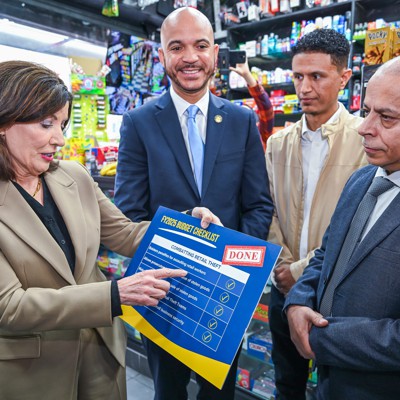
Lawrence Levy, associate vice president and executive dean of the National Center for Suburban Studies, was interviewed by City & State New York about how Governor Kathy Hochul’s budget and focus on issues like affordable housing and retail theft may provide some protection for incumbent Democrats this November. The state budget may be designed to insulate Democrats from Republican attacks, but it’s not clear that it will be the deciding factor in various races. The 2024 election cycle is an entirely different beast than 2022. Two years ago, Hochul was at the top of the ticket in New York. This year, she’s not even on the ballot. That may actually be a boon for Democrats, as many observers credited her lackluster performance with negatively impacting races down ballot and the latest Siena College polling has her favorability and job approval ratings at all-time lows. Hochul notably did not stump for Suozzi during his high-profile race in February despite her role as de facto head of the state Democratic Party. And in the weeks following the state budget, she has only visited a swing district to celebrate her policy successes in the spending plan once. Instead, President Joe Biden and Donald Trump will be at the top of the ticket, and any thoughts about the specific policies included in the state budget could be reflected by voters’ sentiments about the two presidential candidates. “With the presidential campaign at the top of the ticket, I don’t think what Hochul does, or doesn’t do, will make a particular difference in any of the competitive congressional races,” said Lawrence Levy, executive dean of the National Center for Suburban Studies at Hofstra University. “Yes, she may be cited by Republicans along with several other high-profile Democrats as supposedly insensitive to their constituents on housing and crime, to see if that still sticks, but mostly it’s going to be about Trump and Biden.” May 13 - City and State New York Covering New York politics - we have experts ready to help with any of your questions and stories. Lawrence Levy is the Executive Dean of the National Center for Suburban Studies at Hofstra University. He's available to speak with media - simply click on his icon now to arrange an interview today.

Changes to Philadelphia's Tax Structure Could Represent "Pivotal" Economic Shift
On March 14, Philadelphia mayor Cherelle Parker delivered her first budget proposal in a 75-minute address to City Council. Throughout her speech, the new mayor touched on subjects ranging from corridor cleaning and housing programs to police spending and anti-violence grants. However, one set of items was absent from her $6.29 billion plan and presentation. In a break from recent administrations, Mayor Parker abstained from calling for cuts to the city's wage or business taxes. She also refrained from speaking on adjustments to Philadelphia's tax structure, which depends more heavily than other municipalities on wage taxes and has a relatively light property tax burden. Theodore Arapis, PhD, chair of Villanova University’s Department of Public Administration and an expert on fiscal policy in local governance, believes that changes to how Philadelphia levies and handles taxes, particularly on the real estate front, should be discussed further. "[Having property taxes play a larger role] represents a pivotal shift towards creating a more resilient and efficient revenue system," said Dr. Arapis, after reviewing the mayor's plan. "The current reliance on wage taxes is subject to considerable volatility, undermining fiscal stability. In contrast, property taxes offer a more inelastic and predictable revenue stream, suggesting a strategic move towards them would be beneficial for the city." Dr. Arapis also maintains that, with Harrisburg's go-ahead, Philadelphia's real estate taxes could be structured in a way that effectively facilitates business growth, while ensuring that homeowners are not unduly burdened. "Differentiating tax rates between commercial and residential properties could strike a delicate balance—spurring economic development while maintaining equitable tax distribution," he stated. "This segmentation could stimulate business activity by creating favorable conditions for commercial enterprises, which is essential for Philadelphia's economic vitality." Additionally, Dr. Arapis contends that tweaks to the city's tax abatement policy, which is currently in the process of a gradual phaseout, could further provide for inclusive and sustainable growth. "Tax abatements have been utilized as a policy tool to stimulate property revitalization and neighborhood renewal. However, these measures often carry unintended consequences that disproportionately impact existing residents," he shared. "Specifically, such incentives can precipitate a rise in property values and, consequently, a hike in the tax burdens of non-abated properties. This dynamic can exacerbate gentrification, leading to the displacement of longstanding community members. "To address the complexities of tax abatement policies in fostering affordable [and accessible] housing, a nuanced strategy is vital. A more equitable distribution of housing affordability could be achieved by, say, mandating that at least 50% of units in new developments meet affordability criteria... [and diversifying] the approach to income targeting, perhaps through a tiered system that caters to various income levels [and indexes] these categories to local inflation and wage growth." Despite the content of her first budget proposal and address, Mayor Parker likely shares some similar perspectives on tax reform and structural adjustments. Prior to entering office, during her years as a City Council member and days on the campaign trail, the acting executive worked to lower Philadelphia's wage tax, acknowledged the untapped potential of property taxes and expressed her desire for a differentiation of property tax rates. Before pursuing these measures further, as The Philadelphia Inquirer reports, Mayor Parker is probably (1) holding off until the newly announced Tax Reform Commission shares its findings, (2) ensuring that there are no immediate, major disruptions to the city's flow of revenue, as she launches her "safer, cleaner, greener" agenda, and (3) waiting for state lawmakers to make greater progress on raising the minimum wage and restructuring the Commonwealth's tax legislation, namely the uniformity clause. The mayor did, however, make one notable tax-related recommendation in her budget plan: She proposed an increase to the school district's share of real estate tax revenue from 55% to 56%, which could boost funding for the district by $119 million over five years. "The redistribution of real estate taxes between the school district and the city is commendable as an initial measure," observed Dr. Arapis. "However, without a comprehensive reform of the real estate tax system, encompassing regular property reassessments and adjustments to mill rates, this change is likely to yield only ephemeral benefits."


Healthy Environment, Healthy People: The Intersection Between Climate and Health
How is climate change influencing our health? Why does climate change have a greater impact on vulnerable populations and low-income people? How does the U.S. health care system affect the climate? How can health care systems improve their impact on the climate and the environment? ChristianaCare’s inaugural Climate and Health Conference addressed these topics and raised possible solutions at the John H. Ammon Medical Education Center on the Newark, Delaware, campus on April 12. At the conference, the common denominator was this: An unhealthy environment can lead to illnesses and deaths from air pollution, high heat, contaminated water and extreme weather events. Health systems, government entities, community organizations and individuals all have a role to play in decreasing these effects. “Climate, the environment and health care systems are intertwined,” said Greg O’Neill, MSN, APRN, AGCNS-BC. “We need to pay close attention to this relationship so we can improve health for everyone.” O’Neill is director of Patient & Family Health Education and co-chair of the Environmental Sustainability Caregiver Committee at ChristianaCare. Climate change and intensifying health conditions Negative health effects are so closely tied to the environments where people live, work and play that The Lancet called climate change “the greatest global health threat facing the world in the 21st century [and] the greatest opportunity to redefine the social and environmental determinants of health.” At the conference, speakers addressed specific areas of concern. Asthma. Air pollutants, while largely invisible, are associated with asthma. What’s more, people who live in urban areas with little green space are more likely to have uncontrolled asthma, said speaker Robert Ries, M.D., an emergency medicine resident at ChristianaCare. And there’s the rub, he said: When people with asthma spend time in green spaces, it may improve their health. “In Canada,” he said, “some doctors prescribe nature – two hours a week for better overall health outcomes. Could we do that here?” Heat-related illness. Temperatures worldwide have been rising, increasing the likelihood of heat-related health incidents. Heat waves may be harmful to children and older adults, particularly those who don’t have access to air conditioning, swimming pools or transportation to the beach, said speaker Alan Greenglass, M.D., a retired primary care physician. Children visit the emergency room 20% more frequently during heat waves. Weather-related illness. Climate change is causing more floods, which may result in respiratory problems due to mold growth; and droughts, which may threaten water safety and contribute to global food insecurity, said speaker Anat Feingold, M.D., MPH, an infectious disease specialist at Cooper Health. Stress and anxiety. Climate change can affect mental health, even leading to “solastalgia,” which is distress about environmental change and its effect on one’s home, said speaker Zachary Radcliff, Ph.D., an adolescent psychologist at Nemours. He encouraged clinicians in the audience to keep this mental health concern in mind when seeing patients as it may become more prevalent. Cardiovascular disease risk. Frequent consumption of red meat increases the risk of cardiovascular disease, the top cause of death in the U.S. It’s also unhealthy for the environment, said speaker Shirley Kalwaney, M.D., an internal medicine specialist at Inova. Livestock uses 80% of available farmland to produce only 17% of calories consumed, creating a high level of greenhouse gas emissions. By comparison, plant-based whole foods decrease the risk of cardiovascular disease and diabetes. They use only 16% of available farmland, producing 82% of calories consumed. This makes reducing red meat in our diets one of the most powerful ways to lower the impact on our environment. Health equity and the environment People in low-income communities are more likely to live in urban areas that experience the greatest impacts of climate change, including exposure to air pollutants and little access to green space, said speaker Abby Nerlinger, M.D., a pediatrician for Nemours. A Harvard study in 2020 demonstrated that air pollution was linked with higher death rates from COVID-19 — likely one of the many reasons the pandemic has disproportionally harmed Black and Latino communities. Similarly, access to safe, affordable housing is essential to a healthy environment, said Sarah Stowens, Ed.D., manager of State Policy and Advocacy for ChristianaCare, who advocated for legislation including the Climate Solutions Act, another bill that increased oversight regarding testing and reporting of lead poisoning and a policy to reduce waste from topical medications. Opportunities for change in health care Reduce emissions from pharmaceuticals and chemicals. These emissions are responsible for 18% of a health system’s greenhouse gas emissions. One way to reduce this number is for clinicians to prescribe a dry-powder inhaler (DPI) instead of a metered-dose inhaler (MDI) when applicable and safe for the patient and to give patients any inhalers that were used in the hospital at discharge if they are going home on the same prescription. Hospitals have opportunities to reduce greenhouse gases while caring for patients, said Deanna Benner, MSN, APRN, WHNP, women’s health nurse practitioner and co-chair of ChristianaCare’s Environmental Sustainability Caregiver Committee. The health care sector is responsible for 8.5% of U.S. greenhouse gas emissions, the highest per person in the world. U.S. greenhouse gas emissions account for 27% of the global health care footprint. One way to significantly reduce the carbon footprint is to use fewer anesthetic gases associated with greater greenhouse gas emissions, Benner said. Limit single-use medical devices. Did you know that one surgical procedure may produce more waste than a family of four produces in a week? Elizabeth Cerceo, M.D., director of climate health at Cooper Health, posed this question during her talk. Sterilizing and reusing medical devices, instead of using single-use medical devices, she said, may meaningfully reduce hospital waste. ChristianaCare’s commitment to healthy environments and healthy people As one of the nation’s leading health systems, ChristianaCare is taking a bold, comprehensive approach to environmental stewardship. ChristianaCare reduced its carbon footprint by 37% in 2023 by purchasing emission-free electricity. ChristianaCare joined the White House Climate Pledge to use 100% renewable energy by 2025, reduce greenhouse gas emissions by 50% by 2030 and achieve zero net emissions by 2050. ChristianaCare has created an Environmental, Social and Governance structure to help advance a five-year strategic plan that delivers health equity and environmental stewardship. Nearly 150 staff members have become Eco-Champions, an opportunity to be environmental change-leaders in the workplace. In 2023, ChristianaCare’s successful environmental stewardship included: Reducing our carbon footprint by 37% by purchasing emission-free electricity. Recycling 96,663 pounds of paper, which preserved 11,485 trees. Reducing air pollution by releasing an estimated 33,000 fewer pounds of nitrogen oxides and sulfur oxides through the use of a cogeneration energy plant on the Newark campus. Donating 34,095 pounds of unused food to the Sunday Breakfast Mission in Wilmington, Delaware. Donating 1,575 pounds of unused medical equipment to Project C.U.R.E., ChristianaCare’s Virtual Education and Simulation Training Center and Delaware Technical Community College. “In quality improvement, they say you improve the things that you measure,” O’Neill said in expressing goals for continued success. In looking ahead, said Benner, “I really hope that this conference is the catalyst for positive change with more people understanding how climate is connected to health, so that we can protect health from environmental harms and promote a healthy environment for all people to thrive.”



Aston University research centre to focus on using AI to improve lives
• New centre specifically focuses on using AI to improve society • Current research is designed to improve transport, health and industry • “There have been a lot of reports focusing on the negative use of AI...this is why the centre is so important now.” Aston University researchers have marked the opening of a new centre which focuses on harnessing artificial intelligence (AI) to improve people’s lives. The Aston Centre for Artificial Intelligence Research and Application (ACAIRA) has been set up to become a West Midlands hub for the use of AI to benefit of society. Following its official opening, the academics leading it are looking to work with organisations and the public. Director Professor Anikó Ekárt said: “There have been a lot of reports focusing on the negative use of AI and subsequent fear of AI. This is why the centre is so important now, as we aim to achieve trustworthy, ethical and sustainable AI solutions for the future, by co-designing them with stakeholders.” Deputy director Dr Ulysses Bernardet added: “We work with local, national and international institutions from academia, industry, and the public sector, expanding Aston University’s external reach in AI research and application. “ACAIRA will benefit our students enormously by training them to become the next generation of AI practitioners and researchers equipped for future challenges.” The centre is already involved in various projects that use AI to solve some of society’s challenges. A collaboration with Legrand Care aims to extend and improve independent living conditions for older people by using AI to analyse data collected through home sensors which detect decline in wellbeing. This allows care professionals to change and improve individuals’ support plans whenever needed. A project with engineering firm Lanemark aims to reduce the carbon footprint of industrial gas burners by exploring new, more sustainable fuel mixes. Other projects include work with asbestos consultancy Thames Laboratories which will lead to reduced costs, emissions, enhanced productivity and improved resident satisfaction in social housing repairs and a partnership with transport safety consultancy Agilysis to produce an air quality prediction tool which uses live data to improve transport planning decisions. The centre is part of the University’s College of Engineering and Physical Sciences and its official launch took place on the University campus on 29 February. The event included a talk by the chair of West Midlands AI and Future Tech Forum, Dr Chris Meah. He introduced the vision for AI within the West Midlands and the importance of bringing together academics, industry and the public. Current research in sectors such as traffic management, social robotics, bioinformatics, health, and virtual humans was highlighted, followed by industry talks from companies Smart Transport Hub, Majestic, DRPG and Proximity Data Centres. The centre’s academics work closely with West Midlands AI and Future Tech Forum and host the regular BrumAI Meetup. About Aston University For over a century, Aston University’s enduring purpose has been to make our world a better place through education, research and innovation, by enabling our students to succeed in work and life, and by supporting our communities to thrive economically, socially and culturally. Aston University’s history has been intertwined with the history of Birmingham, a remarkable city that once was the heartland of the Industrial Revolution and the manufacturing powerhouse of the world. Born out of the First Industrial Revolution, Aston University has a proud and distinct heritage dating back to our formation as the School of Metallurgy in 1875, the first UK College of Technology in 1951, gaining university status by Royal Charter in 1966, and becoming The Guardian University of the Year in 2020. Building on our outstanding past, we are now defining our place and role in the Fourth Industrial Revolution (and beyond) within a rapidly changing world. For media inquiries in relation to this release, contact Nicola Jones, Press and Communications Manager, on (+44) 7825 342091 or email: n.jones6@aston.ac.uk