Experts Matter. Find Yours.
Connect for media, speaking, professional opportunities & more.

When Markets Wobble (Part 2): How Canadians Can Use Home Equity as Their Ultimate Cash Wedge:
In an earlier post I laid out one of the foundational blocks of your retirement defense system: the "Cash Wedge" - that boring-but-brilliant cushion of cash, GICs, and T-Bills that protects you from selling investments when markets wobble. The Cash Wedge is the mild-mannered superhero of your retirement plan. It buys you time, flexibility, and peace of mind, as it gives you permission to wait for markets to recover— Now if you missed Part 1, go back and give it a quick read here. For Canadian homeowners — especially those whose wealth is mostly in their property — there are additional options that allow you to use your equity as a second buffer, dramatically strengthening your financial resilience. How Home Equity Strategies Can Help You Create a Backup Wedge for Retirement Here's the risk that catches thousands off guard: sequence-of-returns risk combined with home equity concentration. Translation: While you own your home, you encounter problematic market conditions early in retirement while withdrawing, and your options narrow quickly. Author Wade Pfau's research demonstrates that home equity can serve as a "buffer asset," shielding investments during economic downturns. Instead of selling investments when markets are down, it might be smarter to temporarily access a pre-arranged HELOC or reverse mortgage. Once markets recover, you can repay the credit line. This isn't debt panic — it's strategic damage control. Warren Buffett's Wisdom Applied to Canadian Retirement As an investor, Warren Buffett is the epitome of control and discipline. His now famous quote rings true in these times. “The stock market is a device for transferring money from the impatient to the patient.” Translation for retirees: Keep dry powder. Own quality investments. Don't chase fads. And stop looking for the bottom — nobody knows where it is until it's in the rear-view mirror. The Canadian "Brick-and-Mortar" Retirement Strategy Listen up, homeowners. Canadians whose retirement plan is pretty much: buy a home, pay it off, and repeat; "we're mortgage-free" with pride. This strategy is very common and effective. But let's be honest: if your home is part of your retirement plan, economic changes matter even more. If you’re in this camp, you need to accept the facts and plan how you'll use your equity to secure your retirement. It’s better to have a ready, aim, fire approach than the more typical fire, ready, aim! When markets decline, central banks often cut rates. Lower rates can support real estate — but they don't guarantee rising prices. Meanwhile, inflation drives up costs, buyers' budgets fluctuate, property values can soften, and retirees feel the impact most quickly. Even a modest dip in home values creates real erosion in net worth when your home carries the bulk of your financial future. The Case for Securing Home Equity Access Now It's much easier to qualify for credit when home values are higher, finances are stable, and you're not already in a pinch. Your options: Home Equity Line of Credit (HELOC) This includes products like Manulife One: Competitive rates and flexible options — but retirees often face income qualification barriers. Reverse Mortgage: No income needed, no payments required. Plus, the No Negative Equity Guarantee — you can never owe more than your home is worth — but retirees dislike debt! HESA (Home Equity Sharing Agreement): You get cash now in exchange for sharing a percentage of your home's future appreciation. No monthly payments, not technically debt, but you give up a share of future gains. This isn't about needing money today. It's about safeguarding your future from having to sell, downsize, or rely on credit card debt because the economy experienced a mood swing. It's insurance — with a door handle. Building Your Cash Wedge: Step-by-Step Calculate 12–24 months of living expenses. Select where to store each layer (high-interest Savings Account, cashable GICs, T-Bills). Refill the wedge with income from dividends, distributions, or planned draws Monitor your situation closely. If your income is tight: consider arranging a home-equity line or reverse mortgage as a backup wedge - not an emergency scramble. Review annually — cost of living changes, inflation changes, and so should your wedge. The Bottom Line for Canadian Retirees The real question isn't "Do I need a Cash Wedge?" It's "Can I afford NOT to have one?" Retirees have limited capacity to earn income to cover shortfalls. Budgets can tighten unexpectedly. Inflation doesn't seek permission. And sometimes the thing we think we'll never need becomes the lifeline that secures our retirement. Your retirement security comes from: Owning quality investment Building reliable dividend income Preparing smart home-equity backstops Keeping emotions out of financial decisions Avoiding saving too much while living too little The Cash Wedge is the most boring tool in your retirement plan — and the most powerful. Yet most financial plans ignore it. Don't. Sue Don’t Retire… ReWire!!! Want to become an expert on serving the senior demographic? Just message me to be notified about the next opportunity to become a "Certified Equity Advocate" — mastering solution-based advising that transforms how you work with Canada's fastest-growing client segment.


“See a gap, fill a gap.” That’s how Jeffrey Klibert, Ph.D., associate director of clinical training in Georgia Southern University’s Doctor of Psychology (PsyD), described the inspiration behind a project designed to extend behavioral health services in rural areas. Filling gaps is something Klibert said has always been a challenge in behavioral health care. This challenge became steeper in the aftermath of the COVID-19 pandemic. “When COVID hit, we saw some really alarming rates of people seeking services, and there just weren’t enough providers to meet that need,” Klibert said. “We saw waitlists that were six months, eight months, sometimes a year long.” Waitlists of this length are a common occurrence in Georgia’s rural areas, where resources are scarce and reported health outcomes are among the worst in the state. Klibert, along with colleagues Lindsey Stone, Ph.D., and Thresha Yancey, Ph.D., and students, is working to improve the situation across 14 rural counties in Georgia, thanks to the renewal of a research and training grant from the Health Resources and Services Administration. Stone and Yancey will supervise the trainees, while Klibert will oversee the entire program. The grant enables quantitative and qualitative research to increase access to behavioral health care in rural areas, while also providing Georgia Southern’s fourth-year PsyD students with hands-on training through local care providers. The ultimate goal is to develop more efficient and effective models for interprofessional, team-based care in areas of the state where it is most needed. “Everybody sees the need. We just need the glue to link everybody together,” Klibert said. “That’s what the program is trying to be. It’s trying to build those bridges to create a more comprehensive system of care.” Students will provide a range of services in collaboration with local care providers, including psychological assessments and therapy for individuals and families. Alex Cudd, a fourth-year PsyD student who joined the program in August, calls the experience “invaluable” and hopes to join the 94% of program alumni who currently provide care in rural settings. “In just a few months, I’ve learned so much about providing well-rounded care,” Cudd said. “I know I’ll carry this training into my career.” CarePartners of Georgia (CPGA), a resiliency- and recovery-based behavioral health agency serving Bulloch, Candler and Emanuel counties, is among the local providers partnering with Georgia Southern. “All the interns we’ve had from Georgia Southern understand the concept of recovery, are trauma-informed and very effective at delivering services,” said CPGA CEO David Crooke. “It’s been mutually beneficial. We are helping them further their education, and they quickly become important members of our team due to the breadth and depth of their knowledge.” Klibert notes that the grant’s initial four-year term brought significant improvements in local healthcare networks and enhanced communication between providers, something he sees as an investment in lasting success. “We’re doing some exciting stuff, but at the end of the day, we are very aware of making sure what we’re doing sticks and that we have the resources to continue care after the grant ends,” Klibert said. Looking to know more about Georgia Southern University's Doctor of Psychology Program or arrange an interview with Jeffrey Klibert — simply contact Georgia Southern's Director of Communications Jennifer Wise at jwise@georgiasouthern.edu to arrange an interview today.

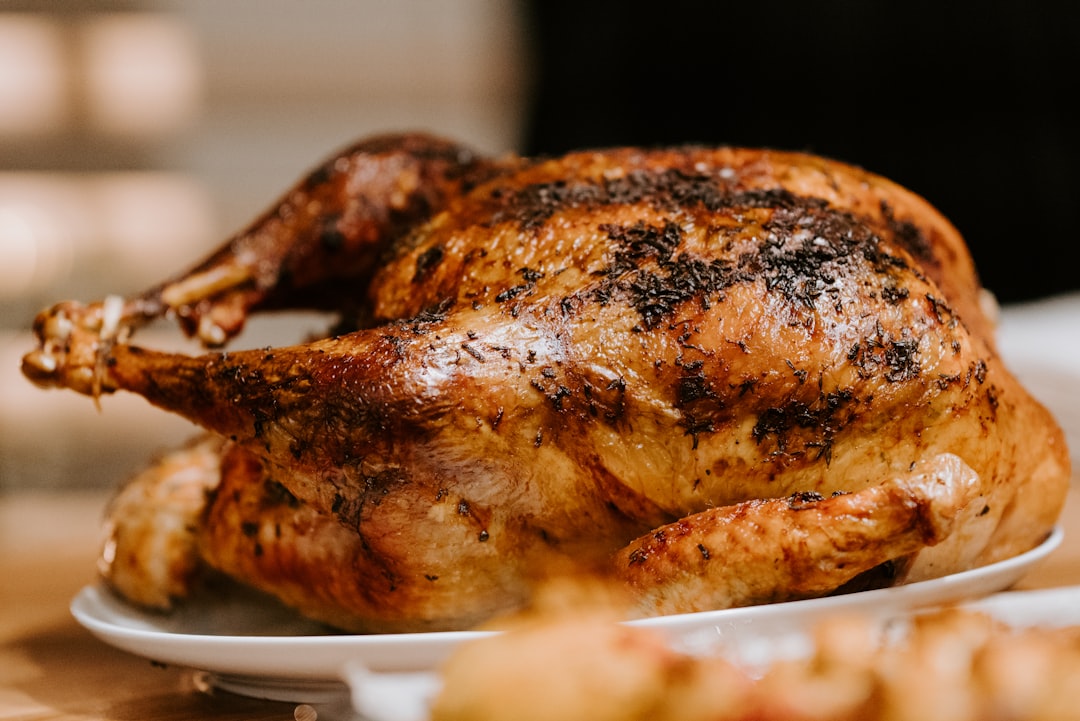
#ExpertSpotlight: Why Do We Eat Turkey at Thanksgiving?
Thanksgiving is all about tradition — family gatherings, fall colours, and the annual moment where someone at the table says, “I swear the turkey was bigger last year.” But why this bird? Why not ham, roast beef, or something simpler that doesn't require hours of basting, brining, and YouTube tutorials from chefs with suspiciously perfect kitchens? It turns out, the turkey’s rise to holiday fame is a tale packed with practicality, politics, early marketing, and a few misconceptions that have stuck around longer than the leftovers. Turkey: The Accidental Icon While popular myth suggests the Pilgrims dined on turkey in 1621, historical accounts are vague. They definitely ate wild fowl — which could’ve been turkey, duck, or goose. But practical realities sealed the deal later on: Turkeys were plentiful: In the 1800s, wild turkeys roamed North America in massive numbers. They were big, available, and cheaper to raise than cows or pigs. Big bird = big table: A turkey could feed a crowd without sacrificing dairy-producing animals. Practicality wins again. Seasonal timing: Turkeys matured in the fall, just in time for an annual feast. Nature set the menu before Pinterest ever could. Sarah Josepha Hale: The 19th-Century Queen of Thanksgiving One of the biggest reasons turkey ended up on the national table? A woman named Sarah Josepha Hale — journalist, author, and relentless advocate for making Thanksgiving a national holiday. Hale spent decades campaigning, writing hundreds of letters, and filling her magazine with Thanksgiving recipes (including turkey). When Abraham Lincoln finally proclaimed the first national Thanksgiving in 1863, Hale’s influence helped cement turkey as the centrepiece. In other words: The “Mother of Thanksgiving” was also the Mother of Modern Turkey Marketing. The Power of Tradition (and Leftovers) By the 20th century, turkey was the default. Norman Rockwell painted it. Grocery stores promoted it. Manufacturers created special roasting pans for it. And millions of families quietly wondered whether it was worth the effort. Yet the turkey holds its place because: It symbolizes abundance It satisfies enough people to avoid mutiny Its leftovers power the real Thanksgiving tradition: sandwiches Great Story Angles for Journalists The forgotten role of Sarah Josepha Hale — the woman who shaped a national holiday How turkeys became big business — and how Thanksgiving drives Canada/U.S. poultry economics Turkey myths vs. facts — no, tryptophan alone doesn’t knock you out How immigrant communities reinterpret Thanksgiving menus What the “perfect” turkey says about North American food culture Why It Matters Today Thanksgiving remains a cultural anchor — a moment where millions gather over a shared meal whose main dish has become iconic, symbolic, and occasionally overcooked. Understanding how turkey became the star of the table opens conversations about food history, national identity, environmental sustainability, cultural adaptation, and of course… the annual debate over stuffing inside or outside the bird. For journalists exploring food history, cultural traditions, or holiday trends, culinary experts on ExpertFile can provide deeper context, historical insight, and delicious perspectives to bring your stories to life. Find your expert here: www.expertfile.com


Government Plays Catch Up After End of Shutdown
Dr. Anoop Rai, professor of finance at Hofstra’s Frank G. Zarb School of Business, was interviewed by Newsday about the lasting economic impact of the recent federal government shutdown, the longest in the history of the United States. Dr. Rai told Newsday that the period of economic uncertainty caused by this latest shutdown is a “blip” and he expects a quick rebound as government spending resumes. “In the broad scheme of things, everything will come back to normal with a slight dip in [gross domestic production], but the question is — was it necessary?” he said. “The disruption the shutdown has caused should be measured in terms of the pain it has inflicted on a lot of people.”



Let's get one thing straight: the stock market doesn't care that you're retired. It doesn't care that you finally cleaned out that drawer full of ancient T4 slips, promised yourself you'd stop checking your RRIF balance daily, or told your spouse, "This year, we're sticking to the plan." The Market Doesn't Care About Your Retirement Date Markets wobble because they wobble. Headlines panic. Analysts disagree sharply — and confidently. And somewhere, a retiree stands in front of the fridge, wondering whether to sell everything or simply turn off the news. But retirement isn't a day-trading contest; it's a decades-long longevity project. The aim is to generate reliable income, maintain sleep-at-night discipline, and avoid the common mistake among retirees of saving too much while living too little. Your Retirement Income Defense: Sectors That Weather Any Storm Read the news, and you'll see a constant blizzard of rising prices created by our neighbours to the south. Not just little price increases, but if economists are right about what we can expect, it's best to “inflation-proof” yourself - before you need it. But keep in mind, every downturn follows the same pattern: a few key sectors keep humming while everything else goes through a mild identity crisis. The Classic Defensive Trio for Canadian Retirees: Consumer Staples (groceries, household essentials) Utilities (keeping the lights on and heat up) Healthcare (aging doesn't pause for recessions) Research on past downturns shows these sectors experienced significantly smaller losses than the S&P 500 during selloffs. When markets tantrum, these industries act like the sensible cousin who says, "We'll get through this. Have a muffin." Canadian-Specific Additions: Telecoms (we'll cut many things, but not Wi-Fi) Pipelines (fee-for-service revenue, though rate-sensitive) Combine these with low-volatility or dividend ETFs, and your portfolio suddenly feels less like a roller coaster and more like a slow-moving Via Rail train: reasonably steady, unfussy, and you still get to where you're going. The Cash Wedge: And Why You Need One Think of your retirement plan as a three-layer cake: Long-term investments (stocks, dividend ETFs, balanced portfolios) Intermediate safety assets (short GICs, T-bills, high-interest savings) Cash you can actually live on (your wedge) Your Cash Wedge sits at the very front of the line — a 12–24-month cushion of living expenses held in stable, boring, absolutely-not-newsworthy places: High-interest savings accounts Short-term GICs Treasury bills Cashable deposits It's essentially the "dry powder" you need to ride through market volatility without panic-selling. Three Critical Risks Your Cash Wedge Protects Against 1. Sequence-of-Returns Risk in Early Retirement This is the risk that markets drop early in your retirement while you're withdrawing. It's the silent killer of portfolios. A cash wedge buys you: Time for dividends to arrive Time for markets to recover Time for calm to return 2. Emotional Decision-Making During Market Downturns When markets fall, too many retirees experience "sell-and-suffer syndrome": They sell low Lock in losses Delay recovery Reduce the lifespan of their savings 3. Portfolio Depletion at Critical Moments Without a cash wedge, every withdrawal during a downturn digs a deeper hole. With a cash wedge, withdrawals can pause while investments rebound. "Think of a cash wedge as retirement jiu-jitsu — using stability to neutralize volatility." How to Calculate Your Ideal Cash Wedge Size There's no magic number, but here's a practical framework: 12 months of essential expenses for retirees with pensions or steady income sources 18 months for those relying heavily on investments 24 months for anyone highly risk-averse or aging in place on a fixed budget This isn't a pile of cash sitting in a chequing account — it's a structured, laddered buffer. Why Canadian Retirees Often Resist Building a Cash Wedge I've heard all of these comments over the years from many retirees: "Cash earns nothing." Not true anymore — HISAs and T-bills offer competitive yields. "I don't want my money sitting around doing nothing." It isn't doing nothing — it's protecting your future income. "I've always been fully invested." Retirement changes the rules. What worked during the accumulation phases of retirement can be dangerous during deaccumulation. The Cash Wedge is not an investment strategy. It is an income preservation strategy — the most important one in retirement. Real-Life Example: The 2020 Market Crash Test Remember 2020? Stock markets dropped nearly 35% in just weeks. Let's consider two couples with similar assets: Couple A : had a 2-year cash wedge Couple B : had none Couple A simply shifted withdrawals from their wedge, not their portfolio. Couple B sold their best assets at their worst prices — causing permanent damage. This is why I tell retirees: "The Cash Wedge protects your portfolio from you." It’s 12–24 months of living expenses kept in cash, high-interest savings accounts (HISA), short-term GICs, or T-Bills. It's not exciting. No one flaunts a 6-month GIC at brunch. But the emergency fund prevents disaster: selling investments at the worst possible time. It buys you time. It buys you calm. It buys you the uninterrupted ability to buy groceries. The Cash Wedge alone is powerful. But for Canadian homeowners — especially those whose wealth sits mostly in their property — there’s a second buffer that can dramatically strengthen your financial resilience: your home equity. We'll explore that in Part 2 of this post tomorrow. Sue Don’t Retire… ReWire!!! Want to become an expert on serving the senior demographic? Just message me to be notified about the next opportunity to become a "Certified Equity Advocate" — mastering solution-based advising that transforms how you work with Canada's fastest-growing client segment.

The Conversation: A UF neuroscientist explains the science of pain
Nobody likes to feel pain, but it’s something every person will experience at some point in their life. But why is that? I am a neuroscientist, and my job is to research why and how people feel pain in order to help doctors understand how to treat it better. What is pain? To understand why people feel pain, it helps first to understand what pain is. Pain is the unpleasant sensation you feel when your body is experiencing harm, or thinks it is. Not everyone experiences pain the same way. Pain is a highly personal experience influenced by a variety of biological, psychological and social factors. For example, research has shown differences in the pain experiences of women and men, young and older people, and even across people from different cultures. Danger signals A network of nerves similar to wires runs all through the human body, from the tips of your fingers and toes, through your back inside the spinal cord and up to your brain. Specialized pain receptors called nociceptors can be found at the end of the nerves on your skin, muscles, joints and internal organs. Each nociceptor is designed to activate its nerve if it detects a danger signal. One way scientists classify nociceptors is based on the type of danger signal that activates them. Mechanical nociceptors respond to physical damage, such as cuts or pressure, while thermal nociceptors react to extreme temperatures. Chemical nociceptors are triggered by chemicals that the body’s own tissues release when they are damaged. These receptors may also be triggered by external irritants, such as the chemical capsaicin, which gives chili peppers their heat. This is why eating spicy food can cause you pain. Finally, there are the nociceptors that are activated by a combination of various triggers. For example, one of these receptors in your skin could be activated by the poke of a sharp object, the cold of an ice pack, the heat from a mug of cocoa, a chemical burn from household bleach, or a combination of all three kinds of stimulation. How pain travels though the body When you fall and get a scrape, the mechanical nociceptors in your skin spring into action. As soon as you hit the ground, they activate an electrical signal that travels through the nearby nerves to the spinal cord and up to your brain. Your brain interprets these signals to locate the place in your body that is hurting and determine how intense the pain is. Your brain knows that a pain signal is an SOS message from your body that something isn’t right. So it activates multiple systems all at once to get you out of danger and help you survive. Your brain may call on other parts of your nervous system to release chemicals called endorphins that will reduce your pain. It may tell your endocrine system to release hormones that prepare your body to handle the stress of your fall by increasing your heart rate, for example. And it may order your immune system to send special immune cells to the site of your scrape to help manage swelling and heal your skin. As all of this is happening, your brain takes in information about where you are in the world so that you can respond accordingly. Do you need to move away from something hurting you? Did you fall in the middle of the road and now need to get out of the way of moving cars? Not only is your brain working to keep you safe in the moments after your fall, it also is looking ahead to how it can prevent this scenario from happening again. The pain signals from your fall activate parts of your brain called the hippocampus and anterior cingulate cortex that process memory and emotions. They will help you remember how bad falling made you feel so that you will learn how to avoid it in the future. But why do we need to feel pain? As this example shows, pain is like a warning signal from your body. It helps protect you by telling you when something is wrong so that you can stop doing it and avoid getting hurt more. In fact, it’s a problem if you can’t feel pain. Some people have a genetic mutation that changes the way their nociceptors function and do not feel pain at all. This can be very dangerous, because they won’t know when they’re hurt. Ultimately, feeling that scrape and the pain sensation from it helps keep you safe from harm. Yenisel Cruz-Almeida is a UF Associate Professor of Community Dentistry and Associate Director of the Pain Research & Intervention Center Of Excellence, University of Florida This article is republished from The Conversation's Curious Kids series under a Creative Commons license. Read the original article:



Worked Through Thanksgiving? That’s a Burnout Red Flag, Not a Badge of Honor
If your Thanksgiving weekend included answering work emails from a guest room, sneaking Slack replies between courses, or “just finishing one thing” while your family watched a movie, you’re not alone. But Craig Selinger, an executive function coach who works with high achievers, says it’s a warning sign, not proof of commitment. “More and more of my clients tell me they ‘took time off’ - but then admit they were checking in on everything from their phones,” Selinger says. “They come back to work exhausted, frustrated with their families, and confused about why they don’t feel refreshed.” He doesn’t see this as a time-management failure. He sees it as a boundary failure fueled by an always-on culture. “Old technology stayed in one place,” he explains. “A desktop in a home office was easy to walk away from. Now, work follows you onto the couch, into your in-laws’ living room, and onto the plane ride home. Unless you deliberately decide when you’re not available, the default is ‘always working, never actually off.’” After holidays like Thanksgiving, Selinger helps clients reflect on a few key questions: Did you actually have any fully work-free hours or days? Did your phone stay with you during meals and family time - and did you feel pulled to check it? Do you feel like you rested, or like you just changed locations while staying on call? “If the honest answers are uncomfortable, that’s valuable data,” he says. “It means your relationship with availability needs attention.” Instead of telling high performers to “just unplug,” Selinger works with them to redesign their availability ahead of the next holiday crunch: Setting clear out-of-office messages that specify when they’ll be offline and when they’ll check in. Agreeing with their team on what counts as a true emergency and which channel should be used for it. Creating short, non-negotiable deep-rest windows - for example, no work apps from 5-9 p.m. on certain days, or one weekend day that’s completely work-free. “When people see that they can set smart boundaries and still be respected and effective, that’s usually the turning point,” Selinger says. “They stop confusing constant responsiveness with real value.” With December’s year-end push approaching, he believes now is the time for high performers to recalibrate. “Treat this past Thanksgiving as a test run,” he suggests. “If you didn’t get the rest you needed, don’t just shrug it off. Use it as the moment you decide to draw a clearer line before the next holiday - for your performance and for the people who actually sat across the table from you.” About the Expert Craig Selinger is an executive function coach who works with founders, executives, families, and high-achieving students. He specializes in digital distraction, productivity, and helping people build realistic boundaries in an always-on work culture. Craig is part of the Executive Function Coaching Community at Offline.now



A popular on-the-go sandwich is now the subject of a mega trademark lawsuit between two food industry giants. The J.M. Smucker Company, more commonly known as Smucker's, recently filed a trademark lawsuit against grocery chain Trader Joe's over what it alleges is infringement upon its iconic billion-dollar investment: the Uncrustables sandwich. Smucker's seeks to obtain unspecified monetary damages from Trader Joe's, as well as profit from its similar product. But beyond the novelty of the sandwich suit lies a complex case built around a lesser-known morsel of trademark law, says Waseem Moorad, Esq., assistant professor of Law at Villanova University Charles Widger School of Law and director of the school's Intellectual Property Clinic. Professor Moorad, a former U.S. Patent and Trademark Office Patent (USPTO) examiner, recently discussed the actual claims of the lawsuit, and how both parties are preparing for a potential trial. Q: Since this lawsuit was filed, it has been a popular topic of public discourse, much of which has centered on the product—a crustless peanut butter and jelly sandwich—itself. Is that what this is truly about? Professor Moorad: Much of the commentary has been focused on the argument of whether Smucker's is permitted to have a monopoly of peanut butter and jelly sandwiches, or if Trader Joe's can actually infringe upon the Uncrustables product without necessarily using the actual trademarked name. While both discussions are legitimate conversations folks could have while munching on the delicious snack products, they are not necessarily the relevant legal claims at the crux of this lawsuit. Q: Before we get into what those relevant legal claims are, Smucker's has filed dozens of trademarks in its 128-year history. What sorts of intellectual property do these trademarks generally protect? PM: Most of their trademarks filed with the USPTO are registered to protect against competitors from using words, logos, slogans, symbols and other materials that are linked to the brand name of the company, its affiliates, or its respective products. Well-known examples include Smucker's, Folgers, Jif and, of course, Uncrustables. If a competing company has a brand or a product that has a similar sounding name or appearance, such as "Giff Peanut Butter," then Smucker's could sue that company for trademark infringement. That name is not only infringing upon a trademark that Smucker's has federal protection over, but also is in the same related industry (food products), within which Smucker's has protection. Q: But Trader Joe's did not necessarily infringe on any trademarked words, symbols, slogans or the like. What, then, is the basis for the claims of infringement? PM: The issue is related to a deeper subset of trademark law, specifically the concept of "trade dress." Trade dress is the intellectual property associated with the visual and aesthetic characteristics of a product or its related packaging that allows a consumer to know with whom that product or packaging is associated. For example, Coca-Cola's name, which is federally protected, is well known as a registered trademark; however, the Coca-Cola bottle, with the curvy appearance where it gets slimmer in the middle, is an example of a registered trade dress belonging to Coca-Cola. If there was no logo or word mark on the bottle, the average consumer would still be able to recognize it as a Coke bottle. There are several trademarks that Smucker's owns that are related to the trade dress of its products. Smucker's isn't alleging that Trader Joe's is copying any of the branding names of their products; they are accusing their competitor of mimicking the trade dress or aesthetic appearances, textures and characteristics of its Uncrustables products and packaging. Q: What specific trade dress trademarks are they claiming have been infringed upon? PM: There are at least two registered trademarks that Smucker's is drawing legal attention to. In 2002, Smucker's had trademarked the image of an Uncrustables sandwich that has pie-crimping indentations or marks along the circumference of the sandwich, and in 2019, the company trademarked the image of an Uncrustables sandwich with a bite taken out of it. Smucker's argument is that the Trader Joe's packaging for a similar crustless peanut butter and jelly shows an image of a sandwich with a bite taken out of it, as well as the crimping along the outer edges. Q: How does one make a legal case out of something like this? PM: In order to effectively file a trademark infringement lawsuit, the plaintiff must not only show that their federally-protected intellectual property rights are being infringed upon, but also demonstrate that as a result of this infringement, the customer or consumer is being confused. Smucker's alleges that as result of Trader Joe's actions, customers are now confused over the product and are purchasing Trader Joe's peanut butter and jelly sandwiches thinking they are actually Smucker's Uncrustables sandwiches. Smucker's is of the belief that if the Trader Joe's packaging did not show pie-like crimped edges and the image of the sandwich with a bite taken out of it, confused consumers would not have purchased the Trader Joe's products and would have instead purchased Smucker's Uncrustables. It is this argument that will be the crux of the court cases to follow. Q: Assuming this goes to trial, how will the two parties prepare and what are some of the challenges for Smucker's as plaintiff? PM: Part of the case on Smucker's end will be to gather customer feedback or testimony that demonstrates confusion in the marketplace as a result of the similar packaging and trade dress. Trader Joe's will focus on the fact that even though the packaging may be similar, there would be no reason or basis for a customer to be confused between a Trader Joe's-branded product and a Smucker's-branded product. As the plaintiff in this case, the burden shall be on Smucker's to prove the confusion element necessary to have trademark infringement. The Trader Joe's product clearly says Trader Joe's, and the chain has a marketplace reputation for selling its own products rather than other-branded products. The challenge in such a scenario will be to prove, despite this, that customers purchasing this product would still have gotten confused and either assumed that they were purchasing Uncrustables, or mistakenly believed that Uncrustables may now have a commercial relationship with Trader Joe's.


U.S. News: AI Can’t Replace Therapists – But It Can Help Them
For a young adult who is lonely or just needs someone to talk to, an artificial intelligence chatbot can feel like a nonjudgmental best friend, offering encouragement before an interview or consolation after a breakup. AI’s advice seems sincere, thoughtful and even empathic – in short, very human. But when a vulnerable person alludes to thoughts of suicide, AI is not the answer. Not by itself, at least. Recent stories have documented the heartbreak of people dying by suicide after seeking help from chatbots rather than fellow humans. In this way, the ethos of the digital world – sometimes characterized as “move fast and break things” – clashes with the health practitioners’ oath to “first, do no harm.” When humans are being harmed, things must change. As a researcher and licensed therapist with a background in computer science, I am interested in the intersection between technology and mental health, and I understand the technological foundations of AI. When I directed a counseling clinic, I sat with people in their most vulnerable moments. These experiences prompt me to consider the rise of therapy chatbots through both a technical and clinical lens. AI, no matter how advanced, lacks the morality, responsibility and duty of care that humans carry. When someone has suicidal thoughts, they need human professionals to help. With years of training before we are licensed, we have specific ethical protocols to follow when a person reveals thoughts of suicide. Read the full article here:


A new national Unity Poll from Vanderbilt University shows overwhelming agreement among Americans on one core belief: colleges should teach students how to think, not what to think. At a time when higher education is under intense political and cultural scrutiny, this finding reveals an unexpected area of unity. Amid debates over free speech, curriculum design, and the purpose of a degree, Americans are signaling a shared expectation for colleges to cultivate critical thinking and reasoning — not ideological conformity. For journalists, observers or anyone keeping a close eye on post-secondary education, this is a rare lens into what the public actually wants from higher education, and a timely point of entry into stories about academic freedom, the value of a college degree, political polarization, and workforce readiness. “Many observers think current debates about the nature of higher education are relatively new but they are not,” said John Geer, co-director of the Vanderbilt Unity Poll and professor of political science. “The country, for example, was debating the purpose, value and direction of higher education in the 1940s when the federal government made major investments in research and teaching during and after World War II.” “People want colleges and professors to teach students how to think, not what to think,” added Vanderbilt Poll Co-Director Josh Clinton, who holds the Abby and Jon Winkelried Chair at Vanderbilt and is a professor of political science. “The public most highly values those parts of higher education that help students think critically, process information and contribute meaningfully to society. The closer you get to subjects and content that has associations with contemporary political divisions, the more you see public support fracture.” John Geer and Josh Clinton, Co-Directors of the Vanderbilt Unity Poll and Professors of Political Science, are among the nation’s leading experts on public opinion, political behavior and democratic attitudes. With decades of research experience and multiple national polls under their leadership, Geer and Clinton bring essential context to these findings. Their perspective helps media interpret not only the data itself, but the broader social forces shaping how Americans view higher education, institutional trust and the role of colleges in preparing the next generation. What the Data Reveals: 1. A Return to Fundamentals: The Public Wants Critical Thinking Above All Ninety percent of Americans say “the ability to think more logically” is extremely or very important for their children to gain from college. Factual knowledge matters too, but the public places higher value on reasoning, analysis and cognitive skill-building. Geer can help illuminate why this shift is resonating so strongly now — and what it suggests about the changing expectations placed on colleges and universities. 2. A Rare Point of Consensus in a Polarized Era The emphasis on teaching students how to think cuts across political, geographic and demographic lines. Geer notes that agreement of this magnitude is increasingly uncommon in today’s contentious climate. This story angle gives journalists a data-driven counterpoint to the typical “campus culture wars” narrative — showing where unity still exists and why. 3. Is College Worth It? Depends How You Ask When asked about long-term value, a majority of Americans say a college degree is worth the time because it opens better job prospects. But when the question focuses on financial cost, support drops significantly. Geer and Clinton can walk reporters through why perceptions differ depending on how “value” is framed — and how these attitudes influence choices about pursuing postsecondary education. 4. Americans Oppose Government Control of College Teaching Most respondents say the federal government should not direct how professors teach. This adds nuance to ongoing debates about curriculum oversight, classroom autonomy and political influence in higher education. Geer and Clinton’s expertise help explain how this preference aligns with longstanding public attitudes about institutional independence. 5. Curriculum Flashpoints Reveal Sharp Divides While many Americans agree on the need for core historical and civic content, support fragments around politically charged topics. Issues such as gender identity, sexual orientation, and certain cultural topics show much lower consensus. Read the full article and report here: