
Experts Matter. Find Yours.
Connect for media, speaking, professional opportunities & more.
On August 3, 2019, a white power-inspired gunman killed 24 people and injured 22 others at a Wal-Mart in El Paso, Texas. We tend to understand mass shootings as isolated events committed by “lone wolf” gunmen who might have mental health problems, but what we know about the El Paso gunman – as well as the terrorists who carried out mass killings at the Al Noor Mosque and Linwood Islamic Center in Christchurch, New Zealand in March 2019, the Tree of Life Synagogue in Pittsburgh in 2018, and at the Emanuel African Methodist Episcopal Church in Charleston, South Carolina in 2015 – tell a different story. The evidence investigators have complied shows that these white-power terrorists had never met one another, but that they lived in an on-line world created by 4chan, 8chan, and white-power organizations’ websites, where they consumed racist ideas and propaganda that shaped their decision to kill African-Americans, Muslims, Jewish people, and Mexicans and Mexican-Americans. We also know that white-power terrorists have particular goals in mind. Message boards like 8chan reveal a competition among participants about who can top the number of people killed in the last mass shooting. There is also a strong belief expressed on-line that killing racial minorities will foment a race war and allow white-power advocates to create an all-white world. I describe these terrorists as advocates of white power because it is important to understand that “white power” and “white nationalism,” a term often used in the media to describe the perpetrators of recent mass killings and the movement that animates them, are not the same thing. White nationalism calls to mind an effort to shore up the interests of white people within the American nation as it currently exists. The white-power movement, on the other hand, imagines a transnational, Aryan nation of white people living in an all-white world after wiping out non-whites. This might sound far-fetched, but does not mean that those who carry out mass killings in pursuit of this goal are mentally ill. Rather, their actions are the result of a white-power ideology fostered and spread on-line. What is new about how white-power advocates communicate with each other is that some of it now happens on-line. Interaction between racists who never met one another, however, has a long history in the United States. Approximately 4,100 African Americans were lynched between the end of the Civil War in 1865 and the 1960s. The white perpetrators of these lynchings lived hundreds of miles apart and often did not know one another, but they were united in a collective effort to enforce Jim Crow white supremacy in the American South (I use “white supremacist” here because white southerners who carried out lynchings did not, broadly speaking, subscribe to white power as the current movement defines it: the creation of a transnational, Aryan nation of white people living in an all-white world after wiping out non-whites). Lynchings were sometimes public events that drew hundreds or thousands of people with the purpose of “teaching” southern African Americans what would happen to them if they violated the rules of Jim Crow. Southern newspapers ran stories that justified lynchings; perpetrators took pieces of flesh, body parts, and hair from lynching victims as souvenirs and passed them around; and white southerners took lynching photographs, turned them into postcards, and mailed them to friends, family, business associates, and fellow travelers in the white supremacist movement. This racist community building had the goal of creating and maintaining white supremacy and, of course, it all happened without the help of the Internet. Communication, whether on-line or through the more traditional means has played an integral role in fostering and perpetuating racial violence and hatred. If you are a reporter covering this topic – let one of our experts help. Dr. Anthony DeStefanis is an associate professor of history at Otterbein University. He specializes in modern U.S. history with an emphasis on labor and the working class and immigration, race, and ethnicity. Dr. DeStefanis is available to speak with media regarding the history of racial violence in America – simply click on his icon to arrange an interview.


Experts available to discuss vaping and new tobacco products
A host of new tobacco products, including e-cigarettes like JUULs, have entered the market in recent years, bringing new public health concerns with them. Researchers at the University of North Carolina at Chapel Hill are studying the health and societal impacts of emerging tobacco products. UNC-Chapel Hill experts are available to discuss topics including e-cigarettes’ health impacts, their failure as smoking cessation tools, the differences in how smoking and vaping affect the body, and e-cigarette explosions and the resulting chemical burn injuries. If you’d like to speak with an expert, call (919) 445-8555 or email mediarelations@unc.edu. Dr. M. Bradley Drummond is an associate professor of medicine at UNC School of Medicine and the director of the Obstructive Lung Diseases Clinical and Translational Research Center. He can discuss the health consequences of these new tobacco products and how they vary from traditional cigarettes. He can also discuss how these products exacerbate other conditions like chronic obstructive pulmonary disease, asthma and other chronic lung diseases. Dr. Adam Goldstein is a professor in the UNC department of family medicine, the director of tobacco intervention programs at UNC School of Medicine, and a member of UNC Lineberger Comprehensive Cancer Center. He can discuss the potential drawbacks versus any potential benefit of using these products as smoking cessation tools and can share evidence-based strategies to stop smoking. He can also speak to trends in teen tobacco use. Dr. Ilona Jaspers is a professor of pediatrics and microbiology & immunology, director of the Curriculum in Toxicology, and deputy director of the Center for Environmental Medicine, Asthma and Lung Biology all at the UNC School of Medicine, and professor of Environmental Sciences and Engineering at the UNC Gillings School of Global Public Health. She can discuss the current scientific understanding of the health effects of vaping or juuling, a subject on which she has published widely. Kurt Ribisl is a professor and chair of the department of health behavior at UNC Gillings School of Global Public Health and the program leader for Cancer Prevention and Control at UNC Lineberger Comprehensive Cancer Center. Ribisl specializes in tobacco policy and regulation and can speak to taxation, advertising and marketing of new tobacco products and recommendations for preventing youth access. Robert Tarran is a professor of cell biology and physiology at UNC School of Medicine, a member of UNC Marsico Lung Institute, and a member of UNC Lineberger Comprehensive Cancer Center. He can discuss the science of vaping, including how e-cigarettes impact a person’s lungs, including their genes and what happens to the lung’s immune system. He can also speak to the varying toxic effects of different e-cigarette flavors. Rebecca Williams is a research associate at UNC Lineberger Comprehensive Cancer Center. She is a leading expert on internet tobacco sales, age verification, technology and emerging tobacco products, including the wide variety of vaping devices available today. Her research has shown that online e-cigarette vendors routinely sold to minors, a finding that underscores the need for regulations requiring and enforcing age verification for the online sale of e-cigarettes. She can discuss the sales and marketing practices of websites that sell emerging tobacco products, and underage access to these online products.


IU Kelley School expert: $170 million fine of Google, YouTube probably not enough
In the largest fine ever, Google agreed to pay $170 million to settle a case with the Federal Trade Commission and New York’s attorney general over charges that YouTube made millions from violating children’s privacy laws. Scott Shackelford, associate professor of business law and ethics at the Indiana University Kelley School of Business, chair of IU’s Cybersecurity Program in Risk Management and director of the Ostrom Workshop Program on Cybersecurity and Internet Governance, doubts it will have much of an effect. “Google, via YouTube, has been held accountable by the FTC and the New York Attorney General’s Office for its practices that violated children’s privacy, but it’s questionable whether a $170 million fine is sufficient to change business practices,” Shackelford said. “Similar to its $5 billion fine against Facebook, the FTC needs to do more to both increase these penalties, and even more importantly require the necessary steps to ensure that these violations do not recur. This is the FTC’s third fine against Google since 2011, for example, and it will likely not be the last.”


'The wrong way to fix social media'
In a recent column published by the St. Louis Post-Dispatch, Associate Dean and Professor Enrique Armijo of the Elon School of Law addresses flaws in a plan to crack down on social media content many find objectionable. Armijo, an expert on how new technologies affect free speech issues, explains how the Communications Decency Act prevents internet websites and applications from being liable for the content of their users. Now more than 20 years since that protection was codified, there is a movement to legislatively revoke that immunity from liability as debate about whether internet platforms should assume more responsibility for the content they publish and distribute. Anyone who calls himself a conservative should be embarrassed to be associated with this idea. As an initial matter, the legislation ignores the fact that a publisher's decisions as to what to publish are protected First Amendment speech. Armijo goes on to note that "the actual First Amendment rights of platforms cannot be sacrificed to protect rights of access to the platform's users claims but don't exist. We can all hope that neutrality will guide the hands of power, but the government cannot command neutrality from the powerful." If Dr. Armijo can assist with your reporting about free speech, social media and new technologies, please reach out to News Bureau Director Owen Covington at ocovington@elon.edu or (336) 278-7413. Dr. Armijo is available for phone, email and broadcast interviews.


Buying local? Higher price means higher quality in consumers' minds
BLOOMINGTON, Ind. -- Why are we willing to pay much more for a six pack of craft beer, a locally produced bottle of wine or a regional brand item, often choosing them over national brands? It's because when people prefer to "buy local," they more frequently base their decisions on price as a perception of quality, according to research from the Indiana University Kelley School of Business and three other universities. The study, published in the Journal of Marketing, suggests that marketers can use this understanding of local identity versus global identity to shape consumers' price perceptions and behavior. "Consumers tend to use price to judge a product's quality when their local identity is most important to them," said Ashok Lalwani, associate professor of marketing at Kelley. "When promoting high-priced or branded products, marketers can situationally activate consumers' local identity. To accomplish this objective, businesses can encourage consumers to 'think local' or employ local cultural symbols in advertising and other promotional material. The researchers also suggested that the opposite was true for low-price products. "Discount stores, such as dollar stores, should discourage consumers from using the price of a product to infer its quality," Lalwani said. "They would be better served by temporarily making consumers' global identity more prominent. Cues in advertisements that focus on a product's global appeal would help achieve that goal." Many companies find it difficult to set and increase prices in the digital marketplace because of the pricing transparency of the internet, consumers' deal-seeking attitudes and global product availability. For their study, Lalwani and his colleagues conducted in-depth interviews, two field studies and seven experiments, and reviewed secondary data. In their interviews with 15 senior-level managers from Fortune 500 companies, they found that while the executives considered local or global communities in their pricing decisions, none knew when such strategies were effective or why. For example, an executive at a snack food maker told them, "It is important to have a reasonably high price since it communicated 'premium-ness' and then reinforce it with advertising and packaging. But we don't know for sure why such consumers prefer premium brands." A pet products manager said, "In dog sweaters, it is difficult to judge quality, so I am sure that my pet parents use price, in addition to other factors, to choose." Through the field studies, experiments and secondary data, the researchers found that when consumers choose to identify more with others around them, they perceive greater variance among brands, which increases their reliance on price as a cue to judge quality. Past research has found that consumers from more globalized countries and communities, such as the United States and its larger cities, often have a stronger global mindset because they interact with many types of people and cultures and hear news from abroad. In contrast, those living in smaller population areas or from isolated or insular nations often have a stronger local identity because they have less access to other cultures. This paper provides useful guidelines for firms to adapt strategies for different regions and address whether companies should be more locally or globally oriented. "For products to be marketed to the places where people tend to have a more local identity (such as rural areas), local flavors and ingredients can be used in the products. As these consumers are more likely to make price-quality associations, marketers may not need to allocate much ad budget to convince consumers about price-quality associations," Lalwani and his co-authors wrote. The opposite is true as well, according to the authors, indicating that in more metropolitan areas, consumers most often don't have an established connection between price and quality. For marketers, this means that putting additional effort into differentiating their brand will help consumers associate a higher price with higher quality. Lalwani is in the process of reviewing results of a large-scale national survey of the U.S. that measures which states tend to have more of a local identity versus a global one, for a follow-up study. His co-authors on the paper, "How Does Consumers' Local or Global Identity Influence Price-Perceived Quality Associations? The Role of Perceived Quality Variance," are Zhiyong Yang of the University of North Carolina, Sijie Sun of the University of Hawaii at Hilo and Narayan Janakiraman of the University of Texas at Arlington.

Modernizing rural health – what it could mean for America
For Americans living outside of cities and in rural and sometimes remote areas of the country, the concept of readily accessible health care just isn’t a reality. However, the idea of expanding broadband internet into rural communities to improve access is one that shares support from all sides of the political spectrum. Just last week, an expert from Augusta University was called up to speak before lawmakers in Congress on the need for this technology and who it could best serve. "Broadband is the gateway to rural schools, businesses and health care providers," said Rep. Angie Craig, a Democrat from Minnesota. Lawmakers raised concerns about the dwindling number of hospitals in rural areas and the need to be competitive when recruiting corporations to do business. "Just the ability in rural America for a physician to pull up an X-ray at their home instead of having to drive to the hospital to look at a patient to know if that is something that’s an emergency," said Rep. Austin Scott, a Republican from Georgia. "One of the biggest needs is tele-psychiatry and tele-mental health," said Dr. David Hess of the Medical College of Georgia. - Spectrum News 1 - July 11 It’s an interesting topic and one that is gaining a lot of attention. How many rural Americans are without access to a doctor or hospital in the country? How much money could be saved by expanding online health care? Online is a viable solution, but are there drawbacks or concerns for patients? And how could expanding broadband and digital health care support issues like mental and maternal health across rural America? If you are a reporter covering this topic – that’s where our experts can help. Dr. David Hess is dean of the Medical College of Georgia and executive vice president for Medical Affairs and Integration at Augusta University. He also helped develop the REACH telestroke network in rural Georgia that now includes about 30 hospitals. Dr. Hess is available to speak with media regarding this topic – simply click on his icon to arrange an interview.


Online extremism and hate groups
A recent episode of the Reveal podcast from The Center for Investigative Reporting and PRX titled "Hate in the homeland" features insights from Megan Squire, professor of computing sciences. Squire, who has conducted research into online networks of hate groups, participated in the discussion about how those groups are managing to remain online despite efforts to silence extreme sites. Squire recounts hearing the news about a gunman killing dozens of Muslim worshipers in Christchurch, New Zealand, and the discovery that he had posted a manifesto online. "I had already been collecting these hate manifestos from different killers, trying to do some text mining on them to see what themes they were taking from on another, to see if they were radicalizing one another," Squire told the podcast host. Squire collected what ended up being multiple versions of the shooter's manifesto posted online, but that there were only slight variations. "They were treating the manifesto as an artifact, almost a holy artifact," Squire said. She found something different with the livestreamed video of the attack, which others were changing significantly — creating memes, adding soundtracks, adding clips and artwork. That made it significantly harder to remove from the internet, she said. Source: If Dr. Squire can assist with your reporting about online extremism, please reach out to News Bureau Director Owen Covington at ocovington@elon.edu or (336) 278-7413. Dr. Squire is available for phone, email and broadcast interviews.
A closer look at deepfakes. Let our experts explain if there’s a reason to worry.
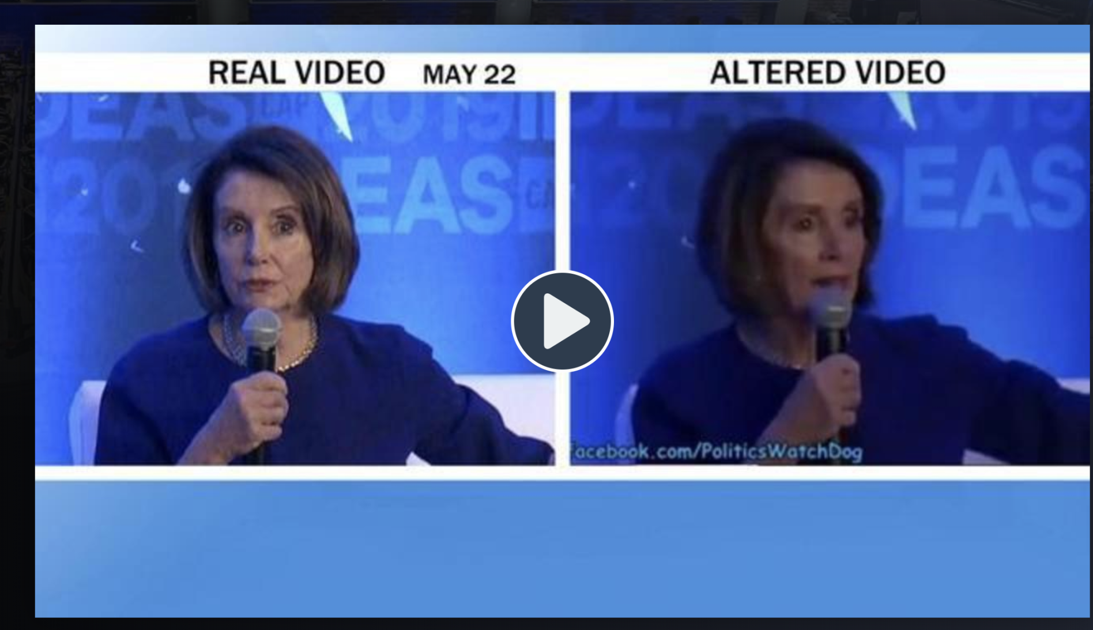
Deepfakes…they’re eerie, entertaining and getting a lot of attention. Deepfake videos are made using artificial intelligence technology which can manipulate someone's face in a video to make it look like they are saying something that they didn't. It's one level up from dubbing, or lip syncing, and can appear very convincing. One example is a video that was made using footage of Mark Zuckerburg in 2017; it was doctored and falsely portrays the Facebook CEO discussing how he had stolen data. – The Sun, June 26 The new concept is all the rage and has seen people spoofed, mocked and tricked. But as once again technology outpaces legislation and with an election approaching, deepfakes have some people going off the deep end. Every day, thousands of videos are posted online, which means that any potential filtering program would need to be able to quickly and efficiently detect fake content. Even then, such media would likely be removed only after being published, meaning that the video would likely have already had an impact. For these reasons, deepfakes are expected to contribute to the upcoming 2020 election in the United States, likely acting as an agent of spreading fake news. However, Edward Delp, a Purdue University professor who developed a computer program to help detect these videos, believes deepfakes pose a bigger threat. “Deepfakes pose a threat to more than just political videos,” he said. “It can be used in making fake child pornography, revenge porn and financial bribes. Just general criminal behavior.” – The Exponent (Purdue University), June 21 As deepfakes become more common on social media and the internet, odds are they will make their way – accidentally or not – into the actual media. And as America still battles with the fake news phenomenon, will Deepfakes further erode our trust in media and our leaders? As deepfakes become more common on social media and the internet, odds are they will make their way into the actual media. So, what can be done? How will these deepfakes affect the perception of news media? What simple advice can we apply to verify if something is real or fake? And do these videos represent a threat to democracy, as some experts are saying? Dr. Gregg R. Murray, professor of political science at Augusta University, is available to talk about the implications of this new threat. Murray’s research focuses on political behavior and psychology with specific interests in voter mobilization and turnout. He is also executive director of the Association for Politics and the Life Sciences.


Big Brother is watching (literally)…let our experts explain the new social credit system
There’s a new way of life coming to China, and for most observers it feels a lot like the book 1984. As officially explained, China’s new ‘Social Credit System’ – it is designed to enforce accountability, keep the public safe and as the Chinese government put it – to create a “culture of sincerity” that will “restore social trust.” What it will do is shame, embarrass, hamstring and potentially ruin the social and economic opportunities for anyone who falls out of line with strict government regulations and rules. It sounds frightening to us, but according to Chinese officials, it’s just a concept Westerners are to ‘unsophisticated’ to comprehend. Here’s a snapshot from the article attached below outlining some of the social shaming and consequences: “And the punishments are shocking. The government algorithm will go as far as to install an “embarrassing” ring tone on the phones of laolai, shaming them every time they get a call in public. But an embarrassing ring tone, flight bans and slow trains are just the beginning of the dystopian nightmare that is now daily life in China for tens of millions of people. A low social credit score will exclude you from well-paid jobs, make it impossible for you to get a house or a car loan or even book a hotel room. The government will slow down your internet connection, ban your children from attending private schools and even post your profile on a public blacklist for all to see. According to Australia’s ABC News, the government has produced a “Deadbeat Map” via an app on WeChat, which shows a radar-style graphic identifying every laolai in the vicinity of the user. “Tapping on a person marked on the map reveals their personal information, including their full name, court-case number and the reason they have been labeled untrustworthy. Identity-card numbers and home addresses are also partially shown,” ABC reported.” New York Post It’s as astounding as it is almost Orwellian. And it is happening. Are you covering and do you need to know more? That’s where our experts can help. Dr. Glen Duerr's research interests include nationalism and secessionism, comparative politics, and international relations theory. Glen is available to speak to media regarding the rise of extremism – simply click on his icon to arrange an interview.


Cybersecurity – Is it finally getting the attention it deserves? Ask our experts!
It’s been talked about, dominated the news and has cost some companies billions – but it seems like finally America’s leaders are taking the issue of cybersecurity seriously. With an election looming and non-stop threats coming from enemies near and afar, it seems like America’s leaders are now on side in the battle against cybersecurity. Last week President Trump signed an executive order directing the creation of programs to grow and strengthen our cybersecurity workforce to meet the challenges of the 21st century. “America built the internet and shared it with the world; now we will do our part to secure and preserve cyberspace for future generations.” President Donald J. Trump It’s a lofty goal – and odds are an expensive one, but will it work? Who are the chief actors behind potential cyber-attacks? What are the key targets? What are the costs to secure America’s cyber-territory? And more importantly, what are the consequences if we do not? There are a lot of questions out there and that’s where out experts can help. Dr. Seth Hamman earned his Ph.D. in computer science with an emphasis in cybersecurity at the Air Force's graduate school, the Air Force Institute of Technology, located at Wright-Patterson Air Force Base. As a researcher he is interested in helping to shape the young and growing discipline of cybersecurity education. Contact him today for your story! Simply click on his icon to arrange an interview.