
Experts Matter. Find Yours.
Connect for media, speaking, professional opportunities & more.

GRANDSPLAINING...It's as Bad as it Sounds!
Summary: "Grandsplaining" is a playful term that captures the all-too-familiar situation where younger generations offer unsolicited advice to older family members, often in a manner that is as condescending as it is unhelpful. This behaviour can be perceived as disrespectful and potentially creates awkward communication barriers, emotional strain, and family tension. Rooted in ageist stereotypes, it can even undermine elders' self-esteem. Here, we explore alternatives to grandsplaining, including the radical concepts of genuinely listening, asking open-ended questions, demonstrating empathy, and avoiding assumptions. These suggestions aim to help adult children support their older family members—not merely swoop in with a "fix-it" attitude. The Disrespectful Impact of Condescending Advice on Seniors When I helped older Canadians navigate financing their retirements, I often witnessed what can only be described as "grandsplaining in the wild." Conversations between adult children and their elders usually felt less like dialogues and more like lectures—one-sided advice sessions that left everyone gritting their teeth. The younger relative, likely well-meaning, would offer suggestions like, “You should downsize and buy a condo,” “Sell and rent,” or, the pièce de resistance, “Move in with family!” Judging by the withering looks from their elders, it was clear this approach wasn’t winning any "Favorite Child" awards. The older family members often felt patronized, as though their decades of life experience had been conveniently forgotten. The advice was condescending, painfully obvious, and usually impractical or unwanted. The dynamic reminded me of the cringeworthy experience of being "mansplained." And that’s when it hit me: this is “grandsplaining.” Unfortunately, grandsplaining can turn retirement planning conversations into a crash course on how not to communicate! Fortunately, with a little effort (and much less lecturing), families can turn this ship around and build stronger, more respectful relationships. What is "Grandsplaining"? In an age where communication flows freely across digital platforms, I define "grandsplaining" as a colloquial expression to describe a situation where younger generations offer unsolicited advice to older individuals, often patronizing or condescendingly. Grandsplaining typically involves a younger person explaining something to an older individual in a way that belittles their experience or intelligence. The term combines "grand" (suggesting age or status) and "splaining" (a slang term for condescendingly explaining something). While the intention behind such advice may often be well-meaning, the delivery can be patronizing, reinforcing stereotypes about aging and competence. This behaviour can significantly undermine the dignity and autonomy of seniors, leading to feelings of frustration, resentment, and a sense of being marginalized. Understanding the nuances of grandsplaining sheds light on intergenerational dynamics in these conversations. We must find a better, more respectful, and effective way to communicate with our elders considering retiring. The phenomenon of grandsplaining can manifest in various contexts, not just financing retirement—whether it’s discussing technology, lifestyle choices, healthcare options, or even social norms. For instance, a grandchild might explain how to use a smartphone app to a grandparent, assuming that the older generation cannot understand it despite their own lifelong experience with technology in different forms. Communication Breakdown In an era where financial literacy and retirement planning are more crucial than ever, "grandsplaining" has become a significant barrier to effective communication between generations. Retirees often feel overwhelmed or dismissed when their relatives provide unsolicited advice, especially if it contradicts their wants or financial strategies. This can lead to a reluctance to engage in discussions about finances, creating a rift that undermines the potential for collaborative planning. When adult children dominate conversations with preconceived notions of financial management, it stifles the opportunity for seniors to express their feelings, share their knowledge, and collaborate on effective retirement strategies. The Generation Gap in Financial Understanding Adult children may rely on outdated financial paradigms that no longer apply to their elders' realities. The economic landscape has changed dramatically over the past few decades, with shifts in real estate markets, a lack of formal retirement plans, and longer life expectancies. This generational gap can lead to misguided advice that does not consider modern challenges such as retiring with debt, little or no pension income, or rising living costs. Emotional Strain and Family Tension When relatives impose their views, it can evoke frustration, resentment, or inadequacy in their elders. This dynamic can shift the conversation from one focused on financial empowerment to one steeped in emotional conflict and shame. Instead of fostering a supportive environment for discussing retirement goals, grandsplaining can create adversarial relationships where seniors feel belittled or pressured, further complicating an already sensitive topic. Erosion of Autonomy When relatives try to impose their methods or strategies, it can undermine the seniors’ independence, making them feel a lack of control over their finances. Financial decisions are deeply personal and often intertwined with individual circumstances, goals, and values. This loss of agency not only affects financial outcomes but can also impact the mental well-being of older adults, leading to feelings of incompetence or anxiety about their financial futures. The Context of Ageism The implications of ageism are particularly concerning in a rapidly changing world characterized by technological advancements and unprecedented changes in social norms. While younger generations may genuinely wish to assist their elders in navigating these changes, their actions can reinforce negative stereotypes rather than empower seniors. Grandsplaining highlights the generational divide, creating an "us versus them" mentality that hinders collaboration and mutual understanding. Grandsplaining is deeply intertwined with ageism, a pervasive societal attitude that discriminates against individuals based on their age. Ageism manifests in various forms, including stereotypes that depict older adults as technologically inept, resistant to change, or incapable of learning. These stereotypes can lead to the marginalization of seniors within families and communities. Not cool! When younger generations adopt a condescending tone, they inadvertently reinforce ageist stereotypes that portray older adults as out of touch or incapable. This affects individual relationships and perpetuates societal narratives devaluing older individuals' contributions and wisdom. The Impact on Relationships Grandsplaining can strain relationships between generations, fostering resentment and conflict. For many seniors, unsolicited advice can infringe on their autonomy, making them feel infantilized or disrespected. I've seen firsthand how parents can react defensively to younger family members and sometimes withdraw altogether from conversations. When assistance is delivered condescendingly, it can backfire. The resulting tension may prevent meaningful conversations about important topics, such as healthcare decisions or lifestyle changes, which are crucial for seniors' well-being. The Psychological Impact on Seniors Being on the receiving end of condescending advice can also lead to diminished self-esteem and increased feelings of inadequacy. Seniors may begin to internalize the belief that they are not capable of making sound decisions or understanding new concepts, which can further exacerbate issues related to aging, such as cognitive decline and depression. Encouraging Respectful Communication with Seniors Addressing the issue of grandsplaining requires a concerted effort from both younger and older generations to cultivate respectful communication. Here are several strategies to foster more positive intergenerational interactions: 1. Actively Listen: Younger people should prioritize active listening when engaging with seniors. This involves hearing what the older person says and validating their experiences and perspectives. Younger people can create a more respectful dialogue by acknowledging their knowledge and expertise. 2. Seek to Understand: Younger generations must approach conversations with empathy. To quote Stephen Covey's wise words, "Seek first to understand, then to be understood." Recognizing seniors' challenges, such as health issues or technological gaps, can foster a sense of compassion. This approach can help bridge the generational divide and promote more constructive conversations. 3. Avoid Assumptions: The tendency to assume that older adults are out of touch or incapable can lead to grandsplaining. Instead, younger individuals should avoid making assumptions about seniors’ knowledge or abilities. Asking questions like “What do you think about this?” or “How do you feel about that?” can empower seniors to share their insights and experiences. 4. Offer Support, Not Solutions: Ask questions like, “What does a successful retirement look like to you? How do you plan to finance your retirement? Do you want to stay in this home? Are you open to moving? If so, where? Do you have enough in savings? How can I support you in having an independent and dignified retirement”? 5. Understand the Bigger Picture: Don’t assume that the traditional strategies of downsizing, selling, renting, or moving in with family are reasonable solutions for your elder in today’s economic environment. These retirement strategies are problematic for today’s seniors. In most cases, downsizing only works financially if the retiree is willing to move to a smaller, more affordable community. Most seniors want to stay in their communities and not move away from family, friends, churches, or familiar shops and services. Selling, renting, or moving in with family requires the sale of their significant appreciating asset. Given today's longer life expectancies, it's not always a wise choice. 6. Humour: By skillfully using humour, you can turn potentially patronizing situations into moments of connection and shared joy, ensuring that conversations with elders remain meaningful, respectful and memorable. For example, you could start the conversation this way; "The last thing I want to do is give you advice. That would be ridiculous. You’re the wise sensei here—I’m just the clueless apprentice trying to save enough downpayment to buy a shoebox of a house." This approach humorously flips the script, poking fun at the presumptuousness of unsolicited advice while emphasizing the elder's experience and wisdom. People often feel judged or vulnerable when discussing finances or significant life changes. Humour shifts the dynamic, showing that you approach the conversation as an ally, not an adversary. For example: "Talking about budgets isn’t fun for anyone—I mean, who loves math? But it’s worth it if we can figure out how to turn this retirement conversation into Canada Day rather than Labour Day!" This playful approach lowers barriers, making the discussion feel collaborative rather than critical. Laughter fosters connection. Sharing a laugh creates a sense of camaraderie, making it easier for people to open up about sensitive topics. When elders feel that you’re not judging them but partnering with them—and can make them smile—they’re far more likely to trust your intentions and take your advice seriously. Humour invites the other person to join the conversation, breaking the ice and encouraging them to share their thoughts. It sets a tone that the conversation is a dialogue, not a lecture. Example: "You’ve been making great financial decisions for decades. I’m here to ensure we don’t accidentally end up with a basement full of K-tel Veg-O-Matics… unless that’s the plan?" This allows them to laugh, respond, and engage while respecting their autonomy. A word of caution. Humour is only effective when paired with genuine respect and sensitivity. Pay attention to your elder's reactions and adapt if they seem uncomfortable or unamused. The goal is to build rapport, not to win laughs at their expense. Using humour skillfully, you can turn potentially patronizing situations into moments of connection and shared joy, ensuring that conversations with elders are respectful and memorable. Before You Go Good financial planning thrives on clear communication, but grandsplaining tends to turn productive discussions into monologues that undermine elder autonomy and trigger emotional static. To create a more harmonious environment, families should swap their megaphones for listening ears and embrace a collaborative approach that respects seniors' wisdom and frames younger relatives’ financial theories as conversation starters, not TED Talks. After all, when it comes to navigating retirement planning, a little less "know-it-all" and a bit more "let’s figure it out together" can go a long way. Think of it as building a bridge, not a lecture podium—because nothing says "family unity" like tackling compound interest together! Don’t Retire…Re-Wire! Sue My Book is Now Available for Pre-Order I hope you will consider pre-ordering a copy of Your Retirement Reset for you, a friend or loved one. It's available September 8, 2026 published by ECW Press - You can now order at Indigo or Amazon. And if you love supporting Canadian booksellers, please also check with your local independent bookstore. Most can easily order it for you.



Chihuly’s Glass Abloom at Meijer Gardens
Frederik Meijer Gardens is hosting Chihuly at Meijer Gardens through Nov. 1, 2026 - the only temporary Chihuly exhibit in the country and one of only two in the world this year. Most creative passions have their roots in childhood—and such is the case with Dale Chihuly’s great love of flowers. The artist fondly recalls his mother’s large and exuberant garden in Tacoma, Washington, known as one of the most beautiful in the neighborhood. Memories of his mother’s garden have influenced much of Chihuly’s work, with the bursting colors and blooming forms matching the fecundity of flora. Another inspiration for Chihuly’s flowering glass forms is the famed Blaschka Collection of glass flowers at Harvard University’s Museum of Natural History, which he encountered while studying sculpture on the East Coast. His avowed love of Vincent van Gogh’s vibrant flower paintings provides another source for Chihuly’s expressive floral artworks. Michigan’s largest‑ever Chihuly exhibition marks long-awaited return to Meijer Garden MLive/Grand Rapids Press April 30, 2026 “The exhibition offers an unprecedented opportunity to lose yourself in Chihuly’s career and in individual pieces,” said Suzanne Ramljak. “It’s hard to describe how experiential it is.” Chihuly’s many exhibitions in conservatories and botanical gardens—including repeatedly at Frederik Meijer Gardens & Sculpture Park—further testifies to the ways his art speaks directly to nature. Meijer Gardens’ 2026 presentation of CHIHULY at Meijer Gardens features a number of the artist’s floral-based series, including his Venetians, Ikebana and Fiori. Below are images of a few of the blooming glass pieces visitors encounter inside the Chihuly: Radiant Forms indoor gallery exhibition, while his outdoor installations revel in the company of flowers. VENETIANS Chihuly’s opulent Venetians series, begun in the late 1980s, is both a celebration of the Italian city that fueled his glass art and of nature’s endless bounty. Several of these baroque vessels are adorned with vegetative forms and stylized flowers in colors that rival that of a garden palette. IKEBANA In 1989, Chihuly began his Ikebana series inspired by Japan’s traditional art of flower arranging. Chihuly’s bold variations on this tradition features sculptural vases of every imaginative shape, containing expressive flowers not to be found in any handbook of botanical species. Chihuly continued his exploration of Japanese flower arranging in a number of innovative glass-on-glass paintings, which are also on view in the Radiant Forms exhibition. FIORI AND MILLE FIORI Chihuly’s profusion of floral forms continues in his Fiori (Italian for “flowers”) and Mille Fiori (“a thousand flowers”) series. Whether shown as singular stalks or amassed on a platform as a riotous glass garden, the artist’s Fiori both celebrate the vitality of nature and the endless creative possibilities of glass. Massive, fantastic Chihuly exhibition opens in Grand Rapids Detroit Metro Times May 1, 2026 “It’s a different piece every day, when the sun hits it and flashes out from its tips, or when it’s darker and deeper in color,” Suzanne Ramljak says. “And that, I must say, is really the pleasure and the power of an outdoor sculpture park that we have. It is an outdoor museum, and it’s alive … when you put art outdoors, nature adds a whole other dimension of life and color.” When Chihuly’s ongoing series of Fiori are set outdoors—in the landscape as with Mottled Trumpet Flowers or gathered within a floating Fiori Boat—his opulent floral forms gain dynamism through the interplay with living organisms. CHIHULY at Meijer Gardens Presented by Macatawa Bank runs through Nov. 1. General admission tickets include access to all outdoor Chihuly installations across the campus. The indoor CHIHULY: Radiant Forms requires a separate timed-entry ticket ($9 adults, $5 children ages 3–13 and members receive a 10% discount). For exhibition tickets and a schedule of related events and programs, visit MeijerGardens.org/Chihuly. Suzanne Ramljak is Director of Curatorial Affairs at Frederik Meijer Gardens & Sculpture Park, where she has worked since 2022. Ramljak previously was curator at the American Federation of Arts, New York, overseeing the development of traveling museum exhibitions and scholarly publications. View her profile. If you are looking to cover CHIHULY at Meijer Gardens, connect with Suzanne below.



From Economic Crisis to Global Influence: The Evolution of the G7
The world's attention is once again focused on the G7 as leaders meet this week in Évian-les-Bains, France. The summit brings together the leaders of Canada, France, Germany, Italy, Japan, the United Kingdom, the United States, and representatives of the European Union to discuss some of the world's most pressing challenges, including Ukraine, economic stability, artificial intelligence, global security, and international development. From Economic Crisis to Global Leadership Forum The G7 traces its origins to 1975, when leaders from six industrialized democracies met in Rambouillet, France, amid economic turmoil following the 1973 oil crisis. The gathering was designed to create an informal forum where leaders could have candid discussions about economic recovery, inflation, energy security, and trade. Canada joined the following year, creating what became known as the G7. Unlike formal international organizations, the G7 has no permanent headquarters or treaty structure. Its influence comes from the economic and political weight of its members and the ability of leaders to coordinate policy responses to global challenges. Major Milestones in G7 History 1975 – Rambouillet, France The first summit established a new model for direct dialogue among world leaders during a period of economic uncertainty. 1980s – Managing Economic Volatility Summits focused heavily on inflation, energy security, trade liberalization, and coordination among major economies as globalization accelerated. 1998 – Expansion to the G8 Russia joined the group, transforming it into the G8 and reflecting hopes for greater post-Cold War cooperation. 2002 – Kananaskis, Canada Following the September 11 attacks, security and counterterrorism became central themes. The summit also launched major international development initiatives. 2014 – Return to the G7 Russia was suspended following its annexation of Crimea, and the forum returned to its current G7 structure. 2023 – Hiroshima, Japan Leaders met in the world's first city devastated by an atomic bomb, reinforcing commitments to peace, international security, and nuclear non-proliferation. 2025 – Kananaskis, Canada The summit marked the 50th anniversary of the first G7 gathering and focused on energy security, digital transformation, emerging technologies, and strengthening international partnerships. Why the G7 Still Matters While the global economy has evolved dramatically since 1975, the G7 remains a critical venue for coordination among advanced democracies. The agenda has expanded far beyond economics to include climate policy, international security, public health, emerging technologies, cybersecurity, artificial intelligence, and responses to international conflicts. This year's summit in France reflects that evolution. Alongside discussions on Ukraine and global economic imbalances, leaders are expected to focus on the opportunities and risks presented by AI, debt challenges facing developing nations, and growing geopolitical tensions around the world. Connect With An Expert Journalists covering the 2026 G7 Summit, international relations, global governance, economic diplomacy, trade policy, international security, or the evolving role of multilateral institutions can connect with experts from your institution through ExpertFile. Whether examining the summit's historical significance or its impact on today's geopolitical landscape, expert insight can help provide context behind the headlines. Visit all of our experts at www.expertfile.com


Villanova Sports Business Expert Bret Myers, PhD, Previews the World Cup
Move over, American football fans. Hello, American… fútbol fans. Soon, the homes of NFL franchises like the Kansas City Chiefs, Dallas Cowboys and Philadelphia Eagles will play host to the 2026 FIFA World Cup, returning to the United States for the first time in 32 years. Through five-plus weeks of action-packed matches, soccer lovers from across the country—alongside more than 1.2 million international visitors—will flock to the nation’s metro areas to take in and celebrate the “beautiful game,” contributing to an atmosphere of revelry, drama and overall excitement. One person adding to the chorus of “olé”s will be Bret Myers, PhD, a sports business expert and professor of the practice of Management and Operations at Villanova University. Formerly a consultant with the Philadelphia Union, the Columbus Crew and Toronto FC, he recently shared some thoughts concerning the upcoming World Cup, its stateside appeal and the latest developments relating to the international contest. Q: The last World Cup game played on U.S. soil took place in 1994. How has soccer’s profile, and the American relationship with the sport, evolved since then? Dr. Myers: Undoubtedly, soccer has grown in this country since 1994 across all relevant metrics—namely, youth participation and academy development, domestic professional league development, TV and streaming viewership and the strength of the national team. A recent Economist survey even identified soccer as the third most popular sport in the country. A lot of that can be attributed to different demographic trends. Many Gen Xers grew up playing and following the sport, and Millennials and younger have become accustomed to engaging with it through social media. The popularity of EA Sports’ FIFA on gaming consoles has also helped with brand and player recognitions domestically. That said, while there have been many positive signs of growth, it is still a complex landscape in the U.S. Major League Soccer (MLS) has increased in quality over its 30 years of existence, but it has been challenging for them to carry the same kind of stature and appeal as the English Premier League, Mexico’s Liga MX, Spain’s La Liga and Germany’s Bundesliga—whose global broadcast rights and merchandising have attracted a lot of American fans due to higher standards of play and tradition. Q: How effective are promotions surrounding the World Cup? And do domestic professional and youth soccer teams benefit from the interest cultivated? DM: Honestly, it doesn’t take much to generate interest in World Cup games. Back in 1994, promotional efforts were arguably more important because soccer was in its infant stages of growth in the U.S., and the ticket prices were accordingly much lower, to spur demand. For this year’s World Cup, there’s an inverse problem. There is so much demand that FIFA is capitalizing with high ticket prices, unfortunately pricing out a lot of avid soccer fans. As for youth soccer and MLS, I don’t see a direct relationship between the promotional effort for the World Cup and the dynamics there. Participation in youth soccer is already high, and it has become a very competitive landscape with a lot of different tiers across multiple age groups, male and female. Meanwhile, MLS interest and ticket sales really boil down to the talent the league attracts. For instance, Lionel Messi’s decision to sign with Inter Miami was an enormous lift factor, bumping up attendance levels and increasing revenue levels for tickets, sponsorships and broadcast rights. Q: This year’s competition marks the first that will feature 48 teams, up from 32 previously. Could you speak about the logic and potential benefits of boosting the number of participants? DM: With the expansion of the World Cup field, there are certainly revenue benefits that come with more matches, more ticket sales, more consumption by fans and more viewership potential. That is the business side of things. From a competition standpoint, the clear beneficiaries are the smaller nations from less competitive continents that get the opportunity to participate, like Curaçao and Cape Verde. These teams are not going to win the World Cup, but they will make things interesting at times in the group phase, as there is always the potential for a surprise knockout or qualification for the next stage. Q: As Sports Illustrated reports, a series of rule changes have been put into effect for the World Cup to “maximize fairness and eliminate the dark arts.” Do you see any of these tweaks meaningfully impacting the product on the pitch? DM: While I think it’s good that FIFA is continuing to examine how to make the game safer, fairer and more exciting, I don’t think the World Cup is the place to experiment. Players should have the chance to get accustomed to rule changes during other types of competitions, so that they can better understand how they are being enforced. That said, in the long term, I think the proposed changes [aimed at preventing time-wasting and feigned injuries] will impact the sport positively. On-field theatrics compromise the integrity of the game, and most fans pick up on it and don’t appreciate it. Q: What elements of the upcoming tourney have you most excited? Are there any particular trends or stories you suggest fans track? DM: Personally, I’m satisfied to see that certain players are defying the traditional notion of an “age curve.” Many countries have players over 35 on their roster, with some of the bigger names being Messi (38), Cristiano Ronaldo (41) and U.S. team captain Tim Ream (38). It is also interesting to see the other end of the spectrum, with emerging talents like Spain’s Lamine Yamal (18) and Brazil’s Estêvão (19). With all the “GOATs” and “young bucks,” it isn’t exactly clear who is effectively the best player in the world right now. It’ll be interesting to see who emerges at the end of the World Cup to stake a claim.



Beyond the Chair: How AI Is Transforming Modern Dentistry
A recently published article from Augusta University’s Jagwire is highlighting how artificial intelligence is rapidly changing the future of dentistry not only in patient care, but also in education, research and clinical decision-making. The article features insights from Theodore Ravenel and third-year dental student Reid Loveless, who discuss both the opportunities and risks associated with AI integration in the profession. Ravenel explains how AI-powered tools are already assisting dentists with cavity detection, orthodontic planning, bone-loss analysis, and treatment forecasting, while also helping researchers process enormous amounts of clinical data more efficiently. He also emphasizes the importance of ethical safeguards, patient privacy and ensuring that AI tools are trained using diverse and accurate datasets. “It is really reshaping dentistry and how we practice dentistry.” Theodore Ravenel, DMD Loveless offers the perspective of a future clinician learning in an increasingly technology-driven environment. He describes how AI-supported educational tools developed by faculty such as Rafael Pacheco are helping students navigate complex patient scenarios, receive immediate feedback, and strengthen clinical reasoning skills. The article also highlights emerging technologies being used at the Dental College of Georgia, including virtual reality simulators and AI chatbots that provide students with real-time evaluations of dental procedures. Researchers such as Zoya Kurago are also leveraging AI to analyze large-scale datasets tied to cancer and oral disease research. Despite the excitement surrounding these advances, the article stresses that AI is intended to support, not replace, human clinicians. Empathy, communication and patient trust remain essential components of quality care. To learn more about how Augusta University is preparing future dental professionals for an AI-driven healthcare landscape, contact Rafael Pacheco at rapacheco@augusta.edu.

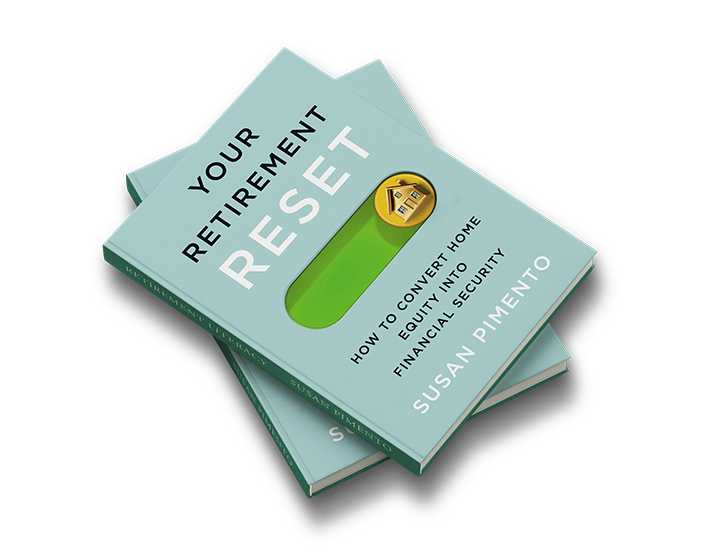
MEDIA ADVISORY: Your Retirement Reset Book
Cover art has been finalized and Your Retirement Reset (ECW Press) is now heading to print ahead of its September 8, 2026 release date. Pre-orders are now available on the ECW Press website. Written for Canadians navigating the realities of modern retirement — and the adult children supporting them — Your Retirement Reset delivers a clear, practical roadmap for converting home equity and other assets into lasting financial security. It tackles the defining challenges of today's retirement landscape: longer lifespans, eroding purchasing power, vanishing pensions, and the near-universal desire to age in place. Susan Pimento brings decades of experience in the financial industry to a conversation that's long overdue — one that goes beyond saving to address how Canadians can strategically and safely spend what they've built. Susan Pimento is available for media interviews and speaking engagements. To arrange, contact: Jennifer Smith ECW Press jsmith@ecwpress.com

From “Covfefe” to commanding the algorithm: How Trump turned memes into political power
A recent analysis by CNN traces how Donald Trump’s relationship with internet culture has evolved from accidental viral moments into a deliberate, highly effective communications strategy. The article highlights how memes, once unpredictable and grassroots, have become a central tool in shaping political narratives, driving engagement and bypassing traditional media channels. Some of the great insight and perspective in the article comes from Dannagal Young, whose insights help explain why this strategy resonates so strongly. Young emphasizes that memes act as powerful emotional and cultural signals, allowing political messages to travel quickly while reinforcing identity and belief among audiences. What began with moments of internet spontaneity has matured into a calculated approach that blends humor, provocation and simplicity to dominate attention in a crowded digital landscape. “The entire ethos and aesthetic of this administration is spectacle and subversion of norms,” Young said. “You don’t do that through deliberation or argument, but through symbols.” Her perspective, as presented in the CNN article, underscores a broader shift: political influence is increasingly shaped by content that feels native to the internet, where relatability, repetition and shareability often matter more than traditional policy-driven messaging. ABOUT DANNAGAL G. YOUNG Dannagal G. Young is a Professor of Communication and Political Science at the University of Delaware where she studies the content, audience and effects of nontraditional political information. She has published over sixty academic articles and book chapters on the content, psychology and effects of political information, satire and misinformation.


Expert Insight: Netflix’s AI Bet Signals a Shift From Creation to Control in Filmmaking
Recently published articles in NPR and outlets like Rest of World explore how Netflix is accelerating its use of artificial intelligence in film production through its work with InterPositive, an artificial intelligence company built by Hollywood actor Ben Affleck, signaling a shift that is less about replacing filmmakers and more about reshaping how films are made. The deal between InterPositive and Netflix comes just over a week since the streamer pulled out of its plan to acquire Warner Brothers Discovery. Paramount agreed to acquire the media giant in a deal valued at around $110 billion. On Feb. 26, the Warner Brothers Discovery board declared Paramount's bid to be "superior" to an $83 billion deal it had previously struck with Netflix. Kimberly A. Owczarski, an associate professor at Texas Christian University who studies media franchises, told NPR in an email that Netflix's decision to partner with a filmmaker of Affleck's prominence sends out a positive message to an industry reeling from the threats posed by the growing adoption of AI across the entertainment landscape. "His status in the industry as a star, filmmaker, and producer gives substantial weight as he promotes a responsible use of AI in filmmaking," Owczarski said. March 02 - NPR The technology focuses on post-production efficiencies, using AI trained on a project’s own footage to handle tasks like relighting, continuity fixes, and visual effects, dramatically reducing time and cost while keeping creative direction in human hands. But the broader implications are harder to ignore. As Kim Owczarski notes in the feature by Rest of World, “AI is not replacing creativity, but it is reshaping labor,” underscoring how these tools could redefine roles across visual effects and post-production. While studios frame AI as assistive, the growing reliance on platform-controlled technology raises critical questions about authorship, workforce disruption, and who ultimately controls the filmmaking pipeline. Kimberly Owczarski is an associate professor in the Department of Film, Television and Digital Media at Texas Christian University. Her teaching and research focus is in the areas of conglomeration, franchises, media authorship and digital distribution. View her profile To explore how AI is transforming the media and entertainment industry and what it means for creative labour, production workflows, and the future of storytelling - simply contact Kim Owczarski for expert insight and commentary today.



The Political Ripple of Iran at Home
Lawrence Levy, associate vice president and executive dean of the National Center for Suburban Studies, provided analysis to Newsday on how national political dynamic are shaping the electoral landscape on Long Island ahead of the midterms. In coverage of the ongoing U.S. military operation in Iran, Levy highlighted the political ripple effects of the conflict at home. While the war itself has prompted debate over national security and economic consequences such as rising gas prices, Levy emphasized its electoral implications, noting that voter perceptions of President Trump’s performance are likely to be the dominant factor in upcoming congressional and state races. He pointed out that even though the president will not be on the ballot, his influence will loom large, particularly among swing voters and segments of the Republican base.



Your Retirement Reset: My New Book will Be in Stores on Sept. 8th
This one has been a long time coming. My new book, Your Retirement Reset: How to Convert Home Equity into Financial Security, published by ECW Press, finally has a publication date. Why I Wrote This Book I have spent decades watching far too many older Canadians carry unnecessary financial stress into what should be a more secure and dignified stage of life. Throughout my career as a mortgage broker, business owner, and later as an executive at HomeEquity Bank, I saw the same painful pattern again and again: people who had worked hard, paid down their homes, built real equity, and still felt trapped. Many were living with fear, cutting back on basic pleasures, worrying about every bill, and feeling ashamed that they had not “saved enough.” Meanwhile, a major asset was sitting right beneath their feet. What struck me most was this: younger homeowners often see home equity as a financial tool, but many retirees do not. For many older Canadians, the idea of borrowing against their home feels frightening, even when it could improve their quality of life and help them stay independent. This resistance is not just about math. It is emotional. It is psychological. And it is deeply tied to identity, security, family, and fear. The Retirement Problem We Are Not Talking About Honestly Enough The old retirement script is failing too many people. We are living longer. The cost of living keeps rising. Private sector pensions have largely disappeared. Healthcare and long-term care costs are real concerns. And many people reaching retirement are discovering, far too late, that the traditional advice to simply save, downsize, and make do does not reflect today’s reality. At the same time, most older Canadians want to age in place. They want to remain in the homes and communities they know and love. They do not want to be pushed into selling, renting, or moving in with family unless they truly choose that path. Yet many are gripped by what I call FORO — Fear of Running Out. That fear shapes countless decisions and robs people of peace of mind. It’s actually rooted in neuroscience and the way we’re wired to behave as we do. I’ve posted about this here in my newsletter and Substack a lot. Because it’s important. This is not a fringe issue. It is a national issue. And it deserves a more honest conversation. Why This Book Matters for Canadians 55+ There is a critical gap in this country when it comes to retirement literacy. Many Canadians over 55 have substantial value tied up in their homes, yet traditional retirement advice often does not seriously incorporate home equity into the conversation. At the same time, the information people do find is often fragmented, biased, overly technical, or scattered across lenders, planners, brokers, lawyers, accountants, media stories, and well-meaning family members. That leaves people vulnerable. They may rely on outdated assumptions. They may wait too long to explore options. They may make decisions out of fear rather than clarity. And because older adults usually do not have decades to recover from a financial mistake, the stakes are high. I want to be direct about this: one wrong decision later in life can be extremely hard to reverse. Seniors need unbiased, transparent information they can actually trust. I wanted to create a resource that is practical, plainspoken, and empowering. Not a sales pitch. Not a jargon-filled textbook. Not a one-size-fits-all solution. What I Hope This Book Will Accomplish I hope “Your Retirement Reset” helps Canadians 55+ do a number of things. First, I hope it helps people understand their options more clearly. Too many retirees only hear about a narrow set of choices. I want readers to see the full landscape and understand how different strategies work, including the pros, cons, and trade-offs. Second, I hope it helps people replace fear with confidence. Retirement should not be defined entirely by scarcity thinking. When people understand how to use all of their assets strategically, including home equity, they can make decisions from a position of strength rather than panic. Third, I hope it helps families have better conversations. One of the great hidden challenges in retirement planning is communication. Adult children often mean well, but they may not understand the emotional reality of aging, independence, or financial vulnerability. These conversations matter, and they are often avoided until a crisis forces them. This book is meant to encourage healthier, earlier, and more respectful dialogue. Fourth, I hope it helps more older Canadians protect their dignity and independence. To me, this is the heart of the matter. As I work through my current MBA studies, my life today is filled with spreadsheets. But retirement shouldn’t be. It is about autonomy, confidence, lifestyle, peace of mind, and the ability to live on your own terms for as long as possible. The Information Gap Nobody Is Filling One reason I felt so compelled to write this book is that the resources simply are not where they need to be. There is no shortage of opinions in the marketplace. But there is a shortage of clear, balanced, accessible education specifically designed for older Canadians trying to navigate retirement in the world as it actually exists now. Many books in this category are dated, narrowly focused, or too technical for many of the people I speak with. And it’s to be expected that much of the consumer-facing content around financial products like reverse mortgages comes from lenders themselves. Many seniors are left trying to piece together a life-changing financial strategy from disconnected advice and Google searches. That is the gap I am trying to fill. Canadians need impartial, balanced information they can trust — especially around home equity strategies and retirement financing. I believe Canadians deserve better than that. They deserve a resource that speaks to them in plain language, respects their intelligence, acknowledges the emotional complexity of these decisions, and gives them practical tools to move forward. We Need a More Modern Retirement Roadmap This book is built around a simple idea: retirement planning cannot just be about accumulating savings. It also has to be about learning how to use those resources wisely. That includes understanding how to: • create income • manage spending • shelter income from unnecessary tax pressure • protect savings from fraud and bad decisions • evaluate whether home equity should play a role in your retirement strategy These are the pillars I keep coming back to. They reflect what I believe Canadians in this stage of life truly need. I want readers to come away not just informed, but steadier. More capable. More hopeful. This Is Personal for Me I am part of this demographic myself. I understand the questions, the transitions, the uncertainty, and the pressure. I also know from lived experience that retirement is not simply a financial event. It is a life event. It affects your confidence, your relationships, your routines, your health, and your sense of who you are. That combination — professional experience and personal experience — is exactly what I bring to every page. That is why I have approached this book not simply as a finance book, but as a practical guide for real people facing real decisions. My hope is simple: that this book helps more Canadians 55+ move into the next chapter of life with greater knowledge, less fear, and a stronger sense of possibility. Because retirement should not just be about getting by. It should be about living with confidence, dignity, and choice. The Book is Now Available for Pre-Order If this message speaks to you, or to someone you love, I hope you will pre-order a copy of Your Retirement Reset. Available September 8, 2026. PRE-ORDER NOW: https://ecwpress.com/products/your-retirement-reset And if you love supporting Canadian booksellers, please also check with your local independent bookstore. Most can easily order it for you. Don’t Retire… Re-Wire! Sue