
Experts Matter. Find Yours.
Connect for media, speaking, professional opportunities & more.

New light-based chip boosts power efficiency of AI tasks 100 fold
A team of engineers has developed a new kind of computer chip that uses light instead of electricity to perform one of the most power-intensive parts of artificial intelligence — image recognition and similar pattern-finding tasks. Using light dramatically cuts the power needed to perform these tasks, with efficiency 10 or even 100 times that of current chips performing the same calculations. Using this approach could help rein in the enormous demand for electricity that is straining power grids and enable higher performance AI models and systems. This machine learning task, called “convolution,” is at the heart of how AI systems process pictures, videos and even language. Convolution operations currently require large amounts of computing resources and time. These new chips, though, use lasers and microscopic lenses fabricated onto circuit boards to perform convolutions with far less power and at faster speeds. In tests, the new chip successfully classified handwritten digits with about 98% accuracy, on par with traditional chips “Performing a key machine learning computation at near zero energy is a leap forward for future AI systems,” said study leader Volker J. Sorger, Ph.D., the Rhines Endowed Professor in Semiconductor Photonics at the University of Florida. “This is critical to keep scaling up AI capabilities in years to come.” “This is the first time anyone has put this type of optical computation on a chip and applied it to an AI neural network,” said Hangbo Yang, Ph.D., a research associate professor in Sorger’s group at UF and co-author of the study. Sorger’s team collaborated with researchers at UF’s Florida Semiconductor Institute, the University of California, Los Angeles and George Washington University on study. The team published their findings, which were supported by the Office of Naval Research, Sept. 8 in the journal Advanced Photonics The prototype chip uses two sets of miniature Fresnel lenses using standard manufacturing processes. These two-dimensional versions of the same lenses found in lighthouses are just a fraction of the width of a human hair. Machine learning data, such as from an image or other pattern-recognition tasks, are converted into laser light on-chip and passed through the lenses. The results are then converted back into a digital signal to complete the AI task. This lens-based convolution system is not only more computationally efficient, but it also reduces the computing time. Using light instead of electricity has other benefits, too. Sorger’s group designed a chip that could use different colored lasers to process multiple data streams in parallel. “We can have multiple wavelengths, or colors, of light passing through the lens at the same time,” Yang said. “That’s a key advantage of photonics.” Chip manufacturers, such as industry leader NVIDIA, already incorporate optical elements into other parts of their AI systems, which could make the addition of convolution lenses more seamless. “In the near future, chip-based optics will become a key part of every AI chip we use daily,” said Sorger, who is also deputy director for strategic initiatives at the Florida Semiconductor Institute. “And optical AI computing is next.”


-fotor-20250826990.jpg)
How a UF reading program is reaching classrooms worldwide
For more than 25 years, Holly Lane, Ph.D., has been laser-focused on a global educational goal: to ensure that students worldwide have access to information about reading. Her passion project, known as the University of Florida Literacy Institute, or UFLI, has already improved the literacy skills of more than 10 million children. What began as a modest classroom tool now has a Facebook community of over 273,000 members; 18 million online toolbox views; and more than 500,000 instructional manuals in classrooms. And as the UFLI brand gains traction, Lane continues to champion what the acronym means and why the program has been so life-changing. “When you learn to read, you fly,” said Lane, who serves as the UFLI director and a professor of special education at UF. UFLI is an ongoing effort by UF faculty and students to improve literacy outcomes for struggling students by addressing two key areas: reader development and teacher development. The program began in 1998 as a tutoring model for beginning readers working with Lane’s pre-service teachers. The idea was that, if teachers understood how to employ effective, evidence-based practices in a one-on-one tutoring session, they could transfer those skills to their small-group or classroom instruction. However, some teachers struggled to make that transition, so a dedicated small-group lesson model was created. That foundation eventually expanded into a dyslexia support program and caught the attention of a surprising partner, best-selling author and philanthropist James Patterson. Known worldwide for his literacy advocacy and generous support of reading initiatives, Patterson has become a key benefactor for the program. When the COVID-19 pandemic hit, a challenge turned into a breakthrough. UFLI started its Virtual Teaching Resource Hub and, in the first week, about 70,000 teachers visited the site and downloaded materials. The turning point came when a school in St. Augustine reached out to UFLI, asking for professional development. “I said, ‘Well, what if we planned the lessons for you instead of teaching you how to plan these lessons?’” Lane said. What followed was what Lane called her “accidental phonics program.” “They ended the year with the best scores they'd ever seen, better than their pre-COVID scores, and that was unheard of,” Lane said. That success led to an effective district-wide pilot in Alachua County with 21 elementary schools. UFLI leaders decided to publish the contents of the program and create a manual that individual teachers could purchase. This concept boomed, and the program even made waves overseas. “Starting with the virtual teaching hub… we had a huge following in Perth and in Melbourne, and now we have an Australian edition of the manual,” Lane said. “We’ve been in every state and every Canadian province and territory, but we're also now in something like 60-some other countries.” Patterson has continued his support by directing efforts toward expanding UFLI’s reach in Florida, aiming to bring the program to every district in the state. Looking ahead, Lane is especially excited about UFLI’s new technology. “We're calling it our assessment and planning portal,” Lane said. “Teachers assess two skills a week, and they enter their data into this program and it spits out small-group lesson plans for the following week that target specific needs of their students.” The data input system is highly advanced, requiring the teacher to simply hold up work in front of a webcam, and the system then reads the student handwriting and imports the data. The program’s structure also ensures that students apply new concepts daily and revisit them regularly. But behind it all is a deeply connected community. For Lane, the success of UFLI boils down to people. “We have an amazing team here,” Lane said. “If anything, that's my superpower, finding really good people who are really good humans but also really good at what they do.” For more information about UFLI, visit ufli.education.ufl.edu.

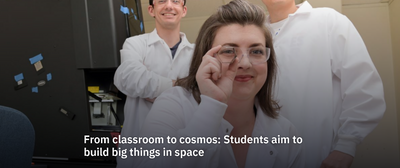
From classroom to cosmos: Students aim to build big things in space
In the vast vacuum of space, Earth-bound limitations no longer apply. And that’s exactly where UF engineering associate professor Victoria Miller, Ph.D., and her students are pushing the boundaries of possibilities. In partnership with the Defense Advanced Research Projects Agency, known as DARPA, and NASA’s Marshall Space Flight Center, the University of Florida engineering team is exploring how to manufacture precision metal structures in orbit using laser technology. “We want to build big things in space. To build big things in space, you must start manufacturing things in space. This is an exciting new frontier,” said Miller. An associate professor in the Department of Materials Science & Engineering at UF’s Herbert Wertheim College of Engineering, Miller said the project called NOM4D – which means Novel Orbital and Moon Manufacturing, Materials, and Mass-efficient Design – seeks to transform how people think about space infrastructure development. Picture constructing massive structures in orbit, like a 100-meter solar array built using advanced laser technology. “We’d love to see large-scale structures like satellite antennas, solar panels, space telescopes or even parts of space stations built directly in orbit. This would be a major step toward sustainable space operations and longer missions,” said team member Tianchen Wei, a third-year Ph.D. student in materials science and engineering. UF received a $1.1 million DARPA contract to carry out this pioneering research over three phases. While other universities explore various aspects of space manufacturing, UF is the only one specifically focused on laser forming for space applications, Miller said. A major challenge of the NOM4D project is overcoming the size and weight limitations of rocket cargo. To address these concerns, Miller’s team is developing laser-forming technology to trace precise patterns on metals to bend them into shape. If executed correctly, the heat from the laser bends the metal without human touch; a key step toward making orbital manufacturing a reality. “With this technology, we can build structures in space far more efficiently than launching them fully assembled from Earth,” said team member Nathan Fripp, also a third-year Ph.D. student studying materials science and engineering. “This opens up a wide range of new possibilities for space exploration, satellite systems and even future habitats.” Miller said laser bending is complex but getting the correct shape from the metal is only part of the equation. “The challenge is ensuring that the material properties stay good or improve during the laser-forming process,” she said. “Can we ensure when we bend this sheet metal that bent regions still have really good properties and are strong and tough with the right flexibility?” To analyze the materials, Miller’s students are running controlled tests on aluminum, ceramics and stainless steel, assessing how variables like laser input, heat and gravity affect how materials bend and behave. “We run many controlled tests and collect detailed data on how different metals respond to laser energy: how much they bend, how much they heat up, how the heat affects them and more. We have also developed models to predict the temperature and the amount of bending based on the material properties and laser energy input,” said Wei. “We continuously learn from both modeling and experiments to deepen our understanding of the process.” The research started in 2021 and has made significant progress, but the technology must be developed further before it’s ready for use in space. This is why collaboration with the NASA Marshall Space Center is so critical. It enables UF researchers to dramatically increase the technology readiness level (TRL) by testing laser forming in space-like conditions inside a thermal vacuum chamber provided by NASA. Fripp leads this testing using the chamber to observe how materials respond to the harsh environment of space. “We've observed that many factors, such as laser parameters, material properties and atmospheric conditions, can significantly determine the final results. In space, conditions like extreme temperatures, microgravity and vacuums further change how materials behave. As a result, adapting our forming techniques to work reliably and consistently in space adds another layer of complexity,” said Fripp. Another important step is building a feedback loop into the manufacturing process. A sensor would detect the bending angle in real time, allowing for feedback and recalibration of the laser’s path. As the project enters its final year, finishing in June of 2026, questions remain -- especially around maintaining material integrity during the laser-forming process. Still, Miller’s team remains optimistic. UF moves one step closer to a new era of construction with each simulation and laser test. “It's great to be a part of a team pushing the boundaries of what's possible in manufacturing, not just on Earth, but beyond,” said Wei.

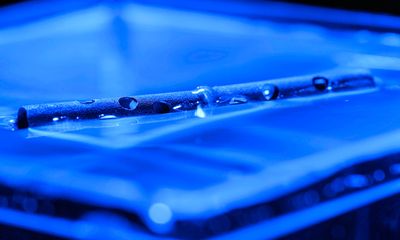
Research Matters: 'Unsinkable' Metal Is Here
What if boats, buoys, and other items designed to float could never be sunk — even when they’re cracked, punctured, or tossed by an angry sea? If you think unsinkable metal sounds like science fiction. Think again. A team of researchers at the University of Rochester led by professor Chunlei Guo has devised a way to make ordinary metal tubes stay afloat no matter how much damage they sustain. The team chemically etches tiny pits into the tubes that trap air, keeping the tubes from getting waterlogged or sinking. Even when these superhydrophobic tubes are submerged, dented, or punctured, the trapped air keeps them buoyant and, in a very literal sense, unsinkable. “We tested them in some really rough environments for weeks at a time and found no degradation to their buoyancy,” says Guo, a professor of physics and optics and a senior scientist at the University of Rochester’s Laboratory for Laser Energetics. “You can poke big holes in them, and we showed that even if you severely damage the tubes with as many holes as you can punch, they still float.” Guo and his team could usher in a new generation of marine tech, from resilient floating platforms and wave-powered generators to ships and offshore structures that can withstand damage that would sink traditional steel. Their research highlights the University of Rochester’s knack for translating physics into practical wonder. For reporters covering materials science, sustainable engineering, ocean tech, or innovative design, Guo is the ideal expert to explain why “unsinkable metal” might be closer to everyday use than you think. To connect with Guo, contact Luke Auburn, director of communications for the Hajim School of Engineering and Applied Sciences, at luke.auburn@rochester.edu.

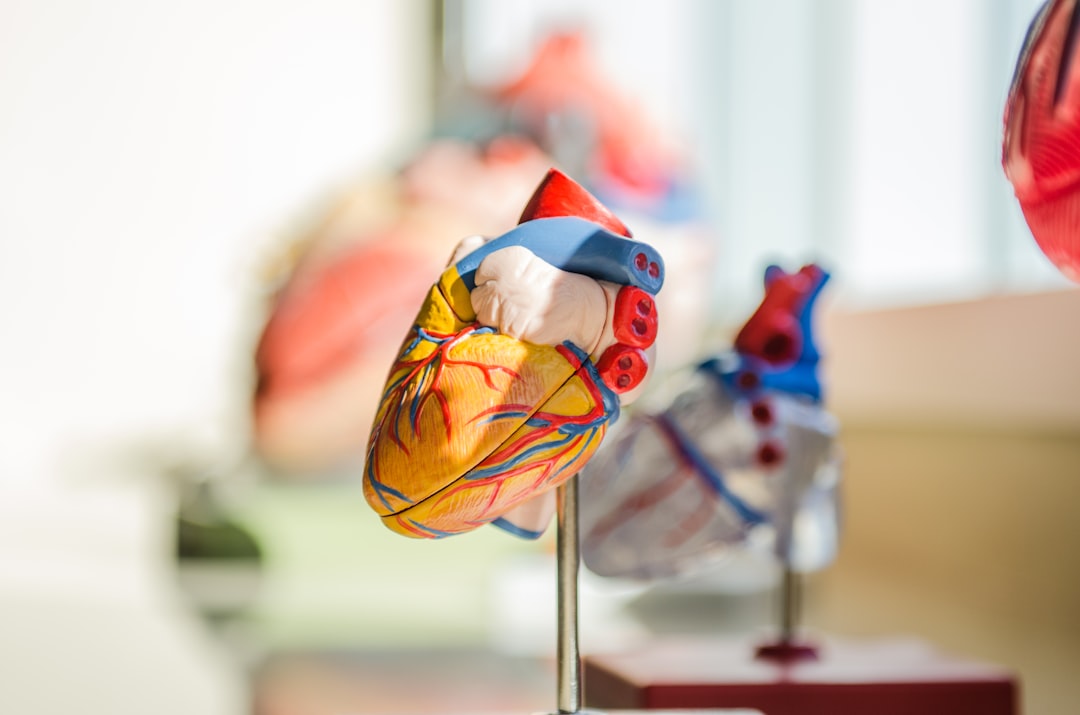
Heart valve developed at UC Irvine shines in early-stage preclinical testing
UC Irvine researchers designed and developed a minimally invasive replacement pulmonary heart valve. Created for pediatric patients, the device can be expanded as children grow, eliminating the need for multiple surgeries. The team successfully conducted laboratory and early-stage animal feasibility testing of the implant, crucial steps toward approval for human use. Irvine, Calif., June 23, 2025 — Researchers at the University of California, Irvine have successfully performed preclinical laboratory testing of a replacement heart valve intended for toddlers and young children with congenital cardiac defects, a key step toward obtaining approval for human use. The results of their study were published recently in the Journal of the American Heart Association. The management of patients with congenital heart disease who require surgical pulmonary valve replacement typically occurs between the ages of 2 and 10. To be eligible for a minimally invasive transcatheter pulmonary valve procedure, patients currently must weigh at least 45 pounds. For children to receive minimally invasive treatment, they must be large enough so that their veins can accommodate the size of a crimped replacement valve. The Iris Valve designed and developed by the UC Irvine team can be implanted in children weighing as little as 17 to 22 pounds and gradually expanded to an adult diameter as they grow. Research and development of the Iris Valve has been supported by the Eunice Kennedy Shriver National Institute of Child Health and Human Development; the National Heart, Lung, and Blood Institute; and the National Science Foundation. This funding has enabled benchtop fracture testing, which demonstrated the valve’s ability to be crimped down to a 3-millimeter diameter for transcatheter delivery and subsequently enlarged to 20 millimeters without damage, as well as six-month animal studies that confirmed successful device integration within the pulmonary valve annulus, showing valve integrity and a favorable tissue response. “We are pleased to see the Iris Valve performing as we expected in laboratory bench tests and as implants in Yucatan mini pigs, a crucial measure of the device’s feasibility,” said lead author Arash Kheradvar, UC Irvine professor of biomedical engineering. “This work represents the result of longstanding collaboration between our team at UC Irvine and Dr. Michael Recto at Children’s Hospital of Orange County built over several years of joint research and development.” Congenital heart defects affect about 1 percent of children born in the United States and Europe, with over 1 million cases in the U.S. alone. These conditions often necessitate surgical interventions early in life, with additional procedures required to address a leaky pulmonary valve and prevent right ventricular failure as children grow. The Iris Valve can be implanted via a minimally invasive catheter through the patient’s femoral vein. The Kheradvar group employed origami folding techniques to compress the device into a 12-French transcatheter system, reducing its diameter to no more than 3 millimeters. Over time, the valve can be balloon-expanded up to its full 20-millimeter diameter. This implantation method, along with the ability to begin treatment earlier in very young patients, helps mitigate the risk of complications from delayed care and reduces the need for multiple surgeries in this vulnerable population. “Once the Iris Valve comes to fruition, it will save hundreds of children at least one operation – if not two – throughout the course of their lives,” said Recto, an interventional pediatric cardiologist at CHOC who’s also a clinical professor of pediatrics at UC Irvine. “It will save them from having to undergo surgical pulmonary valve placement, as the Iris Valve is delivered via a small catheter in the vein and can be serially dilated to an adult diameter and also facilitate the future placement of larger transcatheter pulmonary valves – with sizes greater than 20 millimeters, like the Melody, Harmony and Sapien devices – if needed.” Kheradvar said that the next phase of preclinical testing of the Iris Valve is funded by the Brett Boyer Foundation, which is committed to supporting research into treatments for congenital heart disease. “We are actively engaged with the U.S. Food and Drug Administration to define and carry out the required experiments and documentation for first-in-human authorization of the Iris Valve,” Kheradvar said. “Our team is urgently advancing the Iris Valve through preclinical studies to enable its clearance for first-in-human use. This is a critical step toward providing toddlers – who currently have no viable minimally invasive treatment until they reach the 45-pound threshold – with a much-needed option.” First co-author Nnaoma Agwu, a biomedical engineering Ph.D. candidate at UC Irvine, said: “The development of the Iris Valve required a strong and knowledgeable team that understood the clinical and mechanical design requirements. This accomplishment would not have been possible without the collaboration of talented clinicians, veterinarians and engineers. With this milestone reached, we are rigorously advancing the Iris Valve’s development, setting our sights on human clinical trials.” Joining Kheradvar, Recto and Agwu as co-authors of the article in Journal of the American Heart Association were Daryl Chau, a recent UC Irvine master’s graduate; Gregory Kelley and Tanya Burney, both research specialists at UC Irvine, with Burney also affiliated with the Beckman Laser Institute; Ekaterina Perminov, a clinical veterinarian with UC Irvine’s University Laboratory Animal Resources; and Christopher Alcantara, a radiology technician at CHOC. About UC Irvine’s Brilliant Future campaign: Publicly launched on Oct. 4, 2019, the Brilliant Future campaign aims to raise awareness and support for the university. By engaging 75,000 alumni and garnering $2 billion in philanthropic investment, UC Irvine seeks to reach new heights of excellence in student success, health and wellness, research and more. The Samueli School of Engineering plays a vital role in the success of the campaign. Learn more by visiting https://brilliantfuture.UC Irvine.edu/the-henry-samueli-school-of-engineering About the University of California, Irvine: Founded in 1965, UC Irvine is a member of the prestigious Association of American Universities and is ranked among the nation’s top 10 public universities by U.S. News & World Report. The campus has produced five Nobel laureates and is known for its academic achievement, premier research, innovation and anteater mascot. Led by Chancellor Howard Gillman, UC Irvine has more than 36,000 students and offers 224 degree programs. It’s located in one of the world’s safest and most economically vibrant communities and is Orange County’s second-largest employer, contributing $7 billion annually to the local economy and $8 billion statewide. For more on UC Irvine, visit www.uci.edu. Media access: Radio programs/stations may, for a fee, use an on-campus studio with a Comrex IP audio codec to interview UC Irvine faculty and experts, subject to availability and university approval. For more UC Irvine news, visit news.uci.edu. Additional resources for journalists may be found at https://news.uci.edu/media-resources.

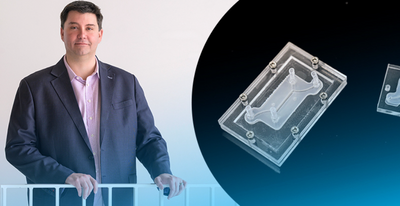
Taking discoveries to the real world for the benefit of human health
It takes about a decade and a lot of money to bring a new drug to market—between $1 billion to $2 billion, in fact. University of Delaware inventor Jason Gleghorn wants to change that. At UD, Gleghorn is developing leading-edge microfluidic tissue models. The devices are about the size of two postage stamps, and they offer a faster, less-expensive way to study disease and to develop pharmaceutical targets. These aren’t tools he wants to keep just for himself. No, Gleghorn wants to put the patented technology he’s developing in the hands of other experts, to advance clinical solutions in women’s health, maternal-fetal health and pre-term birth. His work also has the potential to improve understanding of drug transport in the female reproductive tract, placenta, lung and lymph nodes. Gleghorn, an associate professor of biomedical engineering, was named to the first cohort of Innovation Ambassadors at UD, as part of the University’s effort to foster and support an innovation culture on campus. Below, he shares some of what he’s learned about translating research to society. Q: What is the problem that you are trying to address? Gleghorn: A lot of disease has to do with disorganization in the body’s normal tissue structure. My lab makes microfluidic tissue models, called organ-on-a-chip models, that have super-tiny channels about the thickness of a human hair, where we can introduce very small amounts of liquid, including cells, to represent an organ in the human body. This can help us study and understand the mechanism of how things work in the body (the biology) or help us do things like drug screening to test therapeutic compounds for treating disease. And while these little microfluidic devices can do promising things, the infrastructure required to make the system work often restricts their use to high-end labs. We want to democratize the techniques and technology so that nonexperts can use it. To achieve this, we changed the way we make these devices, so that they are compatible with standard manufacturing, which means we can scale them and create them much easier. Gleghorn: One of the problems with drug screening, in general, is that animal model studies don’t always represent human biology. So, when we’re using animal models to test new drugs — which have been the best tool we have available — the results are not always apples to apples. Fundamentally, our microfluidic devices can model what happens in humans … we can plug in the relevant human components to understand how the mechanism is working and then ask questions about what drives those processes and identify targets for therapies to prevent the dysfunction. Q: What is innovative about this device? Gleghorn: The innovation part is this modularity — no one makes these devices this way. The science happens on the tiny tissue model insert, which is sandwiched between two pieces of clear acrylic. This allows us to watch what’s happening on the tissue model insert in real time. Meanwhile, the outer shell’s clamshell design provides flexibility: if we’re studying lung tissue and we want to study the female reproductive tract, all we do is unscrew the outer shell and insert the proper tissue model that mimics the female reproductive tract and we’re off. We’ve done a lot of the engineering to make it very simple to operate and use, and adaptable to common lab tools that everyone has, to eliminate the need for financial investment in things like specialized clean rooms, incubators and pumps, etc., so the technology can be useful in regular labs or easily deployable to far-flung locations or countries. With a laser cutter and $500 worth of equipment, you could conceivably mass manufacture these things for maternal medicine in Africa, for example. Democratizing the technology so it is compatible and useful for even an inexperienced user aligns with the mission of my lab, which focuses on scaling the science and the innovation faster, instead of only a few specialized labs being a bottleneck to uncovering new mechanisms of disease and the development of therapies. We patented this modularity, the way to build these tiny microfluidic devices and the simplicity of how it's used as a tool set, through UD’s Office of Economic Innovation and Partnerships (OEIP). Q: How have you translated this work so far? Gleghorn: To date, we've taken this microfluidic system to nine different research labs across seven countries and four continents — including the United States, the United Kingdom, Australia, France, Belgium and South Africa. These labs are using our technology to study problems in women’s health and collecting data with it. We’re developing boot camps where researchers can come for two or three days to the University of Delaware, where we teach them how to use this device and they take some back with them. From a basic science perspective, there is high enthusiasm for the power of what it can tell you and its ease of use. As engineers, we think it's pretty cool that many other people are using our innovations for new discoveries. Q: What support and guidance have you received from the UD innovation ecosystem? Gleghorn: To do any of this work, you need partners that have various expertise and backgrounds. UD’s Office of Economic Innovation and Partnerships has built a strong team of professionals with expertise in different areas, such as how do you license or take something to patent, how do you make connections with the business community? OEIP is home to Delaware’s Small Business Development Center, which can help you think about business visibility in terms of startups. Horn Entrepreneurship has built out impressive programs for teaching students and faculty to think entrepreneurially and build mentor networks, while programs like the Institute for Engineering Driven Health and the NSF Accelerating Research Translation at UD provide gap funding to be able to do product development and to take the work from basic prototype to something that is more marketable. More broadly in Delaware is the Small Business Administration, the Delaware Innovation Space and regional grant programs and small accelerators to help Delaware innovators. Q: How have students in your lab benefited from engaging in innovation? Gleghorn: Undergraduate students in my lab have made hundreds of these devices at scale. We basically built a little manufacturing facility, so we have ways to sterilize them, track batches, etc. We call it “the foundry.” In other work, graduate students are engineering different components or working on specific system designs for various studies. The students see collaborators use these devices to discover new science and new discoveries. That's very rewarding as an engineer. Additionally, my lab focuses on building solutions that are useful in the clinic and commercially viable. As a result, we've had two grad students spin out companies related to the work we've been doing in the lab. Q: How has research translation positively impacted your work? Gleghorn: I started down this road maybe five years ago, seriously trying to think about how to translate our research findings. Being an entrepreneur, translating technology — it's a very different way to think about your work. And so that framework has really permeated most of the research that I do now and changed the way I think about problems. It has opened new opportunities for collaboration and for alternate sources of funding with companies. This has value in terms of taking the research that you're doing fundamentally and creating a measurable impact in the community, but it also diversifies your funding streams to work on important problems. And different viewpoints help you look at the work you do in new ways, challenging you to define the value proposition, the impact of your work.


The Impact of Counterfeit Goods in Global Commerce
Introduction Counterfeiting has been described as “the world’s second oldest profession.” In 2018, worldwide counterfeiting was estimated to cost the global economy between USD 1.7 trillion and USD 4.5 trillion annually, as well as resulting in more than 70 deaths and 350,000 serious injuries annually. It is estimated that more than a quarter of US consumers have purchased a counterfeit product. The counterfeiting problem is expected to be exacerbated by the unprecedented shift in tariff policy. Tariffs, designed as an import tax or duty on an imported product, are often a percentage of the price and can have different values for different products. Tariffs drive up the cost of imported brand name products but may not, or only to a lesser extent, impact the cost of counterfeit goods. In this article, we examine the extent of the global counterfeit dilemma, the role experts play in tracking and mitigating the problem, the use of anti-counterfeiting measures, and the potential impact that tariffs may have on the flow of counterfeit goods. Brand goods have always been a target of counterfeits due to their high price and associated prestige. These are often luxury goods and clothing, but can also be pharmaceuticals, cosmetics, and electronics. The brand name is an indication of quality materials, workmanship, and technology. People will pay more for the “real thing,” or decide to buy something cheaper that looks “just as good.” In many cases, “just as good” is a counterfeit of the brand name product. A tariff is an import tax or duty that is typically paid by the importer and can drive up the cost of imported brand name products. For example, a Yale study has shown that shoe prices may increase by 87% and apparel prices by 65%, due to tariffs. On the other hand, counterfeit products don’t play by the rules and can often avoid paying tariffs, such as the case of many smaller, online transactions, shipped individually. Therefore, we expect to see an increase in counterfeit products as well as a need to increase efforts to reduce the economic losses of counterfeiting. The Scale of the Counterfeit Problem In their 2025 report, the Organisation for Economic Co-operation and Development (OECD) and the European Union Intellectual Property Office (EUIPO), estimated that in 2021, “global trade in counterfeit goods was valued at approximately USD 467 billion, or 2.3% of total global imports. This absolute value represents an increase from 2019, when counterfeit trade was estimated at USD 464 billion, although its relative share decreased compared to 2019 when it accounted for 2.5% of world trade. For imports into the European Union, the value of counterfeit goods was estimated at USD 117 billion, or 4.7% of total EU imports.” In a 2020 report, the US Patent and Trademark Office (USPTO) estimated the size of the international counterfeit market as having a “range from a low of USD 200 billion in 2008 to a high of USD 509 billion in 2019.” According to the OEDC / EUIPO General Trade-Related Index of Counterfeiting for economies (GTRIC-e), China continues to be the primary source of counterfeit goods, as well as Bangladesh, Lebanon, Syrian Arab Republic, and Türkiye. Based on customs seizures in 2020-21, the most common items are clothing (21.6%), footwear (21.4%), and handbags, followed by electronics and watches. Based on the value of goods seized, watches (23%) and footwear (15%) had the highest value. However, it should be noted that items that are easier to detect and seize are likely to be overrepresented in the data. Although the share of watches declined, and electronics, toys, and games increased, it remains unclear whether this represents a long term trend or just a short term fluctuation. In general, high value products in high demand continue to be counterfeited. Data from the US Library of Congress indicates that 60% – 80% of counterfeit products are purchased by Americans. The US accounts for approximately 5% of the world’s consumers; however, it represents greater than 20% of the world’s purchasing power. Though it is still possible to find counterfeit products at local markets, a large number of counterfeit goods are obtained through online retailers and shipped directly to consumers as small parcels classified as de minimis trade. This allows for the duty-free import of products up to USD 800 in value. Counterfeit items may be knowingly or unknowingly purchased from online retailers and shipped directly to consumers, duty-free. Purchased products can be shipped via postal services, classified as de minimis trade. Approximately 79% of packages seized contained less than 10 items. Given the size and volume of the packages arriving daily, many or most will evade scrutiny by customs officials. This means of import is increasing over time. In 2017-19 it was 61% of seizures. By 2020-21, it was 79%. Economic Impact of Counterfeiting The scale of the counterfeiting problem has significant impacts on the US economy, US business interests, and US innovations in lost sales and lost jobs. Moreover, counterfeit products are often made quickly and cheaply, using materials that may be toxic. The companies producing these goods may not dispose of waste properly and may dump it into waterways, causing significant environmental consequences. Counterfeit products from electrical equipment and life jackets to batteries and smoke alarms may be made without adhering to safety standards or be properly tested. These products may fail to function when you need it and may lead to fire, electric shock, poisoning, and other accidents that can seriously injure and even kill consumers. Counterfeit cosmetics and pharmaceuticals can also lead to injuries by either including unsafe ingredients or by failing to provide the benefits of the real product. The Tariff Counterfeit Connection Tariffs may be seen as a tax on consumers and raise the price of imported products that are already the target of counterfeiters such as luxury leather products and apparel. It’s commonly understood that raising prices on genuine products can only drive up the demand for counterfeit goods. In general, consumers will have less disposable income and the brand goods they desire will cost more which is bound to increase the demand for counterfeit goods. Although recent changes removing the USD 800 tax exemption on de minimis shipments from China and Hong Kong will make it more expensive for counterfeiters to ship their goods internationally, tariffs are typically applied as a percentage of the cost of an object. This will cause the price of more expensive legitimate goods to increase even more than the cheaper counterfeit goods and likely make the counterfeit products even more attractive economically. Therefore, we expect to see an increase in counterfeit products as well as an increase in efforts to reduce the economic losses of counterfeiting. The Role of Technical Experts in Counterfeit Detection Technical experts play an important role in both the prevention and detection of counterfeits and helping to identify counterfeiting entities. Whether counterfeit money, clothing, shoes, electronics, cosmetics or pharmaceuticals, the first step in fighting counterfeits is detecting them. In some cases, the counterfeit product is obvious. A leather product may not be leather, a logo may be wrong, packaging may have a spelling mistake, or a holographic label may be missing. These products may be seized by customs. However, some counterfeit products are very difficult to detect. In the case of a counterfeit memory card with less than the stated capacity or a pharmaceutical that contains the wrong active ingredient, technical analysis may be needed to identify the parts. Technical analysis may also be used to try and identify the source of the counterfeit goods. For prevention measures, manufacturers may use radio frequency identification (RFID) or Near Field Communication (NFC) tags within their products. RFID tags are microscopic semiconductor chips attached to a metallic printed antenna. The tag itself may be flexible and easy to incorporate into packaging or into the product itself. A passive RFID requires no power and has sufficient storage to store information such as product name, stock keeping unit (SKU), place of manufacture, date of manufacture, as well as some sort of cryptographic information to attest to the authenticity of the tag. A simple scanner powers the tag using an electromagnetic field and reads the tag. If manufacturers include RFID tags in products, an X-ray to identify a product in a de minimis shipment (perhaps using artificial intelligence technology) and an RFID scanner to verify the authenticity of the product can be used to efficiently screen a large number of packages. Many products also may be marked with photo-luminescent dyes with unique properties that may be read by special scanners and allow authorities to detect legitimate products. Similarly, doped hybrid oxide particles with distinctive photo-responsive features may be printed on products. These particles, when exposed to laser light, experience a fast increase in temperature which may be quickly detected. For either of these examples, the ability to identify legitimate products, or – due to the absence of marking – track counterfeit products, allows authorities to map the flow of the counterfeit goods through the supply chain as they are manufactured, shipped, and are exported and imported to countries. For many years, electronic memory cards such as SD cards and USB sticks have been counterfeited. In many cases, the fake card will have a capacity much smaller than listed. For example, a 32GB memory card for a camera may only hold 1GB. Sometimes, these products may be identified by analyzing the packaging for discrepancies from the brand name products. In other cases, software must be used to verify the capacity and performance of each one, which is time-consuming when analyzing a large number of products. Forensic investigators, comprised of forensic accountants and forensic technologists, are heavily involved in efforts to combat this illicit trade. By analyzing financial records, supply-chain data, and transaction histories, they trace the origins and pathways of counterfeit products. Their work often involves identifying suspicious procurement patterns, shell companies, and irregular inventory flows that signal counterfeit activity. Forensic investigators often begin by mapping the counterfeit supply chain, an intricate web that often spans continents. Using data analytics, transaction tracing, and inventory audits, they identify anomalies in procurement, distribution, and sales records. These methodologies help pinpoint the origin of counterfeit goods, the intermediaries involved, and the final points of sale. By reconstructing the flow of goods and money, forensic investigators can begin to unmask activities. Cross-border partnerships are essential for tracking assets, sharing insights, and coordinating with financial regulators. Public-private partnerships further enhance the effectiveness of anti-counterfeiting efforts. Forensic investigators often serve as bridges between government agencies, brand owners, and financial institutions, facilitating the exchange of key information. These partnerships increase information-sharing, streamline investigations, and amplify the impact of enforcement actions. A promising development in this space is the World Customs Organization’s Smart Customs Project, which integrates artificial intelligence to detect and intercept counterfeit goods. Forensic investigators can leverage this initiative by analyzing AI-generated alerts and incorporating them into broader financial investigations, which allows for faster and more accurate identification of illicit networks. Jurisdictional complexity is a major hurdle in anti-counterfeiting efforts. Forensic investigators work closely with legal teams to navigate these challenges to ensure that investigations comply with local laws, and evidence is admissible and can withstand scrutiny in court, especially when dealing with offshore accounts and international money laundering schemes. Forensic investigators follow the money, tracing illicit profits through bank accounts, shell companies, and cryptocurrency transactions. Their findings not only help recover stolen assets but also support disputes by providing expert testimony that quantifies financial losses and identifies the bad actors. Conclusion Imitations of brand name products have become more convincing, harder to detect, and the sources of the counterfeit goods more difficult to identify. While counterfeiting clearly has evolved because of technological advancements, e-commerce, and the growing sophistication of bad actors, the process has now been complicated even further by the unpredictable tariff and trade policies that are affecting businesses worldwide. Consequently, companies need to take a multi-faceted approach to these new challenges introduced into the counterfeiting of products by tariffs. By engaging high-tech product authentication measures, utilizing technology-based alerts about counterfeits, and retaining the specialized skills of forensic investigators and other experts, companies will be able to navigate the risks posed by the complex and changing relationship between tariffs and counterfeit goods. To learn more about this topic and how it can impact your business or connect with James E. Malackowski simply click on his icon now to arrange an interview today. To connect with David Fraser or Matthew Brown - contact : Kristi L. Stathis, J.S. Held +1 786 833 4864 Kristi.Stathis@JSHeld.com


Decoding the Future of AI: From Disruption to Democratisation and Beyond
The global AI landscape has become a melting pot for innovation, with diverse thinking pushing the boundaries of what is possible. Its application extends beyond just technology, reshaping traditional business models and redefining how enterprises, governments, and societies operate. Advancements in model architectures, training techniques and the proliferation of open-source tools are lowering barriers to entry, enabling organisations of all sizes to develop competitive AI solutions with significantly fewer resources. As a result, the long-standing notion that AI leadership is reserved for entities with vast computational and financial resources is being challenged. This shift is also redrawing the global AI power balance, with a decentralised approach to AI where competition and collaboration coexist across different regions. As AI development becomes more distributed, investment strategies, enterprise innovation and global technological leadership are being reshaped. However, established AI powerhouses still wield significant leverage, driving an intense competitive cycle of rapid innovation. Amid this acceleration, it is critical to distinguish true technological breakthroughs from over-hyped narratives, adopting a measured, data-driven approach that balances innovation with demonstrable business value and robust ethical AI guardrails. Implications of the Evolving AI Landscape The democratisation of AI advancements, intensifying competitive pressures, the critical need for efficiency and sustainability, evolving geopolitical dynamics and the global race for skilled talent are all fuelling the development of AI worldwide. These dynamics are paving the way for a global balance of technological leadership. Democratisation of AI Potential The ability to develop competitive AI models at lower costs is not only broadening participation but also reshaping how AI is created, deployed and controlled. Open-source AI fosters innovation by enabling startups, researchers, and enterprises to collaborate and iterate rapidly, leading to diverse applications across industries. For example, xAI has made a significant move in the tech world by open sourcing its Grok AI chatbot model, potentially accelerating the democratisation of AI and fostering innovation. However, greater accessibility can also introduce challenges, including risks of misuse, uneven governance, and concerns over intellectual property. Additionally, as companies strategically leverage open-source AI to influence market dynamics, questions arise about the evolving balance between open innovation and proprietary control. Increased Competitive Pressure The AI industry is fuelled by a relentless drive to stay ahead of the competition, a pressure felt equally by Big Tech and startups. This is accelerating the release of new AI services, as companies strive to meet growing consumer demand for intelligent solutions. The risk of market disruption is significant; those who lag, face being eclipsed by more agile players. To survive and thrive, differentiation is paramount. Companies are laser-focused on developing unique AI capabilities and applications, creating a marketplace where constant adaptation and strategic innovation are crucial for success. Resource Optimisation and Sustainability The trend toward accessible AI necessitates resource optimisation, which means developing models with significantly less computational power, energy consumption and training data. This is not just about cost; it is crucial for sustainability. Training large AI models is energy-intensive; for example, training GPT-3, a 175-billion-parameter model, is believed to have consumed 1,287 MWh of electricity, equivalent to an average American household’s use over 120 years1. This drives innovation in model compression, transfer learning, and specialised hardware, like NVIDIA’s TensorRT. Small language models (SLMs) are a key development, offering comparable performance to larger models with drastically reduced resource needs. This makes them ideal for edge devices and resource-constrained environments, furthering both accessibility and sustainability across the AI lifecycle. Multifaceted Global AI Landscape The global AI landscape is increasingly defined by regional strengths and priorities. The US, with its strength in cloud infrastructure and software ecosystem, leads in “short-chain innovation”, rapidly translating AI research into commercial products. Meanwhile, China excels in “long-chain innovation”, deeply integrating AI into its extended manufacturing and industrial processes. Europe prioritises ethical, open and collaborative AI, while the APAC counterparts showcase a diversity of approaches. Underlying these regional variations is a shared trajectory for the evolution of AI, increasingly guided by principles of responsible AI: encompassing ethics, sustainability and open innovation, although the specific implementations and stages of advancement differ across regions. The Critical Talent Factor The evolving AI landscape necessitates a skilled workforce. Demand for professionals with expertise in AI and machine learning, data analysis, and related fields is rapidly increasing. This creates a talent gap that businesses must address through upskilling and reskilling initiatives. For example, Microsoft has launched an AI Skills Initiative, including free coursework and a grant program, to help individuals and organisations globally develop generative AI skills. What does this mean for today’s enterprise? New Business Horizons AI is no longer just an efficiency tool; it is a catalyst for entirely new business models. Enterprises that rethink their value propositions through AI-driven specialisation will unlock niche opportunities and reshape industries. In financial services, for example, AI is fundamentally transforming operations, risk management, customer interactions, and product development, leading to new levels of efficiency, personalisation and innovation. Navigating AI Integration and Adoption Integrating AI is not just about deployment; it is about ensuring enterprises are structurally prepared. Legacy IT architectures, fragmented data ecosystems and rigid workflows can hinder the full potential of AI. Organisations must invest in cloud scalability, intelligent automation and agile operating models to make AI a seamless extension of their business. Equally critical is ensuring workforce readiness, which involves strategically embedding AI literacy across all organisational functions and proactively reskilling talent to collaborate effectively with intelligent systems. Embracing Responsible AI Ethical considerations, data security and privacy are no longer afterthoughts but are becoming key differentiators. Organisations that embed responsible AI principles at the core of their strategy, rather than treating them as compliance check boxes, will build stronger customer trust and long-term resilience. This requires proactive bias mitigation, explainable AI frameworks, robust data governance and continuous monitoring for potential risks. Call to Action: Embracing a Balanced Approach The AI revolution is underway. It demands a balanced and proactive response. Enterprises must invest in their talent and reskilling initiatives to bridge the AI skills gap, modernise their infrastructure to support AI integration and scalability and embed responsible AI principles at the core of their strategy, ensuring fairness, transparency and accountability. Simultaneously, researchers must continue to push the boundaries of AI’s potential while prioritising energy efficiency and minimising environmental impact; policymakers must create frameworks that foster responsible innovation and sustainable growth. This necessitates combining innovative research with practical enterprise applications and a steadfast commitment to ethical and sustainable AI principles. The rapid evolution of AI presents both an imperative and an opportunity. The next chapter of AI will be defined by those who harness its potential responsibly while balancing technological progress with real-world impact. Resources Sudhir Pai: Executive Vice President and Chief Technology & Innovation Officer, Global Financial Services, Capgemini Professor Aleks Subic: Vice-Chancellor and Chief Executive, Aston University, Birmingham, UK Alexeis Garcia Perez: Professor of Digital Business & Society, Aston University, Birmingham, UK Gareth Wilson: Executive Vice President | Global Banking Industry Lead, Capgemini 1 https://www.datacenterdynamics.com/en/news/researchers-claim-they-can-cut-ai-training-energy-demands-by-75/?itm_source=Bibblio&itm_campaign=Bibblio-related&itm_medium=Bibblio-article-related


Aston University is leading a new £5.5 million EU research project Will focus on converting fibre-optic cables into sensors to detect natural hazards Could identify earthquakes and tsunamis and assess civil infrastructure. Aston University is leading a new £5.5 million EU research project to explore converting existing telecommunication fibre-optic cables into sensors which can detect natural hazards, such as earthquakes and tsunamis, and assess the condition of civil infrastructure. The project is called ECSTATIC (Engineering Combined Sensing and Telecommunications Architectures for Tectonic and Infrastructure Characterisation) and is part of the Horizon Europe Research and Innovation Action (RIA), which aims to tackle global challenges and boost the continent’s industrial competitiveness. Converting telecom fibres into sensors requires new digital signal processing to overcome the limited data storage and processing capabilities of existing communication networks. To address this the project will use localised, high performance digital processing that will integrate artificial intelligence and machine learning. The researchers’ goal is to minimise algorithms’ complexity while providing extremely accurate real-time sensing of events and network condition. The new laser interrogation and signal processing technologies will be tested using existing fibre optic networks, including those underwater, in cities, and along railway infrastructure to assess their potential. Delivered by a consortium of 14 partners across seven countries, from academic and non-academic sectors, the research will start in February 2025 and will last three and a half years. The Europe-wide team will be led by Professor David Webb who is based in the Aston Institute of Photonic Technologies (AIPT). Professor Webb said: “There are more than five billion kilometres of installed data communications optical fibre cable, which provides an opportunity to create a globe-spanning network of fibre sensors, without laying any new fibres. “These traverse the seas and oceans - where conventional sensors are practically non-existent - and major infrastructures, offering the potential for smart structural health monitoring.” Professor Webb will be joined by fellow researchers Professor Sergei Turitsyn, Dr Haris Alexakis and Dr Pedro Freire. For media inquiries in relation to this release, contact Nicola Jones, Press and Communications Manager, on (+44) 7825 342091 or email: n.jones6@aston.ac.uk

Aston University scientist to help make crop monitoring easier and cheaper
Photonics expert Dr Sergey Sergeyev to help make crop monitoring easier and cheaper with remote sensing The technology can be placed on drones and flown over crop fields to provide real-time information about crop health Remote sensing is an essential tool to provide real-time information about crops to estimate yields. An Aston University photonics expert has received a Royal Society Industry Fellowship grant to help make crop monitoring easier and cheaper with remote sensing technology. Dr Sergey Sergeyev of Aston Institute of Photonic Technologies (AIPT) has received £174,000 to improve polarimetric LIDAR, a technology that uses light to remotely observe plants. LiDAR, an acronym for Light Detection and Ranging, involves light sent from a transmitter which is reflected from objects. Devices with this technology can be placed on drones and flown over crop fields to provide real-time information about crop health to help farmers forecast the success of their crops. Polarimetric synthetic-aperture radars (SARs) and polarimetric LiDARs are the most advanced, cost-effective sensors for crop monitoring. They are often used onboard aircraft and satellites and have been in use for three decades. However, current polarimetric LIDAR systems have low spatial resolution, a slow measurement speed and use expensive components that limit their cost effectiveness. Dr Sergeyev will be working in collaboration with Salford-based digital and AI farming company Fotenix to meet farmers' need for a cost-effective solution to check if their plants are adequately watered and disease-free. The team will aim to advance recently patented AIPT technology of the polarimetric LIDAR, making it affordable for farmers in the UK and worldwide. The project, called POLIDAR, will run from 2024 to 2025. Dr Sergeyev said: “Aston University’s patented technique will be modified by using a laser emitting four time-delayed pulse trains with different states of polarisation. By comparing the input states of polarisation and states of polarisation of light reflected from plants, it will reveal information about the distance to plants and plants' leaf texture, such as water stress and pathogen infection. Unlike state-of-the-art solutions we suggest an all-fibre design with a minimum number of bulk components that reduces the footprint, cost and weight. Dr Sergeyev added: “My project's motivation is driven by the global and UK agenda on increased food production, requiring novel remote sensing approaches towards ICT farming. “As declared at the World Summit on Food Security in 2017, the growth in the world's population requires increased and more efficient agricultural production. “Remote sensing is an essential tool to systematically address the challenging task of enhanced agricultural efficiency by providing real-time information about crop traits for yield estimation.” The announcement coincides with UNESCO Day of Light which marks the role light plays in science, culture and art, education and sustainable development. It is held on 16 May every year, the anniversary of the first successful operation of a laser. ENDS World Summit on Food Security in 2017 The future of food and agriculture: Trends and challenges (fao.org) https://www.fao.org/3/i6583e/i6583e.pdf UNESCO Day of Light The International Day of Light is a global initiative that provides an annual focal point for the continued appreciation of light and the role it plays in science, culture and art, education, and sustainable development, and in fields as diverse as medicine, communications, and energy. The broad theme of light will allow many different sectors of society worldwide to participate in activities that demonstrates how science, technology, art and culture can help achieve the goals of UNESCO – education, equality, and peace. The International Day of Light is held on May 16th every year, the anniversary of the first successful operation of the laser in 1960 by physicist and engineer, Theodore Maiman. The laser is a perfect example of how a scientific discovery can yield revolutionary benefits to society in communications, healthcare and many other fields. About Aston University For over a century, Aston University’s enduring purpose has been to make our world a better place through education, research and innovation, by enabling our students to succeed in work and life, and by supporting our communities to thrive economically, socially and culturally. Aston University’s history has been intertwined with the history of Birmingham, a remarkable city that once was the heartland of the Industrial Revolution and the manufacturing powerhouse of the world. Born out of the First Industrial Revolution, Aston University has a proud and distinct heritage dating back to our formation as the School of Metallurgy in 1875, the first UK College of Technology in 1951, gaining university status by Royal Charter in 1966, and becoming The Guardian University of the Year in 2020. Building on our outstanding past, we are now defining our place and role in the Fourth Industrial Revolution (and beyond) within a rapidly changing world. For media inquiries in relation to this release, contact Nicola Jones, Press and Communications Manager, on (+44) 7825 342091 or email: n.jones6@aston.ac.uk