
Experts Matter. Find Yours.
Connect for media, speaking, professional opportunities & more.

Canada’s RRSP Program Has Too Many Jobs
Summary: Since its inception in 1957, the Registered Retirement Savings Plan (RRSP) has been a cornerstone of Canada’s retirement system. However, the RRSP has taken on roles far beyond its original mandate, notably through the Home Buyers’ Plan (HBP) and the Lifelong Learning Plan (LLP). Although these programs provide short-term benefits, they significantly damage the long-term health of Canadians' retirement savings. This article explores how these additional roles are sabotaging retirement savings, highlights statistics about the state of RRSPs today, and discusses the disastrous impact these trends will have on future retirees. If you’re 55 and wondering whether your RRSP is on track, the latest numbers may surprise you. Recent data suggest that the average Canadian aged 55 has approximately $180,000 in their RRSP. But averages can be misleading because a relatively small number of very large accounts pull the number higher. A better measure of what most Canadians have actually saved is the median RRSP balance, which sits at approximately $146,000. In other words, half of Canadians have saved less than that. Even after decades of tax-assisted saving, these balances are unlikely to generate the retirement income most Canadians will need. That raises an important question. How did one of Canada’s most successful retirement savings programs produce such modest results? Part of the answer may be that we’ve quietly asked the RRSP to do far more than it was ever designed to do The average senior aged 65 in Canada receives $19,547 per year from OAS and CPP. If qualified for GIS, they would receive another $13,478 annually, for a total of $33,025 annually. This isn't much income, especially for homeowners who must pay for property taxes, utilities, upkeep, and maintenance. How it All Began At inception, the RRSP was called a Registered Retirement Annuity and was created in 1957. At the time, Canadians could contribute up to 10% of their income to a maximum of $2,500 annually. The goal was to give all Canadians the same tax benefits as members of registered employer-sponsored pension plans. Benefits of the RRSP Plan 1. Tax-Deferral: Contributions to an RRSP are tax-deductible, which can reduce your tax bill. 2. Tax-Free Growth: Your savings grow tax-free while the money is in the plan. 3. Retroactive: You can carry forward any unused contribution room to future years. The Multitasking Disaster Studies show that people are dreadful at multitasking; the same is true of government programs. Here is where the program went wrong. In 1992, the Home Buyer’s Plan (HBP) was made more flexible, which allowed first-time homebuyers to withdraw RRSP funds to buy a house. Then, in 1999, the Lifelong Learning Plan (LPP) was introduced, which permitted withdrawals to pay for education. The Home Buyers' Plan (HBP) was not introduced in 1957 alongside the Registered Retirement Savings Plan (RRSP) creation. Instead, the HBP was introduced in 1992 as a federal initiative to help Canadians buy their first homes by allowing them to withdraw funds from their RRSPs without tax penalties as long as they met specific conditions. Here's a timeline of crucial HBP withdrawal limits since its inception: Timeline of HBP and LLP Withdrawal Limits: 1992 - Introduction of the HBP • Maximum Withdrawal Limit: $20,000 per individual. • Purpose: To help first-time homebuyers purchase or build a home. 1999 – Introduction of Lifelong Learning Plan (LLP) • The annual withdrawal limit is $10,000 per individual • The lifetime withdrawal maximum is $20,000 per individual 2009 - First HBP increase • New Limit: $25,000 per individual. • The increase was introduced as part of federal budget changes to reflect rising housing costs. 2019 - Second HBP Increase • New Limit: $35,000 per individual. • Announced in the 2019 federal budget to support affordability for first-time homebuyers. 2019 -HBP Enhancement for Life Events • The HBP was expanded to allow individuals experiencing a marriage or common-law partnership breakdown to participate, even if they were not first-time homebuyers. 2024 - Recent increase • New Limit: $60,000 per individual. • The increase was introduced as part of federal budget changes to reflect rising costs. A Flawed Strategy The Home Buyers' Plan (HBP) and Lifelong Learning Plan (LLP) were introduced in Canada as tools to make housing and education more accessible. While well-intentioned, these programs effectively allow individuals to borrow from their future retirement savings—a strategy that can have significant negative consequences. Ask any high school economics student, and they will tell you that compromising two of the three main elements (principle and time) in investing growth will lead to a disappointing return. Here is the formula: principle X interest + time = compounded return. ⚠️ WARNING: Retirement Warning Using your RRSP to purchase a home or finance education may seem like a smart financial move. But remember, you’re withdrawing money from the very account designed to support you when you’re no longer earning an income. Lost time and compound growth can never be fully recovered. Are We Borrowing From the Future to Pay for Today? The Problem with the Home Buyers’ Plan (HBP): Addressing Housing Affordability at the Expense of Retirement The HBP permits individuals to withdraw up to $60,000 from their RRSP to buy a first home. In an environment of rising house prices, this measure may help buyers cobble together a down payment, but it drains retirement funds. The funds are unavailable to grow tax-free over decades, diminishing the compounding returns essential for retirement security. The Problem with the Lifelong Learning Plan (LLP): Financing Education by Sacrificing Retirement The LLP allows up to $20,000 in RRSP withdrawals to fund education, which can help individuals upskill. However, education often doesn’t yield immediate returns, and the withdrawn funds lose their growth potential, including the compounded returns. Why This Harms Future Retirees Issue #1: Loss of Compounding Growth Withdrawals disrupt the power of compounding, which is vital for retirement savings. For example, $35,000 left in an RRSP for 25 years at a 6% annual return could grow to over $150,000. If that same $35,000 were withdrawn 15 years ago and repaid over the same period as required by the HBP program, it would be worth $54,311, a loss of $95,689 Issue #2: Repayment Struggles While repayments are required, life’s expenses (mortgage, childcare, loans) often make it hard to repay on schedule. Failure to repay means the amount withdrawn is added to taxable income, further reducing the effectiveness of the programs. Issue #3: Insufficient Savings Most Canadians are already under-saving for retirement. Encouraging them to dip into their RRSPs exacerbates this shortfall. Two Different Problems. One Harmful Solution Housing Affordability Rising house prices are driven by supply-demand imbalances, speculation, and policy failures—not a lack of down payments. Increasing the HBP withdrawal limit does nothing to address the root causes of affordability, but it may drive prices higher by giving buyers more purchasing power. Retirement Security Retirement savings should be preserved and grown to ensure financial stability in later years. Programs like HBP and LLP blur the line between short-term needs and long-term planning. Why Would our Government Do This? Political Expediency Housing affordability and access to education are politically sensitive issues. Allowing individuals to tap into their RRSPs is a cost-neutral policy for the government (unlike direct subsidies or programs). Policies like these help politicians get elected or stay in office. And in proper political form, these policies only tell half the story. Vote for us because we will help you buy your first home, which is a great campaign strategy. Vote for us because we will make it look like we help you buy your first home when, in fact, we will set up a program that will allow you to borrow from yourself at the cost of your retirement, which is political suicide. Short-Sighted Economic Policies Policymakers may believe that homeowners and educated individuals are more financially secure, even if their retirement savings are compromised. The logic might be that owning a home or having better job prospects could mitigate future hardship. Assuming Home Equity is a Safety Net The government might assume that homeownership ensures financial stability in retirement. However, this overlooks that rising housing costs often mean seniors have high debt levels or are "house rich but cash poor." The Bigger Problem with the HBP and LLP Programs: No Warnings or Education Given to Canadians Neither the HBP nor the LLP adequately informs individuals of the long-term consequences of their decisions. To make matters worse, the participants of these programs will likely realize the impact once it is too late to take action. People considering retirement are often in their late 50s to early 60s, past their prime saving years. Borrowing from retirement accounts may seem like “borrowing from yourself,” but this lost growth can never be recouped. Many Canadians are not well enough informed to assess these trade-offs, leading to decisions that harm their financial future. In Case You’re Thinking, These Seniors Have Inadequate Savings - But at They At Least their Homes. The HBP and LLP programs may reflect a government view that seniors would be better off owning a home than relying solely on inadequate savings. But this is flawed for a number of reasons: A home is not a liquid asset—it cannot pay for groceries or healthcare. Also, Seniors with insufficient retirement savings often need help with financial distress despite owning property. They sometimes need reverse mortgages or sell their homes out of desperation. An Unfortunate Misguided Solution Rather than “quick fixes” that appear to solve immediate challenges while creating long-term problems, the Federal government should instead focus on longer-term, systemic solutions For housing: Governments need to curb speculative investments and provide targeted assistance for first-time buyers. Plus they need to focus on programs that increase housing supply, such as income tax incentives for homeowners to build accessory dwelling units (ADUs). These units could be rented out or used for caregivers. Or adopt a policy allowing first-time home buyers to not pay tax on their first $250,000 of income. First-time home buyers could use the tax savings as a down payment. The HST Rebate for eligible buyers of new homes introduced March 2026 is a start, not perfect, but it is a step in the right direction. For Education: Governments need to expand grant programs and low-interest loans to prevent reliance on retirement funds. This will not only help us increase the number of skilled workers to fill critical gaps in vital sectors such as technology, healthcare engineering and the trades. It will also contribute to a higher GDP and build a more sustainable tax base for future generations. Retirement savings should be treated as sacred capital, not a convenient source of funding for unrelated government priorities. Governments shouldn’t solve today’s problems by quietly asking Canadians to mortgage their retirement. Votes are counted on election night. The consequences aren’t counted until retirement. Don’t Retire … Re-Wire! Sue Important: This article is intended for educational purposes only and does not constitute financial, mortgage, tax, legal, or investment advice. Before making decisions about your retirement or home equity, consult qualified professionals who can assess your personal circumstances.


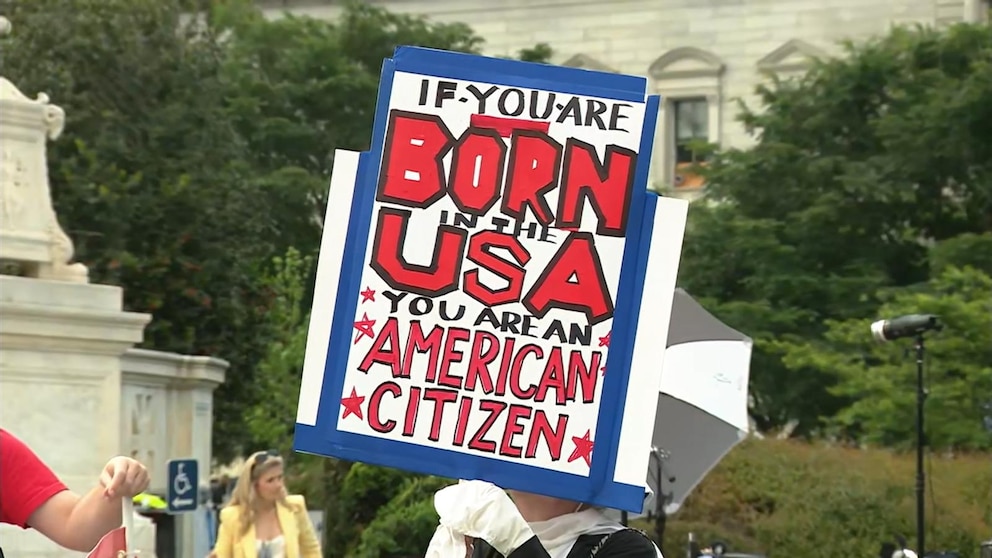
Sample Provides Analysis of Landmark Supreme Court Decisions
Professor James Sample of the Maurice A. Deane School of Law at Hofstra University was among the nation’s leading legal scholars providing analysis of the U.S. Supreme Court’s landmark end-of-term decisions this week, appearing on ABC News and MSNBC’s MS NOW to examine the Court’s rulings alongside other major legal and constitutional developments. Professor Sample summarized the recent analysis on his “Who Decides Who Decides” Substack. Across his June appearances, Professor Sample provided legal insight into the Supreme Court’s decisions involving birthright citizenship, immigration, transgender athletes, and religious liberty, while also analyzing election law disputes, executive authority, federal investigations, and litigation involving the Trump administration. His commentary offered audiences context on the constitutional questions shaping the Court’s term and the broader implications for American law and democratic governance.


America at 250: CMU Experts Explore the Ideas, People and Events That Shaped a Nation
Throughout 2026, the United States will commemorate the 250th anniversary of its founding, a milestone that is prompting reflection on the nation's history, its defining moments, and the people and ideas that continue to shape its future. From the founding principles of democracy and constitutional rights to social movements, innovation, and overlooked stories from America's past, Carnegie Mellon University scholars and experts offer timely insight into the issues and events driving the national conversation. Whether reporting on anniversary celebrations, historical milestones, or the enduring impact of America's past on today's challenges, CMU experts are available to provide informed analysis and historical context. What CMU Experts Can Help You Cover From founding documents to untold histories, CMU experts can speak to the full range of topics for America at 250. The Document in the Archive One of only five known copies of the 1792 Bill of Rights is held at Carnegie Mellon University. As America marks its 250th anniversary, this rare artifact is on public display -- and the story behind it connects directly to debates about rights, citizenship, and constitutional interpretation that are as live today as they were in the founding era. The Constitution on Trial For 250 years, the Supreme Court has been the ultimate interpreter of America's founding documents. But how justices write those decisions -- the rhetoric, the emotion, the moral grandstanding -- shapes how law is understood and applied for generations. What does the language of fundamental rights decisions tell us about American democracy? The History That Was Left Out Official celebrations tend to center on the founders. But historians have spent decades recovering the stories of enslaved people, women, immigrants, and communities whose contributions shaped the nation and whose experiences complicate the triumphant narrative. Dr. Edda Fields-Black's 2025 Pulitzer Prize-winning book on Harriet Tubman and the Combahee River Raid is a reminder of just how much of that history is still being uncovered. What does a fuller American history look like at 250? Suffrage, Memory, and the Myth We Tell The story of how American women won the right to vote is one of the most retold in the country's history -- and one of the most mythologized. As the nation reflects on 250 years of democracy, what does the suffrage movement really tell us about how America progresses, and how it remembers its own progress? Covering America at 250? Carnegie Mellon University's historians, legal scholars, archivists, and subject matter experts are available for interviews, background briefings, and commentary on the people, events, and ideas that have shaped the United States over the past 250 years - and what that history means today.


Professor James Sample Provides Legal Analysis for ABC News, CNN
Professor James Sample of the Maurice A. Deane School of Law at Hofstra University continued to provide legal analysis for national and regional media this month, appearing on ABC News, MSNBC’s MS Now, CNN, Sirius XM and Newsday to discuss developments involving executive power, federal investigations, election law, and high-profile litigation. Across these appearances, Professor Sample examined legal disputes surrounding President Trump’s proposed anti-weaponization fund, Department of Justice investigations and enforcement actions, election administration and redistricting battles, and questions involving government ethics and accountability. He also provided analysis of major court proceedings, including litigation involving OpenAI and Elon Musk, as well as broader issues at the intersection of law, politics, and democratic governance. Full story: https://lawnews.hofstra.edu/2026/06/10/professor-james-sample-provides-legal-analysis-for-abc-news-cnn/
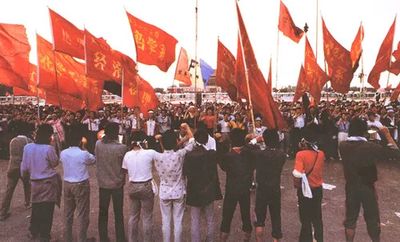
Expert Spotlight: Tiananmen Square - 37 Years Later, Why the World Still Remembers
Thirty-seven years after the events in Beijing's Tiananmen Square, the anniversary continues to spark global reflection on democracy, freedom of expression, state power, and the importance of preserving historical memory. While discussion of the events remains heavily restricted within China, commemorations continue around the world as scholars, journalists, policymakers, and human rights advocates examine the lasting significance of what occurred in the spring of 1989. The movement began in April 1989 following the death of reform-minded Chinese leader Hu Yaobang. What started as student-led gatherings evolved into a nationwide protest movement calling for political reform, greater transparency, accountability, and action against corruption. Hundreds of thousands of demonstrators occupied Tiananmen Square, while similar protests spread to cities across China. After weeks of escalating tensions, martial law was declared. On the night of June 3 and into June 4, Chinese troops and tanks moved into Beijing to clear the protests. The exact number of deaths remains disputed and unknown, with estimates ranging from hundreds to thousands. The Chinese government has never released a full accounting of those killed, injured, detained, or disappeared. Perhaps the most enduring image from the crackdown is that of the unidentified "Tank Man" who stood alone before a column of tanks on June 5, 1989. The photograph became a global symbol of individual courage in the face of overwhelming state power and remains one of the most recognizable images of the twentieth century. Why Tiananmen Still Matters Beyond its historical significance, Tiananmen remains relevant because it raises enduring questions about civil liberties, government accountability, censorship, collective memory, and the role of citizen activism. Researchers continue to study how societies remember contested events and how governments shape historical narratives. The anniversary also serves as a reminder of the importance of preserving documentary evidence and firsthand accounts for future generations. Today, remembrance efforts continue through archives, academic research, museums, oral histories, and public commemorations outside mainland China. Recent reports highlight ongoing attempts by scholars, journalists, and activists to preserve photographs, diaries, eyewitness accounts, and other records associated with the 1989 protests and crackdown. Expert Perspectives Available Journalists covering the Tiananmen anniversary may wish to connect with experts in: Chinese history and politics Human rights and international relations Collective memory and historical preservation Democracy movements and social protest Media censorship and information control East Asian studies and contemporary China The Tiananmen Square anniversary remains more than a historical milestone. It continues to influence conversations about freedom, political participation, historical accountability, and the power of memory in shaping the future. If you're covering - connect now! See all of our experts at www.expertfile.com
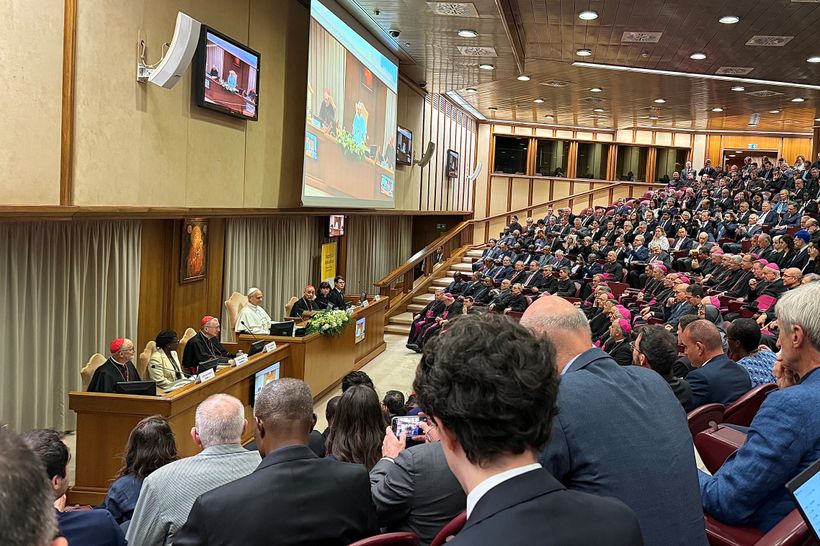
Pope Leo XIV Releases First Encyclical, "Magnifica Humanitas"
On May 25, 2026, Pope Leo XIV released his first papal encyclical, “Magnifica Humanitas: On Safeguarding the Human Person in the Time of Artificial Intelligence.” The letter—true to its title’s meaning of “magnificent humanity”—addresses how society, collectively, must preserve human virtues in a time of rapid technological advancement. The 42,000-word document features five distinct chapters, exploring various elements of the broader issue at hand and serving as a guidepost for moral and ethical use of technology, through the lens of Church teachings. It covers everything from the development and principles of Church social doctrine to technological responsibility, the culture of power, building civilization through love and preserving humanity through truth, work and freedom. “In recent years, it has become increasingly evident how rapidly and profoundly digitalization, artificial intelligence (AI) and robotics are transforming our world,” wrote Pope Leo in the encyclical’s introduction. “Technology should not be considered, in itself, as a force antagonistic to humanity. On the contrary… “Over the centuries, technological development has significantly improved the living conditions of humanity. At the same time, each phase of progress has also revealed the ambiguity of tools that can cause harm when not oriented toward the good… The power and prevalence of emerging technologies are interwoven into the fabric of daily life, shaping decision-making processes and deeply affecting the collective imagination: ‘Never has humanity had such power over itself.’ “[Most] people are watching and waiting, observing from afar and merely hoping for the best. For this very reason, crucial questions impose themselves on our conscience and can no longer be avoided: Where are we going? Toward what goal do we wish to orient ourselves? What direction should we choose as a people and as a human community?” What Is a Papal Encyclical? Popes have written more than 300 encyclicals—or “circulating letters”—since the mid-18th century. They were initially used to clearly communicate doctrine and guidance to priests throughout the world who were facing religious, political or social issues, which was especially useful as the world grew more interconnected and the Church grew larger. Beginning with Pope Leo XIII’s Rerum Novarum and continuing today, some papal encyclicals have been referred to as “social encyclicals” because they address a pervasive social issue through the lens of Catholic Social Teaching and are written not only for those within the Church, but laypeople as well. Some examples of those included Pope Saint John Paul’s 1987 Sollicitudo Rei Socialis on international inequality, and Pope Francis’ 2015 Laudato Si’ on environmental care and social justice. “[Pope Leo XIII and his successors] were developing a new way of teaching the world how to order itself according to Catholic principles, now translated into a vocabulary that would be intelligible to the larger world,” said Patrick Brennan, JD, the John F. Scarpa Chair of Catholic Legal Studies at Villanova University Charles Widger School of Law, on LiveNow From Fox. “They try to address important social questions in ways that any person of goodwill can read and understand.” “Encyclicals contribute to our collective wisdom for how to live as community,” wrote Sally Scholz, PhD, professor of Philosophy at Villanova, in her recent contribution to Church Life Journal titled “What to Look For in Pope Leo XIV's First Social Encyclical.” “The principles and various themes they discuss offer guidance for day-to-day interpersonal interactions as well as for how to participate as a Catholic and as a “person of good will” at every level of social existence: in our families, our communities, our institutions, our states and in our ‘one human family.’” Observations From Magnifica Humanitas A New Twist on a Longstanding Issue While the types of technology being discussed in the letter—particularly artificial intelligence—are unique to our modern times, encyclicals addressing how to interact with contemporary technology are far from it. “Discussion of the relationship between humans and technology appears in many of the previous social encyclicals,” wrote Dr. Scholz in Church Life Journal. “It is a social phenomenon with so much promise but inspires so much fear for how it will change work and the workplace, communication, global trade, war and the family.” “Technology is integral to evolution. Understanding technology's relationship to human welfare means grasping its role within the flow of biological and human life,” wrote Sister Ilia Delio, OSF, PhD, the Josephine C. Connelly Endowed Chair in Christian Theology in the 2025 Global Sisters Report. What Pope Leo argues in his lengthy letter, boiled down to a few sentences, is that while technological advancements, and AI in particular, can be beneficial to society, they must never supersede human dignity, moral responsibility and the common good. A society that allows systems to replace human judgment, concentrate power or exploit workers risks dehumanization. For Jaisy Joseph, PhD, assistant professor of Theology and Religious Studies at Villanova University, particularly striking was something not written in the document itself, but rather spoken at the official promulgation of the letter in Rome. There, Pope Leo was joined in powerful reflection by Anthropic co-founder Christopher Olah. Olah analogized the current reality with bringing a fictional character to life, citing that while technical fields build the machinery of AI, “what character we choose, how it interacts with the world, how it ought to interact with the world— these are more clearly questions for the humanities, for religion, for philosophy, for society at large.” On that front, he then enlisted the help of the Church in addressing three pressing concerns related to AI and human flourishing, before ending with a request for the Church to continue to be an unyieldingly moral voice and informed critic. “The dynamic dialogue and discernment between Leo and Olah reflect a significant continuity with the Francis papacy,” Dr. Joseph said, referencing the late pontiff’s encouragement of “theology to adopt a transdisciplinary method that recognized how this discipline is part of a web of relationships among disciplines.” Technology Through the Lens of Augustinian Theology Throughout Magnifica Humanitas, Pope Leo’s ubiquitous thoughts and guidance on safeguarding humanity—particularly in the context of modern technology—are infused with references to the teachings of St. Augustine. “[Augustine’s teachings say] we need standards to guide our judgements and actions,” said Terence Sweeney, PhD, assistant teaching professor of Humanities at Villanova. “Pope Leo XIV, ‘a son of St. Augustine,’ offers us standards for how we judge our world in the age of AI. “One surprising standard in a document on Big Tech is that ‘a litmus test for social justice today is the treatment of migrants, refugees and those forced to move.’ Why this litmus test? Leo is shaped by Augustine’s rejection of communities of perfection where only the pure, powerful and perfect are welcome.” “Pope Leo beautifully aligns himself with traditional Catholic Social Teaching while grounding his vision in the theology of St. Augustine,” Dr. Joseph added. “The result is a groundbreaking defense of the human person in our new age of artificial intelligence.” Pope Leo, through a scriptural metaphor of the Tower of Babel, “resurrects Augustine’s famous warning that human history is a constant struggle between two loves fighting for our hearts,” Dr. Joseph said. He references how the builders of the tower tried to create “a single language, a single technology, a single direction” without reference to God. “The concluding paragraphs of chapter three highlight Pope Leo XIV’s distinctively Augustinian approach to evaluating the place of technology and scientific progress in the world,” said Emma Kennedy, PhD, assistant professor of Christian Ethics at Villanova University. “What we love, ‘both as individuals and as a society,’ will guide us to participate in ‘the rebuilding of Jerusalem’ or ‘the construction of Babel’––a contrast that hearkens back to Augustine’s ‘two cities.’” “Pope Leo [also] draws on an Augustinian spirituality that highlights fundamental desiring in the shared search for truth,” added Tim Hanchin, PhD, associate professor of Practical Theology at Villanova. “Our desire for truth, or wonder, reflects humanity’s transcendent origin and end. That we are created in the image and likeness of the Triune God (Genesis 1:26-27) distinguishes human knowing from mere data processing.” A Discussion on Slavery, Past and Present Intermixed with Pope Leo’s chapter four thoughts on modern slavery—such as various forms of human trafficking that he says are “directly linked to the digital economy”—he made an historic recognition and apology for the Church’s role in the transatlantic slave trade centuries ago. Tia Noelle Pratt, PhD, special assistant to the Vice President of Mission and Ministry at Villanova University, assistant professor of Sociology, and editor of the Journal of Catholic Social Thought, said that what makes this acknowledgement so important is how it differs from the way previous popes have addressed the issue, which have condemned slavery but remained at the individual level. “They spoke of their papal predecessors and those popes’ actions, but stopped short of invoking the institution itself and the institution's role in the promulgation of slavery,” Dr. Pratt said. Tying it back to current affronts on human dignity fueled by the digital age, Pope Leo penned his own papal version of the famous saying that “Those who cannot remember the past are condemned to repeat it.” “If we want to avoid the need to ask for pardon again in the future for having failed to respect the treasure of human dignity that is required by our faith, it falls to us today to denounce, clearly and firmly, trafficking in its many forms,” he wrote. “Pope Leo is telling us today that we cannot have detachment between the past and the present,” Dr. Pratt said. “We must see how these things are connected.” Inspired by Rerum Novarum, but Far From a Repeat Pope Leo XIV signed Magnifica Humanitas on May 15—the 135th anniversary of the release of Pope Leo XIII’s Rerum Novarum. That was the most famous social encyclical issued by the long-reigning pontiff and is considered to be a foundational text of modern Catholic Social Thought. It addressed numerous issues facing the working class during the time of the Industrial Revolution. On May 10, 2025—just two days after his election—Pope Leo referenced his namesake’s 1891 encyclical in an address to the College of Cardinals, foreshadowing the attention he intended to pay to the modern version of the same issue. “Pope Leo XIII in his historic encyclical Rerum Novarum addressed the social question in the context of the first great industrial revolution,” Pope Leo said in that address. “In our own day, the Church offers to everyone the treasury of her social teaching in response to another industrial revolution and to developments in the field of artificial intelligence that pose new challenges for the defense of human dignity, justice and labor.” Yet, while he was explicitly inspired by the 19th-century pontiff and his text, Pope Leo makes it clear early in Magnifica Humanitas that “While Leo XIII spoke in his time of ‘new things’ (rerum novarum), today we cannot limit ourselves simply to repeating his insightful teachings. “Instead, we must ask God for the wisdom to interpret the great trends of our time, particularly technological advances.”








Seventy There it is. Just sitting there. A number that tends to land somewhere between “good for you” and “are you feeling alright?” And before you answer that, let me tell you I am more than alright. I am thriving. Loudly. Definitely with dancing. And with just enough attitude to make a few people slightly uncomfortable, which I have decided is a sign of a life extremely well lived. But first, let me tell you about the plan. ⁂ The Plan Was Magnificent. It Lasted Eleven Minutes The plan was to retire gracefully. Ease into a slower pace. Read more. Maybe garden. Drink better wine. Finally, work through all those documentaries piling up in my queue with the quiet confidence of someone who had absolutely earned the right to nothing. Here is what actually happened. The documentaries stayed in the queue, and the garden did not get planted. I did, however, read one book. Just one. But it turned out to be exactly the right one. David Brooks wrote The Second Mountain: The Quest for a Moral Life, and I picked it up the way you pick up something that does not look urgent, only to find you cannot put it down. Brooks argues that we spend the first part of our lives climbing what he calls the first mountain: the career, the credentials, the identity, the whole elaborate structure of proving ourselves. And then something happens. You reach the top, or you fall off, or the mountain turns out to be considerably smaller than it looked from the bottom. Either way, you end up in a valley, slightly winded, wondering what comes next. And that, Brooks says, is where real life begins. The second mountain. The one you climb not for yourself but for something greater. The one where the question shifts from “what do I want?” to “what does the world need from me?” I read that while sitting in my living room and thought: that is the whole story, right there. There is a phrase I use throughout this blog: try to keep up. I say it because seventy feels faster and fuller than I ever expected, and because it is an invitation, not a taunt. You still have tread on your tires. I mean that warmly. Try to keep up. ⁂ The Valley Was Not Optional My valley arrived without warning or invitation: I lost my job unexpectedly. No graceful wind-down. No farewell luncheon with a tasteful card, no parade! Just the particular silence that follows the end of something you had not quite finished. Nobody glides gracefully from mountain one to mountain two, no matter how it looks on social media. What nobody tells you about retirement, voluntary or otherwise, is that stopping is quite difficult. Not the logistics. The identity. You spend thirty years answering the question “What do you do?” and then one day no one asks anymore. We carefully plan the money. We almost never plan for the morning when your calendar is empty, your inbox is quiet, and no one expects you anywhere. That morning is its own kind of reckoning. Brooks calls this the valley experience, and he is right that it is unavoidable. It is where you shed the old self so a new one can emerge. There are no shortcuts. I tried several. But then I hired a coach. Not just any coach. A thought leadership coach, which sounds very impressive but turns out to involve a great deal of uncomfortable self-reflection and at least one conversation in which the coach tells you to write a blog. “Do your research,” he said. “Find your niche. Share what you know. And honestly, you should probably write a book.” (Thank you, Peter!) I nodded. I smiled. I thanked him warmly. Then I went home, sat down, and had a completely private, entirely dignified meltdown that I will describe only as spirited. Action absorbs anxiety, so once the spirited moment passed, I got to work. Try to keep up. ⁂ The Second Mountain Has a Name. It Is Retire with Equity I started writing. Article after article, something unexpected happened: I found my voice. It turns out my voice is part educator, part agitator, and part hilarious, where kitchen-table logic meets a spreadsheet. I began calling her Aunt Equity, and she has been absolutely delightful company ever since. A word on naming your alter ego after a financial product: no one recommends it. No self-help book has a chapter that says ‘step three, create a persona rooted in home equity solutions and give her a sassy name.’ And yet Aunt Equity arrived fully formed, with opinions, a logo, and an inexplicable amount of charisma. She is part brand, part character, and entirely my fault. I am keeping her. For Brooks, the second mountain is a calling, not a career move. For me, it is a community. The Canadian retirement community. The people who built this country, paid into it, raised children in it, and are now quietly panicking about whether they have enough to keep going. That community. They are my people, and this is my mountain and I have built my company, Retire with Equity to support it. And I will be honest: this mountain is considerably steeper and way more fun. Try to keep up. ⁂ What Is Your Second Mountain? Here is where this stops being about me and starts being about you. The second mountain is not one thing. It is not a prescription. It is not reserved for people who write blogs, build platforms, or have particularly spirited meltdowns. It is waiting for you, wherever you are, whatever you are carrying, whether you are fifty or seventy or somewhere in between and still not entirely sure you are allowed to want something new. The second mountain looks different for everyone, and that is entirely the point. Also, a feature, not a bug. For some people, it is family. Really showing up for grandchildren in ways that a demanding career never allowed. Being present, not just present-ish. Taking the grandkids to school on Tuesdays because Tuesday is your day now and the best day of the week. Becoming the person in the family who holds things together, not because you have to, but because you finally have the time and the wisdom to do it right. For others, it is community. A neighbourhood organization, a cause that has been pulling at you for years, or a faith community that needs exactly the skills you spent a career building. Brooks tells the story of a woman who was moving out of a rough Chicago neighbourhood, looked out the window, saw little girls playing with broken bottles in an empty lot, turned to her husband, and said: we are not leaving. She ended up running a major community organization. She did not set out to build a movement. She just decided not to look away. And then there are the callings that have been patiently waiting in the back of a drawer since approximately 1987. This is my personal favourite category because it is full of people who surprise themselves completely. Andrea, whom I see every week at the gym, spent her late fifties doing something most people her age were emphatically not doing: she went to law school. In London, England. A yearning carried for decades, quietly set aside while she built a career and raised a family. Then one day she stopped being polite about it and went. She is one of the most alive people I know. David discovered painting. Not dabbling. Painting. He picked up a brush at a class a friend dragged him to, and something clicked open that had apparently been waiting for that exact moment. He paints almost every day now, and the look on his face when he talks about it is that of someone who found something he did not know he had lost. If you are sitting there thinking you have left it too long, or that your moment has passed, that is a you problem, and I say that with complete affection. The door is still open. Walk through it. Brooks calls it the place where your deep gladness meets a deep hunger in the world. I think of it as the morning when you wake up and you are not just filling time. You are fulfilling a purpose. Try to keep up. ⁂ What Actually Works (And What Dottie Has to Do With It) I have a ten-pound dog named Dottie. She is the canine embodiment of purposeful living and, frankly, an unsolicited life coach. Full speed, tail up, no apologies. I take notes. The retirements that work, the ones people describe as genuinely meaningful rather than merely solvent, share a few things in common. They move. Consistently, enjoyably, sustainably. The body is not a liability to be managed in retirement. It is an asset, and it responds remarkably well to being treated like one. For me, part of that meant I needed a break from drinking, and the origin story is not glamorous: I woke up one morning and could not remember how the movie I watched the night before ended. That was the moment. What began as a one-month experiment quietly became almost two years. I sleep better, think more clearly, and no longer find myself wide awake at 2 am doing mental arithmetic about nothing. I feel sharper and more energized at seventy than I did a decade ago. The fifties, it turns out, were not the peak. They were the warm-up act. And for the record, I still cannot remember how that movie ended some mornings. Some things are beyond even sobriety. Physical vitality expands your options. Financial clarity reduces your dread. Purpose gives both of those things a reason to matter. Tend to all three. Not perfectly. Just intentionally. Dottie, for what it is worth, nails all three before anyone else in the house has had coffee. If she is the bar, she is not wrong to set it there. Try to keep up. ⁂ A Confession. Then a Celebration Almost five years into this accidental, exhilarating, occasionally terrifying reinvention, I still do not have it entirely figured out. The documentaries remain unwatched. I still cannot tell you how they end. What I do have is this: evidence, personal and otherwise, that the second mountain is real and better. Not easier. Better. Because when you are climbing toward something that matters beyond your own resume, the climb itself changes. The effort feels different. The setbacks feel survivable. And the view, when you get there, means something. You do not need to have it figured out before you start. You just need to take a step. Then another. Then hire a coach, have your spirited moment, and remember: action absorbs anxiety. Say the number out loud, whatever it is. Forty, fifty, sixty, seventy. Say it. Then decide what it means, because that part is entirely up to you. The first mountain shows you what you are capable of. The second one shows you who you actually are. If you have not read David Brooks’ The Second Mountain, put it at the top of the list. The documentaries can wait. I have confirmed this from personal experience. The Friday night of my birthday week, there was an epic dance party at a local brewery, organized by my wife Bonnie, the woman I met on a dance floor thirty-three years ago and have been dancing with ever since. Bonnie deserves more than a shout-out here. She deserves a medal, a monument, and honestly, serious consideration for sainthood. For over three decades, she has lived with my schemes, my pivots, and my absolute certainty that each new thing is the thing. She has never once wavered. Bonnie is the reason any of this works, and the reason that dance floor was full of people who love me. I am, by any objective measure, an extremely lucky person. I am also aware that she will read this, so I want to be clear: yes, I mean every word, and no, this does not get me out of whatever I am currently scheming. The glow of that party remains, and I know I have truly arrived because there was even a party crasher. I named her Mona. Mona could not resist the pull of that much joy and some absolutely kickin’ eighties music. The story of Mona, the early thirties party crasher, is being reserved for another time, but know this: if your birthday celebration attracts a stranger named Mona, you are doing seventy exactly right. The second mountain, it turns out, has a very good playlist. And if you are worried you are not quite ready for it, or that the moment may have passed, I want to leave you with this: you still have tread on your tires. So does everyone in this community. And if you cannot keep up, at least come dance. You might surprise yourself. Just ask Mona. I am seventy. I am on my second mountain. Come find yours. Try to keep up. ⁂ Sue Don't Retire...Re-Wire! My Book is Now Available for Pre-Order I hope you will consider pre-ordering a copy of Your Retirement Reset for you, a friend or loved one. It's available September 8, 2026 - You can now order on the ECW Press site here. And if you love supporting Canadian booksellers, please also check with your local independent bookstore. Most can easily order it for you.

Julian Ku Discusses China-Taiwan Tensions in The New York Times
Hofstra Law Professor Julian Ku offers insight into rising geopolitical tensions between China and Taiwan in a recent New York Times feature. The article, “Inside the Secret Mission to Fly Taiwan’s President to Africa,” examined how several countries reportedly denied airspace access for Lai’s aircraft amid pressure from Beijing. A scholar of international law and U.S. foreign relations law, Professor Ku framed the episode as part of a broader strategic effort by China to constrain Taiwan through legal and regulatory means rather than direct confrontation.


Professor James Sample Provides National Commentary on Voting Rights, Key Supreme Court Cases
Professor James Sample of the Maurice A. Deane School of Law at Hofstra University continued to serve as a prominent national commentator this month, appearing across ABC News, MS NOW (formerly MSNBC), SiriusXM, and Newsday to analyze fast-moving developments in election law, constitutional doctrine, and executive power. Across these appearances, Professor Sample focused on the evolving legal and practical implications of the SAVE America Act, including its potential burdens on married voters and broader access concerns. He also examined a series of high-stakes Supreme Court matters, including disputes over mail-in ballot deadlines and the constitutional debate surrounding birthright citizenship, offering insight into how the Court’s rulings could reshape election administration and individual rights. In addition, Professor Sample provided analysis of expanding presidential authority following the Court’s immunity ruling, situating current developments within a broader conversation about the scope and limits of executive power.
Supreme Court to Hear Arguments on Ending Birthright Citizenship
Professor of Constitutional Law James Sample and Director of the Law School’s Deportation Defense Clinic Alexander Holtzman at the Maurice A. Deane School of Law were interviewed by Newsday for a report on President Donald Trump’s plan to end birthright citizenship for hundreds of thousands of children of parents here illegally or temporarily. The Supreme Court will hear arguments from Trump administration lawyers that the Citizenship Clause of the U.S. Constitution was never intended to grant citizenship universally to everyone born in the country. Professor Sample said the administration’s case lacked merit. The clearest precedent, he said, was an 1898 Supreme Court case, United States v. Wong Kim Ark. He said, “That established clearly that, in the Supreme Court’s view, the language of the 14th Amendment meant that a child born in the United States, including to immigrants, whether documented or not, was a citizen.” He also added that a ruling that overturned this precedent would mark a fundamental change to the American identity. “The notion of birthright citizenship is one of the things that distinguishes us from other countries where citizenship is often a function of lineage,” he said. Professor Holtzman told Newsday that the case was creating anxiety for people who could be negatively affected by a court ruling, which could come as early as this summer. “I’ve had clients who’ve asked me, ‘Are my children safe, or who are pregnant and wonder if their children will be safe.”