
Experts Matter. Find Yours.
Connect for media, speaking, professional opportunities & more.

UCI scholars discuss how 9/11 changed America
In recognition of the 20th anniversary of the Sept. 11, 2001, terrorist attacks in the U.S., we asked UCI scholars a single question: How did 9/11 change America? They responded according to their expertise – which ranges from collective trauma, media, air travel, foreign relations, false narratives, political divisiveness, and the war on terror. Contact Tom Vasich at 949-285-6455, tmvasich@uci.edu, to arrange interviews. Roxane Cohen Silver, Distinguished Professor of psychological science, public health and medicine E. Alison Holman, professor of nursing Topic: Media and collective trauma Quote: “The Sept. 11 terrorist attacks – which hijacked our television screens that Tuesday morning as people who sought to do us harm hijacked four airplanes – captured people’s attention throughout the days and weeks that followed. It also ushered in 24/7 media attention to what has become known as a “collective trauma,” transmitting the horrible events of that day throughout the country and, indeed, throughout the world in a matter of seconds. …The 9/11 attacks were tragic for American residents, but they also taught us that the media can broadcast distress alongside the news it’s covering.” Jan K. Brueckner, Distinguished Professor of economics Topic: Air travel Quote: “In response to the revenue shock of 9/11 and to new competition from low-cost carriers, the major airlines behaved conservatively in adding back capacity as traffic returned, so that the carriers eventually offered fewer seats to an ultimately larger number of passengers, leading to fuller flights and today’s less comfortable flying experience. Even though 9/11 is long past, the airline industry continues to operate in a climate of fear of terrorism from the air.” Erin Lockwood, assistant professor of political science Topic: U.S. foreign policy Quote: “The attacks – and the U.S. response – set in motion decades of war, anti-Arab and anti-Islamic bias and violence, and a willingness to sacrifice military and civilian lives and civil liberties for the perception of security. As we mark the withdrawal of U.S. forces from Afghanistan this month, it’s all too apparent that many of those trends continue to reverberate today.” David Kaye, clinical professor of law Topic: National security Quote: “Despite my hopes for something better that might emerge, the attacks reinforced a cult of national security that the United States transformed into the torture of terrorism suspects, drone warfare, the invasion of Iraq, Guantanamo Bay’s indefinite detentions, anti-Muslim discrimination at home and the emergence of the contemporary surveillance state. … The predominance of national security as an ideology and apologia remains among the most significant legacies of that day, a feature of American political life that continues to constrain creativity and a return to normalcy in American law and policy.” Matthew Beckmann, associate professor of political science Topic: War on terror Quote: “To understand the legacy of 9/11 is to define the legacy of George W. Bush. For after the deadliest terrorist attacks on U.S. soil in our nation’s history, American citizens and lawmakers gave President Bush broad support and broader authority to wage the “war on terror” as he saw fit. … Twenty years after the attacks, having seen those lofty aspirations dashed in Afghanistan and Iraq, disregarded in Guantanamo Bay and black site prisons, and discounted even by our staunchest allies, the biggest legacy of Sept. 11 for the United States is that the “shining city on a hill” has less luster and a shorter reach.” David Theo Goldberg, professor of comparative literature Topic: Rise of false narratives Quote: “The events of 9/11 lent themselves to make-believe. The smoke hadn’t yet cleared when conspiracies began to abound, from “weapons of mass destruction” to “the deep state.” That the Trump administration adopted this as its own playbook while insisting on “draining the swamp” required cooking the rules. … Fabrication had become the rule book of the game. Invention and inventedness, disruption and innovation fueled the movement. The “truth” was, well, oh so yesterday.”


Aston Law School corporate governance experts launch new book on investor stewardship
Dr Daniel Cash and Robert Goddard co-wrote Investor Stewardship and the UK Stewardship Code: The Role of Institutional Investors in Corporate Governance The book will be relevant for an international audience of academics, regulators and policymakers in financial regulation, investment regulation and financial services It coincides with the publishing of the Stewardship Code 2020 signatories as part of a new regulatory code by the Financial Reporting Council (FRC) Two members of Aston Law School have released a new book around investor stewardship to coincide with a major milestone by the Financial Reporting Council (FRC). The FRC published the first main list of Stewardship Code 2020 signatories on 6 September 2021, after a round of reporting earlier this year. This milestone details who is following the Code and allows the regulator to focus on holding signatories to the articulated standards of stewardship and how it is reported. The new book by Dr Daniel Cash and Robert Goddard, Investor Stewardship and the UK Stewardship Code: The Role of Institutional Investors in Corporate Governance, provides a critical assessment of the development of the Stewardship Code 2020, which sets out principles regarding the role of institutional investors in corporate governance. It discusses how the regulatory framework for stewardship evolved before and after the financial crisis, and how that evolution resulted in the 2020 Code. It also critiques the Code from a practical and academic perspective, as well as evaluating the wider regulatory framework; in particular, the position of the FRC merging into the Audit, Reporting and Governance Authority (ARGA). Dr Daniel Cash, senior lecturer in law at Aston Law School, said: “The Stewardship Code is a big deal in British governance, and that is exactly what the book looks at. “It examines the history of the stewardship Codes and regulation in the UK, and uses this to critically examine the new 2020 Code. “That critical analysis leads into projections of how the Code may fare in the modern business environment, aspects that may affect its progression, and puts forward elements that can make the Code’s impact more substantial. “This important regulatory development will play a massive role in aligning the actions of investors with the wider societal needs in the new world being dominated by ESG concerns. “Stewardship Codes modelled on the UK’s original 2010 version have been introduced in numerous markets and, as such, the book will be relevant for an international audience of academics, regulators and policymakers in financial regulation, investment regulation and financial services.” You can buy a copy of Investor Stewardship and the UK Stewardship Code: The Role of Institutional Investors in Corporate Governance here.


The use of swear words declines by more than a quarter in the UK since the 1990s – new research
Aston University’s Dr Robbie Love compared the use of 16 of the most common swear words between 1994 and 2014 He found the amount of swearing has fallen by 27.6 per cent during the 13-year period The study also found that the f-word has overtaken 'bloody' as UK's most popular curse word Researchers from Aston University have found that the use of swear words in Britain has declined by more than a quarter since the 1990s. Dr Robbie Love, based in the College of Business and Social Sciences, looked at how swearing changed in casual British English conversation between 1994 and 2014. As part of the study, which is published in Text & Talk: An Interdisciplinary Journal of Language, Discourse & Communication Studies, Dr Love used two large bodies of transcriptions to analyse the use of language, including: The Spoken British National Corpus gathered in 1994 and the same corpus from 2014. Both texts include over 15 million words, although it was found that swear words accounted for less than one per cent. In total, the amount of swearing was found to have fallen by 27.6 per cent, from 1,822 words per million in 1994 to 1,320 words per million in 2014.The research findings also suggest that the f-word has overtaken 'bloody' as the most popular curse word in the UK. In the study, Dr Love compared the use of 16 of the nation's most common swear words, including p***, c*** and s**g, from the 1990s to the 2010s. He also found that trends in the type of swear words used have changed over the last few decades , with 'bloody' being the most common curse word in the 1990s and the f-word taking precedent in the 2010s. The analysis suggests that this is largely down to a big decline in the use of 'bloody',while the f-word has remained relatively steady over the years. It was also found to be the second most commonly used swear word in 1994, followed by s**t, p***, b****r and c**p. Other key findings of the study included: Over a twenty year period b****r had fallen from the fifth most common curse to the ninth, while b*****d dropped from seventh to 10th. The big climbers include s**t, from third to second, a**e, from eighth to sixth and d***, from tenth to seventh. T**t also rose from the 16th most common swear word in the 1990s to 13th by the 2010s. Dr Love then analysed demographics and discovered that, although swearing is more common in men than women, the difference between the genders has decreased notably from 2.33 times more frequent in men in 1994 to 1.68 times in 2014. Another change concerned how much people swear as they age. In both data sets, swearing is most common among people in their 20s, and then declines with age. However, the decline was less steep in the 2010s, suggesting that people continue swearing later in life more than they did in the 1990s. Dr Robbie Love, lecturer in English at Aston University, said: “This research reinforces the view that swearing plays a part in our conversational repertoire, performs useful functions in everyday life and is an everyday part of conversation for many people. “Despite this, it is relatively under-researched precisely because it is considered to be taboo. “Swearing performs many social functions including conveying abuse and humour, expressing emotion, creating social bonds, and constructing identity. “The strong social conditioning around swear words makes them more psychologically arousing and more memorable than other words, and something different happens in the brain when saying them compared to euphemistic equivalents, such as saying "f***" compared to ‘the f-word’.” You can read the full study, Text & Talk: An Interdisciplinary Journal of Language, Discourse & Communication Studies, HERE If you want to explore how the written and spoken word works in society, Aston University's innovative English language and literature degrees are for you. We emphasise practical applications, linking your studies to the real world through professionally relevant modules in areas such as Language and Literature in Education, The Language of the Law, Psychology of Language and Communication or Language at Work.

What does the latest federal ruling mean for DACA? A UConn expert weighs in.
Deferred Action for Childhood Arrivals, more commonly known as DACA, was introduced in 2012, and ithas enabled roughly 828,000 eligible young adults to work, attend school, and live out their lives in the United States, the only country they know as their home, according to the American Immigration Council. DACA is back in news, though, after a federal judge in Texas ruled that the program was unconstitutional, a decision that attorney, scholar, and expert Jon Bauer from the UConn School of Law says is shaky: The decision in federal court wasn’t a surprise to Jon Bauer, who directs the University of Connecticut Law School’s Asylum and Human Rights Clinic. Because Hanen is known for his conservative judicial philosophy, according to Bauer, the ruling was expected to interfere with DACA in some capacity. But Bauer said the ruling could be overturned. “The reasoning of the decision is very weak, in my opinion. The judge, I think, misconstrued the scope of the Department of Homeland Security's authority to engage in what's called deferred action, which is what the DACA program is,” Bauer said. Connecticut has 3,560 residents who have DACA, as of March 2020, according to the Department of Homeland Security which administers the policy. Current recipients aren’t in immediate danger of losing their status, since the ruling as of now only prevents first time applicants from getting DACA. Bauer said that non-citizens have long been allowed to work with deferred action. While the federal government can conceivably attempt a legislative path to citizenship for DACA recipients, the road ahead to any permanent solution is uncertain due to the divisive nature of the current Congress. July 31, 2021 – Hearst Connecticut Media The fate of DACA is important not just to the individual recipients, but to the immigration system and economy of the United States more broadly. If you are a journalist looking to know more, then let us help. Jon Bauer is a clinical professor of law and is the director of the UConn School of Law’s Asylum and Human Rights Clinic. He is a go-to expert in the areas of asylum and refugee law, immigration law, employment and housing discrimination, and legal ethics. Professor Bauer is available to speak with media regarding this most recent DACA ruling – simply click on his icon now to arrange an interview today.


Your First Week as an International Student in Canada
Canada is one of the world’s leading study destinations, due to its high quality of education, diverse culture, and overall quality of life. Each year, the country welcomes thousands of international students and sets them on a path to academic and personal success. Whether you have just started researching options on where to study or have already been accepted into a Canadian university of your choice, this article will serve as a handy guide for what to expect during your first week in Canada as an international student. In this article: Getting settled in Following quarantine protocol Financial basics for international students Registration at your university Familiarizing yourself with the neighbourhood and campus Getting connected Understanding student life Getting settled in Once you’ve completed your landing formalities at the airport, you are ready to get started on your exciting journey as an international student in Canada. The first item on your agenda will be getting settled into your new accommodation or temporary quarantine location. You can use ride-sharing services like Uber or Lyft or ask a friend or relative to pick you up at the airport and take you to your accommodation. Note: Due to quarantine restrictions, all international travellers landing in Canada are required by law to go directly to their accommodation or quarantine location, without making any stops on the way. As an international student, you will need to secure accommodation (at least on a temporary basis) prior to your arrival in Canada. You can choose to live either on- or off-campus, depending on your budget and requirements. If you haven’t been able to secure accommodation on-campus, there are plenty of other housing options available for international students. Following quarantine protocol The Canadian government has recently eased border restrictions for fully vaccinated travellers, including international students. All international students, regardless of vaccination status, must have a quarantine plan in place and need to follow quarantine protocol as per the Government of Canada ArriveCAN app (this is unrelated to the Arrive app for newcomers). Fully vaccinated students are now exempt from most mandatory quarantine requirements. However, in addition to the pre-arrival COVID-19 (Coronavirus) test, you will also be required to take another COVID test upon arrival in Canada and must quarantine until a negative test result is received. International students who are NOT fully vaccinated will be required to: Take a COVID test immediately after arrival, Book a three-day stay at a government-approved hotel, where they must remain in quarantine until they obtain a negative result to their first post-arrival COVID test. You may leave the hotel as soon as the result comes in, without having to wait the full three days, and go to your personal quarantine location. Get a second post-arrival COVID test on day 8 before exiting their quarantine on day 15. Tip: Your Designated Learning Institution (DLI) may have a quarantine protocol in place for international students. Before arranging short-term accommodation for your first few days in Canada, check if your DLI will be making quarantine arrangements in an on-campus dorm. Financial basics for international students As an international student in Canada, there are some essential financial basics you will need to complete in your first few days here. You might be able to begin some of these tasks during your quarantine period to get a head start on your checklist. Obtaining a SIN If you plan to work part-time while you study in Canada, you will require a Social Insurance Number (SIN). Depending on the airport you land in and your time of arrival, you may be able to get your SIN at the airport. If you are unable to obtain a SIN at the airport, you have the option to apply online or by mail. Opening a bank account Use your quarantine period to explore the different banking options and offers available for international students. As an international student, you want a trusted partner who understands your banking needs and is committed to newcomer success. Some banks (like RBC) are currently allowing international students to open student bank accounts remotely while in quarantine. To open a student bank account with RBC, you will require the following documents: Your passport Student permit (IMM 1442) or Temporary Resident Visa (TRV) Proof of enrollment (optional, good-to-have) Social Insurance Number (SIN) or proof of residence (optional, good-to-have) Information: Book an appointment with an RBC Advisor to get answers to your questions about student banking, and to learn more about opening an RBC student bank account remotely while in quarantine. Getting a credit card Having a good credit score is essential for financial success in Canada. As an international student, you may need a credit score for accommodation rental or lease application, or a car loan. Getting a credit card is your first step towards building a good credit history in Canada. Credit cards are a convenient option for making payments, without having to carry cash. Unlike a debit card, a credit card allows you to make purchases first and pay later. However, credit cards typically have very high interest rates, and late payments can result in high penalties. Make sure you speak with your banking advisor to have a good understanding of how your credit card works before signing your contract. You can gradually build your credit history by paying off your credit card bills on-time and in full. Creating a budget A good budget can help you plan your expenses, save money for the future, and prevent financial worries as you study in Canada. As an international student, your biggest expense aside from tuition fees will likely be accommodation. In addition, you will also need to budget for utilities, transportation, food, groceries, phone and internet expenses, furniture, insurance, and entertainment. It is also a good practice to set aside a small sum each month for emergency expenses. Tip: The cost of living in Canada may be very different compared to your home country. The Arrive Monthly Expenses Calculator can help you estimate and plan your monthly budget in Canada. Registration at your university With quarantine and social distancing considerations in place, the registration and course enrollment process at your university might be fully or partially virtual. Check your university website or contact your university to get information about your semester timetable, the dates and process for class registration, and getting a student card. You can also sign up for the International Student Identity Card (ISIC) for special discounts from featured partners in Canada. Many universities in Canada are offering a mix of virtual and in-person classes, and your class schedule may vary depending on the course you’ve enrolled in. Sign up for orientation classes to prepare for your academic journey. Familiarizing yourself with the neighbourhood and campus You will likely be spending a lot of time in and around your campus. Walk around your campus and new neighbourhood (if you are living off-campus) to familiarize yourself with the area. Review your campus map or ask around to locate the gym, health services, library, dining hall, class buildings, restaurants, and grocery stores. Don’t hesitate to check if the stores or restaurants you visit offer discounts to students. Most cities in Canada have an extensive public transportation network. Whether you plan to commute to campus or explore the neighbourhood, the public transit system can be a convenient way of getting around. Learn about the transit system in your city, get a transit pass, and start exploring. Information: Get to know more about public transportation in key Canadian cities through our Getting Around article series for Toronto, Ottawa, Edmonton, Montreal, Calgary, Vancouver, and Winnipeg. Getting connected With “virtual” becoming the norm in student life, staying connected to your friends, family, and university will likely be on your list of essentials. In Canada, you have the option of choosing between a pay-as-you-go (prepaid) or postpaid phone plan. However, since postpaid plans typically require a credit check, most international students start with a prepaid phone service. Some carriers also allow you to purchase a prepaid SIM card online and have it delivered to your address. International students living on-campus typically have internet access through their local Wi-Fi network. If you are living off-campus, you may need to sign up for an internet service. The cost of a monthly internet plan typically ranges between $50 to $80 CAD, depending on the provider and plan. Do your research on comparative costs, offers, and typical usage limits, before selecting a phone and internet provider. Understanding student life Student life in Canada is about more than just academic success. Take the time to meet your new classmates, either in-person or virtually, to forge new connections and friendships. Many universities have on-campus student groups where you might find people with similar interests or backgrounds. Most academic institutions will be offering a mix of virtual and in-person classes in the coming semesters. Use your first week to ensure that you’re all set up for online learning, technology-wise, to avoid interruptions in classes later. Once you have your course timetable, keep your schedule in mind while planning extracurricular activities, such as socializing, sports, exercising, exploring the city, or working part-time. Working part-time can not only bring in extra income but can also help you build skills, grow your network, and explore future career opportunities. If your study permit allows you to work part-time as an international student, evaluate how many hours you might reasonably be able to work, without impacting your academic success. Your first week as an international student in Canada may seem overwhelming at first as you get the basics in place. But with some prior research and planning, you will be able to settle into your new schedule, make the most of your student life, and set yourself up for long-term success. The Arrive mobile app is your essential companion to prepare for and navigate life as an international student in Canada. Whether you’re just exploring study options in Canada or are getting ready for your move, you’ll get the information and resources you need, when you need them, all in one place. Original article located here, published by Arrive.


Working while studying in Canada: What you need to know
Working during your studies in Canada can be a great way for international students to gain experience, make new connections in Canada, and earn extra money to pay the bills (or treat yourself to something special!). However, there are some restrictions on who can work while studying in Canada and what types of work they can do. Here’s what you need to know before you start your job search. Who can work while studying in Canada It’s important to make sure you qualify to work while studying in Canada before starting a job because, if you do so without qualifying, you could be asked to leave Canada. Your study permit will include information about whether you’re able to work on- or off-campus. International students can work on-campus without a work permit if they meet all of these requirements. (Note that you must stop working on campus the exact day your full-time study ends.) 1. You are a full-time post-secondary student at either: a public post-secondary school, a private college-level school in Quebec that’s at least 50 per cent funded by government grants, or a Canadian private school that can legally award degrees under provincial law. 2. You have a valid study permit. 3. You have a Social Insurance Number (SIN) International students can work off-campus without a work permit if they meet all the following requirements. (Note that you can only start work in Canada once your study program officially begins.) You’re a full-time student at a Designated Learning Institution (DLI) You’re enrolled in either a post-secondary professional, vocational, or professional training program or a secondary-level vocational training program (Quebec only) You’re in a study program that’s at least six months long and leads to a degree, diploma, or certificate You’ve already started studying You have a Social Insurance Number (SIN) If you’re a part-time student, you must meet all of the above requirements and only be studying part-time because you’re in the last semester of your program and don’t need a full course load to complete it. Types of work permitted On-campus work On-campus work means any jobs located in the buildings on your school campus. If your school has more than one campus, you can normally only work on the campus you study at. You can, however, work at other locations if you’re a teaching or research assistant, or if your work is related to a research grant. An on-campus employer can be your school, a faculty member, a student organization, a private contractor that provides on-site services, or even yourself if you run a business that’s physically located on campus. There is no limit to the number of hours you can work on campus. You can learn more about working on-campus here. Off-campus work If you meet all of the requirements for off-campus work, you may work up to 20 hours a week during regular school terms/semesters. During school breaks, such as winter or summer holidays, you’re free to work overtime or take two part-time jobs that add up to a higher than usual number of hours. Note you have to be a full-time student both before and after a break to qualify. This means the summer breaks before and after your study term are not included. You can find more information about off-campus work here. Internships and co-op placements Some study programs include work experience as part of their curriculum. If this applies to your program, you can apply for a co-op or intern work permit as long as you meet these requirements: You have a valid study permit Work is required to complete your program of study in Canada You have a letter from your school that confirms all students in your program need to complete work placements to earn their degree Your co-op or internship makes up less than 50 per cent or less of your study program During COVID, the Canadian government has made some exceptions for remote co-ops and internships. You can learn more about these here. Tips for working while studying in Canada Plan your schedule well. Between work and school, it can be easy to overcommit yourself– especially in your first year of study. It may be best to give yourself some time to adjust to your new schedule before seeking out additional work. Look for opportunities aligned with your field of study or ones that allow you to develop new skills (such as improving your English or French!). Jobs can have more benefits than just making money. Take this opportunity to learn outside the classroom and even make some valuable connections in your field. Consider future employment prospects with your employer. Canadian companies often offer full-time jobs to former interns or employees they’ve already worked with on a part-time basis. Use your co-op or part-time gig as a chance to get your foot in the door. Network in the workplace and ask your manager to give you a referral on LinkedIn to show future employers you’re a valuable asset to their team. In Canada, many positions are filled through recruiters networks, so building your network will be key to hearing about job opportunities. Take this opportunity to meet others in your field. Even if they don’t end up hiring you down the road, they may know someone else looking to fill a position. Be proactive. Don’t be afraid to ask your manager for additional opportunities or express your interest in working on a particular project. If you don’t ask, you don’t get! Ask for help when you need it. Canadian companies tend to be very team-oriented and encourage employees to ask for help when they need it. Asking a colleague or manager for help can be a learning and networking opportunity. Working while studying in Canada is a great way to make the most of your study permit. Finding the right job, internship, or co-op placement gives you an opportunity to learn new skills, make valuable connections, and further define your future career goals. Get access to more career resources and tips for international students by downloading the Arrive app. Original full article located here, published with edits by Arrive.
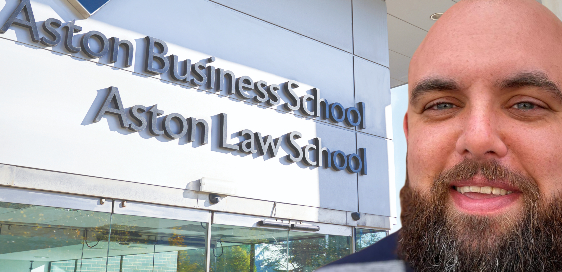
Aston University credit rating expert wins prestigious Fulbright scholarship
Aston Law School’s Dr Daniel Cash is the first member of the University to be awarded a Fulbright scholarship since Donald Biggs in 1974. The Fulbright Program is one of the largest and most prestigious educational exchange programs ever developed It has awarded over 8000 fellowships to students and scholars since its creation in 1946 by Senator J. William Fulbright An Aston University credit rating expert has been awarded a prestigious 12-month scholarship as part of the Fulbright Program in the United States of America. Dr Daniel Cash is the first member of Aston Law School to win one and is the first University staff member to enrol since Donald Biggs in 1974. He will start at New York University’s Stern Business School in April. Whilst there, he will be developing a sector-leading edited collection, bringing together the leading figures in credit rating research. He will also be creating articles on developments within the credit rating sector, and particularly the effect of credit rating agencies on the sovereign debt of the world’s poorest countries. Dr Cash said: “This is the accumulation of more than a decade’s worth of dreaming. I first visited New York in 2007 to try to gain some inspiration after a tough time in my life and ever since then have focused solely on moving over there. “I contacted a professor at NYU during my Masters in 2011 and have kept in touch with him since, even having Visiting Fellowships under him since being at Aston University. This Scholarship is the prize for all of that.” The Fulbright Program is one of the largest and most prestigious educational exchange programs ever developed. It has awarded over 8000 fellowships to students and scholars. Amongst its alumni counts are 39 Heads of State, 60 Nobel Prize Laureates, 75 MacArthur Foundation Fellows and 88 Pulitzer Prize Recipients. Professor George Feiger, executive dean of the College of Business and Social Sciences, who was himself a Fulbright Scholar at Harvard University, said: “The Fulbright Program is highly selective and exclusive and being awarded a scholarship through it is a phenomenal accomplishment for Daniel. It is a flagship initiative that is highly regarded globally and is a just reward for all of his hard work here at Aston University.”

Is a four-day workweek on the horizon?
Is Thursday about to become the new Friday? UConn’s Robert Bird spoke with the Washington Post about the possibility of a four-day workweek and what might be the driving force behind it: New Zealand's and Finland's prime ministers have floated the idea of a four-day workweek. The U.K. Labour Party in 2019 campaigned on the idea that workweeks would be shortened in the next decade. A number of employers have also begun to move in that direction. On Tuesday, Kickstarter announced it would reduce employees' hours without reducing pay next year, reported the Atlantic. Microsoft in Japan instituted a temporary three-day weekend in August 2019 - which resulted in a reported 40% increase in productivity, according to the company, and reduced electricity consumption and paper printing. "A five-day workweek was never a given," Robert Bird, a professor of business law at the University of Connecticut, told The Washington Post, adding that unions fought hard to scrap the six-day workweek norm in the early 1900s. "A five-day workweek was never something that was unchangeable or immutable." "Younger people are demanding more out of their work environment than just a paycheck," he said. "They want to work with someone who believes in their values - and the expression of a four-day workweek sends a signal that the company cares about work-life balance in a significant and meaningful way." June 25 – Washington Post It’s an interesting concept, and one that will be getting a lot of attention. If you are a journalist looking to cover this topic, let our experts help with your stories. Robert Bird is an expert in the areas of corporate compliance, employment law, legal strategy, business ethics, and corporate governance. Professor Bird is available to speak with media – simply click on his icon now to arrange an interview today.


A veteran police officer and a bystander were gunned down in a Denver suburb earlier this week in what authorities are saying was a targeted attack by someone who “expressed hatred” for police. A 19-year veteran of the force, Gordon Beesly was allegedly killed because he was simply wearing a uniform and a badge. The tragic fatality is getting massive coverage and UMW’s Laura C. Wilson was interviewed by The Washington Post to provide her expert perspective on the impact this incident will have on survivors. Laura C. Wilson, an associate professor of psychology at the University of Mary Washington in Virginia, said that years ago she might have thought about each mass shooting or shooting in a public place as having unique characteristics that affect survivors. But she now considers the trauma of multiple events. “When we start to see a lot of these events happening in a small community or within the country, we start to have these compounding impacts,” she said. “People now have more evidence that the world is unpredictable, more evidence that regardless of what I do I can’t keep myself safe.” But Wilson stressed that the effects of trauma are unique to every individual, every survivor. There will be extensive coverage of this killing and if you are a reporter looking to cover the issues survivors of mass shooting events will experience, then let us help. Dr. Laura C. Wilson is a clinical psychologist whose expertise focuses on post-trauma functioning, particularly in survivors of sexual violence or mass trauma (e.g., terrorism, mass shootings, combat). Her research interests extend to predictors of violence and aggression, including psychophysiological and personality factors, as well as indicators of PTSD following mass trauma, long-term functioning among first responders, outcomes among survivors of sexual violence and the influence of media on mental illness stigma. Dr. Wilson is available to speak with media, simply click on her icon to arrange an interview today.



Cyber attacks and ransomware are incidents that are happening more and more often. They are threatening America’s energy supply, food chain and critical infrastructure. Recently, two Georgia hospitals were victims of a recent attack. Media from across the country asked experts like Frank Katz, director of Georgia Southern University's Center for Applied Cyber Education, who is vulnerable and why. Katz, who directs the Center for Applied Cyber Education at Georgia Southern University’s Armstrong Campus in Savannah, said hospitals can be targets for extortion as well as sources of personal identifying information that can aid in further fraud. “They are more likely to pay than another type of business because it’s a life and death situation,” Katz told WSAV-TV. “It really has become a situation of money, pure and simple. These are thieves that know they can extort the money and often get it.” June 21 – Associated Press Frank Katz, director of the Center for Applied Cyber Education at Georgia Southern University, says hospitals are often easy targets. Having so many employees, he says user IDs and passwords can be easy to figure out. Plus, they’re dealing with emergency medical care. “They are more likely to pay than another type of business because it’s a life and death situation,” Katz said. June 21 – NBC News If you are a reporter looking to cover this subject and speak with Frank Katz, Georgia Southern’s Director of the Center for Applied Cyber Education – then let our experts help. Frank Katz, director of the Center for Applied Cyber Education is available, simply click on his icon or reach out to Georgia Southern Director of Communications Jennifer Wise at jwise@georgiasouthern.edu and she’ll assist with connecting you for an interview today.
