
Experts Matter. Find Yours.
Connect for media, speaking, professional opportunities & more.
Juneteenth is this Saturday? Our experts can help with your coverage and questions
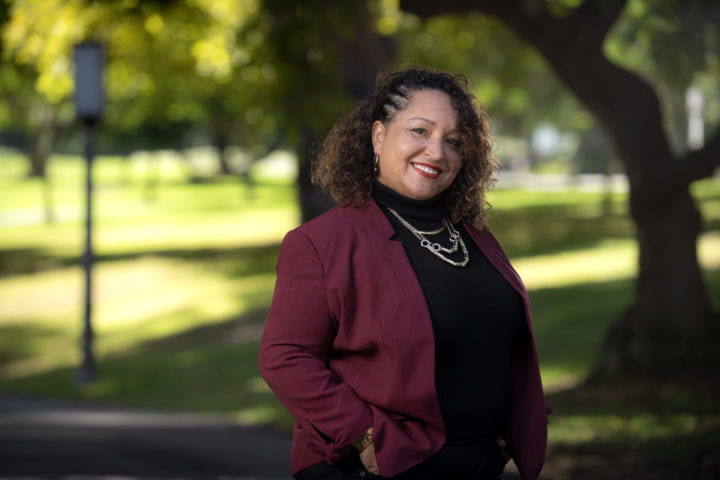
June 19 — Juneteenth — marks the day in 1865 that the Union Army announced in Texas that the African American slaves were free. Black Americans since then have honored the day, even as it has gone unnoticed by many others. In 2020, Jessica Millward, an associate professor of history at UCI, appeared on the UCI Podcast to discuss the history behind Juneteenth, the decades upon decades of continued struggle, and the hope she feels in this moment. And if you’re a reporter covering this important date in American history – then let our experts help with your stories. Dr. Jessica Millward is an Associate professor in the Department of History at the University of California, Irvine. Her research focuses on comparative slavery and emancipation, African American history, gender and the law. Dr. Millward is available to speak with media about Juneteenth – simply click on her icon now to arrange an interview today.


Experts available to comment on G7 summit discussions
A range of experts from the University of Bristol are available to comment on the upcoming G7 summit taking place in Cornwall, UK. Professor Simon Tormey, Professor of Politics and Dean of Social Sciences and Law at the University of Bristol can speak about what G7 means for UK, reboot of US-China relations, climate change, and taxes on large corporations. Simon can also do interviews in French. Dr David Matthews, Reader in Virology in the School of Cellular and Molecular Medicine at the University of Bristol and a member of the 'G2P-UK' National Virology Consortium, can discuss vaccines and global health security. Dr Kate Hendry, Associate Professor of Geochemistry at the University of Bristol can discuss ocean action including net zero oceanographic capability. Dr Tommaso Jucker, Research Fellow at the University of Bristol’s Cabot Institute for the Environment, can cover: supporting the transition to a low carbon economy – the role of forest conservation and reforestation in mitigating climate change, and action to halt and reverse biodiversity loss – ecosystem restoration. Dr Kristen Reyher, Reader in Veterinary Epidemiology and Population Health at the University of Bristol, is able to discuss antimicrobial resistance, antimicrobial stewardship, antimicrobial use, and epidemiology. And Professor Awais Rashid, Professor of Cyber Security at the University of Bristol, is available for the following topics: Internet safety including protecting children and online fraud, darknet markets, privacy issues and data exploitation.


Climate Change-Related Natural Disasters Impact Short-Lived Assets and Interest Rates
For decades, scientists across the globe have warned about the effects of climate change. Given that these changes—global warming, rising sea levels—happen over time and that their disastrous results may not be obvious for decades, studying the effects of climate change on financial markets has posed a problem. According to Christoph Herpfer, assistant professor of finance, Goizueta Business School, most of the existing literature that deals with the effect of climate change on financial markets considers “indefinitely lived assets,” such as owning stock or owning a home—assets that “don’t have an expiration date,” explained Herpfer. To evaluate the effect of climate change in the long run on these assets then requires discount models—ways to value something today based on what it could be worth decades from now. Herpfer, a banking and corporate finance specialist, studies short-lived assets that, on average, expire after 4.5 years. Herpfer wondered if there could be “an alternative channel in which climate change already impacts companies today,” he explained. One that didn’t have to deal with all the “challenges associated with long run discount rates,” he added. In “The rising tide lifts some interest rates: climate change, natural disasters, and loan pricing,” Herpfer and his colleagues—Ricardo Correa, deputy associate director, Board of Governors of the Federal Reserve System, Ai He, assistant professor of finance, University of South Carolina, and Ugur Lel, associate professor, Nalley Distinguished Chair in Finance, University of Georgia, Terry College of Business—consider this question by studying corporate borrowing costs. In 2020, the paper received the best paper award at the Boca Corporate Finance and Governance Conference. The foursome had a novel idea: In recent years, there has been scientific consensus that climate change fuels natural disasters. So Herpfer and his fellow authors wondered if financial institutions took climate change-amplified natural disasters into account when pricing short-term loans. Their answer was, unequivocally, “yes.” Their work and research is captured in a recent article in Emory Business - it's attached and well worth the read. If you're a journalist looking to know more - then let us help. Christoph Herpfer is an assistant professor of finance at Goizueta Business School. He is also a financial economist working at the intersection of banking, law, and accounting. Christoph is available to speak with media about this research - simply click on his icon now to arrange an interview today.


MEDIA RELEASE: CAA reminds motorists and cyclists to share the road ahead of the long weekend.
Ahead of the Victoria Day long weekend and the summer months, cycling is set to once again be a popular activity this year. As Ontarians start to prepare for the upcoming cycling season, CAA South Central Ontario (SCO) is reminding motorists and cyclists to prioritize safety when sharing the road. “After staying indoors all winter, we expect that more people will choose to get back on their bikes as the weather gets warmer,” says Michael Stewart, community relations specialist for CAA SCO. “With more cyclists re-emerging onto the roads, it is important to be vigilant and mindful of other road users.” All motorists and cyclists are also advised to follow public health guidelines, communicate their intentions with signals, be patient, regularly check blind spots and turn on their lights during dawn, dusk and dark hours when lighting is most limited. Another issue that CAA is reminding motorists to watch out for is dooring, which is described as when a cyclist is injured by the opening of a car door. CAA data shows that it continues to be a big safety concern for both cyclists and motorists alike. Last year the Toronto Police Service reported 77 dooring incidents. Recently the Minister of Transportation introduced the Moving Ontarians More Safely Act that proposes to update the collision reporting process. The proposed legislation would also change the definition of a reportable collision to include bicycles that collide with vehicle doors. A change that CAA supports. CAA is reminding all motorists of these important rules of the road: Pay attention. Avoid distractions like texting, adjusting your GPS or scrolling through your playlist. Yield to cyclists. Motorists should not be driving in a bike lane unless making a right turn. Watch for the approaching cyclists and never speed up and cut off a cyclist when making a right turn. Keep a safe distance. Drivers must keep at least a one-metre distance when passing a cyclist. If it is not possible, safely change lanes to pass. The penalty for not doing so is a $110 fine. Practice the Dutch Reach. Avoid “dooring” cyclists by doing the Dutch Reach. CAA launched a new Dutch Reach video for users to practice as more people are out on their bikes. Some cycling-specific safety tips: Ride with traffic. Riding against traffic flow is dangerous, illegal and a leading cause of car-bike collisions. Protect yourself. Cyclists, wear your helmets. Be visible. Use reflectors and lights in dark and overcast conditions. It’s the law. Be predictable. Obey traffic signs and be clear with your intentions with other drivers. Under Ontario’s Highway Traffic Act (HTA), a bicycle is considered a vehicle, just like a car or truck and must follow the same rules of the road. Ride close to home. As cyclists start to use their bikes for the first time in a while, remember to stay close to home as you are starting out. “By following these best practices and navigating the road respectfully, we can all do our part in keeping our roads safe for everyone,” says Stewart. For more information on cycling safety, visit caasco.com/cycling.



The Facebook Oversight Board’s ruling temporarily upholding the social media giant’s ban on former President Donald J. Trump, which they instructed the company to reassess within six months, noted that the parameters for an indefinite suspension are not defined in Facebook's policies. The non-decision in this high-profile case illustrates the difficulties stemming from the lack of clear frameworks for regulating social media. For starters, says web science pioneer James Hendler, social media companies need a better definition of the misinformation they seek curb. Absent a set of societally agreed upon rules, like those that define slander and libel, companies currently create and enforce their own policies — and the results have been mixed at best. “If Trump wants to sue to get his Facebook or Twitter account back, there’s no obvious legal framework. There’s nothing to say of the platform, ‘If it does X, Y, or Z, then it is violating the law,’” said Hendler, director of the Institute for Data Exploration and Applications at Rensselaer Polytechnic Institute. “If there were, Trump would have to prove in court that it doesn’t do X, Y, or Z, or Twitter would have to prove that it does, and we would have a way to adjudicate it.” As exemplified in disputes over the 2020 presidential election results, political polarization is inflamed by a proliferation of online misinformation. A co-author of the seminal 2006 Science article that established the concept of web science, Hendler said that “as society wrestles with the social, ethical, and legal questions surrounding misinformation and social media regulation, it needs technologist to help inform this debate.” “People are claiming artificial intelligence will handle this, but computers and AI are very bad at ‘I’ll know it when I see it,’” said Hendler, who’s most recent book is titled Social Machines: The Coming Collision of Artificial Intelligence, Social Networking, and Humanity. “What we need is a framework that makes it much clearer: What are we looking for? What happens when we find it? And who’s responsible?” The legal restrictions on social media companies are largely dictated by a single sentence in the Communications Decency Act of 1996, known as Section 230, which establishes that internet providers and services will not be treated as traditional publishers, and thus are not legally responsible for much of the content they link to. According to Hendler, this clause no longer adequately addresses the scale and scope of power these companies currently wield. “Social media companies provide a podium with an international reach of hundreds of millions of people. Just because social media companies are legally considered content providers rather than publishers, it doesn’t mean they’re not responsible for anything on their site,” Hendler said. “What counts as damaging misinformation? With individuals and publishers, we answer that question all the time with libel and slander laws. But what we don’t have is a corresponding set of principles to adjudicate harm through social media.” Hendler has extensive experience in policy and advisory positions that consider aspects of artificial intelligence, cybersecurity and internet and web technologies as they impact issues such as regulation of social media, and powerful technologies including facial recognition and artificial intelligence. Hendler is available to speak to diverse aspects of policies related to social media, information technologies, and AI.



A Message from Dean Sarah Gehlert on the Derek Chauvin Verdict
When I heard the verdict read at the trial of Derek Chauvin, I was relieved that a change had been made in how excessive violence by police officers has been viewed and treated in courts. This gave me some hope that a door had finally been opened to create change. A single verdict does not even begin to erase all the lives lost over decades of police violence based on prejudice and discrimination. It does however signal that change is happening, or is at least possible, if we are vigilant. It can be a step taken toward ending systemic discrimination by race in how our judicial system considers the actions of police. The wisdom of George Floyd’s seven-year-old daughter, who stated that her dad “changed the world,” has been validated. We also recognize the wisdom and courage of Darnella Frazier, the Minnesota teenager who filmed the event, knowing that what she was witnessing was wrong. When the verdict came in, I was with a group of community activists from three California counties around Los Angeles. While group members expressed some elation for an episode of justice realized, some cautioned that this victory does not mean that all is well. Racism, and the discrimination that it engenders, continues to run rampant through our judicial system. Within the last week we have added the names of Daunte Wright and Adam Toledo to our protests and vigils. We hope this verdict is a turning point, but we will need to work to assure it. It is worth reading a publication from 2018 to understand the role that social work needs to play in ensuring effective and lasting change to our judicial system. In their paper entitled “The Futile Fourth Amendment,” Professor Osagie Obasogie and Postdoctoral Researcher Zachary Newman examine the Supreme Court case that established the standard for court adjudication of excessive force by police, and how this has perpetuated excessive use of force in many communities of color. Protesting alone will not create the change we want to see. It will require change in policy and practices to establish equal protection for all under the law. This is a moment for us as social workers to seize. We must not wait to act until there is another incident of police brutality or an unfair trial. We should use this moment to move forward with renewed conviction in our beliefs, using our training in policy, community organizing, management and planning, and clinical practice. We should always be the voices demanding equality under the law, saying that an end to systemic racism is possible. The world is ready for change and social work should be leading it, with those whom we serve. We should be the champions of social justice for the well-being of individuals, families and communities through innovative teaching of evidence-informed and practice-based skills, and pioneering transformative research. If not us, then who? Sarah Gehlert Dean


Social Work is Advancing Addiction Science Research
Tens of thousands of Americans die from drug use and addiction every year, with overdoses killing over 63,000 people in America in 2016, according to the National Institute on Drug Abuse. Add in deaths linked to alcohol overuse and tobacco, and the number climbs above half a million Americans. The collective work of several researchers at the USC Suzanne Dworak-Peck School of Social Work, in collaboration with other USC faculty and outside organizations, is advancing knowledge of substance use disorders. Social work has become a hub where researchers and practitioners drive understanding and improve treatment for this disease that impacts millions of families each year. “Either as a cause or consequence, addiction relates to every problem we deal with in social work,” said John Clapp, professor and associate dean for research and faculty development at the USC Suzanne Dworak-Peck School of Social Work. Addiction’s complexity The social work field is uniquely poised to help effect change because of its holistic approach to individual well-being and the public good. According to Clapp, substance use disorder problems are inherently ecological, impacting and being impacted by individuals, families, peers, neighborhoods, communities and public policy in complex and dynamic ways. Untangling those causes and effects and interdependencies is one part of the solution. The other part is understanding that simple solutions may stay out of reach. “We will not find a one-size-fits-all answer,” said Clapp. Looking at addiction as a genetic, psychological or sociological issue only shows one piece of the overall cause. A comprehensive approach is essential, he said, especially when statistics from the National Institute on Alcohol Abuse and Alcoholism (NIAAA) show alcohol use disorders alone as the third leading cause of preventable death in the world. A hub for addiction science The need for a transdisciplinary response to this worldwide crisis was behind the 2018 creation of the USC Institute on Addiction Science (IAS), a joint venture between social work and the Keck School of Medicine of USC, with membership from 10 different schools, colleges and hospitals. Its vision is to strengthen the discipline of addiction science and improve the lives of those touched by the disease. Clapp is co-director of the institute and one of its founding architects. IAS is quickly becoming the foremost place for a broad effort focused on addiction that brings together researchers from the fields of public health, social work, law, public policy, mathematicians, computer engineers and others in recognition of the promise of new approaches to longstanding problems. The USC Suzanne Dworak-Peck School of Social Work has eight faculty making substantial contributions to the prevention of addiction-related disorders as members of the IAS: Professor Avalardo Valdez, associate professors Julie Cederbaum and Alice Cepeda, and assistant professors Jordan Davis, Shannon Dunn, Jungeun Olivia Lee, Danielle Madden, and Hans Oh. “Social work brings one of the broadest perspectives on the underpinnings and solutions to the addiction crisis,” said Adam Leventhal, director of IAS and professor of preventive medicine and psychology at Keck. “By approaching addiction as a health condition and a social justice issue, social work brings to the table the opportunity for high-impact, multi-modal intervention and social policy approaches, which are needed to address the addiction epidemic.” A holistic approach Social work faculty are raising the bar in addiction science research, developing new and novel approaches to improving outcomes for those affected by addiction. In a study recently published in Addiction, a multidisciplinary team lead by Davis and Clapp found gender differences in the risk factors for relapse following treatment for opioid use disorder. The study was the first in this field to use machine learning techniques to process large data sets and identify risk factors for relapse, said Davis, who also serves as associate director of the USC Center for Artificial Intelligence in Society (CAIS). The findings may result in more personalized treatment for opioid use disorder with lasting results. This dovetails with additional research Davis is conducting with computer science engineers at CAIS to collect and input neighborhood and census data into their models in an effort to better understand how these macro variables affect relapse. “We are finding that data points such as crime statistics, population density and concentrated poverty tend to be some of the most important predictors of relapse, over and above individual-level predictors such as impulsivity, motivation or gender,” Davis said. These findings echo Clapp’s description of addiction as ecological and point to the need for holistic solutions. “These machine learning techniques are helping us gain an apparent picture of what the most important factors are surrounding someone’s recovery,” Davis said. “Environment matters greatly.” Davis is also collaborating closely with Eric Pedersen, associate professor at Keck School of Medicine at USC, on several research efforts examining substance use among veterans. Most recently, they have assembled a survey group of approximately 1,200 veterans whom they survey quarterly about their well-being. A recently conducted survey of the group found that veterans with PTSD prior to the COVID-19 pandemic were now managing their symptoms with more frequent alcohol and cannabis use. Another joint research endeavor between the two is examining the use of mindfulness smart phone apps to help reduce substance use in Operation Enduring Freedom/Operation Iraqi Freedom veterans with PTSD and alcohol use disorder. Where well-being and inequalities intersect Jungeun Olivia Lee also seeks to decode the network of relationships between socioeconomic status, adverse childhood experiences and drug use. Her experience as a social work practitioner working directly with clients drives her motivation to demonstrate to policymakers what she sees as a linkage between unemployment, economic stress and substance use disorders. She is lead author on a paper published in Nicotine & Tobacco Research that found unemployment may advance nicotine addiction among young adults, rather than the idea that nicotine addiction may lead to unemployment. Lee’s research interests lie at the intersection of substance use and co-occurring mental health, social inequalities (such as poverty and low socioeconomic status), and adverse childhood experiences. She is interested in combining these three areas of inquiry to explore their influence on addictive behavior that can persist over generations of at-risk families, such as adolescent mothers and their children. Her memories of working directly with clients struggling with the impact of addiction remain clear in her mind. When Lee hears policymakers and others suggest that individual willpower will solve substance use disorder problems, she has a straightforward response: “People are not born with addiction.” In her view, many factors contribute to the triggered distress, including socioeconomic status and adverse childhood experiences. Lee is exploring an idea with other IAS researchers to investigate the relationship between financial strain and employment uncertainty and addiction. “Individual circumstances, such as losing a job, certainly influence substance use, but policy-level decisions, such as the generosity of unemployment insurance, can mitigate the impact,” she said. Transdisciplinary collaboration with social scientists, psychologists and medical researchers at IAS and across the USC campus enriches and amplifies her work. “We are breaking down discipline-specific silos and bringing new and valuable perspectives to this work,” she said. “The synergy is both useful and inspiring.” Looking ahead Researchers also hope to spark interest in the field among the next generation. A new minor for undergraduate students in addiction science was introduced at USC in Fall 2020. The minor is an interdisciplinary collaboration of the Keck School of Medicine, the USC Suzanne Dworak-Peck School of Social Work, the USC School of Pharmacy and the USC Dornsife College of Letters, Arts, and Sciences. It is designed to provide students with a transdisciplinary approach to understanding and treatment of the broad spectrum of addiction-related problems. The goal of addiction science research and education is to improve the long-term effect of addiction treatment and save lives. As society’s understanding of the cause of addiction grows, researchers like those in the school of social work and the IAS strive to bridge the gap between science, practice and policy to positively impact outcomes for those affected by addiction.

Could Smarter Guns Be the Key To Stopping Mass Shootings and Other Violence?
“Gun violence in this country is an epidemic, and it’s an international embarrassment,” President Biden recently said. At least 45 mass shootings have occurred in America in the last month, according to reports. In the same time period, news of police officers killing unarmed Black men and boys, including 20-year-old Daunte Wright in Minneapolis and 13-year-old Adam Toledo in Chicago, sparked waves of protest around the country. These all-too-common tragedies could be significantly reduced — and even eliminated — without any of the partisan rancor and gridlock typically associated with gun-related debates, says Selmer Bringsjord, an expert in artificial intelligence and reasoning and a professor of cognitive science at Rensselaer Polytechnic Institute. “There is a solution,” Bringsjord, the director of the Rensselaer AI and Reasoning Laboratory, wrote in the Times Union. “A technological alternative to the fruitless shouting match between politicians: namely, AI — of the ethical sort. Guns that are at once intelligent and ethically correct can put an end to the mass-shooting carnage.” Rather than an endless debate over whether the public should have more guns or less, Bringsjord’s novel – and, he says, plausible – proposal is to shift to “smart and virtuous guns, and intelligent restraining devices that operate in accord with ethics, and the law.” Along with his coauthors, Bringsjord detailed his ideas in a recent paper, “AI Can Stop Mass Shootings, and More.” Anticipating some counterarguments, the authors urge readers “to at least contemplate whether we are right, and whether, if we are, such AI is worth seeking.” Bringsjord and his collaborators have created simulations showing how, in only 2.3 seconds, ethical AI technology can perceive a human’s intent and environment and then, if necessary, prevent their gun from firing. Importantly, he notes, the same technology that could prevent a criminal from opening fire in a public area could also prevent a police officer from shooting a person who posed no threat. “Ultimately research along this line should enable humans, in particular some human police, to simply be replaced by machines that, as a matter of ironclad logic, cannot do wrong,” Bringsjord said in a recent public radio segment. The AI capabilities discussed by Bringsjord are the product of prior work over seven years of funding from the Office of Naval Research devoted to developing moral competence in robots. Bringsjord has spoken about robots and logic at TEDxLimassol. He is the author of What Robots Can and Can’t Be and Superminds: People Harness Hypercomputation. He is also the co-author of Artificial Intelligence and Literary Creativity: Inside the Mind of Brutus, a Storytelling Machine. Bringsjord is available to speak about his recent proposals around AI-enabled guns, as well as other aspects of AI, human and machine reasoning, and formal logic.

Is It Time to End Qualified Immunity?
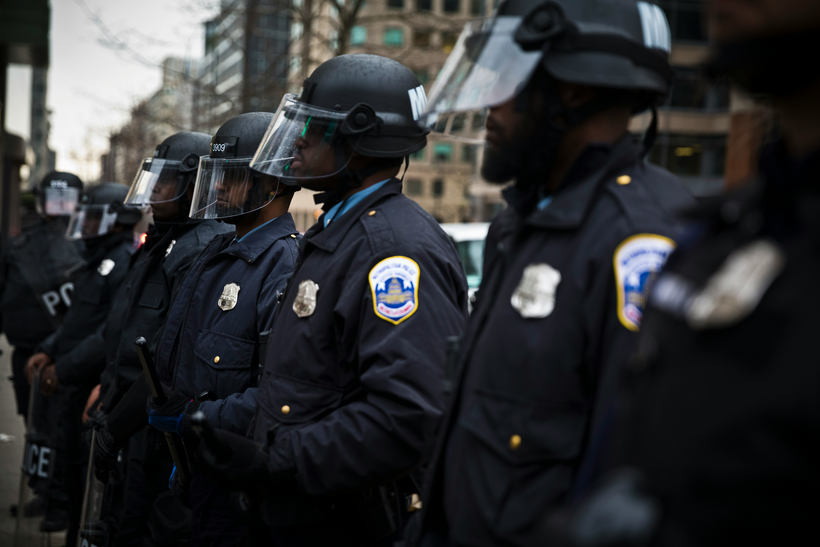
Following the death of George Floyd and subsequent protests of police brutality, many began to wonder if this should be the end of qualified immunity, the legal protection that police officers and other government officials have from civil rights lawsuits unless the victim is able to show their constitutional rights had been violated by that official. At the time, there seemed to be a lot of momentum. "Based on the events of last summer, we were all poised for the United States Supreme Court to take action on qualified immunity," says Teri Ravenell, a law professor at Villanova who specializes in police accountability and municipal liability. "There were almost a dozen cases pending before them. With the egregious facts in these cases, it was ripe for them to act, but they refused to take cert." It was around the same time that the House passed the George Floyd Justice in Policing Act. And while there had been no action at the federal level, we began to see more states and local municipalities decide to move forward on their own. New Mexico and Colorado put laws in place to end qualified immunity, including for police officers, and New York City recently ended it as well. "Qualified immunity still exists at the federal level, but you now have local options that don't have the same obstacles because it has been eliminated in these state and local statutes," Prof. Ravenell says. While there has been progress, Prof. Ravenell cautions to look beyond the present moment. "We say we want to end qualified immunity, but we're not thinking five steps ahead about what this actually does. We can say we want to make police more accountable, but how are we doing that? If it's that we want them to pay damages, if they take on more liability, municipalities will stop indemnifying and plaintiffs will go uncompensated. We have to think about how different rights and issues intersect with each other."

Public health education soars in wake of pandemic
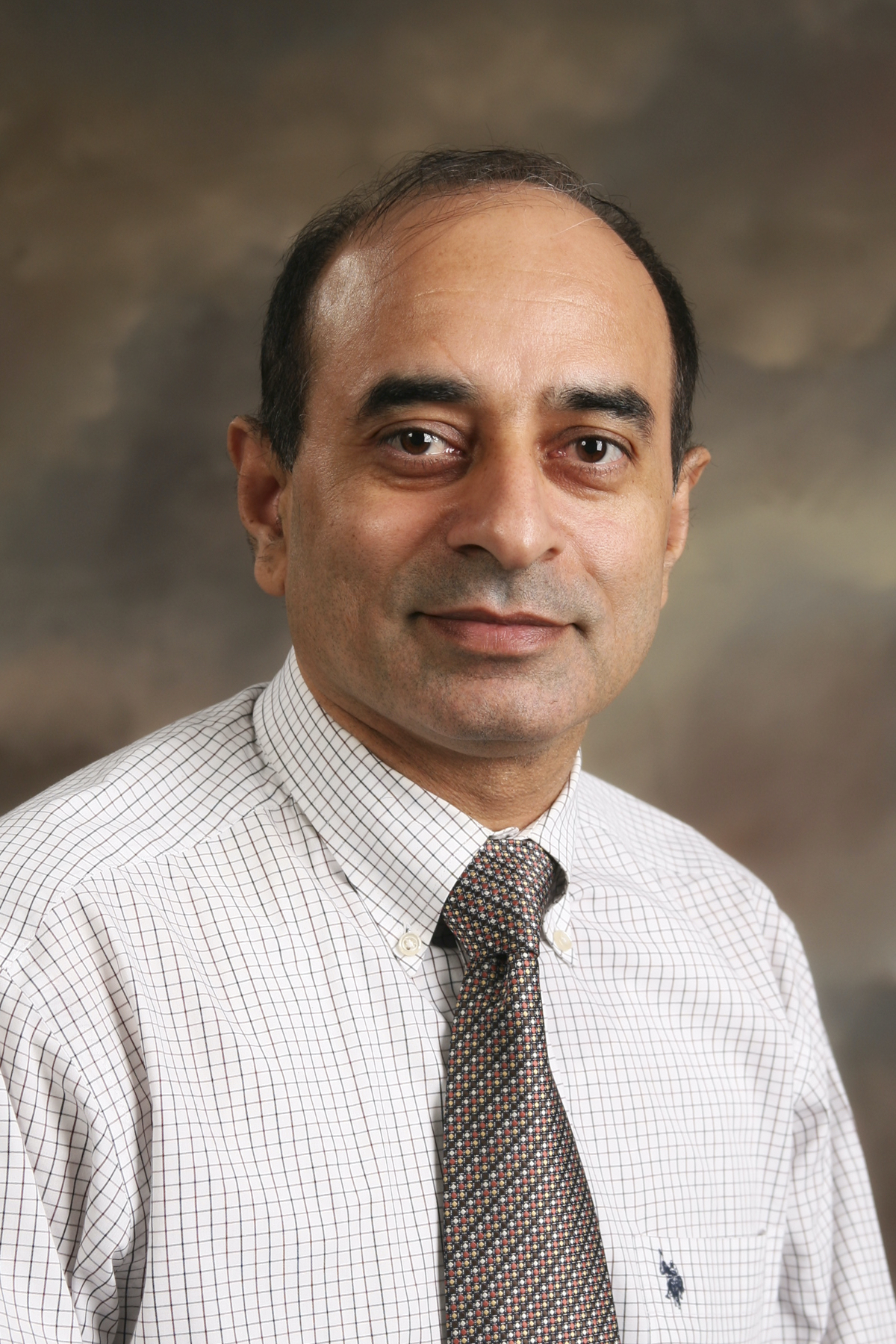
Maybe a silver lining can be found from the COVID-19 pandemic, as interest in public health education is soaring at U.S. colleges and universities, says a nationally prominent public health professor. Public health education has become a logical choice for students when looking at changing public health practice trends and their implications for public health education, explained Gulzar Shah, Ph.D., who authored an invited editorial in the March issue of the American Journal of Public Health (AJPH). Shah is department chair and professor of health policy and community health in Georgia Southern University’s Jiann-Ping Hsu College of Public Health. His editorial is titled “Public Health Education and Changing Public Health Realities in the Public Health 3.0 Era.” “For many of the 19 million college students enrolling annually in public and private colleges in the United States, public health is becoming a logical choice,” he said. “Because of COVID-19, interest in public health careers is soaring, evident from the 20% increase nationwide in Master of Public Health applicants.” The editorial also drew insights from the Association of Schools and Programs of Public Health’s national-level data from schools and programs of public health about the first employment destinations of public health graduates. “The emphasis on aligning public health practice and policy with the Public Health 3.0 framework, in which leaders partner across various sectors to address social, environmental and economic factors that affect population health and health inequity, has attracted the spotlight on generalist, behavioral education and health policy degrees,” Shah noted. “The Public Health 3.0 framework has also underscored the desirability of adopting the Health in All Policies approach and encouraging public health leaders to act as chief health strategists in influencing policies in other sectors affecting population health. Increasing focus on Health in All Policies and higher salary positions in health care may further explain the popularity of health policy and management and health law programs.” If you are a journalist looking to know more about Dr. Shah’s work, and the importance public health education in America of the programs Georgia Southern is offering – then let us help. Dr. Gulzar H. Shah is a Professor and Department Chair, Health Policy and Community Health at the Jiann-Ping Hsu College of Public Health (JPHCOPH), Georgia Southern University. He is available to speak with media regarding this important topic - simply click on his icon now to arrange an interview today.

