
Experts Matter. Find Yours.
Connect for media, speaking, professional opportunities & more.

Former U.S. Attorney Available to Discuss Fallout for Trump Administration in Light of Cohen Plea
Wheaton College Professor David Iglesias, a former U.S. Attorney in New Mexico whose areas of expertise include federal prosecutions, is available for interviews regarding the fallout for the Trump administration in light of Michael Cohen’s guilty plea in federal court on 8 criminal counts, including violation of campaign finance laws. “President Trump is now in a place few presidents have ever been,” Iglesias says. “At this point, he is basically an unindicted co-conspirator to federal crimes.” “I wouldn’t call it the beginning of the end, but it’s certainly the end of the beginning.” Iglesias is an associate professor of politics and law and director of the Wheaton Center for Faith, Politics, and Economics. He can discuss topics including: -The process of presidential pardons -How federal prosecutors treat indicted persons who cooperate with information concerning the crimes of other persons, and the quid pro quo for getting an individual to cooperate with law enforcement -Guilty pleas, hung juries, and sentencing in federal court -Impeachment (What Iglesias calls “the nuclear option for removing a sitting President of the United States”), the process, and why it has happened so rarely in U.S. history -Whether a sitting president can be indicted for crimes -The importance of the rule of law (Why is America the world leader for holding all accountable for their actions? What message is being sent if wealthy and powerful people can avoid criminal exposure for their actions?) -Watergate as a precedent, and similarities/differences with the current situation -Rules of federal investigations (How do federal agencies conduct investigations? What is public and what is non-public? Why are prosecutions that are considered "political" so dangerous for law enforcement?) To request an interview with Professor Iglesias, e-mail Wheaton College Director of Media Relations LaTonya Taylor at latonya.taylor@wheaton.edu. Source:


Understanding Trump’s ‘transition tax’ and who wins and who could lose (a lot)
Last December President Donald Trump signed into law sweeping tax reforms – some which had a purpose of discouraging multi-billion-dollar corporations from parking their money outside of the United States. The goal was to incentivise or encourage American-based companies like Apple and Amazon to keep profits local and ideally taxable in the United States. But the impact of these new laws is trickling down and hurting a lot of people. It seems anyone with dual citizenship or any American with interests in Canada may be vulnerable. And for some it is costing a lot of money that’s due very soon. So how much are companies expected to pay? Who is expected to pay and who will be impacted the most? As well, when it comes to taxes – that often means a windfall of new revenue for governments. Is it just Washington that will benefit or will the coffers in Ottawa see some money too? Tax laws are not an easy topic to understand. There are loopholes, complexities and levels of accounting that are beyond most people’s grasp. But that’s where the experts from Freelandt Caldwell Reilly LLP can help. Ed Reilly, Managing Partner and co-founder of Freelandt Caldwell Reilly LLP practices in the areas of tax and owner-managed businesses. To contact Ed directly, simply click on his icon to arrange an appointment regarding this topic. Source:

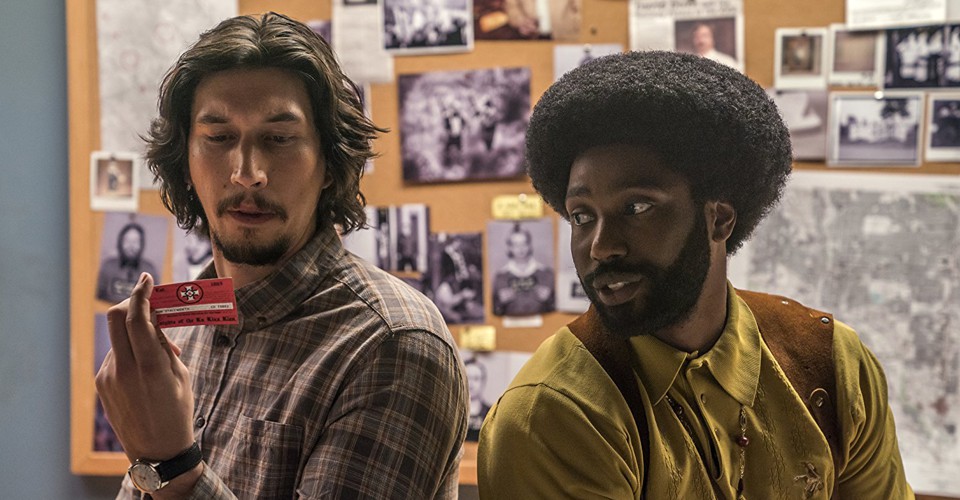
Spike Lee's Cinematic Alchemy of Past and Present is a Warning About the Future
Nearly a year to the day after White Nationalists marched in Charlottesville, the film “BlacKkKlansman” is released. Spike Lee's film is both a representation of a real-life story of an African-American detective who infiltrated and exposed the Ku Klux Klan in the 1970s and as an ideological vehicle for critique of our current social and political moment, says Matthew Hughey, associated professor of sociology at UConn. Together, “BlacKkKlansman” conveys a multi-part message. First, it is cinematic alchemy of the past and present—revealing what has and has not changed over the past half-century in order create a warning about the future. It recalls philosopher George Santayana’s saying “those who cannot learn from history are doomed to repeat it.” Second, the film eviscerates both American naiveté and intentional hypocrisy regarding racism and racial inequality. The film shines a bright light on the dark methods people use to dress up racism, nativist xenophobia, and hatred as “pride and patriotism,” and the madness deployed to rationalize police brutality and murder as little more than “law and order.” Third, and perhaps most importantly, the film deconstructs the “bad apple” theory of racism. Racism does not exist within the hood-wearing, swastika-sporting, epithet-spewing ignoramus alone, but exists in a systemic orchard that segregates and privileges whiteness economically, politically, and socially regardless of individual intention, worldview, or behavior. In the end, Lee’s film leads us to the conclusion that if “we are all Charlottesville” then “we are all Klansman,” too, says Hughey. Source:


Liberals' best hope for a new swing vote is... John Roberts?
As Brett Kavanaugh, 53, readies himself for a series of heated Senate Judiciary Committee hearings, many have questioned who will take up his mentor’s mantle on the Supreme Court. For three decades Justice Anthony Kennedy was arguably the most powerful figure in Washington, D.C. Famed for his ability to vote across party lines. Kennedy, who announced his retirement in June, helped shape some of the biggest landmark decisions of the past decade—most notably on the issue of same-sex marriage and LGBTQ rights. As a replacement, Kavanaugh is unlikely to be as magnanimous with his votes. But will that alter the Court’s direction? Only a little, said Dr. Martha Ginn Ginn, assistant dean of the Pamplin College of Arts, Humanities, and Social Sciences and associate professor of political science, said Kennedy’s most likely “successor” is already a fixture of the Court: Chief Justice, and occasional swing voter, John Roberts. “Roberts will likely become the Court’s ‘swing vote’ now that Kennedy’s out,” Ginn said. “While Roberts may move a little more to the center as result, the overall shift will be more conservative.” A scholar of constitutional law and the Supreme Court, Ginn said the Court’s rightward movement won’t be quite as monumental as pundits have proposed. After all, Kennedy’s votes weren’t always left-leaning. In his last term, he sided with his liberal colleagues not once. “I think one point that is getting lost is that Kennedy was, for the most part, a conservative and voted accordingly,” she said. “There were certain issues where he was more likely to join the liberal wing, most prominently LGBTQ rights, but he voted with the conservative justices the majority of the time.” Kennedy’s retirement will certainly shift the Court toward the right, Ginn added, but “not to the same degree as if Ruth Bader Ginsburg retired or died in office.” Meanwhile, as the non-chaos of a Kavanaugh confirmation plays out, Roberts stands to gain as the Court’s new wildcard. Ginn said Roberts’ latest ruling, that law enforcement agencies must obtain warrants to use cell tower data, is a good indication of how he’ll vote as part of a post-Kennedy Court. “I think the role of Chief Justice Roberts becomes even more significant in a Kennedy-less Court and that hasn’t been given much attention,” she said. “I think both sides are forgetting that Roberts is a bit of wild card too when it comes to voting on very consequential cases. The one that comes to mind most Source:


"Forcible separation of families inflicts severe trauma on children and parents. The bond between caregiver and child is critical for the child’s sense of safety and well-being. When that bond is interrupted through a violent or forcible separation, the child experiences severe neurobiological stress causing the child to feel intense fear, helplessness, or horror. Such stress is particularly acute for children who have experienced other traumas, such as witnessing violence, sexual abuse, or forced detention, which are common experiences for migrant children fleeing violence and persecution. Prolonged exposure to such stress has a debilitating effect on children even after the particular traumatic event is over. Children separated from their parents exhibit the behaviors detailed above typical of children experiencing the symptoms of traumatic stress. They can suffer anxiety, sleep disturbances, emotional changes such as aggression, withdrawal, and fear. They also suffer difficulties in reasoning, thinking, learning, and communication, and a decline in educational achievement." Source:


Former U.S. Attorney: Family Separation Is "A Moral Outrage"
Professor David Iglesias, a former U.S. Attorney in New Mexico who also served as chair of the border and immigration subcommittee under John Ashcroft, is available for interviews about the zero tolerance and family separation immigration policies. "The president's zero tolerance for people crossing the border is more than just a moral outrage--it rejects decades of administrations deferring to prosecutors in the region know how best to deal with immigration cases," he says. Iglesias, who is an associate professor of politics and law and director of the Wheaton Center for Faith, Politics, and Economics, is among a bipartisan group of former U.S. Attorneys who have called on Attorney General Jeff Sessions to end family separation. "Zero tolerance may make a catchy bumper sticker, but it is the very definition of bad public policy," Iglesias says. To request an interview with Professor Iglesias, e-mail media.relations@wheaton.edu. Source:

Baylor Gerontology Expert: It's Important for People to Know the Signs of Elder Abuse
Gerontology expert James Ellor, Ph.D., M.Div., professor in Baylor University’s Diana R. Garland School of Social Work, said it's important to remind people what elder abuse looks like and how they can respond if they see the signs. Reports of abuse are most often submitted by family members, hospital staff and law enforcement. But churches and other organizations should also be diligent, Ellor said, adding that clergy are considered mandatory reporters in many states. “No one group of caring persons can solve this problem alone; it takes a community of caring lay and professional leaders to even try to start to make a difference,” Ellor said. Elder abuse – intentional or negligent acts by a caregiver or trusted individual – comes in many forms: * neglect or isolation * physical abuse, sexual abuse * exploitation or financial abuse * emotional and psychological abuse * verbal abuse and threats “If signs are noticeable, the next steps will depend on the type of abuse. In most cases, counseling support is critical, but often the need for medical help or legal help is also very important,” Ellor said. Read the linked article to learn more. ... Dr. Ellor works with older adults around issues of mental and spiritual health. He has served on the executive committee of the Midwestern Geriatric Education Center and provided education, counseling and planning for individuals and groups who work with seniors. His research includes work in entrostomal therapy, hunger, the church as service provider, spiritual assessment and intervention techniques with cognitively impaired older adults. Source:


Dear President Trump, In response to the numerous school shootings, Please re-consider your agenda and work to make the educational system safe for our children. Consider allocating funding to allow for the following: *The placement of police sub-stations in middle and high schools that are in at-risk neighborhoods and studying the effect of police presence on the culture of safety. *The creation of school-based mental health clinics run by nurse practitioners and social workers. This will allow at risk and troubled youth to have immediate access to interventions and services. *The ability for community-based researchers to work pro-actively with schools to creatively solve the issue at the local level. Pass federal legislation addressing the minor consent to treat laws for mental health issues. In Washington State, where I live and practice, minors over the age of 13 can consent to mental health treatment without parental consent. The goal isn’t to take the healthcare decision making authority away from parents, the goal is to get youth the help they need before something tragic happens. Appoint a special task force or committee consisting of educators, healthcare providers, lawyers, social workers, and anyone else who directly works with at risk youth. I believe that the solutions will come from these committees. Submitted to POTUS May 19, 2018 Source:

Is repealing the Second Amendment possible or easier said than done?
On Tuesday, retired Supreme Court justice John Paul Stevens called for the repeal of the Second Amendment. It appeared an Op-Ed in the New York Times and has been taking the news and political worlds by storm. It’s not often a justice leaves his position of objectivity, even if retired. But at the age of 97, the former justice who was first appointed to the Supreme Court in 1975 by then President Gerald Ford weighed in calling the amendment a “relic of the 18th century.” However, it takes more than just a stroke of the pen or a simple impassioned vote to accomplish this. In fact, to repeal the Second Amendment would be require both houses of Congress proposing the amendment with a two-thirds vote, or two thirds of state legislatures calling on Congress to hold a constitutional convention. It would then have to be ratified by three-fourths of the states or state legislatures. There’s a lot of math involved there. As well, an equal amount of legal and constitutional perspective required. That’s where the experts from the UC Hastings College of Law can help. Joel Paul is an expert in the field of constitutional law. He is available to speak with media regarding just what it might take to repeal a constitutional amendment. Simply click on his icon to arrange an interview. Source:


Done in by digital? What will the sale of Time mean for the industry?
On Monday, a once mighty media juggernaut was sold off for $2.8 billion dollars. Time Inc. – the publisher of Time, Fortune, Sports Illustrated and People was now property of the Meredith Corporation. The Des Moines, Iowa-based company better known for its Better Homes and Gardens, Family Circle, Parents and Family Fun magazines. It’s a bitter and sad end for Time. The company was once the industry leader in magazines and world-respected periodicals. The magazines were’ must-reads’ for the informed. But times have changed, and Time never did catch on or catch up with the digital wave that has transformed journalism as we know it. So, what will all of this mean? Can the world of print media survive and adapt to changing times and tastes? As well, with shrinking circles of media ownership – will regulators let this sale proceed? And what will this mean for the many journalists? More job cuts and shrinking news rooms? Will they move from NYC to Iowa? Has the lustre and allure of being a New York based journalist lost its shine? There are a lot of questions that still need to be addressed and answered. That’s where the experts from Cedarville University can help. Dr. Marc Clauson is a professor of history and law at Cedarville. Marc is an expert in the fields of anti-trust regulation and the economic impact of mergers and takeovers like this. Dr. Clauson is available to speak with media – simply click on his icon to arrange an interview. Source:
