
Experts Matter. Find Yours.
Connect for media, speaking, professional opportunities & more.

Poll finds bipartisan agreement on a key issue: Regulating AI
This article is republished from The Conversation under a Creative Commons license. Read the original article here. In the run-up to the vote in the U.S. Senate on President Donald Trump’s spending and tax bill, Republicans scrambled to revise the bill to win support of wavering GOP senators. A provision included in the original bill was a 10-year moratorium on any state law that sought to regulate artificial intelligence. The provision denied access to US$500 million in federal funding for broadband internet and AI infrastructure projects for any state that passed any such law. The inclusion of the AI regulation moratorium was widely viewed as a win for AI firms that had expressed fears that states passing regulations on AI would hamper the development of the technology. However, many federal and state officials from both parties, including state attorneys general, state legislators and 17 Republican governors, publicly opposed the measure. In the last hours before the passage of the bill, the Senate struck down the provision by a resounding 99-1 vote. In an era defined by partisan divides on issues such as immigration, health care, social welfare, gender equality, race relations and gun control, why are so many Republican and Democratic political leaders on the same page on the issue of AI regulation? Whatever motivated lawmakers to permit AI regulation, our recent poll shows that they are aligned with the majority of Americans who view AI with trepidation, skepticism and fear, and who want the emerging technology regulated. Bipartisan sentiments We are political scientists who use polls to study partisan polarization in the United States, as well as the areas of agreement that bridge the divide that has come to define U.S. politics. In April 2025, we fielded a nationally representative poll that sought to capture what Americans think about AI, including what they think AI will mean for the economy and society going forward. The public is generally pessimistic. We found that 65% of Americans said they believe AI will increase the spread of false information. Fifty-six percent of Americans worry AI will threaten the future of humanity. Fewer than 3 in 10 Americans told us AI will make them more productive (29%), make people less lonely (21%) or improve the economy (22%). While Americans tend to be deeply divided along partisan lines on most issues, the apprehension regarding AI’s impact on the future appears to be relatively consistent across Republicans and Democrats. For example, only 19% of Republicans and 22% of Democrats said they believe that artificial intelligence will make people less lonely. Respondents across the parties are in lockstep when it comes to their views on whether AI will make them personally more productive, with only 29% − both Republicans and Democrats − agreeing. And 60% of Democrats and 53% Republicans said they believe AI will threaten the future of humanity. On the question of whether artificial intelligence should be strictly regulated by the government, we found that close to 6 in 10 Americans (58%) agree with this sentiment. Given the partisan differences in support for governmental regulation of business, we expected to find evidence of a partisan divide on this question. However, our data finds that Democrats and Republicans are of one mind on AI regulation, with majorities of both Democrats (66%) and Republicans (54%) supporting strict AI regulation. When we take into account demographic and political characteristics such as race, educational attainment, gender identity, income, ideology and age, we again find that partisan identity has no significant impact on opinion regarding the regulation of AI. State of anxiety In the years ahead, the debate over AI and the government’s role in regulating it is likely to intensify, on both the state and federal levels. As each day seems to bring new advances in AI’s capability and reach, the future is shaping up to be one in which human beings coexist – and hopefully flourish – alongside AI. This new reality has made the American public, both Democrats and Republicans, justifiably nervous, and our polling captures this widespread trepidation. Lawmakers and technology leaders alike could address this anxiety by better communicating the pitfalls and potential of AI, and take seriously the concerns of the public. After all, the public is not alone in its trepidation. Many experts in the field also have substantial worries about the future of AI. One of the fundamental political questions moving forward, then, will be to what degree regulators put guardrails on this emerging and transformative technology in order to protect Americans from AI’s negative consequences. Adam Eichen is a doctoral candidate in political science at UMass Amherst. Alexander Theodoridis is associate professor of political science and co-director of the UMass Amherst Poll at UMass Amherst. Sara M. Kirshbaum is a postdoctoral fellow and lecturer of political science at UMass Amherst. Tatishe Nteta is provost professor of political science and director of the UMass Amherst Poll at UMass Amherst.




James Sample Shares Legal Expertise as ABC News Contributor
Hofstra Law Professor James Sample recently added ABC News Contributor to his title of professional accomplishments. In the past year, the media has consistently relied on Professor Sample for his engaging and in-depth analysis on various legal topics. He made his debut as an ABC News Contributor by discussing several major Supreme Court rulings, including limiting judges’ power to block the Trump Administration’s policies on birthright citizenship procedures.



Sample Weighs in on SCOTUS Ruling on Gender-Affirming Care for Trans Youth
Hofstra Law Professor James Sample appeared on ABC News to give a legal analysis on a new Supreme Court ruling that involves gender-affirming care for transgender children.

10th Anniversary of the Supreme Court Legalizing Gay Marriage
The 10th anniversary of the U.S. Supreme Court’s landmark decision in Obergefell v. Hodges marks a decade since same-sex marriage became legal nationwide—a pivotal moment in the advancement of LGBTQ+ rights and civil liberties. This anniversary is newsworthy not only because of the social and legal progress it symbolizes but also due to ongoing conversations around equality, representation, and protection under the law. As the political landscape shifts and new challenges emerge, revisiting the legacy of this decision offers an opportunity to reflect on progress, examine setbacks, and spotlight the voices shaping the next chapter in LGBTQ+ advocacy. Key story angles that may interest a broad audience include: Personal stories from couples and families: Exploring how the decision transformed lives and created new definitions of family, love, and legal recognition. The legal legacy of Obergefell v. Hodges: Analyzing the impact on subsequent LGBTQ+ rights cases and how the precedent continues to be tested in courts. Backlash and resistance: Investigating the rise of anti-LGBTQ+ legislation and rhetoric in the decade following the ruling. Intersectionality within the LGBTQ+ rights movement: Highlighting the experiences of LGBTQ+ people of color, transgender individuals, and rural communities. The global ripple effect: Examining how the U.S. ruling influenced marriage equality movements in other countries. The future of LGBTQ+ rights: Discussing what comes next in the fight for inclusive healthcare, anti-discrimination laws, and gender identity recognition. Connect with our experts about the 10th Anniversary of the Supreme Court Legalizing Gay Marriage: Check out our experts here : www.expertfile.com


Supreme Court Takes Action on Transgender Law
On June 18, 2025, the Supreme Court ruled 6-3 that Tennessee could ban gender-affirming care for transgender minors. This decision is expected to not only affect those in Tennessee but those across America. This is not the first time the Supreme Court has upheld anti-transgender laws. President Trump requested that transgender individuals be removed from the military, which the Supreme Court granted on May 6, 2025. This ruling has gotten mixed reactions to those rejoicing and others enraged. Bill Lee, Tennessee governor, reminds others that, "Protecting children is a fundamental responsibility that we take seriously...this [bipartisan legislation] lawfully safeguards young people from irreversible, life-altering medical decisions." Time will tell how this decision made by the Supreme Court will affect other similar cases that will appear before them. Dr. Mark Caleb Smith is the Director of the Center for Political Studies at Cedarville University. Mark is available to speak with the media regarding the Supreme Court and their decision. Simply click on his icon or email mweinstein@cedarville.edu to arrange an interview.



Trump's deployment of National Guard troops in L.A. sparks legal questions
Professor of Law James Sample discussed the new travel ban enacted by the Trump Administration and its legality, and the use of National Guard troops in Los Angeles with MSNBC.
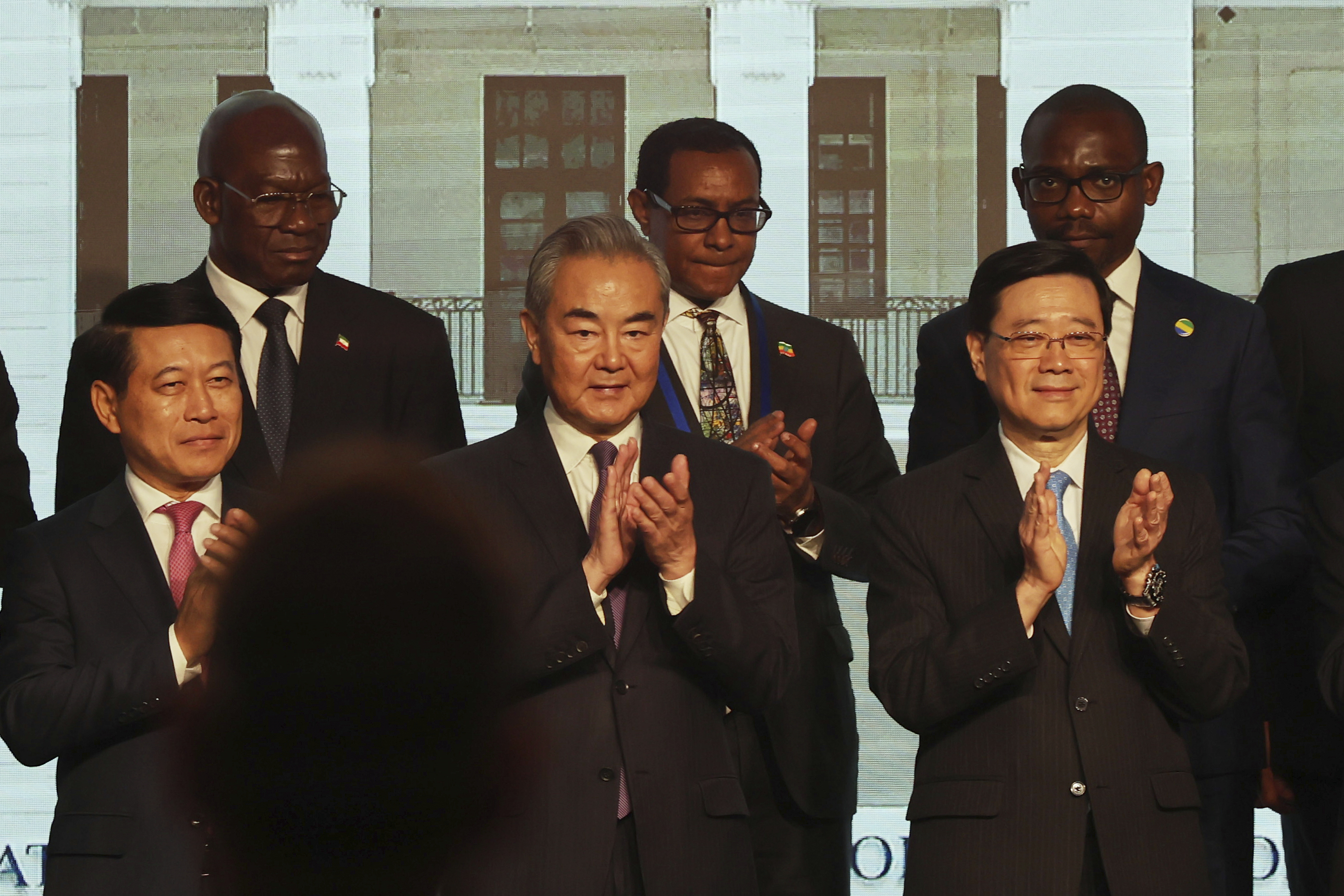
Julian Ku Examines China’s Role in New International Mediation Agreement
Hofstra Law Professor Julian Ku provided legal insights to Newsweek on the Convention on the Establishment of the International Organization for Mediation agreement that was signed by China and 32 other countries. The organization stands as the first of its kind, dedicated solely to facilitating mediation between nations.


James Sample Shares Legal Analysis on President Trump’s Travel Ban
Hofstra Law Professor James Sample shared his legal analysis on President Donald Trump’s new travel ban proclamation in an interview with ABC News. The proclamation bans 12 countries, citing national security concerns as the reason. In the news segment, Professor Sample said he expects the ban to be challenged in court. He also provided similar commentary for KYW Newsradio.

Video Insights: What Investors Need to Know About Shifting Tariffs
Unprecedented uncertainty brought on by quickly evolving tariff policies is creating challenges and additional considerations for investors and other capital providers. In this video, J.S. Held experts Brian Gleason, John Peiserich, James E. Malackowski, and Tom Burns – experts in turnaround, supply chain, intellectual property, and political risk – pose twelve questions to private equity sponsors and their portfolio companies to explore amid the continued tariff uncertainty. Restructuring and operations expert Brian Gleason has managed or participated in more than 300 turnaround engagements over the past 29 years and applies the principles utilized in J.S. Held's work advising companies in crisis. In the video, Brian addresses three essential questions that investors should consider with their portfolio companies during this period of unprecedented tariff-policy-induced uncertainty: 1) How have tariffs impacted business forecasting and investor confidence? 2) What are the key actions portfolio company management teams should take during tariff-induced uncertainty? 3) What leadership strategies are recommended for navigating the economic stress caused or complicated by tariffs? Business intelligence expert Tom Burns has extensive experience leading intelligence collection assignments for financial institutions, law firms, and blue-chip multinationals around the world. Tom explores the additional pre-acquisition diligence essential amid tariff uncertainty in the video. He addresses three questions, including: 4) How have tariffs changed the due diligence process in acquisitions? 5) What is transshipment, and why is it a concern for investors and their portfolio companies? 6) What steps should investors take to manage tariff-related risks in acquisitions? Capital projects, environmental risk, and compliance expert John Peiserich has over 30 years of experience advising heavy industry and law firms throughout the country with a focus on Oil & Gas, Energy, and Public Utilities. In the video, John reflects upon: 7) Why is it important for investors to assess the owner-operator's understanding of supply chain risks? 8) How have tariffs introduced new challenges for large-scale projects? 9) What is the potential impact of supply chain and tariff-related delays on investment outcomes? James E. Malackowski has a unique perspective on intellectual property litigation risk, strategic management, and monetization, which benefits from his prior work at a leading private equity firm. In the video, he advises investors and their portfolio companies to consider: 10) How do tariffs influence decisions around manufacturing relocation and intellectual property? 11) What IP-related risks should companies consider when relocating manufacturing operations? 12) What steps should investors take to ensure IP is properly managed in response to tariffs? The J.S. Held Tariffs and Trade Series is a collection of intelligence, insights, and action plans that inform strategic business decision-making and foster resilience in an increasingly volatile global market. To view more of our Tariffs and Trade Series expert analysis and commentary, visit: Looking to know more or connect with John Peiserich and James E. Malackowski? Simply click on either expert's icon now to arrange an interview today. If you are looking to connect with Brian Gleason or Tom Burns - contact : Kristi L. Stathis, J.S. Held +1 786 833 4864 Kristi.Stathis@JSHeld.com


Covering the latest developments in Iran? Our experts are here to help with your coverage.
Iran’s nuclear program remains one of the most closely watched issues in international security, diplomacy, and nonproliferation. Originally launched in the 1950s with Western support, the program has since evolved into a focal point of global concern over nuclear weapons, regional stability, and international trust. As negotiations continue to stall and enrichment capabilities increase, understanding the historical context, scientific progress, and geopolitical consequences of Iran’s nuclear ambitions is critical for public awareness. This topic provides journalists with high-impact angles spanning diplomacy, science, and security. Key story angles include: Origins and Evolution of the Program: Tracing the nuclear program from its U.S.-backed beginnings under the Shah to its secret expansion after the 1979 Islamic Revolution. The JCPOA (Iran Nuclear Deal): Examining the 2015 Joint Comprehensive Plan of Action, its successes, its unraveling after the U.S. withdrawal in 2018, and current attempts to revive it. Scientific Advances and Enrichment Capacity: Analyzing Iran’s current uranium enrichment levels, centrifuge technology, and what experts say about its "breakout time." Regional and Global Security Concerns: Investigating how Iran’s program affects Middle Eastern tensions, Israeli security policy, and broader nuclear proliferation risks. Diplomatic Stalemates and Sanctions: Reviewing the impact of international sanctions, diplomatic efforts by the EU, China, and Russia, and the political dynamics within Iran. The Risk of Escalation or Military Conflict: Exploring scenarios that could lead to open confrontation and what military analysts say about preemptive strikes or deterrence strategies. Iran’s nuclear program is not just a regional issue—it’s a global flashpoint at the intersection of science, diplomacy, and international law. Journalists covering this story have an opportunity to unpack a decades-long narrative with renewed urgency. Connect with our experts about Iran’s Nuclear Program: History, Progress, and Global Risks: Check out our experts here : www.expertfile.com