
Experts Matter. Find Yours.
Connect for media, speaking, professional opportunities & more.

‘Bottom-line mentality’ can lead to loss of employee respect and loyalty, research shows Supervisors driven by profits could actually be hurting their coveted bottom lines by losing the respect of their employees, who counter by withholding performance, according to a new study led by Baylor University. The study, “The Influence of Supervisor Bottom-Line Mentality and Employee Bottom-Line Mentality on Leader-Member Exchange and Subsequent Employee Performance,” is published in the journal Human Relations. “Supervisors who focus only on profits to the exclusion of caring about other important outcomes, such as employee well-being or environmental or ethical concerns, turn out to be detrimental to employees,” said lead researcher Matthew Quade, Ph.D., assistant professor of management in Baylor University’s Hankamer School of Business. “This results in relationships that are marked by distrust, dissatisfaction and lack of affection for the supervisor. And ultimately, that leads to employees who are less likely to complete tasks at a high level and less likely to go above and beyond the call of duty.” While other studies have examined the impact of bottom-line mentality (BLM) on employee behavior, Quade said this is the first to identify why employees respond with negative behaviors to supervisors they perceive to have BLM. The research team surveyed 866 people. Half of those surveyed were supervisors; the other half were their respective employees. Data was collected from those who work in a range of jobs and industries, including financial services, health care, sales, legal and education. Researchers measured supervisor BLM, employee BLM, task performance and leader-member exchange – the rating employees gave of their relationships with their supervisors. Employees rated their supervisors’ BLM by scoring on a scale statements like: “My supervisor treats the bottom line as more important than anything else” and “My supervisor cares more about profits than his/her employees’ well-being.” They rated leader-member exchange via statements such as “I like my supervisor very much as a person” and “My relationship with my supervisor is composed of comparable exchanges of giving and taking.” Supervisors rated their employees by scoring statements such as: “This employee meets or exceeds his/her productivity requirements,” “This employee searches for ways to be more productive” and “This employee demonstrates commitment to producing quality work.” Based on the responses and the data collected and analyzed, the researchers found: High-BLM supervisors create low-quality relationships with their employees. In turn, employees perceive low-quality leader-member exchange relationships. Thus, employees reciprocate by withholding performance. When supervisor BLM is high and employee BLM is low, the damaging effects are strengthened. When both supervisor and employee BLM are high, the negative performance is still evident. The last finding on that list was particularly significant, Quade said, because it contradicts a common belief that when two parties (in this case, supervisors and employees) think alike and have similar values, there will be a positive outcome. Not so much in the case of BLM, the study shows. “When supervisor and employee BLM is similarly high, our research demonstrates the negative effect on performance is only buffered, not mitigated – indicating no degree of supervisor BLM seems to be particularly beneficial,” the researchers wrote. “It seems even if employees maintain a BLM, they would prefer for their managers to focus on interpersonal aspects of the job that foster healthier social exchange relationships with their employees in addition to the bottom line.” The profit-performance relationship can spark a conundrum for companies, Quade said, because organizations want to be profitable, and performance is an important indicator of an organization’s health and vitality. If leaders believe a negative dynamic regarding BLM exists in their organization, the researchers suggest a few practical steps: Be cautious of a BLM approach or emphasizing bottom-line outcomes that could neglect other organizational concerns, such as employee well-being and ethical standards. Managers should be aware of the message they pass along to employees (and the possible performance repercussions) when they tout bottom-line profits as the most important consideration. Organizations that need to emphasize bottom-line outcomes should consider pairing the BLM management style with other management approaches known to produce positive results, such as practicing ethical leadership. “Supervisors undoubtedly face heavy scrutiny for the performance levels of their employees, and as such they may tend to emphasize the need for employees to pursue bottom-line outcomes at the exclusion of other competing priorities, such as ethical practices, personal development or building social connections in the workplace,” the researchers wrote. “However, in doing so they may have to suffer the consequence of reduced employee respect, loyalty and even liking.” ABOUT THE STUDY “The Influence of Supervisor Bottom-Line Mentality and Employee Bottom-Line Mentality on Leader-Member Exchange and Subsequent Employee Performance” is published in the journal Human Relations. Authors are Matthew Quade, Ph.D., assistant professor of management in Baylor University’s Hankamer School of Business; Benjamin McLarty, Ph.D., assistant professor of management, Mississippi State University; and Julena Bonner, Ph.D., assistant professor, Utah State University. ABOUT BAYLOR UNIVERSITY Baylor University is a private Christian University and a nationally ranked research institution. The University provides a vibrant campus community for more than 17,000 students by blending interdisciplinary research with an international reputation for educational excellence and a faculty commitment to teaching and scholarship. Chartered in 1845 by the Republic of Texas through the efforts of Baptist pioneers, Baylor is the oldest continually operating University in Texas. Located in Waco, Baylor welcomes students from all 50 states and more than 90 countries to study a broad range of degrees among its 12 nationally recognized academic divisions. ABOUT HANKAMER SCHOOL OF BUSINESS AT BAYLOR UNIVERSITY At Baylor University’s Hankamer School of Business, integrity stands shoulder-to-shoulder with analytic and strategic strengths. The School’s top-ranked programs combine rigorous classroom learning, hands on experience in the real world, a solid foundation in Christian values and a global outlook. Making up approximately 25 percent of the University’s total enrollment, undergraduate students choose from 16 major areas of study. Graduate students choose from full-time, executive or online MBA or other specialized master’s programs, and Ph.D. programs in Information Systems, Entrepreneurship or Health Services Research. The Business School also has campuses located in Austin and Dallas, Texas. Visit www.baylor.edu/business and follow on Twitter at twitter.com/Baylor_Business.



Otterbein’s engineering program focuses on adding diversity to the profession
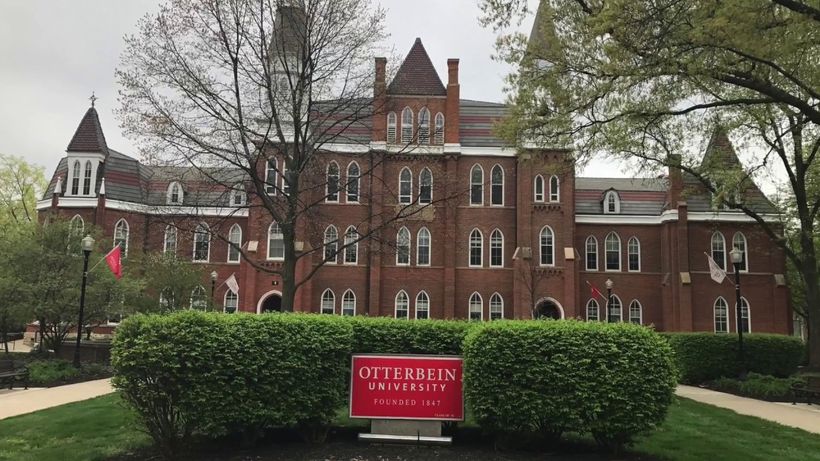
In April, Otterbein granted degrees to its first class of engineering graduates. While it’s a historic moment for the school, the class is important for another reason: it exceeds the national graduation rate for women in engineering. Otterbein is working in an intentional way to recruit a diverse class of engineers in a field that is increasingly looking for well-trained professionals who bring diverse opinions and ideas to the table. According to the American Society of Engineering Education, the national average for females earning bachelor’s degrees in engineering is 19.9%. The average for minority students graduating with engineering degrees is just 7%. Amongst the 21 students graduating from Otterbein, 29% are female and 29% are minority students. The inaugural class was also the first class to study in The Point at Otterbein University, an experiential learning facility focused on collaboration with businesses, community makers and academics. At The Point, students have opportunities to pursue industry projects and on-campus internships with resident professionals from some of the country’s largest and most respected businesses, like JPMorgan Chase and Nestle, and locally based companies, like Worthington Industries, Nikola Labs and edgeThingZ. Of the 21 graduating students, several are pursuing graduate studies at The Ohio State University and Santa Clara University, while others have already accepted full-time jobs at companies like Honda and Williams-Sonoma. “The students in this class helped us develop a strong program and accomplished a lot during their four years,” said Mike Hudoba, assistant professor of engineering. “Looking back on what they started with, it’s such a neat legacy they get to leave behind. They’re all hardworking students who entered into this new program with us.” Are you covering or would you like to learn more about Otterbein University and its engineering program? Let our experts help. Michael Hudoba is an assistant professor of engineering at Otterbein University and he is available to speak to media regarding this historic time at the school. Simply click on his icon to arrange an interview. To learn more, click on the link below: https://www.otterbein.edu/news/first-engineering-class-a-highlight-of-otterbein-universitys-commencement-weekend/

This year, 26 students from Columbus (Ohio) City Schools (CCS) walked across the stage to receive their Otterbein degrees as part of the Class of 2019. It was a result of a partnership between two great educational institutions that is ensuring post-secondary education is accessible to students in central Ohio. “(The event) was a great example of how two educational institutions can come together and make an impact on the lives of young people and the larger community,” said Tanya L. McClanahan, supervisor of higher education partnerships for CCS. For some time now, Otterbein and CCS have been working together to provide several academic options and initiatives to students from Ohio’s largest school district. Since 2014 the Urban Districts Initiative has been working with Columbus City Schools, as well as South-Western City Schools, Westerville City Schools, Whitehall City Schools and Cristo Rey, all districts with more than 35%of students living in poverty. The Initiative is an enhanced need-based aid model that reduces the gap between aid and expected family contribution to the smallest amount possible and has driven significant increases in enrollment of low-income students at Otterbein, as well as sparking a significant increase in student success. The Seniors-to-Sophomores program, where Otterbein offers a summer College Credit Plus course for CCS students that pairs an academic course with a for-credit study skills course. The University also has a STEM skills refresher course for entering students funded through a grant from Nationwide. Otterbein offers Professional Learning Communities (PLCs) for district teachers and Otterbein faculty. In PLCs, teachers and faculty come together to discuss issues related to pedagogy and serving students to enhance the work of both institutions. Recently, Otterbein introduced a scholarship for the dependent children of CCS district (benefits eligible) employees that reduces the cost of an Otterbein education to the average of the state supported universities in Ohio. There are a lot of great things happening in Otterbein’s financial aid and recruitment models that are seeing positive outcomes in the Otterbein and central Ohio communities - and if you need to know more, that’s where our experts can help. Jefferson Blackburn Smith is the Vice President for Enrollment Management and is an expert in financial aid, scholarships, politics, and higher education. He is available to speak to media regarding these topics – simply click on his icon to arrange an interview. To learn more, click the link below: https://www.otterbein.edu/news/cohort-of-columbus-city-schools-alumni-to-graduate-from-otterbein-university-sunday/

College readiness: Why it’s time to turn the page on one-off developmental courses
With summer officially here, millions of recent high school graduates and adult learners alike are preparing for college this fall. Unfortunately, a large percentage of them need developmental courses in order to advance, and many of those students will drop out within their first year—victims of a college preparedness approach that is generally not working. While it is true that education provides one of the surest pathways to a better life, millions of individuals do not have the academic background, confidence, mindset, and study habits to succeed in postsecondary programs and achieve their career dreams. Underprepared students face serious hurdles when attempting to enroll in college, and often struggle with one or more of the following: Poor self-image, lack of confidence (and overconfidence), and undeveloped study skills Weak math skills and math phobia Poor writing/language skills Lack of preparation for rigorous reading of texts, analytical thinking, and problem-solving Despite the poor track record, an estimated $7 billion is spent annually on traditional remedial education by students and institutions. According to research, 68 percent of community college students and 40 percent of public four-year college students take at least one developmental course, and among them less than 10 percent of two-year students graduate within three years, and only 35 percent of four-year students graduate within six years. Solutions exist, according Pat Partridge, president of WGU Academy—an independent nonprofit entity established by Western Governors University (WGU) to help solve the growing college-readiness gap. He suggests that for college readiness to be effective, programs must incorporate noncognitive personal competencies. “The Academy’s approach is based on the premise that to make college-readiness effective we must address the whole person rather than just getting them through one-off math or English courses to satisfy admissions requirements. Our two-pronged approach to preparing students—focused on academic coursework and noncognitive personal skills—is challenging traditional thinking paradigms that are not working well. The program is designed to be transformative for students who need confidence and persistence, social and emotional learning skills, and customized support to position them for long-term academic and career success.” Studies show that students and families pay an extra $3,000 on skills and content they should have learned in high school—a hefty price for courses that typically offer no transferable credits. Partridge suggests that programs like Academy—which uses an online, competency-based learning model similar to WGU’s—can change that by offering a scalable, replicable solution. WGU Academy students pay $150 per month, and most enrollees should finish the program in three to four months, or even less—making it a low-cost, low-risk solution. And the courses are ACE (American Council on Education) recommended, which hundreds of colleges and universities recognize. “The challenge is far larger than WGU alone can tackle, which is why Academy is designed to help serve hundreds of thousands of individuals who are not likely to attend WGU” Partridge noted. “We look forward to working with other entities that share the same mission to help individuals succeed in college and their careers—both recent high school grads and adults—by boosting completion rates.” WGU Academy’s first partnership is with tnAchieves in support of Tennessee’s flagship scholarship program that allows any resident without a postsecondary certification to attend community college tuition-free. WGU Academy, which launched May 1, 2019, already has more than 600 enrolled students. To speak with Partridge, contact WGU Academy’s PR Business Partner, Matt Griffin, at matt.griffin@wgu.edu or (615) 472-6056.


They are incidents that are now more common than a lot of people want to admit – and research is showing that mass shootings are taking a serious psychological toll on our country’s population. UMW’s Laura Wilson’s research was recently cited in media throughout the country for her work analyzing PTSD and its affects on witnesses to these events. “PTSD estimates 28 percent of people who have witnessed a mass shooting develop post-traumatic stress disorder (PTSD) and about a third develop acute stress disorder. Laura Wilson, an assistant professor of psychology at the University of Mary Washington in Virginia conducted a meta-analysis — an examination of data from 11 studies of PTSD symptoms among more than 8,000 participants who ranged from those who'd witnessed shootings to those who just lived in the communities in a 20-year period. She found the greater the exposure — someone who was at the scene or who lost a friend or family — the greater risk of developing PTSD. But, in her work, Wilson has found other factors, too, including previous psychological symptoms and a lack of social support, also played a role in increasing the likelihood. "Mass shootings are a different type of trauma," Wilson says. "People are confronted with the idea that bad things can happen to good people. ... Most people have a hard time reconciling the idea that a young, innocent person made the good decision to go to school, was sitting there, learning and was murdered. That does not make sense to us. ... It just rattles us to our core." And yet, some people don't fully appreciate the lasting psychological wounds of those who escaped physical harm.” June 02, Associated Press Are you covering this topic, or would you like to know more? That’s where UMW can help. Laura C. Wilson is a clinical psychologist whose expertise focuses on post-trauma functioning, particularly in survivors of sexual violence or mass trauma (e.g., terrorism, mass shootings, combat). Dr. Wilson is available to discuss this topic with media – simply click on her icon to arrange an interview.



Monitoring the migration of blackfin sharks – Florida Atlantic’s experts are in the news
Seeking the warmer waters of the south coast – it is that time again for the annual migration of the black fin shark. These majestic sharks can grow up to 8 feet and weigh in at more than 200 pounds when fully grown. They’re also listed by the International Union for Conservation of Nature (IUCN) as near threatened, mostly due to the fact it is a targeted for its meat and its fins, which are used to make shark fin soup. Recently, one of our experts was featured in the media for his efforts in ongoing research and his studies are benefiting those who live both on water and on land. “Dr. Stephen Kajiura, a researcher at Florida Atlantic University, has been tracking the migration patterns of these apex predators by air and sea. Now Kajiura's latest tool is providing thorough details about their every move. He is capturing their movements and gathering detailed information through a $5,000 reusable radio and satellite sensor attached to their dorsal fins for two to four days. Data from these "shark diaries" records information, including how often they swish their tails, at what depth they prefer to swim, and at what time of day they swim close to the beach — proving beneficial to lifeguards responsible for beach safety.” Tampa Bay Times Are you covering? Do you need to know more about sharks, the dangers they face and what researchers are learning about these amazing species of fish? Let our experts help. Stephen Kajiura, Ph.D., is a professor and researcher at Florida Atlantic University. He’s also an expert in sharks and shark behavior. Stephen is available to speak with media – simply click on his icon to arrange an interview.



China Employs Mass Surveillance as Authoritarian Tool in Xinjiang Province
China has been engaged in high-tech surveillance of citizens in its Xinjiang province, according to a New York Times report, creating “an incubator for increasingly intrusive policing systems” that could expand automated authoritarianism across the country and abroad. One of the prime motivators, ostensibly, is to monitor and subdue minority religious and ethnic groups. This practice presents obvious, multi-faceted ethical issues, says Benjamin R. Mitchell, PhD, an assistant professor in Villanova’s Department of Computing Sciences with expertise in computer ethics. “The Chinese government surveillance project in Xinjiang is a perfect example of why we must be cautious and thoughtful about the deployment of technology. Most of the basic technologies being deployed were not originally developed for this application, and many of them have alternative uses which are potentially beneficial, or at the very least less clearly harmful to human rights. But applying these technologies to the surveillance and oppression of large groups of citizens still requires a large, intentional effort, making this as much a social and moral problem as it is a technological one.” Modern technologies, constantly being refined and developed, have brought us closer to the potential spread of totalitarian states, Dr. Mitchell says. “George Orwell’s 1984 was intended as a cautionary tale, but there have always been authoritarian regimes that have viewed it as a how-to manual. In the past, however, the manpower requirements for implementing such a system made it impractical to scale up to very large target groups. Modern technologies like automatic facial recognition and machine learning are now beginning to make widespread deployment of such systems possible.” Decreasing costs of technological surveillance systems will make their misuse even more likely, and those that employ them are justly open to criticism and opposition, Dr. Mitchell noted. “While the cost and manpower requirements are still likely too high to deploy such a system nationwide, the costs are steadily being driven down through research and development, meaning the development of a totalitarian information state is easier than ever before. It is entirely appropriate to critique governments, companies, or individuals who knowingly contribute to the construction and deployment of systems intended to oppress.” Although technology plays a key role in the Chinese attempt to oppress or eliminate targeted groups within its own borders, it is certainly not the first of its kind to do so through authoritarian surveillance, says Dr. Mitchell. “We can look at examples like Nazi Germany or Soviet East Berlin to see how this type of surveillance and suppression has been used in the past; the technological sophistication may have been less, but the risks to human dignity and freedom were broadly the same. The technology is certainly an enabling factor, but the fundamental problems presented here are not new ones. Security is important for human flourishing, but we must remember that the targets of pervasive surveillance can never feel secure; in pursuing security thoughtlessly, we can destroy it. If we are to be moral, we must consider the security of all people, not just those in a position of power,” he concluded.


WACO, Texas (May 13, 2019) – The movie-watching experience continues to evolve. And while directors wish all people could experience their movies on the silver screens in theaters, they know most people these days will be watching on the big screens in their living rooms or on the small screens in their hands. The movie-watching experience and the takeaways matter, said award-winning filmmaker Chris Hansen, M.F.A., who serves as professor and chair of the film and digital media department in Baylor University’s College of Arts & Sciences. “As a director, I want people to engage with the story and the characters. I want you to be able to put yourself in the characters’ shoes and see the world from their points of view so that, whether you agree or disagree with their actions, you understand where they’re coming from,” Hansen said. Hansen has directed five independent films. His most recent project, Seven Short Films About (Our) Marriage, is now in post-production. In the following Q&A, Hansen shares thoughts on how we – as audience members – can do our part to get the best movie-watching experience and what he – as the director – hopes we take away from that experience. Q: As a director who puts in countless hours and organizes a team that puts in countless hours on a project, what do you hope audiences take away from your film? A: Film critic Roger Ebert once called films “a machine that generates empathy.” I see my films falling within that description. I want to generate empathy in the viewer for these characters and their situations, and I want audiences to come away talking about and thinking about their struggles. Q: So much goes into making a movie. There’s the script, cinematography, setting, dialogue, music, costumes, etc. Is there any one thing you hope your audiences notice? A: I hope that I, along with the other artists who have collaborated on the film, have created an experience where none of those things stands out above the other, except that they create a moment or moments that move people. If you’re thinking, “That was great dialogue,” then that can take you out of the world of the movie. Q: Your films are all available on various streaming platforms, which means that people are most likely watching them on televisions in their homes. What are your thoughts on the home viewing experience? A: The quality of the home viewing experience has gotten better and better over the years. We now have (or have access to) better and larger television screens, terrific audio systems and movies available in high-resolution formats. On the flip side, the home does not afford the best viewing environment because it’s not immersive the way a theater is. The experience of the theater provides fewer interruptions and allows the viewer to be fully immersed in the world of the movie, although even that environment is being disrupted by people using their cell phones in the middle of a movie. Still, it’s better than the home viewing experience, which gives the viewer many distractions and interruptions. Q: When you watch films at home, what steps do you take to limit distractions? A: As a person with a wife and children, I try to plan viewings of movies around their schedules, so I can watch uninterrupted when I know people won’t be home. And I try to control my own distraction level, but the “always on” nature of email and texting are hard to resist. My preference would always be to have people turn the phone off, turn the lights off and turn their attention solely to the screen. That’s hard to get people to do at home. Q: What are your thoughts about people watching movies on their smartphones or tablets? A: Very few filmmakers I know would express a preference that people watch their work on smaller screens. It’s just not ideal, and there are so many carefully planned details that can be missed. Having said that, I’ll admit to having watched films and TV shows on my tablet, especially when I’m traveling. The truth is, given the changing nature of the world we live in, people are going to watch in whatever way is most convenient for them. But watching on a screen as small as a phone means you’re getting a much more utilitarian experience of the film. You can say you watched it and can probably recount the plot accurately. But you will often have missed the fuller experience of seeing the film on a larger screen. Q: When students come to you and say, ‘I want to make movies!’ what’s the first thing you say to them? A: One of the first things I tell people is that the best way to learn how to make movies is to make movies. You learn by doing and getting critical feedback from someone who has done it and understands the form. And of course, in our program at Baylor, we also teach the theory side of things. We believe in a solid balance between theory and practice. We teach our students how this is done, but then they just actually have to do it and learn from their successes and their failures. Q: Do students in Baylor’s film and digital media program have the opportunity to work on your films? If so, in what ways? A: Students in our program do indeed have the opportunity to work on faculty-led projects. We make our films in the summer and offer the opportunity as a credited course so that they can have a lab-like learning experience. Students rotate through crew roles while working under professionals who help them understand their jobs. Some of our students have called this one of their best learning experiences in our major because it takes all the things they learn in the classroom and puts those to the test on a project that’s much larger in scope than what they’ve been able to experience before. And being a crew member on a film set can be a stressful experience. We’re dependent on the weather and limitations of time and money. It’s a great way for them to understand the ups and downs of the process and how they’ll respond to the pressure. Q: What can you share about your newest project and where can people find your previous films? A: My latest film, currently in post-production, is a feature film called Seven Short Films About (Our) Marriage. It’s the story of one marriage that unfolds over seven episodes over a number of years, as this couple struggles with the common issues that marriages face and try to make their love last. My films are currently all available on various streaming platforms. You can find Blur Circle, Where We Started, Endings, and The Proper Care & Feeding of an American Messiah either on Amazon Prime, iTunes, and in some cases, on Blu-ray disc via Amazon and other outlets.

Working together to promote veteran education
Georgia Southern University recently signed an agreement (see attached) with Nine Line Foundation that will assist veterans as they transition back into civilian life. Veterans will be enrolled in an aquaponics training program with the University’s Armstrong Campus’ Sustainable Aquaponics Research Center (SARC) at a compound at Nine Line Apparel in Savannah, Georgia. Aquaponics, or soilless farming, mixes aquaculture, the farming of fish, and hydroponics, to fuel the growth of plants in water. The SARC, a 4,100 square-foot greenhouse, has four independent recirculating systems, each containing 900-gallon tanks capable of holding more than 100 mature tilapia. Working within the College of Science and Mathematics, the SARC is focused on providing students, faculty and volunteers with the opportunity to conduct fundamental, interdisciplinary research in the area of aquaponics. The partnership with Nine Line Foundation will extend education opportunities to area homeless veterans and provide faculty and students an opportunity to engage with the veterans. Are you interested in learning more about his project and how Nine Line Foundation and Georgia Southern University are working together to provide opportunities and training to veterans? SARC’s director, Brent Feske available to speak with media – simply click on his icon to arrange an interview.


Just how big of a deal is AI? At this year’s Directions 2019, IDC Canada experts will be speaking to a variety of topics that are reshaping the digital visions and tactics modern companies are using to compete. Explore how AI encompasses a huge spectrum of technologies for the enterprise and how at the center of it all is data. On May 02, join Warren Shiau, Research Vice-President with IDC Canada as he presents a highly anticipated talk on AI: Process Animation at 11:20 AM. Warren will look at what’s being adopted by Canadian enterprise under the banner of AI; and why AI can generate significant business value even in the absence of large data science teams and enterprise-wide high-quality data. Deep learning may rule the future but “small AI” targeting things like process automation rules the day. Organizations are rethinking digital transformation – join us May 02 to learn more. Location: St. James Cathedral Centre: Snell Hall, 65 Church Street | Toronto Date: May 2, 2019 Time: 8:00 AM - 8:30 AM - Registration & Networking Breakfast | 8:30 AM - 3:30 PM Conference Program Register Today before it's too late! If you're a member of the media and would like to attend this event, please contact Cristina Santander at csantander@idc.com
