
Experts Matter. Find Yours.
Connect for media, speaking, professional opportunities & more.

Amid "Likes" and "Shares," Facebook Jeopardizes Children's Health and Safety
On February 4, 2004, a 19-year-old Mark Zuckerberg launched “TheFacebook.” Developed in his Harvard University residence hall, it began as a networking service for his roughly 7,000 classmates. Today, it is the most popular social media platform in existence, boasting over three billion monthly active users worldwide. Through two decades of “likes” and “shares,” Facebook has transformed how people connect, interact and think. Driving everything from dinner parties and concert outings to political campaigns and protest movements, it has frequently been celebrated for its ability to convey information, mobilize groups and galvanize change. However, it has also been criticized for its questionable content management choices, its suspect data collection practices and, perhaps most notably, its role in feeding an ever-growing mental health crisis among children and adolescents—a charge Zuckerberg refutes. Elizabeth Burgess Dowdell, PhD, RN, FAAN, is a professor in Villanova University’s M. Louise Fitzpatrick College of Nursing and an expert on the health and safety risks posed by social media. From her perspective, Facebook and platforms like it have undoubtedly played a part in heightening levels of emotional distress and physical harm among youths. “Statistically, it’s well-established in the literature that mental health issues and concerning behaviors among children have escalated tremendously,” said Dr. Dowdell. “They’re becoming sadder, more depressed and lonelier, even though they’re very connected.” To Dr. Dowdell’s point, mental health disorders began rising precipitously among young people in the years following Facebook’s launch. Per the Centers for Disease Control and Prevention (CDC), the percentage of children aged 6 to 17 years “ever having been diagnosed with either anxiety or depression” increased from 5.4% in 2003 to 8% in 2007 and 8.4% in 2011-2012. And just last year, in the era of Instagram and TikTok, Mental Health America found that 11.5% of children in the United States were struggling with severe depression, with 16% of youths aged 12 to 17 years having experienced a major depressive episode in the past 12 months. A contributing factor, according to Dr. Dowdell, is the way social media construes reality. Flooded with images, posts and videos that show hyper-idealized, rose-colored representations of life, impressionable young users can be made to feel isolated, inept or dissatisfied with their appearance. “I think adults understand that a ‘perfect’ picture is often preceded by a dozen other photos,” she said. “Kids don’t always see it like that. They focus on what makes them happy and what makes them sad—and what makes them feel sad about themselves.” Tragically, throughout the social media age, this sadness has been tied to increasing rates of suicide, self-harm and risky behavior among youths. A 2023 CDC study found that the suicide rate for children aged 10 to 14 years tripled from 2007 to 2018 (from 0.9 deaths per 100,000 to 2.9), and in 2021-2022, the National Center for Missing and Exploited Children noted a 35% year-over-year increase in reports of suspected child sexual exploitation. Amid these frightening statistics, Dr. Dowdell emphasizes the importance of caring, compassionate adults’ involvement in young people’s lives. She notes these individuals’ presence can not only shield youths from potentially hazardous situations but give them the tools to cope with traumatic episodes and feelings of despair. “The critical factor that helps children become resilient is having a support system—having family members, parents or trusted adults with whom they can talk,” Dr. Dowdell shared. “They might go down the rabbit hole, but they have someone to pull them out, someone to help them.” For adults concerned about their loved ones’ social media use, Dr. Dowdell stresses that empathy and understanding are key. In turn, she advocates for an approach that reflects the supposed purpose of Facebook and platforms like it: active conversation. “It all comes back to communication,” she said. “Parents and guardians need to role-model responsible behaviors. They need to talk about these things: ‘What did you look at today?’ ‘What was good?’ ‘What was bad?’ ‘What did you think?’ ‘How did you feel about that?’ “It’s much like, when children are little, reading them books. When we read to children, we engage them… Why not read the social media feeds, look at the Facebook posts or go through Instagram? These forms of engagement, the conversations we have, let them know they can come and talk.”


Reflection, Recognition and Expression: The Science of Cultivating Gratitude
Baylor positive psychology researchers offer three ways to increase gratitude and empathy Credit: Marina Demidiuk / iStock / Getty Images Plus Gratitude research delves into the science surrounding human emotions and the physical, mental and spiritual benefits of actively expressing gratefulness. Leading Baylor University positive psychology researchers Sarah Schnitker, Ph.D., and Jo-Ann Tsang, Ph.D., who specialize in the study of gratitude, have identified three science-based mechanisms that can cultivate gratitude and improve empathy. This work is especially timely during the Thanksgiving and Christmas seasons. Through the examination of previous studies and the broader literature on the process and benefits of gratitude, the associate professors of psychology and neuroscience have discovered that some previous understandings of gratitude may not tell the whole story. By engaging gratitude in a way that benefits the whole community, the researchers identified ways to engage in gratitude that move the emotions of gratitude beyond a fleeting feeling and become virtuous through helping others. “Gratitude does seem to increase well-being, but not all the time,” Schnitker said. “It sometimes decreases depression and anxiety symptoms, but not always. It makes you more generous, more kind, more caring, but again, not always,” Schnitker said. “[That’s why] we’ve been looking at how to cultivate gratitude in such a way as to really impact flourishing. Not just individual well-being, but also the well-being of other people around them.” Deep reflection Through intentional deep reflection of what we are grateful for, we can move past the cycle of “hedonic adaption” – a theory that proposes people will quickly return to a baseline level of happiness, despite the effects of major positive or negative life events – and into a positive emotional state of gratitude. “You have to pay attention and be intentional about reflecting,” Schnitker said. “Part of the reason is that, like a hedonic treadmill, we get used to our current state; it becomes part of the background, and it no longer benefits our well-being.” Schnitker describes intentionally recognizing who and what you are grateful for as a tool that leads to feelings of greater happiness and connection. “What we find is that by incorporating practices that engage deep reflection – that are structured and effortful – it will lead to higher levels of life satisfaction and gratitude,” she said. Recognizing a giver When you recognize the person for whom you are grateful, you begin to move from feeling thankful for that person to feeling thankful to that person. Schnitker suggests writing gratitude letters to acknowledge those for whom we feel grateful. “Go beyond being thankful and think about the giver; whether that is God or someone else in your life, take the time to deeply consider them,” Schnitker said. “The suggestion of writing a letter over a list is effective in that you are addressing it to someone outside of yourself, and it can build deeper connections.” Jenae Nelson, Ph.D., a postdoctoral research associate in Schnitker’s Science of Virtues Lab at Baylor, has found that expressions of gratitude through letter writing towards an entity increased empathy and transcendent indebtedness in participants significantly more than writing a gratitude list. Participants who felt transcendent indebtedness, or a desire to pay it forward, were much more generous in charitable donations than those who just felt gratitude during the experiment. “This is compelling evidence that gratitude has to work in harmony with other prosocial emotions such as indebtedness and empathy to promote generosity, which are only activated when someone thinks about a person to whom they are grateful,” said Nelson. Outward expression The act of outwardly expressing thankfulness to the giver, whether that is a human, nature or God, can transform it from a temporary feeling into virtuous gratitude. It is the intentional effort of action that contributes to the flourishing of other people. “So many of the studies will have people just write a letter and not necessarily send it,” Schnitker said. “Writing the thank-you note and sending it – either electronically or in the mail – may enhance the impact of the gratitude practice. Expressing gratitude is a natural response and can compound its benefits because both the recipient and giver of thanks can experience an increase in positive emotions.” Essentially, you might not be able to thank the person directly, but expressing your gratitude outwardly could lead to expansive generosity. Research suggests that people treasure feeling thanked. It boosts their own well-being, especially in Western societies and the cultural context of the United States. "So have the courage to reach out and thank them," Schnitker said. Gratitude expressed with these components and mechanisms promotes well-being for both self and those around you. “We find that when people feel that genuine gratitude, not only do they want to pay it back, but they also want to pay it forward,” Schnitker said.


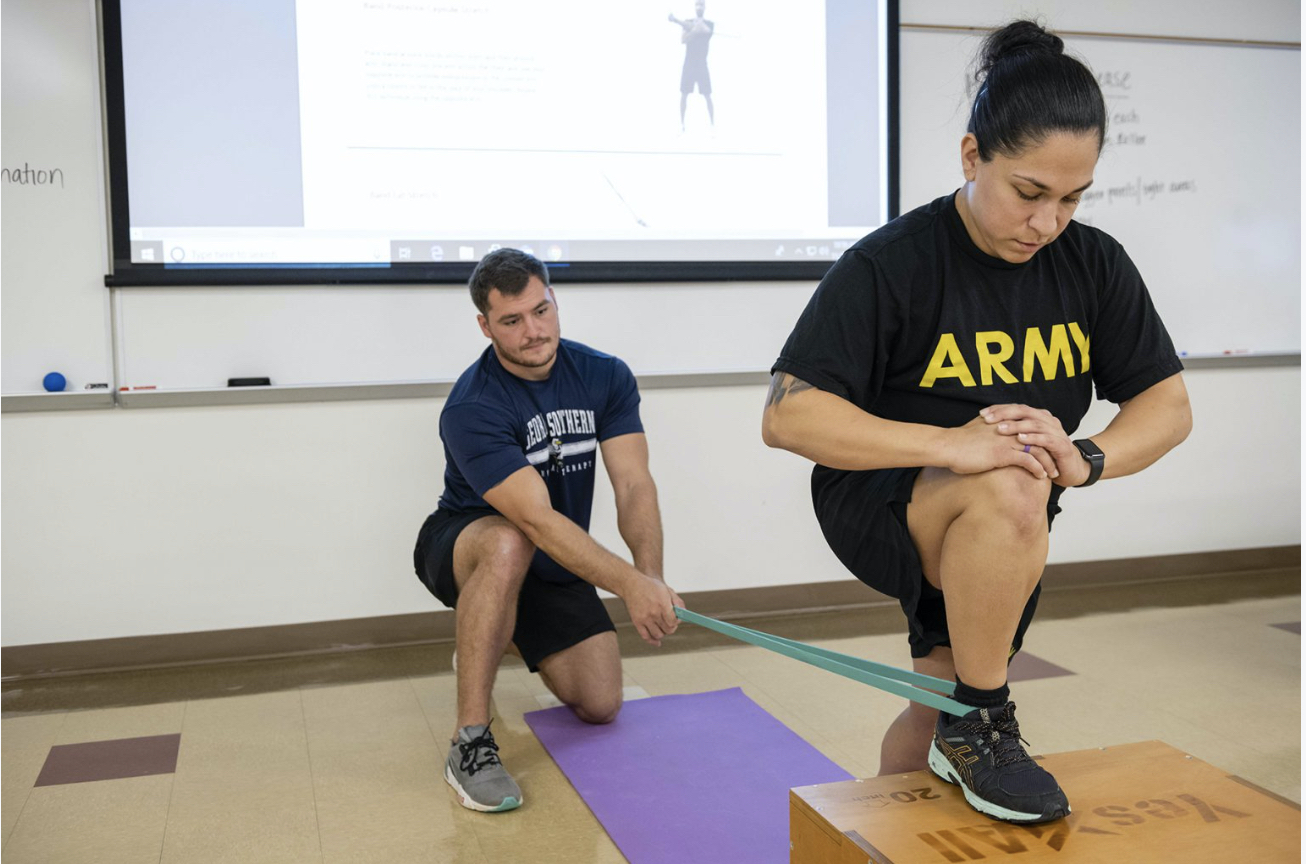
The Georgia Southern University Soldier Performance and Readiness (SPAR) program received a $1.5 million, two-year grant from the Department of Defense’s U.S. Army Medical Research and Development Command (USAMRDC). The grant will expand Georgia’s Southern research and programming capacity in injury prevention techniques that ensure force readiness for the Army. “Through this large-scale research study, Georgia Southern doctoral students have opportunities to be involved in the research process and work directly with soldiers,” said Nancy Henderson, Ph.D., assistant professor in the Doctor of Physical Therapy (DPT) program. “Additionally, the grant will fund graduate assistant positions in the Doctor of Physical Therapy program.” USAMRDC’s mission is to provide solutions to medical problems for American service members at home and abroad, as well as to the public at large. The scope of this effort and the priorities attached to specific projects are influenced by changes in military and civilian medical science and technology, operational requirements, military threat assessments and national defense strategies. Extramural research and development programs play a vital role in the fulfillment of the objectives established by the organization. Research and development funded through this are intended to benefit both military and civilian medical practices. “The grant investigates different physical training programs to identify those practices that best prevent non-combat injuries,” said Henderson. “Faculty on the research team will seek to advance the body of literature by determining the best educational models to educate soldiers on injury-prevention topics.” This is the first time that Georgia Southern will act as lead investigator on a collaborative research project with an Army research institute. However, SPAR has long been involved in multiple branches of research with community impact. “Georgia Southern has several initiatives underway to help improve the health, fitness and performance of military service members, law enforcement personnel and firefighting and rescue personnel,” said Joseph Kardouni, Ph.D., director of the Tactical Performance Group. “The Tactical Athlete Certificate (TAC) program is one of these initiatives that teaches service members exercise fundamentals to help mitigate training-related injuries. The funding coming through Medical Research and Development Command will improve evidence-based teaching methods and inform similar efforts to teach service members within this field. Leaders from health and human performance programs within the Army understand the importance of leveraging partnerships with academic institutions to work toward improving the quality of life, health and occupational performance of soldiers.” Faculty and students in the DPT program have educated soldiers on injury prevention topics since 2016 and this grant further provides students with the opportunity to assess effectiveness while learning how to improve educational methods with military service members. “This research is an important next step in delivering on the promise of the SPAR program and Georgia Southern’s close working relationship with Army research partners,” said Interim Vice President for Research and Economic Development Christopher Curtis, Ph.D. Curtis also noted that funding was made possible by the advocacy of U.S. Rep. Buddy Carter and the strong support of Georgia’s legislative delegation in Washington D.C. Interested in learning more or looking to talk with Nancy Henderson? Simply click on her icon now or Contact Georgia Southern's Director of Communications Jennifer Wise at jwise@georgiasouthern.edu to arrange an interview today.


Expert Insight: Fake News, Fake Reviews: Building Trust with Online Shoppers
Online customer reviews have become a critically important cog in the sales conversion process in recent years. Studies show that 97 percent of consumers read product reviews and ratings, and that positive reviews can almost triple the likelihood of making a purchase. As customers do more and more of their shopping online, they are turning in droves to the likes of Yelp, TripAdvisor, and Google Reviews to seek out opinions, recommendations, and feedback from other users before pushing through the final part of the sales funnel. As a result, these third-party review sites have experienced exponential growth. But there’s a caveat: and it’s trust. The success of Yelp and its competitors is wholly contingent on how trustworthy their users perceive them to be; on the transparency and authenticity of the content published and the sources of that content. In an era of disinformation with fake reviews and AI mass-generated content precipitously on the rise, securing—and keeping—user trust is paramount. The Five Keys to Fighting Fakery Goizueta Business School’s Sandy Jap has some suggestions. Together with colleagues Ben Beck of Brigham Young University’s Marriott School of Business and Stefan Wuyts of Penn State’s Smeal College of Business, Jap, who is the Sarah Beth Brown Professor of Marketing, put together a series of studies to test the kinds of measures and mechanisms that platforms can deploy to win user confidence. And it turns out there’s one tactic that works more effectively than any other: actively monitoring the authenticity of user reviews. That and being open and transparent about doing so. Jap and her colleagues scoured the latest research and data on marketing, governance, and identity disclosure to pinpoint the mechanisms that best mitigate online fakery, while simultaneously building trust among platform users. They identified five. “We worked through the literature and were able to whittle these down to five core practices that are robustly effective at building trust,” says Jap. “They are monitoring, exposure, community building, status endowment and identity disclosure. Doing these five things can signal to your users that you are committed to being a guardian of their trust, so to speak.” Monitoring or evaluating reviews for their authenticity and exposing firms that pay for and propagate fake content are mechanisms directed at the rogue firms that spread fakery and misinformation, explains Jap. Meanwhile community building and status endowment focus on reviewers. Community building is about enabling authentic, transparent interactions between consumers and reviewers. An example of this might be allowing consumers to ask questions and reviewers to respond directly. “Status endowment is where a platform verifies and acknowledges the credibility or helpfulness of a reviewer in some way. Yelp and others use things like badges or reviewer ratings which are earned over time and which make it hard for fake reviewers to game their systems,” says Jap. Identity disclosure is the practice of having reviewers provide personal information—their name, picture, or location, for instance—before they can post content. And while this approach can keep fabrication and false profiles in check, it also raises certain tradeoffs, says Jap. “Anonymity online has long been understood as something of an un-inhibitor—a factor that enables users to speak more freely and openly. It can be democratizing in the sense that it removes or lessens prejudice and bias around things like race, social class, or physical appearance,” she says. “Of course, having people share personal data on your platform can also open up a can of worms around privacy and identity theft which are major considerations; so there’s a balancing act needed with this.” To test the efficacy of all five trust building policies, including identity disclosure, Jap and her colleagues ran a series of experiments and studies. They invited volunteers to rate how the presence or absence of these mechanisms impacted the trustworthiness of a platform. One study saw them parse things like domain authority and traffic across 25 online review sites against how many (or few) of the five mechanisms each deployed. Elsewhere, the team used surveys to assess how users ranked the different mechanisms in terms of platform trust, above and beyond other factors such as the quantity of reviews published say, or the expertise of different reviewers. The Bottom Line: Bust Bogus Reviews After crunching the data, Jap and her co-authors found that while all five trust-building mechanisms were valued and important to platform users, the practice of monitoring for fake reviews and reviewers—and broadcasting the fact clearly—was by far the most effective. “Doing all of these five things—monitoring, exposing, community building, status endowment and ID disclosure—are important if you want to earn and keep the trust of your users,” says Jap. “We found that the more of these mechanisms that platforms incorporate, the better their domain authority, Alexa site ranking, backlinks, and organic site traffic.” Based on our findings, monitoring your content and communicating that you’re doing this is by far the most powerful cue that you are trustworthy. So that’s where we’d say platforms might want to focus their spend. Many of the biggest review platforms have already taken note of these insights. Yelp recently shared a post to its official blog welcoming the finding that of the 25 sites analyzed in Jap’s study, theirs is one of two platforms that actively implement all five mechanisms. “After examining 25 review platforms, the study found that Yelp is one of two platforms that applies all five mechanisms and as the research states, has become a guardian of trust for review information.” Meanwhile, Jap stresses that these findings should be relevant to any business that is focused on “combating online review fakery.” “All businesses today face the challenge of managing their word-of-mouth reputation. Any firm interested in sharing and leveraging points of view around its products or services, be it a small online retail store or an Amazon, is going to want to go the distance—and be seen to do so—in going to war on fakery and disinformation.” Are you a journalist interested in learning more about the importance and trustworthiness of online reviews? Sandy Jap is available to speak with media - simply click on her icon now to arrange an interview today.


The effects of social media on domestic terrorism - Our experts have the answers
There is no question social media has an impact on today’s society. Worldwide there isn’t much research available with empirical evidence showing its effect. Lance Hunter, PhD, associate professor in Pamplin College of Arts, Humanities, and Social Sciences and the Masters of Arts in Intelligence and Security Studies program at Augusta University recently was part of two studies that show evidence linking social media to political violence including domestic terrorism and civil conflict. The studies included over 150 countries and covered the time frame 2000 to 2019. “One of the things we found very interesting is the amount of time that people spend on social media on average within each country per year. It really does matter in affecting the amount of domestic terrorism within countries,” said Hunter. While many are focused on what happens domestically, Hunter found that some countries have more social media usage as compared to the United States and have varying amounts of political violence within their countries. “When social media is dangerous is when it increases polarization. When it’s used to spread disinformation that disinformation can have a polarizing effect on citizens around the world, and that polarization is associated with political violence.” Even socio-economic factors can play a role in social media and its effect on people in a country. “Looking at our research and data and looking across democracies and non-democracies, different income levels of countries most developed, less developed, we see there is a noticeable effect that social media can really influence political violence, especially if it’s used for disinformation purposes.” He went on to add since their data ended in 2019, and there have been instances of violence in the U.S. since then, researchers may continue to speculate on the relationship between social media posts and the acts of domestic terrorism. Here's an excerpt from the journal's abstract in Behavioral Sciences of Terrorism and Political Aggression: Much qualitative research has drawn an association between social media and domestic terrorism, with the studies reaching different conclusions. However, few empirical studies have evaluated whether the surge in social media participation affects domestic terrorist events. Controlling for common explanations in the literature, we conduct a cross-national, time-series analysis of up to 151 countries from 2000 to 2019 to assess the impact of social media penetration on domestic terrorism. We find that greater social media penetration increases the likelihood of domestic terrorism in countries as it supports extremists’ ability to recruit, mobilize, and train terrorists. Using mediation analysis, we also find that greater social media penetration amplifies online and political polarization, increasing the likelihood of domestic terrorism events. Our work indicates the possible mechanisms linking social media and domestic terrorism and the need to develop and apply appropriate counterterrorism strategies to mitigate terrorist operations. “There is a noticeable effect that social media can really influence political violence, especially if it’s used for disinformation purposes. I think maybe it’s just something to think about going forward for governments and citizens regarding how we should approach social media because I think with any type of technology, it can be used for good or for evil.” While there are countries that try to limit certain social media platforms depending on what information is being transmitted, there will likely be ways around any restrictions put in place. “When you’re thinking overall regarding social media, and we’re thinking about communication over social media, is that individuals at times do have certain technologies that they can circumvent those controls at times. So it can be a cat and mouse game between the government and the citizens.” Dr. Lance Hunter is an assistant professor of political science with a background in international relations. His research focuses on how terrorist attacks influence politics in democratic countries and how political decisions within countries affect conflicts worldwide. Hunter is available to speak with media about this important topic - simply click on his icon to arrange an interview today.


Black culture expert on history and significance of Juneteenth
Tracy Sharpley-Whiting, Gertrude Conaway Vanderbilt Distinguished Professor of African American and Diaspora Studies, is available for inquiries on Juneteenth. Tracy is an expert in comparative Black cultural movements and African American literature and culture. Her research examines Black culture and the impacts of politics and society. She can discuss the history and significance of Juneteenth, the continuing relevance of African American history (including slavery) today and the work still yet to be done.


Covering the music beat? Then tune in and get in touch with our resident hip-hop expert
Augusta University Professor Adam Diehl is an expert in hip-hop culture, lyrical analysis, rap as a form of literature and specifically, the works of Kendrick Lamar. Diehl gives an update on what's new in hip-hop and of course, answers questions about Lamar and his highly anticipated new album. How has the hip-hop music scene changed over the last 5 years? The hip-hop music scene has changed faster than any other genre the last five years. Whereas country still uses radio play and music videos to gauge success (along with album sales and streaming numbers) and rock uses touring to supplement and offset recording costs, pop and hip-hop have a great advantage in that they can raise people to stardom almost overnight. In fact, several of the biggest pop stars like Billie Eilish and Post Malone made their rapid ascents through the same channel many of the top hip-hop stars did: Soundcloud. Because this platform allowed new artists the chance to put their music alongside heavyweights, it democratized the listening process. What sent Soundcloud soaring? To put it succinctly, Soundcloud was the great reset of the hip-hop world. But when COVID hit and musicians couldn't tour for upwards of two years, the hip-hop community soared past country and rock (which they were already outselling pre-pandemic) because they didn't base their profit model on touring. Even pop stars were at a disadvantage, because the TV appearances and interviews they used to promote their new releases were few and far between for at least a year, and virtual events just couldn't replicate award show appearances and performances. Hip-hop, meanwhile, continued to be "Black America's CNN" and reported on the protests and outrage following the high-profile deaths of George Floyd and Breonna Taylor. The resurgence of Black Lives Matter brought mainstream media and cultural attention to the Black community, and as such the importance of hip-hop grew, just as it did in the wake of the Rodney King verdict and the deaths of Trayvon Martin, Michael Brown and Eric Garner. How has the economy of music changed? Most people under 20 don't own any CDs. What money these kids don't spend on music can now go to a modern cultural institution: the music festival. Increasingly, cities are hosting these previously camping-required concerts, which has been a particular advantage for hip-hop artists, who don't need roadies or sometimes even other people on stage. All they need is a setlist with six to 10 catchy songs, an entrancing light show, a DJ/engineer and a strong stage presence, and they can captivate the audience as easily as some of the all-time greats of any genre. Going forward, the music industry is going to be about return on investment. Instead of developing artists over a five-year period and then letting them blossom for two to three decades, they are looking for someone to explode in popularity instantly, stay in the spotlight and public consciousness consistently for three to five years, and then maybe stick around. TikTok is, in many ways, analogous to this career arc: the videos are short, the makers are -- to some extent -- largely forgettable, and the popularity relies heavily on a "hook." It's no surprise that hip-hop has been the most adopted genre by TikTokers: the genre has been more effective than any other in terms of codifying "catch phrases." And that's what TikTok is going for: something to hook viewers into watching more. Did the Super Bowl appearance by hip-hop artists take the genre to a whole new level as far as mainstream music? If the Super Bowl halftime show in 2022 did anything, it showed that rap and hip-hop are now as household friendly as rock, country and pop. Perhaps because so many best-selling rock acts had already played the halftime show, and perhaps because the pop acts of recent years had failed to maintain the public's attention, the 2022 halftime show featured one of hip-hop's founding fathers: Dr. Dre. His menagerie of artists' careers stretched over 30 years, and the time constraints of the show made hip-hop the ideal soundtrack. In a 13-minute set, six performers all got their moment in the California sun, and the mega-mix model so often used in clubs was perfect to segue from artist to artist. What 30 to 35 years ago was "Parental Advisory" is now the music that parents listen to. The target demo of the Super Bowl would've thought someone like Simon & Garfunkel or The Eagles much more risky picks than Dr. Dre & Co., even if their music was more family-friendly. Many casual music fans thought Kendrick Lamar was the head-scratcher because of his shorter tenure in the spotlight, but the younger generations watching were much more interested in what Kendrick did than "old heads" like Snoop Dogg and Mary J. Blige. Was this new album by Kendrick Lamar overdue? The new Kendrick Lamar album comes right on time: it is the definitive COVID album. If he had released in spring/summer 2020 when he originally intended (i.e. if the early March 2020 pgLang rollout was foreshadowing his record release), this would be a substantially different work of art. Instead, the project voices what so many people have endured in the pandemic: domestic turmoil. The tracks cover a vast array of topics -- from vaccinations to transgenderism to cancel culture -- but the unifying theme is therapy. As much emphasis as physical health got over the past two years, the pandemic was arguably just as bad if not worse for people's mental health. Accordingly, this album goes into dark valleys in Kendrick's and his family's trials and traumas: child abuse, sex addiction, separation/divorce, deaths, etc. In the two years that society has been persevering through the pandemic, countless marriages and millions of lives have been shaken to their cores. Listening to this double-album adds another tremor to our already-jostled souls. Tracks like "We Cry Together" capture the rapid-fire romantic arguments that can quickly escalate from disappointment to suicidal ideation, and "United in Grief" recreates the sense of a panic attack with its intensifying lyric delivery and drumbeats. Anxiety and depression are the recurring moods of this album, and the track list ranges in sonic textures -- from Lamar's tried-and-true vintage gangsta rap beats to the utterly unpredictable piano flourishes that come straight from a spoken word poetry reading -- to reflect the all-too-familiar combination of monotony and chaos that the world has undergone for the last two years. It is unforgettable -- just like COVID-19 -- but also, perhaps, something we'd rather not relive. Why do some consider Lamar the most influential rapper of our generation? Kendrick Lamar only has two real rivals for most influential rapper of the generation: Kanye West and Drake. Although Kanye is 10 years older, his career overlaps to a large degree with Kendrick's. Kanye's influence certainly comes more in the production of songs than in lyrical delivery, but his subject matter has been very contagious. Kendrick's mentioning of a Birkin bag in "N95" would never have happened if not for Kanye's lyrical (and career) forays into high fashion. Drake, on the other hand, is probably the rapper most influenced by Kanye...who went on to influence the most artists. Without Drake, many rappers wouldn't have had the blueprint for being singers as well as MCs. What Kendrick brings to the conversation is, in a way, more elusive; however, he without a doubt has raised the bar for lyrical delivery and flow, such that rappers have a better chance at success if they are comically basic than if they are merely competent. It's as if Kendrick took Eminem's velocity and used it to speak on bigger picture issues. Kendrick has also proven to be a fashion-forward rapper, collaborating with Reebok, Nike and Converse over the last few years. His influence might be most prominent in the "realness" of his lyrics: without Kendrick's "everyday life music," the emergence and popularization of "Soundcloud rap" might have been significantly limited. Instead, he uses Kodak Black -- one of the most successful of all Soundcloud-era rappers -- on Mr. Morale & the Big Steppers. If Kendrick isn't the most influential rapper of his generation, it's because his ambition and execution have placed him with the all-time greats, and oftentimes that puts artists at odds with their contemporaries. In 100 years, people won't remember some big acts because popularity wears off, but they will still celebrate Kendrick because his work is excellent. Looking to know more? Hit up Adam Diehl today -- simply click on his icon now to arrange an interview.


INNOVATORS BRING AI INTO IMAGING SKILLS DEVELOPMENT
Originally from CHT Magazine By Jerry Zeidenberg October 30, 2019 Two Ontario hospital organizations – encompassing six sites – will soon deploy artificial intelligence to help with continuous learning and peer review in their imaging departments. By automatically detecting the types of cases being read by radiologists at St. Joseph’s Healthcare Hamilton and Hamilton Health Sciences, the system will deliver the latest journal findings, as well as personal pattern recognition and error avoidance, direct to their desktops. While radiologists at all Canadian hospitals are experts in their field, with years of education and experience, our understanding of diseases and illnesses is rapidly expanding and new insights are constantly appearing. To ensure that they’re aware of the latest research and best practices, many radiologists conduct journal and web searches while they’re reading cases at the hospital, or at night, from home. “Our radiologists and physicians spend a lot of time reading and searching for literature,” said Shairoz Kherani, who until recently was Director of Diagnostic Services at HHS. (She has since moved to Halton Health Care, in nearby Oakville, Ont., where she is Director of Diagnostic Services and Laboratory.) “Finding the right information can be a daunting process. Now it will be readily available.” “There are hundreds of new findings every day,” said Ian Maynard, CEO of RealTime Medical, of Mississauga, Ont., the company that’s providing the AI-powered solution, called AICloudQA™. “Radiologists can spend two or more hours a day searching independent medical data sources,” said Maynard. “Our solution saves radiologists a significant amount of time and effort by searching multiple data sources simultaneously, relative to the case at hand. We’re like a Google search on steroids for relevant medical data, helping radiologists apply the latest findings to their patient care”. Indeed, RealTime Medical is collaborating with Google Cloud and Sightline Innovation to deliver its AI-fueled solutions. The project is also supported by the National Research Council of Canada’s Industrial Research Assistance Program (NRC IRAP), resulting in a collaboration between these organizations and the hospitals using the solution. Not only does the automated searching save time and contribute to better medical outcomes for patients, but it helps reduce radiologist “burnout”, a serious issue today as radiologists feel overloaded by the demands placed on them, Maynard said. St. Joseph’s Healthcare Hamilton and Hamilton Health Sciences will introduce AICloudQA for peer learning and skills development across their sites by the end of this year. The hospitals will probably start with one site, or one physician group across all sites, and then steadily roll out the solution. The context-sensitive provision of journal articles and other sources of medical information is expected to be of great help to the radiologists, nuclear medicine physicians, cardiologists and other clinicians who use the system. There are 70 to 80 radiologists and medical imaging experts at Hamilton Health Sciences and St. Joseph’s Healthcare Hamilton who will be the prime users of AICloudQA. RealTime Medical’s Ian Maynard said the importance of timely and accurate information cannot be underestimated. As they’re reading cases, radiologists want the latest literature and personal pattern recognition notifications of what to be on the lookout for. “What they don’t want our patients and their families coming back to them later, asking why they didn’t know about the latest finding from Cleveland Clinic for example,” said Maynard. Dr. Karen Finlay, radiologist and Interim Chief of Radiology at Hamilton Health Sciences, agreed that radiologists are currently taking “a lot of time for research”. “If a radiologist steps off a case for five to 10 minutes to go to Google Scholar, that can really add up over the course of a day,” she said. Additionally, for those familiar with the impact of interruptions on the efficiency of the diagnostic process, that time impact can be significantly magnified to the detriment of diagnostic efficiency, which collectively impacts system-wide efficiency. The feed from AICloudQA, by contrast, is instantaneous, meaning the radiologist doesn’t have to stop what they are doing. Notably, the RealTime Medical system also uses AI to scan the readings done by radiologists, and to provide feedback on areas where they might want to focus on or look more closely in future. “It’s like the blind-spot warning system in your car, only it’s anonymously helping you avoid possible gaps in your own reading patterns,” said Maynard. “This is very valuable,” said Kherani. “The system can do intelligent sampling and note where a radiologist may want to improve. It can even spot patterns, time of day and other conditions when they may be more vulnerable.” Dr. Finlay observed that AICloudQA will also transform the process of peer learning at Hamilton Health Sciences and St. Joseph’s Healthcare Hamilton. It will do this, in one way, by increasing the pool of radiologists participating. One of the limitations of current peer review methods is that there’s often a limited number of potential reviewers, especially when a sub-specialty is involved – such as breast or neuro-imaging. RealTime Medical’s cloud-based solution offers the potential to connect with other hospitals across the province and the country, creating a critical mass of peers with a cross-section of experiences in each sub-speciality. This will enable a level of peer learning and best practice sharing that’s simply not possible with site-based systems. Increasing the number of radiologists in the peer learning pool also helps with the issue of anonymity. With site-based solutions, it’s sometimes possible to guess the identity of the radiologist or clinician being assisted, as physicians are often familiar with the reporting styles of their peers. Like all physicians – and people in general – radiologists don’t like to be judged. By making the system more anonymous, the Real Time Medical system makes peer learning more objective, valid and hence palatable for participants. This part of what is being called a “just culture” approach, that physicians are calling for in such solutions. AICloudQA embraces the “just culture” principles that physicians want and deserve. It is not punitive, and the information is not shared. Instead, it’s sent privately to the participating radiologist or clinicians, who can use it for self-improvement. At Hamilton Health Sciences and St. Joseph’s Healthcare Hamilton, the peer-reviewing will be prospective – that is, it’s done before the results are reported to the referring physician. Of course, there are only so many cases that can be reviewed before the process becomes counter-productive. The need for continuous learning must be balanced with the extra burden that’s placed on reviewers. “The trick is to make it a rich and rewarding learning experience, but not burdensome,” said Dr. Finlay. Hamilton Health Sciences and St. Joseph’s Healthcare Hamilton currently aim to review 2 percent of the cases, which is in keeping with other Canadian programs. Kherani noted there are other potential benefits to the AICloudQA platform. It has a workload balancing function, where it uses its intelligence to feed cases to the appropriate radiologist – based on availability and expertise. That not only offers the organization advantages with workflow and wait times, but it also benefits patients, as they obtain the most expert radiologist available. She said the system can eventually support different types of physicians involved in imaging, such as cardiologists, and not only radiologists. “It’s a multi-ology solution.” Dr. Finlay noted the system also supports critical results reporting – so that urgent findings are quickly sent to referring doctors. It can also be tweaked to include notification of unexpected findings – flagging colleagues about problems that were unanticipated, but should be addressed.


Aston University appoints translator in residence to inspire future literary translators
Aston University and Writing West Midlands have appointed Sarah Letza, a professional translator from the region to the role She will be working on community engagement activities at Aston University and with the West Midlands community The project is funded by Arts Council England. Aston University has appointed a translator in residence as part of a project developed by the translators Daniel Hahn and Ros Schwartz, a new one-off literary translation residency for 2022 based in Birmingham. Sarah Letza, a professional translator from the region, has been appointed to the position until March 2023. The project is funded by Arts Council England and will be run in partnership with Aston University and Writing West Midlands. Sarah’s residency will encourage an interest in literary translation and translated literature, and the valuing of languages, among communities in and around Birmingham through workshops, talks and other public engagement and collaborative participation projects. Sarah Letza, translator in residence at Aston University, said: “I hope to draw attention to the opportunities that translation and language learning can lead to and capitalise on the wealth of talent that can be drawn from Midlands schools and universities. “There is the potential to be involved with the many translation research projects already under development at Aston University as well as promoting and supporting languages and translation pathways. “I want to showcase Birmingham as a city that has been built on cultural crossings, intellectual exchange and creativity, all of which are the bedrock of both translation and language learning.” Dr David Orrego-Carmona, a lecturer in English, languages and applied linguistics at Aston University, said: “Birmingham is an incredibly multilingual city and Aston University is particularly well-placed to raise awareness and showcase the value of languages, translation and intercultural exchanges. “We are certain the programme will provide inspiring experiences for our beneficiaries in Birmingham and the region, and we are looking forward to the engaging activities that Sarah is already planning.” For more information about our courses in translation click here.


New research to help manage excessive weight gain in patients being treated with antipsychotics
New research led by Dr Gurkiran Birdi and Dr Ian Maidment in the College of Health and Life Sciences at Aston University will explore ways of managing excessive weight gain in patients being treated with antipsychotics for mental health illnesses such as schizophrenia. The project, known as RESOLVE and funded by the National Institute for Health Research (NIHR), will study non-pharmacological interventions for antipsychotic-induced weight gain in people living with severe mental illness (SMI) by working directly with patients to understand and explain how, why, for whom, and in what contexts non-pharmacological interventions could help service users to manage antipsychotic-induced weight gain. Antipsychotics are widely used in the treatment of schizophrenia and other severe mental illnesses (SMI). Over the last 20 years, the first generation of antipsychotics has been replaced by the newer second generation of antipsychotics. There are over 220,000 people being treated for schizophrenia in the UK at any one point in time. Up to 80% of people with schizophrenia or bipolar disorder are overweight or obese. Weight gains of up to 33kg have been reported with antipsychotics. This weight gain has devastating consequences: life expectancy is reduced by 20 years in people with schizophrenia, partly related to the consequences of this weight gain. Diabetes has been reported to be a major issue with second-generation antipsychotics. In RESOLVE - which includes partners from University of East Anglia, Oxford, Cambridge, Birmingham Universities, the NHS and the McPin Foundation - the researchers will combine literature what has been written about the subject. The team will also interview volunteers, both people who have suffered from the weight and healthcare staff involved to understand their lived experience of weight gain. We also want to find out what works to help manage weight. At the end of the project, the team plans to develop guidance for service users and practitioners on the best ways to treat and manage weight gain. Dr Ian Maidment, reader in clinical pharmacy and lead researcher, said: “Prior to moving to academia, I spent 20 years working in mental health services. This is a really important issue, I have seen patients literally “balloon” weight with their weight increasing from 80 to 120kg. We need to find better ways to help them.” One member of the RESOLVE Lived Experience Advisory Group said: “The RESOLVE study could provide a tailored solution to my antipsychotic weight gain, that could benefit my unique needs as an individual. I have found that weight gain from taking anti-psychotics has been a real health problem. I find that this is often ignored or stigmatized by friends, family and healthcare professionals. Added to which there seems to be no currently available solution that works”.
