
Experts Matter. Find Yours.
Connect for media, speaking, professional opportunities & more.

What Is Greenhushing & Why Does It Matter?
A recent global survey of 1,400 sustainability executives showed that 58% of companies are engaging in “greenhushing” or intentionally decreasing their sustainability communications due to fear of facing government or public backlash. In this video, Kimberly Logue Ortega discusses why greenhushing has become a trend and examines the consequences as they relate to litigation, reputational risks, and progress toward global sustainability goals. To learn more about our Environmental Risk & Compliance Consulting Services click on the button below: Looking to know more or connect with Kim Logue Ortega about Greenhushing and its implications? Simply click on the icon to arrange an interview today.


J.S. Held Experts Examine Sustainability Investments and Headwinds in Annual Global Risk Report
In the 2025 J.S. Held Global Risk Report, scientific, technical, financial, and risk management experts explore the implementation of new and existing Environmental, Social & Governance (ESG) regulations across different regions along with significant compliance challenges for organizations operating on a global scale. As sustainability continues to be a critical issue worldwide, businesses are facing an increasingly complex regulatory landscape. While some jurisdictions are advancing sustainability frameworks, others, most notably the United States, are likely to see new environmental and energy policies which disfavor sustainability advancements as reflected by recent executive orders following the change in administrations. The European Union’s Corporate Sustainability Due Diligence Directive (CS3D), adopted in 2024, is a landmark regulation requiring both EU and non-EU companies to conduct due diligence to identify and prevent adverse environmental and human rights impacts throughout their operations and supply chains. J.S. Held environmental risk and compliance expert John Peiserich, Esq., observes, “Compliance with CS3D poses significant challenges for multinational corporations, especially those selling into the EU market, as they navigate conflicting regulatory requirements across jurisdictions.” In the United States, ESG-related policies have become a polarizing issue. Some states have mandated ESG criteria—such as climate risk assessments—for state-related investment decisions, while others have actively opposed such measures. Kim Logue Ortega, Associate Vice President at J.S. Held, adds, “Despite these contrasting approaches, businesses must continue addressing sustainability concerns, as environmental considerations are increasingly tied to permitting and regulatory approvals.” Following the June, 2024 United States Supreme Court ruling in Loper Bright, a team of environmental risk experts at the Verdantix Green Quadrant recognized consultancy J.S. Held, examined in Crosscurrents: Companies Face Regulatory Uncertainties in Wake of SCOTUS Decisions, how the Supreme Court further complicated the regulatory environment by undermining agency authority to define compliance standards. This ruling is expected to lead to increased legal challenges to environmental and sustainability-related regulations, adding further uncertainty for businesses seeking to comply with evolving standards. With the second Trump administration expected to roll back key environmental justice directives and sustainability-related incentives introduced under the previous Administration, businesses must remain vigilant in monitoring regulatory developments. Strategic planning and proactive risk management will be crucial for navigating the evolving ESG landscape and maintaining compliance across multiple jurisdictions. J.S. Held experts present insights into how organizations can align with evolving frameworks while driving innovation and managing risk, as they explore: 1. EU Corporate Sustainability Due Diligence Directive, where non-compliance could lead to fines and civil liability, necessitating companies to rigorously assess environmental and human right impacts. 2. Regulatory Fragmentation and Greenwashing / Greenhushing, summoning businesses to avoid exaggerated or underreported sustainability claims to mitigate the rising threat of litigation and regulatory scrutiny. 3. Shareholder Activism and Litigation, as investors demand greater transparency on sustainability goals, which may present legal consequences for failing to meet expectations. One week into the new Administration in the United States, the anticipated rollback of environmental justice directives and sustainability-related incentives introduced under the previous Administration have begun to take shape in the form of various Executive Actions and other directives. J.S. Held experts are actively monitoring regulatory developments, providing strategic guidance to multinational clients as they navigate the evolving ESG landscape and compliance requirements across multiple jurisdictions. Sustainability is just one of the five key areas analyzed in the J.S. Held 2025 Global Risk Report. Other topics include global supply chain challenges, the rise of crypto and digital assets, AI and data regulations, and managing cyber risk. If you have any questions or would like to further discuss the risks and opportunities outlined in the report, please email GlobalRiskReport@jsheld.com. For any other media inquiries - simply contact : Kristi L. Stathis, J.S. Held +1 786 833 4864 Kristi.Stathis@JSHeld.com


Dropping Federal Charges Against Trump “A Loss for the Rule of Law”
The CNN story, “Trump’s evasion of January 6 accountability will echo for next four years and generations to come,” features an interview with Professor of Constitutional Law James Sample. The piece focuses on special counsel Jack Smith’s motions to drop federal charges against President-elect Donald Trump for mishandling of classified documents and efforts to overturn the 2020 presidential election. The dropping of the charges reinforces Trump’s belief that he will have almost unchecked authority when he is sworn in to office in January. “For Donald Trump, his strategy of delay, delay, delay and then win the election to do away with the litigation, proves to be one of the ultimate success stories,” said Professor Sample. “It’s certainly a win in terms of avoiding accountability, which means it is a loss for the rule of law that it took so long to bring these cases to trial that they never in fact got to trial before the election.”


Kelley professor’s M-Score model remains most viable means of predicting corporate fraud
BLOOMINGTON, Ind. — Enhanced oversight over the auditing profession and firms’ financial reporting has led to a proliferation of models to predict financial statement fraud. But one of the first forensic models, the M-Score, devised by an Indiana University Kelley School of Business professor in the late 90s, remains accurate and is the most economically viable for investors to use, according to a forthcoming paper in The Accounting Review — the official journal of the American Accounting Association. The article, “The Costs of Fraud Prediction Errors,” co-authored by M. Daniel Beneish, professor of accounting and the Alva L. Prickett Chair at Kelley, compares seven fraud prediction models with a cost-based measure that nets the benefits of correctly anticipating instances of fraud against the costs borne by incorrectly identifying non-fraud firms as fraudulent. Even though newer fraud models early doubled the success rate of M-Score, which Beneish developed, they did so at the cost of a much larger number of false positives. As a result, the other models are not used in practice by auditors because they are too costly to implement as all flagged firms must be carefully investigated. “I have long known from my experience consulting with Arthur Andersen — for whom my model detected Enron before the debacle — and other public accounting firms, that litigation concerns relating to false positives — firms incorrectly flagged as having fraudulent financial statements — created an unwillingness by auditors’ general counsel to use fraud prediction models in practice,” Beneish said. “My efforts back then to improve the M-Score in the context of auditing failed because I could not increase the model’s success rate without increasing the number of false positives. It seems that the new models cannot either,” he added. Interestingly, as early as 2017 the M-Score flagged Kangmei Pharmaceutical, a Chinese publicly traded company that was involved in financial reporting fraud between 2016 and 2018. Like the Enron scandal in the U.S., the Kangmei Pharmaceutical scandal helped trigger new regulation in China that increased regulatory penalties for financial fraud (effective March 2020) and last November became China’s first successful class-action lawsuit involving corporate fraud. Its chairman was sentenced to 12 years in prison. “The main purpose of our paper is to provide evidence on the costs and benefits of using fraud prediction models, and to show whether using these models is economically viable for auditors, investors and regulators,” Beneish said. “This is important because the traditional measures commonly used in recent research to justify new models are misleading about model performance in fraud samples as the proportion of fraud firms in the population is very small, and as they typically assume that the cost of a false positive and false negatives (missed detections) are equal.” For example, assume that among 10,000 publicly traded firms, there are about 60 fraud firms and 9,940 firms without misreporting. The newer models detected 42 frauds (70% of the total frauds), and incorrectly flagged 3,976 firms (40% of the non-frauds). The latter is too large a number for most decision makers to investigate. “Our evidence that a cost-based assessment of models is preferable to traditional model comparison measures (e.g., area under the curve), should become even more important as efforts by future researchers in the areas of data mining and machine learning intensify,” Beneish said. Patrick Vorst of Maastricht University, assistant professor in financial accounting and accounting & information management, co-authored the paper with Beneish.


Who should pay for the opioid epidemic? – In latest lawsuit, drug stores say it's the doctors
It’s lawsuit after lawsuit after lawsuit as blame, accountability and, eventually, restitution is sought as the opioid epidemic's damage is sorted out across courtrooms in America. The latest turn in the road is that major drug store chains are now suing doctors in the bell-weather area of northeast Ohio with a claim that it is those with the pen and prescription pad that need to own the responsibility for the rampant opioid abuse across the country. “CVS, Walgreen Co., Walmart, Rite Aid and other major pharmacy chains said opioid prescribers bear responsibility for the prescription narcotic crisis, but unlike the drugstores, have not been sued by Cuyahoga and Summit counties. In legal papers filed Monday, they contended that doctors and other prescribers should have to pay some of the penalty if the drugstore chains are found liable at trial.” January 07 - Washington Post With billions at stake and the fates of big-pharma, drug stores and distributors, and now doctors now in the hands of the justice system – what’s next? How long will these lawsuits be tied up in court? Will the victims and families of the hundreds of thousands of Americans impacted by the opioid epidemic ever see compensation? And is this a matter of finding one sector or segment accountable or in these instances, will it be shared? There are a lot of questions to be asked, and that’s where the experts from the University of Connecticut can help. Alexandra Lahav is an expert in complex litigation, class actions, and mass torts, and is the author of a prize-winning book, In Praise of Litigation. Alexandra is available to speak with media regarding the mass of opioid epidemic lawsuits – simply click on her icon to arrange an interview.


One Tweak That Can (Instantly) Add Significantly To The Value Of Your Business
If you’re trying to figure out what your business might be worth, it’s helpful to consider what acquirers are paying for companies like yours these days. A little internet research will probably reveal that a business trades for a multiple of your pre-tax profit, which is Sellers Discretionary Earnings (SDE) for a small business and Earnings Before Interest Taxes, Depreciation and Amortization (EBITDA) for a slightly larger business. Ian Fitzpatrick is a Chartered Professional Accountant and a Chartered Business Valuator. He is an expert in advising business owners and entrepreneurs on all aspects of corporate sales, mergers, acquisitions, litigation, succession and ownership issues. In a recent piece, Ian highlights how business owners can take simple steps to add significant value to their enterprises. To learn more, simply click on the short article attached at the bottom. To contact Ian directly, simply click on his icon to arrange an appointment regarding this topic. Source:

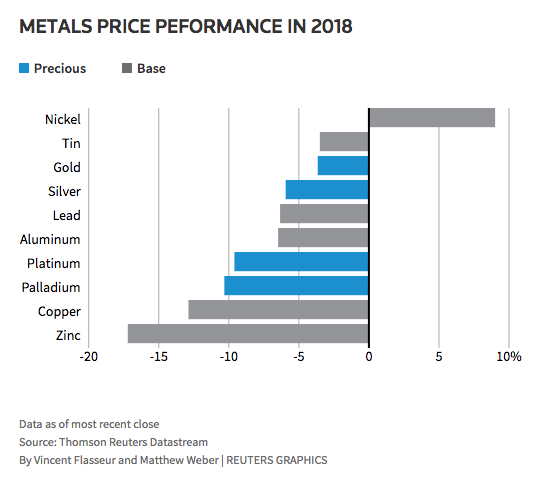
With the shine coming back on nickel – what will it mean for Ontario’s local and wider economies.
It’s boom or bust in the nickel business. From cycles, to slumps to super-cycles and even the most recent decade-long crash, it appears the time for nickel to rebound is near. The last big boom at the turn of the 21st Century saw nickel soar above 20 dollars per pound. It led to multi-billion dollar takeovers of smaller mining companies by industry giants and saw local economies flourish as bonuses skyrocketed, overtime was uncapped and investments in service, supply, innovation and industry support were elevated almost exponentially. Today, with analysts projecting the price of nickel to at least double over the next four years, what can local and provincial economies expect? After a 10-year slump can we expect the same rush to invest and spend? Will companies be more cautious and what will it mean for investors, the markets and businesses. There are a lot of questions and speculation out there about just how big of a splash there will be if nickel finally makes its comeback. And that’s where the experts from Freelandt Caldwell Reilly LLP can help. Ian Fitzpatrick is a Chartered Professional Accountant and a Chartered Business Valuator. He is an expert in advising business owners and entrepreneurs on all aspects of corporate sales, mergers, acquisitions, litigation, succession and ownership issues. To contact Ian directly, simply click on his icon to arrange an appointment regarding this topic. Source: