
Experts Matter. Find Yours.
Connect for media, speaking, professional opportunities & more.

Aston University establishes Design Factory Birmingham as a global innovation hub for Midlands
• Birmingham becomes the latest city to join a global network of design and digital consultancies • Based at Aston University, expertise in areas such as 3D printing will be shared to boost the local economy • It will include a space named after the late Dame Margaret Weston, former director of the Science Museum. Birmingham has become the latest city to join a global network of design and digital consultancies set up to solve real world challenges through effective problem-solving. Design Factory Birmingham will be based at Aston University, one of just two hubs in the UK outside of London. The city officially joined the Design Factory Global Network on Wednesday 14 February and as a result Aston University will open the doors to its state-of-the-art facilities to other organisations. Shared understanding and common ways of working enable Design Factories in the network to collaborate efficiently across cultures, time zones and organisational boundaries fostering radical innovations. Businesses, industry partners, entrepreneurs, staff and students will be able to collaborate on projects that will involve technologies such as 3D printers and design software. The University will be sharing its expertise in artificial intelligence, additive manufacturing, data science and web, app and graphic design to boost the local economy. Currently there are 39 innovation hubs in 25 countries across five continents based in universities and research organisations. The Design Factory will include a space named after the late Dame Margaret Weston, former director of the Science Museum. Dame Margaret had studied electrical engineering at one of Aston University’s predecessor institutions and went on to be the first woman appointed to lead a national museum. She left a generous gift to Aston University in her will, which will be commemorated in the Birmingham Design Factory in honour of her engineering background. (l-r) Felipe Gárate, Professor Aleks Subic, Professor Stephen Garrett The Vice-Chancellor and Chief Executive of Aston University, Professor Aleks Subic said: “The Design Factory Birmingham is another key milestone in our ambition to be a leader in science, technology, and innovation, driving socio-economic transformation in our city and region. It is important to the Midlands because it will make a direct contribution to innovation led growth in partnership with industry and businesses. However, this is not only a local launch but also a global launch as Design Factory Birmingham is a global innovation hub, and an integral part of the Design Factory Global Network involving 39 innovation hubs around the world.” The head of the Design Factory Global Network Felipe Gárate from Aalto University in Helsinki, Finland attended the official launch in Birmingham. He said: “I am delighted to welcome Aston University as our latest member. “We are on a mission to create change in the world of learning and research through passion-based culture and effective problem-solving. “Shared understanding and common ways of working enable Design Factories in the network to collaborate efficiently across cultures, time zones and organisational boundaries fostering radical innovations.” The launch event was used to showcase design projects that are already running and companies attending were given the chance to meet placement students who could boost their existing expertise. Associate Pro-Vice-Chancellor and Deputy Head of the College of Engineering and Physical Sciences, Professor Tony Clarke said “This unique space on campus will bring together multi-disciplinary teams of hands-on innovators, collaborative thinkers and creators. “We will be delivering a wide range of services including software application development, product design, creating protypes using a variety of technologies including laser and water cutting, digital and design training courses, and helping companies obtain innovation grants for projects.” As a member of the global network the Birmingham Design Factory at Aston University will participate in two global design challenges - one run by McDonalds and the other run by the Ford Motor Company. ENDS Notes to Editors There are 39 Design Factory hubs around the world https://dfgn.org/ In the UK there are three; London, Birmingham and Manchester. About Aston University For over a century, Aston University’s enduring purpose has been to make our world a better place through education, research and innovation, by enabling our students to succeed in work and life, and by supporting our communities to thrive economically, socially and culturally. Aston University’s history has been intertwined with the history of Birmingham, a remarkable city that once was the heartland of the Industrial Revolution and the manufacturing powerhouse of the world. Born out of the First Industrial Revolution, Aston University has a proud and distinct heritage dating back to our formation as the School of Metallurgy in 1875, the first UK College of Technology in 1951, gaining university status by Royal Charter in 1966, and becoming The Guardian University of the Year in 2020. Building on our outstanding past, we are now defining our place and role in the Fourth Industrial Revolution (and beyond) within a rapidly changing world. For media inquiries in relation to this release, contact Nicola Jones, Press and Communications Manager, on (+44) 7825 342091 or email: n.jones6@aston.ac.uk


Widening rift with Canada puts India's relations with the West at risk
Relations between India and Canada continue to devolve after Canadian Prime Minister Justin Trudeau accused India of playing a part in the assassination of a Sikh activist on its home soil. Following India's denial, both countries expelled senior diplomats. In a new video posted on his YouTube channel, Professor Muqtedar Khan said relations are spiraling toward a dangerous place. And, he added, if the situation continues to devolve, it could have a major impact on India's relations with the entire Western world. Khan, a professor of political science and international relations, is an expert on issues surrounding U.S. foreign policy in the Muslim World as well as national security and counter-terrorism. He can also discuss: The Khalistan Movement: The Sikh separatist movement that has taken many lives since the 1980s including the assassination of India's former PM Indira Gandhi. How Canada's large Sikh population 770,000 (2.1%) makes it a hotbed of Sikh activism. In 1985, Canadians Sikh exploded an Air India flight from Montreal to London killing 329 people The assassination of Hardeep Singh Nijjar and its diplomatic fallout. The dispute between Canada and India is over the killing of Nijjar, a Canadian Sikh who was organizing an illegal referendum on separatism. Khan is the author of "Islam and Good Governance: A Political Philosophy of Ihsan." Video of Khan discussing the concept of Ihsan can be found here. He has also drawn a large following with his "Khanversations" channel on YouTube. To schedule an interview, click on the contact button found in his ExpertFile profile.


Repeatedly seeing headlines of wrongdoing reduces perception of moral offense
A study recently published in Psychological Science reveals that when people repeatedly encounter headlines about corporate wrongdoing, they view the wrongdoing as less unethical and are more likely to believe the headlines are true. Social media can cause scandalous news to go viral in an instant, and the resharing of provocative headlines ensures people repeatedly encounter these scandals. To test the effects of this repetition on moral judgement, researchers at Vanderbilt Peabody College of education and human development and the London Business School sent text messages to study participants with news headlines about corporate misconduct. The study occurred over the course of 15 days as participants engaged in their daily routines. “We often think about social media and the current digital media landscape as increasing our anger and moral outrage, but in this case, repeated exposures to corporate wrongdoings actually made people slightly less outraged about the moral offense,” said Lisa Fazio, associate professor of psychology and human development. “When we repeatedly see news of the latest viral wrongdoing on social media, we often encounter it passively, at random times of the day, and while we might be distracted by other tasks. In our research, we show that even passing encounters can shape our thoughts and emotional reactions,” said Raunak Pillai, the study’s first author and a psychology doctoral student in Fazio’s Building Knowledge Lab. The researchers found that participants rated repeated headlines of wrongdoing as significantly less unethical than new headlines–a phenomenon known as the moral repetition effect–and that participants’ anger diminished when they encountered wrongdoings described in repeated headlines versus new headlines. The less anger they felt, the less unethical they judged the wrongdoing. Likewise, wrongdoings in repeated headlines verses new headlines were rated as less unusual, which also led to judging the wrongdoing as less unethical. That said, the effect size of repetition on moral judgement diminished as participants encountered more headlines; in other words, the effects were larger from the first to the second encounter as compared to the 15th to 16th encounter. As the number of repetitions increased, the effect on moral judgement became progressively smaller. Additionally, the more frequently participants viewed a headline, the truer they thought it was (known as the illusory-truth effect). After the initial views of headlines, participants’ truth ratings rose sharply and then plateaued, suggesting that the first few encounters with a headline have the most impact on peoples’ beliefs. The findings also suggest that perceptions of misconduct as true may elicit a more lenient moral judgment, but the authors say more research is needed to confirm this effect. “The more we hear about a wrongdoing, the more we may believe it—but the less we may care,” the authors write. Fazio and Pillai collaborated with Daniel Effron, Ph.D., from the London Business School on this study.


CorpusCast with Dr Robbie Love: Dr Clyde Ancarno & Professor Insa Nolte on Anthropology
Hello, hello, hello, everyone! Welcome back to Corpuscast, the podcast that brings you the fascinating world of Corpus Linguistics. Can you believe it? We're already on episode 19! Since our launch in January 2022, we've been exploring the incredible impact of Corpus Linguistics on society. And trust me, today's episode is going to blow your mind! As always, I'm your host Robbie Love, a linguist from Aston University. Today, we dive deep into the realm of anthropology, the study of human societies and cultures. Get ready for an engaging discussion on the origins of humanity, the evolution of civilizations, and the incredible diversity that exists across our world. Our special guests for today's episode are none other than Professor Insa Nolte, a leading anthropologist from the University of Birmingham, and Dr. Clyde Ancarno, a brilliant corpus linguist and senior lecturer in Applied Linguistics and Education at King's College London. Together, Insa and Clyde collaborated on a groundbreaking research project in Southwest Nigeria, exploring how members of different religious groups coexist peacefully. Their findings shed light on the intricate social structures that maintain harmony within diverse communities. Join us as we delve into the thought-provoking questions that shape our understanding of humanity. Who are we and where do we come from? How have civilizations transformed throughout history? What factors contribute to the functioning of our societies? This captivating conversation will unveil the incredible insights brought forth by Corpus Linguistics and its intersection with anthropology. Discover how language and culture intertwine to shape our identities and communities. Don't miss out on this enriching episode! Tune in to Corpuscast below, and let's embark on this captivating journey together. Subscribe to Corpuscast on YouTube, Apple Podcasts, Spotify or wherever you get your podcasts, for more thought-provoking episodes exploring the boundless possibilities of Corpus Linguistics in education, health, technology, and beyond. Stay curious, stay inspired! ? #Corpuscast #Anthropology #CorpusLinguistics #Humanity #Culture #Diversity #Podcast #LanguageResearch

If you’re looking for comment on this week’s announcement about government’s proposed £50bn investment in creative industries we have a design expert available. Dr Tim Whitehead is associate dean and senior lecturer, engineering and technology, Aston University. He believes that although the Tory's promise spending for the creative industries they need to invest in education first. His full response is attached and below: “This week the government announced a plan to boost the creative industries by £50bn by 2030 and invest £77m in funding for the sector. “This news is fantastic and long overdue. The UK design economy contributes £97.4bn GVA and for every £1 invested in design we see a return of £4 to the wider economy. “The creative sector is a major British export with film, TV, music being some of the biggest exports. However, we also have physical products; If you’ve ever used an iPhone, a Dyson or ridden on a London double decker bus then you’ve used world class British design. “The funding is welcome, however we really need investment in our schools to teach creativity and align this with recent announcements in maths education. “The majority of our most successful designers / creative engineers started with Design and Technology at school. “Between academic years 2009-10 and 2021-22, the proportion of pupils taking Design and Technology GCSEs fell from around 42% to 27% in all schools in England. With only a minor increase in pupils taking Art and Design GCSE which increased from 27% to 29% over the same period. “There is a big gap here, and we really need to ensure that children have access to a creative education as school. “By embedding creativity into the next generation it will help foster new creative engineers data scientists etc. and the next Dyson.” Dr Tim Whitehead, associate dean and senior lecturer, engineering and technology, Aston University For inquiries contact Nicola Jones, Press and Communications Manager, on (+44) 7825 342091 or email: n.jones6@aston.ac.uk

Aston University biofuel experts advise on how Ukraine can build back greener
• Aston University biofuel experts provide advice on Ukraine’s recovery • Professor Patricia Thornley and Dr Vesna Najdanovic were invited to Royal Society conference • Outcomes will be presented to policymakers at Ukraine Recovery Conference in June. Two Aston University scientists have provided expert advice on how the UK’s wealth of research can support Ukraine’s reconstruction. A two-day conference was organised by the Royal Society and its outcomes will be presented to policymakers ahead of the UK government-hosted Ukraine Recovery Conference in June. As Ukraine is one of the largest agricultural producers and exporters it also generates large amounts of agricultural waste which could be used to produce biofuels and valuable chemicals. This could decrease the country’s fuel import dependency and increase the revenues for the sector. Researchers at the conference explored how to tackle some of the many challenges facing Ukraine, from rebuilding its economy, health and wellbeing, regional security and planning for a green recovery. Professor Patricia Thornley who is director of Aston University’s Energy and Bioproducts Research Institute (EBRI), was one of the just three academics invited to contribute to an infrastructure roundtable session. Professor Thornley said: “I was honoured to be asked to attend the infrastructure roundtable and share my expertise on renewable energy and sustainable products. “Ukraine has significant sustainable agricultural and forestry residues, which can be valuable to plug potential gaps in oil and gas supply for heating in the short term. But in the long term these can provide opportunities to produce sustainable bio chemicals and materials which could provide a basis to grow green chemical, material and construction industries. “UK researchers, such as those at EBRI at Aston University and the Supergen Bioenergy Hub, have the experience needed to work on developing these solutions to build back greener. Research evidence and expertise have a vital role to play in supporting policy makers to tackle the complex and urgent challenges related to the reconstruction and recovery of a resilient, sustainable Ukraine.” Meanwhile, Dr Vesna Najdanovic presented opportunities to develop bioenergy and bioproducts in Ukraine at the event and participated as a panel member. Ukraine’s recovery: rebuilding with research, which brought together Ukrainian and UK researchers and policy makers, was held on 15 and 16 May in London. It was funded by Universities UK International, Research England and the British Council and supported by the Academy of Medical Sciences, British Academy and the Royal Academy of Engineering.


Coronation of King Charles III: Augusta University professor talks about what to expect
Eyes from around the world will be on Westminster Abbey in London this weekend as King Charles III is crowned king following the passing his mother Queen Elizabeth II on Sept. 8, 2022. As you might expect, there will be plenty of pageantry involved with the ceremony. Ruth McClelland-Nugent, PhD, is chair of History, Anthropology and Philosophy at Pamplin College of Arts, Humanities, and Social Sciences at Augusta University and an expert on the royal family. McClelland-Nugent said this is a major day for those in the United Kingdom, and to a lesser extent, some parts of the Commonwealth "where the British monarch is still monarch, such as Charles will become king of Canada as well as the U.K." The coronation is a religious service of the Church of England, so there will be a number of traditions upheld, such as anointing of the king with blessed oil, and by the end of the ceremony, Charles will have officially received his crown and his scepter, as well as the traditional robes and stole that mark him as king. The crown and the orb that will be used during the coronation date back to 1661 for King Charles II. New crowns were needed after the Puritans melted the old ones down during the English Civil Wars. “These are very traditional things, and reinforce the ancient idea that the monarch is selected by God to have authority over people,” said McClelland-Nugent. "However, for the first time, there will be participation from clergy of other faiths as well, since the king has invited clergy from the Jewish, Sikh, Hindu, Muslim and Buddhist faiths to participate, reflecting the great religious diversity in the U.K.” She also said those watching the coronation, in-person or virtually, will be invited to swear an oath of allegiance to the monarch, giving the entire country a role in the ceremony for the first time. “It will probably feel very formal and ancient to any Americans who watch it, and it is, but it will be the most informal and diverse coronation in recent British history,” McClelland-Nugent said. Others in the royal family will also play roles in the ceremony. Queen Camilla will be crowned alongside Charles. Princess Anne, Charles' sister, will lead a procession of armed forces and other personnel behind the new king and queen when they leave Westminster Abbey. “Look for her to be on horseback. This is a highly prestigious role and not one carried out by a woman previously.” McClelland-Nugent said Prince William, Prince of Wales, who is now heir to the crown, will make an oath of loyalty directly to the newly crowned king. Some of the king’s grandchildren and queen’s grandchildren will also serve roles during the coronation. If you're a reporter covering the coronation and all the events leading up to it this week, then let our experts help with your stories. Ruth McClelland-Nugent is available for interviews; simply click on her icon now to arrange a time to talk today.


Optometry professor recognised for excellence in research at awards ceremony
Professor James Wolffsohn recognised for research excellence at London awards ceremony Professor Wolffsohn specialises in myopia management, dry eye disease and contact lenses research Excellence in eye care event is hosted by the Association of Optometrists. A world leading optometrist from Aston University has been recognised for his research excellence in the field of optometry specialising in myopia management, dry eye disease and contact lenses research. Professor James Wolffsohn was the recipient of the Recognising Research Excellence award on Sunday (26 February) at the Excellence in eye care event in London - hosted by the Association of Optometrists. Professor Wolffsohn, who is also the head of the School of Optometry said: “I was very surprised and truly honoured. It is lovely to have my research recognised.” “I have always been driven by wanting to know more. I think research is important because you want healthcare professionals to be working at the cutting edge and using techniques that are proven to work without bias.” James’s first experience of research occurred during his pre-reg placement at Moorfields Eye Hospital. He said: “They had a project on automatic teller machines – bank machines were fairly new and we were working for a major bank on the optimum colour combinations for people with visual impairment.” James went on to complete his doctorate in ocular motor research at Cardiff University, before travelling to Australia to work as a researcher at the University of Melbourne. During this time, Professor Wolffsohn continued to work in practice and would fly into the outback to provide low vision services to remote communities. Since returning to Aston University in 2000, he has worked in a variety of different academic roles – including as head of department across three different disciplines. “I will rarely turn down a collaborative proposal if there is an opportunity to make a difference to evidence-based clinical practice,” Wolffsohn said. James is also passionate about ensuring that scientific discoveries result in tangible change for patients. Three spin-out companies have been developed on the basis of research he has contributed to at Aston University. Alongside research and academic roles, Professor Wolffsohn continues to work a half-day in clinic each week. He has also played an influential role in spearheading consensus among the profession on evolving scientific fields, from myopia management to dry eye disease. James led the diagnostic committee for the Tear Film & Ocular Surface Society DEWS II report and chaired the Contact Lens Evidence-based Academic reports of the British Contact Lens Association. For more information about the School of Optometry and the Vision Sciences Research Group please visit our website.

Aston University welcomes Mexican Ambassador to campus during Global Trade Conference
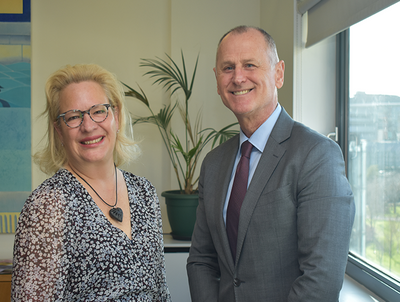
Her Excellency Josefa González-Blanco, Mexican Ambassador to the UK visits West Midlands for the Global Trade Conference The ambassador met with representatives of British industry including University Vice-Chancellor Professor Aleks Subic Josefa González-Blanco was appointed as Mexico's representative in London in 2021. Mexican Ambassador to the UK, Her Excellency Josefa González Blanco Ortiz Mena, has visited Aston University during a high-profile visit to the city to attend the Global Trade Conference and meet with representatives of British industry. The Global Trade Conference (15 February) is an annual event hosted by the Greater Birmingham Chambers of Commerce which offers businesses the opportunity to build relationships and grow their network. During her visit to campus, she met with Vice-Chancellor Professor Aleks Subic, executive director of business engagement Mark Smith, and Lloyd Broad, head of international affairs at Birmingham City Council. Ambassador González Blanco said: “I was thrilled to visit Aston University and to meet the Vice-Chancellor and Chief Executive, Professor Aleks Subic. “We had a chance to review our academic links towards intensifying the research collaboration already in place between Aston Business School, Tecnológico de Monterrey, Conacyt México and Instituto Nacional de Astrofísica.” Professor Aleks Subic said: “It was a pleasure to welcome Her Excellency Josefa González Blanco Ortiz Mena to Aston University. “We are immensely proud of our international collaborations, and meetings such as this one, are crucial in deepening our understanding of areas of common interest and priorities as we work together to advance global partnerships and trade. “I look forward to working further with relevant higher education institutions and industries in Mexico and around the world in line with our 2030 strategy focused on creating a globally relevant university that can make substantial contributions to innovation and trade at international level.”
Aston University to celebrate 100 years of pharmacy education and research
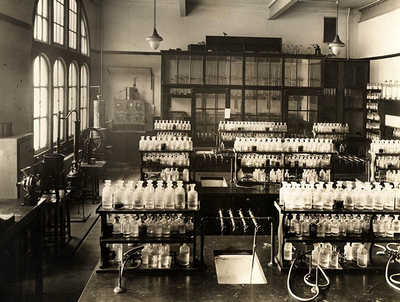
Aston Pharmacy School to celebrate 100 year anniversary during 2023 The history of teaching pharmacy at Aston University dates back to the 1890s In 2016 the Pharmacy School was awarded a Regius Professorship by HM Queen Elizabeth II. Aston University is gearing up to celebrate 100 years of pharmacy education and research this year. In 1923 the Birmingham Municipal Technical School started to offer full time pharmacy courses to applicants from the general public. The roots of pharmacy education at Aston University date back to the 1890s and more significantly to 1919 when it first started teaching the subject as part of the Chemistry department at the Birmingham Municipal Technical School - as part of a funded package of training and education for returning servicemen after the First World War. In 1923 the pharmacy training provision expanded, taking on six specialist pharmacy staff within the pharmacy section of the Department of Chemistry. That year the Technical School began to offer full time pharmacy courses open to applications from the general public. In 1926 Harry Berry was appointed as head of a separate Department of Pharmacy - following an inspection by the University of London and a positive report. This distinct identity was further cemented a year later in 1927, when Neville Chamberlain, who was the then Minister for Health, opened the new teaching facilities in the School of Pharmacy in the Birmingham Central Technical College. Since then, the University has graduated thousands of pharmacy students with more than 2700 graduates in the last 20 years. Aston University’s Pharmacy School is now recognised as one of the outstanding pharmacy schools in the UK and has been at the forefront of scientific advances over the last 100 years. Its researchers developed the $2 billion blockbuster drug Temozolomide, the leading treatment for brain tumours and it created the UK's first Masters programme for hospital pharmacists. In 2016, Aston Pharmacy School was awarded a Regius Professorship by HM Queen Elizabeth II to mark her 90th birthday. It was the first time a pharmacy school had been given the award, a rare and prestigious honour bestowed by the Sovereign to recognise exceptionally high-quality research. The first holder of the title of Regius Professor of Pharmacy at Aston University was Keith Wilson, a pharmacy academic who helped to shape current and future pharmacy education both within the UK and internationally. Dr Joe Bush, head of Aston Pharmacy School, at Aston University said: "100 years of pharmacy education is a major milestone. We are immensely proud of all our achievements, from producing exceptional graduates who make a significant contribution to the professional workforce in a variety of near-patient settings, to our research discoveries and developments which have positively impacted patient healthcare and the high quality of this research having been recognised via the award of the first ever Regius Chair for Pharmacy. “It is an honour to be a part of Aston Pharmacy School, whose humble beginnings have grown to produce world class research and exceptional graduates. I look forward to celebrating with the rest of the school over the course of the year.” Celebrations of the centenary anniversary will include a celebratory lunch for staff, former staff, students and alumni to recognise the significant contributions that the school has made in research discoveries and teaching. The school will host an exhibition about the last 100 years of pharmacy at Aston University, with a range of historical artefacts on display in the entrance to the University’s main building and there will be a social media campaign to highlight key facts about the last 100 years of pharmacy at Aston University. Did you study pharmacy at Aston University? We would love to hear from you with any stories, memories from your student days. And we would love to hear about where your pharmacy career has taken you. Please get in touch with our alumni team here.