
Experts Matter. Find Yours.
Connect for media, speaking, professional opportunities & more.

Part 1: Collaborating with Faculty Experts: A How-To Guide for Marketing Departments & Deans
“I don’t have time to do this.” “I don’t think I’m the right expert.” “My subject area is too specific.” Have you ever approached a faculty member with an opportunity to speak to the media or perhaps speak at an event, only to hear responses like these? Asking certain faculty members to help serve as experts can be challenging. While it’s becoming more widely accepted by faculty that responding to such requests is a great way to build their personal reputation – as well as the institution’s – there is still work to be done in this area. With my experiences I wanted to share some useful tips to help you better collaborate with your faculty and get more results: 1. Walk the Halls: Stay Connected to Important Faculty Research & Publications Faculty play a key role in helping you tell compelling stories to a variety of audiences such as media, prospective donors and students. Yet it’s amazing how many communications people are disconnected from important discoveries their experts are working on. They get caught up in day-to-day events and struggle to find time to walk the campus. The first step in collaborating with your faculty is showing them you care. Make yourself approachable as a resource to help them communicate their stories and you’ll see dramatic results. While it may be tough, it is worth the time investment. 2. Take Inventory: Assess Which Experts Can Be Most Valuable in Helping You Engage Various Audiences With so many faculty members across the campus involved in a wide range of activities, it’s important to develop a framework that identifies who you should be working with. While faculty have deep subject-matter expertise, not all are suited to helping with certain engagements such as broadcast media interviews. To better assess your faculty look at these key factors: Credibility Does the expert have a deep understanding of their focus area? How respected are they among their peers? Have they conducted research in this area? Have they been published? Have they spoken at conferences or received awards for their work? Relevance Is their field of research relevant to various audiences such as Media, Prospective Students, Donors and Partners? Engagement How are their writing skills? Do they have experience with public speaking to various audiences? Can they conduct an interview with a reporter? Are they willing to participate or get media training? Responsiveness Do they understand the significant value they can contribute in helping you build your institution’s reputation? Are they comfortable with being in the spotlight? Can they be available on short notice (within hours) for media interviews? Are they interested in building their own personal brand? 3. Get Alignment: Get Senior Leadership on the Bus Consulting with Faculty Deans and other leaders on the campus will help you gain important support for your efforts to work more with faculty. Identifying their objectives at a program level will help you ensure that your work isn’t viewed as another “make work” exercise for faculty. Show them how your work with faculty experts will have potential to impact the following: Brand reputation in the community and among peers Media coverage Increased student enrolment Better Alumni engagement Increased donations to the school Government and research funding Corporate partnerships 4. Tap into Peer-to-Peer Power: Focus on Faculty Evangelists We all know who our “go-to” faculty are. The people who will enthusiastically help you try out some new approaches. These are the faculty who are doing great research but also can tell a great story and are respected among their colleagues. Identify a manageable group (a range of 3-6 experts is a good number to start). Assess them using the criteria we discuss in point #2. Then get these select experts to invest a little time with you to work on topic strategies and content development. Explain to them what you are trying to achieve and listen to their feedback. Getting their support, and helping them develop their content and stories is the key to success. As evangelists, they can be vital to getting buy-in across the campus. 5. “Opt-In” your Experts: Look for Different Types of Contribution While media coverage is a big focus for many organizations it often tends to dominate the discussion about experts. Think about the ways your experts can contribute and help you tell your story to a variety of audiences beyond media (see point #3). Faculty can be engaged in a broad spectrum of activities such as: Television Radio Print Research on specific topics Blog posts Podcasts Speaking at conferences Speaking at student recruiting events Attending or speaking at alumni events Attending or speaking at donor events Build a “Contributions List” that outlines activities where you may need support and get faculty to opt-in. Getting this agreement in advance allows you to better assess where you have “bench strength” to plan for specific projects. At the end of the day, you won’t get 100% of the faculty to jump on board, but we have seen that a good plan and collaborative communication raises engagement and participation. READ PART II of Collaborating with Faculty Experts: A How-To Guide for Organizations.




Part 2: How Duke University doubled their media hits by showcasing faculty
Last week we shared the first five major rules of Expert Marketing that are currently being used by Duke University to double their media hits (READ PART I). We also developed some strategies and best practices for higher education institutions to better market their experts. In this blog post, we are going to share our team’s final insights into how to better leverage your experts. Rule #6: Create Once, Publish Everywhere At one time we just had to focus on creating a news site. That’s now expanded to a multi- screen environment that requires we thread content into sites that are being accessed from desktops, mobile devices and even digital signage that is often scattered throughout the campus. Sit down with your digital team and map out how to distribute media across multiple channels such as social networks, news-feeds, homepages, faculty sites, as well as faculty profiles in your expert center or speakers bureau. Many schools still don’t have the “responsive” capability to push their news content out to mobile users. Insiders Tip: Duke applies a “create once publish everywhere” model to ensure that time-crunched journalists can easily connect with their expert commentary, whether they access the website’s desktop or mobile versions, or through a wide range of social channels. Rule #7: Get Your Expert Quotes Ready for the Real-Time News Cycle Organizing a system with your faculty to publish pre-approved expert quotes on your website can pay huge dividends, as news outlets have fewer reporters covering more territory. Many of our clients tell us they are seeing less experienced reporters who have much less time to research and interact with media departments. Having pre-approved quotes ready to go makes it much simpler for media, making you much more attractive to them. This pre-planning can minimize the strain on faculty experts during class hours. An added bonus is that it also minimizes misquotes. Insiders Tip: Duke University aims to provide daily quotes on its website by midday as part of its “news tips” section. While these quotes generally take less than one hour to produce, they have proven most effective. Almost all of their news tips have been used by the media since they started producing them in June 2014. Rule #8: Promote Your Core Areas of Expertise First With so much going on throughout the campus there are a lot of opportunities to promote a diverse range of topics to the media. However, it’s really important to identify the core topics where you have expert commentary in demand. The best media relations people have established their school as go-to sources for select topics. You should also stake your claim. What groundbreaking research can you find on the campus that relates to key news events? Think about what reporters need to communicate to their audiences. Do you have faculty who are credible, approachable and engaging on these topics? Invest the time with your team to develop a master topics list and tune this list regularly based on upcoming faculty contributions and news cycle developments. Insiders Tip: Duke University identified a number of key factors that contribute to the media take-up rate such as the degree of media interest in a story; the relative supply of experts available to media and timing considerations. While it’s impossible to control all these variables, They learned, based on trial and error, that concentrating on core topics where they have an academic focus such as politics, law and the environment generated more coverage. Rule #9: Focus your Editorial Calendar on Key Event Anniversaries It is important to get the mix right when looking for media opportunities. While it will always be to your advantage to leverage breaking news if you can mobilize your faculty experts, there is also a predefined editorial flow to the news across a calendar of special and recurring events. It’s crucial that you get some of these major opportunities on the calendar and develop a campaign to enlist faculty experts. For example, Black History Month and the Super Bowl are both annual recurring events happening in February. It’s good to map these along with other special events that are periodically staged or non- recurring such as a G8 Summit or the upcoming papal visit to the US. If you can mobilize your experts to provide value for media who need to start researching these events well in advance you increase your chances of coverage. Insiders Tip: The Duke University media relations team actively monitors upcoming anniversaries and other timely events that reporters are likely to write about. Events that have the potential to generate stories that Duke can leverage with their experts are reviewed by the communications team in twice weekly scrum meetings. Rule #10: Leverage Tools such as Twitter to Grow your Media Contacts Much of the success you will have with faculty experts hinges on your ability to take your message to the market. So it’s important to focus on grooming and growing your media contacts. Besides buying access to media lists from vendors such as Cision, PR Newswire, Marketwired and Meltwater; don’t forget about Twitter. It provides a huge opportunity to build a list of influencers and key opinion leaders. Using a simple topic and hashtag searches on Twitter, you can begin to map various clusters of people who are following specific news beats that may be relevant to your institution. Remember that media outlets tend to follow other media outlets for story angles and media sources. Having a well organized list of people that have interacted with you in the past is a large part of distributing your news faster to a larger audience. It’s important to do Twitter searches to research specific reporters you want to pitch to see where their interests lie. Insiders Tip: Duke University refines its media lists continually using Twitter. It looks at the social graph of reporters who make use its online news tips to identify other journalists to add to their database.

Part 1: How Duke University doubled their media hits by showcasing faculty
In the February 2015 issue of CASE Currents, Steve Hartsoe, a Senior Editor at Duke University and former Editor for the Associated Press, shares some powerful strategies for working with experts on campus. This article is a must read for any organization looking to build reputation through more focused media relations. Now you might be thinking that Duke is an already renowned university with an extensive network of media contacts so this stuff is easy for them. Not true. Doubling your media hits isn’t easy for any organization. Duke made some major improvements that set them up as a go-to destination for journalists to find credible, relevant sources. However, even implementing just a few of their ideas could drive some big results for your organization – without having to blow out the size of your marketing team or budget. Spoiler alert. The Duke strategy centers on being more strategic and collaborating better with faculty experts. The best practices that the Duke media relations team employed should inspire any organization that wants to generate more coverage. Whether you are looking for media visibility to help drive student enrolment, alumni giving, or corporate partnerships, there are valuable lessons to be found in this article. For the full article check out the January/February issue of CASE Currents at www.case.org. Please note you will need a subscription to view. So what’s going on at Duke that’s driving all this media coverage? To examine this further, our ExpertFile team weighs in below with the first five major rules of Expert Marketing for Schools and summarizes some insider tips they shared from their experience. Tune in next week for the finale! Rule #1: Organize a Team to Help Focus on Expert Marketing As with most initiatives, it’s vitally important to get the support of senior people in the organization when developing an increased focus on faculty experts. Gaining the support of a group of progressive deans within the school as well as notable faculty can be critical. Appoint a specialized team that can help you establish media visibility as a priority for your school. Build your case for an expert marketing program and ask for their support in developing your plan, then set up some regular meetings and make this team visible on the campus. It will help you develop a sense of collaboration and continuity. Insiders Tip: Duke built a “rapid response team” within their media relations department that had a clearly defined meeting schedule. They met twice a week and kept meetings to just 30 minutes in length. These regular check-ins helped identify breaking news opportunities and inspired a sense of priority and established momentum. Rule #2: Strategize with your Experts It’s amazing how many colleges and universities’ media relations departments we talk with that are disconnected from the interesting research conducted by their faculty. Ironically, it’s this research, as well the academic interests and passions of your faculty that feed the most engaging stories you can tell to the media. Make sure you have a good understanding of current and upcoming research that you can pitch. You should also identify what publications and books are being planned by faculty and see how you can collaborate with them. Insiders Tip: Duke invested the time to meet personally with faculty members to get a deeper understanding of their research and identify relevant topics that could be pitched to the media. They also invited some faculty to media meetings to brainstorm on potential news stories. It’s this kind of contact that helped make faculty more responsive to media opportunities and respond to deadlines. Rule #3: “Opt-In” your Experts for Different Types of Contributions It’s becoming more understood by faculty that media coverage can be a very good thing for their career and their organization. However, be careful of one size fits all approaches in recruiting faculty to contribute their expertise. Contribution from faculty comes in different forms. Faculty can be engaged in a broad spectrum of activities that run from broadcast TV interviews, blogging, and even helping speak at recruiting or alumni events. It’s good practice to create a master checklist of possible engagement types and to take an inventory of what your faculty experts may want to opt-in for. Having this inventory allows you to better plan for content development projects and also ensures that faculty clearly understand the duties that are expected of them in a media relations capacity. Insiders Tip: Duke’s media team recruited their experts for a range of contributions based on the level of interest and comfort level of faculty. And they made it clear that agreeing to be a media source meant responding promptly to incoming media inquiries. Rule #4: Provide Media Training and Support While every campus has it’s faculty “rockstars”, who can rise to the challenge of any breaking news opportunity, many experts on the campus can benefit from some form of media training. It’s critical to your media strategy’s success that you provide the experts with support and opportunities to practice their speaking skills in front of a camera. If you expect more experts to step up to the podium, it’s important to make the investment. However, make sure you design these programs to be engaging and don’t overwhelm your faculty by making them too exhaustive. Often they can be coordinated over lunch or in the early morning before classes start and can be focused on key areas such as: public speaking, blogging tips, video training, and social networking guidelines. Get a sense of where your key gaps are among faculty before you dive in. Also remember these sessions can provide valuable opportunities to shoot video interviews, B-Roll clips and even headshots that can be used to provide media assets for your website, alumni magazine and other properties. Insiders Tip: Duke invests in media training for its faculty experts and administrators offering a two and a half hour media training workshop each year to participating faculty, covering interview techniques via phone, video and social media. Rule #5: Meet Journalists on Their Terms Reporters appreciate media relations contacts that help them get their job done. Operating under tighter breaking news cycles they have less time to discover and research experts. In todays competitive media market what sells papers or builds ratings is often what gets covered. You have to focus your experts on helping journalists tell stories that matter to all those “eyeballs”. The best media relations professionals understand the value in building relationships with journalists. These connections are often essential in establishing your organization as a relevant, trusted source of expert commentary. Given the importance of these relationships, we’re also seeing the renewed popularity of industry conferences hosted by organizations such as the MAKI Network (www.thembasite.com) and Wynne Events – BAM Conference (www.wynneevents.com). These events give schools a unique opportunity to listen to and meet journalists from major news networks. ExpertFile sponsored both MAKI and Wynne events this past year, and we were impressed by the roster of global media attending. Insiders Tip: While Duke still distributes the requisite daily news on campus events and other university happenings, they don’t get mired in all of this content. They also focus a great deal of their activities on expert content that positions their university as a go-to source that is both credible and relevant to a variety of media audiences. READ PART II of How Duke University doubled its media hits by showcasing faculty experts.
Confronting the Fake News Phenomenon with Credibility
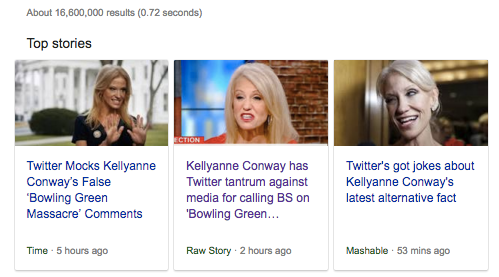
Fake news is suddenly big news. A quick browse this morning and the topic is featured in articles and stories in The Guardian, CNN, Forbes, Reuters, iPolitics and The New York Times. Explaining fake news, finding its source, its effectiveness and how to counter it are all top of mind priorities for journalists, politicians and even technology leaders. Fake news is eroding the trust the public has in its leaders and media and something must be done soon. We need to see a return of intelligence and knowledge to present true facts. In this new era, issues such as climate change, economic data, security, crime and healthcare policy -people without qualifications are being asked to speak on topics that require years of study, research, and experience. Opinions — not always informed opinions — are taken as fact. To reverse this trend, institutions need to work with the media to present a more balanced set of perspectives. We need to see academics, physicians, professionals, and leaders in their respective fields contribute more to these big conversations. It won’t be easy, but it is possible. ExpertFile is the world's first marketing platform and search engine for expert content. The company specializes in providing media access to thought leaders and thousands of experts who are objective, credible and whose opinions are sought and respected worldwide. Now more than ever – the public needs trustworthy sources of accurate and unbiased information. Peter Evans is the CEO and Co-founder of ExpertFile. His experience and expertise has made him a leader in the realms of innovation, marketing and digital software. He is a respected speaker and a sought-out panelist for technology, marketing and innovation events throughout the world. Peter is available to speak to media regarding fake news and how technology companies are fighting back. Simply click on his icon to arrange an interview. Source:

Pope Francis Calls Consumerism a "Virus," Encourages Prayer and Charity
In an Advent homily on December 1, Pope Francis urged to "choose prayer and charity over consumerism" during the holiday season. "Consumerism is a virus that affects the faith at its root because it makes you believe that life depends only on what you have, and so you forget about God," Francis said. "The meaning of life is not to accumulate." Villanova's experts have weighed in on and provided their thoughts on Francis' latest remarks. Mary Hirschfeld, associate professor of theology and religious studies and author of Aquinas and the Market: Toward a Humane Economy "Francis is echoing the message the Church has consistently given on this. Pope John Paul II warned about thinking of 'progress' as having more. The essence of true progress is being more—growing as a human being, giving oneself more fully to relationships, drawing closer to God. "God created us to find our happiness in Him. We thus do have a longing for the infinite. The modern mistake is to seek that infinite in the finite goods of this life. But that can never satisfy us, which is why we always look for the next thing and the next thing. "The one thing I would ask Pope Francis is whether it is our consumerism that is driving out our desire for God, or are we throwing ourselves into consumerism because we have forgotten about God? It could well be both. But for Christians who find themselves swept up in consumerism it is worth asking whether we are seeking out the distractions of things because we are afraid of turning more fully to God. This might be a fruitful line of prayer this Advent season. "We live in a culture that thinks that happiness consists in getting more. It's built into the economic approach that informs so much public discourse. So, it's not surprising that we all struggle with this. "And plenty of secular people know this is a problem. That's why there have been episodic movements towards 'simple' living. Marie Kondo's popularity is testimony to the fact that we all recognize that 'more' doesn't lead to 'better' or 'happier.'" Eugene McCarraher, associate professor of humanities and author of The Enchantments of Mammon "While I certainly agree with Pope Francis that consumerism is a virus, I don't think it's the most harmful virus with which we have to deal. In fact, I've long thought that consumerism is way of not talking about capitalism. "Capitalism needs consumerism as a structural necessity; capitalists need people to buy a lot of things they either don't need or often don't really want. Hence, the importance of the culture industries such as advertising, marketing and public relations. I also think that criticizing consumerism can end up being a rather tiresome and ineffectual form of moralism. "Wagging a finger at people for being 'materialistic' has never really worked, and besides, material things are both necessary and good; material life should be cherished and savored. The real issue isn't the amount of material goods that people use; it's the nature of the goods and what sort of people their use helps to cultivate. So, while the pope's remarks are certainly true and pertinent, I think we might use them as a starting point for a very different kind of conversation."


Baylor Study: Fear of Missing Out (FOMO) Plus Social Media Connections Can Equal Happiness
FOMO – aka the “fear of missing out” – can have a positive impact on well-being when it leads to social media use that increases social connections, according to a new Baylor University study. James A. Roberts, Ph.D., The Ben H. Williams Professor of Marketing, and Meredith David, Ph.D., assistant professor of marketing in Baylor’s Hankamer School of Business, coauthored the study, “The Social Media Party: Fear of Missing Out (FOMO), Social Media Intensity, Connection, and Well-Being,” published in the International Journal of Human-Computer Interaction. Roberts and David collaborate often and are nationally recognized experts on the effects of technology and social media on relationships and well-being. For this collaboration, the researchers conducted two studies consisting of 565 college students from a large U.S. university to determine the effect FOMO has on social media use, social connection to others and psychological well-being. FOMO is defined in the study as apprehension that others might be having a rewarding experience from which one is absent. According to Roberts, approximately 75% of young adults struggle with FOMO. “The human need to belong is an innate drive that dictates much of our behavior. Social media capitalizes on this need to belong,” Roberts said. “Social media has a dual nature. It lets us interact with others, which is good, but it also exposes us to more social opportunities than we can take part in that fosters a sense of missing out and inadequacy.” The study found: FOMO is a significant predictor of subjective well-being, and social media intensity had a slight significant effect on well-being. Social media is an omnipresent conduit for attempting to make such connections. It is likely that FOMO encourages the use of social media to stay connected. From the first study of 107 college students, David and Roberts gathered data to measure FOMO, social media intensity and social connection. Although FOMO typically has a negative connotation on social interactions, the study showed that the fear of missing out can lead to greater feelings of social connection. “We found that FOMO might actually have a positive impact on social connection through its impact on social media intensity and attachment,” Roberts said. “FOMO drives our use of social media to connect socially with others. Being socially connected leads to happier people.” The second study of 458 college students used the same measures, but also included an assessment on subjective well-being (happiness). The study tested their complete conceptual model in which subjective well-being is an ultimate outcome of FOMO (through its impact on social media intensity and social connection). Roberts said that social media can be a positive resource to help those with FOMO create social interactions, if it is being used actively through online actions such as posting, liking and commenting. “The problem is that people often turn to social media but use it passively – such as creeping on people or viewing pages without interacting – which can then lead to lower levels of happiness because creeping does not foster social connection,” Roberts said. “FOMO can lead to happier people if it drives people to use social media to connect but not simply to ‘creep’ on others.” ABOUT THE STUDY AND AUTHORS James A. Roberts, Ph.D., The Ben H. Williams Professor of Marketing, and Meredith David, Ph.D., assistant professor of marketing in Baylor University’s Hankamer School of Business, coauthored the study, “The Social Media Party: Fear of Missing Out (FOMO), Social Media Intensity, Connection, and Well-Being,” which is published in the International Journal of Human-Computer Interaction. OTHER RESEARCH BY ROBERTS AND DAVID Cellphones Can Damage Romantic Relationships, Lead to Depression People Who Are “Phone Snubbed” By Others Often Turn To Their Own Phones, Social Media For Acceptance Bosses Who “Phone Snub” Their Employees Risk Losing Trust and Engagement When ‘Religiosity’ Competes with Materialism, Charitable Giving Takes a Hit ABOUT BAYLOR UNIVERSITY Baylor University is a private Christian University and a nationally ranked research institution. The University provides a vibrant campus community for more than 17,000 students by blending interdisciplinary research with an international reputation for educational excellence and a faculty commitment to teaching and scholarship. Chartered in 1845 by the Republic of Texas through the efforts of Baptist pioneers, Baylor is the oldest continually operating University in Texas. Located in Waco, Baylor welcomes students from all 50 states and more than 90 countries to study a broad range of degrees among its 12 nationally recognized academic divisions. ABOUT HANKAMER SCHOOL OF BUSINESS AT BAYLOR UNIVERSITY At Baylor University’s Hankamer School of Business, integrity stands shoulder-to-shoulder with analytic and strategic strengths. The School’s top-ranked programs combine rigorous classroom learning, hands-on experience in the real world, a solid foundation in Christian values and a global outlook. Making up approximately 25 percent of the University’s total enrollment, undergraduate students choose from 16 major areas of study. Graduate students choose from full-time, executive or online MBA or other specialized master’s programs, and Ph.D. programs in Information Systems, Entrepreneurship or Health Services Research. The Business School also has campuses located in Austin and Dallas, Texas. Visit www.baylor.edu/business and follow on Twitter at twitter.com/Baylor_Business.


Kanye West is a master of marketing. It seems, the hip-hop superstar and designer has also crossed over to evangelism. The crowds are enormous and growing each week. In fact, this past Sunday on very short notice – one of his pop-up services attracted close to 6,000 people. The reaction from religious leaders has been mixed. Some are embracing and encouraging anyone who can use their star power to spread the good word. Others are hesitant as some events seem to be exclusive to some and not open to anyone hearing the call. Religion is never an easy topic to cover as a journalist – and if you are a reporter covering – that’s where our experts can help with your stories. Dan DeWitt, Ph. D. is the Director of the Center for Biblical Apologetics and Public Christianity at Cedarville University and is an expert in areas where faith and secularism intersect. Dr. DeWitt is available to speak with media regarding the rising popularity of Kanye West on the religious scene – simply click on his icon to arrange an interview.


Will e-cigarettes and vaping be the next addictions epidemic to sweep across America?
In a recent op-ed, David T. Courtwright, Ph.D., an author and addiction specialist opined that there’s a market to getting people hooked on substances and that e-cigarettes are the next big problem facing America. "I had just finished a new book on addiction when the vaping crisis erupted. The gist of the book is that that globalization, industrialization, mass marketing, digitization, and social media have turned the ancient human preoccupation with disreputable, potentially addictive pleasures into lucrative, commercially normal enterprises. Bad habits have been McDonaldized. Vaping couldn’t have been a more perfect example of this. I call those who help make bad habits routine “limbic capitalists,” a reference to their products’ neural common denominator. Whether they sell junk food, porn, slots, computer games, alcohol, or drugs, they target the limbic system, the brain networks responsible for pleasure, motivation, long-term memory, and other survival functions linked to emotions. Biological evolution shaped the limbic system, which is indispensable for life and reproduction. But cultural evolution and technological change created a trapdoor. The same neural pathways can be exploited — lethally — by entrepreneurs of brain-rewarding products that foster excessive consumption and addictive behavior." October 28, 2019 – STAT There has been growing concern, awareness and news coverage about e-cigarettes and the dangers they present. As well, industry spin-doctors and public health advocates have been in overdrive trying to convince politicians about the pros and cons of legislation and regulation for these products. Are you a journalist covering this emerging issue? Then let the experts from Cedarville help with your coverage. Dr. Marc Sweeney is an expert specializing in drug abuse, prescription drug abuse, Opioid addiction, medical marijuana & related issues. Justin Cole is an expert in clinical pharmacy, Pharmacogenomics, and the pharmacy industry. Both experts are available to speak to media regarding this issue – simply click on either gentlemen’s icon to arrange an interview.

Gene therapy and the next frontier of medicine
Genetic testing today is mainstream, marketing to consumers who want to know where in Europe they came from or what types of hereditary diseases they could develop. For around $200 you can trace your family tree to learn your origins or identify genetic abnormalities that could signal disease. James Dahlman, assistant professor in the College of Engineering’s biomedical engineering department, specializes in genetics and believes these genotyping services can be helpful, as long as they are used responsibly. “If you’re going to start making medical predictions, you have to be careful,” said Dahlman. “Most people are not equipped to interpret statistics correctly, which can lead to negative predicting and ethical dilemmas. In a few years, genetic counselors will be in high demand so folks can make better decisions about their health.” Dahlman is fascinated by genetics, citing gene therapy as the most interesting field in the world. And it’s a field that he is revolutionizing through his research. Gene therapy is an experimental technique that uses genes to treat or prevent diseases, including hemophilia, Parkinson’s, cancer and HIV. It can help manage a number of diseases by leveraging genes instead of drugs or surgery. Although gene therapy shows promise, there are still risks involved, including unwanted immune system reactions or the risk of the wrong cells being targeted. That’s where Dahlman’s research comes in. Dahlman’s lab focuses on drug delivery vehicles, which are nanoparticles. The nanoparticle delivers gene therapies to the right place in the body to fight disease. It’s critical that the gene therapies only target the unhealthy cells to avoid damaging healthy ones. Dahlman is laser focused on ensuring the nanoparticles know what paths to take to reach the correct organ to start the healing process. “The issue with genetically-engineered drugs is that they don’t work unless they get to the right cell in the body,” said Dahlman. “You can have the world’s best genetic drug that's going to fix a tumor or eradicate plaque, but it’s not going to be effective unless it travels to the right organ. In my lab, we design different nanoparticles to deliver the genetically-engineered drugs to the correct location.” The field of genetic therapy is fascinating – and if you are a journalist looking to cover this topic or have questions for upcoming stories – let our experts help. James Dahlman is an Assistant Professor in the Georgia Tech BME Department. He is an expert in the area of biomedical engineering and uses molecular biology to rationally design the genetic drugs he delivers. This research is redefining the field of genetic therapy. Dr. Dahlman is available to speak with media – simply click on his icon to arrange an interview.



Experts available to discuss vaping and new tobacco products
A host of new tobacco products, including e-cigarettes like JUULs, have entered the market in recent years, bringing new public health concerns with them. Researchers at the University of North Carolina at Chapel Hill are studying the health and societal impacts of emerging tobacco products. UNC-Chapel Hill experts are available to discuss topics including e-cigarettes’ health impacts, their failure as smoking cessation tools, the differences in how smoking and vaping affect the body, and e-cigarette explosions and the resulting chemical burn injuries. If you’d like to speak with an expert, call (919) 445-8555 or email mediarelations@unc.edu. Dr. M. Bradley Drummond is an associate professor of medicine at UNC School of Medicine and the director of the Obstructive Lung Diseases Clinical and Translational Research Center. He can discuss the health consequences of these new tobacco products and how they vary from traditional cigarettes. He can also discuss how these products exacerbate other conditions like chronic obstructive pulmonary disease, asthma and other chronic lung diseases. Dr. Adam Goldstein is a professor in the UNC department of family medicine, the director of tobacco intervention programs at UNC School of Medicine, and a member of UNC Lineberger Comprehensive Cancer Center. He can discuss the potential drawbacks versus any potential benefit of using these products as smoking cessation tools and can share evidence-based strategies to stop smoking. He can also speak to trends in teen tobacco use. Dr. Ilona Jaspers is a professor of pediatrics and microbiology & immunology, director of the Curriculum in Toxicology, and deputy director of the Center for Environmental Medicine, Asthma and Lung Biology all at the UNC School of Medicine, and professor of Environmental Sciences and Engineering at the UNC Gillings School of Global Public Health. She can discuss the current scientific understanding of the health effects of vaping or juuling, a subject on which she has published widely. Kurt Ribisl is a professor and chair of the department of health behavior at UNC Gillings School of Global Public Health and the program leader for Cancer Prevention and Control at UNC Lineberger Comprehensive Cancer Center. Ribisl specializes in tobacco policy and regulation and can speak to taxation, advertising and marketing of new tobacco products and recommendations for preventing youth access. Robert Tarran is a professor of cell biology and physiology at UNC School of Medicine, a member of UNC Marsico Lung Institute, and a member of UNC Lineberger Comprehensive Cancer Center. He can discuss the science of vaping, including how e-cigarettes impact a person’s lungs, including their genes and what happens to the lung’s immune system. He can also speak to the varying toxic effects of different e-cigarette flavors. Rebecca Williams is a research associate at UNC Lineberger Comprehensive Cancer Center. She is a leading expert on internet tobacco sales, age verification, technology and emerging tobacco products, including the wide variety of vaping devices available today. Her research has shown that online e-cigarette vendors routinely sold to minors, a finding that underscores the need for regulations requiring and enforcing age verification for the online sale of e-cigarettes. She can discuss the sales and marketing practices of websites that sell emerging tobacco products, and underage access to these online products.
