
Experts Matter. Find Yours.
Connect for media, speaking, professional opportunities & more.

Using social media to assess public sentiment
Large corporations, government agencies, and political campaigns increasingly are using social media listening platforms and software to monitor public sentiment online. According to research from David Schweidel, associate professor of marketing, and Wendy Moe (U of Maryland), the information gleaned from social media can provide useful insights for decision making, but only if the “comments are measured appropriately.” Since prior marketing research has focused on one social media venue or failed to acknowledge the differences in multiple social media venues, Schweidel and Moe discovered that these measurements of public sentiment fell short. Instead, they analyzed brand sentiment for an enterprise software company and a telecommunications business across a variety of social media platforms. Accounting for factors that varied across different social media platforms, the authors derived a measure of general brand impression (GBI). They showed that general brand impression was a leading indicator of shifts in brand tracking studies and stock price movements. Taken together, Schweidel and Moe’s “measure of GBI effectively captures movement in the underlying sentiment toward the brand.” Source:



Relational signaling and gift giving
Prior research indicates that gift givers are motivated by competing goals. Often, they will simply select an item of the recipient’s choosing. However, gift givers are also likely to select an item on their own to help show knowledge of the recipient and further define and maintain a personal connection. Morgan Ward, assistant professor of marketing, and coauthor Susan Broniarczyk (U Texas) take the research a step further by analyzing how the closeness of a relationship further impacts the gift-giving decision when a gift registry is readily available. The duo employed five separate studies with human subjects presented with various gift-giving scenarios. The paper notes, “We find that despite their stated primary intention to please recipients, close (vs. distant) givers ultimately are more likely to ignore recipients’ explicit registry preferences in favor of freely chosen gifts.” Ward and Broniarczyk conclude that divergence from the registry was not necessarily about finding a better gift. Instead, it occurred only when givers specifically received attribution for their selection. The closeness of the personal connection resulted in a “perceptual distortion of the gift options in favor of relational-signaling gifts.” Distant givers were much more likely to pick an item from the registry, selecting gifts closely aligned with recipients’ preferences. Source:

Who's the best gift-giver? Baylor marketing expert shares her research findings
Meredith David, Ph.D., assistant professor of marketing, studies marketing strategies with an emphasis on consumer behavior and well-being. Her newest study on gift-giving centers on "social projection" -- making choices on behalf of others based on your own preferences. The research reveals that people who are “secure” in interpersonal settings are the ones most likely to engage in social projection (making choices on behalf of others based on their own preferences). Conversely, those who are “anxious” in such settings are less likely to assume that others share their own preferences and less likely to make choices for others based on their personal attitudes. “You’d think that secure people with lots of friends and healthy personal relationships would have a better idea of what someone would like as a gift, but that’s not the case,” David said. “This research shows that individuals who are anxious in interpersonal situations and who have fewer close, personal relationships are better at predicting what a person may like.” Dr. David’s research focuses on marketing strategies with an emphasis on consumer behavior and well-being. Recently, her research has explored how new media technologies, including smartphones, impact personal and workplace relationships. Dr. David has also published research related to customized pricing tactics, interpersonal attachment styles, and the pursuit of health goals. Her research appears in numerous journals including the Journal of Business Research, Journal of the Association for Consumer Research, Journal of Advertising, European Journal of Marketing, and Psychology & Marketing, among others. Dr. David has been interviewed and quoted for her research in many national and international news outlets, including ABC News, Fox News, Oprah.com, Redbook Magazine, Consumer Reports and Health Magazine. Source:


Is there any room left in the crowded home assistant market?
The tech world is abuzz with rumours that Spotify is potentially wading into the ‘home assistant’ marketplace. It’s a billion dollar business and could be the future for consumers wanting ‘smarter’ houses – but it is already a crowded market. The rumours are based on speculation as job postings for a project manager and analyst for a new hardware project to be developed and released. For Spotify to enter this space – it makes sense. However, is Spotify just a little too late to the party? As well, when you are last on the field and your opponents are Amazon, Google and Apple – the task ahead is daunting if not dangerous for the hundreds of millions of dollars in development and marketing that will be required. Is this just speculation for attention or will Spotify jump in and try to stand out? It’s not easy to decipher or decide. But that’s where the experts from IDC Canada can help. Jean Philippe (JP) Bouchard is Vice-President, Mobility and Consumer Research and is an expert in the areas of modeling and market forecasting, mobile device and platforms, go to market strategies, strategic marketing and product management. Simply click on JP’s icon to arrange an interview. Source:

Oculus Go is coming – the market is about to evolve
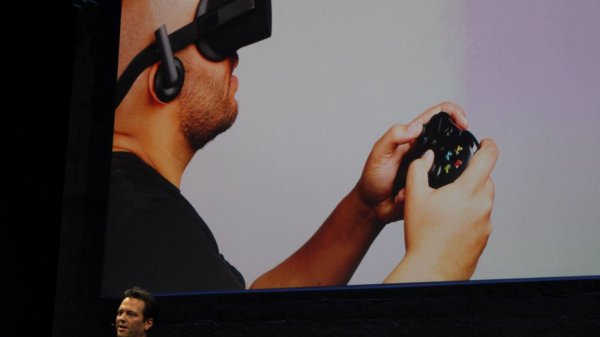
Oculus Go is an all-in-one virtual reality (VR) headset that will offer 1,000s of games, 360-degree experiences without wires or even a PC to attach to. It’s coming – according to Facebook in early 2018 - but Canadian availability remains somewhat of a mystery. But the marketing has begun. There is a lot of hype when it comes to virtual reality – but will this technology be the gamechanger that shifts the market towards virtual reality experiences without wires and away from screenless viewers (headsets that require users to insert their smartphone)? Or will it take longer for VR to become mainstream, altering how we all consume games, media and virtually every experience that requires or incorporates technology? Is Oculus set to be the next Apple or Amazon? What will the future look like – and who will benefit most from VR? Which VR experiences are of most interest to Canadian consumers? These are early days, what will VR look like in a decade? As the market evolves, it seems VR's market potential has been diminished by the emergence of mobile AR as a rival platform. Even with the market pushing towards standalone headsets, premium VR might not accelerate until second-generation, standalone VR headsets break out starting over the next few years. There are a lot of questions about virtual reality and that’s where the experts from IDC Canada can help. Emily Taylor is a senior research analyst in the areas of consumer service and technology markets. She also can provide unique and intelligent insight into new landscape of virtual reality and augmented reality technologies for both consumers and businesses in Canada. Watch her video for more information on the VR/AR market in Canada, then simply click on her icon to arrange an interview. Source:

Tyrha Lindsey-Warren, Ph.D., clinical assistant professor of marketing in Baylor University’s Hankamer School of Business, studies consumer behavior, multicultural media, movies and entertainment. She is an expert on Hollywood and movies featuring actors of color. She said Tuesday's Oscar nominations reveal "positive strides" for recognition of minorities in the film industry, but she also noted missed opportunities for noteworthy films. “With today’s Oscar nominations, we see positive strides in the categories of Best Actor, Best Supporting Actress and Best Director regarding the nominations of persons of color. Even for not-so-well publicized categories like Best Screenplay, Best Writing, Adapted Screenplay and Best Cinematography, there are some wonderful artists of color and women that have been nominated. One that truly makes me happy is the nomination of ‘Coco’ for Best Animated Feature. It was an outstanding tribute to Mexican culture and was truly well done," Lindsey-Warren said. "However, I am saddened that Patty Jenkins, the director of ‘Wonder Woman’ did not get any acknowledgement from The Academy. She did an excellent job with ‘Wonder Woman,’ from both a cinematic perspective as well as from the worldwide box office revenues. I am also saddened that director Reginald Hudlin’s ‘Marshall’ is missing this awards season. The story of American hero Thurgood Marshall is one that should have been more celebrated.” Tyrha Lindsey-Warren, Ph.D., is a marketing scholar, business executive, artist and entrepreneur. As a consumer behavior scholar, her research is rooted in narrative transportation theory (i.e., storytelling) that exudes the emotion of empowerment and its impact on consumer attitudes, behaviors, purchase intention and message recall. She also studies health edutainment, multicultural media and advertising, as well as movies and entertainment. Lindsey-Warren is an expert in effective communications strategies for leaders, multicultural communications and marketing. For more information, or for an interview with Tyrha Lindsey-Warren, contact Baylor Media Communications. Source:


A whole lot of problems facing Whole Foods?
In August, Amazon went on a binge and acquired high-end grocer Whole Foods for 13.6 billion dollars. Many wondered what changes would come and how the high-tech and modernized Amazon approach to retail would impact the grocery chain. A few months late, a look inside some stores shows the results aren't good. Shelves that once showed off fresh fruit and vegetables at a premium price are bare. And customers aren't happy. A new food ordering system called Order-to-shelf, or OTS may be the leading culprit. OTS is a tightly controlled system designed to streamline and track product. It allows outlets to carry items that move almost literally from daily delivery trucks to store shelves. Its goal is to reduce storage costs, waste and provide a cheaper and more efficient system of managing products. But is this effort for an almost militaristic efficiency costing Whole Foods customers, demoralizing employees and hurting the store's brand? Is this a matter of a learning curve that will sort itself out? Or did Amazon make a mistake implementing OTS? And will these empty shelves leave a lasting and negative impression on customers? There are a lot of scenarios and questions - that's where the experts from can help. Ryan Hamilton is a is a consumer psychologist and an expert in marketing, branding and consumer decision making. Ryan is available to speak with media regarding Whole Foods and the OTS system. Simply click on his icon to arrange an interview. Source:


What can you expect from a Spotify IPO?
"Previous disclosures suggest that Spotify has done an excellent job of retaining paid subscribers, with monthly churn metrics well below their peers," says Assistant Professor of Marketing Dan McCarthy. "It will be very important for Spotify to flesh out this unit economics in the prospectus they will file before the listing. Investors will be particularly interested in how well Spotify has kept its acquisition costs down, free user engagement and free-to-paid conversion metrics." Source:

Movies like “Marshall” that are built around actors of color (Chadwick Boseman plays the iconic attorney) and have appeal to consumers of color historically see a significant surge in ticket sales in weeks five through eight – if producers are willing to keep them in theaters that long and allow for word-of-mouth advertising to build, said Tyrha Lindsey-Warren, Ph.D., clinical assistant professor of marketing in Baylor’s Hankamer School of Business. She studies consumer behavior, multicultural media, movies and entertainment. “I believe that Hollywood often pulls movies starring women and actors of color out of the theaters way too soon and before word-of-mouth has time to fully spread,” Lindsey-Warren said. “In my opinion, and according to our studies, Hollywood is leaving a great deal of money on the table.” Movies built around actors of color typically make money – in many cases as much or more than five times the budget, she said. For example, the 2017 comedy “Girls Trip,” which was built around four African-American female leads, was made for $19 million and has grossed more than $100 million at the box office. A challenge, Lindsey-Warren said, is that Hollywood expects to make its money back in the opening weekend. That strategy often doesn’t translate well to consumers of color. She cited a Nielsen study that showed African-Americans make an average 6.3 trips every year to see movies, and they tend to strongly support movies where there are characters like themselves and to whom they can relate. But they don’t rush to theaters for premier weekends. “Historically, African-American consumers have not been such early adopters of seeing movies on opening weekend and have typically waited to hear from trusted sources, by way of word-of-mouth, if the movie is worth seeing,” she said. “I call this behavior giving word-of-mouth time to spread. These are insights that Hollywood has not fully embraced regarding consumers of color and for movies built around actors of color.” Source:
Impact of Protests on NFL Brand? Baylor Sports Sales Expert is Watching How 'Generations' Respond
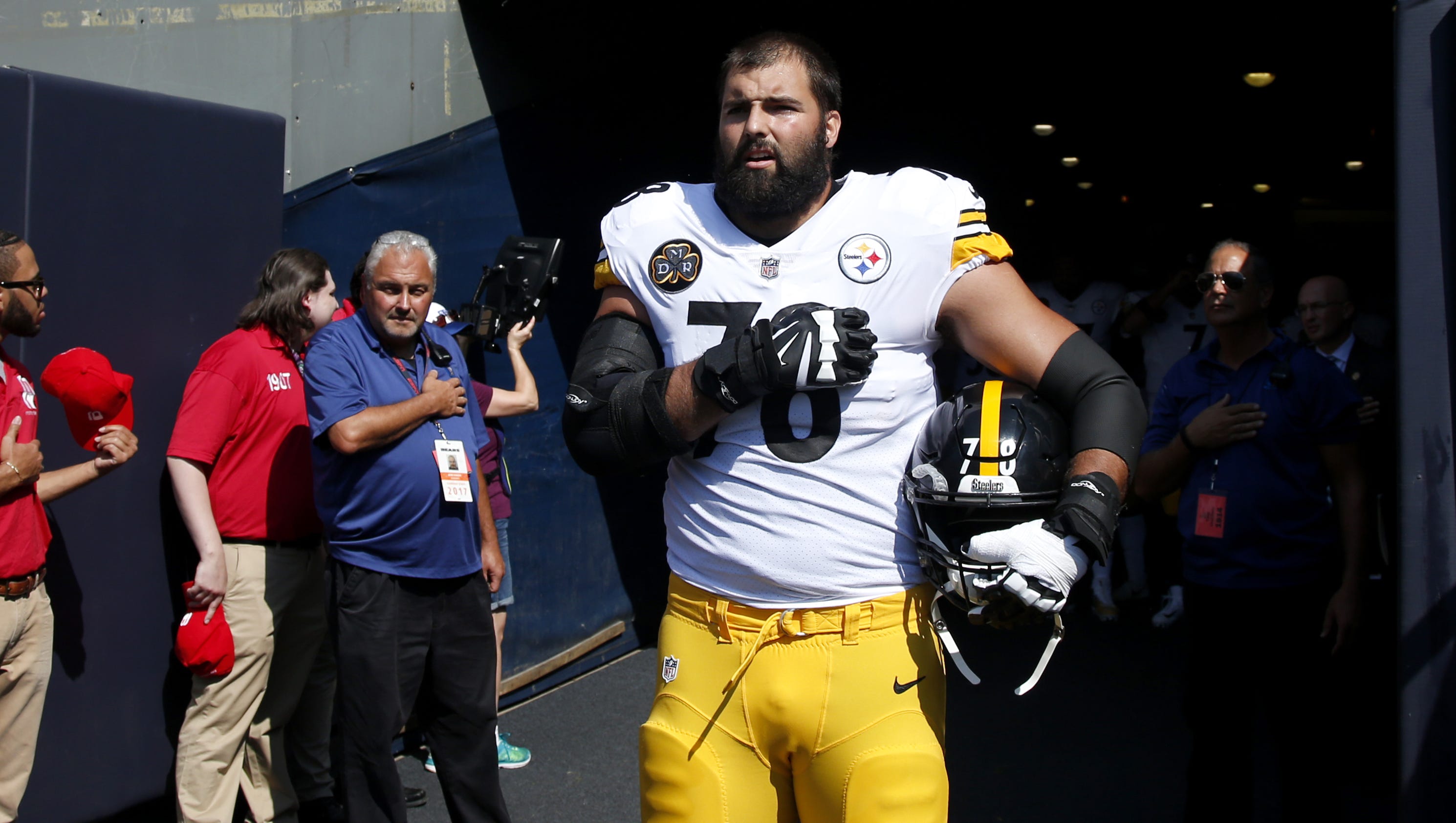
Kirk Wakefield, Ph.D., is the Edwin W. Streetman Professor of Retail Marketing and director of Baylor University’s Sports Sponsorship & Sales program. He is an oft-quoted expert on marketing and branding of professional sports teams and serves as publisher and editor of The Baylor S3 Report (www.baylors3.com), the industry-leading publication featuring best practices in sports sales and marketing. In response to this season's protests during many of the NFL games, Wakefield said he is closely watching the “generations” of fans, particularly the season ticket holders. He explained that the average NFL season ticket holders are male, in their 40s and have a household income of more than $100,000. “I think the question is if the NFL can truly use this as a unifying rather than divisive tool. The dilemma is that the season ticket holder base is older and more prone to see it as divisive and offensive. But the younger set, tomorrow’s fan base, is likely to side with the players. So, brand equity could erode among current season ticket holders and, at the same time, gain interest and support from millennials – who have not been watching or attending as much.” Wakefield’s research in retailing covering more than two decades focuses primarily upon sports psychology, team sports marketing, entertainment marketing, and fan and consumer response to pricing and promotional tools. He has conducted fan research in almost every venue in sports including the NBA, NFL, MLB, MLS, NHL, and NASCAR. Source: