Experts Matter. Find Yours.
Connect for media, speaking, professional opportunities & more.

Expanding Comprehensive Cancer Services to Middletown, Delaware
ChristianaCare’s Helen F. Graham Cancer Center & Research Institute is expanding access to high-quality, comprehensive cancer care for residents in Middletown and nearby communities. These services will be offered at the new Middletown Health Center, now under construction and expected to open in May 2027. “Our vision is to expand and grow our services throughout the region so that more patients can access high-quality cancer care close to home,” said Thomas Schwaab, M.D., Ph.D., Bank of America Endowed Medical Director of the Helen F. Graham Cancer Center & Research Institute. “By bringing our full cancer-care team and advanced technology to Middletown, we can provide highly precise, coordinated treatment while maintaining the same high standard of care our patients expect.” The cancer care services offered at the Middletown Health Center will reflect the same high-quality, comprehensive care provided at ChristianaCare’s Helen F. Graham Cancer Center & Research Institute in Newark. Patients will have access to specialists across all major cancer types, supported by the Graham Cancer Center’s participation in the National Cancer Institute Community Oncology Research Program (NCORP), which brings advanced treatments and clinical trials directly to the community. In Middletown, this means coordinated multidisciplinary treatment planning, advanced radiation therapy, infusion services, consultations with oncologists and surgeons, nurse navigation, supportive care, clinical trial participation and both in-person and virtual visit options. Advanced Technology Enhances Precision and Comfort When services open in Middletown, patients will have access to advanced radiation therapy using the Varian TrueBeam linear accelerator, one of the most sophisticated radiation therapy systems available. TrueBeam delivers highly precise, image-guided treatments for a wide range of cancers, allowing physicians to target tumors more accurately while minimizing radiation to healthy tissue. “The TrueBeam system represents a major step forward in how we deliver radiation therapy,” said Adam Raben, M.D., chair of Radiation Oncology at ChristianaCare. “Treatments that once took 30 minutes can now be completed in just a few minutes, with real-time imaging ensuring precision. This means better tumor control, fewer side effects and a more comfortable experience for patients.” A Growing Community with Expanding Health Care Needs Middletown is one of Delaware’s fastest-growing communities, with its population projected to rise 8% by 2029, nearly twice the statewide rate, according to the US Census Bureau. Since 1990, the town’s population has grown more than 550%, and the number of residents age 65 and older has increased 24% since 2020, driving demand for accessible, high-quality health care. With continued growth and an aging population, cancer service demand in Middletown is expected to increase by 11% over the next decade, according to health care forecasts from Sg2, a Vizient company, underscoring the need for expanded local care options. Expanding Access to Meet Future Cancer Care Demand By expanding services in Middletown, ChristianaCare is responding to both the region’s population growth and the increasing need for cancer care. The new site will help patients receive timely diagnosis and treatment while reducing travel time and improving coordination with the full Graham Cancer Center team. “As our community grows, so too does the need for locally accessible, state-of-the-art cancer services,” said Schwaab. “This expansion represents a pivotal investment in the health of the Middletown—Odessa—Townsend corridor and beyond.” $92 Million Investment in Middletown’s Health The $92.3 million Middletown Health Center reflects a deep investment in the health and vitality of the state. It is part of ChristianaCare’s larger plan, announced in July 2025, to invest more than $865 million in Delaware over the next three years. In addition to cancer care, the Middletown Health Center will offer a full range of services, including primary and specialty care, women’s health, behavioral health, cardiovascular care, pediatrics, neurology, imaging, diagnostics and lab testing. The center’s healing environment will also include walking trails and abundant natural light, making high-quality, convenient and coordinated care more accessible and welcoming for patients and families. The 87,000-square-foot Health Center will be located at 621 Middletown Odessa Road, next to ChristianaCare’s existing freestanding emergency department.


ChristianaCare Launches Organoid Core to Personalize Cancer Treatment
ChristianaCare’s Cawley Center for Translational Cancer Research has unveiled a first-of-its-kind organoid core in a community cancer center program. The new laboratory facility within the Helen F. Graham Cancer Center & Research Institute grows and tests living, patient-derived tumor models, giving doctors and researchers a faster, more precise way to identify the therapies most likely to work for each patient. This innovation could change how cancer is treated in Delaware and serve as a model for community centers nationwide. There are only a handful of organoid core centers, or “tumor-on-a-chip” programs, in the United States, and ChristianaCare’s is the first within a community cancer center setting. What the Organoid Core Does Tumor organoids are tiny, three-dimensional cultures grown from a patient’s tumor tissue. They preserve the genetic and molecular traits of the original tumor, making them far more accurate than traditional cell lines. “These mini-tumors enable researchers to screen drugs faster, identify new biomarkers and discover which treatments are most likely to work for each patient,” said Thomas Schwaab, M.D., Ph.D., Bank of America Endowed Medical Director of ChristianaCare’s Helen F. Graham Cancer Center and Research Institute. “This core is a bridge between the lab and the clinic. By growing living tumor models from cells of individual patients, we can test real-world drug responses and tailor treatments for them in ways that were not possible before.” How It Advances Patient Care The organoid core strengthens the Cawley Center's research capabilities by enabling drug screening and biomarker discovery. It will bank organoids representing the wide variety of tumors seen in the community, giving scientists a realistic system for testing therapies. ChristianaCare treats more than 70 percent of cancer patients in Delaware, giving researchers unique access to treatment-naïve samples. These are tumor tissues that have not yet been exposed to chemotherapy or other therapies. Studying them provides a more accurate picture of how cancer behaves naturally and how it might respond to new treatments. Bringing a new cancer drug to patients is expensive and risky. Estimates show it can cost $1.3 to $2.8 billion, with up to a third spent on preclinical development, and only about one in 10 compounds ever reach human trials. Traditional mouse models often fail to fully mimic human tumors, making early testing less reliable. By using organoid screening, the Cawley Center can test therapies more accurately, reduce costs and failure rates and move promising treatments into clinical trials faster. Combined with existing tissue collection programs, clinical trial infrastructure and community partnerships, these resources create a direct pathway to bring lab discoveries to patients faster. Turning Point in Translational Research “Our goal is to shorten the distance between discovery and treatment,” said Nicholas J. Petrelli, M.D., director of the Cawley Center. “Too many promising drugs fail because early models do not capture the complexity of real tumors. The organoid core helps solve that problem. We can now test therapies in models that reflect the patients we actually serve.” “This is a turning point for translational research in community health,” said Jennifer Sims Mourtada, Ph.D., associate director at the Cawley Center. “Organoid technology lets us study cancer in a way that feels personal. We are not just looking at data points. We are studying living models of a patient’s tumor, which can reveal how that person’s cancer might behave or respond to treatment. This approach brings science closer to the people it is meant to help.” Looking Ahead In the coming months, the organoid core will focus on building a diverse biobank of tumors common in Delaware. Plans include collaborations with academic institutions, shared access for external researchers, and development of immune-tumor co-culture models. By combining advanced technology, strong community partnerships and direct patient access, ChristianaCare and the Cawley Center are showing how translational cancer research can thrive in a community setting, making breakthroughs not only in the lab but also in patients’ lives.

Avoiding the Reverse Mortgage Reflex
Every once in a while, an industry article really hits the mark. Recently, one did just that—Canadian Mortgage Trends' "Who Uses Mortgage Brokers Today and Why? (Part 2)" gave seniors their own category, not as an afterthought, but as a client segment worthy of attention. Bravo. It's about time someone acknowledged that older Canadians aren't just "another niche." But then… came the reverse mortgage section. Don't get me wrong—it's refreshing to see financial professionals finally acknowledge that Canada's aging population presents both opportunities and complexities. But suggesting that "helping seniors" automatically means "offering a reverse mortgage" is like telling everyone who's thirsty to drink espresso. Some will love it. Others will lie awake at 3 a.m. with regrets. Let's call it what it is: type-casting seniors into a product. The Reverse Mortgage Reflex There's a curious habit in our industry. Mention the word "senior" and watch what happens: eyes light up, marketing decks shuffle, and—as if on cue—the term "reverse mortgage" materializes like a pop-up ad from 2007. It's as if the entire profession has agreed that every retiree with a pulse and property must be yearning to re-mortgage their home. Except… most aren't. Most seniors spent decades teaching their kids to avoid debt and pay off mortgages as quickly as possible CBC Radio. Suggesting they should now joyfully jump back into one to "solve retirement" isn't just unappealing—it's borderline insulting. Here's the truth: no one dreams of retiring into debt. And the numbers bear this out. Debt Levels: While only about a quarter of people over 65 had debt in the late 1990s, that figure has climbed to more than 40% today (Source: CBC News). Anxiety Levels: Nearly 50% of retirees now worry about their debt, according to the Credit Counselling Society. Reverse mortgages can absolutely be valuable tools. The reverse mortgage market has exploded, with over $8.2 billion in outstanding debt as of June 2024—an 18.3% increase from the previous year (Source: MoneySense). But offering one before understanding the client's full picture isn't being a trusted advisor—it's running on sales autopilot. Brokers, You're Better Than This Brokers pride themselves on being client advocates—the ones who shop the market, decode fine print, and find creative solutions when banks can't. The very definition of a broker is someone who matches the right solution to the customer's needs. So why, when it comes to seniors, do many skip the most important part—the needs assessment—and leap straight to the product? It's backwards. While it may seem very simple, a proper financial conversation starts with identifying the problem, then illustrating a solution, and finally defining the intended outcome. • Why does this person need to access equity? • What problem are they really solving? • How do they define "financial comfort" The first step of solution selling isn't talking—it's listening. Start With the Need, Not the Product Before reaching for any rate sheet, it's critical to understand the client's true priorities. According to research from HomeEquity Bank, 9 in 10 Canadians want to age in place and live out their retirement years in the comfort of their home (Source: Canadian Mortgage Trends). But their financial needs are as diverse as their travel insurance policies. The reality is stark: A 2024 survey by the Healthcare of Ontario Pension Plan (HOOPP) found that 39% of Canadians aged 55-64 have less than $5,000 in savings, and 73% have $100,000 or less. More than half of Canadians over 60 who remain in the workforce do so out of financial necessity, not choice (Source: CBC Radio). Ask the right questions: • Do they need to eliminate high-interest debt? • Do they need cash flow to cover rising expenses? • Are they struggling to afford in-home care or medical support? • Do they want income stability—that pension-like feeling—rather than a lump sum? • Do they want to downsize, relocate, or age in place with dignity? Only after understanding the full financial picture can you propose the best, most robust solution. That's not just good practice. That's respectful advising. Solution Selling: Connecting the Dots Here's a classic example: A client walks in with a paid-off home and a stack of monthly bills that feel heavier than the Sunday paper. They're anxious about cash flow but debt-averse. The reflex answer? "Reverse mortgage!" Not so fast. Solution sellers focus on understanding customers' challenges and delivering ideas that address their daily needs, rather than pushing products. When clients can see exactly what they're getting, they make better decisions and advisors earn lasting trust through transparency, not sales pressure. Maybe downsizing to a more manageable property makes sense. Perhaps a small secured line of credit covers the gap without interest compounding as quickly. Maybe an annuity provides steady income with less long-term cost. Or maybe—just maybe—they don't need a mortgage at all. Consider that a $100,000 reverse mortgage balance can grow to $150,000 in just 5 years at current rates, with interest compounding annually. When you solve the real problem (not just the balance sheet), you build lasting trust and genuine loyalty. The Psychology of the Senior Client It's not just about the math; it's about the mindset. Here's where most brokers stumble: they treat all seniors as if they're cut from the same cloth. They're not. Let's get real: seniors aren't a monolithic group. A 55-year-old and an 85-year-old? They're separated by 30+ years of life experience, different communication styles, varying financial literacy, and completely different emotional triggers around money. Cookie-cutter advice doesn't cut it. The best advisors listen first. They ask questions. They assess each client's actual financial situation—not what they assume it is—and then deliver advice that fits that person's life, not some generic "senior strategy." Respect Is the Real Differentiator Understanding a client's lifestyle, fears, and goals isn't just good ethics—it's good business. Seniors have finely tuned radar for sincerity. They can smell a sales pitch faster than a Labrador finds bacon. Want to stand out? Lead with curiosity, not a contract A holistic, solution-based approach positions you as a trusted advisor—not a product pusher. Once you earn that trust, referrals flow like coffee at a church social. From Product Pushing to Purpose Selling Here's the shift our industry needs: Stop viewing seniors as a market. Start viewing them as individuals with layered needs. Solution selling isn't anti-reverse mortgage—it's anti-assumption. It ensures the whole problem gets solved, not just the one that fits your product lineup. Yes, over 25% of Canadians aged 55 and older are considering a reverse mortgage (Source: Canadian Mortgage Trends), and it might eliminate a monthly payment—but if it doesn't solve for cash flow, health costs, or income stability, you've only done half the job. The real opportunity? Elevate the conversation from product placement to purpose-driven advising. Advisors, Reset Your Lens Seniors don't need to be sold. They need to be understood. Give them the dignity of choice, the respect of time, and the power of informed decision-making. When advisors show prospective clients detailed solutions, it allows clients to properly assess the quality of advice and make fully informed decisions, supporting healthy long-term relationships The best brokers—the ones shaping the next chapter of this industry—don't just sell mortgages. They sell confidence, clarity, and control. And that, my friends, is how you truly help Canadians retire hip, fit, and financially free. Want to become an expert on serving the senior demographic? Just message me to be notified about the next opportunity to become a "Certified Equity Advocate" — mastering solution-based advising that transforms how you work with Canada's fastest-growing client segment.


Mosquito-borne disease research featured ahead of climate conference
University of Florida medical geographer Sadie Ryan, Ph.D. is among the international scientists whose work is featured in the forthcoming “10 New Insights in Climate Science” report, which will be presented at the United Nations COP30 Climate Conference on Nov. 10. Ryan’s research, which examines how climate change influences the spread of mosquito-borne diseases such as dengue, contributed to a newly generated global map illustrating where shifting temperatures and rainfall patterns are making conditions increasingly suitable for disease transmission. “A lot of my research is about how vector-borne diseases are going to move as the climate changes, and what that means for where and when transmission can happen,” Ryan said. “Climate change isn’t the only driver of dengue’s spread, but we are seeing the bleeding edge of climate shifting those distributions, where it’s warm enough for long enough and wet enough at the right times for outbreaks to take off.” According to Ryan, the map included in the report is based on the most recent generation of climate models and directly illustrates how climate suitability for dengue is changing around the world. Produced annually by Future Earth, the Earth League and the World Climate Research Programme, the report synthesizes the most important developments in climate research at the intersection of climate, health and policy on the world stage.


Motor vehicle crashes remain one of the leading causes of death among teenagers. For the youngest drivers, getting behind the wheel marks freedom but also comes with measurable risk. At the University of California, Irvine, Dr. Federico Vaca, professor and executive vice chair of emergency medicine, is determined to change that trajectory. “Driving licensure among our youngest drivers remains a major life milestone, and it allows for newfound freedom and opportunity for not only youth but their parents as well. At the same time, learning to drive and licensure come at a time when youth are rapidly moving through life with new transitions in school, with friends, and likely exposure to alcohol and drugs,” he says. “Our priority … is to examine the complexities of young driver behavior and to thoroughly understand crash injury risk and crash prevention among this special group of drivers.” Vaca’s work is at the intersection of health, transportation science and policy. A fellow of the Association for the Advancement of Automotive Medicine and a researcher at UC Irvine’s Institute of Transportation Studies, he previously served as a medical fellow at the U.S. Department of Transportation’s National Highway Traffic Safety Administration in Washington, D.C. His long-standing goal is to prevent the injuries he has seen and treated in emergency departments and trauma centers through rigorous research, using the findings to inform and advance evidence-based programs and policies that save lives on the road. Innovating safety science UC Irvine is home to a new hub for understanding and preventing crash injuries among young drivers, the Brain, Body & Behavior Driving Simulation Lab, founded by Vaca and his interdisciplinary team. At the heart of the B3DrivSim Lab is a high-fidelity, half-cab driving simulator capable of replicating real-world conditions with precision. It uses advanced software to design customized driving scenarios – from complex roadway environments to the inclusion of such human elements as distraction and fatigue – all while capturing real-time video and driving behavior as well as vehicle control metrics. This integration of medicine, behavioral science and engineering enables researchers to measure how developmental and socioecological factors shape driver decisions in unique and consequential ways. The B3DrivSim Lab also represents a growing mentorship ecosystem at UC Irvine. In mid-June, the facility welcomed Siwei Hu, a postdoctoral scholar who earned a Ph.D. in civil and environmental engineering, with a focus on transportation studies, at UC Irvine. Hu works closely with Vaca to combine engineering and modeling analytics with behavioral and crash risk insights. The half-cab driving simulator uses advanced software to replicate real-world conditions and design customized driving scenarios – from complex roadway environments to the inclusion of such human elements as distraction and fatigue – all while capturing real-time video and driving behavior as well as vehicle control metrics. Steve Zylius / UC Irvine From the lab to policy Beyond simulation, Vaca’s latest National Institutes of Health-funded study, separate from his lab’s work, takes this philosophy to the national level. His project, “Modeling a National Graduated-BAC Policy for 21- to 24-Year-Old Drivers,” explores whether lowering the legal blood alcohol limit for young adults could reduce alcohol-related crashes and deaths. “When you turn 21, at that very moment, the application of several alcohol-related prevention laws changes in the blink of an eye,” Vaca says. “Before that, the minimum legal drinking age and zero-tolerance laws are in place to protect young drivers from alcohol-impaired driving. Effectively, the second you turn 21, those prevention policies don’t apply, and you’re suddenly allowed to have a much higher blood alcohol concentration in your body that’s intimately tied to serious and fatal crash risk. It’s a very dangerous disconnect.” The study will use national crash data, behavioral surveys and system dynamics modeling to examine how a “graduated BAC policy” might bridge that gap, giving young adult drivers a safer transition into full legal responsibility and saving many more lives. Bridging science, education and prevention Earlier this year, Vaca and his B3DrivSim team joined prevention program educators, policymakers, engineers and law enforcement professionals in Anaheim at a Ford Driving Skills for Life event, part of a Ford Philanthropy-sponsored national effort teaching teens hands-on safe driving techniques – from hazard recognition to impaired-driving awareness. Speaking to more than 130 high school students and their parents from local and distant communities, Vaca emphasized the connection among driving, independence, opportunity and responsibility. That message aligns with his broader initiative, Youth Thriving in Life Transitions with Transportation, which introduces high school students to traffic safety and transportation science and their role in promoting health, education and employment in early adulthood. By linking research and real-world experience, the project empowers youth to see mobility as a foundation for opportunity with safety as its cornerstone. With overall young driver crash fatalities rising 25 percent nationally over the last decade and a 46 percent increase in fatal crashes where a young driver had a BAC of ≥ .01/dL, Vaca’s work represents a crucial step toward reversing that trend. Through a combination of clinical insight and prevention, transportation and data science underscored by community collaboration, he and his team are redefining how researchers and policymakers think about youth driver safety.


Humanities play integral role in the UF Astraeus Space Institute
The ability to imagine has given the human species the power to create, problem solve, empathize, and theorize. In fact, creative imagination can be found at the origin of every modern development throughout time. From medical advancements and the formation of governments to the establishment of the internet and the creation of Beethoven’s Symphony No. 3 — all at first were simply imagined. So, it is not a leap to think that in establishing a space institute at the University of Florida, collaborators would continue to anchor the institution in the human element of imagination. That’s where space exploration began. Ancient Greek philosopher Thales, later known as the father of Greek science and mathematics, questioned the true origins of the universe. Introducing deductive reasoning, Thales sought answers beyond the stories of gods and heroes. Three hundred years later, Aristotle theorized the geocentric layout of the universe with Earth at its stationery core and celestial bodies revolving around it. In the early 14th century, the Italian poet Dante told the story of a vertical journey through the universe, reaching the stars in what he described as paradise. And in the fall of 1609, Galileo began observing the heavens with instruments he created to magnify his view up to 20 times beyond what the natural eye could see. Through his telescope, Galileo observed mountains on the moon, rings around Saturn, and the moons of Jupiter, all evidence that the universe did not revolve around the Earth, but the sun. Inspired by words written in 1865 by Jules Verne in his novel, “De la Terre à la Lune” (From the Earth to the Moon), a 10-year-old Russian boy questioned, could travel be possible beyond the Earth’s atmosphere? Could Verne’s 900-foot-long space gun propel humans — or anything for that matter — through the bonds of gravity and into outer space? Read more here: Looking to know more about the UF Astraeus Space Institute or connect with Rob Ferl, Amy J. Williams or Stephen Elardo? Simply click on either expert's icon now to arrange an interview today.


MCG scientists investigate arthritis drug’s impact on Alzheimer’s disease
According to the Alzheimer’s Association, more than 7 million Americans are living with Alzheimer’s disease, and one in nine of those people is 65 or older. Although that number is expected to grow, researchers at the Medical College of Georgia at Augusta University are making progress on studies that could turn into life-saving treatments. Qin Wang, MD, PhD, professor in the Department of Neuroscience and Regenerative Medicine at MCG and Georgia Research Alliance Eminent Scholar in neuropharmacology, recently published a study titled “The PKCι‑β‑arrestin2 axis disrupts SORLA retrograde trafficking, driving its degradation and amyloid pathology in Alzheimer’s disease,” in Molecular Degeneration, a leading journal in neurodegeneration. In the study, Wang and her team explored how certain proteins and enzymes interact in the brains of Alzheimer’s patients. Key players include the SORL1 gene, the PKCι enzyme and proteins SORLA, β‑arrestin2 and amyloid. SORL1 encodes SORLA, which helps regulate amyloid. Amyloid can form plaque in the brain, contributing to Alzheimer’s. People with the disease often have lower SORLA levels, which amplifies plaque production. “The goal is to increase SORLA levels in patients with AD. If we can boost it up, that would be great,” Wang said. “But if you want to know how to boost it up, you have to know how it is degraded, so that’s what our work is about – we’re trying to understand how its stability is regulated.” Wang’s research team found that PKCι can add a phosphate group to SORLA, which helps SORLA interact with β‑arrestin2. The PKCι‑β‑arrestin2 axis leads to SORLA degradation, reducing its levels and allowing amyloid plaques to grow unchecked, thereby worsening the disease condition. They discovered this by using biochemical methods and a mass spectrometer managed by Wenbo Zhi, PhD, at the Proteomics and Mass Spectrometry core lab at AU. “We conducted biochemical studies and found that SORLA can be phosphorylated. We identified the phosphorylation site and the interacting enzymes,” Wang explained. “Using the mass spectrometer with PKCι, we saw increased phosphorylation of SORLA at certain sites. Preventing that could stop SORLA degradation.” That’s where a rheumatoid arthritis drug called auranofin comes into play. “While it is an arthritis drug, it can also inhibit the PKCι enzyme,” Wang explained. The team conducted tests using Alzheimer’s mouse models and human iPS cells developed into neurons. For the mouse models, they treated the mice with auranofin for eight weeks, resulting in decreased amyloid levels, reduced neuroinflammation and improved cognitive function. Similar results were seen in human cells with increased SORLA levels and decreased amyloid levels. “A good thing about this is, because this is an FDA-approved drug, it’s ready to be tested in Alzheimer’s patients,” Wang said. “People often worry about drug safety because of long-term use in chronic diseases like Alzheimer’s, but, in this case, existing safety data for chronic use gives a good starting point for testing in Alzheimer’s patients. “I hope a drug company can pick that up for a trial with Alzheimer’s patients because we are trying to translate our bench work all the way to the bedside for treatment,” she continued. The study wraps up a five-year National Institute on Aging grant, a collaborative effort between Wang’s lab and the Kai Jiao, MD, PhD, lab in AU’s Center of Biotechnology and Genomic Medicine. Wang’s team is also working on other grant-funded Alzheimer’s-related projects and hopes to continue making advancements toward finding a cure for this debilitating disease. “All of our projects share the goal of finding a better treatment,” Wang said. “Related to this project in particular, we want to know how the SORLA protein works in different types of brain cells, given the brain’s complexity. Then we can determine how to specifically target that protein to develop more effective therapies.” Qin Wang, MD, PhD, researches the neuropharmacology and signaling mechanisms underlying neurological and psychiatric disorders. If you're interested in learning more about her work or booking an interview, simply click on her icon now to arrange a time to talk.


Experts in the Media: CBD may help treat and reduce inflammation in Alzheimer's disease
In a recent Medical News Today article, Corrie Pelc reported on a study led by Babak Baban, PhD, in which inhaled CBD (cannabidiol) was tested in a mouse model of Alzheimer’s disease to examine its effects on neuroinflammation. Baban, associate dean for Research with AU's Dental College of Georgia and a professor with appointments in neurology and surgery in the Medical College of Georgia at Augusta University, explained that previous work from his group showed inhaled CBD to be more effective than oral or injected forms for certain neurological conditions, motivating them to explore its potential in Alzheimer’s research. He emphasized that Alzheimer’s is driven by multiple interacting biological processes – not just amyloid plaques – and sees inflammation as a promising new therapeutic target. In the study, inhaled CBD lowered activity in two major immune “alarm” pathways – IDO (indoleamine 2,3-dioxygenase) and cGAS-STING – both implicated in chronic inflammation. By dampening these pathways, CBD reduced levels of inflammatory cytokines and helped restore a more balanced immune environment in the brain. Baban framed this as a shift from symptom treatment to addressing underlying immune dysfunction, and noted that the findings could reorient how Alzheimer’s is approached. At the same time, he stressed that human trials are still needed: his team is preparing translational studies and holds an active Investigational New Drug (IND) application with the FDA for inhaled CBD in neuroinflammatory conditions, with Alzheimer’s disease as a natural next step. Read the full article here: Babak Baban, PhD, is a professor, immunologist and associate dean for research at the Dental College of Georgia at Augusta University where he has served for 13 of his 20 years as a translational and clinical immunologist. View his profile here Looking to know more about this important research or to connect with Babak Baban, PhD? He's available to speak with media – simply click on his icon to arrange an interview today.
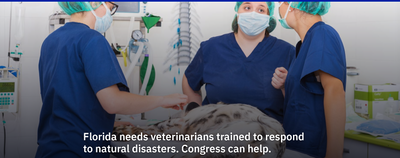
Florida needs veterinarians trained to respond to natural disasters. Congress can help.
When Hurricane Helene struck, we were on the frontlines in Florida’s Big Bend region, racing against time to support the Humane Society as they rescued animals displaced by the most powerful storm ever to hit this part of the state. Two weeks later, we were back in action, facing the devastating flooding from Hurricane Milton. These back-to-back disasters showcased the urgency and critical need for emergency-response veterinarians who can act fast to save lives. We lead one of the nation’s only three emergency veterinary response teams — the University of Florida Veterinary Emergency Treatment Service (UF VETS). Founded after the 2004 hurricane season and operating under the UF College of Veterinary Medicine, the UF VETS program hosts two distinct, yet complementary, branches: a medical response unit for disaster-affected animals and an animal technical rescue branch, which manages complex operations like overturned livestock trailers. Larry Garcia specializes in veterinary disaster preparedness and response, animal technical rescue/training and shelter medicine operations. View his profile here Our team is on call whenever disaster strikes, working alongside local and state veterinary organizations, animal rescues and law enforcement to save animals in crisis. But here’s the problem: Without a nationwide system for coordinating these efforts, it’s often chaotic, and animals suffer because of it. Now Congress has a golden opportunity to change that. As they return to Washington, they have the chance to make a game-changing impact by including funding in the final FY 2025 Homeland Security Appropriations bill to create a nationwide network of veterinary emergency teams. This funding could revolutionize how the U.S. handles animal care during national disasters — and it needs to happen, fast. Read more ... Looking to know more about this important topic or connect with Lawrence Garcia - simply click on his icon now to arrange an interview today.

LSU Launches Louisiana’s Most Advanced Microscope at Research Core Facility
LSU’s Advanced Microscopy and Analytical Core (AMAC) facility gives Louisiana researchers access to 16 state-of-the-art instruments, including a new Spectra 300 Scanning Transmission Electron Microscope (S/TEM) for atomic-scale imaging and analysis. The new microscope—the most advanced in Louisiana—was installed with $10 million in support from the U.S. Army. Standing almost 13 feet tall on a platform isolated from vibration, the S/TEM required major renovations, including a raised ceiling, acoustic wall panels, and a magnetic field cancellation system to ensure the instrument’s stability and performance. The microscope offers magnification up to 10 million times, powerful enough to enlarge a single grain of Mississippi River silt to the size of Tiger Stadium. “This is a transformational moment for LSU and for the future of research in Louisiana,” Interim LSU President Matt Lee said. “With the installation of the most advanced microscope in the state, LSU is once again demonstrating how we’re delivering on our promises—leading in research, innovation, and service to the state and nation.” The launch of the AMAC and S/TEM demonstrates LSU’s increased investment in providing its faculty and partners with the best possible equipment for research and discovery, including for national defense, energy, and health. “Winning in research is no different than winning in athletics—the best facilities attract the best talent, and you need the best of both to win,” LSU Vice President of Research and Economic Development Robert Twilley said. “Today’s launch is about a state-of-the-art microscope but also the launch of the AMAC as our first research core facility at LSU—the first of more to come to attract, train, and supply the best research talent for Louisiana and build research teams that win.” Using a finely focused electron beam and techniques such as energy dispersive X-ray spectroscopy (EDS) and electron energy loss spectroscopy (EELS), the S/TEM can reveal both structure and chemistry at atomic resolution. These capabilities drive advances in materials science—improving semiconductors, solar cells, batteries, catalysts, coatings, and alloys—while supporting biomedical research by mapping drug delivery, uncovering the structures of viruses and bacteria, and improving medical implant design. LSU’s AMAC research core facility was recently rebranded, changing its name from the Shared Instruments Facility (SIF). Learn more about how AMAC instruments help unlock millions in federal research funding to Louisiana and deliver solutions.