
Experts Matter. Find Yours.
Connect for media, speaking, professional opportunities & more.

Dinosaurs in New Mexico Thrived Until the Very End, Study Shows
For decades, many scientists believed dinosaurs were already dwindling in number and variety long before an asteroid strike sealed their fate 66 million years ago. But new research in the journal Science from Baylor University, New Mexico State University, the Smithsonian Institution and an international team is rewriting that story. The dinosaurs, it turns out, were not fading away. They were flourishing. A final flourish in the San Juan Basin In northwestern New Mexico, layers of rock preserve a hidden chapter of Earth’s history. In the Naashoibito Member of the Kirtland Formation, researchers uncovered evidence of vibrant dinosaur ecosystems that thrived until just before the asteroid impact. High-precision dating techniques revealed that fossils from these rocks are between 66.4 and 66 million years old – placing them in the catastrophic Cretaceous-Paleogene boundary. “The Naashoibito dinosaurs lived at the same time as the famous Hell Creek species in Montana and the Dakotas... They were not in decline – these were vibrant, diverse communities.” – Daniel Peppe, Ph.D. “The Naashoibito dinosaurs lived at the same time as the famous Hell Creek species in Montana and the Dakotas,” said Daniel Peppe, Ph.D., associate professor of geosciences at Baylor University. “They were not in decline – these were vibrant, diverse communities.” Dinosaurs in their prime The New Mexico fossils tell a different story than originally thought. Far from being uniform and weakened, dinosaur communities across North America were regionally distinct and thriving. Using ecological and biogeographic analyses, the researchers discovered that dinosaurs in western North America lived in separate “bioprovinces,” divided not by mountains or rivers, but by temperature differences across regions. “What our new research shows is that dinosaurs are not on their way out going into the mass extinction,” said first author Andrew Flynn, Ph.D., ‘20, assistant professor of geological sciences at New Mexico State University. “They're doing great, they're thriving and that the asteroid impact seems to knock them out. This counters a long-held idea that there was this long-term decline in dinosaur diversity leading up to the mass extinction making them more prone to extinction.” Life after impact The asteroid impact ended the age of dinosaurs in an instant – but the ecosystems they left behind set the stage for what came next, the researchers said. Within 300,000 years of their extinction, mammals began to diversify rapidly, exploring new diets, body sizes and ecological roles. The same temperature-driven patterns that shaped dinosaur communities continued into the Paleocene, showing how climate guided life’s rebound after catastrophe. “The surviving mammals still retain the same north and south bio provinces,” Flynn said. “Mammals in the north and the south are very different from each other, which is different than other mass extinctions where it seems to be much more uniform.” Why the discovery matters today The discovery is more than a window into the past – it’s a reminder of the resilience and vulnerability of life on Earth. Conducted on public lands managed by the U.S. Bureau of Land Management, the research highlights how carefully protected landscapes can yield profound insights into how ecosystems respond to sudden global change. With a clearer understanding of the timeline of the dinosaurs’ final days, the study reveals not a slow fade into extinction but a dramatic ending to a story of flourishing diversity cut short by cosmic chance.


LSU Hurricane Expert Dr. Jill Trepanier Featured in TIME Magazine
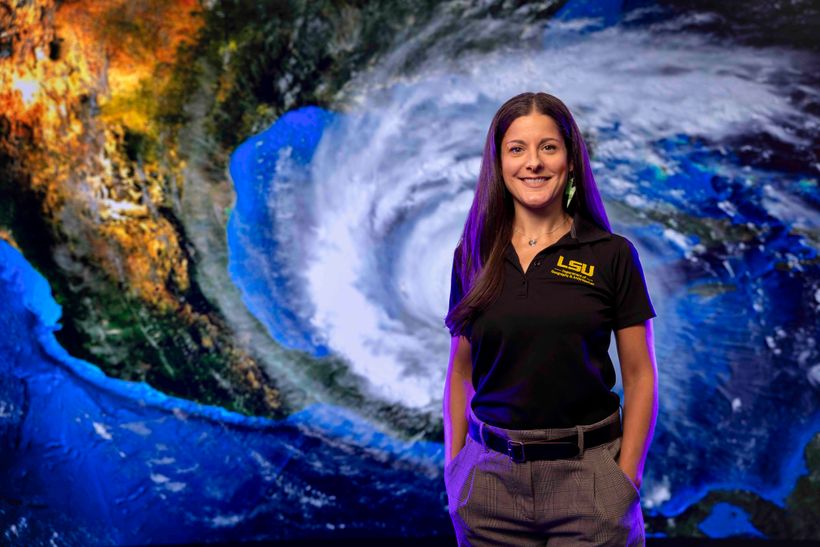
For the first time in a decade, no hurricanes have made landfall in the United States through the end of September—a rare and welcome reprieve for coastal communities. But according to LSU hurricane climatologist Dr. Jill Trepanier, the season has been far from quiet. In a recent TIME Magazine feature, Trepanier explains that while no major storms have struck land, powerful systems have still formed over the Atlantic. “There are storms,” she says. “They’re just not making landfall.” Trepanier points to several atmospheric factors behind this pattern, including dry air moving in from the Sahara and a persistent high-pressure system over the Gulf of Mexico that has made conditions unfavorable for hurricane development near the U.S. coast. Another key influence, she notes, is a pressure pattern called the North Atlantic Oscillation, which helps steer storm paths. “When that oscillation pattern shifts closer to Bermuda, it unfortunately drives them directly into the Gulf Coast and the eastern seaboard,” Trepanier says. “It changes over the course of a handful of years, and then back again. It’s this controlling mechanism that has shifted, thankfully, in the favor of those of us at the coast.” Read the full article here:



LSU Expert Christine Navarre on the Threat of New World Screwworms
The New World screwworm (NWS), also known as the primary screwworm, is the larvae of the fly Cochliomyia hominivorax. Unlike the larvae (maggots) of other flies that only feed on dead tissue, the NWS feeds on live tissue. This leads to more severe and potentially deadly consequences which threatens livestock and wildlife populations. Prior to their eradication form the United States, NWS were a major economic burden to the production of livestock, especially in the in the southwestern U.S. and Florida. The U.S. Department of Agriculture estimates that the U.S. livestock industry saves approximately $900 million a year as a result of NWS eradication. Other benefits of eradication and control are enhanced human and animal health and welfare and increased survival of endangered wild animal species. The NWS fly was eradicated from the U.S. in 1966 with the release of sterile male flies to control the population. This status is maintained through the Panama-U.S. Commission for the Eradication and Prevention of the Cattle Borer Worm (COPEG) which releases millions of sterile flies weekly along the Panama-Colombia border to create a barrier preventing the northward spread of screwworms. Due to these efforts, it is now found primarily in tropical areas of South America and some Caribbean Islands, including Cuba. In 2016 NWS were found in Key Deer in the Florida Keys. The source of the outbreak was never determined. Rapid recognition of the problem and response with the release of sterile flies quickly eradicated the problem but this incident illustrates the importance of remaining vigilant. In November, NWS was detected in Mexico near the Guatemala border. The USDA Animal and Plant Health Inspection Service (APHIS) has imposed immediate import restrictions on animal commodities from Mexico. They are also intensifying efforts to prevent the northward spread of NWS by collaborating with Mexican and Central American authorities and urging livestock producers along the southern U.S. border to monitor their livestock and pets for signs of NWS. Any suspected cases should be reported immediately. Clinical Signs NWS can infest any warm-blooded animal including livestock, pets, wildlife, birds and occasionally humans. Common sites of infestation are any fresh or old wounds, warts, tumors, tick bites and antlers in shedding. Wounds left from management procedures, such as dehorning, branding, ear tagging, tail docking and shearing, can become infested. The eyes, nose, vulva and prepuce are also vulnerable, as well as the umbilicus in newborn mammals. Animals infested with NWS may show the following signs: Presence of maggots in wounds or body openings Wounds with a foul odor, bloody drainage or white/cream-colored drainage (eggs) Depression, reduced appetite, weight loss Isolation and/or signs of discomfort, head shaking Fever and other signs of secondary infection Diagnosis and Reporting Maggots found on animals showing the above clinical signs should be sent to a veterinarian or veterinary diagnostic lab for identification to distinguish NWS larvae from other more common fly larvae. In Louisiana larvae can be sent to the Louisiana Animal Disease Diagnostic Laboratory (www.lsu.edu/vetmed/laddl). Larvae should be placed in 70% alcohol for submission to the diagnostic laboratory. It is very important to immediately report any NWS infestations to the Louisiana Department of Agriculture and Forestry. A reported case will not result in herd depopulation but will allow animal health officials to take steps to help you manage your animals and prevent spread. Early detection and rapid response are critical to controlling this parasite. Treatment Immediate veterinary care should be sought to remove larvae and properly treat with insecticides. Wound care is also important to speed healing and prevent reinfestation. Prevention Treatment of NWS can be difficult, and eradication is very costly, so prevention of infestations is essential. Adult NWS flies can travel up to 12 miles to lay eggs, and eggs can be transported by animals and people traveling from infested areas. This necessitates constant vigilance to ensure that reintroduction into the U.S. does not occur. Preventative steps include: Regularly inspect livestock and pets for cuts, wounds, scabs and tick infestations. Closely monitor the umbilicus of newborn livestock, vulva of females and prepuce of males. Use insect repellant and wound dressings to prevent fly strike. Report any unusual wildlife or bird deaths to the Louisiana Wildlife and Fisheries. Pay close attention to nasal passages and eyes for signs of larvae (maggot) infestation. Seek veterinary advice for immediate treatment of open wounds, including dehorning and castration sites and preventive use of topical and systemic insecticides. Review biosecurity plans with the farm or ranch veterinarian. Original article by the LSU AgCenter here.


Tariffs and Trade Series - The Potential Impacts of Tariffs and Global Trade Shifts
This is the first installment in a series examining the multifaceted impacts of tariff and trade policies. By delving into the nuances of these policies, we aim to provide valuable insights and perspectives that will inform strategic business decision-making and foster resilience in an increasingly volatile global market. Future papers in this series will explore the specific implications for key sectors such as agriculture, energy, and construction, offering targeted analysis and recommendations to help businesses navigate and thrive amidst evolving trade landscapes. The global trade landscape is experiencing rapid shifts driven by escalating tariffs, geopolitical realignments, and supply chain disruptions. In North America, businesses must navigate changing US trade policies, evolving trade agreements such as the United States-Mexico-Canada Agreement (USMCA), and the broader implications of international trade tensions. These developments may have significant economic implications which impact supply chains, regulatory compliance, financial strategies, and heighten geopolitical risk. Trade policies across the world are being redefined, with tariffs increasingly used as economic and political tools. The US, China, and the European Union are at the center of these shifts, reshaping global supply chains and trade routes. Businesses must reassess their sourcing strategies, financial models, and regulatory compliance efforts in response to these evolving dynamics. In North America, the US has intensified its use of tariffs, impacting trade with Canada, Mexico, and numerous global partners. While these policies aim to boost domestic industries, they have introduced supply chain challenges and regulatory complexities. As a result, companies must proactively adapt to maintain operational efficiency and financial stability. This article examines the challenges and opportunities that may arise from these trade shifts and provides insights for businesses to mitigate risks and maintain competitiveness. At J.S. Held, we help businesses navigate these challenges by providing insights into regulatory changes, trade risks, and strategic adaptations to ensure long-term resilience. "With the sweeping April 2 tariff announcement, U.S. trade policy has entered a new phase. One where national security, economic leverage, and regulatory unpredictability intersect. Businesses are now navigating not just targeted tariffs, but a universal cost layer that may touch nearly every sector. The urgency to adapt through exemption strategies, supply chain restructuring, and trade compliance has never been greater." The full report is accessible below, and is a must read for anyone covering the impacts of the tariffs announced by President Trump on April 02, 2025. Looking to know more or connect with Andrea Korney? Simply click on the expert's icon now to arrange an interview today. For any other media inquiries - contact : Kristi L. Stathis, J.S. Held +1 786 833 4864 Kristi.Stathis@JSHeld.com


With a trade war that sees steep tariffs on imports from China, Canada and Mexico - various industries across the continent are scrambling to figure out how to conduct cross-border business in the wake of President Trump's new policies on trade. For many industries with production lines that crisscross the border, there's concerns about how to prosper or function in the future. Among Detroit brands, GM's Chevrolet and GMC pickups, along with Stellantis's Ram, are more exposed to Trump's taxes than Ford because both build large numbers of pickups in Mexico. Ford builds its F-series pickups in the United States - but also makes some truck engines in Canada, underscoring the web of economic interdependence among the three North America trading partners. Almost no American vehicle is made from solely American parts, industry research shows. Barclays bank analysts estimate that Mexico provides up to 40% of the parts in U.S. vehicles and Canada more than 20%. Suppliers say they will have to cover some of the tariff costs and will likely see an additional hit if consumer demand weakens from rising vehicle prices. Automakers and suppliers also worry about the effects of tariffs on vehicle components that bounce across borders before reaching their final destination. Companies worry that such parts could be taxed with every border crossing, although Trump has not clarified his policy in such cases. March 05 - Reuters Industry insiders are saying companies need to adapt their strategies immediately. To become more agile, companies are increasingly turning to advanced supply chain solutions. Modern platforms provide end-to-end visibility, helping businesses map complex, inter-connected supply chains made up of multiple tiers and assess risks associated with tariffs or regulatory changes. These tools enable companies to model the financial impact of different scenarios, offering data-driven insights for supplier diversification or regional sourcing strategies. March 06- Supply Chain Management Review Despite the 30 day reprieve for automakers, companies are still waiting and figuring out how to adapt. If you're a journalist covering tariffs and the trade war and how the supply chain might be impacted, Steven Carnovale can help. Steven is a supply chain strategist specializing in interfirm networks, risk management and global sourcing/production networks. Steven is available to speak with media. Simply click on his icon now to arrange an interview today


The Battle Begins - How Long will Trump's Trade Wars Last Between China, Canada and Mexico?
It has begun. March 04 signaled the first day of what could be a long and drawn out trade war between America and it's two closest neighbors and trading partners - Canada and Mexico. President Trump also doubled the tariff he slapped last month on Chinese products to 20%. Markets are reeling, politicians are scrambling and the world is watching to see how the tariffs on Mexican and Canadian imports will affect consumers and the economy. In Canada, the reaction was swift. Businesses pulled American bourbon, wine and other imported spirits from store shelves along. Canada also threatened to turn off imported power that keeps the lights on and factories running in states like Michigan, Minnesota and New York. As well, Canadian Prime Minister, Justin Trudeau announced immediate retaliatory measures. Trudeau said Canada will not back down from a fight in the face of "completely bogus and completely unjustified" trade action that has the potential to ruin bilateral relations and prompt job losses, economic devastation and higher inflation on both sides of the border. Trudeau has already slapped tariffs on an initial tranche of $30 billion worth of American goods and promised $125 billion more will face levies in three weeks' time. He said more, non-tariff measures are coming if Trump doesn't immediately back down. Trudeau said Trump is doing something "very dumb" by attacking Canada like this, given there will be serious ramifications for American workers and consumers with higher prices on everything from food, car parts and fertilizers to pharmaceuticals and paper products. March 04 - CBC News Meanwhile, there have been some indicators that President Trump may be willing to negotiate. President Donald Trump will “probably” announce tariff compromise deals with Canada and Mexico soon, Commerce Secretary Howard Lutnick said Tuesday. The potential agreements would likely involve scaling back at least part of Trump’s brand new 25% tariffs on imports from Mexico and Canada, he added. Lutnick’s comments came minutes after the U.S. stock market limped to a close for a second day of sharp declines, spurred at least in part by investors’ fears that Trump’s aggressive policies will ignite a crippling trade war. After his remarks, U.S. stock futures tied to all three major averages rose. The compromises with Canada and Mexico will likely be revealed as soon as Wednesday, Lutnick said on “Fox Business.” March 04- CNBC News There's a lot of speculation out there - and lingering questions: What key American industries will benefit, which ones will suffer? When and will consumers see price hikes at the stores? Will there be a lasting negative impact felt on the American economy? What does this mean for the USMCA that was currently in place? If you're a journalist covering tariffs and the trade war - then let us help. William J. Luther, Ph.D., is an associate professor of economics at Florida Atlantic University, director of the American Institute for Economic Research’s Sound Money Project, and an adjunct scholar with the Cato Institute’s Center for Monetary and Financial Alternatives William is available to speak with media. Simply click on his icon now to arrange an interview today


Trade Wars: Economic Strategy or Risky Gamble for the U.S.?
As global markets become increasingly interconnected, trade wars have emerged as a high-stakes economic strategy with far-reaching consequences. A potential trade conflict between the U.S., Canada, and Mexico—key partners in the North American supply chain—raises critical questions about economic growth, job security, and consumer prices. While proponents argue that tariffs and trade restrictions protect domestic industries, critics warn of rising costs, retaliatory measures, and disruptions to vital industries such as agriculture, manufacturing, and technology. Understanding the impact of trade wars is essential to assessing the future of North American economic relations, with key areas of interest including: The economic implications of tariffs on American businesses, workers, and consumers How a trade war with Canada and Mexico could impact the USMCA agreement and cross-border trade The industries most vulnerable to supply chain disruptions and retaliatory tariffs The historical impact of past trade wars on economic growth and stability The role of globalization and shifting alliances in modern trade policies Potential winners and losers: Which sectors stand to benefit, and which face economic hardship? This issue presents a timely and complex discussion about economic policy, international relations, and the future of North American trade. Connect with an expert about trade and trade wars: To search our full list of experts visit www.expertfile.com


Legality, Next Steps for Canadian Tariffs
Maurice A. Deane School of Law at Hofstra University Professor Julian Ku was quoted in The Globe and Mail article “The best hope for Canada in fighting a trade war with Trump may lie in U.S. courts." “Using IEEPA to impose tariffs has not been done before, so there has never been a court ruling on this question,” said Julian Ku, who studies the interaction of international law and U.S. constitutional law at Hofstra University. Mr. Trump has, however, argued that he is responding to external threats, citing the movement of fentanyl and illegal migrants to the U.S. from Canada, Mexico and China. That is likely to prove a potent defense, Prof. Ku said. “The court has also been deferential to the President on national-security matters, and the language of the statute is very broad, so it is far from clear which way the court would come down on this issue,” he said.


Trump, Trade and Tariffs What to Expect, Will They Work and Who Benefits?
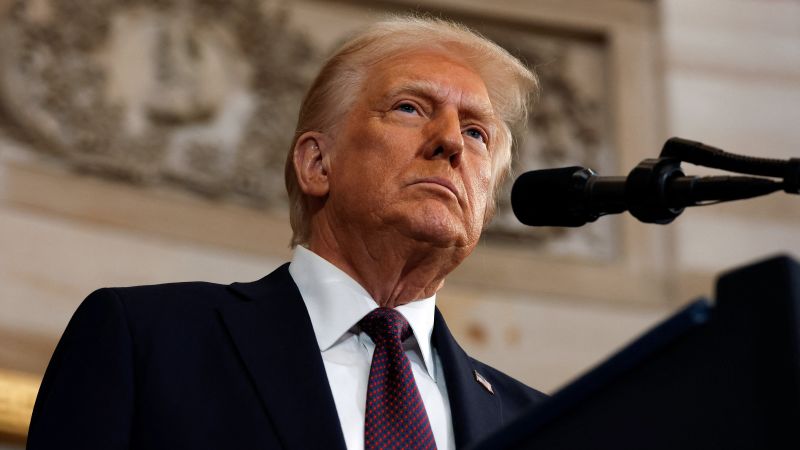
The threat of 25 % tariffs on Canada and Mexico had newsrooms buzzing, politicians scrambling and economists calculating who wins and who loses when trade wars break out among usually amicable neighbors. Factor in Greenland and China - and the story went global. It was a topic that headlined the news as many have watched and waited since the election for President Trump's first days in office to see what the country can expect with incoming policy changes. President Donald Trump said in an Oval Office signing ceremony Monday evening that his administration will impose 25% tariffs on Mexico and Canada on February 1, an extraordinary change in North American trade policy that could raise prices for American consumers. Trump still outlined his broader trade policy for his second term in an executive action Monday. But that action — described by sources as a “placeholder” — doesn’t institute new global tariffs that Trump promised on Day One. As a candidate, Trump proposed sweeping and across-the-board tariffs: up to 20% on imports from all countries, with a 25% tax on goods from Mexico and Canada, plus a punishing 60% levy on goods from China. He also pledged to use tariffs as a negotiating tool on other countries, including, for example, Denmark — putting pressure on the European nation to give control of Greenland to the United States. Asked Monday at an Oval Office signing ceremony about tariffs on China, Trump noted extensive tariffs he imposed during his first administration were still in effect after former President Joe Biden largely left them in place. And on universal tariffs, Trump punted, saying, “We may, but we’re not ready for that just yet.” The executive action signed Monday directed the secretaries of Commerce and Treasury and the United States Trade Representative to investigate the causes of America’s trade deficits with foreign nations, to determine how to build an “External Revenue Service” to collect tariffs, to identify unfair trade practices and to review existing trade agreements for potential improvements. It also directs the government agencies to analyze how the US-Mexico-Canada trade agreement (the USMCA) signed by Trump in his first term is affecting American workers and businesses — and whether America should remain in the free trade agreement. January 21 - CNN As business and political leaders in many countries, especially North America wait for what's ahead, there are questions to be asked: What industries will be targeted? Will tariffs cause higher prices for consumers and increased inflation? Who wins if an all-out trade war happens? How will interwoven sectors like the auto industry and agriculture be impacted? If you're a journalist covering this ongoing story - then let us help. William J. Luther, Ph.D., is an associate professor of economics at Florida Atlantic University, director of the American Institute for Economic Research’s Sound Money Project, and an adjunct scholar with the Cato Institute’s Center for Monetary and Financial Alternatives William is available to speak with media. Simply click on his icon now to arrange an interview today.

Turning on the tap for a drink of clean water may seem like part of an everyday routine for many. Yet, for countless communities—even here in the U.S.—this simple act remains a daily challenge, with each glass or clean drop of water far from guaranteed. One Georgia Southern University professor is working to change that. Thirty percent of the Navajo Nation population lacks access to clean drinking water. Lewis Stetson Rowles, Ph.D., assistant professor in the Department of Civil Engineering and Construction in the Allen E. Paulson College of Engineering and Computing at Georgia Southern University, is working to increase access to clean water for this community and beyond by engaging with locals to understand how materials used in traditional cultural practices can be transformed into life-changing solutions. “My first trip to the Navajo Nation as an undergraduate student was a really eye opening experience for me,” Rowles said. “To realize that there were people within the U.S., in our own backyard, who lacked clean water is what inspired my whole career in research and education.” Establishing trust was an important challenge to overcome for Rowles and his fellow researcher and mentor Navid Saleh, Ph.D., professor of environmental and water resources engineering at the University of Texas at Austin. “Years of uranium mining left the mineral-rich area and the connection with the Navajo community polluted,” Rowles said. “It has been a decade-long effort to build community relationships, understand the issues and develop potential solutions specific to the needs of the Navajo Nation.” Finding solutions specific to local needs and cultures is key to their implementation and success according to Rowles. “We have to work with communities to truly understand the issues and collaboratively develop functional solutions because locals are the people who understand the problems the best,” Rowles said. “I don’t believe that there’s a one-size-fits-all solution. For technologies to really be sustainable, we need to understand if they’re going to work in a specific location, which means we need to develop community-specific solutions.” Working with the community is important for more than just understanding the issue at hand. When thinking about big-ticket issues, like clean water, Rowles said that it’s easy to fall into the trap of thinking about large-scale, infrastructure-based solutions. But some of the most immediately effective and impactful solutions happen on a much more intimate level. “Centralized distribution systems take a long time to build, they’re also very costly,” Rowles said. “The need for clean water is dire in many communities, so point-of-use technologies are great because they can be adopted quickly. They also bring power to the people in a way, because technologies can be developed with local materials, like we’re doing here with clay and pinyon resins for ceramic filters. This can create immediate solutions to water contamination issues.” Rowles, who specializes in environmental engineering, worked with members of the Navajo community to discover how the process of creating traditional pottery can help solve the problem of clean drinking water at a local level for families. Deanna Tso, a third-generation Navajo potter, has been integral to this process to ensure that the novel solutions don’t detract from traditional practices. “If you’ve ever climbed a pine tree and gotten sap stuck on your hands, you know it’s very sticky,” Rowles said. “The Navajo people have been using this sap for centuries to waterproof pottery and baskets. Meanwhile, one of the biggest limitations to the use of silver nanoparticles for water treatment is the immobilization of those particles. We used this local resin to coat the nanoparticles, keeping them in place and extending the lifetime of the filters while still allowing them to kill bacteria. It also acts as a really unique barrier that prevents silver poisoning by stopping the silver from interacting with other compounds that would inhibit the dissolution of silver nanoparticles into silver ions which kill bacteria.” By working together to integrate new technologies into existing traditions, Rowles and his partners are one step closer to changing the lives of many in the Navajo Nation. Their hope is that this knowledge will be used to expand access to potable water to more parts of the world. “While we started working with Deanna on a very specific pine tree sap, the more we’ve researched, we’ve seen there are similar pine and conifer trees throughout the continent, even into Mexico, that have been used by indigenous groups for centuries,” Rowles said. “This means that this research has much broader applications across the world, particularly in areas that lack centralized water treatment systems where people go and collect water from distant sources or wells, bring it back to their house, and then treat it at the household level.” The extension of this knowledge begins by sharing it, which is precisely what Rowles’ team has done over the last year. They published their research Integrating Navajo Pottery Techniques To Improve Silver Nanoparticle-Enabled Ceramic Water Filters for Disinfection in October 2023 and shortly thereafter began working with PBS NOVA. Their work will now be shared as part of a documentary series highlighting engineers working to positively change the world. “The Navajo Nation is just one area impacted by lack of access to clean water,” Rowles said. “Around 1.5 million people across the U.S. lack indoor plumbing and many more rely on wells and septic systems that are often aging or failing, leading to sanitation concerns. There are a lot of great organizations and a lot of great research working to address sanitation issues abroad, but I hope this research can open people’s eyes to the fact that this is a local problem, too. Don’t take it for granted that you’re able to turn on the tap and have safe, clean water, because that is not true for a lot of Americans and for much of the world.” You can continue exploring Rowles’ research on an episode of PBS NOVA—Building Stuff: Change It! and by watching the Innovations in Water Treatment with Navid Saleh from Building Stuff: Change It! Twitch episode of Building Stuff with NOVA. If you're interested in learning more or a reporter looking to speak with Stetson Rowles - simply contact Georgia Southern's Director of Communications Jennifer Wise at jwise@georgiasouthern.edu to arrange an interview today.
