
Experts Matter. Find Yours.
Connect for media, speaking, professional opportunities & more.

Covering Cuba? Augusta has one of the leading experts ready to help with your coverage
Cuba is facing one of its most severe crises in decades, as compounding economic and energy challenges continue to strain everyday life on the island. Persistent fuel shortages have led to rolling blackouts, transportation disruptions, and reduced industrial output, while inflation and shortages of basic goods have eroded purchasing power for ordinary Cubans. Tourism, once a critical source of foreign exchange, has struggled to fully recover, and the country continues to grapple with declining productivity and limited access to international capital. These pressures have contributed to rising public frustration, increased migration, and a government response that blends cautious economic reforms with efforts to maintain stability. Paolo Spadoni is an ideal expert for journalists covering this evolving situation. As a specialist in Cuba’s political economy, his work focuses on the island’s external sector, including foreign investment, remittances, tourism and the impact of international sanctions. He brings a rare ability to connect on-the-ground developments – such as energy shortages or policy changes, to the broader structural realities shaping Cuba’s economy. With deep academic research and ongoing analysis of current reforms, Spadoni offers clear, credible insight into whether Cuba’s latest measures signal meaningful transformation or simply short-term responses to a prolonged crisis. Paolo Spadoni, PhD, is a widely recognized expert on Cuba and its international relations. He is a tri-lingual political economist with a specialization in international relations and a focus on Latin America’s political and business environments. His research focuses on international relations theories, Cuba's economy and business market, foreign investment in Cuba and U.S.-Cuba relations. View his profile Since this crisis escalated, Spadoni has been the 'go-to' expert for reporters with media from across North America like Reuters, Bloomberg and The New York Times connecting with him for his expertise, input and perspective on the situation. LA TERCERA: “The Cuban tourism sector was already struggling before the Covid pandemic. The best year for international tourism in Cuba was 2017 in terms of foreign exchange earnings. That was the year in which $3.3 billion was collected, and tourism represented 10% of Cuba's GDP at that time. In terms of employment, it provided 120,000 direct jobs and roughly 500,000 indirect jobs. So it played a significant role. That was the best year for international tourism in Cuba, which coincidentally ended in November of that year with the sanctions imposed by the first Trump administration. From then on, tourism from North American visitors began to decline, but European and Canadian visitors were already decreasing,” Spadoni explained to La Tercera. CBC NEWS: "Most of those investments are real estate investments more than tourism investments, meaning the Cuban military has taken possession of prime locations in the best tourism areas of Cuba," said Paolo Spadoni, an associate professor at Augusta University in Augusta, Ga., and co-author of the 2025 book The Cuban Tourism Industry: Evolution, Challenges and Prospects. Columbia Law School: "While seeking to finalize an economic agreement with Cuba, the Trump administration could secure deals across various sectors of the economy. However, tourism holds the most promising opportunities in the short term." Global News (Canada):



The January U.S. military action in Venezuela is altering political connections and calculations across the Western Hemisphere, with deep implications for Cuba. The long-standing belief in the United States’ strategic patience regarding adversarial and destabilizing governments has been decisively overturned and threatens the Cuban government’s vulnerability to collapse. Georgia Southern University Associate Professor of International Studies Christopher M. Brown, Ph.D., is a recognized expert in the democratization and democratic theory of Latin American countries and the Caribbean Basin. He offers expert analysis on the shifting political landscape in Venezuela and the long-term resilience of the Havana-Caracas axis. Brown is a National Endowment for Humanities Scholar with the José Martí Institute at the University of Tampa and participated in a Faculty Exchange with the University of Havana. He has authored several books focused on the failed democratic systems in Latin America and most recently published a book titled “Responding to the Venezuelan Migration Crisis: Insights for the Caribbean” (with Georgina Chami Ph.D., University of the West Indies, St. Augustine, Trinidad and Tobago, and Nalanda Roy, Ph.D., Georgia Southern University). His monograph, “Failed Democracies in Latin America and the Caribbean” (Palgrave-Macmillan) was published in August 2023 and he is currently completing, “Democratization of Cuba” (Palgrave-Macmillan), which will be published in June 2026. Brown is available in person at the Statesboro Campus or virtually. Simply contact Georgia Southern's Director of Communications Jennifer Wise at jwise@georgiasouthern.edu to arrange an interview today.


Georgia Southern University expert available to provide geopolitical analysis on the Iran war
The Middle East has entered an active state of war marked by a cycle of retaliatory strikes across Iran and the Persian Gulf. Three major uncertainties now dominate the global outlook: the long-term survival of the Iranian government, the fate of Iran’s nuclear infrastructure, and the security of critical oil transit routes. Georgia Southern University Professor of Political Science and International Studies Jacek Lubecki, Ph.D., is available to speak about the military operation in Iran and its implications for regional stability and global security. Lubecki is an expert in comparative politics and military security studies, with a focus on the Middle East and Eastern Europe, particularly Poland. His research examines terrorism, counterinsurgency and military strategy. His work has been published in journals including Europe-Asia Studies, East European Politics and Societies, The Polish Review, The New Ukraine and The Armchair General. He has co-authored several books, including Globalization, Nationalism, and Imperialism: A New History of Eastern Europe (2023), which examines domestic and global security challenges, and Defending Eastern Europe: The Defense Policies of New NATO and EU Member States (2021). Lubecki speaks Polish, English, French, Russian, Spanish, Italian, German and Arabic with varying levels of fluency. Lubecki is available for interviews in person at Georgia Southern’s Statesboro Campus or virtually.

Oil Shock: How the War in Iran Could Send Global Fuel Prices Soaring
The ongoing war involving Iran has rapidly become one of the most consequential energy stories in the world. Oil markets have reacted sharply as military escalation threatens critical energy infrastructure and shipping routes in the Persian Gulf. Brent crude prices have surged past $100 per barrel as traders react to supply disruptions and the growing risk that the conflict could persist or expand across the region. At the heart of the concern is the Strait of Hormuz, a narrow but vital shipping corridor through which roughly one-fifth of the world’s oil and liquefied natural gas flows. Any disruption to this route has immediate ripple effects across global energy markets, transportation costs, supply chains, and ultimately consumer fuel prices. Analysts warn that if disruptions continue, the world could face sustained higher oil prices, tighter energy supply, and inflationary pressure across multiple sectors including transportation, manufacturing, and food production. In some scenarios, oil prices could climb significantly higher if shipping through the region remains restricted or if energy infrastructure becomes a sustained target in the conflict. For journalists covering the evolving situation, the energy implications of this conflict are complex and rapidly changing. From geopolitical strategy and energy security to economic ripple effects and consumer fuel prices, reporters need credible expert voices who can explain what’s happening and what comes next. ExpertFile connects journalists with leading experts across energy economics, geopolitics, global supply chains, and international security who can provide timely analysis on questions such as: Why the Strait of Hormuz is so critical to global oil markets How war in the Middle East impacts gasoline and diesel prices worldwide Whether oil prices could spike to $120 or higher The economic ripple effects of energy shocks on inflation and global markets How governments and energy companies respond to supply disruptions What the conflict could mean for long-term energy security and global trade Journalists covering the global energy story can connect with the many experts available through ExpertFile to provide context, analysis, and insight as this rapidly evolving crisis unfolds. Our experts can help! Connect with more experts here: www.expertfile.com

Strategic Closure of Strait of Hormuz Puts Pressure on U.S., Threatens Global Oil Trade Stability
Less than a week after the onset of the war in Iran, and amid escalating conflict in the region, Iran effectively closed the Strait of Hormuz to shipping tankers moving oil from the Middle East by threatening attacks against any vessel who entered the waterway. Thus, the small body of water, which moves a large percentage of the world’s crude oil, has become one of the most discussed places in the world in recent days. Frank Galgano, PhD, is a professor of Geography and the Environment at Villanova University. He is an expert in military and Middle East geography and has also studied global maritime shipping and access to natural resources. Dr. Galgano says there geographic, geopolitical, military and economic factors at play, along with widespread potential consequences, as Iran holds steady on their closure of the strait and the U.S. considers how, or if, it will attempt to help escort oil ships through. Geography and Significance of Strait of Hormuz Situated between Iran to the north and Oman and the United Arab Emirates to the south, the Strait of Hormuz is a narrow shipping lane that connects the Persian Gulf to the Gulf of Oman and, further out, the Arabian Sea. It is one of the most vital chokepoints in the Middle East, along with the Suez Canal, Straits of Tiran, Bab al-Mandab and the Turkish Straits. “Right now, because of oil, it is the most important,” Dr. Galgano said. “Every day, roughly 20 percent of global petrochemical use goes through Hormuz.” The strait itself is barely over 20 nautical miles at its narrowest, but only a small portion of that is shipping lanes. Depth constraints limit shipping to two lanes, each two miles wide, with a two-mile buffer between. “You’re essentially looking at all of that shipping constrained to six nautical miles, and the ships are relatively slow,” Dr. Galgano said. “There are usually about 14-25 tankers every 24 hours transiting the Gulf, so there is always a ship in line." By Iran threatening military action against any oil-carrying ships in Hormuz—and by shipping companies refusing to attempt to traverse it— one-fifth of the global oil trade is essentially cut off indefinitely. That is concerning, given that it takes very little to send global oil prices skyrocketing. Dr. Galgano referenced the 2010-11 Somali pirate issue that caused supertankers—which cost upward of $50,000 a day to operate—to be rerouted. “That alone caused gas prices to raise 10 cents per gallon,” he said. In this case, the biggest impact will be felt throughout Asia, which relies more heavily on oil imports. But the U.S., despite being the second-biggest producer of crude oil last year, will still feel significant effects, since oil is traded globally. “It takes these supertankers eight or 12 days to reach the East Coast from Hormuz,” Dr. Galgano said. “So, a few days later you might see diminished supplies, but there is a critical point where we would face a real shortage.” Attempting to Move Ships Through Hormuz Poses Huge Danger Unlike the Iranian-backed Houthi rebels attacks on Israeli ships and those belonging to its allies in the Red Sea last year, Iran itself has far more sophisticated weapons, along with a strong motive to do whatever it can to put pressure on the U.S. and involved allies. In addition to drones designed for attacking ships—like the ones used by Houthis—Iran also possesses Chinese and Russian anti-ship missiles, according to the professor. “Ships are very vulnerable,” he said, then referencing the 2000 bombing of the USS Cole by Al Qaeda operatives. “That was just two guys in a rubber boat with an explosive device, and it almost sunk the whole ship. If one is carrying oil, it becomes almost like a large fuel bomb.” The United States has weighed the idea of sending a convoy to help escort and protect these ships. They did as much in the late 1980s in Operation Earnest Will, in which President Reagan ordered Kuwaiti supertankers—which were being fired at—to reflag under the U.S. flag so the Navy could legally escort them. But weapons technology has changed, and while U.S. naval ships could certainly defend themselves, “supertankers are slow and it is still an incredibly dangerous operation,” Dr. Galgano said. “The convoy would have to be lucky 100 percent of the time. Iran would only have to be lucky once to hit a ship and cause an immediate fiasco, both physically and in the media.” Global Dependance on Shipped Goods According to Dr. Galgano, between 75 and 90 percent of all items you handle on a day-to-day basis come from inside the hull of a ship: shocks on your car, clothes on your back, or components of your computer. When shipment is disrupted, it can cause supply chain and cost issues. “During the pandemic, Ford was waiting on chips for F-150s, and HP was waiting in chemicals to make ink,” Dr. Galgano said. “Even the ship that got stuck in the Suez Canal a few years ago caused $10 billion in losses per day due to the backup.” For commodities like oil, the indefinite inability to utilize perhaps the most important shipping lanes in the world due to large scale conflict quickly raises the economic stakes to even greater levels. “Iran absolutely knows that, and they see this as a bargaining chip,” Dr. Galgano said. “Cause economic pain to force cessation of the attacks.”


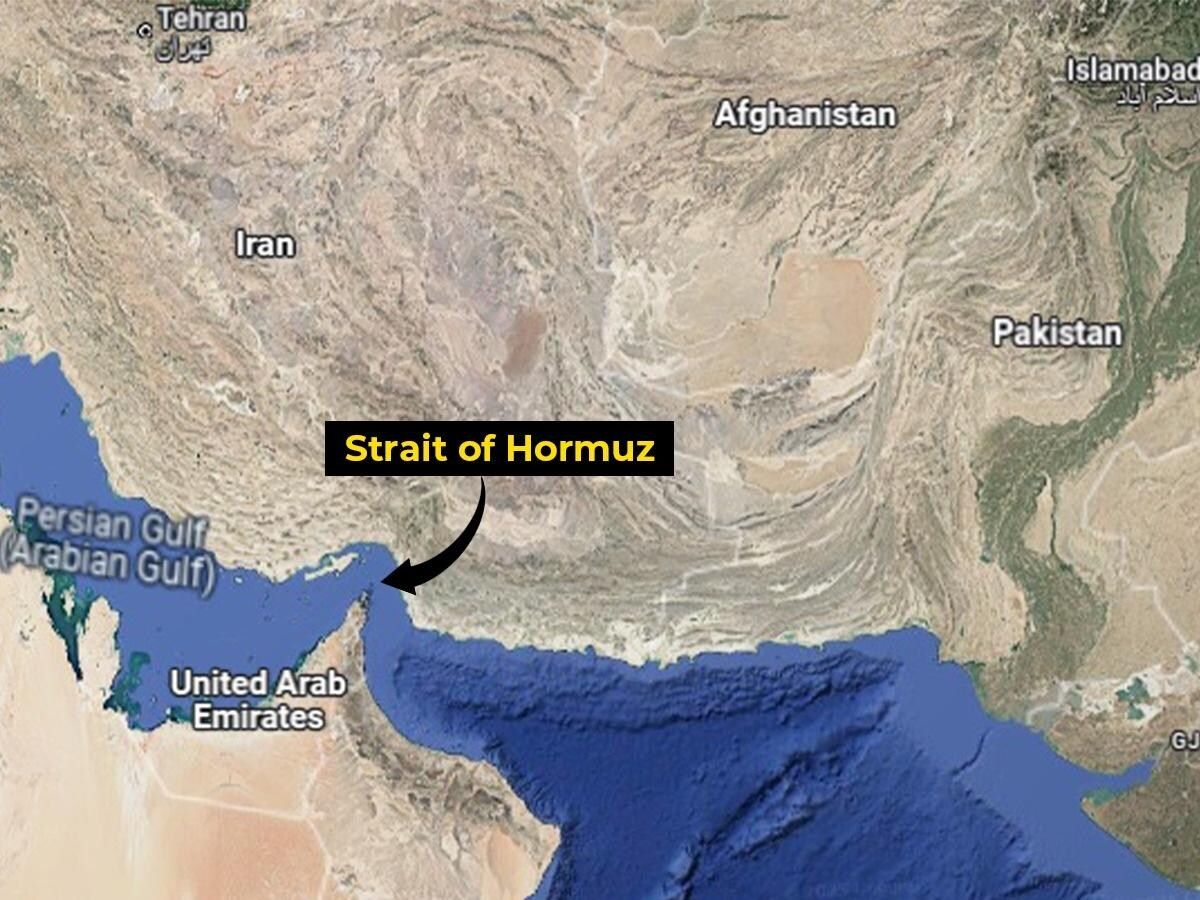
ExpertSpotlight: Why the Strait of Hormuz Matters: The World’s Most Critical Chokepoint
The Strait of Hormuz is one of the most strategically vital waterways on Earth. Just 20 miles wide at its narrowest point, with shipping lanes only a few miles across in each direction, this narrow channel connects the Persian Gulf to the Gulf of Oman and the Arabian Sea. Through it flows roughly one-fifth of the world’s petroleum supply, along with vast quantities of liquefied natural gas, particularly from Qatar. For global markets, the Strait is more than geography, it is a pressure point. Any disruption, even the threat of one, can send oil prices surging and rattle financial markets worldwide. A History Shaped by Empire and Energy For centuries, the Strait served as a maritime corridor linking Mesopotamia, Persia, India, and East Africa. Control over it shifted between regional powers, colonial empires, and eventually modern nation-states. In the 16th century, the Portuguese seized nearby islands to dominate regional trade routes. Later, British naval power asserted influence during the height of imperial shipping dominance. In the 20th century, however, the Strait’s importance expanded dramatically with the rise of oil exports from Gulf states. After the 1979 Iranian Revolution, tensions surrounding the Strait intensified. During the Iran-Iraq War in the 1980s, particularly the so-called “Tanker War” phase, commercial vessels were targeted, highlighting how vulnerable global energy supplies could be. Since then, periodic confrontations between Iran, the United States, and regional powers have kept the Strait at the centre of geopolitical risk. Why It Is So Important Today 1. Energy Security Major oil producers including Saudi Arabia, Iraq, the UAE, Kuwait, and Qatar rely heavily on this route. Even short-term closures could disrupt millions of barrels per day in global supply. 2. Global Economic Stability Because oil is globally traded and priced, disruptions in the Strait impact fuel costs, inflation, shipping, and consumer prices worldwide — including in North America and Europe. 3. Military Strategy The Strait is bordered primarily by Iran to the north and Oman to the south. Iran has periodically threatened to close the passage in response to sanctions or military pressure. The U.S. Navy and allied forces maintain a consistent presence to ensure freedom of navigation. 4. Modern Geopolitical Flashpoint Recent decades have seen drone seizures, tanker detentions, and naval standoffs. Each incident reinforces how fragile global energy logistics can be when concentrated in a single corridor. The Strait as a Symbol of Interdependence The Strait of Hormuz underscores a central truth of globalization: the world’s economies are deeply interconnected and geographically vulnerable. A narrow stretch of water in the Middle East can influence gasoline prices in Ontario, manufacturing costs in Germany, and energy security debates in Asia. It is both a trade artery and a geopolitical lever — a reminder that geography still shapes global power. Expert Angles for Media An expert in geopolitics, energy economics, or maritime security could explore: How vulnerable is the global economy to a prolonged closure? Can alternative pipelines realistically replace Hormuz traffic? What role do regional alliances play in deterring conflict? How does the Strait shape Iran’s negotiating power? What would insurance and shipping markets do in a crisis? The Strait of Hormuz is not simply a map feature — it is one of the world’s most consequential strategic chokepoints. Its stability underpins global energy flows, economic predictability, and international security. If tensions rise there, the world feels it. Our experts can help! Connect with more experts here: www.expertfile.com
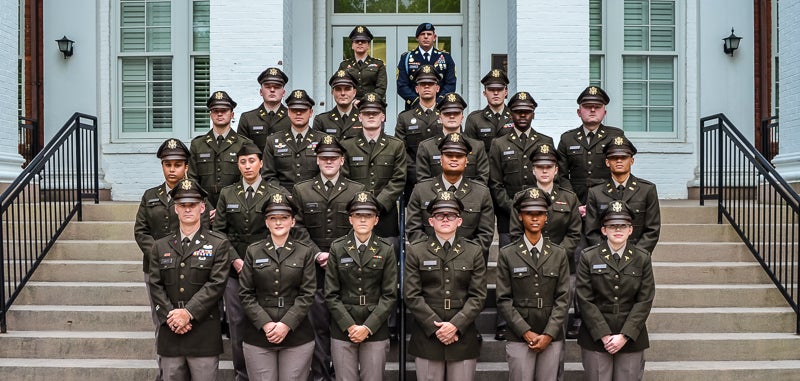
Raised to Serve: How Georgia Southern’s Jaden Young Found His Calling to Lead
“Shoot for the stars.” That guiding mindset defines Jaden Young, a recent graduate of Georgia Southern University who has been commissioned as a second lieutenant in the United States Army. Young earned his master’s degree in professional communication and leadership at December commencement, carrying forward a lifelong connection to military service shaped by family tradition and constant movement. “If you shoot for the stars, even if you miss, you might land on the moon,” Young said, reflecting the ambition that has guided his academic and leadership journey. Raised in a military family, Young learned early how adaptability and exposure to different communities build resilience. Those lessons carried into his time in Army ROTC, where he credits the program with sharpening his discipline, confidence, and problem-solving skills. “The ROTC program instilled in me discipline, confidence and resilience… When things don’t go your way, it’s all about how you adapt and find a better solution,” he said. Young’s Georgia Southern experience also tested his perseverance beyond the classroom and training field, as he balanced graduate studies and ROTC commitments while supporting his mother through cancer treatments. Those challenges deepened his understanding of leadership as service rooted in trust, communication, and loyalty. As he prepares for the Basic Officer Leadership Course at Fort Benning, Young says he feels ready to lead soldiers with purpose—bringing together the lessons of his upbringing, education, and commitment to serve. Looking to know more about Georgia Southern University's Professional Communications and Leadership program? Simply contact Georgia Southern's Director of Communications Jennifer Wise at jwise@georgiasouthern.edu to arrange an interview today.
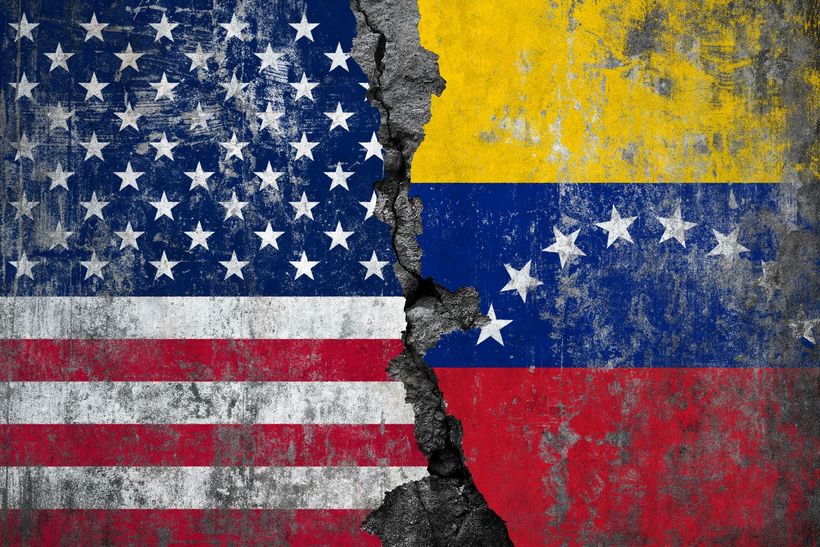
Venezuela: Why Regime Change Is Harder Than Removing A Leader
With global attention on Venezuela following the U.S. removal of Nicolás Maduro, one of the central questions is whether taking out a leader actually changes the political system that put him in power. Two University of Rochester political scientists — Hein Goemans and Gretchen Helmke — study different sides of this issue, and can shed light on why authoritarian regimes often survive even when leaders fall and what the U.S. intervention means for Venezuela and the world order. Goemans specializes in how wars begin and end, regime survival, and why so-called “decapitation strategies” — removing a leader without dismantling the broader power structure — so often fail to produce stable outcomes. His research draws on cases ranging from Iraq and Afghanistan to authoritarian regimes in Latin America. In a recent interview with WXXI Public Media, Goemans warned that removing Maduro does not resolve the underlying system of military and economic control that sustained his rule. Without changes to those institutions, he said, power is likely to remain concentrated among the same elite networks. “The problem isn’t just the leader,” Goemans explained. “It’s the structure that rewards loyalty and punishes defection. If that remains intact, the politics don’t fundamentally change.” Helmke, a leading scholar of democracy and authoritarianism in Latin America, emphasizes that legitimacy, not just force, determines whether democratic transitions take hold. Her research helps explain why democratic breakthroughs so often stall after moments of dramatic change, and why outside interventions can unintentionally weaken domestic opposition movements by shifting power toward regime insiders. “When the institutions and elites remain in place, uncertainty — not democratic transition — often becomes the dominant political reality,” she said. For journalists covering the fast-moving situation, Goemans and Helmke are available to discuss why removing leaders rarely brings the political transformation policymakers expect and what history suggests comes next. They can address: • Why regime-change operations so often backfire, even when dictators are deeply unpopular • What sidelining democratic opposition means for legitimacy • Whether U.S. claims that Maduro is illegitimate hold up under international and U.S. law • How prosecuting a foreign leader in U.S. courts could reshape norms of sovereignty • The risks the U.S. intervention poses to the rules-based international order and NATO • How interventions affect international norms, including sovereignty and the rule of law, and why short-term tactical successes can create long-term strategic risks. • Why treating global politics as a series of “one-off” power plays misunderstands how states actually enforce norms over time • How competing factions inside the U.S. administration may be driving incoherent foreign policy Geomans also brings rare insight into the internal dynamics of U.S. policymaking, having taught and observed Stephen Miller, one of President Donald Trump’s closest aides who is helping shape the administration’s worldview. (Goemans taught Miller at Duke University in 2003.) Click on the profiles for Goemans and Helmke to connect with them.




Why Greenland Matters: The History and Strategic Importance of the World’s Largest Island
Often viewed as remote and sparsely populated, Greenland has long played an outsized role in global strategy. Settled by Inuit peoples for thousands of years, Greenland later became part of the Danish realm in the 18th century and today exists as an autonomous territory within the Kingdom of Denmark. Its location—bridging North America and Europe—has consistently drawn the attention of major powers, especially during moments of geopolitical tension. That attention intensified during the Cold War, when Greenland became a critical asset in Arctic defense. The United States established military installations on the island, most notably what is now known as Pituffik Space Base, to support missile warning systems and transatlantic defense. Greenland’s position along the shortest air and missile routes between North America and Russia made it indispensable to early-warning networks—and that strategic logic has not faded with time. Today, Greenland’s importance is growing rather than shrinking. Climate change is reshaping the Arctic, opening new shipping routes and increasing access to natural resources such as rare earth minerals, hydrocarbons, and freshwater reserves locked in ice. These developments have renewed global interest in Greenland from NATO allies and rival powers alike, as control over Arctic infrastructure, data, and mobility becomes central to economic and security planning. At the same time, Greenland’s own political future—balancing autonomy, Indigenous priorities, and external pressure—adds another layer of complexity. Greenland’s story is ultimately one of geography shaping history. What once made the island strategically valuable for defense now places it at the center of debates about climate, security, energy, and sovereignty in the 21st century. As Arctic competition accelerates, Greenland is no longer a peripheral actor—it is a focal point where global interests converge. Journalists covering geopolitics, Arctic security, climate change, Indigenous governance, or global resource competition are encouraged to connect with experts who study Greenland’s past and its evolving strategic role. Expert insight can help explain why this vast island continues to matter—and why it is likely to play an even larger role in the years ahead. Our experts can help! Connect with more experts here: www.expertfile.com
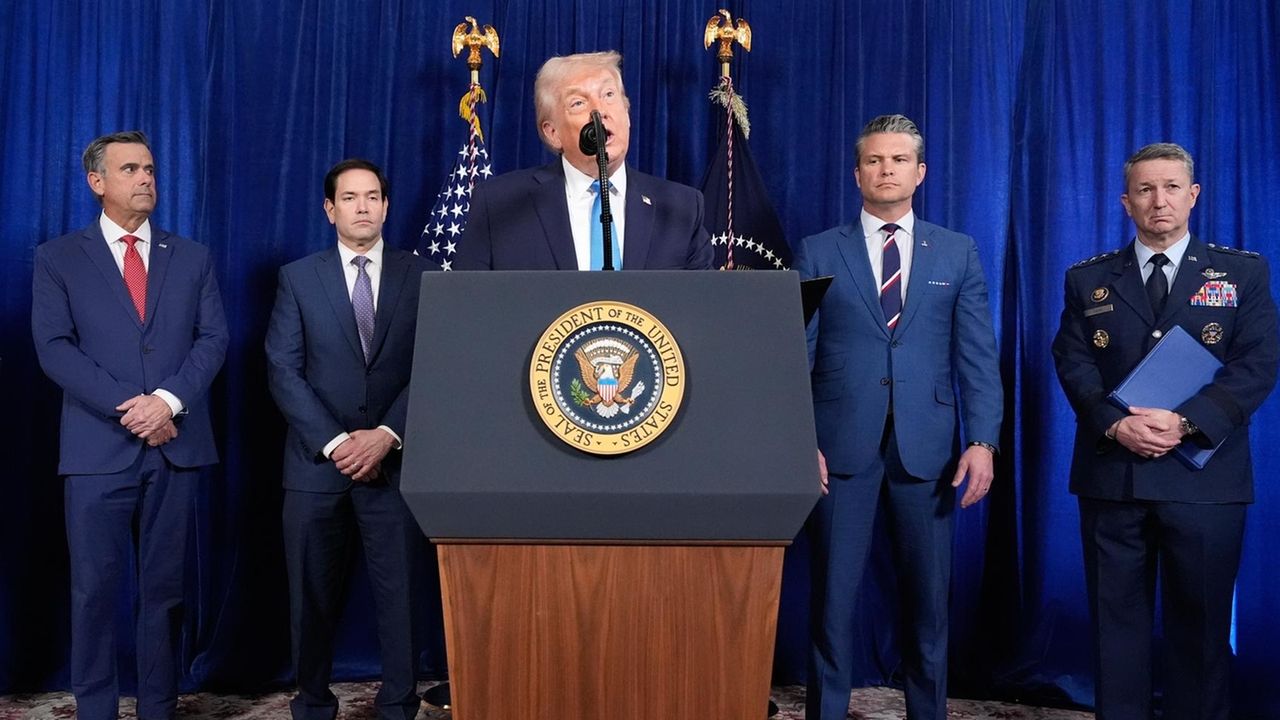
Is Maduro Ouster In Line with Trump’s “America First” Mantra?
In an article about the U.S.-led ouster of Venezuelan leader Nicolás Maduro, Dr. Meena Bose told Newsday that President Donald Trump’s foreign policy positions have undergone an “evolution” between his first and second terms. “When he first ran for president and started campaigning in 2015, he was very much opposed to U.S. intervention abroad,” said Dr. Bose. “His America First policy was very much against the Iraq War. He called for … economic U.S. primacy in the world, but to also kind of step back from direct engagement. And yet, we’ve seen multiple efforts from the first term and the second where the administration has been engaged in airstrikes and military action abroad.”

