
Experts Matter. Find Yours.
Connect for media, speaking, professional opportunities & more.

How to Find Quality Family Time During the Coronavirus Pandemic
Planning schedules, screen time and social connectedness during the coronavirus crisis can parents and children reduce stress, be productive and create meaningful family moments With many schools closed as a measure against the spread of coronavirus, and many parents working remotely, families can incorporate a variety of activities — including educational ones — to keep kids engaged and ready to continue learning when they return to school, say family experts at Baylor University. “Life will look a little different over the next few weeks” amid the social distancing recommend by the Centers for Disease Control and Prevention, said Karen K. Melton, Ph.D., assistant professor of child and family studies in Baylor’s Robbins College of Health and Human Sciences. “For the next few weeks, we are going to get to spend extra quality time with our loved ones at home, likely resulting in more laughs and tears. “A sense of routine can help us stay calm and keep moving forward,” she said. “As we all lean into the changes that surround us, we offer three S’s for being intentional while kids are home: schedules, screen time and social connectedness.” SCHEDULES Schedules can take time and effort to create, but once established, they will help reduce stress, Melton said. “You can create a full-day schedule or just a morning/afternoon schedule when you need to get other work done. By providing a family’s schedule, you will reduce boredom and anxiety while increasing a sense of belonging and competency. Some families may allow kids to watch TV in the morning and then work through their schedule. If they complete all their activities, then they can earn additional screen time in the late afternoon.” Some schedule suggestions: Art and/or music Outdoor play Free play Learning activities/educational worksheets Reading Chores Board games Screen time SCREEN TIME “Your kids will likely have more screen time than usual,” Melton said. “For older children, limit screen time so that it does not replace physical activity, sleep or other healthy behaviors. Parents also may want to consider that all screen time is not equal, not only by the ways we interact — smartphones, tablets, computers, gaming devices and televisions — but by different categories for screen time use.” Among those: Watching educational shows versus watching entertaining shows Playing educational games versus playing entertainment games Constructive social media versus destructive social media use SOCIAL CONNECTEDNESS Apps and other technology offer ways to stay connected with those outside the home. But each day of the week also provides opportunities for meaningful moments with family at home, said Nicole McAninch, Ph.D., clinical associate professor of child and family studies at Baylor, who co-directors the Intentional Family Project at Baylor. Some ideas: Dust off the board games. Teach your kids a family recipe. Have a family dance party. Play a video game as a family. Have a family movie night. “Life will be a little crazier than usual over the next few weeks,” Melton said. “Remember, we are all in this together. We will all need to sacrifice and be more flexible. If we spend a little time being intentional with schedules, screen time and social connections, then we can look back at this time, having created meaningful moments that help our family thrive.” ABOUT BAYLOR UNIVERSITY Baylor University is a private Christian University and a nationally ranked research institution. The University provides a vibrant campus community for more than 17,000 students by blending interdisciplinary research with an international reputation for educational excellence and a faculty commitment to teaching and scholarship. Chartered in 1845 by the Republic of Texas through the efforts of Baptist pioneers, Baylor is the oldest continually operating University in Texas. Located in Waco, Baylor welcomes students from all 50 states and more than 90 countries to study a broad range of degrees among its 12 nationally recognized academic divisions.


Winning a Grammy Can "Catapult" Your Career
At the 62nd Annual Grammy Awards, Billie Eilish became the first woman to take home the big four awards: Album of the Year, Record of the Year, Song of the Year and Best New Artist. Villanova's David Fiorenza, an assistant professor of economics, says that winning a high-profile award, like a Grammy, has the potential to catapult your career for decades, particularly for a lesser-known artist like Eilish. However, he notes that it's important to be wary of changes to the music industry. "Musical trends change. Creative destruction of the music industry has occurred for decades. Radio station mergers and business cycles have all contributed to dozens of artists careers fizzling a year or so after the Grammys," Fiorenza says. "One way to keep your career going economically: touring the U.S. and looking for markets in Europe, Japan and South America."


Social Media Spaces Can Be Instruments of God’s Unconditional Love, Theologian Says
Being 'always on' can be a source of anxiety or sorrow, but it also can be a way to strengthen faith, Baylor author says Many of us are “always on” — scrolling through social media, checking email or searching the web, says author Angela Gorrell, Ph.D., assistant professor of practical theology at Baylor University’s George W. Truett Theological Seminary. In her book “Always On,” she writes about how social media spaces can be instruments of God’s unconditional love — but also sources of anxiety, jealousy and depression. With the arrival of 2020 — and its potential for change for the better — she discusses in this Q&A some tools for understanding social media and enabling Christian communities to address its use in constructive ways. Q: From your perspective as a practical theologian, are the social media strategies you recommend aimed solely at people of faith? Dr. Gorrell: Practical theology takes different forms. Ultimately, I aim to write about issues — like social media — that matter to people and shine the light of the Gospel on them. I also research and write about theology and faith in practice, how people express and perform their values, hopes and beliefs through practices, rituals, disciplines, activities, relationships, work—through their way of life. While I write about social media from a Christian perspective, much of what I have written about using social media mindfully and having “interested conversation” about media is applicable to people from a variety of religious and philosophical perspectives. Q: There is much talk about how people spend too much time on social media, to the point of ignoring family and friends when in their presence. How much is too much? And what problems can this create for people? Dr. Gorrell: The most important thing for people to realize is that how you spend time online is more important than how much time you spend online. There are a variety of issues that “passive,” unintentional, unregulated, time online can extend and nurture. I say extend because all of these issues can also be in-person issues. For example, empathy burnout, depression, anxiety and jealousy. We often encounter an enormous amount of suffering online. The amount of suffering and the velocity of these encounters — and rapidly seeing multiple examples back to back in articles or our newsfeeds — can nurture empathy burnout. We can become numb to the suffering we see online and take in but do nothing about it or think very little of it. Likewise, being on social media and passively scrolling through people’s status updates, tweets and stories for unbounded sets of time and looking at copious amounts of content but never replying, messaging, posting or sharing has been linked to depression and anxiety. Similarly, passive following, which is following people closely that we do not know (e.g., celebrities) or people we do not see regularly in person (e.g., high school friends) has been linked to jealousy, which can negatively impact how we perceive ourselves and our lives . . . When we see someone a lot in person or talk to them regularly by phone, we know that their lives have a lot more going on than what they are sharing online. Q: What strategies do you suggest help people use social media wisely? Dr. Gorrell: The goal is meaningful participation. I encourage people to limit passive scrolling and following as much as possible. Create something and share it online. Join conversations. Reply to people’s statuses rather than just clicking emojis. When you see that someone is celebrating, share their joy in a significant way. Share it as your status with a note of congratulations or text them or call them. When you notice someone is mourning, message them. When you encounter suffering online, stop scrolling and do something in response. Get offline, take a walk and pray about this suffering. Give money to an organization that is relieving this suffering. Find other articles and educate yourself on the issue. Learn more about how to help or how to invite other people to care. Q: Any suggestions as to how and where people might create a space to ask and answer questions about social media use? Dr. Gorrell: Asking powerful questions about people’s online experiences that encourage storytelling and helping each other think about new media can happen around the dinner table, in a church small group or on a road trip in the car. When family and friends ask each other about one another’s lives, we can include asking questions about and discussing social media experiences. We can ask curious, open-ended questions without simple yes or no answers like: 1. How do you make decisions about what to respond to online? 2. Have you ever been frustrated or sad about new forms of technology? What causes frustration or sadness for you? 3. When have you had a joyful experience online? Could you describe a time when you felt heard, affirmed or understood online? 4. How does social media help you love God and others and/or prevent you from loving God and others? 5. When have you had a painful experience online? Could you describe a time when you felt unheard, bullied, left out or misunderstood online? 6. What are the top two feelings you experience when using social media, and why do you think this is so? Q: How can we do a better job of using social media? Dr. Gorrell: Develop a rhythm for life with your friends or family that specifically addresses technology — when you will use it and for what purposes, when you will not use it, what boundaries you will have. Using social media constructively requires intentionality. I encourage people to find times in their week or month or year to not use devices and social media and to write down their plan on a calendar. A college student told me that he and his friends put all their phones in the center of the table at restaurants and say that the first person to pick up their phone during dinner pays the entire bill. Since they started this ritual, no one has picked up a phone during dinner. Practices like these help people to be present to people they are with in person. It is a great idea to put all devices away at night one to two hours before bed so minds and bodies can get prepared for sleep. I know families that have a basket for this purpose in their homes. I especially encourage parents to make sure children under 18 do not have a device in their room during sleeping hours so they can get adequate rest. I invite people to consider turning off notifications from all social media platforms and email and only check apps and email at a certain time each day. It is also important to have a plan for difficult moments and conversations online. What will you do when you get angry, disagree with someone else or feel depressed about your life or feel left out? What will you do next? It is equally important to think about what you will use social media for. How can you use social media to love people well, truly stay connected to people, expand your thinking on certain subjects, remain humble and open to being corrected, and nurture your creativity and increase your compassion? How might meaningful participation online support goals like these? ABOUT ANGELA GORRELL Angela Gorrell, Ph.D., assistant professor of practical theology at Baylor’s Truett Seminary, is the author of “Always On: Practicing Faith in a New Media Landscape,” which addresses the perils and possibilities of Christian faith in an era of massive technological change. She also is writing a book that addresses America’s crisis of despair, illuminated by its suicide rates and opioid addiction, and describes joy as the counteragent to despair. Gorrell earned a bachelor’s degree in youth ministry from Azusa Pacific University and an M.Div. and Ph.D. from Fuller Theological Seminary. She came to Baylor from the Yale Center for Faith and Culture at Yale Divinity School, where she developed relationships with more than 250 scholars from roughly 150 institutions on four continents while managing metrics and evaluation for the project. She has more than 14 years of experience in congregational and parachurch ministry, including serving as a chaplain at a women’s maximum-security prison. ABOUT BAYLOR UNIVERSITY Baylor University is a private Christian University and a nationally ranked research institution. The University provides a vibrant campus community for more than 17,000 students by blending interdisciplinary research with an international reputation for educational excellence and a faculty commitment to teaching and scholarship. Chartered in 1845 by the Republic of Texas through the efforts of Baptist pioneers, Baylor is the oldest continually operating University in Texas. Located in Waco, Baylor welcomes students from all 50 states and more than 90 countries to study a broad range of degrees among its 12 nationally recognized academic divisions. ABOUT GEORGE W. TRUETT THEOLOGICAL SEMINARY AT BAYLOR UNIVERSITY Baylor University’s George W. Truett Theological Seminary is an orthodox, evangelical school in the historic Baptist tradition that equips God-called people for gospel ministry in and alongside Christ’s Church by the power of the Holy Spirit. Accredited by the Association of Theological Schools, Truett Seminary provides theological education leading to the Master of Divinity, Master of Arts in Christian Ministry, Master of Theological Studies, Doctor of Ministry and Ph.D. in Preaching. The MACM and MTS degrees also can be completed at the seminary’s Houston campus. In addition, Truett Seminary offers joint degrees: M.Div./M.S.W. and M.T.S./M.S.W. with the Diana R. Garland School of Social Work, M.Div./M.B.A. with the Hankamer School of Business, M.Div./J.D. with Baylor Law School, M.Div./M.M. with the School of Music and M.Div./M.S.Ed. or M.Div./M.A. with the School of Education. Visit www.baylor.edu/truett to learn more.

Preacher Archives Add New Element to Baylor University’s Black Gospel Music Restoration Project
The Black Gospel Music Restoration Project at Baylor University is preserving more than just gospel music. In the past few years, Baylor journalism professor and former Billboard gospel music editor Robert Dardenand a team from the Baylor Libraries have undertaken the project of restoring and preserving recorded sermons from black preachers in addition to the gospel music. While both are equally important to preserve, finding sermons to preserve comes with a unique set of challenges. Darden said the idea for preserving sermons started about four years ago, when the BGMRP team was in contact with the daughter of the Rev. Dr. Marvin Griffin, former pastor of New Hope Baptist Church in Waco. Griffin was a renowned Civil Rights leader in Central Texas and boasts a list of significant firsts, including first black man to earn a degree from Southwestern Baptist Theological Seminary and first African-American president of the Austin Independent School District board of directors. Darden said somebody mentioned in passing that they kept Griffin’s sermons and said he ought to hear them because they are full of music. “All black preachers sing, and all black singers preach,” Darden said. “That got me thinking – nobody has been collecting the black preaching from the Civil Rights movement, other than Dr. King. All these incredible heroes who were preaching around the rest of the country, there’s not a collection of their work. So, I met with the other folks in the Black Gospel project, and we agreed that in addition to the music, we ought to be trying to collect preaching.” Many of these sermons had been recorded on vinyl, and Darden said some have even speculated that it was black preaching that started black gospel music in the 1930s. He said some records that were just a black preacher preaching for two and a half minutes on each side sold half a million copies – even during the Great Depression. Digitizing sermons from different formats When the BGMRP was founded in the Baylor Libraries in 2005, the bulk of incoming materials focused on recorded gospel music. Over the ensuing decade, the BGMRP team realized they already had hundreds of vinyl LPs from famous preachers in their collection. Shortly after, they started receiving sermons in many different formats. Darryl Stuhr, associate director of the Libraries’ digital preservation services, consulted with Darden and together they decided they needed a collection to show to preachers and their families who were not familiar with the projects, in hopes of convincing them to trust the project with their sermons long enough to digitize them. Darden worked with two in particular – the Rev. E.E. Jones in Shreveport, Louisiana, and the Rev. Clay Evans in Chicago, who is still preaching at 93-years-old. “Evans) was one of only two preachers who helped Dr. King in Chicago during those really rough times, and they had collected video cassettes of him back into the ‘70s,” Darden said. “That’s the good news. The bad news is they kept them in unairconditioned or unheated warehouses.” Darden said the BGMRP spent lots of money getting these cassettes stabilized enough to play them even just one time so they could be digitized. Using technology at the Libraries’ Riley Digitization Center, audiovisual digitization staffers Stephen Bolech, Travis Taylor and Hannah Engstrom are able to rescue the recorded sermons from other formats as well, including videocassette, film and digital audio tape. The wide range of formats the BGMRP team can work with means a greater number of sermons can be saved, Stuhr said. “They’re not all in the best condition, but they’re just thrilling because (Evans’ church) is one of the largest historic African-American churches in just full 1970s regalia. We got (Jones and Evans) and we’ve been using those to approach other preachers and their families now. This is already the largest collection in the country, and we just started,” Darden said. Recently, Darden got a call from PBS. Dr. Henry Louis Gates of the TV series “Finding Your Roots,” whom Darden quotes in his books, will have a new six-part series on the history of African-American churches in America debuting in 2020. Darden said they contacted him about providing materials for the show and contacts of people. The BGMRP already has made hundreds of copies for PBS and is communicating about how they can help. “I’m hoping they’re going to come down and do some filming here as well, because a lot of the stuff we have is old bulletins and the sheet music – we just have everything. Sure, we can digitize it, but if they came down, they could array it in such a way from an artistic standpoint,” Darden said. Search continues Darden got together with some of the “preaching folks” at Baylor and put together a top 10 wish list of influential black preachers of the past 50 years whose sermons they would like to digitize. “I just think God put me in a place where I could facilitate, rather than me initiate, and it was God’s idea apparently, because it wouldn’t have worked this well otherwise,” Darden said. Darden said new vinyls continue to come in every few days, and it is like Christmas for him to go see what is new. “I don’t mind not knowing every artist or every preacher – there’s hundreds and thousands of them,” he said. “But what scares me is when I pull a piece of vinyl out and it’s a label that I don’t know, which means there’s another whole line of that label that we’ve never heard of. So here we’re sitting 15 or so years into this project, and I don’t know if we have 1 percent of what’s out there – 10 percent? There’s no database. Nobody knows.” “It’s unlike every other kind of music. Nobody ever made a discography of gospel music,” Darden said. “So, whether we mean to or not, we’re actually putting that together as well. Trying to figure out how many Andraé Crouch albums, how many James Cleveland, how many Rosetta Tharpe, and now with preaching, it could go on forever. It’ll be going, hopefully, long after I’m gone.” For more information or to learn how to donate materials, visit the Black Gospel Music Restoration Project at www.baylor.edu/library/gospel or email digitalcollectionsinfo@baylor.edu.

The Gun Control Debate is at a Stalemate. Can Smarter Weapons Help to Solve it?
The gun control debate is at a stalemate. America seems incapable of finding common ground on background checks, waiting periods, weapons registries and restrictions or bans on select weapons. Shooting after shooting has resulted in decades of debate but little substantive change. But Professor Selmer Bringsjord from Rensselaer Polytechnic Institute, who recently weighed in on the issue, presented a concept that could turn the entire topic on its head by using artificial intelligence. Bringsjord accepts that America won’t get rid of its guns – so why not just make our guns smarter? Ethically AI-enabled weapons can put American politicians back to work by shifting the debate from the weapons we should ban, to the targets we will accept. Do we allow guns to kill school children, shoppers, concert-goers? The technology of ethical AI changes the conversation. His idea was just recently published in the Times Union: “Yet there is a solution, a technological alternative to the fruitless shouting match between politicians: namely, AI — of an ethical sort. Guns that are at once intelligent and ethically correct can put an end to the mass-shooting carnage. Consider the rifle apparently used by the human killer in the El Paso Walmart shooting. But now suppose that time is turned back to before his shots were fired on Aug. 3, and that his rifle, radically unlike the stupid one that killed, is both intelligent and ethical. This alternate-future rifle would know that it's approaching the Walmart by car and would accordingly know that it has no business being used anytime soon. Move forward in time a bit; the rifle is now in the hands of the aspiring, ear-muffed killer outside his car; but his weapon has fully disengaged itself and is locked into a mode of utter uselessness with the finality of a sealed bank vault. On the other hand, the guns in the hands of law enforcement officers who have dashed on scene know in whose hands they rest, and accordingly know that if they are trained on the would-be killer, they have every right to work well, if this criminal reveals some new threat. Notice: If people who don't actually pose a threat sufficient to warrant being shot by police can't be shot by smart, ethical guns, a fact that could lead to the welcome evaporation of a different but also vitriolic political shouting match.” -Times Union, August 16, 2019 Could AI be the answer to America’s gun problem? It’s truly a new perspective on an old issue. If you are a reporter covering this topic, let our experts help with your story. Dr. Selmer Bringsjord is the Chair of the Department of Cognitive Science expert in logic and philosophy, specializing in AI and reasoning. Dr. Bringsjord regularly speaks with media about AI and is available to speak about the concept of intelligent, ethical guns. Simply click on his icon to arrange an interview.


University of Rochester's John Covach gives perspective on Beatles Abbey Road Anniversary
September 26 marks the 50th anniversary of the worldwide release of the Beatles’ Abbey Road. While Let It Be was released in 1970, most of the tracks on that album were recorded earlier, making Abbey Road the band’s last album project. John Covach, director of the Institute for Popular Music at the University of Rochester, coauthor of What’s That Sound: An Introduction to Rock and Its History, and Beatles academic expert, notes: “It’s definitely the Beatles’ last statement. You’ve got a band that’s breaking up and everyone knows they’re breaking up. They’re arguing with each other, suing each other, and it’s ugly and goes against the band’s legacy. This all happens in 1969, so they decide to go back into the studio and do one last record to leave on a high note, which is Abbey Road. And there’s this moment where they come out with this album that it’s back to form; just a fantastic Beatles project after the last project had failed. Abbey Road is the group playing together, singing together, and working together in a way that they haven’t really done for some time and putting their personal differences aside.” The University of Rochester’s Institute for Popular Music and Eastman School of Music will host The Abbey Road Conference, from September 27 to 29. The conference will feature speakers Ken Townsend, recording engineer and former Abbey Road manager; Andy Babiuk, author of Beatles Gear, Walter Everett, author of The Beatles as Musicians; and Kenneth Womack, author of Maximum Volume: The Life of Beatles Producer George Martin.



The ‘Heaven 11’: Gospel Music Expert Lists 11 Most Influential Black Gospel Songs
June is African American Music Appreciation Month Photo by Robert Rogers, Baylor Marketing & Communications Baylor Professor Robert Darden attends Baylor University's 2019 Pruit Symposium, "Lord, Make Me An Instrument: Black Sacred Music at the Intersection of Gospel and Jazz." WACO, Texas (May 31, 2019) – Robert F. Darden, professor of journalism, public relations and new media at Baylor University and a former gospel music editor for Billboard Magazine, is leading a national movement to preserve the fast-disappearing legacy of African American sacred music on vinyl. To celebrate African American Music Appreciation Month in June, Darden, who is founder and director of Baylor’s Black Gospel Music Restoration Project, compiled the “Heaven 11” – a list of the 11 most influential black gospel songs. “There is no way to quantify the ‘greatest’ gospel song of all time, but certain songs have been more influential than others through the years,” said Darden, who selected songs from the 1940s through the 1980s. (Listen to the “Heaven 11” on this Spotify playlist, created by Baylor Proud.) The list includes Darden’s comments about each selection: 1. “Move on Up (A Little Higher)” “The Queen of Gospel Mahalia Jackson’s first big hit, and one of the best-selling gospel songs of all time. It was also understood to be an early ‘Freedom Song’ in the African-American community.” 2. “Take My Hand, Precious Lord” “Perhaps the best-known, most beloved of all gospel songs. Written by Thomas Dorsey after the loss of his wife and infant child, it is still sung today at virtually every African-American funeral service in the country.” 3. “Oh Happy Day” “This song by Edwin Hawkins was the first gospel song to be a hit single in the 1960s, and had a revolutionary combination of gospel choir, stirring chorus and a thoroughly modern beat.” 4. “The Reason Why We Sing” “Kirk Franklin did to the ‘80s and ‘90s what Hawkins did to the ‘60s and Andrae Crouch did to the ‘70s, combined straight-ahead gospel with the beat of the day, while paying tribute to the old gospel classic, ‘His Eye is on the Sparrow.’” 5. “People Get Ready” “This tune by Curtis Mayfield is not really a gospel song, but it was so compelling that it was adopted by both the Civil Rights Movement and the African-American church. There are a number of great versions, including the Chambers Brothers, the Blind Boys of Alabama and even Rod Stewart.” 6. “We Shall Overcome” “This is the ‘signature’ song of the Civil Rights Movement, an adaptation of an old gospel tune that has been honed by the fire and blood of a thousand movement events and is still sung by oppressed people around the world.” 7. “Peace Be Still” “This song by the Rev. James Cleveland and the Angelic Choir of the First Baptist Church of Nutley, New Jersey, is the song and the arrangement that made young black people want to join mass choirs and sing. After the assassination of President John F. Kennedy, ‘Peace Be Still’ was the gospel anthem that the black church turned to.” 8. “Through It All” “Andrae Crouch and the Disciples forever changed gospel music, opening it up lyrically and musically. He was also a brilliant composer – you could just as easily substitute “My Tribute,” “The Blood,” “Soon and Very Soon” and any one of several other enduring classics here.” 9. “Touch the Hem of His Garment” “This song by the Soul Stirrers, featuring Sam Cooke, helped invent the hard-charging gospel quartet sound. The popularity of this song helped convince Cooke, the writer and featured singer, to launch a mainstream performing career.” 10. “Mary, Don’t You Weep” “The great old spirituals often make great gospel songs. This is one by the Caravans, featuring Inez Andrews, and is one of my personal favorites.” 11. The next great gospel song “We haven't heard it yet. Few people still alive even know of its existence. But it could be in the next batch of long-lost gospel classics by a hitherto unknown gospel artist donated to the Black Gospel Music Restoration Project.” Search-and-rescue mission to preserve black gospel music Darden founded Baylor’s Black Gospel Music Restoration Project (BGMRP) more than a decade ago in a search-and-rescue effort to identify, acquire, preserve, digitize and catalog recordings from the black gospel music tradition. This music, from the Golden Age of Gospel from 1945 to 1975, was quickly vanishing as albums made the transition to CDs. “Thousands of at-risk songs have been saved for future generations,” Darden said. “These recordings are priceless, irreplaceable and historic in a way that scholars are only now realizing.” Through the work of the Baylor Libraries’ Digital Projects Group, recordings from the BGMRP are available online in the Baylor Libraries Digital Collection, and in some cases includes other materials, such as taped interviews, photographs, press packets, tour books and programs, newspaper and magazine clippings and sheet music. Music from the BGMRP also has been included in a permanent exhibit featuring African-American musical history at the Smithsonian Institution’s National Museum of African American History and Culture, which opened in 2016 in Washington, D.C. The interactive exhibit, “Musical Crossroads,” has featured these key recordings from the BGMRP: · “The Old Ship of Zion” by The Mighty Wonders of Aquasco, Maryland (1972) · “Amen” by Wings over Jordan (1953) · “I Won’t Be Back” by The Caravans (1962) · “Over My Head” by Wings Over Jordan (1953) · “There’s a Tree on Each Side of the River” by The Davis Sisters (1957) Visit Baylor’s Black Gospel Music Restoration Project website to learn more and to listen to the collection of digitized recordings. ABOUT BAYLOR UNIVERSITY Baylor University is a private Christian University and a nationally ranked research institution. The University provides a vibrant campus community for more than 17,000 students by blending interdisciplinary research with an international reputation for educational excellence and a faculty commitment to teaching and scholarship. Chartered in 1845 by the Republic of Texas through the efforts of Baptist pioneers, Baylor is the oldest continually operating University in Texas. Located in Waco, Baylor welcomes students from all 50 states and more than 90 countries to study a broad range of degrees among its 12 nationally recognized academic divisions.

WACO, Texas (May 13, 2019) – The movie-watching experience continues to evolve. And while directors wish all people could experience their movies on the silver screens in theaters, they know most people these days will be watching on the big screens in their living rooms or on the small screens in their hands. The movie-watching experience and the takeaways matter, said award-winning filmmaker Chris Hansen, M.F.A., who serves as professor and chair of the film and digital media department in Baylor University’s College of Arts & Sciences. “As a director, I want people to engage with the story and the characters. I want you to be able to put yourself in the characters’ shoes and see the world from their points of view so that, whether you agree or disagree with their actions, you understand where they’re coming from,” Hansen said. Hansen has directed five independent films. His most recent project, Seven Short Films About (Our) Marriage, is now in post-production. In the following Q&A, Hansen shares thoughts on how we – as audience members – can do our part to get the best movie-watching experience and what he – as the director – hopes we take away from that experience. Q: As a director who puts in countless hours and organizes a team that puts in countless hours on a project, what do you hope audiences take away from your film? A: Film critic Roger Ebert once called films “a machine that generates empathy.” I see my films falling within that description. I want to generate empathy in the viewer for these characters and their situations, and I want audiences to come away talking about and thinking about their struggles. Q: So much goes into making a movie. There’s the script, cinematography, setting, dialogue, music, costumes, etc. Is there any one thing you hope your audiences notice? A: I hope that I, along with the other artists who have collaborated on the film, have created an experience where none of those things stands out above the other, except that they create a moment or moments that move people. If you’re thinking, “That was great dialogue,” then that can take you out of the world of the movie. Q: Your films are all available on various streaming platforms, which means that people are most likely watching them on televisions in their homes. What are your thoughts on the home viewing experience? A: The quality of the home viewing experience has gotten better and better over the years. We now have (or have access to) better and larger television screens, terrific audio systems and movies available in high-resolution formats. On the flip side, the home does not afford the best viewing environment because it’s not immersive the way a theater is. The experience of the theater provides fewer interruptions and allows the viewer to be fully immersed in the world of the movie, although even that environment is being disrupted by people using their cell phones in the middle of a movie. Still, it’s better than the home viewing experience, which gives the viewer many distractions and interruptions. Q: When you watch films at home, what steps do you take to limit distractions? A: As a person with a wife and children, I try to plan viewings of movies around their schedules, so I can watch uninterrupted when I know people won’t be home. And I try to control my own distraction level, but the “always on” nature of email and texting are hard to resist. My preference would always be to have people turn the phone off, turn the lights off and turn their attention solely to the screen. That’s hard to get people to do at home. Q: What are your thoughts about people watching movies on their smartphones or tablets? A: Very few filmmakers I know would express a preference that people watch their work on smaller screens. It’s just not ideal, and there are so many carefully planned details that can be missed. Having said that, I’ll admit to having watched films and TV shows on my tablet, especially when I’m traveling. The truth is, given the changing nature of the world we live in, people are going to watch in whatever way is most convenient for them. But watching on a screen as small as a phone means you’re getting a much more utilitarian experience of the film. You can say you watched it and can probably recount the plot accurately. But you will often have missed the fuller experience of seeing the film on a larger screen. Q: When students come to you and say, ‘I want to make movies!’ what’s the first thing you say to them? A: One of the first things I tell people is that the best way to learn how to make movies is to make movies. You learn by doing and getting critical feedback from someone who has done it and understands the form. And of course, in our program at Baylor, we also teach the theory side of things. We believe in a solid balance between theory and practice. We teach our students how this is done, but then they just actually have to do it and learn from their successes and their failures. Q: Do students in Baylor’s film and digital media program have the opportunity to work on your films? If so, in what ways? A: Students in our program do indeed have the opportunity to work on faculty-led projects. We make our films in the summer and offer the opportunity as a credited course so that they can have a lab-like learning experience. Students rotate through crew roles while working under professionals who help them understand their jobs. Some of our students have called this one of their best learning experiences in our major because it takes all the things they learn in the classroom and puts those to the test on a project that’s much larger in scope than what they’ve been able to experience before. And being a crew member on a film set can be a stressful experience. We’re dependent on the weather and limitations of time and money. It’s a great way for them to understand the ups and downs of the process and how they’ll respond to the pressure. Q: What can you share about your newest project and where can people find your previous films? A: My latest film, currently in post-production, is a feature film called Seven Short Films About (Our) Marriage. It’s the story of one marriage that unfolds over seven episodes over a number of years, as this couple struggles with the common issues that marriages face and try to make their love last. My films are currently all available on various streaming platforms. You can find Blur Circle, Where We Started, Endings, and The Proper Care & Feeding of an American Messiah either on Amazon Prime, iTunes, and in some cases, on Blu-ray disc via Amazon and other outlets.

Multiracial Congregations Have Nearly Doubled, But They Still Lag Behind the Makeup of Neighborhoods
About one in five American congregants attends a racially mixed place of worship, Baylor University study find The percentage of multiracial congregations in the United States nearly doubled from 1998 to 2012, with about one in five American congregants attending a place of worship that is racially mixed, according to a Baylor University study. While Catholic churches remain more likely to be multiracial — about one in four — a growing number of Protestant churches are multiracial, the study found. The percentage of Protestant churches that are multiracial tripled, from 4 percent in 1998 to 12 percent in 2012, the most recent year for which data are available. In addition, more African-Americans are in the pulpits and pews of U.S. multiracial churches than in the past, according to the study. Multiracial congregations are places of worship in which less than 80 percent of participants are of the same race or ethnicity. “Congregations are looking more like their neighborhoods racially and ethnically, but they still lag behind,” said lead author Kevin D. Dougherty, Ph.D., associate professor of sociology in Baylor’s College of Arts & Sciences. “The average congregation was eight times less diverse racially than its neighborhood in 1998 and four times less diverse in 2012.” “More congregations seem to be growing more attentive to the changing demographics outside their doors, and as U.S. society continues to diversify by race and ethnicity, congregations’ ability to adapt to those changes will grow in importance,” said co-author Michael O. Emerson, Ph.D., provost of North Park University in Chicago. For the study, Dougherty and Emerson analyzed data from the National Congregations Study, a nationally representative survey conducted in 1998, 2006-2007 and 2012, with a cumulative sample of 4,071 congregations. The study by Dougherty and Emerson — “The Changing Complexion of American Congregations” — is published in the Journal for the Scientific Study of Religion. The study found that: One-third of U.S. congregations were composed entirely of one race in 2012, down from nearly half of U.S. congregations in 1998. Multiracial congregations constituted 12 percent of all U.S. congregations in 2012, up from 6 percent in 1998. The percentage of Americans worshipping in multiracial congregations climbed to 18 percent in 2012, up from 13 percent in 1998. Mainline Protestant and Evangelical Protestant churches have become more common in the count of multiracial congregations, but Catholic churches continue to show higher percentages of multiracial congregations. One in four Catholic churches was multiracial in 2012. While whites are the head ministers in more than two-thirds (70 percent) of multiracial congregations, the percentage of those led by black clergy has risen to 17 percent, up from fewer than 5 percent in 1998. Blacks have replaced Latinos as the most likely group to worship with whites. In the typical multiracial congregation, the percentage of black members rose to nearly a quarter in 2012, up from 16 percent in 1998. Meanwhile, Latinos in multiracial congregations dropped from 22 percent in 1998 to 13 percent in 2012. The percentage of immigrants in multiracial congregations decreased from over 5 percent in 1998 to under 3 percent in 2012. Previous research shows that congregations have adopted varying ways to encourage racial diversity, among them integrating music genres, using more participatory worship, hosting small groups to foster interracial networks and creating programs to address racial or ethnic issues. Churches with shorter histories are more likely to have diversity, and change is harder to bring about in long-established congregations. The new study by Dougherty and Emerson concluded that the complexion of American congregations is indeed changing — and the authors see benefits for American society. “During a several-year period of heightened racial tensions, the growth of multiracial congregations is a dramatic development,” Emerson said. “Such congregations are places of significantly increased cross-racial friendships and cross-racial common experiences.” ABOUT BAYLOR UNIVERSITY Baylor University is a private Christian University and a nationally ranked research institution. The University provides a vibrant campus community for more than 17,000 students by blending interdisciplinary research with an international reputation for educational excellence and a faculty commitment to teaching and scholarship. Chartered in 1845 by the Republic of Texas through the efforts of Baptist pioneers, Baylor is the oldest continually operating University in Texas. Located in Waco, Baylor welcomes students from all 50 states and more than 80 countries to study a broad range of degrees among its 12 nationally recognized academic divisions. ABOUT BAYLOR COLLEGE OF ARTS & SCIENCES The College of Arts & Sciences is Baylor University’s oldest and largest academic division, consisting of 25 academic departments and seven academic centers and institutes. The more than 5,000 courses taught in the College span topics from art and theatre to religion, philosophy, sociology and the natural sciences. Faculty conduct research around the world, and research on the undergraduate and graduate level is prevalent throughout all disciplines.

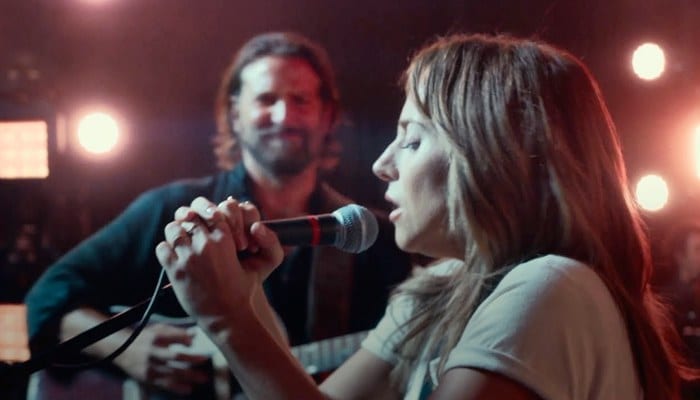
Can Hollywood help lift the stigma on mental health?
When A Star is Born was released to theatres – it had high expectations. It was a hit at international film festivals and Oscar buzz was already starting. Loaded with stars from stage, screen, and the music industry, it was guaranteed to bring in the audiences and pack theatres. While critics are raving about the performances, the message the film is bringing is also resonating with audiences as well. The story deals with characters attempting to overcome addictions as well as suicide. It’s a film that has people talking about serious issues. But is it Hollywood’s job to educate people about issues such as mental health? With the lines between education and entertainment blurring – is this a platform that could serve the wrong purposes? And with all things celebrity, is there a risk to glorifying acts of suicide or addiction? There are a lot of questions and that’s where the experts from CARF International can help. Michael Johnson is Managing Director of Behavioral Health at CARF and is an expert in mental health and substance use disorder. Mike is available to speak with media regarding this topic – simply click on his icon to arrange an interview.

