
Experts Matter. Find Yours.
Connect for media, speaking, professional opportunities & more.

Dinosaurs in New Mexico Thrived Until the Very End, Study Shows
For decades, many scientists believed dinosaurs were already dwindling in number and variety long before an asteroid strike sealed their fate 66 million years ago. But new research in the journal Science from Baylor University, New Mexico State University, the Smithsonian Institution and an international team is rewriting that story. The dinosaurs, it turns out, were not fading away. They were flourishing. A final flourish in the San Juan Basin In northwestern New Mexico, layers of rock preserve a hidden chapter of Earth’s history. In the Naashoibito Member of the Kirtland Formation, researchers uncovered evidence of vibrant dinosaur ecosystems that thrived until just before the asteroid impact. High-precision dating techniques revealed that fossils from these rocks are between 66.4 and 66 million years old – placing them in the catastrophic Cretaceous-Paleogene boundary. “The Naashoibito dinosaurs lived at the same time as the famous Hell Creek species in Montana and the Dakotas... They were not in decline – these were vibrant, diverse communities.” – Daniel Peppe, Ph.D. “The Naashoibito dinosaurs lived at the same time as the famous Hell Creek species in Montana and the Dakotas,” said Daniel Peppe, Ph.D., associate professor of geosciences at Baylor University. “They were not in decline – these were vibrant, diverse communities.” Dinosaurs in their prime The New Mexico fossils tell a different story than originally thought. Far from being uniform and weakened, dinosaur communities across North America were regionally distinct and thriving. Using ecological and biogeographic analyses, the researchers discovered that dinosaurs in western North America lived in separate “bioprovinces,” divided not by mountains or rivers, but by temperature differences across regions. “What our new research shows is that dinosaurs are not on their way out going into the mass extinction,” said first author Andrew Flynn, Ph.D., ‘20, assistant professor of geological sciences at New Mexico State University. “They're doing great, they're thriving and that the asteroid impact seems to knock them out. This counters a long-held idea that there was this long-term decline in dinosaur diversity leading up to the mass extinction making them more prone to extinction.” Life after impact The asteroid impact ended the age of dinosaurs in an instant – but the ecosystems they left behind set the stage for what came next, the researchers said. Within 300,000 years of their extinction, mammals began to diversify rapidly, exploring new diets, body sizes and ecological roles. The same temperature-driven patterns that shaped dinosaur communities continued into the Paleocene, showing how climate guided life’s rebound after catastrophe. “The surviving mammals still retain the same north and south bio provinces,” Flynn said. “Mammals in the north and the south are very different from each other, which is different than other mass extinctions where it seems to be much more uniform.” Why the discovery matters today The discovery is more than a window into the past – it’s a reminder of the resilience and vulnerability of life on Earth. Conducted on public lands managed by the U.S. Bureau of Land Management, the research highlights how carefully protected landscapes can yield profound insights into how ecosystems respond to sudden global change. With a clearer understanding of the timeline of the dinosaurs’ final days, the study reveals not a slow fade into extinction but a dramatic ending to a story of flourishing diversity cut short by cosmic chance.



At the age of 88, American political giant and two-time former Secretary of Defense Donald Rumsfeld is dead. Donald Rumsfeld, the two-time defense secretary and one-time presidential candidate whose reputation as a skilled bureaucrat and visionary of a modern U.S. military was unraveled by the long and costly Iraq war, died Tuesday. He was 88. In a statement Wednesday, Rumsfeld’s family said he “was surrounded by family in his beloved Taos, New Mexico.” President George W. Bush, under whom Rumsfeld served as Pentagon chief, hailed his “steady service as a wartime secretary of defense — a duty he carried out with strength, skill, and honor.” Regarded by former colleagues as equally smart and combative, patriotic and politically cunning, Rumsfeld had a storied career in government under four presidents and nearly a quarter century in corporate America. June 30 - Associated Press If you're a journalist looking to know more about Rumsfeld's legacy and impact on American foreign policy, then let our expert help. Professor of Political Science and International Affairs Jason Davidson is an expert in American foreign and security policy, and international security. His study, The Costs of War to United States Allies Since 9/11, recently received an onslaught of media attention, landing in Forbes, The Guardian and Daily Mail. If you’re looking to arrange an interview with Dr. Davidson, simply click on his icon now to arrange an interview today.


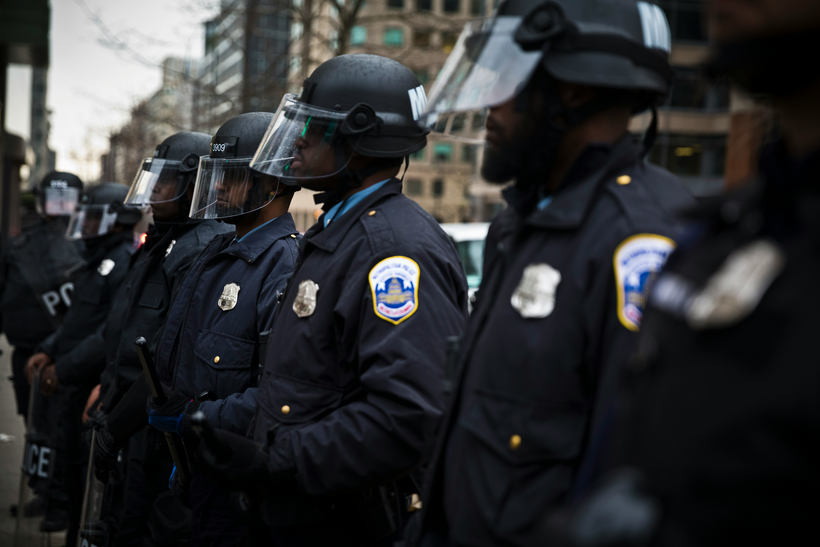
Is It Time to End Qualified Immunity?
Following the death of George Floyd and subsequent protests of police brutality, many began to wonder if this should be the end of qualified immunity, the legal protection that police officers and other government officials have from civil rights lawsuits unless the victim is able to show their constitutional rights had been violated by that official. At the time, there seemed to be a lot of momentum. "Based on the events of last summer, we were all poised for the United States Supreme Court to take action on qualified immunity," says Teri Ravenell, a law professor at Villanova who specializes in police accountability and municipal liability. "There were almost a dozen cases pending before them. With the egregious facts in these cases, it was ripe for them to act, but they refused to take cert." It was around the same time that the House passed the George Floyd Justice in Policing Act. And while there had been no action at the federal level, we began to see more states and local municipalities decide to move forward on their own. New Mexico and Colorado put laws in place to end qualified immunity, including for police officers, and New York City recently ended it as well. "Qualified immunity still exists at the federal level, but you now have local options that don't have the same obstacles because it has been eliminated in these state and local statutes," Prof. Ravenell says. While there has been progress, Prof. Ravenell cautions to look beyond the present moment. "We say we want to end qualified immunity, but we're not thinking five steps ahead about what this actually does. We can say we want to make police more accountable, but how are we doing that? If it's that we want them to pay damages, if they take on more liability, municipalities will stop indemnifying and plaintiffs will go uncompensated. We have to think about how different rights and issues intersect with each other."

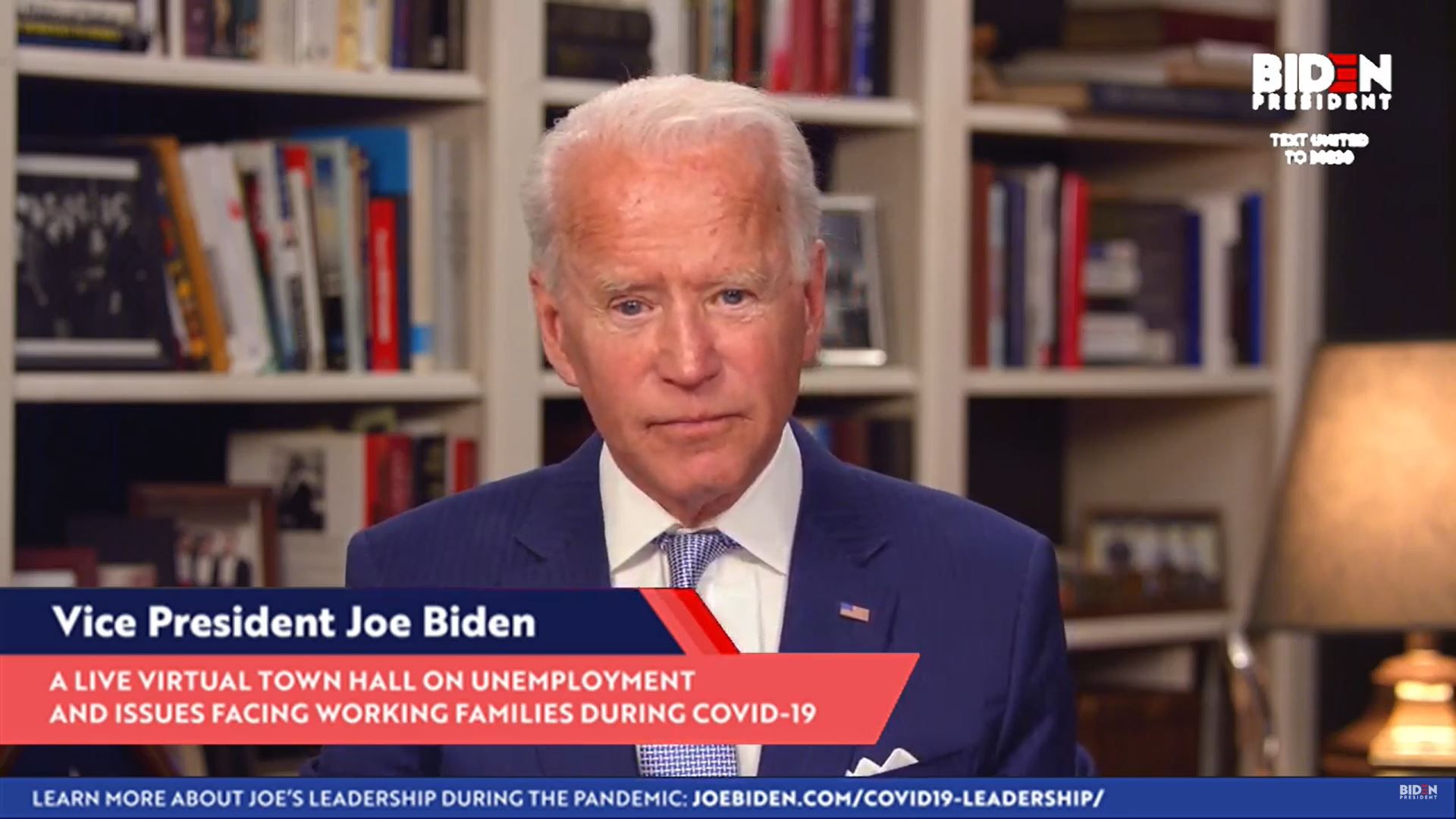
According to some, the election is pretty much already over. There is no way Joe Biden can lose and there is absolutely no way Donald Trump can win. The thing is a lot of people said that four years ago about Hillary Clinton. There is a path to victory for Joe Biden, but unseating a sitting president is no easy task. It will take swinging several red states blue and not focusing on areas where President Trump may have fallen out of favor. What to watch Rust Belt's traditional battlegrounds: Trump’s chance of winning Michigan, which he carried by 11,000 votes in 2016, has been significantly reduced by the impact of COVID-19 in the state, which has suffered the fourth most deaths in the country. Pennsylvania has almost been as hard hit as Michigan (fifth most deaths). Of the three Rust Belt states, Trump is best positioned in Wisconsin, where his job approval has remained higher than the national average. West and South emerge as new Democratic base: Seven western states — California, Colorado, Hawaii, Nevada, New Mexico, Oregon and Washington — are firmly in the Democratic column. Six states in the South and Southwest — Arizona, Florida, Georgia, North Carolina, Texas and Virginia — are in various stages of becoming blue states. Outside of Virginia, which has already become a blue state, Arizona is the state most likely to transition to a Democratic base state as early as November. May 17 – Axios But as much as the playbook seems obvious – there will be pitfalls, landmines and barriers along the way. It is expected that this upcoming election will be divisive, expensive, and close. And President Trump has proven to be an effective and relentless campaigner. If you are covering – then let our experts help with your questions and stories. Mark Caleb Smith is the Director of the Center for Political Studies at Cedarville University. Mark is available to speak with media regarding the DNC Primary, running mates and the upcoming election. Simply click on his icon to arrange an interview.


Villanova Experts Reflect on the 2010s
The iPad. Hurricane Sandy. Affordable Care Act. #MeToo. Brexit. Streaming services. Since 2010, there have been so many memorable and historic events that have shifted culture and society into unfamiliar territory around the world. Two Villanova experts have put together thoughts on a few of the decade's top stories that will continue to be relevant for the next ten years—and beyond. Stephen Strader, assistant professor of geography and the environment Over the last decade we have seen the issue of anthropogenic or human-induced climate change shift from something discussed between select, interested scientists to the front page of the news on a daily basis. This dramatic change in the importance and coverage of climate change makes complete sense given six of the last ten years globally have been in the top ten warmest on record. Actually, it's very likely, if not certain, that the last five years will be the hottest globally on record. The odds of that happening naturally are very close to zero. Nowhere have the effects of a changing climate been realized more so than in the western United States, where wildfires have wreaked havoc year after year in the 2010s. States such as California, Colorado, Kansas, Oklahoma, New Mexico and Washington all experienced record-breaking wildfires over the last decade. Specifically, the Camp Fire in 2018 became the deadliest and most destructive wildfire in California history, destroying 18,000-plus homes and killing 85 people in the town of Paradise. Additionally: Hurricanes Dorian, Irma, Harvey, Maria, etc. damaged entire countries (Puerto Rico and Bahamas) so much that there is question whether they will ever recover from the effects. The deadliest tornado season on record occurred in 2011, including the devastating April 27, 2011, tornado outbreak and the deadliest U.S. tornado in modern history, which struck Joplin, Missouri (158 fatalities). Between 2011 and 2017, drought and water shortages impacted the western U.S., with California seeing its worst drought in history (or worst in 1,200 years). The drought killed 100-plus million trees and resulted in water shortages that affected crops and caused municipalities to limit water use. Record-setting rainfall and floods occurred in locations such as Colorado, New York, Oklahoma, Texas, etc., resulting in hundreds dead and millions of dollars in crop losses. If the last 10 years have taught scientists, climatologists, policy makers and the general public anything, it's that we have our work cut out for us if we are to reverse this trend of increasing disasters around the world. The atmosphere continues to warm, and all model projections point to a progressively warmer future Earth if action is not taken. And this action can't be tomorrow or by 2025, 2050 or some other arbitrary year; it has to happen now if we want to reduce future economic and societal losses. Yes, it's easy to be afraid and fearful of the future when all we see as scientists and citizens are rising temperatures, deadlier disasters and a lack of drastic climate action. However, we can't let this fear result in crippling inaction; we have to let it motivate us to fight, not for just our futures but our children's, grandchildren's and great-grandchildren's futures. Let's give them a chance to see the world the way we used to: beautiful. Jerusha Conner, associate professor of education and counseling The latter half of this decade witnessed a resurgence of student activism, sparked by Black Lives Matter protests and the dramatic events at the University of Missouri in the fall of 2015. Highlighting 2015 as a pivotal year for student activism, the authors of the American Freshman National Norms survey deemed the 2015 freshman class "the most ambitious" group in 49 years of the survey's administration in terms of their expectations for participating in protests, connecting to their communities and influencing the political structure; and the numbers of freshmen who report having participated in demonstrations as high school seniors has ticked up every year since. In my own research with college student activists in 2016, I found three striking trends: Nearly half came to college already seeing themselves as activists; only 10% consider themselves single-issue activists (with more than half identifying seven or more issues their activism addressed); and a significant share were not protesting their own institution's policies or practices, but instead concerning themselves with broader social and political issues. They are what I call "outward-facing activists," who use their campuses to stage and mobilize campaigns, rather than as the targets of their change efforts. In the last couple of years, we have seen activism among high school students take off, as students have staged walkouts and school strikes to protest inaction on climate change and gun violence. Although these movements may appear narrowly focused on a single issue, the students involved have intentionally advanced an intersectional perspective, which draws attention to the racialized, economic and gendered dimensions of the multifaceted problems they are seeking to address. Digital natives, these young people have deployed the affordances of social media not only to mobilize their peers in large-scale collective action, but also to attract and sustain the attention of the media, pressure business leaders and politicians and shape public understanding of the issues. One interesting shift with this generation of student activists is that, rather than turning their backs on the system or seeking to upend it, they are focused on enhancing voter registration and turnout, especially among young people. And their efforts appear to be working. Youth turnout in the 2018 midterms was double that of 2014, and record numbers of youth are continuing to register to vote. As the decade comes to a close and the 2020 campaign season revs up, the engagement of student activists in electoral politics will be important to continue to track.



College concierge? Cedar Crest offers special services to students
Managing the college experience can be a challenge for students, but it looks like some institutions are thinking outside the box to help. New Mexico State University, for example, is now offering a college concierge, a program that was launched by Sodexo. The "Crimson Concierge" can help students manage their extra-curricular needs (like planning a trip abroad) so they can focus on their academics. Cedar Crest College has not yet established a concierge service, but it does provide a number of similar services for students. The college offers free shuttles to local airports during college breaks, free laundry, and pre-made dinners to students during the longer holiday breaks. The college will also make travel arrangements for students attending national conferences and pay for them to attend. To learn more about the services Cedar Crest offers or to discuss the benefits of these services, please contact Mary Alice Ozechoski.


Former U.S. Attorney Available to Discuss Fallout for Trump Administration in Light of Cohen Plea
Wheaton College Professor David Iglesias, a former U.S. Attorney in New Mexico whose areas of expertise include federal prosecutions, is available for interviews regarding the fallout for the Trump administration in light of Michael Cohen’s guilty plea in federal court on 8 criminal counts, including violation of campaign finance laws. “President Trump is now in a place few presidents have ever been,” Iglesias says. “At this point, he is basically an unindicted co-conspirator to federal crimes.” “I wouldn’t call it the beginning of the end, but it’s certainly the end of the beginning.” Iglesias is an associate professor of politics and law and director of the Wheaton Center for Faith, Politics, and Economics. He can discuss topics including: -The process of presidential pardons -How federal prosecutors treat indicted persons who cooperate with information concerning the crimes of other persons, and the quid pro quo for getting an individual to cooperate with law enforcement -Guilty pleas, hung juries, and sentencing in federal court -Impeachment (What Iglesias calls “the nuclear option for removing a sitting President of the United States”), the process, and why it has happened so rarely in U.S. history -Whether a sitting president can be indicted for crimes -The importance of the rule of law (Why is America the world leader for holding all accountable for their actions? What message is being sent if wealthy and powerful people can avoid criminal exposure for their actions?) -Watergate as a precedent, and similarities/differences with the current situation -Rules of federal investigations (How do federal agencies conduct investigations? What is public and what is non-public? Why are prosecutions that are considered "political" so dangerous for law enforcement?) To request an interview with Professor Iglesias, e-mail Wheaton College Director of Media Relations LaTonya Taylor at latonya.taylor@wheaton.edu. Source:


Professor David Iglesias, a former U.S. Attorney in New Mexico who also served as chair of the border and immigration subcommittee under John Ashcroft, is available for interviews about President Trump's executive order ending family separations at the border. Iglesias, now a professor of politics and international relations at Wheaton College (Ill.) and director of the Wheaton Center for Faith, Politics & Economics (wheaton.edu/fpe) had called the policy "a moral outrage" in a recent comments (http://bit.ly/2MIIxtA), and, along with a bipartisan group of former U.S. Attorneys, called on Attorney General Jeff Sessions to end the policy. "The president did the right thing to rescind this policy," he says. "It's to the administration's credit that they pulled back." However, he says, the zero tolerance policy, which still remains in place, is "a terrible idea." Iglesias says it is likely to overload the courts with misdemeanors by first-time offenders. "Federal courts along the border will be overwhelmed with nothing but immigration cases, and serious crimes will languish under the weight of minor offenses," he says. "Federal courts on the southwest border will be reduced exclusively to handling immigration offenses and will essentially become federal traffic court." "Zero tolerance may make a catchy bumper sticker, but it is the very definition of bad public policy," Iglesias says. To request an interview with Professor Iglesias, e-mail media.relations@wheaton.edu. Source:

Former U.S. Attorney: Family Separation Is "A Moral Outrage"
Professor David Iglesias, a former U.S. Attorney in New Mexico who also served as chair of the border and immigration subcommittee under John Ashcroft, is available for interviews about the zero tolerance and family separation immigration policies. "The president's zero tolerance for people crossing the border is more than just a moral outrage--it rejects decades of administrations deferring to prosecutors in the region know how best to deal with immigration cases," he says. Iglesias, who is an associate professor of politics and law and director of the Wheaton Center for Faith, Politics, and Economics, is among a bipartisan group of former U.S. Attorneys who have called on Attorney General Jeff Sessions to end family separation. "Zero tolerance may make a catchy bumper sticker, but it is the very definition of bad public policy," Iglesias says. To request an interview with Professor Iglesias, e-mail media.relations@wheaton.edu. Source: