
Experts Matter. Find Yours.
Connect for media, speaking, professional opportunities & more.

Aston University graduates among highest paid in the country, new data reveals
"We continue to regularly meet with industry to ensure that the content of our courses meets the needs of the labour market, which is reflected in these findings." Saskia Loer Hansen, Deputy Vice-Chancellor Engagement Median earnings of employed Aston University graduates are £33,400 five years after graduation - the 20th largest in the UK Range of subject disciplines offered at Aston University have high median salaries Graduates from allied health subjects had the 5th largest median salary five years after graduation at £37,200. Graduates of Aston University are among the highest paid in the country five years after graduating, according to new data released by the Department for Education. The 2021 Longitudinal Education Outcomes (LEO) data shows that employed Aston University graduates have the 20th largest median salary overall five years after graduation at £33,400, compared with £24,900 sector average Subject level data in the LEO reveals that graduates from allied health subjects at Aston University had the fifth-largest median salary five years after graduation at £37,200, which is over £11,000 more than the sector average. It’s also good news for sociology and social policy graduates, with the median earnings in those subjects at £32,500 five years after graduation, the fourth largest in the country. Graduates from the materials and technology courses at Aston University earn a median salary of £42,000 five years after graduation which reflects the performance of the University’s logistics graduates. Speaking on the LEO data, Saskia Loer Hansen, Deputy Vice-Chancellor Engagement at Aston University, said: “We are delighted to see this recognition that our graduates are highly employable and go on to secure fulfilling and well-paid jobs once they have graduated. “It is fantastic to see the University appearing in the top 20 when it comes to median salaries five years after graduating, with an increase of £200 compared to last year’s results. “This is the 5th year of LEO and Aston University has always fared well and is among the top 20 largest median salaries five years after graduation for the 2nd year in a row. “We continue to regularly meet with industry to ensure that the content of our courses meets the needs of the labour market, which is reflected in these findings. It once again shows Aston University offers great value for money when it comes to employability. “We also work hard to ensure that students have a positive learning experience when they study with us and I am confident that the quality of this experience contributes to the great longer-term employment outcomes for Aston University graduates as measured by LEO.” The LEO analysis also shows that the University’s new graduates quickly earn good incomes with a median salary of £23,000 one year after the end of their courses, which is £4,400 higher than the sector average of £18,600.


England’s identity: fans sing football’s coming home, but what is home?
Sport matters to national identity. The pageantry of flags, emblems and anthems (both official and unofficial) load sport with symbolism and imagery of the nation. One of the key reasons governments spend billions of dollars to host sporting mega events is to build or reinforce a sense of national identity. However, national identity is fluid, not fixed. Sport offers an arena in which national identity can adapt and change. In England, where many civic institutions represent Britain as a whole, the men’s national football team is particularly important to English identity. In 1996, the country hosted the European Championships tournament. This coincided with the so-called awakening of English national identity, symbolised by the supplanting of the union flag with the waving of the Saint George’s cross at Wembley football stadium and the singing of a new fans’ anthem, Three Lions (Football’s Coming Home). In recent years, celebrating Englishness has often been linked to a narrow and exclusive imagery, which is said to marginalise ethnic minorities and those with a more socially liberal perspective, and has been tied to a football culture often associated with hooliganism. Yet now, as England have reached the finals of the Euros for the first time, the team and its manager, Gareth Southgate, have put football at the centre of a debate about English identity for the opposite reason. Is a more proud, inclusive version of Englishness emerging? Multicultural teams in a globalised world A recent graphic promoted by the UK’s Museum of Migration shows a stark picture of what England’s starting 11 would look like without immigration over the past two generations. With only three players without a parent or grandparent born overseas, the national team is held up as a microcosm of a diverse, multicultural population (although the absence of England’s significant Asian communities is glaring). To paraphrase historian Eric Hobsbawm, the imagined community of multicultural England seems more real as a team of eleven named people. As Southgate said before the 2018 World Cup: “In England we have spent a bit of time being a bit lost as to what our modern identity is. I think as a team we represent that modern identity and hopefully people can connect with us.” In many ways, this is old news. Sport in England and the UK (akin to national identity) has always been a multinational affair, owing to its colonial ties with the countries of the former British Empire. Whether it was Jamaican-born John Barnes scoring against Brazil in 1984, Kevin Pietersen (South African born) winning the Ashes in 2005, or Greg Rusedski (Canadian born), Johanna Konta (Australian born) or, more recently, Emma Raducanu (Canadian born) performing at Wimbledon, British sport has long reflected its colonial history and the tensions and contingencies that brings. Nor is this issue unique to England or the UK. In 1998, the French World Cup-winning team was both celebrated and attacked by pro- and anti-migrant voices for the multiracial makeup of their “rainbow team”, as a large proportion of its players – including its star Zinedine Zidane – had ethnic backgrounds in former French colonies in Africa and the Caribbean. The imperial legacies of Belgium, Netherlands and Portugal are also evident in the diversity of their respective squads. Beyond former colonial powers, most national teams are now more ethnically diverse than they were 30 years ago, due to globalisation and the naturalisation of foreign athletes. England’s quarter-final opponents Ukraine have fielded Brazilian born players Júnior Moraes and Marlos this year, and their captain Andriy Yarmolenko was born in Russia. In addition to historical, cultural and linguistic connections, there is a clear performance imperative: teams that embrace ethnic diversity often outperform teams that don’t. ‘Englishness’ and immigration What is significant about this moment is the wider political context in the UK – particularly the uncertainty over what is “English” national identity and, critically, what should it be. All this comes amid the fray of polarised debate over the issues of immigration and race in England, and the UK more generally. The prospect of a tighter, points-based system of immigration, which has now been introduced, was one of the key themes of the Leave campaign in the 2016 EU referendum. Had such a system been installed several decades ago, the graphic about the English team’s immigration history may well have been approaching reality. And without the talents of Raheem Sterling, Kalvin Phillips, Kieran Trippier and others, England fans may well have been lamenting another disappointing tournament campaign. Amid the euphoria of reaching a final, there remains much soul-searching, as well as division, among the English on the key questions of “who are we” and “what exactly do we want to celebrate”? Fans, quite rightly, are celebrating the achievements of the whole English team, as well as the activism of individual heroes like Sterling and Marcus Rashford. Yet while many fans embrace the diversity of the team, the booing of their own players taking the knee against racism – a gesture that originated in the US – shows that identity politics can still divide, on and off the pitch. In spite of the positive image of diverse modern England projected by this group of players and manager, it is unrealistic to expect football to navigate the current “culture war” and be able to consolidate a more progressive, inclusive vision of Englishness – at least on its own. Other civic, and possibly political, institutions are needed if England is going to mean more than “the 11 men in white shirts at Wembley”. Notwithstanding how people identify themselves in terms of their nationality, research shows that both hosting a football tournament and making successful progression through it can have a positive impact on national feelings of happiness and well-being. If England beat Italy at Wembley on Sunday and win Euro 2020, a feel-good factor will inevitably abound, which may be a springboard to unite a country that is still deeply divided.


Gas boiler ban: how to make sure everyone can afford low-carbon heating
Most of us only think about central heating when it stops working or when the fuel bills arrive. So reports of an impending ban on gas boilers in the UK – and news that green alternatives such as heat pumps can cost over £10,000 – might have been a nasty shock for many. Most UK households rely on gas boilers, which are more efficient than ever, but still burn fossil fuels. As a result, domestic heating accounts for over a third of greenhouse gas emissions and almost half of energy consumption nationwide. Tackling climate change means changing how we heat our homes. But this is possible without turning warmth and comfort into unaffordable luxuries. Our research has looked at how business models can break this trade-off between people and the planet. One involves reimagining heating as a service. When buying a boiler, a customer typically pays someone to buy and install it. They then sign a contract with an energy company to provide the fuel and find another service provider to fix the boiler when it breaks down. Wouldn’t it be simpler to sign one contract with one company that could guarantee a steady supply of heat? A manufacturer would be responsible for installing the heating system and for ensuring it works. Since the manufacturer would be paid for delivering heat, you wouldn’t be billed for repairs or have to pay steep upfront installation costs – you’d simply have to keep up with flat monthly payments. By aligning the objectives of all parties, “heat as a service” allows the risks and rewards of investing in new technologies like heat pumps to be shared. Fuelling poverty Low-carbon technologies such as heat pumps can go a long way to achieving net zero targets. Unlike a boiler, heat pumps move heat from warm to cold spaces rather than generate it, operating in a similar way to air conditioning. Heat pumps run on electricity and can reduce greenhouse gas emissions if their power comes from low-carbon sources. Waste heat from sewage plants and other facilities can even be redirected to supply home central heating systems with the right infrastructure, such as district heat networks. But most UK homes have gas on tap, and new heating technologies are expensive to install and manage. Much of the required infrastructure needs to be funded. Heat pumps decarbonise home heating by replacing fossil fuel burning boilers. I AM NIKOM/Shutterstock Over two million households in England suffer from fuel poverty. This means that paying fuel bills would leave them with nothing left over for food and other necessities. More efficient, low-carbon heating can bring those bills down, but when faced with the decision to heat or eat, is it fair to expect people to invest in expensive technology? If these technologies are unaffordable, can we hope for the needed revolution in domestic heating? The slow adoption of rooftop solar panels and electric cars demonstrates what a hard sell these technologies can be for cash-strapped consumers. Technology is not enough. Instead, we need to change the business logic for bringing technology into our homes. Heat as a service Digital technology has made it easier for almost everything we use, from music to cars and clothing, to be delivered as a service. Record stores selling albums now compete with online streaming services which offer a vast library of music ready to be played with a monthly subscription. Taxi drivers and car dealers have had to adjust to ride-sharing services and even fast-fashion companies are now threatened by online rental services, which help old clothes find new purpose. Businesses offer software as a service and even manufacturing as a service, which take away the need for upfront investment and unexpected bills and allow customers to access and pay for what they need with a single fee or subscription. Heat as a service does something similar by cutting out the complexity of installing, maintaining and fuelling a boiler or heat pump. In the winter of 2017, over 100 UK homes were offered a heat plan, which guaranteed an indoor temperature for an arranged monthly fee. Customers often struggle to keep track of how much they spend on heating, so the plan offered some peace of mind. The trial involved collaboration between local authorities, an energy company and a boiler manufacturer, plus digital tool providers that helped monitor and control the temperature. Most participants found they were more comfortable and were more likely to consider low-carbon heating on its own, and particularly as part of an arrangement like heat as a service. Paying for heating technologies that are kinder to the planet is likely to be too expensive for lots of people. Relying on households to make these preparations on their own would also be disastrous for decarbonisation. A recent report by the International Energy Agency forecasted that less than 5% of the total emissions reductions needed to reach net zero by 2050 can be expected to come from such behaviour changes among the general public. Rather than expecting households to buy heat pumps, states and energy utilities should offer them low-carbon heating as a service. This article was co-written by Ahmad Beltagui, Andreas Schroeder, and Omid Omidvar, of Aston University


Victory for Kim Leadbeater, relief for Keir Starmer. Peter Byrne/PA Images/Alamy Stock Photo Parveen Akhtar, Lecturer in Political Science, Aston Centre for Europe at Aston University, dissects the close vote. The Batley and Spen by-election was a close contest that went right down to the wire with few commentators risking calling the result before it was announced. At 5:25am it was declared. Kim Leadbeater was the new Labour MP for Batley and Spen, beating her nearest rival, the Conservative candidate Ryan Stephenson, by 323 votes. It was close but a clear victory for Labour. Leadbeater’s acceptance speech was always going to be poignant. This was the seat held by her older sister, Jo Cox, at the time of her murder in 2016. Cox, who won the seat for Labour in 2015, was killed by a terrorist who held extreme right-wing views and targeted Cox because of her work with refugees. But what was striking – if also sobering and shocking in equal measure given the context – was that Leadbeater also had recourse to thank West Yorkshire police for their protection of her during the campaign. “Sadly”, she said, “I have needed them more than ever.” In fact, even before her victory had been declared, she released a statement pointing to the “intimidation and violence of those who had convened in the constituency with the sole aim of sowing division”. Discord, division and dirty tricks A total of 16 candidates put their hats in the ring for the race in Batley and Spen – a number of whom represented far-right political parties. But it was the presence of George Galloway standing as an independent for the Workers Party which seriously threatened to undermine Labour’s chances of retaining the seat it had held since 1997. Galloway was determined to woo traditional Labour supporters, including the significant Muslim constituent in Batley and Spen. Capitalising on escalating tensions in the Middle East, Galloway sought to paint the Labour leader Sir Keir Starmer as anti-Muslim. His intention was to set up the vote as a referendum on Starmer’s leadership, to split the Labour vote and ultimately force Starmer out of office. To this end, he also attempted to attract white working-class voters by building a narrative of the Labour leader as “woke” rather than for the working class. In the run-up to July 1 there were deeply disturbing reports coming out of Batley and Spen detailing the intimidation and abuse of candidates. There were accusations of dog-whistle racism and homophobia, fake leaflets and foul play. The campaign descended into one of the most bitter and divisive by-elections of recent years. Tracy Brabin, who had won the seat after the murder of Cox and whose win in the West Yorkshire mayoral election triggered the by-election, described witnessing her group of canvassers “being egged, pushed and forced to the ground and kicked in the head”. It was by no means the only time such disturbing strategies have been exploited. In fact, similar divisions were present in the 2015 general election in Bradford West, an election in which Galloway was again present, this time fighting to retain his seat. At a hustings at the university, the then conservative candidate, George Grant, captured the “wild west” nature of the campaign by likening it to a 19th-century rotten borough rather than a 21st-century parliamentary democracy. That election too descended into discrediting individuals and delving into their private lives rather than concentrating on the issues faced by people on the ground. Changing nature of campaigns Electioneering is by its very nature divisive, effectively asking the electorate to vote for party or candidate A and not party or candidate B. But dirty tricks or underhand tactics used to discredit opponents are by no means inevitable. And yet, while the notion of a sense of fair play and decency may be engraved in the nation’s idea of itself, the 2019 general election demonstrated how easy it is to resort to electioneering in bad faith in the age of social media. From faking fact checks to manipulating videos, the 2019 election threw up a whole catalogue of ways in which to unduly undermine political opponents. Indeed, divisive and personal campaigns may become more prevalent in an era of online campaigning. Something not unique to the UK, of course. The 2020 US presidential election was also divisive in nature as were the state elections in India’s West Bengal earlier this year. In Batley and Spen, in the end, as the Leadbeater pointed out in her speech, the people voted for hope not hate. Yet the constituency is deeply divided and will take much work to bring together. Leadbeater was the only major candidate on the ballot box who was local to the area. While the others leave, she remains, in her words, “the best person” to get on with the job of reconciliation.

Is Herschel Walker game-ready for the gridiron of Georgia politics?
He once dominated the NFL and is still considered the greatest college running back of all time. But Herschel Walker is now suiting up for a different game and as the original GOAT gets ready to enter the political arena, Joshua Kennedy, Ph.D., an associate professor of political science at Georgia Southern University, is being contacted by media for what he thinks the former superstar needs to do to get across the electoral goal line. In a recent interview with WJCL, Kennedy said, "When it comes to a potential candidate like Herschel Walker who has the celebrity factor in the state of Georgia, who helped bring UGA their national title in 1980, who won the Heisman trophy, is still very well-beloved by the people of Georgia, it could make for an interesting race." At this point, Kennedy believes Warnock would be more likely to win the race. "I think Sen. Warnock has an engaged base and if I were prognosticating at this point, I would say he is a little likelier than not to win," he said. However, Kennedy believes the former president's endorsement of Walker would help the Georgia Bulldog secure a significant number of votes. "The fact that he has the endorsement and support of the former president would carry a lot of weight with Republican voters in the state," he said. In order for someone like Walker to win, Kennedy said he would have to appeal to both the Republican base and independents. "I think that Walker needs to energize the base first and foremost, then focus on finding particular issues that speak to the concerns of Georgians including those non-affiliated voters who could be gettable for a Republican," Kennedy said. He would also need to instill a sense of reliance and competence in Georgians. "Voters want politicians who are oriented towards solving problems," Kennedy said. "He’s going to have demonstrate that he is able to do that, that he has that level of competence, which will be difficult considering he has not been in political office before. That will give Raphael Warnock a bit of that incumbent advantage by virtue of being in office, he can point to things he's worked on that Herschel Walker can’t." Kennedy said if Walker were to win, it would make it difficult for Democrats to maintain control of the senate. June 30 – ABC News If you are a reporter looking to cover this subject – then let our experts help. Contact Georgia Southern Director of Communications Jennifer Wise at jwise@georgiasouthern.edu for an interview with Joshua Kennedy.

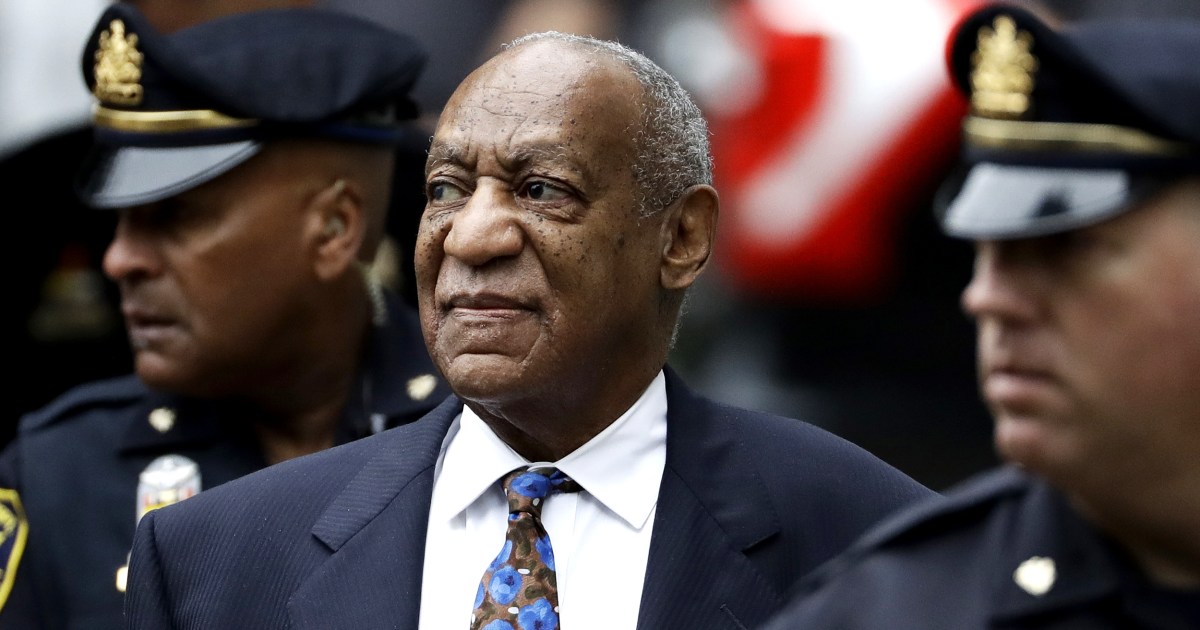
Covering Cosby? Connect with UMW psychological trauma expert Laura Wilson
It’s news that has everyone shocked. Bill Cosby is getting out of jail and will be a free man. Pennsylvania's Supreme Court vacated the sexual assault conviction of Bill Cosby on Wednesday and ordered his release from prison after finding that he was denied protection against self-incrimination. The court said that a prosecutor's decision not to charge Cosby, 83, opened the door for him to speak freely in a lawsuit against him — and that testimony was key in his conviction years later by another prosecutor. Cosby was convicted in 2018 of drugging and sexually assaulting a woman in 2004, and was serving a three- to 10-year sentence. He has served two years of the sentence. The state Supreme Court said Cosby cannot be retried on the same charges. June 30 – NBC News This is a story that will be dominating the news cycle for some time – and if you are a reporter covering this story, then let our expert help. University of Mary Washington Associate Professor of Psychological Science Laura C. Wilson has provided sought-after commentary to The Washington Post, NPR, Reuters, Huffington Post, NBC, The Atlantic and more on the psychological trauma experienced by survivors of rape and sexual assault, as well as mass shootings. Dr. Wilson is available to speak with media, simply click on her icon to arrange an interview today.



Even with a drastic reduction in driving due to the COVID-19 pandemic, Black Americans saw the largest increase in traffic-related deaths in 2020 when compared to other racial groups. An estimated 38,680 people died in motor vehicle traffic crashes in 2020 — the largest projected number of deaths since 2007 — and the number of Black people who died in such crashes was up 23 percent from 2019, according to the U.S. Department of Transportation’s National Highway Traffic Safety Administration. UConn’s Dr. Norman Garrick spoke with NBC News about the new report: Norman Garrick, a civil and environmental engineering professor at the University of Connecticut, said the numbers are saddening, but not surprising. “Black people tend to be overrepresented as walkers in this country,” Garrick said. “This is not by choice. In many cases, Black folks cannot afford motor vehicles. And people that walk in this country tend to experience a much, much higher rate of traffic fatality. We’re talking eight to 10 times more. It’s a perfect storm of a lot of horrible forces.” This most likely represents yet another way the health crisis has had an outsize effect on Black people. Even in the early days of the pandemic, the National Safety Council found that the emptier roads were proving to be more deadly, with a 14 percent jump in roadway deaths per miles driven in March. And Black people are more likely to face traffic injuries in general; from 2010-2019, Black pedestrians were 82 percent more likely to be hit by drivers, according to a 2021 report from Smart Growth America, a Washington, D.C.-based advocacy group focused on urban development. June 22 - NBC News Dr. Garrick is a professor in the UConn School of Engineering's Department of Civil Engineering and is co-director of the Sustainable Cities Research Group. He is an expert in the areas of transportation behaviors, parking, public transit, and bicycle lanes. Dr. Garrick is available to speak with media – simply click on his icon now to arrange an interview today.


Cyber attacks and ransomware are incidents that are happening more and more often. They are threatening America’s energy supply, food chain and critical infrastructure. Recently, two Georgia hospitals were victims of a recent attack. Media from across the country asked experts like Frank Katz, director of Georgia Southern University's Center for Applied Cyber Education, who is vulnerable and why. Katz, who directs the Center for Applied Cyber Education at Georgia Southern University’s Armstrong Campus in Savannah, said hospitals can be targets for extortion as well as sources of personal identifying information that can aid in further fraud. “They are more likely to pay than another type of business because it’s a life and death situation,” Katz told WSAV-TV. “It really has become a situation of money, pure and simple. These are thieves that know they can extort the money and often get it.” June 21 – Associated Press Frank Katz, director of the Center for Applied Cyber Education at Georgia Southern University, says hospitals are often easy targets. Having so many employees, he says user IDs and passwords can be easy to figure out. Plus, they’re dealing with emergency medical care. “They are more likely to pay than another type of business because it’s a life and death situation,” Katz said. June 21 – NBC News If you are a reporter looking to cover this subject and speak with Frank Katz, Georgia Southern’s Director of the Center for Applied Cyber Education – then let our experts help. Frank Katz, director of the Center for Applied Cyber Education is available, simply click on his icon or reach out to Georgia Southern Director of Communications Jennifer Wise at jwise@georgiasouthern.edu and she’ll assist with connecting you for an interview today.

Did you know in America more than 6 million people are living with Alzheimer’s disease? June is Alzheimer's and Brain Awareness Month and the experts from Georgia Southern University have been busy talking with reporters and media about the importance of brain health and how to monitor your memory for any signs that may require attention. Earlier this month, Georgia Southern’s Adrienne Cohen spoke to NBC News about Dementia and the many types of brain disorders. Alzheimer’s is one of the many types of Dementia, a brain disorder that causes the brain to create gaps, initially effecting the short-term memory. “It can have several stages,” said Adrienne Cohen, Ph.D, associate professor and director, Center for Social Gerontology . “It can effect your memory, it can effect your mood, it can effect the way you interact with other people. It’s a slow progression, initially people might just be confused or can’t remember things and sadly that happens to all of us.” For many, it can be difficult to determine whether a person’s forgetfulness is caused by a number of underlying factors, like vitamin deficiencies or metabolic-related issues, or if it could potentially be something more serious. June 07 – NBC News With nearly six million Americans effected by Alzheimer’s disease, the chance of being effected doubles every five years for every American as they age after 65. This is an important topic and if you are a reporter looking to cover this subject – then let our experts help. Simply reach out to Georgia Southern Director of Communications Jennifer Wise at jwise@georgiasouthern.edu and she’ll assist with connecting you with Dr. Cohen today.

A new model of health care is coming to Wilmington’s Riverside neighborhood and the Kingswood Community Center. ChristianaCare Virtual Health is now available at The Coker Family Resource Center, inside Kingswood Community Center. It offers convenient, personalized, always-accessible care that makes it easier for people to connect with the care they need and stay well. “This is an entirely new model of health care powered by data and technology to make it easier for people to access care when they need it, and one that fosters strong relationships between patients and their care team,” said Janice E. Nevin, M.D., MPH, president and CEO of ChristianaCare. “In our commitment to make a positive impact on health for everyone in the communities we serve, we’re excited to bring this leading-edge model of care to our neighbors at Riverside. We’re grateful for the partnership of The WRK Group and Kingswood Community Center in this collaborative effort that will support the health and wellbeing of the people in this community.” At The Coker Family Resource Center, patients can connect to ChristianaCare Virtual Health for a virtual appointment with a primary care provider or a member of their care team and also receive access to medical services such as vaccines, blood pressure checks and in-person exams. But care doesn’t have to happen at Kingswood Community Center. Patients can have a virtual visit with their care team anytime and from anywhere they have access to the internet with a smartphone, tablet or laptop with a camera. “Throughout the pandemic, many people have learned the convenience of having a video visit with their doctor instead of coming in for an in-person appointment. At ChristianaCare, we’ve actually been developing this kind of care since the launch of our Virtual Primary Care practice for ChristianaCare caregivers in 2018, in addition to our CareVio data-powered care management platform,” said Sharon Anderson, RN, MS, FACHE, chief virtual health officer at ChristianaCare. “What we’re able to provide today is not just video visits, but an entirely new kind of care that’s always on—it enables patients to interact with their care team when they need support through video visits, secure text messages and other ways that provide care in ways that fit into each person’s lifestyle.” Sharon Anderson, RN, MS, FACHE, chief virtual health officer at ChristianaCare In addition to the on-site medical services provided at the Kingswood location, patients can also receive in-person help with the technology so that they can become comfortable with this new model of care, and ask questions or get help when they need it. Kingswood Community Center, a member of The WRK Group (The Warehouse, REACH Riverside, and Kingswood Community Center), has been a pillar of the Riverside community for 75 years and is located at 2300 Bowers St, Wilmington, DE 19802. In-person appointments are available every Tuesday and Thursday from 12:30 – 2:30 (times may vary). Information and appointments are available by calling 302-428-2400. Establishing easily accessible health care within the Riverside neighborhood marks a long-time goal of The WRK Group. “We are incredibly thankful for this partnership with ChristianaCare Virtual Health as they become the first primary care service provider that exists within Riverside,” said Logan S. Herring, Sr., CEO of The WRK Group. “ChristianaCare has created a nimble solution for our neighbors that includes valuable in-person services and care as well as virtual appointments. Creating this physical and virtual space is an achievement for our community and one in a series of initiatives The WRK Group plans to bring to the local area.” The WRK’s Group managing partner, REACH Riverside, is currently overseeing a $250M holistic revitalization project which includes building a new and improved community center, developing a mixed income housing community, and investing in physical capital to create a thriving and vibrant neighborhood. Introducing the Coker Family Resource Center The Coker Family Resource Center is a new addition to the Kingswood Community Center, made possible by the generous donation of the Coker family, a pillar in the Riverside and Wilmington community. From matriarch and civil rights leader Beatrice “Bebe” Coker and her activism efforts to daughters Dr. Joan Coker, Laurie Coker Reid, and Julie Coker's collective philanthropic and community work, the Coker family embodies the values of Kingswood Community Center and The WRK Group’s collective mission to empower the community to reach its full potential. “Thank you to the entire Coker family, who have dedicated themselves to bettering our community for decades, as well as for providing the needed funding to create the physical space that ChristianaCare Virtual Health inhabits,” Herring continued. “The Coker family has once again demonstrated the value of believing and investing in their community. As we look to the future and continue to dream big about the new Kingswood Community Center, I am excited by the prospect of what this space will evolve into and what additional services we can offer our community.” For more information about ChristianaCare Virtual Care at Kingswood Community Center, click here. About ChristianaCare Headquartered in Wilmington, Delaware, ChristianaCare is one of the country’s most dynamic health care organizations, centered on improving health outcomes, making high-quality care more accessible and lowering health care costs. ChristianaCare includes an extensive network of primary care and outpatient services, home health care, urgent care centers, three hospitals (1,299 beds), a freestanding emergency department, a Level I trauma center and a Level III neonatal intensive care unit, a comprehensive stroke center and regional centers of excellence in heart and vascular care, cancer care and women’s health. It also includes the pioneering Gene Editing Institute. ChristianaCare is nationally recognized as a great place to work, rated by Forbes as the 5th best health system to work for in the United States and by IDG Computerworld as one of the nation’s Best Places to Work in IT. ChristianaCare is rated by HealthGrades as one of America’s 50 Best Hospitals and continually ranked among the nation’s best by U.S. News & World Report, Newsweek and other national quality ratings. ChristianaCare is a nonprofit teaching health system with more than 260 residents and fellows. With its groundbreaking Center for Virtual Health and a focus on population health and value-based care, ChristianaCare is shaping the future of health care. About The WRK Group The WRK Group, which is comprised of three organizations and over 130 employees, shares a collective mission to empower the community to reach its full potential by eliminating the barriers of structural racism and revolutionizing teen engagement. REACH Riverside, overseeing a $250M holistic revitalization, also serves as the managing partner for Kingswood Community Center, a pillar of the Northeast Wilmington neighborhood for 75 years, and The Warehouse, an educational and recreational oasis for teens. The Warehouse: Developed "For Teens, By Teens" - Innovative, one-stop center serving ages 13 to 19 Teen-driven programming focused on recreation, education, arts, career, and health Collaborating with over 140 youth-serving organizations Three goals: safety, educational support, and workforce readiness REACH Riverside: Developed "With the Community, For the Community" Member of the national Purpose Built Communities Redevelopment: Up to 600 units of high quality, mixed-income housing Education: cradle-to-college and career readiness pipeline Community Health: health, wellness, safety services, and programming Kingswood Community Center Empowering the Community of Riverside and Northeast Wilmington since 1946 Early Learning Academy: high quality, evidence-based programming (ages one through five) School-age services (ages six through twelve): before, after-school, and summer programming Jimmy Jenkins Senior Center: activities to remain healthy and self-sufficient Kingswood Academy: alternative school, located at The Warehouse (seventh through twelfth grade) Preparing for the development of a new, state-of-the-art facility that will replace and enhance the current community center ####
