
Experts Matter. Find Yours.
Connect for media, speaking, professional opportunities & more.
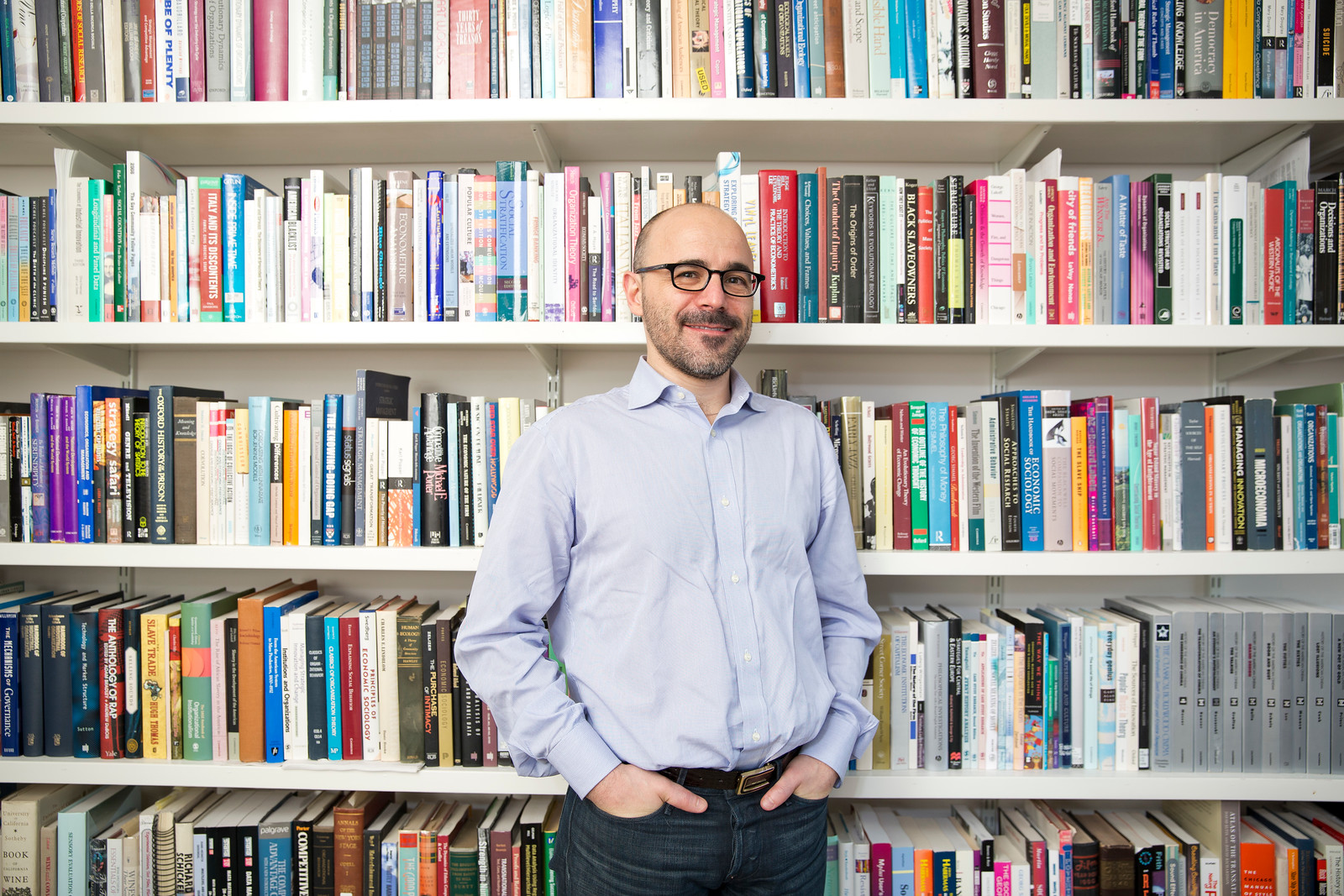
As the persistent turmoil of protests grips America on an almost daily basis, people are becoming more aware of issues, getting engaged and taking sides. Be it around the dinner table debating, marching in the streets or even arguing on a national news panel – topics like Black Lives Matter, masks during COVID, the upcoming election or a host of other hot-topic issues are all part of the American conversation these days. It’s easy and even healthy for people to debate the issues – but for a business to pick a side on a controversial topic, it’s a much different picture. One recent example was Nike’s support of NFL quarterback Colin Kaepernick. However, Nike also had the resources to bolster their support. They had a multi-million-dollar ad budget, a public relations machine generating hours of earned media – and the company was, for the most part playing to its core audience. Though there was push-back, Nike was rewarded with increased sales and its stock surged. For almost a decade now, Chick-fil-A has also boldly taken a stance with its opinion on gay marriage. The restaurant chain has faced mountains of negative press and protests, but the fast-food giant’s bottom lined never suffered. It still sees sales over 10 billion a year. For Nike and Chik-Fil-A and their deep pockets to wade into the fray with an opinion – it’s one thing, but for a small business to share how it feels, there’s a matter of weighing risk versus reward no matter how important the topic might be. “It may well be that it’s harder for entrepreneurs to create a viable business model for their venture in a more polarized context, says Giacomo Negro, a Professor of Organization & Management at Emory University’s Goizueta Business School. “If your business is more hybrid—if you’re supportive of a cause without being overtly affiliated with it—then it could be harder to engage other customers or clients who are uncomfortable doing business with a firm that is even vaguely linked to a specific social group or movement. Similarly, the core supporters of the cause can look at the same organization as not authentically engaged with them.” His findings certainly suggest that existing in a “gray zone,” where you take neither one side or the other, is a hard place for organizations to thrive in times of social change. “If protest activates the cultural boundary surrounding a group’s identity, then increasing protest participation will threaten the viability of precisely those organizations trying to engage inside and outside audiences,” Negro said. “At the same time, bridging inside and outside audiences also conveys a confusing identity and a more limited commitment to pursuing goals relevant to either audience.” With a global pandemic impacting all aspects of national and local economies – small businesses are under pressure to sustain and survive like never before. And if you are a journalist looking to cover the state of small businesses in America and whether or not small business has a role to play in protests and politics in America – then let our experts help with your coverage. Giacomo Negro is a Professor of Organization & Management at Emory University’s Goizueta Business School and is an expert in the area of economic sociology. His resent research study research study, “Which Side Are You On? The Divergent Effects of Protest Participation on Organizations Affiliated with Identity Groups’ focuses on this very subject. Professor Negro is available to speak with media about this topic – simply click on his icon to arrange an interview today.



In the introduction to his new book, Greg Fisher and his co-authors note that strategy used to be the domain of only those at the very top of an organization. Many would attend management retreats and forget what was discussed soon afterward, much like unfulfilled New Year’s resolutions. “It used to be that strategy happened at off-site retreats, often coupled with golf, cigars and scotch. It used to be that strategy was only discussed as part of an annual planning cycle … was about grand, long-term plans that stretched way into the future,” they wrote. “Strategy was largely cerebral.” Fisher, the Larry and Barbara Sharpf Professor and an associate professor of entrepreneurship at the IU Kelley School of Business, says those days are over. Even before the Covid-19 pandemic began seemingly disrupting every aspect of life, including business processes, the rapid pace of social change meant that companies could no longer wait or slowly adjust. His book, “Strategy in 3D: Essential Tools to Diagnose, Decide & Deliver (Oxford University Press),” co-authored with two former Kelley School faculty members, presents insights into how companies can broaden and include more people in the strategic process. “Anyone with career ambition in the business world needs to become a strategist. We hope this book will serve as a useful resource for everyone willing to take that leap,” he wrote along with John Wisneski of Arizona State University’s W.P. Carrey School of Business and Rene Bakker of Rotterdam School of Management at Erasmus University. The first section of the book discusses strategic concepts and ideas and how they can be enacted in different ways and at different levels of an organization. Then they discuss the “three elements that are central to being strategic within a business – the 3Ds of diagnose, decide and deliver.” The second section outlines tools that should be part of any manager’s strategy toolbox. The authors see strategy as being about diagnosing a wide array of complex issues or opportunities facing organizations, deciding on solutions to address those challenges or opportunities and then taking action. But the process of forming such strategies is messy. “There are no hard-and-fast rules when it comes to applying tools in tandem,” they note in the book’s conclusion. “What does stand out, though, is that making combinations that ‘click’ with the specific problem in focus adds more value than simply adding tools in isolation.” The book’s 218 pages cover a great deal, but here are three important takeaways from Fisher, Wisneski and Bakker: Let the problem define the parameters – Preconceived preferences for certain tools or frameworks offer fewer useful insights than the application of tools developed to address specific issues. “In other words, start from the problem or question you face,” they said. Combine strategic tools that offer complementary insights – It makes sense to select tools that will investigate different sides of a problem, “making sure no stone is left unturned.” It makes sense to often include at least one external and internal strategic tool in tandem. “We want to know generally whether this new market is attractive, but the more important question is whether the market is also attractive for us,” they said. “Strategists are everywhere,” Fisher and his co-authors write. “We are aligned in our dismissal of the view of the chief executive as the almighty, all-knowing strategy designer.”


Chatbots can ease medical providers' burden, offer trusted guidance to those with COVID-19 symptoms
COVID-19 has placed tremendous pressure on health care systems, not only for critical care but also from an anxious public looking for answers. Research from the Indiana University Kelley School of Business found that chatbots -- software applications that conduct online chats via text or text-to-speech -- working for reputable organizations can ease the burden on medical providers and offer trusted guidance to those with symptoms. Researchers conducted an online experiment with 371 participants who viewed a COVID-19 screening session between a hotline agent -- chatbot or human -- and a user with mild or severe symptoms. They studied whether chatbots were seen as being persuasive, providing satisfying information that likely would be followed. Their results showed a slight negative bias against chatbots' ability, perhaps due to recent press reports. When the perceived ability is the same, however, participants reported that they viewed chatbots more positively than human agents, which is good news for health care organizations struggling to meet user demand for screening services. "The primary factor driving user response to screening hotlines -- human or chatbot -- is perceptions of the agent's ability," said Alan Dennis, the John T. Chambers Chair of Internet Systems at Kelley and corresponding author of the paper, "User reactions to COVID-19 screening chatbots from reputable providers." "When ability is the same, users view chatbots no differently or more positively than human agents." Other authors on the paper, forthcoming in the Journal of the American Medical Informatics Association, are Antino Kim, assistant professor of operations and decision technologies at Kelley; and Sezgin Ayabakan, assistant professor of management information systems, and doctoral candidate Mohammad Rahimi, both at Temple University's Fox School of Business. Even before the pandemic, chatbots were identified as a technology that could speed up how people interact with researchers and find medical information online. "Chatbots are scalable, so they can meet an unexpected surge in demand when there is a shortage of qualified human agents," Dennis, Kim and their co-authors wrote, adding that chatbots "can provide round-the-clock service at a low operational cost. "This positive response may be because users feel more comfortable disclosing information to a chatbot, especially socially undesirable information, because a chatbot makes no judgment," researchers wrote. "The CDC, the World Health Organization, UNICEF and other health organizations caution that the COVID-19 outbreak has provoked social stigma and discriminatory behaviors against people of certain ethnic backgrounds, as well as those perceived to have been in contact with the virus. This is truly an unfortunate situation, and perhaps chatbots can assist those who are hesitant to seek help because of the stigma." The primary factor driving perceptions of ability was the user's trust in the provider of the screening hotline. "Proactively informing users of the chatbot's ability is important," the authors wrote. "Users need to understand that chatbots use the same up-to-date knowledge base and follow the same set of screening protocols as human agents. ... Because trust in the provider strongly influences perceptions of ability, building on the organization's reputation may also prove useful."
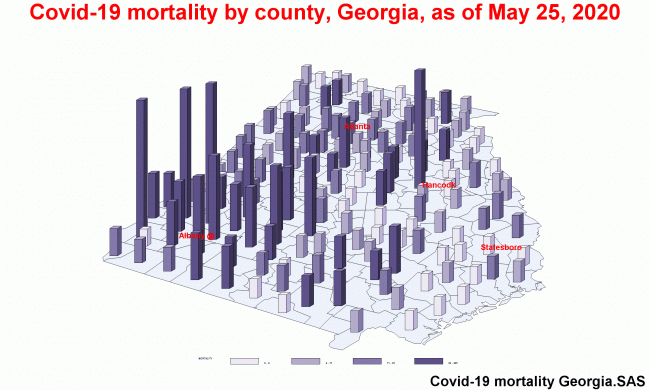
Graduate students in the Jiann-Ping Hsu College of Public Health at Georgia Southern University analyzed mortality data to reveal that a county in southwest Georgia is dealing with deaths from COVID-19 at a rate higher than most other counties in the country. The students found that the mortality rate of 305 per 100,000 residents (as of May 28, 2020) for Terrell County in southwestern Georgia, is 50% higher than that of New York state’s Nassau County, the documented highest rate in New York. The three other Georgia counties that are highest in terms of mortality rate are Hancock, Early and Dougherty counties. Three out of these four are in southwest Georgia, around the Albany area. That accounts for almost half of the 10 counties in the United States with the highest mortality rate, which is defined as a measure of the frequency of occurrence of death among a defined population. However, it’s interesting to note that none of Georgia counties reached the top 20 in terms of incidence and the death numbers per 100 confirmed Covid-19 cases, said professor Dr. Jian Zhang, a veteran medical epidemiologist. “Georgia is doing pretty well to stop the spread of the virus, and hospitals in Georgia are doing well to save hospitalized COVID-19 patients. The high mortality rate, in this case, may be deeply rooted in the historical burden of poverty in Georgia,” Zhang said. The findings are part of a service-learning project Zhang led. A six-student group formed the surveillance team that began running a real-time COVID-19 numbers in his Public Health Surveillance class. If you are a journalist covering COVID-19 and would like to learn more about this research taking place at Georgia Southern University – then let us help. Dr. Jian Zhang has worked with the Chinese Centers for Disease Control and Prevention, and the World Health Organization prior to moving to the United States.



And the award goes to … Georgia Southern University receives two Emmy nominations
The National Academy of Television Arts and Sciences Southeast Chapter has recognized Georgia Southern University’s Multimedia Development Center (MDC) with two professional Emmy award nominations. Nominated for the Emmy awards were Art Berger, Best Technical Director for Georgia Southern football, baseball and basketball, and Ben Powell, Best Technical Director for Georgia Southern basketball. Berger, director of the MDC, said the nominations are a result of a collaborative effort among the student and staff team. The MDC’s mission is to provide students with professional opportunities and deliver excellence in media programming. Students working at the MDC receive hands-on experience delivering more than 150 live streaming events a year including commencement and Georgia Southern football. “We are very proud of our collaboration with Georgia Southern Athletics and our two Technical Director 2019-2020 Emmy award nominations,” said Berger. “These awards reflect the quality and the outstanding dedication of our students and our staff in delivering high-quality ESPN programming. We are extremely proud of our continued excellence in bringing Emmy level ESPN programming to Georgia Southern University.” The MDC has previously received eighteen Emmy nominations as well as five professional wins including best director, best sports director, and best technical director, and two Emmy awards for best audio with the Georgia Southern Symphony. The National Academy of Television Arts and Sciences is a professional organization for individuals in the television and broadcasting industry. If you are journalist and would like to know more about this story - simply reach out to Georgia Southern Director of Communications Jennifer Wise at jwise@georgiasouthern.edu to arrange an interview.

STORY: CAA named the most trusted brand in Canada in the annual Gustavson Brand Trust Index
The Canadian Automobile Association (CAA) has been named the most trusted brand in Canada in the annual Gustavson Brand Trust Index, released today. This is the fourth consecutive year that CAA is one of the top two most trusted brands in Canada, beating out several hundred other prominent international and Canadian brands. This year, CAA tied for first place with Mountain Equipment Coop (MEC), another Canadian, membership-based, not-for-profit organization. Further, CAA finished first, for the third year in a row, in the insurance category of this year’s Index. Conducted by the Peter B. Gustavson School of Business at the University of Victoria, the sixth annual Gustavson Brand Trust Index asked more than 7,800 consumers to score 342 prominent companies and brands, across 27 industry sectors, on a range of brand value measures.


STORY: CAA Volunteers to deliver another BIG shipment of PPE to help Frontline workers.
CAA has once again partnered up with Mobilizing Masks for Health Care workers to deliver a large donation of 120,000 Personal Protective Equipment masks. Mobilizing Masks is a grassroots organization of physicians and advocates, that is facilitating a large-scale mask donation drive, to bring masks to hospitals most in need of PPE and to units where medical staff have high exposure to COVID-19 positive patients. While CAA has been helping the organization with the delivery of PPE’s since April 6th, this donation is one of the largest to date. The masks were donated by T & T Supermarket and delivered by CAA to 105 Gibson, a community centre in Markham. There they were sorted and distributed to long term care residences in the GTA. Since April 6th CAA South Central Ontario has helped to distribute: Surgical Masks - 570,805 N95 masks - 3,810 Face Shields - 2,900 Thank you to all the Associates and Network Providers who have contributed to getting this initiative off the ground and who continue to ensure that those on the frontline of our healthcare network are supported.
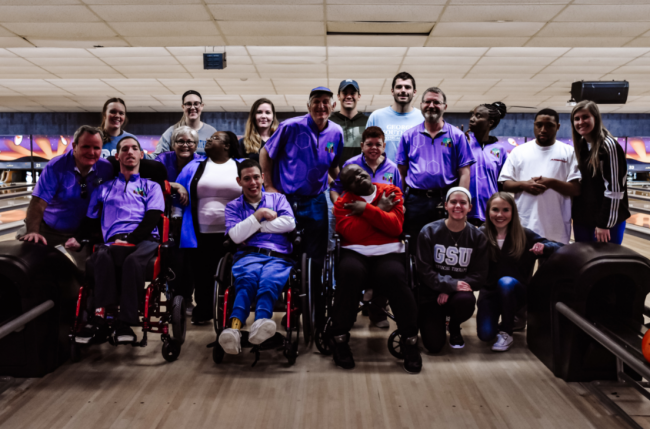
Twelve students in the Doctor of Physical Therapy (DPT) program at Georgia Southern University were awarded scholarships totaling more than $17,000 from the Savannah American Business Clubs (AMBUCS). “This is a recognition of the dedication we have to AMBUCS and helping others in our community,” said scholarship recipient and AMBUCS student leader Alexandra Adams. “Most of us are paying for our education with loans, and the scholarship helps relieve some of the financial burden that comes with pursuing a graduate degree. I am very thankful that AMBUCS has considered me for this scholarship the past two years.” The organization has hosted a League of Exceptional Bowlers on Saturdays for more than 50 years. The DPT students join the Savannah AMBUCS league to assist bowlers with physical and intellectual disabilities to promote an inclusive and competitive environment. In addition to the hands-on experiences, DPT students have the opportunity to interact with different members of the community. “It shows our commitment to the inclusion of our community and our passion for encouraging movement for everyone, despite their limitations, to increase their quality of life,” Adams said. “The program reinforces our classroom training, as well as, enhances our communication skills with others. Each member of our DPT program gets as much of a benefit from attending AMBUCS as the bowlers do.” A century-old membership organization dedicated to helping people with disabilities, the Savannah AMBUCS awards scholarships to students pursuing careers in the allied health professions and who volunteer with AMBUCs. If you’re a journalist looking to cover this story or would like to learn more about the physical therapy and other programs at Georgia Southern University – then let us help. Barry Joyner is the dean of Georgia Southern University’s Waters College of Health Professions - simply click on his icon to arrange an interview today.


As the global pandemic touches almost all parts of the United States – it is essential that the public receives only accurate and definitive information from credible and expert sources as news, media and information reaches million of people across the country. An invisible enemy is killing thousands and forcing people worldwide to cower behind closed doors. Unfounded conspiracy theories and miracle “cures” abound on social media. Politicians and pundits send mixed messages about how to protect yourself. Who you gonna call? - Bedford Gazette, April 14 As the coronavirus rampages, the public increasingly is turning to experts in academia and government -- the educated, experienced “elites” that many Americans had tuned out. The Coronavirus 2019 (COVID-19) situation is certainly new to all of us. As guidance from the CDC changes and instructional methods transition, there are experts at Georgia Southern who can help to answer questions such as: How should we best address this pandemic as a nation? How should we best address this pandemic individually? What does it mean to “flatten the curve?" What is the economic impact of COVID-19? How do you best manage employees virtually? Why are grocery stores having trouble keeping inventory on their shelves? Should we prepare for a lapse in groceries and goods? What contributes to the fear and panic in disasters and pandemics? What do educators, parents and students need to know to prepare for online learning in the K-12 and college settings? If you are a reporter covering COVID-19, let the team of experts from Georgia Southern help with your coverage. Public Health: Atin Adhikari, Ph.D. Associate Professor of Environmental Health Sciences, Department of Biostatistics, Epidemiology and Environmental Health Sciences, Jiann-Ping Hsu College of Public Health Dr. Adhikari brings over 15 years of extensive research experience on aerosols, airborne microorganisms, other air pollutants, and related respiratory disorders. His current research areas include environmental air quality, exposure assessment, occupational health and safety, environmental microbiology, and respiratory health. Before joining JPHCOPH, Dr. Adhikari was also involved (Co-I) with two DoD-DTRA and U.S. Office of Naval Research funded projects on inactivation of hazardous microorganisms. Chun Hai (Isaac) Fung, Ph.D. Associate Professor, Department of Biostatistics, Epidemiology and Environmental Health Sciences, Jiann-Ping Hsu College of Public Health Dr. Isaac Chun-Hai Fung is a digital health expert and an infectious disease epidemiologist. He analyses social media data for public health surveillance and health communication and uses digital technologies for public health interventions. He investigates the transmission of communicable diseases with a focus on respiratory infections and environmentally transmitted infections. He applied a variety of methods, from classical statistical methods to machine learning and mathematical modeling, to address public health problems and to provide solutions to policy-makers. He is especially interested in assisting public health agencies in their responses to public health emergencies. He is currently a guest researcher with the Health Economics and Modeling Unit, Division of Preparedness and Emerging Infections, National Center for Emerging and Zoonotic Infectious Diseases, Centers for Disease Control and Prevention (CDC). Examples of his recent projects include: Surveillance of unplanned school closures through social media platforms, Analysis of social media posts pertinent to public health emergencies, such as Ebola, MERS and Zika. Jessica Schwind, Ph.D. Assistant Professor, Department of Biostatistics, Epidemiology, and Environmental Health Sciences, Jiann-Ping Hsu College of Public Health Dr. Jessica Smith Schwind is an epidemiologist and program evaluator. She joined the Department of Biostatistics, Epidemiology and Environmental Health Sciences at JPHCOPH in August 2017. Her current research interests include disease surveillance, capacity building and risk communication for the prevention and/or early recognition of outbreaks with a focus on: best practices for operationalizing the ‘One Health’ approach, understanding and improving capacity building efforts and priorities for increasing health surveillance, and improving early warning systems for disease detection and response by bridging the gap between global digital databases and local health information. Schwind also conducts SoTL research on innovative online/onsite teaching and evaluation with a focus on immersive and service-learning practices. Pandemics, panic and the public: Amy Ballagh, Ed.D. Associate Vice President of Enrollment Management Featured in the Washington Post : Jessica Schwind, Ph.D. Assistant Professor, Department of Biostatistics, Epidemiology, and Environmental Health Sciences, Jiann-Ping Hsu College of Public Health Dr. Jessica Smith Schwind is an epidemiologist and program evaluator. She joined the Department of Biostatistics, Epidemiology and Environmental Health Sciences at JPHCOPH in August 2017. Her current research interests include disease surveillance, capacity building and risk communication for the prevention and/or early recognition of outbreaks with a focus on: best practices for operationalizing the ‘One Health’ approach, understanding and improving capacity building efforts and priorities for increasing health surveillance, and improving early warning systems for disease detection and response by bridging the gap between global digital databases and local health information. Schwind also conducts SoTL research on innovative online/onsite teaching and evaluation with a focus on immersive and service-learning practices. Jodi Caldwell, Ph.D. Executive Director of the Georgia Southern University Counseling Center On a national level, Dr. Caldwell is currently serving her second elected term to the Directorate Board of the Commission for Counseling and Psychological Services of the American College Personnel Association and is a certified Red Cross Disaster Mental Health Responder. COVID-19 and logistics, the economy and the workforce: Alan Mackelprang, Ph.D. Associate Professor, Department of Logistics & Supply Chain Management Currently the director of the Ph.D. in Logistics and Supply Chain Management program, his research interests include examining interdependencies among supply chain partners, JIT/Lean production, manufacturing flexibility as well as supply chain integration. Scott Ellis, Ph.D. Associate Professor, Department of Logistics & Supply Chain Management Scott Ellis’ research interests center on the study of purchasing and supply management processes and functions. He has published in Journal of Operations Management and Journal of Supply Chain Management, among others. Richard McGrath, Ph.D. Professor, Parker College of Business Richard McGrath researches immigration, consumer survey methodology, and applied microeconomics. He is a long time expert on the economy in Savannah and the Coastal Empire. Michael Toma, Ph.D. Fuller E. Callaway Professor of Economics Michael Toma is a professor and lead analyst for the Center for Business Analytics and Economic Research, a student- and faculty-staffed applied research group focused on the Savannah-area economy that works with many local partners on special initiatives, customized applied business research and impact studies. Based on Toma's analytics, the Center publishes the quarterly Coastal Empire Economic Monitor, a closely watched economic report. Toma's community ties are also strong in the area. He serves on the Board of Directors for United Way of the Coastal Empire and on the organization's Executive Committee as chair of the Community Investments Committee. David Sikora, Ph.D. Assistant professor of management David Sikora’s research interests include strategic human resource management and the business impact of employee management practices. He has published his research in such journals as the Journal of Applied Psychology, Leadership Quarterly, Human Resources Management Review, International Journal of Selection and Assessment, and International Journal of Human Resources Development and Management. Prior to his academic career, David had extensive corporate experience in human resources and marketing including serving as human resources vice president at Cigna Corporation and director of human resources product management at Gevity HR, Incorporated. Steven Charlier, Ph.D. Associate Professor, Department of Management Charlier’s research interests are focused on the modern work environment, and include virtual teams, e-learning, leadership in a virtual world, and management education. His work has been published in several leading international academic journals, including The Leadership Quarterly, Human Resource Management, Journal of Organizational Behavior, Academy of Management Learning & Education, and Human Resource Management Review. Online teaching and learning: Charles Hodges, Ph.D. Professor, Department of Leadership, Technology and Human Development Hodges is a tenured professor of instructional technology at Georgia Southern with over 20 years of online teaching experience. As an active researcher in online teaching and learning, Hodges presents regularly at the national and international levels. He currently serves as the editor-in-chief of the journal and he is a long-time member of the Association for Educational Communications and Technologies, a professional organization for Educational Technology scholars and practitioners. Featured in the Inside Higher Ed article (published 3/11/20): Jeffrey Tysinger, Ph.D. and Dawn Tysinger, Ph.D. Professors, Department of Leadership, Technology and Human Development The Tysingers are one of very few individuals who are actively researching in the area of crisis preparedness in K-12 online learning Professors, Department of Leadership, Technology and Human Development The Tysingers are one of very few individuals who are actively researching in the area of crisis preparedness in K-12 online learning: o https://digitalcommons.georgiasouthern.edu/nyar/vol2/iss1/4/ o https://dl.acm.org/doi/10.5555/2811036.2811057 o https://eric.ed.gov/?q=Tysinger&id=EJ1147626 o https://eric.ed.gov/?q=Tysinger&id=ED595756 Dawn Tysinger, NCSP, serves as professor and program director for the nationally-recognized, National Association of School Psychologists-Approved Education Specialist program in school psychology at Georgia Southern University. Tysinger has contributed to her field through active participation in NASP, publications in school psychology journals, and presentations at the local, state, regional, national, and international levels. She currently serves on the NASP program review board for school psychology programs and as a member of the editorial boards of Journal of School Psychology, Psychology in the Schools, Trainers’ Forum: Journal of the Trainers of School Psychologists, National Youth-At-Risk Journal and Journal of Online Learning Research. Jeff Tysinger, NCSP, is a professor of school psychology at Georgia Southern University. He has been the president of the Kansas Association of School Psychologists (KASP), editor of the KASP Newsletter, KASP Futures committee member, KASP NCSP committee member, member of National Association of School Psychologists (NASP) since 1997, Nationally Certified School Psychologist since 1997, NASP Program Reviewer, NCSP Portfolio Reviewer, member of NCATE Board of Examiners, member of Georgia Association of School For parents at home with (k-12) children now distance learning: Chelda Smith Associate Professor, Department of Elementary and Special Education Smith’s master's thesis focused on parents as the first teachers of children and can speak to how parents can be empowered in that role. Her research agenda continues to focus on home and community assets, of which parents/caregivers are the primary influence and factor for positive outcomes. Lastly, as a parent of both a middle schooler and a toddler, Smith is navigating the process of being a primary educator in the home in real-time. Each expert is available to speak with media – simply contact Melanie Simon at 912.313.3245 to arrange an interview today.

COVID-19 and a sustainable transition
As the COVID-19 pandemic touches almost every aspect of society, it is becoming increasingly obvious that the slowdowns and shutdowns may inadvertently enable us to shape a new conception of prosperity and good livelihood. What has the global slowdown meant for the environment and sustainable living, and what could it mean if some of the radical changes in our everyday lifestyles and consumption habits persisted long-term? As Maurie Cohen, professor in New Jersey Institute of Technology's department of humanities, explains, "Since we are all living through this unique moment, observing the responses by government, businesses and ordinary people, it marks an opportune time to explore if these changes can provide leverage points for opening pathways to a sustainability transition." The topic attracted a diverse group of scientists, economists, educators and hundreds more around the world virtually during a live webinar titled, “COVID-19 Can Help Wealthier Nations Prepare for a Sustainability Transition.” The open forum-style event, organized by researchers from the international sustainability organization FutureEarth, set up an online discussion on the major global sustainability trends and issues that have evolved in recent months alongside the coronavirus outbreak. Read more: Cohen is available to speak with media directly on issues related to COVID-19 and sustainability. To arrange an interview, click on the button below.

