
Experts Matter. Find Yours.
Connect for media, speaking, professional opportunities & more.

The H³ Plan: How to Retire Without Losing Your Mind & How You Can Support Older Relatives
MEDIA ADVISORY Retirement planning expert Sue Pimento introduces her H³ Plan — a research-backed framework for maintaining mental and emotional health in retirement that goes beyond financial planning. The framework identifies three essential pillars — Hope, Help, and Horizon — that help combat the emotional flatness many retirees experience after leaving structured work. Drawing on neuroscience research and clinical insights, Pimento offers a practical "emotional pension plan" for the growing population of Canadians navigating this life transition. Sue Pimento is available for interviews on retirement wellness, healthy aging, and the psychology of life transitions. Retirement doesn't arrive with a crash. It arrives quietly. One day, you stop setting alarms, stop racing against the clock, stop feeling urgently needed—and no one gives you the mental and emotional playbook for what comes next. There should be a chapter titled: How to Keep Your Brain Engaged, Regulated, and Not Mildly Irritated by Everyone. Instead? 404 page not found. (Translation: the system is actively seeking guidance… and coming up empty.) And if you're nodding along thinking "yes… exactly" — IYKYK. (If You Know, You Know. And if you don't yet, give it time.) Understanding Your Emotional Pension Plan After years of writing, researching, listening, and living through this stage myself, three factors consistently emerge as essential to maintaining mental and emotional health as we age. I call it H³: Hope, Help, and Horizon. Here's why each one matters—and why neglecting any of them leaves you emotionally drained. Think of them as your emotional pension plan — not optional, not fluffy, but essential. 1. Hope: Not Just Wishful Thinking — Agency, Clarified In her reflective New York Times article, "Your Hopes," journalist and believing host Lauren Jackson examines increasing cynicism, waning trust, and—most importantly—what research indicates truly can turn the tide. One line sums up the difference perfectly: Optimism is believing the future will improve. Hope is believing you can make it so. Here's why that matters. Optimism versus Hope (Plain-English Edition) Optimism is passive: "Things will probably work out." Hope is active: "I can influence what happens next." Optimism awaits. Hope takes part. From a psychological perspective, hope is based on: • Agency (I am able to act) • Pathways thinking (I can find a way) Research from the University of Oklahoma's Hope Research Center indicates that hope is one of the strongest predictors of well-being, often surpassing income, education, and even past success. For retirees, this distinction is important because aging narratives often aim to gently remove us from the driver's seat. Hope replies with something more like: Back off, sister. I refuse to buy into outdated stereotypes. I've upgraded to a more modern version of aging—like a new iPod model. (Stereos are out of style. Keep up.) Hope maintains the nervous system in an engaged state rather than resignation. In fact, some see hope as far more nuanced. Frank O’Dea, best known for his personal comeback story — from being homeless to later becoming a very successful coffee entrepreneur as the co-founder of the Second Cup shares his thoughts in his book, “Hope is Not a Strategy.” His personal narrative reinforces a deep belief in hope as a powerful emotional engine, but never as a substitute for action. O’Dea, who later went on to be a co-founder of the Second Cup Coffee Company and is a recipient of the Order of Canada for his philanthropy and humanitarian work, speaks to the human tendency to confuse optimism with preparation — people often wish their way into opportunity, rather than work their way into readiness. I love this line from his book: “Hope is important — it gives us purpose. But without a strategy, it leaves us vulnerable. We win not by wishing, but by working.” — Frank O’Dea 2. Giving Back: Your Brain's Favourite (Unpaid) Job Giving back isn't about virtue. Or virtue signalling on social, for that matter. (It's not a branding exercise. No hashtag required.) It's about nervous system regulation. Over the holidays, I was listening to an interview on CBC Radio and found myself doing that thing where you stop playing Vita Mahjong mid-game because someone said something so logical but also completely fascinating. Gloria Macarenko’s episode with Vancouver-based psychologist and therapist Lawrence Sheppard explored in detail how giving back influences us and what he has personally observed in his practice. The message? Giving back is a key factor for mental health. Certainly, we've all heard the well-known phrase "tis better to give than receive"—or a version of it. But Sheppard wasn't referring to virtue or being kind. He was discussing what truly happens in the brain when we give. Here's the short version: Helping others shifts the brain out of threat mode and into meaning mode. So what's Happening Neurologically? Building on Sheppard's clinical work and broader neuroscience: • Chronic stress forces the nervous system to stay hyper-vigilant. • Rumination shifts inward and intensifies the sense of threat. • Contribution shifts focus outward • Helping activates reward pathways and emotional regulation. Giving back restores balance. • purpose • structure • connection • competence Giving back reminds your brain it's still engaged—just not earning money. (My definition of volunteering. Not Webster's.) And many retirees miss that feeling more than the salary. They also miss the tangibles: vinyl records, 99-cent bread, and the quiet satisfaction of being needed somewhere at 9 a.m. Importantly, giving back—like hope—helps regulate the nervous system by decreasing feelings of isolation and restoring a sense of predictability. Your brain prefers knowing where it belongs. 3. Something to Look Forward To: Anticipation Is Medicine This one is sneaky powerful—and well documented. Having something to anticipate generates excitement. And excitement is not merely a feeling. It's a nervous system event. Here's the connective tissue: All three pillars—hope, giving back, and anticipation—work because they shift the nervous system away from threat and stagnation, and toward engagement, reward, and regulation. The Science (Why Anticipation Works) Research by neuroscientist Wolfram Schultz showed that dopamine spikes most strongly before a reward—not during it. Later studies in affective neuroscience confirmed: • Anticipation boosts motivation and positive emotions. • Future-oriented thinking diminishes depressive rumination. • Predictable positive events enhance mood regulation. In plain English: Your brain lights up when it knows something good is coming. In many instances, anticipation offers more emotional uplift than the event itself. Think: • first date • first kiss • first solo trip • first "I can't believe I'm actually doing this" moment You cannot buy that feeling in a bottle. (Not even the little blue pill will do it.) Why This Matters in Retirement Work used to provide: • deadlines • milestones • future orientation • purpose • feedback • connection • a sense of accomplishment And yes—before anyone writes me a letter—stay-at-home moms, caregivers, and volunteers: that is work. Don't get me started. When structured work concludes, those inputs aren't automatically replaced. Without things to look forward to: • time flattens • mood dulls • life becomes emotionally beige Something—anything—on the calendar restores forward motion. What Giving Back Looks Like in Real Life My friend Janet retired at 63 with a solid financial plan and no emotional plan. Six months in, she was climbing the walls—bored, restless, wondering why she felt so flat when she "should" be enjoying herself. Then she started tutoring at the library (Help), signed up for a pottery course (Horizon), and realized she could actually shape this chapter however she wanted (Hope). Different person. Same retirement account. Completely different nervous system. Big Things Are Overrated Waiting for something big to look forward to is often just perfectionism wearing a sensible cardigan. We tell ourselves the next big milestone will fix everything, when in reality, progress usually happens in a game of inches. Small choices, taken consistently, create big shifts. Direction beats intensity every time. As I wrote in my last blog about my Everest Base Camp and MBA journey: Even Cs get degrees. And I'll add: Consistent B- work wins most races. Small counts: • weekly plans • standing dates • tickets bought months ahead • regular commitments Anticipation is hope with a calendar invite. The H³ Framework for a Happy Retirement (Hope. Help. Horizon.) All three regulate the nervous system and keep us engaged. Hope — I can still shape things Help — I'm useful and connected Horizon — My life has forward motion If life feels flat, add one from each column. That's the prescription. Retirement isn't just about slowing down. It's about re-wiring. In plain English: You are not done yet! Remember, hope keeps you engaged. Giving back keeps you grounded. Looking forward keeps you light. Or, translated: A happy retirement isn't passive. It's practiced. A Note for Those Supporting Older Relatives If you have aging parents, relatives, or friends in your life, be on the lookout for signs of depression, resignation, or apathy. The signs are obvious if you're paying attention: flat affect, repetitive complaints, withdrawal, that vague sense they're just going through the motions, or their smile doesn't reach their eyes. Here's what not to do: point it out directly or suggest they "find a hobby" or "volunteer somewhere." Here's what does work: create Hope and Horizon by scheduling regular outings—lunch, a walk, a movie, anything with a date attached. Sometimes we underestimate how much seniors look forward to our visits and connections. It's better than any tonic or medication to lift spirits, young and old. In this scenario, action speaks louder than words. Talking about depression often brings up shame and further withdrawal. Instead, think of love as a verb, not a noun. You don't need to fix anything. Just show up. Regularly. Predictably. No grand gestures. No reinvention required. Just presence with a pulse - and notifications on mute! Be that person! Don't retire. Re-wire. — Sue Want more of this? Subscribe for weekly doses of retirement reality—no golf-cart clichés, no sunset stock photos, just straight talk about staying Hip, Fit & Financially Free. Subscribe Here



Boxing Day Explained: From Acts of Charity to a Global Cultural Tradition
Boxing Day may be best known today for shopping deals, leftover turkey sandwiches, and the collective decision to stay in pyjamas as long as possible. But its origins are far richer — rooted in charity, social responsibility, and long-standing cultural tradition. Observed on December 26, Boxing Day has evolved over centuries from a day of giving into a uniquely modern mix of generosity, sport, family, and commerce. Where Boxing Day Began The origins of Boxing Day trace back to medieval Britain. Traditionally, it was the day when: Churches opened alms boxes to distribute donations to the poor Employers gave servants and tradespeople “Christmas boxes” containing money, food, or gifts Workers who served households on Christmas Day were finally given time off to celebrate with their own families At its core, Boxing Day recognized service, labour, and the idea that generosity should extend beyond Christmas Day itself. A Day for Workers, Not Just Celebrations Historically, Boxing Day acknowledged the contributions of workers — from domestic staff to tradespeople — reinforcing values of gratitude, fairness, and shared prosperity. Long before modern labour standards, it created a structured moment for appreciation and rest. How Boxing Day Is Celebrated Around the World Today While its charitable roots remain, Boxing Day traditions vary by region: United Kingdom A public holiday Known for major football matches, horse racing, and community events A blend of tradition, sport, and post-Christmas relaxation Canada A statutory holiday in several provinces Widely associated with retail sales, winter recreation, and family gatherings Increasingly viewed as a day to unwind, travel, or spend time outdoors Australia & New Zealand Celebrated during summer Defined by outdoor events, including cricket and sailing A festive, recreational extension of Christmas rather than a recovery day United States Not an official holiday, but culturally familiar December 26 is widely marked by after-Christmas sales, professional sports viewing, and end-of-year charitable giving Many American traditions - holiday bonuses, tipping service workers, and year-end donations - closely mirror Boxing Day’s original emphasis on gratitude and generosity Beyond the Commonwealth In several European countries, December 26 is observed as St. Stephen’s Day, carrying its own religious and cultural significance From Charity to Commerce: A Modern Shift Over time, Boxing Day became synonymous with retail — driven by post-holiday inventory cycles and consumer demand. While some argue this shift has overshadowed its charitable origins, others see it as an evolution rather than a replacement. Notably, many volunteer initiatives and charitable campaigns continue to peak on or around December 26, reconnecting the day with its philanthropic foundation. Story Angles for Journalists How Boxing Day evolved differently across cultures Why Boxing Day is a holiday in some countries but not others The economic impact of December 26 retail activity Boxing Day and labour history How sport became a defining Boxing Day tradition Why generosity peaks at year’s end Why Boxing Day Still Matters Boxing Day sits between celebration and renewal — a moment to acknowledge service, extend generosity, and reset before the new year. Its global staying power lies in its adaptability, reflecting the values and rhythms of the societies that observe it Find your expert here: www.expertfile.com


Taking the Reins of Holiday Stress
Ho-ho-ho and a bottle of Tums? From feeding a crowd to juggling travel and schedules and managing finances during a challenging economic time, the holidays can feel like a pressure cooker. But University of Rochester psychologist Jeremy Jamieson, one of the country’s leading researchers on stress, says the pressures of the season of giving (and giving and giving and giving some more) can be mitigated by mentally reframing the stress we feel. In other words, what matters is how we interpret our stress. Jamieson’s Social Stress Lab studies a technique called "stress reappraisal": the practice of reframing stress responses as helpful rather than harmful. According to researchers, people can learn to treat their signs of stress — the racing heart, the sweaty palms, the mental sense of urgency — as tools that prepare them to meet a challenge rather than a sign that they’re falling apart. “Stress reappraisal isn’t about calming down or shutting stress off,” Jamieson says. “It’s about changing the meaning of your stress response. If you view the demands as something you can handle, your body shifts into a challenge state, which is a more adaptive, productive kind of stress.” The research behind this approach has grown considerably. In one of Jamieson’s studies, published in Journal of Experimental Psychology: General, the Social Stress Lab trained community college students to reinterpret stress as a resource. The results were striking: students experienced less anxiety, performed better on exams, procrastinated less, were more likely to stay enrolled, and approached academic challenges with healthier physiological responses. Newer findings from the lab also suggest that stress reframing can support people facing workplace pressures, caregiving responsibilities, and major life transitions. In short, stress isn’t the enemy of our well-being during the holidays. The real culprit is believing stress is dangerous. Jamieson is available for interviews and can explain how people can use stress reappraisal strategies to navigate holiday pressures — and other high-demand moments — with more confidence, better health, and better outcomes. Click on his profile to connect with him.


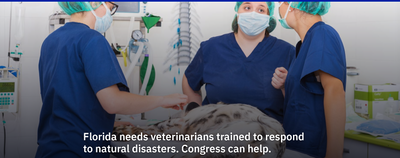
Florida needs veterinarians trained to respond to natural disasters. Congress can help.
When Hurricane Helene struck, we were on the frontlines in Florida’s Big Bend region, racing against time to support the Humane Society as they rescued animals displaced by the most powerful storm ever to hit this part of the state. Two weeks later, we were back in action, facing the devastating flooding from Hurricane Milton. These back-to-back disasters showcased the urgency and critical need for emergency-response veterinarians who can act fast to save lives. We lead one of the nation’s only three emergency veterinary response teams — the University of Florida Veterinary Emergency Treatment Service (UF VETS). Founded after the 2004 hurricane season and operating under the UF College of Veterinary Medicine, the UF VETS program hosts two distinct, yet complementary, branches: a medical response unit for disaster-affected animals and an animal technical rescue branch, which manages complex operations like overturned livestock trailers. Larry Garcia specializes in veterinary disaster preparedness and response, animal technical rescue/training and shelter medicine operations. View his profile here Our team is on call whenever disaster strikes, working alongside local and state veterinary organizations, animal rescues and law enforcement to save animals in crisis. But here’s the problem: Without a nationwide system for coordinating these efforts, it’s often chaotic, and animals suffer because of it. Now Congress has a golden opportunity to change that. As they return to Washington, they have the chance to make a game-changing impact by including funding in the final FY 2025 Homeland Security Appropriations bill to create a nationwide network of veterinary emergency teams. This funding could revolutionize how the U.S. handles animal care during national disasters — and it needs to happen, fast. Read more ... Looking to know more about this important topic or connect with Lawrence Garcia - simply click on his icon now to arrange an interview today.


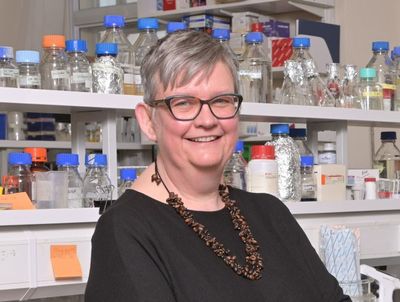
Professor Roslyn Bill selected for the inaugural cohort of the Big if True Science accelerator
Professor Roslyn Bill is the director of Aston Institute for Membrane Excellence (AIME) The Big if True Science (BiTS) accelerator aims to bridge the gap between cutting-edge lab science and multi-million-dollar collaborative projects Professor Bill’s research is focused on the brain’s plumbing system and developing drugs against traumatic brain injury and cognitive decline. Professor Roslyn Bill, director of Aston Institute for Membrane Excellence (AIME), has been selected as an inaugural fellow of the new Big if True Science (BiTS) accelerator. BiTS was set up by a non-profit organisation, Renaissance Philanthropy, to support its scientist and innovator fellows in developing groundbreaking research initiatives and equip them with the tools, skills, and networks needed to design high-impact, collaborative research programmes and technical projects with multi-million-dollar budgets beyond their own laboratories. The first cohort of 12 fellows was selected after a highly competitive process. The cohort represents diverse fields including neuroscience, environmental engineering, biomedical research, and materials science. Over a 15-week period, they will transform their breakthrough concepts into fundable eight-figure R&D programmes, before pitching their ideas to funders on 10 December 2025. Professor Bill’s research focuses on the glymphatic system, the brain’s ‘plumbing’ system, which facilitates the movement of fluid and clears waste products. Water moves in and out of brain cells through tiny protein channels in the cell membrane called aquaporins. Uncontrolled water entry, for example, after a head injury, can cause catastrophic swelling and severe brain injuries of the type suffered by racing driver Michael Schumacher after a skiing accident. When the flow is impeded, for example, as we age, waste products can build up, leading to diseases like Alzheimer’s. In 2020, Professor Bill was lead author on a paper published in the prestigious journal Cell on how the flow of water through aquaporin-4 is controlled. She is now researching drugs to affect this process, which could have a huge impact on the treatment of traumatic brain injury and cognitive decline. Professor Bill said: “Every year, tens of millions of people are affected by injuries to their brains. Every three seconds, someone in the world develops dementia. There are no medicines that can fix these terrible conditions. Being an inaugural member of BiTS is a great honour, and I am delighted to be in the company of truly inspiring people. This exciting programme offers hope to patients for whom no medicines are available!”



Back-to-school stress? Here’s how it can be a good thing.
As America heads back to school, the renewed whirlwind of expectations for students and parents — from demanding coursework to social dynamics and balancing pick-up-and-drop-off schedules — can trigger anxiety for students and parents alike. Jeremy Jamieson, associate professor of psychology who leads the University of Rochester’s Social Stress Lab, studies how social stressors affect decisions, emotion, and achievement and how embracing, rather than battling, those reactions can boost resilience. “We’re not passive receivers of stress,” Jamieson told National Public Radio last year. “We’re active agents in actually making our own stress response.” Jamieson’s research reveals that stress can be helpful when it is reframed as a mobilizer of energy and focus. In a study of students preparing for the GRE, for instance, those who were primed to view physical stress symptoms (like a racing heart) as beneficial outperformed their peers who didn’t reframe those symptoms. As students confront the fall’s demands, a simple shift in mindset can make all the difference. Jamieson’s research has so many practical applications that he is regularly sought out by media outlets on a wide variety of topics. In the last year, he has talked to Golf Digest about battling the “yips,” to The Atlantic about the rise of “anxiety-inducing” television, and to New York Magazine about the stress some people feel when talking on the phone. He is available to discuss his research and to help explain and navigate seasonal pressures. Connect with him by clicking on his profile.

Could China Beat America in the Race to Get Boots Back on the Moon?
Call it a matter of pride, national security or a desire for astronomical dominance; there's a sense of urgency within the U.S. government to return to the moon, sparked by China's team of taikonauts, who could land there before American astronauts get back to the lunar surface. The latest space race is a topic that is making national news. Florida Tech's experts are lending their opinions and insights about the likelihood of a lunar return, and what it might mean. NASA, with the urging of many politicians, has been racing to get astronauts back to the moon — before the Chinese land taikonauts on the lunar surface. But what’s the rush to return to a place the United States has already been and left 53 years ago? Especially when Mars looms as an enticing option for interplanetary travel. Space experts say there’s plenty of reasons for the urgency: national pride and national security. But also returning to the moon and building habitats would mean long term dominance in space and ensure access to resources that NASA didn’t know where there when the Apollo missions flew. Now with the Chinese making significant progress in human space exploration, the clock is ticking. “The Chinese in the last 20 years have made amazing strides in all aspects of space. They’re sending robots to the moon on a very regular basis. Now they’re doing some pretty amazing activities even on the far side of the moon, and they have a Chinese space station now in Earth orbit,” said Don Platt, associate professor of space systems at Florida Tech. Can China beat NASA to the moon? “The Chinese have really caught up,” said Platt. “I do believe that the Chinese are definitely advancing their efforts on the moon, and are identifying it as a critical aspect of their strategic future in space." When asked about the prospect of Chinese astronauts making it to the moon before NASA's planned Artemis III mission, Platt said he believes it’s a possibility and he cited the efforts China is making to highlight the importance of the nation's space efforts to its own populace. “They have some amazing videos. They’re really engaging the Chinese public, and really using it to do what what we’ve always done in space, and that is to inspire the next generation and to show the world the technical abilities of the Chinese,” said Platt. May 21 - USA Today The race is on, and it's getting a lot of attention. If you're a journalist following this ongoing story, let us help with your coverage. Dr. Don Platt's work has involved developing, testing and flying different types of avionics, communications and rocket propulsion systems. He also studies astrobiology and biotechnology systems and human deep space exploration tools. Don is available to speak with media anytime. Simply click on the icon below to arrange an interview today.


Professor Roslyn Bill discusses her research into brain cell membranes with Dr Matt Derry Serious brain injuries and dementia are affected by the flow of water through a protein called aquaporin-4 in brain cell membranes Aquaporins are responsible for clearing the build-up of waste products in brain cells in a process Professor Bill likens to a ‘dishwasher for your brain’. Professor Roslyn Bill, co-founder of Aston Institute for Membrane Excellence (AIME), joins Dr Matt Derry to discuss her research into brain cell membranes in the latest Aston Originals podcast. Water moves in and out of brain cells through tiny protein channels in the cell membrane called aquaporins. One in particular, aquaporin-4, is the focus of Professor Bill’s research. In 2020, she was lead author on a paper published in prestigious journal Cell on how the channels open and close and how this can be controlled. Uncontrolled water entry into brain cells can occur after head trauma, causing swelling which leads to severe brain injuries of the type suffered by racing driver Michael Schumacher after a skiing accident. Finding drugs to control this water movement could lead to treatments to prevent brain swelling in the first place. This research into brain swelling and the contribution of aquaporins led Professor Bill to research into Alzheimer’s, a common form of dementia, which is also related to the action of aquaporins. Alzheimer’s is caused by a build-up of waste products in brain cells. In a process Professor Bill likened to a ‘dishwasher for your brain’, aquaporins are responsible for clearing this waste as we sleep. Professor Bill was selected for an Advanced Grant by the European Research Council (ERC) in 2023, which is being funded by UK Research and Innovation (UKRI). The funded project will further investigate the process, and whether it might be possible to develop a drug to boost the ‘brain dishwasher’, which could be taken to slow or even prevent cognitive decline due to ageing. Bringing together this biological research with the polymer research of AIME, chemists like Dr Derry will help in the drug development and could also lead to totally different applications. Professor Bill said in the podcast to Dr Derry: “We can take the knowledge that we have of how these proteins work in cells and try and apply them to interesting applications in biotechnology. And this is where the sort of work that you (Dr Derry) do comes in, where you can develop plastic membranes, polymer membranes, and then take learning from the biology and try and make really, really good ways of purifying water, for example.” For more information about AIME, visit the webpage. The website also includes links to the previous AIME podcast and details about open positions.


What Are Cardiac Arrest and Heart Attack?
Fast Action Saves Lives. When Buffalo Bills safety Damar Hamlin collapsed during an NFL game against the Cincinnati Bengals, it brought urgency to knowing signs of a cardiac arrest and what to do in case of a medical emergency involving the heart. It’s a common misunderstanding that cardiac arrest and heart attack are the same. They are different, but both are very serious heart problems and require fast action to save lives. "I think the very best bit of news for Mr. Hamlin is that the emergency medical technicians got to him very quickly." Heart attack and other conditions, including a rare type of trauma called commotio cordis, may disrupt the heart’s rhythm and lead to cardiac arrest. Commotio cordis can occur from a severe blow to the chest as in a sports injury. What is cardiac arrest? Cardiac arrest happens when the heart malfunctions and stops beating unexpectedly. Cardiac arrest is triggered by an electrical malfunction in the heart that causes an irregular heartbeat known as arrhythmia. The heart’s cardiac conduction system – or “electrical” system – is a specialized network of heart cells that keeps it beating regularly and effectively. With the heart’s pumping action disrupted, it cannot pump blood to the brain, lungs or other organs. Cardiac arrest often happens to people who didn’t know they had a heart problem. Symptoms of cardiac arrest Seconds after a cardiac arrest, a person becomes unresponsive, is not breathing or is only gasping. Death can occur within minutes if the victim does not receive treatment. Causes of cardiac arrest Cardiac arrest can run in families. People who have a family history of sudden cardiac death have a higher risk for sudden cardiac death. Other health problems can increase the chance of a deadly heart rhythm including: Heart disease (coronary artery disease). A heart attack. Heart failure. Hypertrophic cardiomyopathy. This makes the heart thicker and larger than normal. Blow to the chest that disrupts the heart rhythm as in commotio cordis. Speak with your health care provider to learn if you have a health problem that raises your risk of cardiac arrest; treatment of that problem may help lower your risk. Medicine often can control the heart rhythm. Helping someone having a cardiac arrest Cardiac arrest can be reversible in some victims if treated within a few minutes. Health professionals, family or friends and even strangers may be able to help a person right away who has cardiac arrest. First, call 911 and start CPR right away. Click here for CPR basics, including videos. Then, if an Automated External Defibrillator (AED) is available, use it as soon as possible. AEDs are often available in airports, malls, and other public places. Click here for how to use an AED. If two people are available to help, one should begin CPR immediately while the other calls 911 and finds an AED. In the ambulance and hospital, the person will receive emergency care. This care keeps the heart and lungs working to prevent damage to the body due to lack of oxygen. Doctors will try to find the cause of the cardiac arrest to prevent another one. AEDs are portable, life-saving devices designed to treat people experiencing sudden cardiac arrest, a medical condition in which the heart stops beating suddenly and unexpectedly. What is a heart attack? A heart attack occurs when blood flow to the heart is blocked. A heart attack is a circulation problem with the heart. A heart attack occurs when part of the heart muscle does not get enough blood and oxygen. This part of the heart starts to die. Symptoms of a heart attack The most common symptom of a heart attack is chest pain or pressure. Some people describe it as discomfort, squeezing, or heaviness in the chest. Other symptoms may be immediate and may include intense discomfort in the chest or other areas of the upper body, shortness of breath, cold sweats, nausea or vomiting. Some people feel symptoms in other parts of their upper body such as: Pain or discomfort in your back, jaw, throat, upper belly or arm. Sweat, feeling sick to your stomach or vomiting. Trouble breathing. Feeling lightheaded or suddenly weak. A racing or fluttering heartbeat. More often, though, heart attack symptoms start slowly and persist for hours, days or weeks before a heart attack. Unlike with cardiac arrest, the heart usually does not stop beating during a heart attack. The longer the person goes without treatment, the greater the damage. Heart attack symptoms in women can be different than men (shortness of breath, nausea/vomiting, and back or jaw pain). Address heart attack symptoms immediately Even if you’re not sure it’s a heart attack, call 911 if you have symptoms. Every minute matters. Emergency medical services staff can begin treatment when they arrive — up to an hour sooner than if someone gets to the hospital by car. These professionals also are trained to revive someone whose heart has stopped. Patients with chest pain who arrive by ambulance usually receive faster treatment at the hospital, too. Click here for CPR training classes held by the American Heart Association in your area.



Will voters 'hit' or 'hold' on allowing legal gambling in Georgia?
Could we see horse racing and other forms of gambling come to Georgia in the near future? The Georgia state legislature is looking at the possibility of legalizing gambling on horse racing and the decision could land in the hands of the voters. Proponents say there is potential for a billion dollars in economic benefits, from job creation to a boost in revenues. Marsha Loda is an associate professor at Augusta University’s Hull College of Business. She said if approved, it will likely take more than horse racing for a track to survive. Loda cites Kentucky as an example of what tracks are doing there. “A lot of people think of Kentucky as the mecca of horse racing, but they don’t realize it might not exist without historical horse racing machines," said Loda. "HHRs are slot-like machines that let players wager on past horse races by a random number generator.” Many tracks nationwide have also expanded into casino and sports betting. While this isn’t what Georgia is looking to do initially, it’s not far off to think it could be on the horizon, with horse racing being the first step. Loda, who previously served as marketing director at Harrah’s Cherokee Resort in North Carolina, knows if casino gambling is approved in the future, most of those people who visit need to come from out of town. “You need to be able to import your people who are going to bet. That means you’re importing revenue. Otherwise you’re taking what’s already spent in your community and just slicing it up and giving it to different places. You’re not growing the pie at all,” said Loda. She has also seen the benefits of legalized betting, citing the added jobs a casino would offer. One aspect of gambling that has exploded is sports betting. More than two dozen states have legalized sports betting. Loda thinks if sports betting was on a ballot and went in front of the public for a vote, it would stand a better chance of passing. “I wouldn’t be surprised to see Georgia pass sports betting. I think sports betting has been very well accepted. I think they would come much closer to getting more voters to approve it if it were sports betting than if it’s horse racing or casino gambling.” This is an important topic with many angles to cover, and if you are a reporter looking to know more, then let our experts help. Loda is a leading marketing expert helping businesses in the hospitality industry bounce back from crises, including the COVID-19 pandemic, and also has had extensive experience in the gambling industry. She is available to speak with media regarding the idea of gambling coming to Georgia. Simply click on her icon now to arrange an interview today.

