
Experts Matter. Find Yours.
Connect for media, speaking, professional opportunities & more.

Comment: UK Government alert text message test
The UK government recently conducted a nationwide test of their emergency alert system by sending out text messages to all mobile phone users in the country. The test has sparked a range of reactions from the public, including concerns about the effectiveness of the system and the potential for false alarms. What did we learn from Sunday's test? Is it a concern that it apparently didn't work for everybody? As we would expect, not everything went to plan. However, that is the point of preparing and doing this kind of test – to find out what parts of the system works before it is relied upon. The implementation of a new system rarely works perfectly. Sunday’s test was useful to show people what to expect from the alarm system and to identify any aspects that need to be corrected and improved to make the system more effective. It is not so much a concern that the test didn’t work for everyone; it is only of concern if we don’t know how to fix the problem and/or don’t take identified steps to fix it. Is there a risk that public confidence has been undermined here? Is there also a risk of false alarms? The government needs to manage its public awareness campaign – swiftly and fully. Public confidence need not be undermined as identifying the faults in the system was exactly what this kind of test was meant to do. However, public confidence will be undermined if the government doesn’t explain that to the public and isn’t completely transparent about what happened and what has been done to improve. False alarms are always a possibility, but the benefits outweigh the risks. Having the right information at the right time can help a lot of people in complicated circumstances. Additionally, the government needs to ensure that the message is worded appropriately. The government should continue to keep messages short and simple so that there is no unnecessary worries or panic for the public. What are the key challenges? There are also issues related to people with anxiety or similar who may be overwhelmed by the noise the alarm makes and/or feel extra anxious from the threat of an emergency, even if it is simply a test alert. There are also those who suffer from domestic violence and may have secret phones so more communications on how to protect these vulnerable groups are required. Anyone without a mobile phone device may have been side-lined – senior citizens, vulnerable people, children – anyone without a command of English and/or isn’t really technologically minded enough to have a mobile device is at risk of not receiving these messages. Why do we need a system like this in place anyway? Preparedness is fundamental to mitigate the impact of any negative situation. The UK government is trying to leverage technology available to the public to get them crucial information when facing a crisis. The value of the system is to make people aware of a major danger and provide information about the best course of action which can be key for their protection. Alert systems are a great way to warn people of an impending situation, but equally important is that there are measures in place to handle an emergency such as evacuation procedures and rehearsals. It is the absence of a plan, contingency or knowing what to do in an emergency that transforms an emergency or disaster into a crisis. As such, we need a system like this because it aids in preparedness measures. The Aston Crisis Management Centre is focused on preparedness – whether it is for a business crisis or a natural hazard as we know that preparing for a crisis or disaster will help reduce the impact and may even help prevent some aspects of the disaster from happening. Not only is there a human cost in an emergency but also economic cost. It is important that preparing for crises reduces the impact of both. It is also important to be aware that in times of crisis and emergency it is important to have unified response and this system is the start of that important process. This article was written by David Cantliff, David Carrington, Oscar Rodriguez-Espindola & Lauren Traczykowski of Aston Crisis Management Centre


Researchers find an association between autistic traits and young children with ear, nose and throat problems The study used data from the Children of the 90s study which found 177 children were identified with a probable diagnosis of autism – 139 boys and 38 girls The study looked at data from over 10,000 children from birth to four years old. Ear, nose and throat (ENT) problems, relating to the ears, hearing and the upper respiratory system, are more common in young children with a subsequent diagnosis of autism, or who have demonstrated high levels of autism traits - finds new research published in BMJ Open. The study, which was led by researchers from the University of Bristol and Aston University, looked at data from over 10,000 young children from birth to four years old, who were part of the Bristol’s Children of the 90s study. The team investigated whether early ear and upper respiratory signs are associated with the development of autistic traits. Previous studies have found increased prevalence of ENT and related hearing conditions in children with autism compared with typically developing children, but much of this research has been carried out using health records, which can be biased. In the new study, researchers used data from Children of the 90s study, a general population cohort which recruited over 14,000 pregnant women from the Bristol area between 1991 and 1992 and has followed the lives of their offspring ever since. Within Children of the 90s, 177 children were identified with a probable diagnosis of autism – 139 boys and 38 girls. Those with autism traits were defined as the 10% of the sample with the highest trait scores. The team analysed responses to three questionnaires in which mothers recorded the frequency of nine different signs and symptoms relating to the ears, hearing problems and upper respiratory system when their child was aged 18 to 42 months. These included signs such as mouth breathing, snoring, pulling/poking of the ears, ears going red, worse hearing during a cold, ear discharge and rarely listening. The results found that the frequency of these symptoms was associated with high scores on each of the autism traits: social communication, coherent speech, sociability and repetitive behaviours, plus those with a clinical diagnosis of autism. Pus or sticky mucus discharge from the ears was especially associated with autism (an increased risk of 3.29) and for impaired hearing during a cold (an increased risk of 2.18). Dr Amanda Hall, senior lecturer in audiology, at Aston University, said: “Thanks to the data available from Children of the 90s, we were able to analyse results from a large number of children. We found that common ear and upper respiratory signs and symptoms appear to be more prevalent in those with a subsequent diagnosis of autism or demonstrated high levels of autism traits. “However it is also important to note that these ENT symptoms are very common in childhood and most children who experience these signs and symptoms do not go on to be diagnosed with autism. “For example, of the group of around 1,700 children who snored at age 30 months, most of those 1,660 children did not get a later diagnosis of autism. Our results suggest the need for increased awareness of possible ENT conditions.”


As technology continues to advance, so do the methods that hackers use to steal personal information. One such method that even the FBI has taken notice of is juice jacking, a technique where hackers use public charging stations to install malware onto your device or steal your personal information. The specific danger is very real, experts say. Steve Weldon, director of the Cyber Institute at Augusta University’s School of Computer and Cyber Sciences, said people need to understand there is risk when plugging a phone into a USB port at a public charging station. “USB uses pins for data and power. When we plug devices in to charge, the data pins are also connected,” said Weldon. “No big deal if we’re in an environment we trust. However, do we trust the public charging stations to have access to our data pins and being able to make data transfers? Probably not and that’s the gist of the recent warning.” There are ways to avoid the risk. “The best advice is to bring your own cables and adaptors. Then we can plug directly into power outlets,” Weldon said. If you must use a public charging station, he suggests using a data blocking USB cable. These cables only allow power to flow through, preventing any data transfer between the charging station and your device. Also, be aware if you are using your phone while charging it. “When using public charging stations we should, at a minimum, watch for strange behaviors, weird popups, and being asked questions about trusting the device or drive we’re connected to. Those are danger signs, and we’d want to disconnect quickly,” added Weldon. Another option to protect your phone from juice jacking is to use a wireless charger. These chargers do not require a physical connection between your device and the charging station. While wireless charging is typically slower than using a cable, it is a safe alternative when you’re on the go and need to charge your device. Keeping your personal information safe is crucial in today’s digital age. Protecting your phone from juice jacking is just one way to prevent hackers from accessing your sensitive data. Looking to know more? Connect with our expert today. Steven Weldon is the Director of Cyber Institute at the School of Computer and Cyber Sciences at Augusta University and is an expert in the areas of cellular and mobile technology, ethics in computer science, scripting and scripting and automation. Steve is available to speak with media - simply click on his icon now to arrange an interview today.


Expert Q&A: The Summer of Sargassum?
A 5,000-mile-wide mass of sargassum seaweed is drifting toward Florida's beaches. It could arrive, with its brown, slick leaves and rotten eggs smell, around July as the state's Atlantic beaches are filled with locals and tourists. Florida Tech oceanographer Kevin Johnson offered his insights into this looming arrival. Is it dangerous? Will it spoil the beaches? Here are his answers to some key questions. QUESTION: Is this situation really a big deal? Kevin Johnson: I wouldn’t say it is being overhyped, but it is yet to be determined whether this year will have greater amounts of sargassum in the Atlantic offshore, (visible by satellite) or coming ashore and covering the beaches, a connected but separate phenomenon requiring the cooperation of onshore winds. 2018 was a record-setting year, and this year could exceed what was seen in both locations in 2018. If the winds contribute strongly to sargassum coming ashore, it could make it smelly and hard to find an area of clean sand to set up on the beaches. QUESTION: Is there a health risk if we head to a beach where sargassum is present? Kevin Johnson: Sargassum doesn’t produce aerosolized organic toxins, but as it rots on the beach, it will smell and give off hydrogen sulfide gas, or H2S. That's the stuff that smells like rotten eggs. When concentrated in enclosed areas, this gas is toxic and can be harmful. However, in the open air, diluted on an exposed beach, it is more of a smelly nuisance than a genuine health hazard for most people. But there could be a minor irritation, like itching, after coming into contact with sargassum. There are symbiotic species living in and amongst this seaweed when it is healthy and floating at sea. (These intricate relationships are part of what makes sargassum ecologically significant as a food source, nursery and habitat for many populations.) One of the symbionts is a tiny branching colonial hydroid, related to corals. it grows on sargassum fronds. Hydroid colonies have a sting like corals and jellyfish, but it is generally not severe. Some people may experience itching around their feet or ankles (or any body part that contacts the sargassum hydroids) if they brush up against sargassum in waves or swash, or step on freshly deposited sargassum on the sand. Many people will not be bothered or only mildly troubled by this, but some people may be more sensitive to the hydroids. QUESTION: I was planning to visit the beach. Should I reconsider now? Kevin Johnson: If the winds collude with the large bloom already underway to deliver huge mats to the beach, it could be hard for beachgoers to find a place to sit on the sand, and the smells could make the beach untenable. I emphasize “could” with the hydrogen sulfide smell because it depends on how the sargassum is deposited and how wet it is as it breaks down. In some cases, beached Sargassum can be very dry and in such cases it may not smell too bad. People who are more sensitive to the hydrogen sulfide or to the hydroids on the fresh sargassum may find the experience even more unpleasant. Westerly winds would be helpful from the perspective of keeping sargassum away from beaches, but unfortunately easterlies are pretty common this time of year. If you're a reporter looking to know more about this topic, let us help with your coverage. Dr. Johnson can be available for phone, Zoom or, depending on scheduling, in-person interviews.


Infant seating devices may reduce language exposure
When a parent needs to cook dinner or take a shower, often they will place their baby in a bouncy seat, swing, exersaucer, or similar seating device intended to protect the baby and grant a degree of independence to both the parent and infant. For many parents, these devices represent a helpful extra set of hands; for babies, the freedom to safely explore their immediate surroundings. As useful as these devices are to both parents and infants, they may present trade-offs regarding their effect on infants’ exposure to adult language, which is critical for language development. That’s according to a new study by researchers at the Stress and Early Adversity Lab at Vanderbilt Peabody College of education and human development. Within infants’ natural environments and daily routines, the study explored interactions between their exposure to adult language and their placement in seating devices, which support posture and promote the infant’s ability to play with objects or observe their surroundings without direct support from a caregiver. The researchers found that infants were exposed to fewer words when spending time in seating devices compared to when spending time in other placements. They also found that infants who spent the most time in seating devices heard nearly 40 percent fewer daily words compared to infants who spent the least amount of time in seating devices. Infants with more, compared to less, seating device use also had less consistent exposure to adult language throughout the day. Sixty mothers and their 4- to 6-month-old infants participated in this study. For three days, a Language Environment Analysis audio recording device (i.e. “talk pedometer”) captured language exposure. The mothers inserted the audio recorder into the pocket of a vest their babies wore. Automated software estimated from the recordings the total number of adult words spoken to or near the infant over the course of a day. To record real-time behaviors of infant placement, the mothers responded to 12 brief surveys per day about their infant’s current location and use of seating devices. Caregiver reports of their child’s placement in seating devices accounted for 10 percent of an infant’s daily exposure to adult words, which the researchers say is a striking finding due to the complex nature of language exposure and how many other factors may influence children’s exposure to speech (e.g. caregiver’s talkativeness, presence of other siblings). Kathryn Humphreys, assistant professor of psychology and human development and expert in infant and early childhood mental health, is the senior author of the study. She notes that infant seating devices can provide a convenient way to keep infants safely contained while caregivers attend to other tasks. However, given the potential for frequent and prolonged use of these devices, she says that parents may want to be intentional about interactive opportunities while the infant explores their surroundings as well as consider wearing or otherwise carrying their infant on their body as much as possible to create more opportunities for engagement through speech. “While we need more research to be certain that seating devices reduce the richness of infants’ language environments, these findings are influencing my own decisions about intentional placement with my 6-month-old." - Kathryn Humphreys Kathryn Humphreys She suggests that safe and convenient places are a boon for both infants and their caregivers, but that there is a risk for reduced levels of interactions when infants are stationary and not moving to where their caregivers are active.


Is America's banking system in trouble once again?
Nerves are rattled and many are worried as the markets opened Monday to news of another US bank collapse, making that two large banks shuttered in less than a week. It's news that's rocking the financial world on a massive scale. Federal regulators announced on Sunday that another bank had been closed and that the government would ensure that all depositors of Silicon Valley Bank — which failed Friday — would be paid back in full as Washington rushed to keep fallout from the collapse of the large institution from sweeping through the financial system. The Federal Reserve, Treasury and Federal Deposit Insurance Corporation announced in a joint statement that “depositors will have access to all of their money starting Monday, March 13.” In an attempt to assuage concerns about who would bear the costs, the agencies said that “no losses associated with the resolution of Silicon Valley Bank will be borne by the taxpayer.” March 12 - New York Times With an economy already on edge as Americans feel the grip of inflation and worries of recession - this is frightening news and media are scrambling for answers. What is causing the closures of these big banks and how many more will follow? How much money is lost and how much has been protected? Is this 2008 all over again? Is the federal government doing enough to stop the damage from spreading? What measures need to be put in place by government to assure citizens that their savings, retirement plans and mortgages aren't at risk? And will anyone be held accountable for the billions already lost? There's a lot to explain - and that's where our experts can help. Rebel Cole, Ph.D., a Lynn Eminent Scholar Chaired Professor of Finance, has expertise in global financial institutions, commercial banking and small business finance. He spent 10 years working in the Federal Reserve System and has experience at the the International Monetary Fund and the World Bank. Cole has been interviewed by numerous national media outlets, such as The Wall Street Journal, The New York Times, The Washington Post and Fox Business. Rebel is available to speak to media regarding the current state of banking and what Americans need to watch for or worry about. Simply click on his icon now to arrange an interview today.


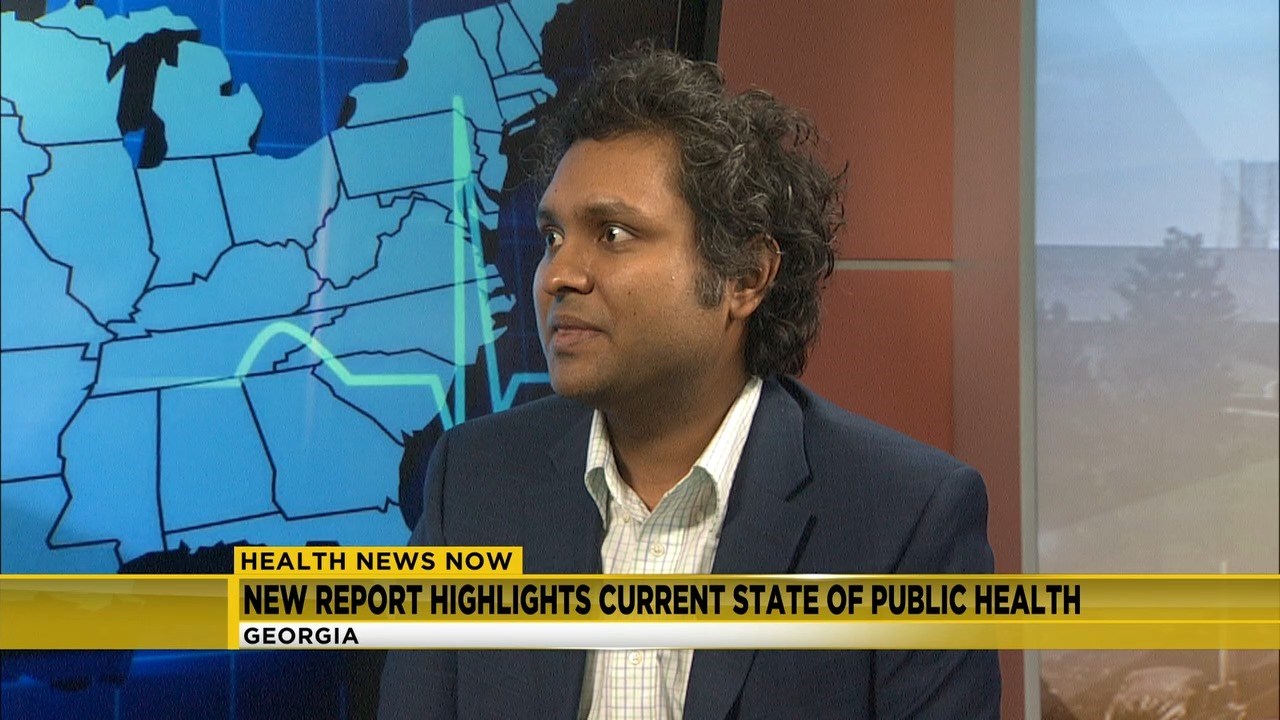
Augusta University’s second annual Healthy Georgia Report has been released, offering a snapshot of health in the Peach State as compared to not only neighboring states, but also the entire country. While Georgia’s population is doing well in some key health factors, researchers also found areas that could benefit from more awareness and public policy action. Biplab Datta, PhD, assistant professor in the Institute of Public and Preventive Health and the Medical College of Georgia’s Department of Population Health Sciences, collaborated with other IPPH faculty and staff to update the report and add new categories this year. The goal of the report is to connect with lawmakers, community leaders and researchers, stimulate conversations about public health needs and promote action, such as greater community engagement, research for informing effective policies and appraisal of required funds. “We need to make lawmakers aware of the public health situation in the state of Georgia,” said Datta. “We hope this report will help identify areas that need policy attention. It can also play an important role in bridging the gap between researchers and policymakers.” Using 2021 data from the Behavioral Risk Factor Surveillance system, the National Survey of Children’s Health, the American Community Survey and the Center for Disease Control and Prevention’s COVID Data Tracker website, the report was compiled on numerous health topics. Some categories studied include high cholesterol, hypertension, obesity, arthritis, asthma, cancer, cardiovascular diseases, alcohol consumption, diabetes and more. It also broke down each category by age, sex, race, income level and other socioeconomic indicators to get a full representation of the data. New to the study this year is an in-depth look at health insurance coverage, COVID-19 vaccinations, breastfeeding, child maltreatment, and unmet healthcare need of children. Georgia ranks 49th in the nation when it comes to health insurance coverage. That was a surprise to Datta. “I didn’t expect the numbers to be that bad, but I think it also indicates the scope of work that we need to undertake to improve insurance coverage in Georgia,” he said. Another surprise was the low rate of flu vaccination in Georgia. “We know there is a difference between whites and Blacks in the U.S. But when we look at and compare Black people in Georgia with Blacks in the rest of the southeastern states, we see the flu vaccination rate was significantly lower among Blacks in Georgia. This is an issue that warrants further research to understand the underlying causes of such disparity,” said Datta. As it was a year ago, hypertension remains a concern. There are several issues involved when talking about hypertension but there are also straightforward ways to improve the condition Datta said. “I think one of the core components of hypertension control is just changing some behavioral stuff. If we just reduced the sodium content in our daily diet, if we do regular physical exercise for a certain amount of time that will significantly improve our hypertension management. Community-level initiatives to make people aware of these things can make a real difference,” said Datta. Residents in Georgia are doing better in several areas such as obesity, cancer rates, asthma prevalence and depressive disorders. Datta said it’s important to recognize these improvements so we can learn from them. “We need to figure out where we are doing well and use that experience in areas where we are not doing so well. It will help us move toward the right direction.” He added it’s important to always be looking for ways to evolve the study, and that includes adding new categories when enough data is available. “We didn’t cover sexually transmitted diseases in this year’s report, which we would like to add when data will become available. We’d also like to add teenage pregnancy, maternal health issues, gun violence and opioid use,” he said. Looking to learn about health in the Peach State? Then let us help. Biplab Datta is available to speak with media regarding this important topic. Simply click on his icon now to arrange an interview today.

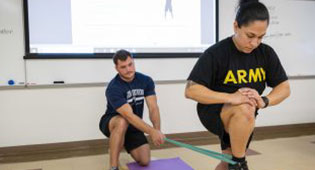
What began in 2016 as a partnership between Georgia Southern University and the Third Infantry Division at Fort Stewart has become a nationally recognized educational and research program with $5.68 million in federal funding to improve soldier health and performance to ensure force readiness. Now called the Soldier Performance and Readiness (SPAR) program, this Georgia Southern project aligns with the U.S. Army’s Holistic Health and Fitness (H2F) initiative and represents a multifaceted partnership with the Army to provide onsite training that decreases musculoskeletal injuries; deliver an online certificate program in tactical fitness for college credit; collaborate with the Army’s Research Institute for Environmental Medicine (USARIEM); and develop programs to enhance and assess cognitive performance in tactical situations. The initial partnership program to prevent musculoskeletal injuries was delivered at first to small cohorts to implement new practices in the physical training of their squads and platoons in a train-the-trainer model. Results were so encouraging, the program expanded at Fort Stewart and to training brigades at Fort Benning last year with the assistance of $1.5 million in Department of Defense funding. Studies show significant preparedness and financial benefits from reducing musculoskeletal injuries to soldiers during drilling and training exercises. In April 2020, officials determined that 58,000 soldiers (the equivalent of 13 Brigade Combat Teams) had injuries that classified them as non-deployable. In 2019, more than half of soldiers experienced a new injury, resulting in 10 million limited-duty days. Musculoskeletal injuries account for nearly 25% of all military injuries and approximately $557 million in acute patient care. Most of these injuries were associated with fitness training-related activities Georgia Southern’s online Tactical Athlete Certificate program was first offered in 2020 and is available exclusively to soldiers on active duty, in the National Guard or reserve. Through a series of three courses, the program teaches foundational exercise and biomechanical concepts, strength and conditioning principles, and rehabilitation. The coursework parallels the Army’s Master Fitness Trainer curriculum, with additional rehabilitation principles, and teaches soldiers how to develop evidence-based and well-rounded physical training programs while minimizing risk of musculoskeletal injury. Certificate completion provides soldiers with nine college credits with Georgia Southern, potential promotion opportunities in the Army, and preparation for the National Strength and Conditioning Association’s TSAC-F exam. “By sharing knowledge, expertise and experience between our faculty and doctoral students with soldiers, drill instructors, and brigade combat fitness teams to create aligned programs that improve tactical performance and force readiness, the SPAR program has become a national model of public-impact research,” said Christopher Curtis, Ph.D., Georgia Southern’s vice provost for research. “We are excited about the future of this partnership. We relish the significant support and encouragement we receive from the Army commands at Fort Stewart, Fort Benning, USARIEM, and the Training and Doctrine command (TRADOC), and we are grateful to Congressman Carter and his fellow members of the Georgia Congressional delegation who have advocated for the value of the partnership on our behalf.” The progress and continued success of this program would not have been possible without several years of support from the Georgia Congressional Delegation and especially the leadership and support of Congressman Buddy Carter, who represents Fort Stewart and the Armstrong Campus of Georgia Southern in Savannah. “Providing for our nation’s defense is the number one responsibility of the federal government. Innovation and research, which is what these dollars will fund at Georgia Southern, will improve working conditions for our brave servicemen and women by providing them with top-of-the-line training and resources,” said Rep. Buddy Carter (R-GA). “I am a proud supporter of Georgia’s military community and am happy that the federal government is investing in these necessary programs.” SPAR programming allocated in the FY23 federal budget will enable Georgia Southern to: Develop protocols and expand delivery of the onsite musculoskeletal injury prevention training and the Tactical Athlete Certificate to commands at Fort Gordon in Augusta and to the Georgia National Guard. Develop and deploy similar online certificate programs for soldiers in Cognitive Performance and Nutrition to further support the Army’s H2F program. Host a national conference on “Charting Future Readiness Needs” in partnership with the U.S. Army Training and Doctrine Command and U.S. Army Forces Command that will bring together other research universities who also work in partnership with the Army. Work with the Army commands to develop specific academic degree programs to meet the specific H2F professional workforce needs at the brigade level. Army officials estimate approximately 3,000 personnel will need graduate degrees or advanced certifications in the next six years. Develop a Tactical Performance Research Lab in Savannah to support the fundamental research and innovation activities of Georgia Southern’s Tactical Performance Group that supports the Army’s H2F program as well as translational research to apply the knowledge and practices broadly to law enforcement and other first responders. Looking to know more - then let us help. Christopher Curtis is available to speak to media - for more information simply click on his icon here or reach out to Georgia Southern Director of Communications Jennifer Wise at jwise@georgiasouthern.edu to arrange an interview today.


Aston University students take home two prizes from annual European Union simulation event
EuroSim is an annual international intercollegiate simulation of the European Union More than 150 students, from universities in North America and Europe, participate every year The Aston EuroSim Team was awarded best debater in two categories. Aston University’s EuroSim team has returned from this year’s event with two awards. The Aston EuroSim Team was awarded best debater in the European Parliament Committee on Employment and Social Affairs (EMPL) and best in special roles (media/journalist). EuroSim is an annual international intercollegiate simulation of the European Union (EU). The purpose of it is to provide a framework for a simulation of the EU decision-making on major current issues. More than 150 students, from 16 universities in North America and Europe, participate in the simulation. All students are assigned roles, including members of the European Parliament (MEPs), members of the European Commission, heads of government and national ministers. The purpose of this module is to educate students about the inner workings of the European Union in order to enhance the learning experience for students. This year it was hosted by the University of South Wales in Newport, the first time the event has been held in the UK. Dr Patrycja Rozbicka, a senior lecturer in politics and international relations who is the lead for Aston EuroSim and was European associate director for EuroSim experience (2019-2023), said: “Here at Aston University, the EuroSim module is one of the most innovative modules of the Aston Politics and International Relations Department’s undergraduate and MA programmes. Amin Hassan, a final year international relations and English language student at Aston University, who took part in EuroSim, said: “I would like to extend my gratitude to my team from Aston University, and special mentions to my lecturer Dr Patrycja Rozbicka and student director Chris Burden for organising and inviting us to this memorable trip. “Representing Max Orville (my alter ego), MEP and Renew Europe Group, I worked together with my party and committee members with shared interests and values to ensure that no one is left behind by the proposed Social Climate Fund, which has recently been approved in real life. “After three days packed with negotiations and meetings, we are pleased that the Social Climate Fund has been approved and we strongly believe that it will support vulnerable people, households, micro-enterprises and transport users at risk of facing higher costs as the bloc introduces new climate measures.” Chris Burden, European students director at EuroSim and PhD researcher at Aston University, said: “I had the greatest honour attending the EuroSim2023 meeting at the ICC Wales as the European student director and part of Team Aston. “The work that goes into this conference is unbelievable, and the students had a fantastic time debating and simulating questions surrounding social and climate action within Europe. “This Transatlantic conference is the highlight of any year. “Thank you to our fantastic team from Aston University who brought home the two awards for their efforts.” The next EuroSim will be held next year in Brockport, northern New York State, USA. If you want to read more about the Aston EuroSim, click here.

ChristianaCare among the top 1% of more than 4,500 hospitals nationwide For the third consecutive year, ChristianaCare has earned Healthgrades America’s 50 Best Hospitals Award™ and is among the top 1% of more than 4,500 hospitals assessed nationwide for consistent, year-over-year superior clinical performance. ChristianaCare’s Christiana Hospital and Wilmington Hospital are the only hospitals in Delaware to receive the America’s 50 Best Hospitals recognition. “At ChristianaCare, we are committed to being exceptional today and even better tomorrow. This recognition as one of America’s 50 Best Hospitals is a testament to the incredible work that our caregivers do every day to ensure safe, high-quality care and an outstanding experience for our patients,” said Janice E. Nevin, M.D., MPH, president and CEO. “I am deeply grateful for our extraordinary caregivers and for the trust we’ve earned from the communities we are privileged to serve.” ChristianaCare also received the following distinctions from Healthgrades: America’s 100 Best Hospitals for Cardiac Care Award™ for 2 years in a row (2022-2023). America’s 100 Best Hospitals for Coronary Intervention Award™ in 2023. America’s 100 Best Hospitals for Gastrointestinal Surgery Award™ for 12 years in a row (2012-2023). America’s 100 Best Hospitals for Spine Surgery Award™ for 10 years in a row (2014-2023). America’s 100 Best Hospitals for Joint Replacement Award™ for 8 years in a row (2016-2023). America’s 50 Best Hospitals for Surgical Care for 2 years in a row (2022-2023). “Achieving the prestigious Healthgrades recognition year after year after year only occurs when you have a workforce whose standard is care that is safe and of the highest quality,” said Kert Anzilotti, M.D., MBA, chief medical officer of ChristianaCare. “This recognition belongs to all the members of our clinical team, who hold themselves to the highest professional standards.” Healthgrades evaluated patient mortality and complication rates for 31 of the most common conditions and procedures at nearly 4,500 hospitals across the country to identify the top-performing hospitals. This year’s analysis revealed significant variation between America’s Best 50 Hospitals and hospitals that did not receive the distinction. In fact, if all hospitals performed similarly to America’s 50 Best, more than 150,000 lives could potentially have been saved. Patients treated for heart failure at ChristianaCare and other 2023 America’s 50 Best Hospitals have, on average, a 22.8% lower risk of dying than if they were treated at a hospital that did not receive the award.* “We’re proud to recognize ChristianaCare as one of America’s 50 Best Hospitals for 2023,” said Brad Bowman, M.D., chief medical officer and head of Data at Healthgrades. “As one of America’s 50 Best Hospitals, ChristianaCare consistently delivers better-than-expected outcomes for the patients in their community and is setting a high national standard for clinical excellence.” Visit www.Healthgrades.com/quality/americas-best-hospitals for an in-depth look at ChristianaCare’s performance and profile to explore its highest quality care. Consumers also can visit Healthgrades.com for more information on how Healthgrades measures hospital quality, and access the complete methodology here. A patient-friendly overview of the complete methodology is available here. *Statistics are based on Healthgrades analysis of MedPAR data for years 2019 through 2021 and represent three-year estimates for Medicare patients only.

