
Experts Matter. Find Yours.
Connect for media, speaking, professional opportunities & more.

Wastewater Hazards in Southwest Florida Spark Environmental Concerns Across the State and Beyond
Over the last week hundreds of millions of gallons of wastewater have spewed from a former fertilizer plant in Piney Point, Florida, which was abandoned in 2001 and taken over in 2006 by the Florida Department of Environmental Protection. The location is adjacent to Tampa Bay, a 400-square-mile body of water that separates Tampa, Clearwater and St. Petersburg and is full of fish, crabs, seagrass, dolphins, manatees and seabirds of every kind. The state plans to close Piney Point, scientists are trying to forecast what comes next and environmentalists fear algal blooms and fish kills (also known as fish die-offs). “There are hundreds if not thousands of these waste storage ponds in the United States and each one is a ticking time bomb,” says Villanova University’s Metin Duran, PhD, an expert on the biological processes of environmental engineering, including public health microbiology and biological processes for waste management. “The last major disaster was in December 2008, when a 40-acre pond used by Tennessee Valley Authority for the coal-burning Kingston Fossil Plant collapsed. The aftermath included damage to the area’s ecosystem and lawsuits.” Regulations regarding waste storage ponds are at the state level, and they aren’t very strict, says Dr. Duran. “Though there are strict design and groundwater monitoring requirements to ensure waste does not cause groundwater pollution, these waste impoundments are prone to have issues under extreme weather events, such as heavy rains. With the increased frequency of such events recently, there is a risk that more of such may fail.” Dr. Duran adds that it can be difficult to predict short- and long-term effects of the Florida case, but the reported low-level radioactive contamination could cause major damage to aquatic life and properties—and that phosphorous and nitrogen would cause eutrophication in Tampa Bay as well.



The days of wiping down groceries may be coming to an end, but will Americans' reliance on hand sanitizer follow suit? This week, the Centers for Disease Control and Prevention (CDC) released a report confirming that the risk of catching the coronavirus from surfaces is low. Kevin Minbiole, PhD, chair of the Department of Chemistry at Villanova University, weighs in on hand sanitizer use—and whether too much sanitizing is a bad thing. "I think that a lot of the concern on the overuse of hand sanitizer a decade ago or so was the overuse of triclosan, a strong antimicrobial agent that would persist in wastewater," said Dr. Minbiole, referring to a theory that arose following the H1N1 pandemic in 2009. At that time, scientists expressed worry that bacteria were becoming resistant to hand sanitizer. "It seemed like overkill to go beyond soap and water or simply ethanol (alcohol)—or to add triclosan into hand soap," Dr. Minbiole continued. While Dr. Minbiole does not dismiss this theory, he notes, "I believe there was merit to the concerns of overapplying antibiotics and antiseptics when they were not needed." Looking to the future, Dr. Minbiole does not see hand sanitizer playing as big a role. "I don't foresee a backlash so much here, as folks recognize that this particular virus is more of an airborne concern," he says.

Is This Bitcoin's Time to Shine?
Bitcoin was invented in 2008 and launched in 2009, but after years of skepticism, it's finally becoming a part of mainstream conversation. The cryptocurrency's value has continued to rise since 2017, but with the start of 2021, its price has surged and many more companies are looking for ways to get involved. Tesla and Square have invested. (You can even buy a Tesla with bitcoins.) Goldman Sachs and JPMorgan are exploring ways to meet customer demand for cryptocurrency investment. A National Football League player converted half of his salary into bitcoins. And Major League Baseball's Oakland Athletics are offering a suite for the 2021 season at the price of one bitcoin. So, if it's been around for so long, why are we only seeing this mainstream push now? "I think the Bitcoin ecosystem is developing to the point where people can start to think about using it as a currency," said John Sedunov, PhD, an associate professor of finance who studies Bitcoin. "However, the price still remains volatile, and it isn't clear that the currency can maintain its current $50,00-to-60,000 value." While there are companies adopting and investing now, this will still be a gradual process, Dr. Sedunov says. "As businesses become better able to accept the currency, and perhaps more importantly better able to withstand and manage the volatility of Bitcoin, then the currency will become more widespread in its use. The process would be expedited if the entire supply chain accepted Bitcoin, rather than just the retailer and the end of the chain. This would smooth the process and allow people to utilize the currency without as much concern for converting it." Additionally, Dr. Sedunov notes that there needs to be a continued evolution of the ability of firms to accept and manage the currency, in addition to a reduction in the volatility of the currency. Smaller businesses may be at much more of a risk than large corporations and banks if there is price instability. But the value of Bitcoin won't be this high forever. As the country and economy continue to deal with the impact of the pandemic, there are growing concerns that inflation could be next, pushing consumers to other options, like cryptocurrency. "When the pandemic ends and there is, perhaps, more economic stability, Bitcoin's value will wane a bit, but I don't think it will fade to nothing," Sedunov notes. "The big question mark, to me, is the U.S. Dollar and inflation. Inflation expectations are rising, and this only pushes people more toward alternatives. If this trend continues, then perhaps economic stability will be a bit lower, and more people will flock toward Bitcoin."


Survival analysis: Forecasting lifespans of patients and products
How long will you live? Should you spring for that AppleCare+ warranty for your iPhone? When will your buddy pay you back for that lunch? For centuries, soothsayers have striven to understand the lifespan of things – be they patient longevity, product lifecycles, or even time to loan default. Nowadays, scientists have turned away from reading tea leaves and toward survival analysis – a complex data science method for predicting not only whether an event will happen (the death of a patient, the failure of a product or machine, default on a payment, and so on) but when this event is likely to occur. But it’s problematic. Until now, the tools of survival analysis have only been applicable in certain settings. This is due to the inherent heterogeneity of what is being analyzed: differences in patient lifestyles, demographics, product usage patterns, and so on. New research by Goizueta Business School’s Donald Lee, associate professor of information systems and operations management and of biostatistics and bioinformatics, has yielded a new tool that greatly extends survival analysis to broader use cases. “Historically, scientists have used classic survival analysis tools to predict the lifespan of different things in different fields, from products to patients,” Lee said. “Since the 1950s, the Kaplan-Meier estimator has been the benchmark for analyzing lifetime data, particularly in clinical trials. The next breakthrough came in the 1970s when the Cox proportional hazards model was introduced, which allows researchers to incorporate variables that can affect the predictability of things like patient mortality.” The problem with the existing survival analysis tools, Lee said, is that they make certain assumptions that can skew the predictions if the assumptions are not met. “There are very few existing tools that can incorporate variables without imposing assumptions on how they affect survival, let alone when there are a lot of variables that can also change over time. For example, two iPhones will have different lifespans depending on the temperature at which they are stored, amongst many other factors. But it’s unlikely that storing your phone at 30 degrees will halve its lifespan compared to storing it at 60 degrees. This sort of linear relationship is commonly assumed by existing tools.” Lee’s team developed a new survival methodology based on something called gradient boosting: a machine learning technique that combines decision trees to yield predictions. The method, Lee said, is totally assumption-free (or nonparametric in technical parlance) and can deal with a large number of variables that can change continuously over time, making it significantly more general than existing methods. Nothing like it has been seen until now, he noted. “Calculating the survival rate of anything is super complex because of the variables. Say you want to create an app for a smart watch that monitors the wearer’s vitals and use this information to create a real-time warning indicator for stroke. Doing this accurately is difficult for two reasons,” Lee explained. “First, a large number of variables may be relevant to stroke risk, and the variables can interact in ways that break the assumptions central to existing survival analysis methods. And second, variables like blood pressure vary over time, and it is the recent measurements that are most informative. This introduces an additional time dimension that further complicates things.” The software implementation of Lee’s method, BoXHED, overcomes both issues and allows scientists to develop real-time predictive models for conditions like stroke. The trained model can then be ported to a watch app to tell its wearer if and when they’re likely to have a stroke, a process known as inferencing in machine learning lingo. The implications, Lee said, are huge. “BoXHED now opens the door for modern applications of survival analysis. In previous research, I have looked at the design of early warning mortality indicators for patients with advanced cancer and also for patients in the ICU. These use other methods to make predictions at fixed points in time, but now they can be transformed into real-time warning indicators using BoXHED.” He cited the case of end-stage cancer patients who are often better served by hospice care than by aggressive therapy. “Accurate predictions of survival are absolutely critical for care planning. In previous analyses, we have seen that using existing predictive models to inform end-of-life care planning can potentially avert $1.9 million in medical costs and 1,600 days of unnecessary inpatient care per 1,000 patient visits in the United States. BoXHED is likely to lead to even better results.” Lee’s research paper is forthcoming in the Annals of Statistics. He has also created an open-source software implementation of BoXHED, which can radically improve the accuracy of survival analysis across a breadth of applications. The paper describing BoXHED was published in the International Conference on Machine Learning, and the latest version of the BoXHED software can be found online. If you are a journalist or looking to speak with Donald Lee – simply click on his icon now to arrange an interview or appointment today.



Covering Eating Disorders Week? Let our experts explain how COVID-19 can affect eating disorders
COVID-19 is presenting many different issues across all spectrums of society and life. The experts at Michigan State University took questions and provided answers in order to assist those looking to know more about how COVID-19 can affect eating disorders. Eating disorders can often stem from trauma or stress. Kelly L. Klump, professor in the Department of Psychology and fellow in the Academy for Eating Disorders, answers questions on eating disorders and how the pandemic may trigger or exacerbate this disorder. Q: Is there any evidence that the pandemic triggers eating disorder behaviors among teenagers? We have emerging data on risk for eating disorders during COVID-19. Although data are in the early stage, we are seeing increased weight-shape concerns, increased binge eating and, potentially, increased dietary restriction during COVID-19. These symptoms seem to be increasing in the general population, but results are more consistent in showing exacerbation of these symptoms in individuals with anorexia nervosa (increased restriction and potentially exercise) and bulimia nervosa (increased binge eating and purging). Reasons for these increases aren’t entirely clear, but theories focus on increased stress, increased isolation and, for individuals in recovery, decreased access to care during the pandemic. There are also fears of weight gain due to less activity overall that may fuel concerns about weight/shape and later, eating disorder symptoms. Limitations in access to food during the pandemic also seem to be related to these symptoms. Although, how they are related may vary across eating disorder symptoms. Q: What are some signs parents should be aware of that might indicate eating disorder behaviors or warning signs? These signs would be similar to those that we watch for during non-pandemic times. Decreased food intake, increased exercise and increased discussion of weight concerns are early signs. In addition, if food that was present (particularly high fat/high sugar foods) comes up missing frequently, this could be a sign of binge eating. Because eating disorders are highly comorbid with depression and anxiety, increased signs of these conditions (e.g., sad mood, withdrawal, increased anxiety about a range of concerns) could be early signs, particularly if in combination with the weight/shape/binge eating early signs mentioned above. Q: What should a parent who is concerned their child is exhibiting eating disorder behaviors do to address the issue? The first step is to talk with your teen and listen. Check in on how they are doing generally, but then also let them know about the signs you are seeing and your concerns. Empathic listening is key in these conversations and letting them know that you would like to do whatever is needed to help. They may not be willing to talk the first time they are approached. It might take multiple conversations for them to open up and/or admit that they need help. Q: What resources are available to parents looking to get help for their kids right now? There are some websites that can help parents identify eating disorder specialists in their area, including: • Academy for Eating Disorders. Find an Expert page • National Eating Disorders Association Q: Are families facing obstacles in getting preteens and teenagers help for eating disorder behaviors because of COVID-19 measures? A potential decrease in treatment resources appears to be present for eating disorders and other psychiatric illnesses. Treatment that is available may be in the form of telehealth, which some individuals may find very helpful, while others may feel is not enough. We are still collecting data on treatment availability during COVID-19, so we don’t have great data on availability. But early theories are that treatment access may be decreased. Q: What advice do you have for parents who feel like they are seeing their teenagers’ past eating disorders either reappear or become more severe in light of COVID-19? Seek help and do so early. Catching an increase or exacerbation of symptoms early in the process will increase the chances that you can catch the symptoms before they become more severe. Your teen may need “booster” sessions with treaters that can help them get back on track and help them cope with current stressors. If you are a journalist looking to know more or interview Dr. Klump, then let us help - simply click on her icon now to arrange an interview today.


Eliminating The Barriers To Telehealth & Patient Retention
During the ongoing national pandemic, healthcare is in a period of rapid evolution, bringing telehealth to the forefront of patient care. Telehealth is a proven strategy to improve health outcomes, but it’s gated behind socioeconomic privilege and leaves behind many of our community’s most vulnerable patients. One such disparity is the inability of many Americans to access digital health care. This silent epidemic affects lives daily. Many patients, especially those in rural communities, face obstacles when trying to get the care they need. From access to reliable transportation and affordable child care to financial instability and lack of culturally competent providers, there is no shortage of hurdles standing in the way of disadvantaged populations accessing quality care. Well-implemented telehealth services can offer a clear path through these common barriers to care while improving health outcomes and boosting patient retention. “We know that mobile health intervention is an effective tool for retaining patients in care, but it’s only as effective as it is accessible,” said Richard Walsh, our CEO. “It would be negligent to assume that every individual has access to the devices, internet, or knowledge necessary to engage in telemedicine.” Like other leaders in the industry, we know telehealth is a privilege, but at Continuud, we believe it should be a right.” As Nathan Walsh, our CXO, said, “During a public health crisis such as this, we have to be proactive in ensuring that underserved communities have access to the care that they need in every way possible.” Through our research and conversations with community health leaders, we have identified 4 common barriers to telehealth success: access to video-ready phones or tablets, access to a reliable & affordable internet connection, an understanding of how to use the device to access services, and trust in technology being used for health services. Our solution is to create a platform that not only solves these problems but also enhances the patient experience and drives the best possible outcome of telehealth intervention. Our platform, Access, provides 8-inch tablets with an unlimited data connection to patients. Each device ships with a secured environment and limited functionality customized by the health care provider to include the tools that patients need to access care. We have created a simple deployment and warehousing solution to make it easy for organizations to get started quickly. Our end-to-end deployment and recall services handle every aspect of the platform so organizations can remain focused on serving their patients. The platform supports patient-by-patient interface customizations, so each patient’s experience is tailored to their unique treatment plan. We have device insurance and same-day replacement built into the program to account for loss, theft, and damaged devices, so organizations will always have access to the inventory they need to serve their clients. At Continuud, we offer an integrated ecosystem designed from the ground up to enable health care providers to work more efficiently toward a common goal of driving positive health outcomes in their communities. Continuud is known throughout Indiana for our innovative approach to connecting high-risk populations to care and implementing strategic technology to help retain and learn from patients so providers can evolve with the needs of their patients. To learn more about our platform, click here to visit our homepage. If you would like to schedule a demo with our team to talk about the platform in greater detail, click here.


Ask an Expert: What is COVID-19’s impact on the homelessness crisis?
The COVID-19 pandemic continues to impact the homeless community and homelessness crisis, including posing unique health risks to the homeless population and spurring a likely increase in homelessness due to job losses. “People experiencing homelessness are at enormous risk of exposure to the coronavirus, due to inability to self-isolate, as evidenced by outbreaks in congregate shelters,” says Marybeth Shinn, Cornelius Vanderbilt Chair and professor of human, organizational and community development at Vanderbilt Peabody College of education and human development. “With the cold weather coming, service providers are scrambling to provide food, shelter and outreach services safely, and to use rental assistance to get people into housing.” Shinn also explains that while eviction moratoriums imposed during the pandemic work to delay evictions, they do not prevent them. Arrears for rent, utilities and fees continue to accumulate when the moratorium ends, and landlords can continue to charge late fees for late payments. On the one hand, moratoriums will help keep many renters in their homes at a time when the alternatives, such as crowding in with friends and relatives or even becoming homeless, puts people’s health at risk. At the same time, landlords, especially small landlords, are also suffering. Landlords often have mortgages as well as other expenses to pay, relying on rental income to do so. In her new book with Abt Associates researcher Jill Khadduri, In the Midst of Plenty: Homelessness and What to Do About It, Shinn argues that homelessness is not a result of personal failure, but rather societal failure, as we have the knowledge and resources to end homelessness but lack the political will. As an immediate step during the pandemic, Shinn advises that Congress needs to enact relief for tenants and landlords, as well as reinstate weekly supplements to unemployment benefits to help people stay current on rent.



Why are U.S. corporate boards under-diversified?
Research tells us that firms with diverse workforces generally outperform those that do not. And in recent years, corporate America has taken significant strides towards greater heterogeneity in the employee base. But a problem remains at the top. U.S. boardrooms remain overwhelmingly Anglo Saxon and male. No less than 81 percent of the Standard & Poor (S&P) 1500 Index directors in America today are white men. White women account for 11 percent, while ethnic minority men make up 6 percent. Meanwhile, female minority board members account for just 2 percent of the total. For businesses, this is becoming problematic, not least because institutional investors and regulators like the Securities and Exchange Commission have started asking firms to open up about their processes in selecting board members. Where diversity is a criterion, firms are required to be transparent about specifications and frameworks. Shedding light on this issue is new research from Grace Pownall, professor of accounting, and Justin Short, assistant professor of accounting, at Emory University’s Goizueta Business School. Together with Zawadi Lemayian of Washington University, they parsed 12 years of data on gender, ethnicity, and salaries from the S&P 1500 to build a composite picture of who’s who and who’s paid what in U.S. boardrooms. What they found points to a systemic shortage of female and minority executives making it onto shortlists for board appointments. But that’s not all. Once women and minority men do make it onto the board, there’s another roadblock waiting for them: they are not getting promoted at the same rate as their white, male counterparts. There seem to be two complex dynamics at play, said Short: a glass ceiling effect hampering the upward trajectory of Black, female, and other minority executives, and what he and his co-authors call “myopic” bias on the part of corporate America. “We developed two hypotheses that might explain what’s behind the lack of diversity on boards,” explained Short. “The glass ceiling hypothesis comes from what we see as a shortfall of women and ethnic minorities in the workforce relative to white men—so the theory here is that these groups just aren’t getting promoted to the point where they would be considered for board positions.” “The alternative hypothesis we worked on was that there might actually be a plentiful supply, but that companies just don’t see directors from different backgrounds as being as valuable in the same way,” he said. “And we would put this down to some kind of institutional myopia or bias at the very highest echelons of business.” To put these hypotheses to the test, Short and his colleagues first collected demographical data on American board members from a database compiled by Institutional Shareholders Services. Here they were able to determine the gender and ethnicity of individuals. They also ran a simple statistical regression on salaries using data from S&P. Then they compared the two. “Economic theory tells us that if there’s a high demand for diverse directors—women and ethnic minorities—and there’s a low supply of them, then these directors will be able to command higher salaries than others,” said Short. “It’s a simple case of supply and demand, and minorities will come at a greater premium.” Looking at the S&P 1500 data, they found that female and minority directors were indeed getting paid more on average than white male counterparts in other companies. And when they analyzed this more closely, Short and his co-authors found that these salaries were in general being paid by larger, more successful firms. “We can see that women and minorities are commanding higher compensation than the average white male director across the S&P universe of 1500 companies, and it’s the bigger, better paying firms that are hiring them,” Short said. “So that tells us that the top companies are proactively trying to build diversity in their boardrooms. At the same time, it shows there is a deficit of supply in this talent pool—the so-called glass ceiling dynamic.” To understand whether bias or institutional myopia might also be limiting the prospects of Black, female, and ethnic directors, Short et al. also looked at differences in compensation within the same company, and here they found something striking. While they made more on average than the typical white male director in U.S. firms, minority directors were being paid around 3 percent less than their direct counterparts – the white male directors on the same board. All this scrutiny begs the questions: What is going on in the American boardroom? And why is there still such a stark lack of diversity in the upper echelons of business in the U.S. today? “This tells us something important,” said Short. “Once these directors make it to the board, for most of them that’s it. They don’t advance or achieve promotion at the same rate.” This could be due to bias or what Short calls a Rolodex effect: “Maybe it’s because they didn’t go to the same school as the chairman of the board, or weren’t connected socially in the same way, so they don’t appear in the Rolodex of candidates with right or familiar credentials to get promoted within the board,” he said. “We know it’s not about hard skills or aptitudes because the data shows us that women and minority directors typically hold more qualifications than their counterparts. But for whatever reason, once they are on the board, they fail to advance in the same way as white men.” Interestingly, Short and his colleagues found that there was a very small number of women and minority directors sitting on the boards of multiple companies in the U.S. “Pulling it all together, we see that there’s a generalized shortage of women and ethnic group candidates in the U.S.,” Short said. “Successful companies are proactively on the lookout for them and offer higher compensation to attract them. “But there seems to be a glass ceiling effect acting as a bottle neck for talent. We also see that minority directors become a bit stuck once they’re on a board. The upward momentum tails off relative to their white, male colleagues. This could be due to bias or myopic thinking.” All of this should provide rich food for thought for the most senior decision-makers in U.S. enterprises, according to Short and his co-authors. With the pressure on to drive board-level diversity in corporate American, leaders need to be cognizant of the roadblocks or cut-off points to tie to ethnicity and gender. “Diversity is something we urgently need to enable and nurture in the United States. Without diversity, creativity and innovation can stall, and in business you run the risk of deferring to group think—sourcing ideas and perspectives from the same small pool of shared experience or expertise,” said Short. “It’s encouraging to see that diversity has increased over time and the largest companies are proactive. But there are still vast gaps of representation on the board compared to the workforce. There’s still work to be done because diversity in American business should be commonplace.” If you are a journalist looking to cover this research or to learn more about the diversification of corporate boards in America, then let our experts help. Grace Pownall, professor of accounting, and Justin Short, assistant professor of accounting, at Emory University’s Goizueta Business School are both available for interviews; simply click on either expert's icon to arrange a time today.

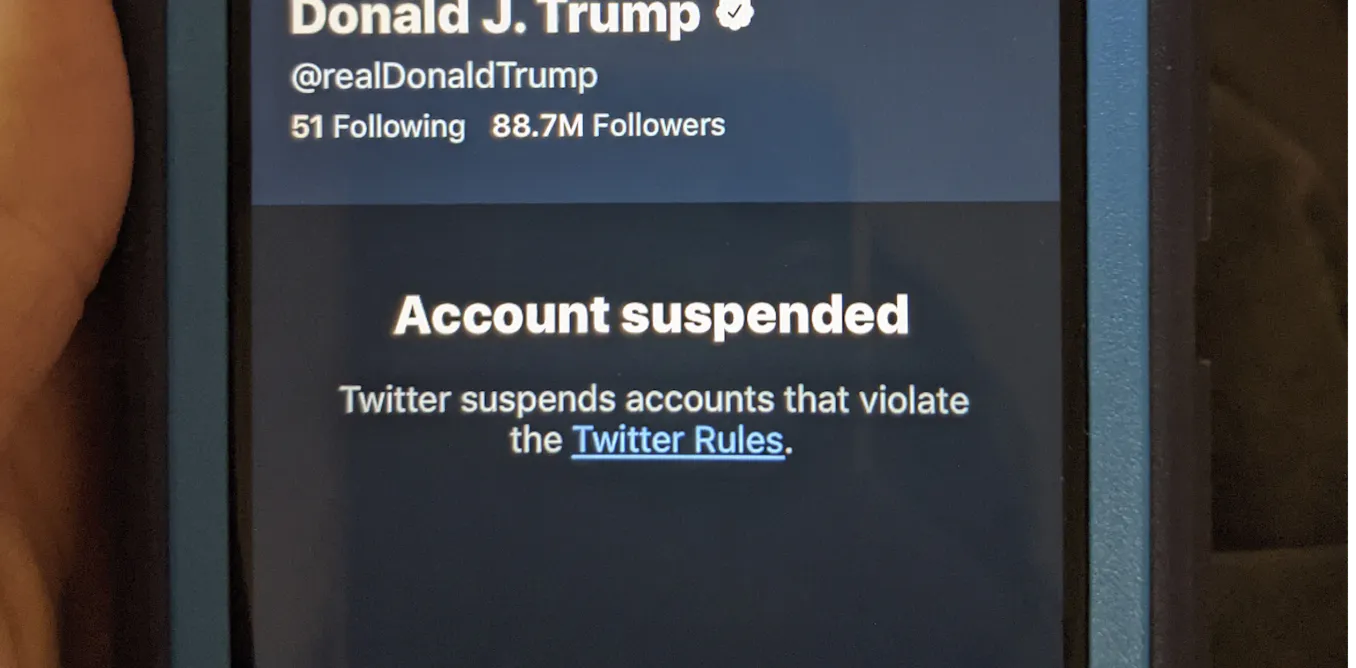
After an incited and encouraged crowd of Trump supporters stormed the Capitol buildings last earlier this month – social media, or at least the executives that run companies like Twitter and Facebook had had enough and opted to oust President Donald Trump from their platforms. Donald Trump has been ‘deplatformed’ and no longer has easy access to an audience of millions of followers. The concept of deplatforming is being widely debated. And recently, University of Connecticut’s Ugochukwu Etudo was asked to lend his expert perspective on the idea. Does the deplatforming of prominent figures and movement leaders who command large followings online work? That depends on the criteria for the success of the policy intervention. If it means punishing the target of the deplatforming so they pay some price, then without a doubt it works. For example, right-wing provocateur Milo Yiannopoulos was banned from Twitter in 2016 and Facebook in 2019, and subsequently complained about financial hardship. If it means dampening the odds of undesirable social outcomes and unrest, then in the short term, yes. But it is not at all certain in the long term. In the short term, deplatforming serves as a shock or disorienting perturbation to a network of people who are being influenced by the target of the deplatforming. This disorientation can weaken the movement, at least initially. However, there is a risk that deplatforming can delegitimize authoritative sources of information in the eyes of a movement’s followers, and remaining adherents can become even more ardent. Movement leaders can reframe deplatforming as censorship and further proof of a mainstream bias. There is reason to be concerned about the possibility that driving people who engage in harmful online behavior into the shadows further entrenches them in online environments that affirm their biases. Far-right groups and personalities have established a considerable presence on privacy-focused online platforms, including the messaging platform Telegram. This migration is concerning because researchers have known for some time that complete online anonymity is associated with increased harmful behavior online. In deplatforming policymaking, among other considerations, there should be an emphasis on justice, harm reduction and rehabilitation. Policy objectives should be defined transparently and with reasonable expectations in order to avoid some of these negative unintended consequences. January 15 – The Conversation If you’re a journalist covering deplatforming and would like to talk with Ugochukwu Etudo – simply click on his icon today and we’ll arrange an interview today.


After four years of scandals, gaffes, hearings, indictments and even an impeachment – President Donald Trump seemed to be coasting on a coating of Teflon that kept him virtually unscathed as nothing ever stuck or shook his grasp on evading trouble. But that might have come to an end this week as The Washington Post dropped a bombshell of a story that including a recording of Trump allegedly seeking to interfere with the results in the recent election. President Trump urged fellow Republican Brad Raffensperger, the Georgia secretary of state, to “find” enough votes to overturn his defeat in an extraordinary one-hour phone call Saturday that legal scholars described as a flagrant abuse of power and a potential criminal act. The Washington Post obtained a recording of the conversation in which Trump alternately berated Raffensperger, tried to flatter him, begged him to act and threatened him with vague criminal consequences if the secretary of state refused to pursue his false claims, at one point warning that Raffensperger was taking “a big risk.” January 03 - The Washington Post No doubt the president was passionate – but did he cross the line? And if so – what are the consequences? There’s a lot of questions to be asked about what is next and that’s where our experts can help if you are covering. The University of Mary Washington has one of the foremost political experts in the country who can help with your stories. Dr. Stephen Farnsworth is a sought-after political commentator on presidential politics. He has been widely featured in national media, including The Washington Post, Reuters, The Chicago Tribune and MSNBC. Dr. Farnsworth is available to speak with media any time regarding the election and its aftermath – simply click on his icon to arrange an interview today.

