
Experts Matter. Find Yours.
Connect for media, speaking, professional opportunities & more.

Baylor Faculty Member Earns $5 Million Grant to Study Meal Deliveries for Rural Students
Baylor University’s Texas Hunger Initiative has taken an important step this week in helping move the University towards its Research 1/Tier 1 aspirations with the announcement of a $5 million grant to expand access to food for students living in rural Texas communities. Kathy Krey, Ph.D., assistant research professor and director of research and administration for Baylor’s Texas Hunger Initiative, has been awarded the three-year grant from the United States Department of Agriculture for a research project aimed at testing a novel approach to distributing food during the summer to rural students age 18 and under. The grant is from USDA’s Food and Nutrition Service. According to the National Center for Education Statistics, more than 3 million children in Texas receive free or reduced-price meals during the school year. During the summer when schools are not in session, food is available to eligible families through federal and state programs, but some students – particularly those who live in rural areas – may have difficulty accessing the food programs, leaving them without consistent access to nutrition. “The current solution to this problem, the federal Summer Food Service Program, doesn’t fit every scenario, because it requires that students congregate at a summer feeding site, often at a school or other central location,” Krey said. “Especially in rural areas, which Texas has a lot of, those meal sites can be less effective because there are transportation, cost or awareness barriers for students who are more broadly dispersed from schools and other potential meal sites.” Improving access to summer meals through mail delivery Krey and her colleagues at THI will be testing a program where families in selected areas of the state who don’t have access to a summer meal site can receive food deliveries through the mail. Grant funding will be used to purchase shelf-stable, nutritionally complete meals, including fruits and vegetables, which are packaged and delivered directly to families. The goal in designing this program, Krey said, is not to eliminate site-based summer feeding programs, but to supplement them with other mechanisms that can be more effective for Texas students whose food needs may not be met by the current system. “We envision a future in which summer feeding sites still exist. In communities where populations are centrally located, the site-based model can make a lot of sense, but we know that it’s going to take a lot of innovative solutions to meet the diversity of the problem especially in a state like Texas that has so many different geographies and different realities in terms of population density,” Krey said. The dual problems of hunger and poverty are closely related since students who don’t have access to healthy meals are at greater risk of low academic achievement and disciplinary problems. A failure to address nutritional deficiencies, Krey said, can contribute to a cycle of poverty that continues from generation to generation. “Research has proven that students need consistent access to healthy food to perform optimally in school,” she said. “If we think about generational poverty, education is such a key factor in students’ being able to break that cycle, and one way they can be equipped to do that learning is by having regular access to nutritious food. “In the summer, there aren’t as many resources and opportunities to get food, which is why it’s so important that we figure out innovative ways to use public and private resources to make sure that low-income kids have access to food during the summer,” she said. The grant also will provide research opportunities for undergraduate and graduate students. Andrea Skipor, graduate student in Baylor’s Diana R. Garland School of Social Work, said her work with the project provides important experiences in application of the concepts taught in class. “In social work, evidence-based practice is a huge part of what we do,” Skipor said. “We learn so much in a classroom, but we don’t always get the opportunity to use it. This project has really given me a way to use my social work and community research skills in a way that has sparked an interest in research for my future practice.” Krey credits students like Skipor with providing invaluable assistance in carrying out important research. “We’ve been really honored with the student researchers and student workers who have come alongside us and acquired great experience in designing a pilot research project. We’ve been so impressed with the Baylor University students’ talent and commitment and we’re really honored to have them as part of this project,” Krey said. The Texas Hunger Initiative is a multi-disciplinary project dedicated to ending hunger through research and innovation and committed to strengthening public policy to address domestic food insecurity. Jeremy Everett, founder and executive director of THI, said the organization was founded on a realization that complex societal problems like hunger and poverty need solutions that leverage the resources of the public and private sectors, faith-based organizations and university researchers. The initiative’s broad-based approach includes a widely-dispersed staff that can observe problems first-hand to come up with evidence-based solutions. “We have field staff throughout the state working in a learning-lab capacity. The average researcher might have their own laboratory. Our laboratory is the state of Texas,” Everett said. It’s a strategy that Everett said is fundamental to Baylor’s mission to positively impact the lives of people in need. “We want to leave society better than we found it,” Everett said. “Our faculty and students want to be engaged in research and evaluation, but they also want to see how that makes a difference in a young child getting access to food who previously wouldn’t have had it without that engagement.” ABOUT BAYLOR UNIVERSITY Baylor University is a private Christian University and a nationally ranked research institution. The University provides a vibrant campus community for more than 17,000 students by blending interdisciplinary research with an international reputation for educational excellence and a faculty commitment to teaching and scholarship. Chartered in 1845 by the Republic of Texas through the efforts of Baptist pioneers, Baylor is the oldest continually operating University in Texas. Located in Waco, Baylor welcomes students from all 50 states and more than 90 countries to study a broad range of degrees among its 12 nationally recognized academic divisions. ABOUT THE TEXAS HUNGER INITIATIVE AT BAYLOR UNIVERSITY The Texas Hunger Initiative (THI) at Baylor University is a capacity-building and collaborative project, which develops and implements strategies to end hunger through policy, education, research, community organizing and community development. THI works to make the state food secure by ensuring that every individual has access to three healthy meals a day, seven days a week. THI convenes federal, state and local government stakeholders with non-profits, faith communities and business leaders to create an efficient system of accountability that increases food security in Texas. THI’s work is supported by the Walmart Foundation, No Kid Hungry, and PepsiCo’s Food for Good. Along with its office located within the Diana R. Garland School of Social Work at Baylor, THI has offices located in Austin, Dallas, Houston, Lubbock, McAllen and San Angelo. For more information, visit www.baylor.edu/texashunger.

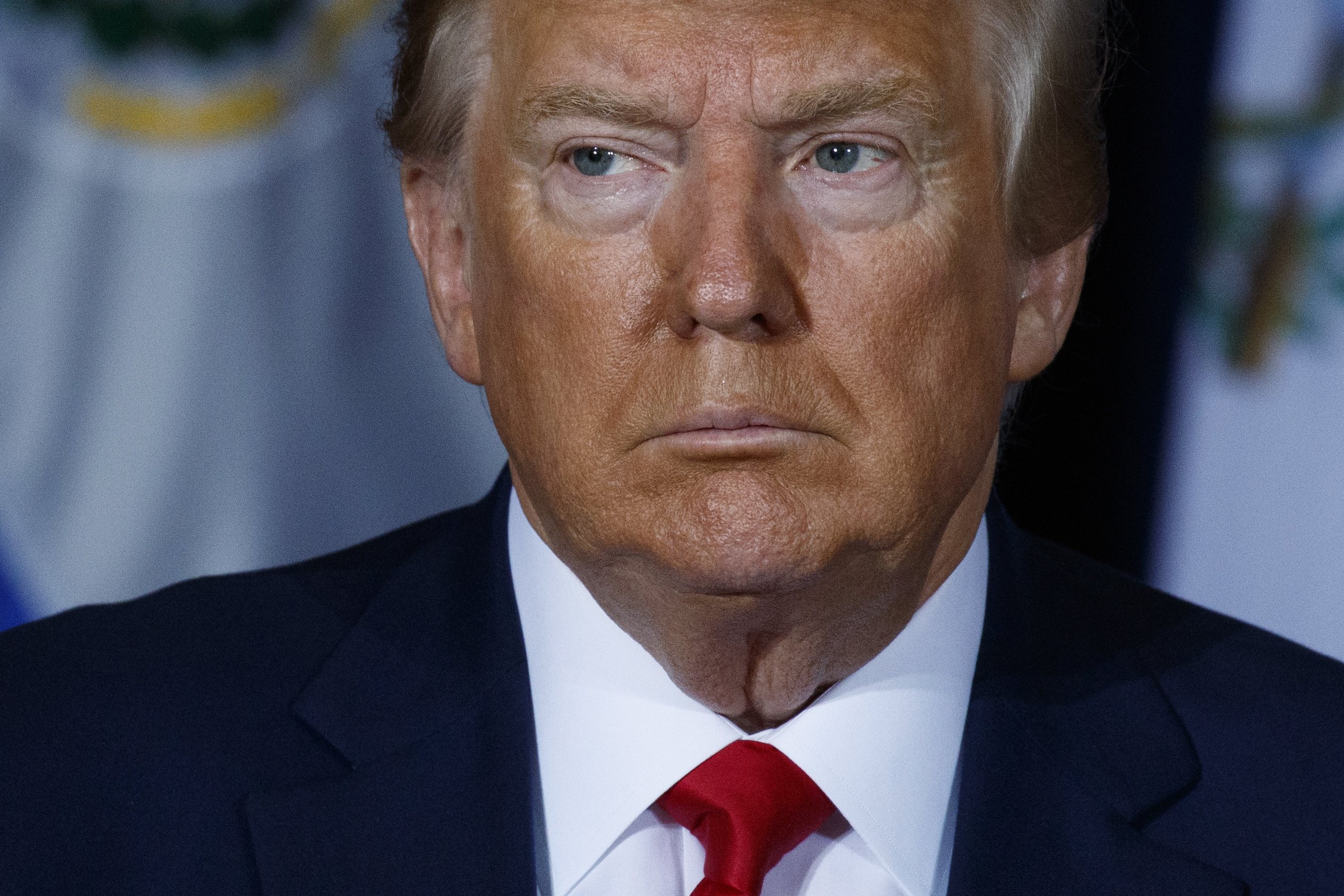
Until now, it seemed no scandal could stick to President Donald Trump. But after a whistleblower came forward after an awkward conversation between President Trump and Ukrainian President Volodymyr Zelenskiy – it seems Trump may have finally crossed the line. His request for an investigation by a foreign power into a political, opponent may have been illegal. Trump repeatedly Ukrainian President Volodymyr Zelenskiy to work with Attorney General William Barr and Rudy Giuliani, Trump’s personal lawyer. At one point in the conversation, Trump said, “I would like for you to do us a favor.” The president’s words set the parameters for the debate to come — just the fourth impeachment investigation of an American president in the nation’s history. The initial response highlighted the deep divide between the two parties: Democrats said the call amounted to a “shakedown” of a foreign leader, while Trump — backed by the vast majority of Republicans — dismissed it as a “nothing call.”… Pelosi announced the impeachment probe on Tuesday after months of resistance to a process she has warned would be divisive for the country and risky for her party. But after viewing the transcript on Wednesday, Pelosi declared: Congress must act.” September 25 – Associated Press This will only be the fourth time in history an impeachment investigation has taken place - and odds are it will dominate the Washington scene for months. But there are a lot of questions to be asked: How long will this take? What does it take to actually succeed? If Trump is impeached by Congress – will the Senate follow? Could he actually be removed from office? And, is this a risk for Democrats who could feed into the Trump narrative of another failed attempt at a witch hunt? There are a lot of questions and that’s where our experts can help. Dr. Stephen Farnsworth is professor of political science and international affairs at the University of Mary Washington. A published author and a media ‘go-to’ on U.S. politics, he is available to speak with media regarding this topic. Simply click on his icon to arrange an interview.



How Can Lighting Be Used to Improve Sleep, Cognition, and Memory?
In August, the National Institute on Aging (NIA) awarded a new five-year grant totaling $3.8 million to Mariana Figueiro, professor and director at the Lighting Research Center (LRC) at Rensselaer Polytechnic Institute. Figueiro will explore and research how lighting intervention designed to promote circadian entrainment will improve sleep, cognition, and memory in individuals with mild cognitive impairment (MCI) which is an “at risk” or potential prodromal stage of dementia. Sleep-wake disturbances are evident in approximately 60% of individuals with MCI. Healthy sleep could improve both working and long-term memory, and in a best-case scenario, prevent onset of Alzheimer’s disease. Light is the main factor impacting a person’s sleep-wake cycle, telling the body when to go to sleep and when to wake up. “Our scientific premise is that sleep spindles, and the timing of spindles, are critical components of an interaction between electrophysiological events that provide a mechanistic explanation for memory consolidation during sleep,” Figueiro said. Sleeping patterns and the importance of rest are key elements in the short and long-term health of every person. Figueiro is among the world’s leading experts in the area of light and health, with a focus on bridging science to practical applications aimed at improving human quality of life. “Tailored lighting, when properly designed to deliver the correct amount of light at the right time, can positively impact health and well-being,” said Figueiro. “We have seen first-hand the many benefits of lighting, but it is important to get the right lighting to see the positive effects.” There’s a lot more to be discovered in this area of important research and if you are a reporter covering this topic – let our expert help with your stories and questions. The LRC is the world’s leading center for lighting research and education. And Figueiro is among the world's leading experts in the area of light and health, with a focus on bridging science to practical applications aimed at improving human quality of life. She is available to speak with media regarding the effects of light on human health. Simply click on her icon to arrange an interview.


IU Kelley School expert: $170 million fine of Google, YouTube probably not enough
In the largest fine ever, Google agreed to pay $170 million to settle a case with the Federal Trade Commission and New York’s attorney general over charges that YouTube made millions from violating children’s privacy laws. Scott Shackelford, associate professor of business law and ethics at the Indiana University Kelley School of Business, chair of IU’s Cybersecurity Program in Risk Management and director of the Ostrom Workshop Program on Cybersecurity and Internet Governance, doubts it will have much of an effect. “Google, via YouTube, has been held accountable by the FTC and the New York Attorney General’s Office for its practices that violated children’s privacy, but it’s questionable whether a $170 million fine is sufficient to change business practices,” Shackelford said. “Similar to its $5 billion fine against Facebook, the FTC needs to do more to both increase these penalties, and even more importantly require the necessary steps to ensure that these violations do not recur. This is the FTC’s third fine against Google since 2011, for example, and it will likely not be the last.”


Key Environmental Quality Research Questions Identified for North America by Multidisciplinary Team
As density in cities increase along with other global megatrends, researchers are working to address environment and health challenges in collaborative ways. Using a recently pioneered process, a multidisciplinary team of North American researchers, government agencies and businesses leaders identified priority research questions for the United States, Canada and Mexico in an effort to tackle pressing environmental quality issues. In an article published in the journal of Environmental Toxicology and Chemistry, Bryan W. Brooks, Ph.D., Distinguished Professor of Environmental Science and Biomedical Studies and director of the environmental health science program at Baylor University, led the Global Horizon Scanning Project (GHSP), which focuses on identifying environmental and health issues internationally. Brooks also facilitated GHSP workshops in Africa, Australia, Central and Southeastern Asia, Europe and Latin America. “We face palpable global environment and health challenges, which require innovative understanding, tools, products and systems to prevent, diagnose and manage adverse outcomes to public health and the environment,” Brooks said. “The GHSP was initiated as part of a larger effort to identify important international research needs. It is essentially a research roadmap towards achieving more sustainable environmental quality, which is necessary to protect human health, biodiversity and ecosystem services.” As part of the study, members of the Society of Environmental Toxicology and Chemistry’s (SETAC) and the American Chemical Society’s (ACS) Environmental Chemistry and Agrochemcials Divisions submitted questions that were then synthesized during a workshop by scientists and engineers from the academic, government and business sectors. “This project is intentionally inclusive, bottom-up, multidisciplinary, multisector and transparent,” Brooks said. “Answering these priority research questions will not be easy, but strategically doing so promises to accelerate progress to address grand challenges that matter to everyone.” “This report provides a comprehensive global perspective covering some of the world’s most critical environmental challenges that will impact society for decades to come,” said Sherine Obare, Ph.D., dean and professor of the Joint School of Nanoscience and Nanoengineering at UNC Greensboro and chair elect of the American Chemical Society’s Environmental Chemistry Division. “SETAC’s ability to engage scientists from around the globe has led to forums that identify urgent challenges including, next generation 21st century analytical chemistry methods, strategies to predict chemical exposure, understanding multiple stressors and new approaches in chemical risk assessment. This project will define the scientific directions needed to transform environmental science and engineering, globally.” “The GHSP reflected in this paper has harnessed the insights of scientists not only across North America but around the world,” said Charles Menzie, Ph.D., Global Executive Director of SETAC. “Each brings tremendous experience and a strong sense of what is needed for future research. However, the distillation of these many into a set of consensus questions provides a much needed foundation for charting our direction for research to inform environmental policy. SETAC is proud to have supported this through our global meetings and now through our journal.” A related GHSP manuscript identifying priority environmental quality questions for the Australasiaregion of Oceania was also recently published in Integrated Environmental Assessment and Management. GHSP efforts from Africa and Asia are ongoing with plans to report priority research questions from these global regions in the next year. ABOUT BAYLOR UNIVERSITY Baylor University is a private Christian University and a nationally ranked research institution. The University provides a vibrant campus community for more than 17,000 students by blending interdisciplinary research with an international reputation for educational excellence and a faculty commitment to teaching and scholarship. Chartered in 1845 by the Republic of Texas through the efforts of Baptist pioneers, Baylor is the oldest continually operating University in Texas. Located in Waco, Baylor welcomes students from all 50 states and more than 80 countries to study a broad range of degrees among its 12 nationally recognized academic divisions. ABOUT BAYLOR COLLEGE OF ARTS & SCIENCES The College of Arts & Sciences is Baylor University’s oldest and largest academic division, consisting of 25 academic departments and seven academic centers and institutes. The more than 5,000 courses taught in the College span topics from art and theatre to religion, philosophy, sociology and the natural sciences. Faculty conduct research around the world, and research on the undergraduate and graduate level is prevalent throughout all disciplines.


Whether making the transition to college, starting a new job, ending a relationship or retiring, change can cause psychological stress, which in turn can make for wear and tear on the body. The good news is, we can develop coping mechanisms to reduce stress and live happier, healthier lives, say Baylor University psychologist Annie Ginty, Ph.D., and her University of California-Irvine collaborator, Sarah Pressman, Ph.D. Using a grant from AXA Research Fund — which supports projects in health, environment, new technology and socioeconomics — Ginty and Pressman produced three short videos to help students and the general public understand what stress is, what it does to our bodies and how to handle it. The videos stem from a two-year AXA postdoctoral research fellowship by Ginty, assistant professor of psychology and neuroscience in Baylor’s College of Arts & Sciences. She investigated the relationship between biological responses to stress and adaptation during a stressful transition, particularly students’ adjustment to college. The videos, 1 to 3 minutes each, are housed on AXA’s YouTube channel and bear Baylor's new logo. “Psychological stress is bad for health; exercise stress is good,” said Ginty, who works with nonprofits to serve at-risk adolescents by providing high-intensity interval training workouts to reduce stress and improve health. “When we think about exercise, your heart rate and metabolic system increase, meaning you’re breathing harder. The rest of your muscle physiology is changing. Your body is working together to maintain homeostasis for balance. This is good stress,” she said. “But with psychological stress, the heart works much harder than the rest of the body. That metabolic imbalance can be hard on the heart and make the body more vulnerable to disease.” In the videos, Baylor students discuss the causes of psychological stress in their lives, how their bodies react and ways they handle stress. For them, a college education poses looming deadlines, fear of living up to expectations, anxiety about tests and adjusting to a new atmosphere. In the first video — "Stress and Your Health" — they describe such reactions as higher heart rate, restlessness, loss of sleep, skin breakouts, headaches and tense muscles. “If I fail at a test, I then in my mind see myself not getting into medical school, which is a pretty big domino effect,” said Devin Mangold of Wolfforth, Texas, a senior neuroscience major in the Honors College at Baylor. Such stressors can take a toll on moods and emotions, putting the physiological stress system into overdrive and possibly becoming a threat to long-term physical health — which in turn creates more stress. The second video — "Effects of Stress on Your Body" — explores how stress can affect emotions and the body. Stressed people may become anxious, sad, worried and angry. The stressors can interfere with sleep and can leave less time to exercise. People also tend to eat foods with higher fat and higher carbohydrates, said Pressman, associate professor of psychological science at UC-Irvine. That can lead to muscle tension, which can translate into injury. The third video — "Coping with Stress" — is about the importance of coping mechanisms so that minor stressors don’t turn into serious health issues. Social networking has been shown by research to reduce the effects of stress in such ways as lowering blood pressure. The best ways to cope are physical activity, a healthy diet and cognitive reappraisal. “Cognitive reappraisal” is “a fancy way of saying we’re changing how we interpret our situation,” said Danielle Young, Psy.D., clinical research coordinator of the Baylor Behavioral Medicine Laboratory in the department of psychology and neuroscience department. “It’s the difference between saying, ‘This is going to be the hardest test ever, and I’m going to fail’ and ‘This is going to be a hard test, but I’m going to do the best I can.’ Even that slight shift in thought can make you less stressed.” A recent study by Ginty of 230-plus Baylor students examined the effect of reappraising stress. “We found that if we gave brief instructions about how increases in heart rate during stress mean they were ‘ready’ and were not a ‘bad thing,’ people rated their levels of anxiety as more helpful to their performance,” Ginty said. The video encourages individuals to experiment with coping techniques that work for them. Students who appear in the video suggest methods from working out to cooking to reading to walking their dogs. “My natural demeanor is laid back, but internally, I stress myself,” said senior neuroscience major Simba Masando of Harare, Zimbabwe. Early in college, he “just went headfirst into the material” of a capstone course. “Now as a senior, I’m doing some preliminary courses I’m not necessarily interested in, but they’re required. I’ve alleviated some pressure in the major, but some of the requirements are a little more worrisome.” As a member of Baylor Behavioral Medicine Lab, what he’s learned about stress oping has been “greatly helpful” as he looks ahead to post-graduate school and his eventual goal of opening a school in Zimbabwe. “I’m an avid learner,” he said. “School is my job, as I see it, but my hobbies are learning, too. In basketball, there’s always a new move I want to learn; in piano, there’s a new technique. If you take the piano away from me, I’ll try guitar. And if you take basketball away from me, I’ll try tennis.” ABOUT ANNIE GINTY Research articles by Annie Ginty, Ph.D., include: “The behavioural, cognitive, and neural corollaries of blunted cardiovascular and cortisol reactions to acute psychological stress,” published in ; “Challenge and threat imagery manipulates heart rate and anxiety responses to stress,” published in ; and “Depression and anxiety are associated with a diagnosis of hypertension 5 years later in a cohort of late middle-aged men and women” published in ABOUT BAYLOR UNIVERSITY Baylor University is a private Christian University and a nationally ranked research institution. It provides a vibrant campus community for more than 17,000 students by blending interdisciplinary research with an international reputation for educational excellence and a faculty commitment to teaching and scholarship. Chartered in 1845 by the Republic of Texas through the efforts of Baptist pioneers, Baylor is the oldest continually operating University in Texas. Located in Waco, Baylor welcomes students from all 50 states and more than 90 countries to study a broad range of degrees among 12 nationally recognized academic divisions. ABOUT THE COLLEGE OF ARTS & SCIENCES AT BAYLOR UNIVERSITY The College of Arts & Sciences is Baylor University’s oldest and largest academic division, consisting of 25 academic departments and seven academic centers and institutes. The more than 5,000 courses taught in the College span topics from art and theatre to religion, philosophy, sociology and the natural sciences. Faculty conduct research around the world, and research on the undergraduate and graduate level is prevalent throughout all disciplines. Visit www.baylor.edu/artsandsciences.


Why is it so hard to pass laws to regulate guns in America? Let our experts explain
So far this year in the United States, there have been eight mass shootings taking the lives of more than 60 people. It’s tragic, but the concept of taking action to remedy this problem is still seen more as political than proactive. In fact, the possibility of being caught up in gun violence is now a part of the everyday lives of a majority of Americans. “Today, 59% of Americans say random acts of violence, like mass shootings, pose the biggest safety threat to them, according to a Reuters/Ipsos poll conducted this month after 31 people were killed in back-to-back rampages in El Paso, Texas, and Dayton, Ohio. The poll also found that 78% of Americans believe another such attack will likely unfold in the next three months. So far this year, there have been more than 250 mass shootings, according to the Gun Violence Archive, a widely cited non-profit that counts incidents in which at least four people other than the shooter were injured or killed.” TIME, Aug. 13, 2019 It is almost baffling why there are bottlenecks and roadblocks to finding a solution – and there are lots of questions that need to be asked. Why don’t national lawmakers pass laws regarding gun violence/mass shooting? How has public opinion changed on gun control in the last 30 years? How does gun violence in the U.S. compare to other countries? What is the current state of gun control laws in the U.S.? If you need answers, that’s where our experts can help. Dr. Gregg R. Murray, professor of political science at Augusta University, is available to talk about why lawmakers are having such a tough time tackling gun violence in America. Murray’s research focuses on political behavior and psychology with specific interests in voter mobilization and turnout. He is also executive director of the Association for Politics and the Life Sciences.


Is this fall’s Virginia election the canary in the coal mine for gun control?
There will be a lot of eyes on Virginia as voters go to the polls to elect its state government this November. Virginia is just one of four states going to the polls this year and it seems like gun-control (or various forms of it) might be a key issue. In fact, Republican Tim Hugo has flip-flopped and is now favoring a Republican drafted “red flag” gun bill that would remove guns from some people considered a risk to themselves or others. Stephen J. Farnsworth, a political science professor at the University of Mary Washington in Fredericksburg, said suburban Republicans like Hugo and Miyares are walking a fine line on volatile issues like gun control as Democrats make inroads in those communities. Those Republicans in moderate areas feel pressure to side with their party in larger political battles, such as the one that occurred in Richmond last month, when the GOP leaders abruptly ended the special session. But they also can’t appear to be out of sync with their changing districts on guns and other divisive topics, Farnsworth said. “Delegate Hugo has to do something to appeal to suburban constituents who are moving away from a Republican Party that is represented by President Trump,” Farnsworth said, noting that the delegate won his 2017 election by just 106 votes. “By offering a response on a gun control measure, Hugo is trying to demonstrate to his voters that he is not simply another Republican willing to shut down debate on the issue before the election,” he said. August 17 – Washington Post Could this be a sign of things to come for 2020? Are politicians actually considering gun control on both sides of the aisle? Or is this just another bait and switch by a politician looking to play both sides during a campaign? If you are a reporter covering this topic – let our experts help. Dr. Stephen Farnsworth is professor of political science and international affairs at the University of Mary Washington. A published author and a media ‘go-to’ on U.S. politics, he is available to speak with media regarding this topic. Simply click on his icon to arrange an interview.

It was a train running full speed and showed no signs of stopping – but America’s economy hit a bump last week and it sent a lot of people from Wall Street and beyond into a panic. The 800-point drop in the Dow Jones seemed to be the first sign of another severe recession. But before everyone cashes out, experts from Western Governors University are hoping we take a look back through the ages before rushing to worry. “What does history teach us? Even before the Great Depression of the 1930s, Nicolai Kondratieff discovered that the capitalist economy, going back to the 18th century was characterized by waves, or business cycles,” says Dr. Rashmi Prasad, Dean and Academic Vice President of Western Governors University's College of Business. “The Federal Reserve, under leadership of Ben Bernanke, claimed that while the business cycle had not been repealed, a ‘Great Moderation’ had emerged in the world post-1982. Independent central banking and the rise of the service economy were among the reasons cited. In a great irony of history, Bernanke was front and center as Chairman of the Federal Reserve during the ‘Great Recession’ of 2008-2009. Business cycles seem to be inevitable for capitalist economies. Will we return to the Great Moderation of 1982-2007, or are we in a new period of regular Great Recessions? Central Banks stabilize and soften the down-cycles of recessions, but the price of managing the Great Recession of 2008-09 has been the dramatic expansion of central bank balance sheets–no new investment cycles–property or finance often leads to recession.” So, where do we stand and what can we expect in the short-term? Prasad adds this perspective: “Conventional economic thinking indicated inflation by now, which may have added to interest rates and constrained the amount of debt that was sustainable. Rapidly rising interest rates posed the risk of a deep and extended downturn. If interest rates can be managed and kept low, then the next down-cycle could be shallowed and prolonged as monetary policy has little scope and fiscal deficits are already very high. Risks for a major downturn exist in extremely high debt levels and central bank balance sheets, but still may be a decade or two away, awaiting triggers that we cannot yet predict.” Are you a journalist covering the economy and do you need expert perspective and opinion for your stories? That’s where Western Governor’s University can help. Dr. Rashmi Prasad is Dean and Academic Vice President of Western Governors University's College of Business. He is an expert in the fields of economic and financial data and business analytics. Dr. Prasad is available to speak with media regarding the state of America’s economy – simply click on his icon to arrange an interview.


August is National Breastfeeding Month – Let our Experts Help with Your Coverage
It’s August…a month that celebrates breastfeeding and all the benefits that come with it. Breastfeeding is natural, healthy and cost-effective – and the American public is beginning to recognize a mother’s right to feed her child wherever and whenever she wants. Breastfeeding is a great benefit to the environment and society, according to the American Academy of Pediatrics. Breastfeeding families are sick less often and the parents miss less work. It does not require the use of energy for manufacturing or create waste or air pollution. There is no risk of contamination and it is always at the right temperature and ready to feed. A new website developed by researchers in Canada and Asia showed that the world could have saved $341 billion each year if mothers breastfeed their children for longer, helping prevent early deaths and various diseases, according to a July 12 article from Reuters. Known as the “Cost of Not Breastfeeding,” the online tool used data from a six-year study supported by the U.S.-based maternal and child nutrition initiative, Alive & Thrive. According to Augusta University Health’s Dr. Kathryn Strickler McLeod, breastfeeding protects against a variety of diseases and conditions in the infant, including diarrhea, respiratory tract infection, childhood obesity and much more. Additionally, there are also maternal health benefits to breastfeeding, including a decreased risk of breast and ovarian cancers. If you are covering this topic – let us help with your stories and questions. Dr. Kathryn Strickler McLeod is a nationally recognized expert in pediatric general and adolescent medicine. McLeod is available to speak with media – simply click on the icon to arrange an interview.