
Experts Matter. Find Yours.
Connect for media, speaking, professional opportunities & more.

Grip Strength of Children Gives Clues about Their Future Health, Study Finds
Measuring hand grip can help identify youths who could benefit from lifestyle changes to improve health, Baylor researcher says Adolescents with a strong hand grip — an indicator of overall muscle strength — have better odds of being healthy over time, according to a two-year study of 368 elementary school children. While other studies have shown that muscle weakness as measured by grip strength is a predictor of unhealthy outcomes — including cardiovascular and metabolic diseases, disability and even early mortality — this is the first to do so for adolescent health over time, a Baylor University researcher said. “What we know about today’s kids is that because of the prevalence of obesity, they are more at risk for developing pre-diabetes and cardiovascular disease than previous generations,” said senior author Paul M. Gordon, Ph.D., professor and chair of health, human performance and recreation in Baylor’s Robbins College of Health and Human Sciences. “This study gives multiple snapshots over time that provide more insight about grip strength and future risks for developing diabetes and cardiovascular disease,” he said. “Low grip strength could be used to predict cardiometabolic risk and to identify adolescents who would benefit from lifestyle changes to improve muscular fitness.” The study — "Grip Strength is Associated with Longitudinal Health Maintenance and Improvement in Adolescents" — is published in The Journal of Pediatrics. It was conducted by researchers at Baylor University, the University of Michigan and the University of New England. Students tracked in the study were assessed in the fall of their fourth-grade year and at the end of the fifth grade. Using the norms for grip strengths in boys and girls, researchers measured the students’ grips in their dominant and non-dominant hands with an instrument called a handgrip dynamometer. Researchers found that initially, 27.9 percent of the boys and 20.1 percent of the girls were classified as weak. Over the course of the study, boys and girls with weak grips were more than three times as likely to decline in health or maintain poor health as those who were strong. Researchers also screened for and analyzed other metabolic risk factor indicators, including physical activity, cardiorespiratory fitness, body composition (the proportion of fat and fat-free mass), blood pressure, family history, fasting blood lipids and glucose levels. “Even after taking into account other factors like cardiorespiratory fitness, physical activity and lean body mass, we continue to see an independent association between grip strength and both cardiometabolic health maintenance and health improvements,” Gordon said. While much emphasis has been placed on the benefits of a nutritious diet and aerobic activity, this study suggests that greater emphasis needs to be placed on improving and maintaining muscular strength during adolescence. If someone with a strong grip develops an even stronger grip, “we don’t necessarily see a drastic improvement in that individual’s health,” Gordon noted. “It’s the low strength that puts you at risk. “Given that grip strength is a simple indicator for all-cause death, cardiovascular death and cardiovascular disease in adults, future research is certainly warranted to better understand how weakness during childhood tracks into and throughout adulthood,” he said. “Testing grip strength is simple, non-invasive and can easily be done in a health care professional’s office. It has value for adults and children.” *An estimated 17.2 percent of U.S. children and adolescents aged 2 to 19 years are obese and another 16.2 percent are overweight, according to the National Center for Health Statistics. Excess weight carries a greater lifetime risk of diabetes and premature heart disease. While the World Health Organization and the U.S. Department of Health and Human Services recommend that youths perform at least 60 minutes of moderate to vigorous physical activity daily — including vigorous activity at least three days a week — fewer than a quarter of U.S. children do so, according to a report by the nonprofit National Physical Activity Plan Alliance. ABOUT THE STUDY The data source was the Cardiovascular Health Intervention Program (CHIP), supported by a subcontract from the Children’s National Medical Center in Washington, D.C., which was funded from The Clark Charitable Foundation. Co-researchers were lead author Mark D. Peterson, Ph.D., assistant professor, University of Michigan Department of Physical Medicine and Rehabilitation in Ann Arbor, Michigan; Baylor graduate Sonja Smeding, B.S. (Biology), ’18; and Paul Visich, Ph.D., professor and chair, University of New England’s Department of Exercise and Sport Performance in Biddeford, Maine. ABOUT BAYLOR UNIVERSITY Baylor University is a private Christian University and a nationally ranked research institution. The University provides a vibrant campus community for more than 17,000 students by blending interdisciplinary research with an international reputation for educational excellence and a faculty commitment to teaching and scholarship. Chartered in 1845 by the Republic of Texas through the efforts of Baptist pioneers, Baylor is the oldest continually operating University in Texas. Located in Waco, Baylor welcomes students from all 50 states and more than 80 countries to study a broad range of degrees among its 12 nationally recognized academic divisions. ABOUT THE ROBBINS COLLEGE OF HEALTH AND HUMAN SCIENCES The Robbins College of Health and Human Sciences at Baylor University was established in 2014, a result of identified priorities for strengthening the health sciences through Baylor’s strategic vision, Pro Futuris, which serves as a compass for the University’s future. The anchor academic units that form the new College – Communication Sciences and Disorders, Family and Consumer Sciences and Health, Human Performance and Recreation – share a common purpose: improving health and the quality of life. The College is working to create curricula that promote a team-based approach to patient care and establish interdisciplinary research collaborations to advance solutions for improving the quality of life for individuals, families, and communities. For more information visit Robbins College of Health and Human Sciences.

Baylor Researchers Awarded Grant to Develop Diabetes Mobile Health App for Use in India
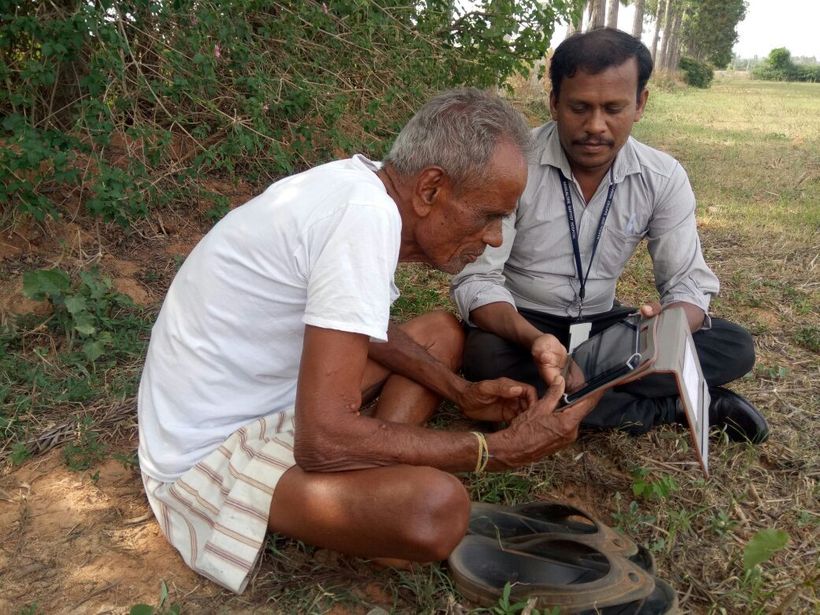
An interdisciplinary team of Baylor University researchers – from nursing and business information systems to art and video game design – and physicians from Bangalore Baptist Hospital in Bengaluru, India, were awarded a 21st Century Knowledge Initiative Grant from the U.S. India Education Foundation (USIEF) to develop a diabetes mobile health app to boost awareness and educate those in India who are most at risk for diabetes. The team is led by Shelby Garner, Ph.D., R.N., assistant professor in Baylor’s Louise Herrington School of Nursing, who has worked in India over the past six years to develop technological health resources. She cited statistics from the World Health Organization that show life expectancy in India is among the lowest in the South East Asian Region and is largely attributed to growing rates of non-communicable diseases, such as diabetes. Contextualized health education is one key to help raise awareness in the country, she said. “There is a need for culturally appropriate health education materials in India,” Garner said. “Our early research showed that technology, such as smartphones and internet accessibility, are widely available in India among health providers, but most technological educational resources were developed in the West and do not effectively translate to the Indian context.” Physicians from Bangalore Baptist Hospital will provide cultural context and help identify important medical content to be included in the app. “Our diabetes app will feature an interactive 3D animated video with gaming features to help educate patients at risk for diabetes,” Garner said. “Answers to questions addressed in the app include: What is diabetes? What happens if I have diabetes? How do I prevent and treat diabetes? What do I do now?” The app also serves as a data collection tool to help researchers determine if the video is improving participants’ knowledge on diabetes. Community health workers employed by Bangalore Baptist Hospital will use the app as they visit with people in rural villages and urban slums during door-to-door health education visits, Garner said. The research team will compare the app’s effectiveness with standard health educational resources previously used. Garner said the USIEF grant was awarded, in large part, due to the success of an earlier project that led to the development of a hypertension app. “Earlier this year, we tested the hypertension app among 346 people in one of the largest slums in Bengaluru, India, and in several rural villages surrounding Bengaluru,” she said. “The app was significantly effective in improving knowledge among participants. We used these results to justify the need to design more resources and applied for funding from the U.S. India Education Foundation.” From previous experience developing and employing the hypertension app, Garner said she knew this new project would require input from a variety of perspectives. “I’ve realized some of the ‘big picture’ challenges in health education, and it will take a team of experts to make this happen,” she said. Team members are: • Shelby Garner, Ph.D., R.N., assistant professor in Baylor’s Louise Herrington School of Nursing • Dr. Carol Elizabeth George, community health physician, Bangalore Baptist Hospital • Dr. Gift Norman, community health physician, Bangalore Baptist Hospital • Dr. Kingsly Victor, internal medicine physician, Bangalore Baptist Hospital • Hope Koch, Ph.D., associate professor of business information systems, Baylor’s Hankamer School of Business • Phil Young, Ph.D., assistant clinical professor of business information systems, Baylor’s Hankamer School of Business • Julia Hitchcock, M.F.A., associate professor of art, Baylor’s College of Arts & Sciences • Matthew Fendt, Ph.D., lecturer in computer science, Baylor’s School of Engineering and Computer Science The grant also will fund exchange teams of researchers and faculty from India to come to the U.S. and for Baylor team members to go to India to collaborate on the research for the next two years. The first team from India is due in late October. “We are really excited about the work we will do together with our Indian partners over the next two years,” Garner said. ABOUT BAYLOR UNIVERSITY Baylor University is a private Christian University and a nationally ranked research institution. The University provides a vibrant campus community for more than 17,000 students by blending interdisciplinary research with an international reputation for educational excellence and a faculty commitment to teaching and scholarship. Chartered in 1845 by the Republic of Texas through the efforts of Baptist pioneers, Baylor is the oldest continually operating University in Texas. Located in Waco, Baylor welcomes students from all 50 states and more than 80 countries to study a broad range of degrees among its 12 nationally recognized academic divisions. ABOUT LOUISE HERRINGTON SCHOOL OF NURSING The Baylor University Louise Herrington School of Nursing (LHSON) located in Dallas was established in 1909 as a diploma program within Baylor Hospital in Dallas, which is now Baylor University Medical Center, and in 1950 became one of the six degree-granting schools of Baylor University. The first Baccalaureate degrees were granted in 1950 establishing the school among the earliest baccalaureate nursing programs in the United States. In 1999, the School was renamed the Baylor University Louise Herrington School of Nursing after Louise Herrington Ornelas, a 1992 Baylor Alumna Honoris Causa, who made an endowment gift to the school. Accredited by the Commission on Collegiate Nursing, LHSON offers Bachelor of Science in Nursing (B.S.N.) degrees through a traditional program and FastBacc (one-year accelerated program). LHSON also offers an online Master of Science in Nursing (M.S.N.) Leadership and Innovation program, as well as Doctor of Nursing Practice (D.N.P.) programs to include Family Nurse Practitioner (F.N.P.), Nurse-Midwife (C.N.M.) and Neonatal Nurse Practitioner (N.N.P.). LHSON was featured in U.S. News & World Reportfor the 2018Best Graduate Schools ranking the D.N.P.program in the top 50 U.S.nursing schools at No. 46. The Baylor M.S.N.program is ranked at No. 56and the Nurse Midwifery Program ranked No. 10. Baylor’s M.S.N. in Nursing Leadership andInnovation Online Program ranked No. 39 in the 2018U.S. News Best Online Graduate Programs. For more information, www.baylor.edu/nursing.

Can Hollywood help lift the stigma on mental health?
When A Star is Born was released to theatres – it had high expectations. It was a hit at international film festivals and Oscar buzz was already starting. Loaded with stars from stage, screen, and the music industry, it was guaranteed to bring in the audiences and pack theatres. While critics are raving about the performances, the message the film is bringing is also resonating with audiences as well. The story deals with characters attempting to overcome addictions as well as suicide. It’s a film that has people talking about serious issues. But is it Hollywood’s job to educate people about issues such as mental health? With the lines between education and entertainment blurring – is this a platform that could serve the wrong purposes? And with all things celebrity, is there a risk to glorifying acts of suicide or addiction? There are a lot of questions and that’s where the experts from CARF International can help. Michael Johnson is Managing Director of Behavioral Health at CARF and is an expert in mental health and substance use disorder. Mike is available to speak with media regarding this topic – simply click on his icon to arrange an interview.


People know that communities affected by weather disasters like Hurricane Michael are in danger and need aid to rebuild. But psychologist Jamie Aten, founder and director of the Humanitarian Disaster Institute at Wheaton College in Illinois, says many don’t realize that such disasters often fuel the human rights violations of sex and labor trafficking. “The dark reality is that not all are there to help,” Aten says. “Some will likely be human traffickers ready to swoop in and exploit the vulnerable.” In this blog post, Aten and colleague Laura Leonard identify three factors that often fuel demand for sex and labor trafficking: significant damage, mass displacement of survivors, and an influx of outsiders. Aten and Leonard offer tips for recognizing the tactics of potential human traffickers, identifying people who are at risk, and stopping trafficking. Dr. Aten is available to discuss the connection between weather/humanitarian disasters and human trafficking, as well as the psychological and spiritual needs faced by those who have suffered from disasters. To schedule an interview, contact Wheaton College Director of Media Relations LaTonya Taylor at media.relations@wheaton.edu.

Bigly: the effect of Trump's rhetoric on national security
Going against the findings of his own intelligence community, President Donald Trump has called Russian meddling into the 2016 U.S. presidential election a “hoax.” In a recent turn of events, though, the president accused China of interfering with the midterm elections. Has President Trump’s rhetoric on the intelligence community and hesitancy to hold Russia accountable influenced countries, such as China, to also try meddling in U.S. elections? “If people and foreign officials start believing President Trump’s rhetoric, there is a possibility, that we will face issues of doubt and trust concerning U.S. policy and commitments,” said Craig Albert, an expert in U.S.-Russian security affairs, director of the master of arts in intelligence and security studies and associate professor of political science at Katherine Reese Pamplin College of Arts, Humanities and Social Sciences at Augusta University. “Also, President Trump’s rhetoric helps prop up Vladimir Putin as being equal in stature to the leader of the free world and gives Kremlin and Putin greater credibility with Russian citizens and the near abroad.” Midterm elections are on the horizon, and Putin will continue election meddling regardless of Trump’s actions or rhetoric, Albert said. “Russia, under Putin’s leadership, will continue to increase its cyber activity against all sectors of the U.S., including and especially into the cognitive hacking of our electoral process,” he said. Cognitive hacking is when fake sources are used to spread fake news on social media. The success of Russia’s meddling in the 2016 election is emboldening other actors, like China. “Non-state actors like ISIS and Al Qaeda feel empowered to engage in both cognitive and source hacking in order to shift American public opinion,” Albert said. “We already believe China and Iran have engaged in similar operations. It won’t be long before ISIS utilizes the same type of intelligence operations because they are low risk, extremely high reward operations. Albert is available to discuss: • How President Trump’s rhetoric affects the U.S. intelligence community • How Trump’s apparent support for Russia empowers Putin and the Kremlin to continue meddling into U.S. elections • How Russia’s actions are emboldening other non-state actors • Why Trump’s denial of Russian meddling into U.S. elections can further damage U.S. relations with its allies Contact us to schedule an interview with Albert or to learn more about his expertise. Source:



Community is key for those recovering from a mass shooting
The man accused of killing 17 people and injuring 14 more at Marjory Stoneman Douglas High School in February is set to appear in court Wednesday. Meanwhile, survivors of the mass shooting are still grappling with the aftermath of that day. Laura Wilson, co-author and editor of "The Wiley Handbook of the Psychology of Mass Shootings" and an assistant professor of psychology at the University of Mary Washington in Fredericksburg, recently talked about that struggle in an American Psychological Association article. "Simply by definition, mass shootings are more likely to trigger difficulties with beliefs that most of us have, including that we live in a just world and that if we make good decisions, we'll be safe," she is quoted as saying. According to the article: "The National Center for PTSD estimates that 28 percent of people who have witnessed a mass shooting develop post-traumatic stress disorder (PTSD) and about a third develop acute stress disorder. "Research also suggests that mass shooting survivors may be at greater risk for mental health difficulties compared with people who experience other types of trauma, such as natural disasters. A study led by former Northern Illinois University (NIU) graduate student Lynsey Miron, PhD, after the 2008 shootings on NIU's campus, found that although a large percentage of mass shooting survivors were either resilient or displayed only short-term stress reactions, about 12 percent reported persistent PTSD, a number that's higher than the average prevalence of PTSD among trauma survivors as a whole (Behavior Therapy, Vol. 45, No. 6, 2014). "What's critical, psychologists' research suggests, is to ensure that victims feel connected to their communities in the aftermath of mass violence and that they have ongoing support available to them." Dr. Wilson is available to speak with media regarding this subject. Simply click on her icon to arrange an interview. Source:



Just how vulnerable are older Americans to getting hooked on opioids?
It’s a problem that most don’t commonly associate with seniors, retirees and older adults – being hooked on opioids. But it is a problem in America and it’s growing at a frightening pace. According the article attached: ‘Researchers involved with the University of Michigan’s National Poll on Healthy Aging polled a nationally representative sample of 2,000 Americans, aged 50 to 80, about what their health-care providers talked about when prescribing opioid medication to them. In the past two years, 589 said they filled an opioid prescription. This group knew how often to take the medication, but the majority didn’t recall their doctors or pharmacists talking about the risk of addiction, the risk of overdose, or what to do with leftover pills. About 40 percent said their doctors didn’t talk to them about the side effects of opioid use or guide them on when to cut back on pain medications.’ That is a staggering and scary scenario? But what can be done? Is it simply about better communication and information? Or do stronger restrictions and regulations need to be put in place to limit the opportunity for vulnerable seniors to become addicted? As America struggles to battle the opioid epidemic – are seniors another layer of addicts that could compound this situation? There are a lot of questions and that’s where the experts from can help. Dr. Marc Sweeney is the Founding Dean of the School of Pharmacy at Cedarville University and is an expert in the fields of drug abuse, prescription drug abuse and Opioid addiction. Marc is available to speak with media regarding this growing issue. Simply click on his icon to arrange an interview. Source:


Being homeless negatively impacts health in diverse ways, especially for those experiencing chronic homelessness.1 Such persons are at higher risk for multiple infectious diseases, traumatic injuries, interpersonal violence, conditions related to extreme heat or cold, and death due to alcoholism and drug overdoses. They are more likely than housed persons to use hospital emergency departments for health care and to be admitted to the hospital for health problems, because they are less likely to have health insurance and because their conditions cannot be appropriately cared for without safe and secure housing. Thus, there are compelling reasons to know whether interventions aimed at reducing homelessness also reduce the adverse health consequences associated with it. Source:


Forecasting sales using financial stock market data
Firms use many kinds of data for forecasting future sales—one of the key activities in the management of a business—and combine various methods in order to utilize different types of information. A recent study by Nikolay Osadchiy, assistant professor of information systems and operations management; Vishal Gaur (Cornell); and Sridhar Seshadri (UT Austin) focuses on financial stock market data in developing a new methodology for firm-level sales forecasting, testing it against standard benchmarks such as forecasts from equity analysts and time-series methods. Applying their method to the forecast of total annual sales for US public retail firms, the researchers find their market-based approach achieves an average 15 percent reduction in forecasting error compared with more typical forecasting methods. Their model, they write, can also be applied to hedging operational risk with financial instruments. Source:



The challenge of accurately weighting contrary advice
Auditors regularly seek informal advice about their initial judgments from other auditors. Audit firms encourage this advice seeking, believing it enhances professional skepticism and improves professional judgment. But does it? A recent study by Kathryn Kadous, professor of accounting; Justin Leiby (U. Florida); and Mark Peecher (U. Illinois at Urbana-Champaign) investigates contrasting theories and evidence on whether seeking advice improves auditors’ judgment and on the factors that influence how readily they incorporate contrary advice into their judgments. They find that nonspecialist auditors who seek advice from those with whom they share a close social bond tend to overestimate the value of that advice. On the other hand, specialists tend to underestimate such advice, perhaps, note the authors, because of threats to the specialists’ egos. In both cases the defensibility of the auditors’ conclusions is negatively affected, heightening audit risk. Source:
