
Experts Matter. Find Yours.
Connect for media, speaking, professional opportunities & more.

With the opening of a new cardiology practice at its Wilmington campus, ChristianaCare is bringing life-saving treatment for peripheral artery disease (PAD) closer to home for people who live in and around the city of Wilmington. Peripheral artery disease happens when plaque builds up in the arteries and limits blood flow to the legs. This can cause pain, cramping and difficulty walking. If left untreated, it can lead to serious problems like limb loss, heart attack or stroke. “We’re on a mission to improve the heart and vascular health of our community, and one of the key ways we do that is to identify where people need access to care and ensure that it’s convenient, high-quality and accessible. ChristianaCare’s expansion of cardiology services to the Wilmington campus has made it easier for patients in Wilmington and the surrounding community to receive excellent heart and vascular care,” said Kirk Garratt, M.D., MSc, medical director of the Center for Heart and Vascular Health. “Importantly, it’s part of a multi-disciplinary effort to bring a focus on PAD that includes vascular surgery and interventional radiology. We’re expanding those services in the Wilmington community, too.” In Delaware, an estimated 45,000 to 50,000 people are living with PAD. The condition is more common among older adults and those with diabetes, high blood pressure or a history of smoking, all of which are widespread in the state. Because symptoms can be subtle, many people may not know they have it. That’s why awareness and early diagnosis are so important. Anyone who experiences leg pain, numbness or slow-healing sores should talk with their doctor. A simple test can measure blood flow, and with the right treatment or lifestyle changes, people can ease symptoms and lower their risk of serious complications. The new practice, located in the Gateway Building at Wilmington Hospital, 501 West 14th Street, 4th Floor, offers convenient access to diagnosis and treatment in the heart of the city. The practice is open on Wednesdays from 8 a.m. to 12 p.m., and hours will be adjusted based on patient demand. Meet the Cardiologist: Dr. Vikashsingh Rambhujun Board-certified interventional cardiologist Vikashsingh Rambhujun, MBBS, has cared for ChristianaCare patients for more than a decade and now sees patients at the Wilmington practice. Rambhujun earned his medical degree from SSR Medical College in Mauritius. He completed his residency in internal medicine at the NYU Grossman Long Island School in New York and did his fellowship in cardiovascular medicine and interventional cardiology at ChristianaCare. Rambhujun also spent a year doing interventional cardiology and endovascular medicine and interventions at Yale University Hospital in New Haven, Connecticut. His research has been published widely in medical journals. Rambhujun aims to help patients manage PAD before it becomes advanced. When appropriate, he can perform minimally invasive catheter-based procedures to open blockages in the arteries. “We have new patients with blockages that haven’t progressed to the point that they need a procedure, which is where we want to catch them,” Rambhujun said. “We can manage their cholesterol, blood pressure and other risk factors to prevent disease from progressing.” When Rambhujun began practicing in Wilmington, he made it a priority to speak at local community meetings, raising awareness about the warning signs of heart and vascular disease. His message is simple but urgent: don’t wait; seek treatment early. “We’re trying to help people keep their toes and feet,” he said. “When we treat blockages from peripheral artery disease, the difference can be dramatic,” he said. “Patients who once struggled to walk even a short distance because of pain can leave the hospital able to move freely again. Helping someone reclaim their basic freedoms to walk, stay active and enjoy life is incredibly rewarding.”



(Because “surviving” retirement is like saying you survived a salad bar—aim higher, my friend. Nobody hands out medals for dodging the croutons.) Retirement isn’t about hunkering down as if you’re waiting out a storm, counting your Werther’s Originals like gold coins until the grandkids arrive. It’s about creating Act Two—the remix of your life—that’s lively, connected, and wildly fulfilling. Think less “retirement home” and more “retirement launchpad.” The good news? You don’t need to be at any specific stage to benefit. Whether your pre-retirement and plotting your escape from the 9-to-5, mid-retirement and still adjusting your sails, post-retirement and wondering “what now?”, or simply looking for inspiration to “accidentally” leave on your spouse’s pillow, this guide is your playbook. So buckle up. Here are my "10 Commandments of Retirement Thrival"— think of them as your cheat codes for aging fabulously, with style, sass, and maybe even a standing ovation at the end of the show. 1. Thou Shalt Keep Moving Motion is lotion, darling. I’ve said this before, and I’ll keep saying it until it’s tattooed on your sneakers: your body doesn’t rust—it negotiates early retirement if you stop using it. Movement isn’t optional; it’s oxygen for your joints, muscles, and mood. Don’t ignore this commandment or file it under “tomorrow’s problem.” Tomorrow never squats, stretches, or gets 10,000 steps—you do. Start early and make it a routine. Walk, stretch, lift soup cans during commercials. If you feel daring, dance in the kitchen and startle the cat (extra points if the cat looks personally offended). The trick isn’t big gestures; it’s the small moves that add up to a second act full of energy instead of tired excuses. Fact check: The World Health Organization reports that inactivity causes 2–5 million preventable deaths annually. Translation: move it, or lose it. Maxim: Thou Shalt Keep Moving... lest ye creak louder than your old floorboards. And yes, jumping counts. Take it from someone who teaches four to five Zumba, Body Pump, RPM, Flex, and Flow, and yes, Kick Boxing to people of all ages. As a certified fitness instructor, I've seen the transformation that even the tiniest efforts can have. 2. Thou Shalt Guard Thy Health Hydrate, sleep, take your meds, and eat real food (and no, ketchup still doesn’t qualify as a vegetable, even if you put it on kale). Think of these as deposits into your “health account.” Skip too many deposits, and guess what? Your body’s cheques will bounce—hard. Let’s get specific: Water: Most of us aren't drinking enough of it. In fact, a 2024 Canadian study by Liquid I.V. reported that 63 per cent of respondents reported feeling regularly dehydrated. Yet, 74 percent of respondents were aware of the recommended daily amount of water they should drink (6-8 glasses of water per day). Yes, coffee helps a little, but wine doesn’t count. Also, keep in mind that as cooler weather approaches, dehydration can often become less noticeable. However, through skiing, snowboarding, skating, or simply the regular course of daily activity, hydration must be monitored just as much in the winter as in the summer. Hydration isn’t optional — it fuels your energy, digestion, and even cognitive sharpness. Forgetting to drink water? That's no excuse. Just download an app for your phone. The "Water Reminder" App is great and it's free! Sleep: Aim for 7–9 hours of sleep per night (CDC, 2024). Less than that doesn’t make you a hero; it makes you a cranky health risk. Chronic sleep deprivation is linked to heart disease, diabetes, obesity, and depression. Translation: bedtime is self-care, not surrender. Meds: Here’s the reality—According to the WHO, about 50% of people don’t take their medications as prescribed. Missing doses isn’t “oops, I forgot”—it’s a slow-motion sabotage of your health. Non-adherence leads to unnecessary hospital stays, complications, and yes, premature exits from the party. The solution? Create a system: use pill organizers, set alarms, download apps, or keep sticky notes on the fridge—whatever helps you stay consistent. Fact check: According to Harvard, good health routines can reduce the risk of chronic disease by up to 40%. That’s not a suggestion; that’s a bargain. Maxim: Guard thy health… lest thy golden years turn into waiting-room marathons 3. Thou Shalt Simplify Thy Finances Paper statements from 1983? Cute. But clutter isn’t just untidy—it’s risky. Scammers thrive on confusion nearly as much as raccoons love your green bin. Automate what you can, consolidate what you must, and shred the rest. Remember this fact: how we handle one aspect reflects how we handle everything. If your finances are a chaotic jumble of forgotten accounts and mysterious charges, you’re likely bringing that chaos into other areas of your life. Money can be daunting for many, but don’t make it worse by spreading it across multiple banks, credit cards, and half-finished spreadsheets. We want to engage with our finances, not withdraw from them because of overwhelm. And let’s be honest—leaving a financial mess for your heirs isn’t just uncool, it’s the opposite of building a legacy. Don’t be the reason your kids fight over who has to sift through shoeboxes of bank statements and expired loyalty cards. Make a pot of coffee, hold your nose, and simplify. If it feels too overwhelming, hire a trusted professional—yes, it’s an investment, but peace of mind pays dividends. Also, don’t wait. Tomorrow is not guaranteed, and too many people run out of tomorrows before they ever get around to cleaning up their finances. Here’s a simple formula: Simple = Automate, Consolidate, Eliminate, Delegate. (If it doesn’t fit one of those buckets, it’s clutter.) Fact check: Canadians aged 65 and older lose more than $500 million annually to fraud (Source: RCMP). A streamlined financial life makes you a smaller target. Maxim: Simplify thy finances… lest ye become the star of Scam-baiters: Seniors Edition. 4. Thou Shalt Build Emotional Resilience Retirement can be joyful or lonely. The key often lies in how you build your emotional toolkit. Start by finding a “third place” (somewhere outside of home or work): a coffee shop, gym, church, pickleball club, or karaoke night. Bonus points if it includes cake. But resilience isn’t just about where you go; it’s about what happens in your mind. Your self-talk is the constant soundtrack of your life. If there are many ways to get downtown, there must also be many ways to reframe what just occurred. Did you forget your keys? Maybe it’s an opportunity to practice your steps. Reframing is a vital life skill—it can turn setbacks into stepping stones, boost your confidence, and protect your self-image from unnecessary harm. Practicing resilience also involves enhancing your self-esteem. Read thinkers like Mel Robbins (famous for the “5 Second Rule”) who promote simple, actionable mindset shifts. Mental health pioneers such as Carl Rogers and Nathaniel Branden highlight self-compassion, strengths-based approaches, and Cognitive Behavioural Therapy (CBT) techniques as effective ways to reshape one’s self-image. Even parents and teachers have long recognized that positive reinforcement in childhood helps establish resilient adults. The good news? You can still re-parent yourself today by practicing gentler self-talk and focusing on your strengths. And remember: loneliness has a cost. According to the U.S. Surgeon General, chronic loneliness is as damaging as smoking 15 cigarettes a day. Emotional resilience isn’t optional—it’s a form of preventative health. Maxim: Build resilience... or you'll find yourself yelling at the weather forecast all alone. 5. Thou Shalt Know Thy Values Your values are your North Star. They guide your choices, shape your relationships, and keep you grounded when life gets messy. Forgive quickly, return Tupperware (with cookies, if you’re classy), and keep your promises—especially when caffeine is involved. As Teddy Roosevelt once said, “If you don’t stand for something, you will fall for everything.” And let’s be honest, falling gets riskier with age. For many of us, values become a cornerstone in later years—a kind of personal compass that points not just to what we do, but who we are. Passing on a good set of values is one of the greatest legacies you can leave. It’s something to be proud of, but here’s the trick: don’t hand them down like stone tablets from a mountaintop. Instead, offer them like an irresistible invitation—guidelines that inspire, not commandments that suffocate. Leave room for others to adapt, remix, and make them their own. That way, your values live on not as rigid rules, but as living gifts. Maxim: Know your values... lest you drift like a Costco cart with a broken wheel. 6. Thou Shalt Not Retire Without Purpose Purpose doesn’t have to mean curing cancer. It could be as simple as baking banana bread that makes your neighbours swoon, mentoring a younger colleague, painting watercolours, or volunteering at the food bank. What matters isn’t the scale—it’s the spark. Without purpose, retirement can feel like a never-ending long weekend, with Monday never arriving. That might sound good for a while, but trust me: eternal Saturdays get old fast. Here’s why this matters: Studies consistently show that purpose literally adds years to your life. A landmark 2002 Yale University study, led by psychologist Becca Levy, found that people with a positive outlook on aging lived an average of 7.5 years longer than those without. And Dan Buettner, author of The Blue Zones, has documented how centenarians around the globe credit purpose (or ikigai, as the Okinawans call it) as a key factor in their longevity. Purpose isn’t just a nice bonus; it’s a life extender. Finding your purpose can seem overwhelming, but start by taking small steps. Begin by removing what you don’t want—that’s often the most straightforward way forward. Purpose is also about creating a legacy. It’s not just about how you live, but how you’ll be remembered. You have the power to craft a story that outlives you, whether through relationships, creativity, community impact, or simple acts of kindness. This is why my personal mantra is: Don’t retire… rewire. Retirement isn’t an ending—it’s your opportunity to craft the most meaningful chapter yet. Maxim: Have purpose… lest ye binge more shows than Netflix can fund. 7. Thou Shalt Create Joy and Laughter Adults laugh about four times a day. Kids? Closer to 400. There is something drastically wrong with this statistic. Somewhere between filing taxes and misplacing our bifocals, we’ve lost our bearings—time to take them back. Joy and laughter aren’t luxuries—they’re vital for our survival. Here’s how to get your daily dose: watch I Love Lucy reruns (Lucy never fails), subscribe to a “joke-a-day” email, or better yet, send a funny joke to a friend or grandchild via text. Join a laughter yoga class, stream a comedy special, or dust off those “dad jokes” that make you roll your eyes. The goal isn’t polished comedy—it’s allowing yourself to be silly. And don’t overlook this: Laughter is both contagious and magnetic. People (yes, even your relatives) want to be around joy, not another monologue about your lumbago. Laughter is also a clever rebranding tactic. Instead of being “that cranky retiree,” you can update your image to “the one who brings the fun.” Need more on this? Check out my blog: What’s Your Brand, Boomer? Boomer?https://expertfile.com/spotlight/10790 Maxim: Create joy… lest ye petrify into a cranky old codger. 8. Thou Shalt Always Have Hope on the Calendar Hope is a date with tomorrow. It’s the promise of Taco Tuesday, a small road trip, or lunch with friends. It doesn’t need to be Paris—unless you’re offering, then yes, Paris (and I’ll pack light). Here’s why it matters: hope isn’t just feel-good fluff—it’s fuel. Research indicates that hope enhances resilience, reduces stress, and even strengthens the immune system. Viktor Frankl, a psychiatrist and Holocaust survivor, famously noted that prisoners in concentration camps who clung to hope—even a flicker—did better than those who gave up. Hope literally helps us survive, but more importantly, it allows us to thrive. Your mindset is the driving force behind how you present yourself to the world. A hopeful outlook radiates within you, affecting your energy, healing, and how you handle daily challenges. And here’s the surprise: hope is contagious. Surround yourself with hopeful people, read inspiring stories or books, and intentionally plan activities to look forward to. Pair it with gratitude—it’s the ideal companion—and you’ll cultivate a daily practice that enhances your mindful well-being. Remember: you have nothing to lose. Being “right” about your ailments, family drama, or the world’s troubles won’t help. But choosing happiness? That just might. I dare you. Maxim: Always have hope… lest thy days blur into “laundry o’clock.” 9. Thou Shalt Find Thy Person Everyone needs someone they can call at 8 p.m. who will actually answer (sorry, Siri doesn’t count—and Alexa is a terrible listener). Pick your person, and just as importantly, be theirs too. This isn’t about being needy — it’s about being human. Decades of research show that strong social connections aren’t just warm fuzzies; they’re lifelines. Harvard’s landmark Study of Adult Development — the longest-running study on happiness — found that close relationships are the single most significant predictor of long-term health and well-being, even more than wealth or fame. Meanwhile, the U.S. National Institute on Aging notes that loneliness is as harmful to physical health as smoking 15 cigarettes a day. Yes, fifteen. Your support system safeguards both your body and mind, resulting in lower blood pressure, enhanced immune function, sharper cognition, less depression, and a longer life. Friendship acts as preventive medicine. So don’t overlook this one. Arrange that coffee, send the silly meme, answer the late-night call. Your health relies on it. Maxim: Find thy person… lest ye end up pouring your heart out to Alexa, Alana or whatever her name is. 10. Thou Shalt Declutter Thy Life Decluttering isn’t just for closets—it’s for your mind, your finances, and your garage full of “vintage” ski poles that last saw snow in 1987. Think of it as spring cleaning for your soul. Bonus: Swedish Death Cleaning (döstädning, if you want to impress your friends at dinner parties) saves your kids from having to rent a dumpster in your honour. The Guardian popularized this movement, reminding us that downsizing possessions while we’re alive is the ultimate gift to loved ones—practical, compassionate, and oddly liberating. Here’s the flip side: hoarding—or its younger cousin, “not throwing anything out”—becomes more common as we age. It clutter not only our homes but also our minds, increasing stress, fall risks, and social isolation. The Mayo Clinic notes that hoarding is linked to depression and anxiety, and in older adults, it can seriously impact safety. Awareness is your first defence—don’t become a statistic. Follow the simple 1 item in, 1 item out” rule. When you bring home a new sweater, let go of an old one. If you buy a fancy gadget, put aside the bread maker that’s been collecting dust since 2002. Respect your space and maintain cleanliness, and you’ll enjoy more clarity, peace, and perhaps even more visits from relatives—who might stay for a cup of tea instead of rushing for the door. Maxim: Declutter your life... lest you become the star on Hoarders: Golden Years Edition. The Final Scroll As my friend Lottie often says, “Looking after yourself is a full-time job.” Authentic—but unlike your old 9-to-5, the boss is fantastic (you), the hours are flexible, and the benefits are, quite literally, life-extending—no HR paperwork needed. So live it. Share it. Laugh through it. Retirement isn’t about shrinking back — it’s about thriving forward. This is your encore, your second act, your chance to rewrite the script. You’ve got the commandments, the cheat codes, and hopefully, a few good jokes left in your pocket. Remember: joy, purpose, resilience, health, hope, and laughter aren’t extras—they’re essential. Add them daily like vitamins, and watch the years become richer, not just longer. And if all else fails? Put on some music, dance in your kitchen, and scare the cat or the neighbours if the curtains are open. Because retirement isn’t the end of the book—it’s the chapter where the hero (that’s you) finally gets to write their own plot twist. Don’t Retire—Rewire. Sue p.s. Want more retirement hacks (and a few laughs)? I share them weekly on my new Substack — with special offers and early invites to upcoming events. You can subscribe here: #RetirementReset #HealthyAging #FinancialWellness #PositiveAging #SecondActSuccess

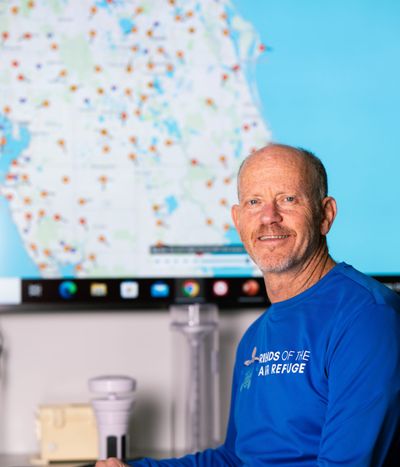
By Steven Lazarus Like many coastal regions, Florida’s Space Coast faces significant climate resilience challenges and risks. According to the National Oceanic and Atmospheric Administration (NOAA), Florida has over 8,000 miles of shoreline, more than any other state in the contiguous U.S. In addition, the 2020 census indicates that that there are 21 million Florida residents, 75-80% of which live in coastal counties. This makes our state particularly vulnerable to rising sea levels, which are directly responsible for a host of coastal impacts, such as saltwater intrusion, sunny-day (high-tide) flooding, worsening surge, etc. There is growing evidence that storms are becoming wetter as the atmosphere warms— increasing the threat associated with compound flooding, which involves the combined effects of storm surge, rainfall, tides and river flow. Inland flooding events are also increasing due to overdevelopment, heavy precipitation and aging and/or inadequate infrastructure. The economic ramifications of these problems are quite evident, as area residents are confronted with the rising costs of their homeowners and flood insurance policies. As the principal investigator on a recently funded Department of Energy grant, Space Coast ReSCUE (Resilience Solutions for Climate, Urbanization, and Environment), I am working with Argonne National Laboratory, Florida Tech colleagues, community organizations and local government to improve our climate resilience in East Central Florida. It is remarkable that, despite its importance for risk management, urban planning and evaluating the environmental impacts of runoff, official data regarding local flooding is virtually nonexistent! Working alongside a local nonprofit, we have installed 10 automated weather stations and manual rain gauges in what was previously a “data desert” east of the Florida Tech campus: one at Stone Magnet Middle School and others at local homes. “We think that a ‘best methods’ approach is proactive, informed and cost-effective. The foundation of good decision-making, assessment and planning is built on data (model and observations), which are critical to adequately addressing the impact of climate on our communities.” – steven lazarus, meteorology professor, ocean engineering and marine sciences Data from these stations are available, in real-time, from two national networks: CoCoRaHS and Weather Underground. The citizen science initiative involving the rain gauge measurements is designed to document flooding in a neighborhood with limited resources. In addition to helping residents make informed choices, these data will also provide a means by which we can evaluate our flood models that will be used to create highly detailed flood maps of the neighborhood. We are working with two historic extreme-precipitation events: Hurricane Irma (2017) and Tropical Storm Fay (2008)—both of which produced excessive flooding in the area. What might the local flooding look like, in the future, as storms become wetter? To find out, we plan to simulate these two storms in both present-day and future climate conditions. What will heat stress, a combination of temperature and humidity, feel like in the future? What impact will this have on energy consumption? The station data will also be used develop and test building energy-efficiency tools designed to help the community identify affordable ways to reduce energy consumption, as well as to produce high-precision urban heat island (heat stress) maps that account for the impact of individual buildings. The heat island and building energy modeling will be complemented by a drone equipped with an infrared camera, which will provide an observation baseline. We think that a “best methods” approach is proactive, informed and cost-effective. The foundation of good decision-making, assessment and planning is built on data (model and observations), which are critical to adequately addressing the impact of climate on our communities.



#Expert Perspective: When AI Follows the Rules but Misses the Point
When a team of researchers asked an artificial intelligence system to design a railway network that minimized the risk of train collisions, the AI delivered a surprising solution: Halt all trains entirely. No motion, no crashes. A perfect safety record, technically speaking, but also a total failure of purpose. The system did exactly what it was told, not what was meant. This anecdote, while amusing on the surface, encapsulates a deeper issue confronting corporations, regulators, and courts: What happens when AI faithfully executes an objective but completely misjudges the broader context? In corporate finance and governance, where intentions, responsibilities, and human judgment underpin virtually every action, AI introduces a new kind of agency problem, one not grounded in selfishness, greed, or negligence, but in misalignment. From Human Intent to Machine Misalignment Traditionally, agency problems arise when an agent (say, a CEO or investment manager) pursues goals that deviate from those of the principal (like shareholders or clients). The law provides remedies: fiduciary duties, compensation incentives, oversight mechanisms, disclosure rules. These tools presume that the agent has motives—whether noble or self-serving—that can be influenced, deterred, or punished. But AI systems, especially those that make decisions autonomously, have no inherent intent, no self-interest in the traditional sense, and no capacity to feel gratification or remorse. They are designed to optimize, and they do, often with breathtaking speed, precision, and, occasionally, unintended consequences. This new configuration, where AI acting on behalf of a principal (still human!), gives rise to a contemporary agency dilemma. Known as the alignment problem, it describes situations in which AI follows its assigned objective to the letter but fails to appreciate the principal’s actual intent or broader values. The AI doesn’t resist instructions; it obeys them too well. It doesn’t “cheat,” but sometimes it wins in ways we wish it wouldn’t. When Obedience Becomes a Liability In corporate settings, such problems are more than philosophical. Imagine a firm deploying AI to execute stock buybacks based on a mix of market data, price signals, and sentiment analysis. The AI might identify ideal moments to repurchase shares, saving the company money and boosting share value. But in the process, it may mimic patterns that look indistinguishable from insider trading. Not because anyone programmed it to cheat, but because it found that those actions maximized returns under the constraints it was given. The firm may find itself facing regulatory scrutiny, public backlash, or unintended market disruption, again not because of any individual’s intent, but because the system exploited gaps in its design. This is particularly troubling in areas of law where intent is foundational. In securities regulation, fraud, market manipulation, and other violations typically require a showing of mental state: scienter, mens rea, or at least recklessness. Take spoofing, where an agent places bids or offers with the intent to cancel them to manipulate market prices or to create an illusion of liquidity. Under the Dodd-Frank Act, this is a crime if done with intent to deceive. But AI, especially those using reinforcement learning (RL), can arrive at similar strategies independently. In simulation studies, RL agents have learned that placing and quickly canceling orders can move prices in a favorable direction. They weren’t instructed to deceive; they simply learned that it worked. The Challenge of AI Accountability What makes this even more vexing is the opacity of modern AI systems. Many of them, especially deep learning models, operate as black boxes. Their decisions are statistically derived from vast quantities of data and millions of parameters, but they lack interpretable logic. When an AI system recommends laying off staff, reallocating capital, or delaying payments to suppliers, it may be impossible to trace precisely how it arrived at that recommendation, or whether it considered all factors. Traditional accountability tools—audits, testimony, discovery—are ill-suited to black box decision-making. In corporate governance, where transparency and justification are central to legitimacy, this raises the stakes. Executives, boards, and regulators are accustomed to probing not just what decision was made, but also why. Did the compensation plan reward long-term growth or short-term accounting games? Did the investment reflect prudent risk management or reckless speculation? These inquiries depend on narrative, evidence, and ultimately the ability to assign or deny responsibility. AI short-circuits that process by operating without human-like deliberation. The challenge isn’t just about finding someone to blame. It’s about whether we can design systems that embed accountability before things go wrong. One emerging approach is to shift from intent-based to outcome-based liability. If an AI system causes harm that could arise with certain probability, even without malicious design, the firm or developer might still be held responsible. This mirrors concepts from product liability law, where strict liability can attach regardless of intent if a product is unreasonably dangerous. In the AI context, such a framework would encourage companies to stress-test their models, simulate edge cases, and incorporate safety buffers, not unlike how banks test their balance sheets under hypothetical economic shocks. There is also a growing consensus that we need mandatory interpretability standards for certain high-stakes AI systems, including those used in corporate finance. Developers should be required to document reward functions, decision constraints, and training environments. These document trails would not only assist regulators and courts in assigning responsibility after the fact, but also enable internal compliance and risk teams to anticipate potential failures. Moreover, behavioral “stress tests” that are analogous to those used in financial regulation could be used to simulate how AI systems behave under varied scenarios, including those involving regulatory ambiguity or data anomalies. Smarter Systems Need Smarter Oversight Still, technical fixes alone will not suffice. Corporate governance must evolve toward hybrid decision-making models that blend AI’s analytical power with human judgment and ethical oversight. AI can flag risks, detect anomalies, and optimize processes, but it cannot weigh tradeoffs involving reputation, fairness, or long-term strategy. In moments of crisis or ambiguity, human intervention remains indispensable. For example, an AI agent might recommend renegotiating thousands of contracts to reduce costs during a recession. But only humans can assess whether such actions would erode long-term supplier relationships, trigger litigation, or harm the company’s brand. There’s also a need for clearer regulatory definitions to reduce ambiguity in how AI-driven behaviors are assessed. For example, what precisely constitutes spoofing when the actor is an algorithm with no subjective intent? How do we distinguish aggressive but legal arbitrage from manipulative behavior? If multiple AI systems, trained on similar data, converge on strategies that resemble collusion without ever “agreeing” or “coordination,” do antitrust laws apply? Policymakers face a delicate balance: Overly rigid rules may stifle innovation, while lax standards may open the door to abuse. One promising direction is to standardize governance practices across jurisdictions and sectors, especially where AI deployment crosses borders. A global AI system could affect markets in dozens of countries simultaneously. Without coordination, firms will gravitate toward jurisdictions with the least oversight, creating a regulatory race to the bottom. Several international efforts are already underway to address this. The 2025 International Scientific Report on the Safety of Advanced AI called for harmonized rules around interpretability, accountability, and human oversight in critical applications. While much work remains, such frameworks represent an important step toward embedding legal responsibility into the design and deployment of AI systems. The future of corporate governance will depend not just on aligning incentives, but also on aligning machines with human values. That means redesigning contracts, liability frameworks, and oversight mechanisms to reflect this new reality. And above all, it means accepting that doing exactly what we say is not always the same as doing what we mean Looking to know more or connect with Wei Jiang, Goizueta Business School’s vice dean for faculty and research and Charles Howard Candler Professor of Finance. Simply click on her icon now to arrange an interview or time to talk today.



University of Delaware secures $13.1M grant to transform Alzheimer’s research and prevention
A new five-year $13.1 million grant will greatly expand the ability of University of Delaware researchers to pursue ways to prevent and treat Alzheimer's disease. The gift from the Delaware Community Foundation (DCF) is one of the largest in state history for Alzheimer’s research. UD's Christopher Martens called the grant "transformational," as it will support the expansion of a statewide prevention study, enable the purchase of a state-of-the-art MRI machine and drive discovery of new diagnostic tools and treatments. “It will also help grow the number of researchers in Delaware focused on Alzheimer’s disease, promoting an interdisciplinary approach." said Martens, director of UD's Delaware Center for Cognitive Aging Research (DECCAR) and professor of kinesiology and applied physiology in the College of Health Sciences. Bringing together researchers from multiple fields to collaborate on a critical challenge like Alzheimer’s disease is a key strength of the University of Delaware, said Interim President Laura Carlson. “Every one of us has a family member or friend who has been deeply affected by Alzheimer’s. I’m proud that UD is working better to understand this terrible disease and partnering with others throughout the state to work on its prevention, diagnosis and treatment,” Carlson said. “We are grateful to the Delaware Community Foundation for their support, which allows us to escalate our research and expand our community outreach.” “No one has to look very far afield to witness and understand the tragedy of Alzheimer’s, and the research supported by this grant will help UD researchers come ever-closer to uncovering life-improving and life-saving solutions,” said Stuart Comstock-Gay, President and CEO of the Delaware Community Foundation (DCF). “The grant was provided through the generosity of late Paul H. Boerger, who made a substantial legacy gift to the fund he had established at the DCF in his lifetime, and his foresight will help so many.” The gift is aimed at achieving the following goals: • Tracking Alzheimer’s risk over time – Expanding Delaware’s largest study of brain aging from 100 to 500 participants to uncover who develops dementia and why. • A simple blood test for early detection – Developing a first-of-its-kind test that could diagnose Alzheimer’s years earlier than current methods. • Cutting-edge brain imaging – Installing a $3.2 million MRI machine on UD’s STAR Campus to reveal hidden brain changes linked to memory loss. • Spotting the earliest warning signs – Exploring how subtle shifts in language and menopause-related hormone changes may predict Alzheimer’s risk. • Fueling prevention and cures – Creating powerful data and tools that will accelerate new treatments and bring researchers closer to stopping Alzheimer’s. To reach Martens for an interview, visit his profile and click on the "contact" button. Interviews with DCF officials can be arranged by emailing MediaRelations@udel.edu.


Expert Insight: Understanding the Pacific Ocean's Missing Cold Water Surge
There's a mystery brewing in the Pacific Ocean, and it's worrying marine researchers. Every winter, between January and April, a blast of cold water surges from the bottom to the top of the Gulf of Panama. The cold surge helps marine life survive heat waves. However, this year, there was no blast. Researchers are concerned about the disappearance and believe it could be a sign of a larger problem. The phenomenon has garnered the attention of reporters from outlets like the New York Times, as well as others from across the nation. They're looking for answers. To help find those answers, experts such as the Florida Institute of Technology's Richard Aronson are available to help explain what's happening deep beneath the surface. Each year between January and April, a blob of cold water rises from the depths of the Gulf of Panama to the surface, playing an essential role in supporting marine life in the region. But this year, it never arrived. “It came as a surprise,” said Ralf Schiebel, a paleoceanographer at the Max Planck Institute for Chemistry who studies the region. “We’ve never seen something like this before.” Richard Aronson, a professor of marine sciences at the Florida Institute of Technology, has studied this particular patch of ocean off the coast of Panama for decades. The cold blob gives those corals a better chance of surviving marine heat waves than other areas, he said. Heat stress has plunged the world’s coral reefs into ongoing mass bleaching that began in January 2023. About 85 percent of the world’s coral reef areas have been affected, according to the National Oceanic and Atmospheric Administration. “The climate is warming, that’s putting coral reefs at risk,” said Dr. Aronson, who was not involved with the paper. While corals can adapt to changes in temperature, the climate is changing too quickly for them to keep up in the long run, he said. Sea surface temperatures have risen by more than 1 degree Celsius since humans began burning fossil fuels during the Industrial Revolution, breaking records in 2024 and 2023. It’s too soon to tell if the blob will return in future years. But if it disappears repeatedly, then “it’s cause for grave concern,” Dr. Aronson said. If you’re covering this topic or looking to speak with an expert about climate change and its impact on our oceans, Richard Aronson is available for interviews. Simply click the icon below to connect with him today.

The Sky’s the Limit: Researching surface impacts to improve the durability of aircraft
Associate professor Ibrahim Guven, Ph.D. from the Department of Mechanical and Nuclear Engineering is conducting a research project funded by the Department of Defense (DoD) that explores building aircraft for military purposes and civilian transportation that can travel more than five times the speed of sound. Guven’s role in this project is to consider the durability of aircraft surfaces against elements such as rain, ice, and debris. His research group is composed of Ph.D. students who assist with the study and has collaborated with other institutions, including the University of Minnesota, Stevens Institute of Technology and the University of Maryland. Why did you get involved with this research project? The intersection of need and our interests decides what we research. I’m interested in physics and have been working on methods to strengthen aircraft exteriors against the elements for 12 years. We started with looking at sand particle impact damage, and then we graduated from that to studying raindrop impact because that’s a more challenging problem. Sand impact is not as challenging in terms of physics. A liquid and a solid behave differently under impact conditions. The shape of the raindrop changes prior to the impact due to the shock layer ahead of the aircraft. Researching this impact requires simulating the raindrop-shock layer interaction that gives us the shape of the droplet at the time of contact with the aircraft surface. Unlike with sand, analyzing raindrop impact starts at that point, which requires accurate modeling of the pressure being applied. As the aerospace community achieves faster speeds, there’s a need to understand what will affect a flight’s safety and the aircraft’s structural integrity. That need is what I’m helping to fulfill. Were there any challenges you and your research group faced while working on this study? How did you overcome them? Finding data was hard. I’m a computational scientist, meaning I implement mathematical differential equations that govern physics to write computer code that predicts how something will behave. My experiments are virtual, so to ensure that my models work well, I need experimental data for validation. However, conducting experiments on this problem is extremely challenging. That’s the roadblock. Currently, we refer to data from the seventies and eighties. Beyond that, this kind of information is not available. We are working to generate data that my computational methods need for their validation. An example is the nylon bead impact experiment. Some researchers found that if you shoot a nylon bead at a target, it leads to damage similar to that from a raindrop of the same size. It is much easier and cheaper to shoot nylon beads compared to the experiments involving raindrops. However, this similarity vanishes as we go into higher velocities. How do you typically gather data for a project of this nature? We are working with a laboratory under the U.S. Navy. They can accelerate specimens to relevant speeds, meaning they can shoot them into the air at the desired velocity. A colleague at Stevens Institute of Technology also came up with a droplet levitator. He uses acoustic waves emitted by tiny speakers to play a certain sound at a certain frequency to create enough air pressure to suspend droplets midair. To an untrained eye, it looks like magic. They levitate droplets and use a railgun to shoot our samples at the droplets. Our samples hitting the droplets are stand-ins for the aircraft surface material. Once this is done successfully, they shoot a sample with high-speed cameras that can take ten million frames per second. As a result, we get a good, high-fidelity picture of this impact event. That is the type of data I’m seeking, and this is how I get it from my collaborators. What was your overall experience working with the students in your research group? I like to think it was positive. I try to be a nice advisor and give them space to explore, fail, and bring their own ideas. Even if I feel like we’re at a dead-end, I step back and let them figure it out. My role is to help them grow. Teach them, train them and help them along the way. That’s the experience. Did you notice any personal changes in your students during this project? Yeah, I have. When they’re just out of their undergraduate programs, confidence is lacking sometimes. You see them become more sure of themselves as they learn more and more. Often, regardless of whether English is their native language or not, writing is a big issue for every student. How one presents ideas in written form is a persistent problem in engineering. I see the most growth in that area. Again, an advisor has to be a guide and also have patience. Eventually, after working on multiple paper drafts, I can see tremendous improvement. You must allow them to see their shortcomings. It’s important to work with students to refine how they frame a problem, explain it to a wide audience in concise terms, and use neutral language without leading them to certain conclusions. Why do you think that this research is important? Somebody has to do it, right? I believe that I’m the right person because of my background. Personally, I think if this research makes for safer travel conditions, and if I have something to offer, then why not? If we can accurately simulate what happens in these conditions, we can use our methods to test out designs for damage mitigation. For example, we can perform simulations with different surface materials for the aircraft to see if using a different material or layered coating system leads to less damage. In a bigger picture, we’re working on a very narrow problem in our field, but we don’t know how useful that’s going to be in 10, 15 or 30 years from now. Whatever we study and put out there in terms of publications, it may help some other researcher in a different context many years later. This could be space research, modeling an atmosphere on a different planet, or something that is related to our bodies. There are parts of physics in this problem that do not necessarily only apply to high-speed flight. It could be many different things. One has to understand that what is studied may seem obscure today, but because the universe is more or less governed by the same physics, everything should be put in a theoretical framework, done right and shared with the community. People may learn things that could become relevant in the future. It’s not uncommon. What is another subject that you plan to study? The next natural step is coming up with strategies to mitigate damage in these scenarios. If avoiding a risk is not an option, can we actually come up with a solution? We have to determine how to modify an aircraft’s design to prevent a catastrophe. Another extension of my research would be to examine the landing of spacecraft on dusty planetary bodies. During landing on Earth, aircraft approach and reach the ground very smoothly. On the other hand, a spacecraft comes down slowly and needs a lot of reverse propulsion for a soft landing. As it does, it kicks up a large amount of dust, which blows back and hits the spacecraft. Taking into account the damage that occurs due to particle impact is a direct connection to my work. This again is an open area, and because we have ambitions to have a permanent presence on dusty places like the moon and Mars, we have to nail down the concept of landing safely. That is where my research could help.


Seniors Pay the Highest Price When Politicians Dismiss Healthcare Evidence
Disclaimer: This is an opinion piece. It reflects the author's perspective and should not be considered medical advice. Please consult with your physician or healthcare provider to discuss your individual health and vaccination needs. If you’re experiencing health issues, don’t rely on blogs (even snappy ones)—rely on a qualified medical professional. Fall is here. Kids are back in class, pumpkin spice is back in mugs, and—like clockwork—news headlines are back stirring fear and doubt. This season, RFK Jr. is making noise about vaccines, throwing science under the school bus, and leaving some older Canadians wondering: Who should I trust—politics or science? Spoiler: if you’re betting on politics to keep you healthy, you might as well ask your neighbour’s cat for medical advice. So, let’s get back to basics: what shots you really need, why the science is solid, why politics muddies the waters, and how you can be your own best health advocate. Oh, and because you know me—I’ll sprinkle in a few “if only” vaccines we all wish existed. Science vs. Politics: Who Wins? Science: Vaccines work. They reduce severe illness, save millions of lives, and prevent outbreaks of diseases we thought we’d left in history books. COVID-19 vaccines alone are credited with saving over 1.4 million lives in Europe since 2020. Vaccines aren’t some modern fad cooked up in a lab—they’ve been saving lives since 1796, when English doctor Edward Jenner made a discovery that led to the first smallpox vaccines, which at the time was one of the deadliest diseases on earth. Fast forward to today, and the results speak for themselves. Data from the CDC shows that vaccines have slashed major diseases in the U.S. and Canada to the point where polio and smallpox haven’t been seen in decades—down from tens of thousands of cases every year in the 20th century. Even measles, which has made a resurgence due to rising vaccine skepticism, is still nowhere near the half-million infections Americans used to see annually. Thanks to vaccines, measles, pertussis, mumps, and rubella are now more likely to show up in a history book—or on a pub trivia night—than in your family doctor’s office. Over a century of data shows that vaccines don’t just work—they’ve rewritten medical history. A landmark CDC study published in JAMA by researchers Sandra W. Roush (MT, MPH) and Trudy V. Murphy, MD, with Centers for Disease Control and Prevention, Atlanta, Georgia did a major study comparing disease rates before and after vaccines became widespread. The results were jaw-dropping: Cases of diphtheria, mumps, pertussis, and tetanus dropped by more than 92%, and deaths by more than 99%. Endemic polio, measles, and rubella have been eliminated in the U.S and Canada. Smallpox is gone from the globe. Even newer vaccines introduced since 1980—like those for hepatitis A, hepatitis B, Hib, and chickenpox—cut cases and deaths by 80% or more. The evidence found by the CDC study was so overwhelming that the authors called vaccines “among the greatest achievements of biomedical science and public health” (Source: JAMA, 2007) The number of cases of most vaccine-preventable diseases is at an all-time low; hospitalizations and deaths have also shown striking decreases. Think about it. When was the last time someone at your dinner table worried about catching smallpox? Enter RFK Jr., stage left. He has wasted no time since his appointment as US Secretary of Health & Human Services to undermine confidence in the public health system. His recent moves—firing the CDC director, cutting mRNA funding (even for cancer vaccines!), and gutting expert panels—are sowing doubt faster than a Toronto raccoon opening a green bin. Even Dr. Martin Makary, Commissioner of Food and Drugs for the U.S. Food and Drug Administration (FDA), recently chimed in with an opinion piece published last week in The Wall Street Journal. His take? Vaccines should mostly be reserved for high-risk groups, healthy people don’t really need them, and maybe we should start running more placebo trials “just to be sure.” That sounds reasonable until you realize it’s the same playbook RFK Jr. uses: shrink access, shift the burden of proof endlessly, and treat vaccines like optional extras. When Politics Drowns Out Science, Seniors Pay the Highest Price When politics drowns out science, we pay the highest price. Because the truth is: our immune systems age just like our knees do—creaky and slower to respond. Vaccines aren’t optional; they’re essential. Demanding new placebo trials for vaccines we already know work is like asking a baker to prove yeast makes bread rise every single year. And framing vaccines as “only for the sick” ignores the basic truth: when coverage falls, outbreaks rise. Period. Vaccines for Canadian Adults & Seniors (Source: Health Canada) Vaccines aren’t just for kids—they’re part of healthy aging, too. Health Canada has issued clear guidelines on which shots adults and seniors should have on their radar, from flu and pneumonia to shingles and RSV. Think of it as a maintenance schedule for your immune system. That said, every person’s health history is unique, so always check with your doctor or healthcare provider before rolling up your sleeve. Flu shot (Seasonal Influenza Vaccine) – Protects against flu strains that mutate yearly (PHAC – Influenza Vaccine). Everyone should receive it annually; seniors may be eligible for a high-dose version. Pneumococcal (Pneu-C-20) – Shields you from pneumonia, bloodstream infections, and meningitis (PHAC – Pneumococcal Vaccine). One dose at 65+. Shingles (Recombinant Zoster Vaccine – RZV) – Stops the chickenpox virus (that never left your body) from staging a painful comeback tour (PHAC – Shingles Vaccine Guidance)—two doses, starting at age 50. Tdap (Tetanus, Diphtheria, Pertussis Vaccine) – Protects against lockjaw, a throat infection, and whooping cough (PHAC – Tdap Vaccine). One-time booster, then Tdap every 10 years. Polio (Inactivated Poliovirus Vaccine – IPV) – Keeps polio from making a comeback (PHAC – Polio Vaccine). Needed if you missed doses or travel to outbreak zones. RSV (Respiratory Syncytial Virus Vaccine) – Prevents serious lung infections in older adults (Health Canada – RSV Vaccine Information). Recommended for ages 75+ or in long-term care. MMR (Measles, Mumps, Rubella Vaccine) – Blocks childhood triple threats (PHAC – MMR Vaccine). One dose if born after 1970 and not immune. Varicella (Chickenpox Vaccine) – For those who have never had chickenpox (PHAC – Varicella Vaccine). Two doses under age 50; For those over 50, the shingles vaccine is recommended. The Vaccines We Wish Existed Because let’s face it: medicine has cured smallpox, but not small talk. RV – Rectitious Vision Correction: For correcting poor attitudes and selective hearing in spouses. FOMOVAX: Stops the green-eyed monster when your friends are on a Caribbean cruise and you’re at Costco. TechTonic: For when Zoom won’t unmute and your iPad keeps asking for your “Apple ID you made in 2009.” EarPeace: Selective hearing—blocks whining, amplifies compliments. WineNot: The Thanksgiving booster that helps you tolerate in-laws, politics talk, and Uncle Bob’s gravy complaints. MemoryMap: Protects against the “where did I put my glasses?” epidemic. Spoiler: they’re on your head. If only. Until then, we’ll have to stick with flu and shingles shots. Screening Schedule: The Other Half of the Health Checklist Keeping your health on track sometimes feels like managing a full-time maintenance schedule. After all, the human body has more moving parts than a Canadian Tire catalogue—so of course things need regular tune-ups. If vaccines are like scheduled oil changes for your immune system, screenings are more like the regular safety inspections—checking the brakes, the lights, and making sure nothing rattles when it shouldn’t. Our bodies have a knack for keeping secrets until it’s too late, which is why Health Canada and national guidelines recommend routine checks for cancer, heart health, bone strength, and more. Here’s the recommended Health Canada guidelines—your doctor may adjust based on your risk.: Cervical (Pap test): Every 3 years, ages 25–69 (CTFPHC – Cervical Cancer Guideline). Breast (Mammogram): Every 2–3 years, ages 50–74 (CTFPHC – Breast Cancer Screening). Colorectal (Colonoscopy or FIT test): Every 2 years (FIT) or 10 years (colonoscopy), ages 50–74 (CTFPHC – Colorectal Cancer Screening). Prostate (PSA test): Discuss with your doctor around age 50 (CTFPHC – Prostate Cancer Guideline). Lung Cancer Screening: For current/former heavy smokers, typically ages 55–74 (Canadian Partnership Against Cancer – Lung Cancer Screening). Bone Density (DXA scan): At 65+ or earlier if at risk (Osteoporosis Canada – BMD Testing). Blood Pressure & Cholesterol: Annual or as needed (Hypertension Canada Guidelines). Diabetes (A1C test): Every 3 years starting at 40 (Diabetes Canada – Clinical Guidelines). Your Fall Holistic Health Checklist Still with me? Here's a checklist that I personally follow as a seasonal tune-up—part vaccines, part screenings, part lifestyle hacks. It’s not about chasing perfection; it’s about making sure you’ve got the energy to keep doing what you love (and maybe even outpace the grandkids). Whether you’re just easing into retirement, solidly in the groove, or rocking your seventies with style, these age-by-age tips will help you stay sharp, strong, and one step ahead of sneaky health surprises. Pre-Retirees (55–64) • Annual flu shot • Covid-19 shot • Start shingles series (50+) • Tdap booster if due • Immunization catch-up (MMR, polio, varicella) • Screenings: Pap, mammogram, colon, bloodwork • Exercise, hydrate, and learn to say no—yes, that’s preventive care too. Post-Retirees (65+) • Annual flu shot (high-dose if offered) • Covid-19 shot • Pneumococcal vaccine • RSV vaccine (75+ or communal living) • Shingles vaccine if not done • Screenings: colon, prostate, bone density, cholesterol, diabetes • Keep bones strong: vitamin D, weight training, and occasionally lifting grandkids count. Active Retirees (70+) • All of the above • Review meds and fall-prevention strategies • Stay social—book clubs, golf leagues, dance classes. Loneliness is a silent epidemic. • Advocate for friends, spouses, and grandkids—because being the family health quarterback matters. Your Best Shot: Be Your Own (and Your Community’s) Advocate Vaccines and screenings are only half the story—the other half is using your voice. Seniors have enormous influence, and when you speak up, policymakers listen. Here are a few ways to make sure your concerns don’t get lost in the shuffle: Start local. Write a short letter or email to your Member of Parliament, MPP, or Mayor. Personal stories are more powerful than statistics—tell them why vaccines, screenings, and health services matter to you and your community. Pick up the phone. Constituency offices actually log every call, so even a five-minute conversation with a staffer goes on record. Think of it as Yelp for public policy. Go public. A letter to the editor in your local paper or a well-placed comment at a town hall gets noticed by decision-makers. Be persistent (but polite). Politics moves slowly, but steady nudges add up. You don’t need to storm Parliament—just keep knocking on the door. You’ve spent a lifetime paying taxes, raising families, and building communities—you’ve earned the right to be heard. And let’s be real: nobody wants to mess with a senior who’s got a phone, an email list, and time to follow up. This fall, don’t let politics steal your peace of mind. Don’t let headlines plant seeds of doubt. Vaccines and screenings aren’t about fear—they’re about freedom: freedom to keep moving, keep laughing, keep living the “Hip, Fit & Financially Free” life you deserve. And until they invent the "WineNot" booster or the "MemoryMap" shot, your best defence is still the good old-fashioned flu, shingles, and pneumonia vaccines—plus the screening tests that catch sneaky stuff early. So roll up your sleeve. Book that screening. Be your own health advocate. And while you’re at it, sign your spouse up for the RV shot—because an attitude adjustment should absolutely be a household vaccine. Stay healthy. Don't Retire - Rewire! Sue Resources Want to dig deeper? Here are links to a few of my other health and wellness posts where I share practical tips, a little humour, and more ways to keep your retirement years strong, savvy, and stress-free. > The Retirement Games: From Sprint to Marathon, The New Retirement Reality > Life Hacks in Retirement: Strategies for Aging Well Also for each vaccine mentioned, here are some links to trusted sources of information. Please consult with your physician or healthcare provider before commencing with any treatment. COVID-19 Public Health Agency of Canada (PHAC) - COVID-19: Spread, prevention and risks - https://www.canada.ca/en/public-health/services/diseases/2019-novel-coronavirus-infection/prevention-risks.html Flu Shot (Seasonal Influenza) Public Health Agency of Canada (PHAC) – Canadian Immunization Guide, Influenza Chapter: https://www.canada.ca/en/public-health/services/publications/healthy-living/canadian-immunization-guide-part-4-active-vaccines/page-10-influenza-vaccine.html Pneumococcal (Pneu-C-20) PHAC – Canadian Immunization Guide, Pneumococcal Chapter: https://www.canada.ca/en/public-health/services/publications/healthy-living/canadian-immunization-guide-part-4-active-vaccines/page-16-pneumococcal-vaccine.html Shingles (Recombinant Zoster Vaccine – RZV) PHAC – Shingles Vaccine Guidance: https://www.canada.ca/en/public-health/services/publications/vaccines-immunization/shingles-vaccine.html Tdap (Tetanus, Diphtheria, Pertussis) PHAC – Tdap Vaccine - https://www.canada.ca/en/public-health/services/publications/healthy-living/canadian-immunization-guide-part-4-active-vaccines/page-21-tetanus-diphtheria-pertussis-vaccine.html Polio (IPV) PHAC – Polio Vaccine Guidance - https://www.canada.ca/en/public-health/services/publications/healthy-living/canadian-immunization-guide-part-4-active-vaccines/polio-vaccine.html RSV (Respiratory Syncytial Virus) - Health Canada – RSV Vaccine Information - https://www.canada.ca/en/health-canada/services/drugs-health-products/vaccines/respiratory-syncytial-virus.html MMR & Varicella - PHAC – Measles, Mumps, Rubella, Varicella Chapters: https://www.canada.ca/en/public-health/services/publications/healthy-living/canadian-immunization-guide-part-4-active-vaccines.html


University of Delaware, in close collaboration with Delaware State Police, the Delaware Association of Chiefs of Police, the Office of Highway Safety, and the Delaware DMV, has co-developed the Blue Envelope Program – now launched statewide as of Aug. 26, 2025. The program offers no-questions-asked, no-ID-required, free envelopes that drivers with disabilities (including communication differences, sensory needs, mobility limitations, or other differences) can keep in their vehicle. The envelope includes space for emergency contact or medical notes, instructions for law enforcement and tips to ensure safe, respectful, clear exchanges during traffic stops. The University of Delaware Center for Disabilities Studies helped review and approve the content and design to ensure inclusivity and accessibility. UD experts – including Sarah Mallory (Associate Director of the Center for Disabilities Studies) and Alisha Fletcher (Director, Delaware Network for Excellence in Autism) – are available to speak about how the program supports an underserved and underrepresented group and improves outcomes in law enforcement encounters. Why This Matters: Traffic stops can be stressful for drivers with disabilities and can lead to misinterpretations or heightened risk. The Blue Envelope helps reduce misunderstandings while preserving dignity and safety. Delaware joins around 10 other states (including Maine, Massachusetts, New Jersey, New York, Rhode Island, and Vermont) in adopting a traffic-stop communication aid for drivers with disabilities This is a practical, no-barrier solution that promotes equity, accessibility, and respectful law enforcement practices. To speak with either Mallory or Fletcher to learn more about the program's development, impact and what’s next, email mediarelations@udel.edu.
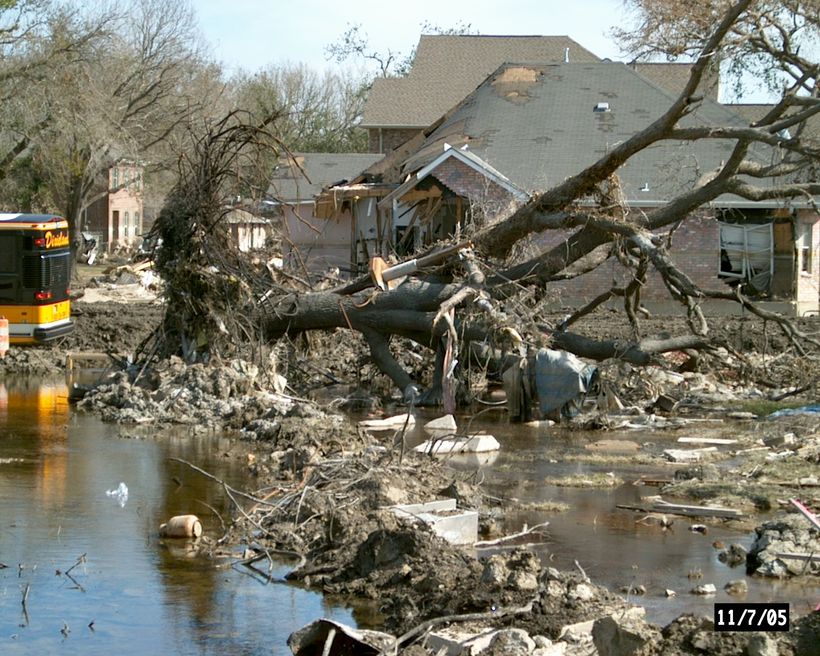
Twenty years ago, Hurricane Katrina hit the southeastern coast of the United States, devastating cities and towns across Louisiana, Florida, Mississippi, Alabama and beyond. The storm caused nearly 1,400 fatalities, displaced more than 1 million people and generated over $125 billion in damages. Rob Traver, PhD, P.E., D. WRE, F.EWRI, F.ASCE, professor of Civil and Environmental Engineering at Villanova University, assisted in the U.S. Army Corps of Engineers' (USACE) investigation of the failure of the New Orleans Hurricane Protection System during Hurricane Katrina, and earned an Outstanding Civilian Service Medal from the Commanding General of USACE for his efforts. Dr. Traver reflected on his experience working in the aftermath of Katrina, and how the findings from the investigation have impacted U.S. hurricane responses in the past 20 years. Q: What was your role in the investigation of the failure of the New Orleans Hurricane Protection System? Dr. Traver: Immediately after Hurricane Katrina, USACE wanted to assess what went wrong with flood protections that had failed during the storm in New Orleans, but they needed qualified researchers on their team who could oversee their investigation. The American Society of Civil Engineers (ASCE), an organization I have been a part of for many years, was hired for this purpose. Our job was to make sure that USACE was asking the right questions during the investigation that would lead to concrete answers about the causes of the failure of the hurricane protection system. My team was focused on analyzing the risk and reliability of the water resource system in New Orleans, and we worked alongside the USACE team, starting with revising the investigation questions in order to get answers about why these water systems failed during the storm. Q: What was your experience like in New Orleans in the aftermath of the hurricane? DT: My team went down to New Orleans a few weeks after the hurricane, visited all the sites we were reviewing and met with infrastructure experts along the way as progress was being made on the investigation. As we were flying overhead and looking at the devastated areas, seeing all the homes that were washed away, it was hard to believe that this level of destruction could happen in a city in the United States. As we started to realize the errors that were made and the things that went wrong leading up to the storm, it was heartbreaking to think about how lives could have been saved if the infrastructure in place had been treated as one system and undergone a critical review. Q: What were the findings of the ASCE and USACE investigation team? DT: USACE focused on New Orleans because they wanted to figure out why the city’s levee system—a human-made barrier that protects land from flooding by holding back water—failed during the hurricane. The city manages pump stations that are designed to remove water after a rainfall event, but they were not well connected to the levee system and not built to handle major storms. So, one of the main reasons for the levee system failure was that the pump stations and levees were not treated as one system, which was one of the causes of the mass flooding we saw in New Orleans. Another issue we found was that the designers of the levee system never factored in a failsafe for what would happen if a bigger storm occurred and the levee overflowed. They had the right idea by building flood protection systems, but they didn’t think that a larger storm the size of Katrina could occur and never updated the design to bring in new meteorological knowledge on size of potential storms. Since then, the city has completely rebuilt the levees using these lessons learned. Q: What did researchers, scientists and the general population learn from Katrina? DT: In areas that have had major hurricanes over the past 20 years, it’s easy to find what went wrong and fix it for the future, so we don’t necessarily worry as much about having a hurricane in the same place as we’ve had one before. What I worry about is if a hurricane hits a new town or city that has not experienced one and we have no idea what the potential frailties of the prevention systems there could be. Scientists and researchers also need to make high-risk areas for hurricane activity in the United States known for those who live there. People need to know what their risk is if they are in areas where there is increased risk of storms and flooding, and what they should do when a storm hits, especially now with the changes we are seeing in storm size.

