
Experts Matter. Find Yours.
Connect for media, speaking, professional opportunities & more.
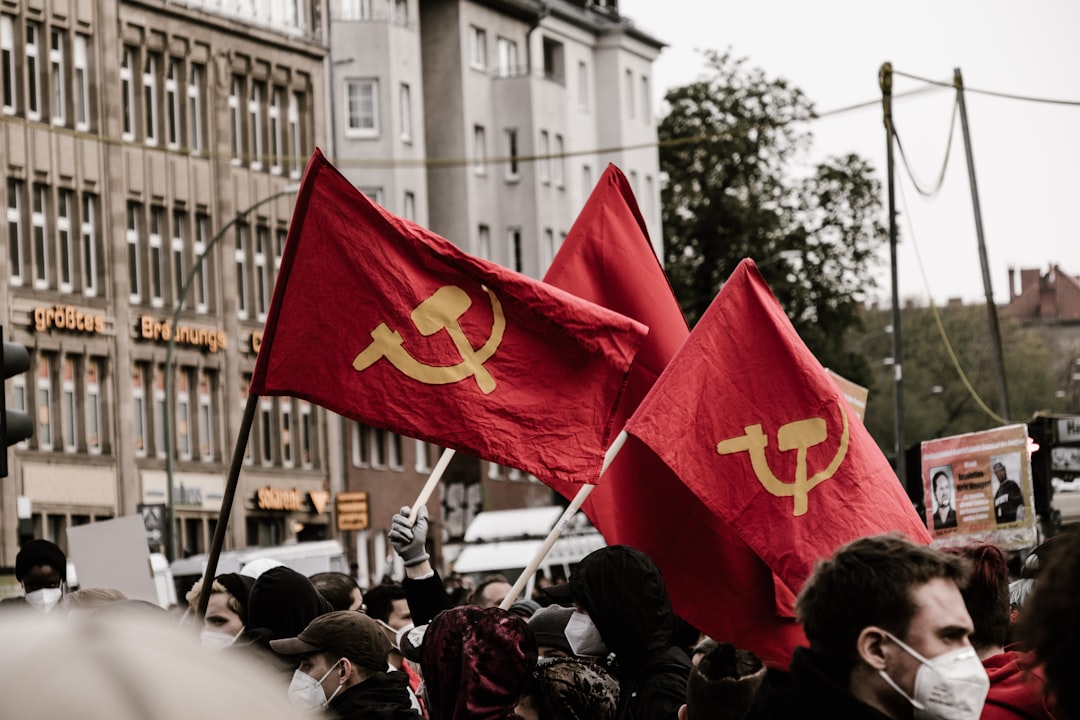
ExpertSpotlight: From Revolution to Ritual: The Enduring Power of May Day Parades in Russia
Each year on May 1, images of grand parades, waving flags, and tightly choreographed displays evoke a powerful legacy rooted in ideology, identity, and statecraft. In Russia, May Day—known as International Workers’ Day—has evolved from a revolutionary rallying point into a symbolic expression of national unity, political messaging, and historical continuity. Origins in Revolution and Worker Solidarity May Day celebrations in Russia trace their roots to the late 19th century, inspired by international labour movements advocating for workers’ rights—particularly the push for the eight-hour workday. Following the Russian Revolution, the holiday was institutionalized by the Bolsheviks as a cornerstone of socialist identity. Under leaders like Vladimir Lenin, May 1 became more than a labour holiday—it was a stage for demonstrating the strength and unity of the working class under communist rule. Early celebrations blended grassroots enthusiasm with emerging state control, reinforcing the ideological foundations of the new Soviet state. The Soviet Spectacle: Power on Display During the era of the Soviet Union, May Day parades transformed into highly orchestrated spectacles. Held prominently in Red Square, these events showcased military hardware, industrial achievements, and mass participation from workers, students, and state organizations. Under Joseph Stalin, the parades took on an increasingly propagandistic tone, emphasizing Soviet strength both domestically and to the outside world. Precision choreography, symbolic imagery, and sheer scale reinforced narratives of unity, productivity, and ideological superiority during the Cold War. Post-Soviet Transition: From Ideology to Identity Following the collapse of the Soviet Union in 1991, the meaning of May Day in Russia shifted significantly. While it remains a public holiday, its overt ideological messaging has softened. Today, events often blend labour advocacy, political expression, and seasonal celebration. Modern observances frequently include rallies organized by trade unions such as the Federation of Independent Trade Unions of Russia, alongside state-supported demonstrations that emphasize national unity and economic stability under leaders like Vladimir Putin. Why May Day Still Matters May Day parades in Russia continue to serve as a barometer of the country’s political and social climate. While the overt revolutionary fervor of the early 20th century has faded, the event remains deeply symbolic: Historical Continuity: A living link to the Soviet past and its defining narratives Political Messaging: A platform for governments to project stability and cohesion Labour Identity: An enduring reminder of workers’ rights and collective action Cultural Tradition: A widely recognized public celebration marking the arrival of spring Expert Insight What makes May Day in Russia particularly compelling is its adaptability. Across more than a century, it has shifted from protest to propaganda to public ritual, each iteration reflecting the priorities of the state and the sentiments of its people. Connect with more experts here: www.expertfile.com


Georgia Southern University expert available to provide geopolitical analysis on the Iran war
The Middle East has entered an active state of war marked by a cycle of retaliatory strikes across Iran and the Persian Gulf. Three major uncertainties now dominate the global outlook: the long-term survival of the Iranian government, the fate of Iran’s nuclear infrastructure, and the security of critical oil transit routes. Georgia Southern University Professor of Political Science and International Studies Jacek Lubecki, Ph.D., is available to speak about the military operation in Iran and its implications for regional stability and global security. Lubecki is an expert in comparative politics and military security studies, with a focus on the Middle East and Eastern Europe, particularly Poland. His research examines terrorism, counterinsurgency and military strategy. His work has been published in journals including Europe-Asia Studies, East European Politics and Societies, The Polish Review, The New Ukraine and The Armchair General. He has co-authored several books, including Globalization, Nationalism, and Imperialism: A New History of Eastern Europe (2023), which examines domestic and global security challenges, and Defending Eastern Europe: The Defense Policies of New NATO and EU Member States (2021). Lubecki speaks Polish, English, French, Russian, Spanish, Italian, German and Arabic with varying levels of fluency. Lubecki is available for interviews in person at Georgia Southern’s Statesboro Campus or virtually.


Covering the War in Iran? TCU has Experts that Are Getting National Coverage
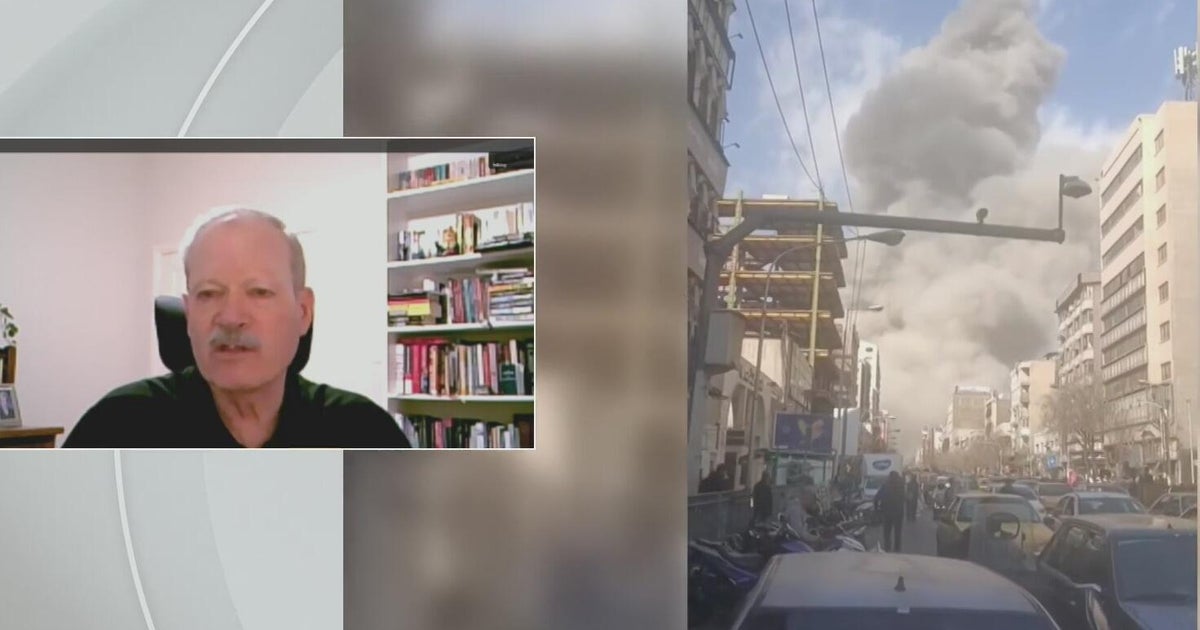
As the war against Iran continues to unfold, global media coverage has intensified, with major news organizations providing near-constant reporting on the conflict and its geopolitical implications. From live battlefield updates to analysis of regional alliances, energy markets, and international diplomacy, the story has become one of the most closely followed developments in international affairs. Networks such as CBS News are dedicating significant airtime to helping audiences understand the rapidly evolving situation and the broader implications for global stability. To provide credible context and insight, these outlets often turn to academic experts who specialize in Middle East politics and international relations. Experts like Ralph Carter from Texas Christian University (TCU) are among those providing research-based analysis that helps explain the historical roots of the conflict, the motivations of the key actors involved, and what developments could come next. Their expertise allows journalists to translate complex geopolitical dynamics into clear, accurate information for audiences trying to make sense of a fast-moving global crisis. Professor Ralph Carter teaches introductory courses in political science and international politics as well as advanced courses in Middle East conflicts, U.S. foreign policy and Russian foreign policy. He is the author or editor of eight books and the author or co-author of over 50 journal articles, book chapters, and other professional publications. His research agenda focuses on the making of U.S. foreign, trade, and defense policy, with a particular emphasis on the roles played by members of Congress. Recently, Professor Carter's expertise was sought out by CBS News in Dallas/Fort Worth as journalists were updating Americans on the current situation in the war in Iran. Ralph Carter is available to speak with the media about the ongoing war in Iran - simply click on his icon now to arrange an interview today.


Strategic Closure of Strait of Hormuz Puts Pressure on U.S., Threatens Global Oil Trade Stability
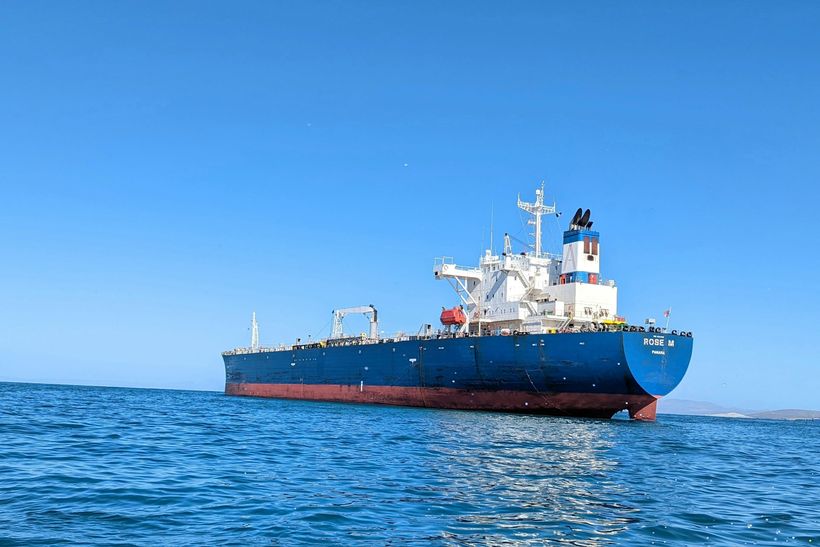
Less than a week after the onset of the war in Iran, and amid escalating conflict in the region, Iran effectively closed the Strait of Hormuz to shipping tankers moving oil from the Middle East by threatening attacks against any vessel who entered the waterway. Thus, the small body of water, which moves a large percentage of the world’s crude oil, has become one of the most discussed places in the world in recent days. Frank Galgano, PhD, is a professor of Geography and the Environment at Villanova University. He is an expert in military and Middle East geography and has also studied global maritime shipping and access to natural resources. Dr. Galgano says there geographic, geopolitical, military and economic factors at play, along with widespread potential consequences, as Iran holds steady on their closure of the strait and the U.S. considers how, or if, it will attempt to help escort oil ships through. Geography and Significance of Strait of Hormuz Situated between Iran to the north and Oman and the United Arab Emirates to the south, the Strait of Hormuz is a narrow shipping lane that connects the Persian Gulf to the Gulf of Oman and, further out, the Arabian Sea. It is one of the most vital chokepoints in the Middle East, along with the Suez Canal, Straits of Tiran, Bab al-Mandab and the Turkish Straits. “Right now, because of oil, it is the most important,” Dr. Galgano said. “Every day, roughly 20 percent of global petrochemical use goes through Hormuz.” The strait itself is barely over 20 nautical miles at its narrowest, but only a small portion of that is shipping lanes. Depth constraints limit shipping to two lanes, each two miles wide, with a two-mile buffer between. “You’re essentially looking at all of that shipping constrained to six nautical miles, and the ships are relatively slow,” Dr. Galgano said. “There are usually about 14-25 tankers every 24 hours transiting the Gulf, so there is always a ship in line." By Iran threatening military action against any oil-carrying ships in Hormuz—and by shipping companies refusing to attempt to traverse it— one-fifth of the global oil trade is essentially cut off indefinitely. That is concerning, given that it takes very little to send global oil prices skyrocketing. Dr. Galgano referenced the 2010-11 Somali pirate issue that caused supertankers—which cost upward of $50,000 a day to operate—to be rerouted. “That alone caused gas prices to raise 10 cents per gallon,” he said. In this case, the biggest impact will be felt throughout Asia, which relies more heavily on oil imports. But the U.S., despite being the second-biggest producer of crude oil last year, will still feel significant effects, since oil is traded globally. “It takes these supertankers eight or 12 days to reach the East Coast from Hormuz,” Dr. Galgano said. “So, a few days later you might see diminished supplies, but there is a critical point where we would face a real shortage.” Attempting to Move Ships Through Hormuz Poses Huge Danger Unlike the Iranian-backed Houthi rebels attacks on Israeli ships and those belonging to its allies in the Red Sea last year, Iran itself has far more sophisticated weapons, along with a strong motive to do whatever it can to put pressure on the U.S. and involved allies. In addition to drones designed for attacking ships—like the ones used by Houthis—Iran also possesses Chinese and Russian anti-ship missiles, according to the professor. “Ships are very vulnerable,” he said, then referencing the 2000 bombing of the USS Cole by Al Qaeda operatives. “That was just two guys in a rubber boat with an explosive device, and it almost sunk the whole ship. If one is carrying oil, it becomes almost like a large fuel bomb.” The United States has weighed the idea of sending a convoy to help escort and protect these ships. They did as much in the late 1980s in Operation Earnest Will, in which President Reagan ordered Kuwaiti supertankers—which were being fired at—to reflag under the U.S. flag so the Navy could legally escort them. But weapons technology has changed, and while U.S. naval ships could certainly defend themselves, “supertankers are slow and it is still an incredibly dangerous operation,” Dr. Galgano said. “The convoy would have to be lucky 100 percent of the time. Iran would only have to be lucky once to hit a ship and cause an immediate fiasco, both physically and in the media.” Global Dependance on Shipped Goods According to Dr. Galgano, between 75 and 90 percent of all items you handle on a day-to-day basis come from inside the hull of a ship: shocks on your car, clothes on your back, or components of your computer. When shipment is disrupted, it can cause supply chain and cost issues. “During the pandemic, Ford was waiting on chips for F-150s, and HP was waiting in chemicals to make ink,” Dr. Galgano said. “Even the ship that got stuck in the Suez Canal a few years ago caused $10 billion in losses per day due to the backup.” For commodities like oil, the indefinite inability to utilize perhaps the most important shipping lanes in the world due to large scale conflict quickly raises the economic stakes to even greater levels. “Iran absolutely knows that, and they see this as a bargaining chip,” Dr. Galgano said. “Cause economic pain to force cessation of the attacks.”


A Roadmap or a Rift? Examining Trump’s 28-Point Ukraine Peace Proposal
As negotiations around the war in Ukraine continue to dominate global headlines, a newly surfaced 28-point peace proposal associated with former U.S. President Donald Trump has triggered intense debate across NATO capitals, Kyiv, and Moscow. The document — described in reporting by Reuters, Axios, Sky News, Al Jazeera and other outlets — outlines a framework aimed at ending the conflict but includes provisions that many analysts say could significantly reshape Europe’s security landscape. A Plan Built Around Ceasefire, Guarantees, and Reconstruction At its core, the plan calls for a formal ceasefire, a non-aggression pact between Russia, Ukraine, and European states, and a set of “security guarantees” meant to deter future conflict. Reporting indicates that Ukraine would receive assurances that any renewed Russian offensive would trigger a coordinated international response. The plan also proposes the creation of a major reconstruction program — potentially financed in part with frozen Russian assets — to rebuild infrastructure and modernize Ukraine’s economy. The proposal references pathways for deeper Ukrainian integration with Europe, including support for progressing toward EU membership and providing enhanced access to European markets. A large “Ukraine Development Fund” is also mentioned in multiple summaries of the plan. Provisions Driving the Most Global Pushback The most controversial elements relate to Ukraine’s territorial integrity and long-term security posture. Outlets such as Sky News and Al Jazeera report that the draft would recognize Russian control over Crimea and large parts of Donetsk, Luhansk, Zaporizhzhia, and Kherson — areas currently occupied by Russian forces. Ukraine would also be required to formally abandon NATO membership and cap its military at 600,000 personnel. Additional provisions include restrictions on the presence of foreign troops in Ukraine, phased lifting of sanctions on Russia, full amnesty for war-related actions, and the reintegration of Russia into global economic and political structures. These components have drawn sharp responses, particularly from European leaders who argue the plan could reward aggression and undermine international legal norms. Dr. Glen Duerr is a citizen of three countries. He was born in the United Kingdom, moved to Canada as a teenager, and then to the United States to obtain his Ph.D. His teaching and research interests include nationalism and secession, comparative politics, international relations theory, sports and politics, and Christianity and politics. View his profile. What Remains Unclear or Still Under Discussion Reporting from Reuters and AP notes that many sections of the plan remain undefined or are still in flux. The exact mechanism behind the proposed security guarantees is not detailed. Oversight of reconstruction funds, timelines for reintegration of Russia, and the legal handling of frozen assets also require further clarification. Some reporting suggests parts of the plan draw from a prior informal Russian “non-paper,” raising questions about the provenance and intent of specific provisions. Why the Proposal Matters With the war approaching four years of fighting, any formal proposal for ending hostilities carries significant geopolitical weight. Supporters of the plan frame it as a pragmatic attempt to halt loss of life and begin rebuilding. Critics argue it risks legitimizing territorial conquest and weakening the broader post-Cold-War security order. As governments evaluate the implications, journalists covering defense, diplomacy, and international law will find this evolving proposal central to understanding where U.S., European, Russian, and Ukrainian negotiators may — or may not — be willing to go next.



Humanities play integral role in the UF Astraeus Space Institute
The ability to imagine has given the human species the power to create, problem solve, empathize, and theorize. In fact, creative imagination can be found at the origin of every modern development throughout time. From medical advancements and the formation of governments to the establishment of the internet and the creation of Beethoven’s Symphony No. 3 — all at first were simply imagined. So, it is not a leap to think that in establishing a space institute at the University of Florida, collaborators would continue to anchor the institution in the human element of imagination. That’s where space exploration began. Ancient Greek philosopher Thales, later known as the father of Greek science and mathematics, questioned the true origins of the universe. Introducing deductive reasoning, Thales sought answers beyond the stories of gods and heroes. Three hundred years later, Aristotle theorized the geocentric layout of the universe with Earth at its stationery core and celestial bodies revolving around it. In the early 14th century, the Italian poet Dante told the story of a vertical journey through the universe, reaching the stars in what he described as paradise. And in the fall of 1609, Galileo began observing the heavens with instruments he created to magnify his view up to 20 times beyond what the natural eye could see. Through his telescope, Galileo observed mountains on the moon, rings around Saturn, and the moons of Jupiter, all evidence that the universe did not revolve around the Earth, but the sun. Inspired by words written in 1865 by Jules Verne in his novel, “De la Terre à la Lune” (From the Earth to the Moon), a 10-year-old Russian boy questioned, could travel be possible beyond the Earth’s atmosphere? Could Verne’s 900-foot-long space gun propel humans — or anything for that matter — through the bonds of gravity and into outer space? Read more here: Looking to know more about the UF Astraeus Space Institute or connect with Rob Ferl, Amy J. Williams or Stephen Elardo? Simply click on either expert's icon now to arrange an interview today.




For Trump’s Perceived Enemies, the Process may be the Punishment
This article is republished from The Conversation under a Creative Commons license. Read the original article here. Former FBI Director James Comey pleaded not guilty to two criminal charges in a federal court in Alexandria, Virginia, on Oct. 8, 2025. The charges allege that Comey lied to Congress in September 2020 when he stood by earlier testimony that he did not authorize a leak of an FBI investigation involving Hillary Clinton. Numerous legal commentators on both the left and right have argued that Comey’s indictment is little more than the Trump administration seeking vengeance on one of the president’s perceived enemies. They allege that the president has it out for Comey, who investigated Russian interference in the 2016 presidential election and was fired by Trump in 2017. The president’s own words support the idea that the Trump administration is targeting Comey. In a social media post on Sept. 20, 2025, Trump directed Attorney General Pam Bondi to move forward with prosecutions against Comey, Democratic U.S. Sen. Adam Schiff and New York Attorney General Letitia James: “They’re all guilty as hell, but nothing is going to be done. …JUSTICE MUST BE SERVED, NOW!!!” If the case against Comey is exceedingly weak – and little more than a political prosecution – then, in my view as a scholar of the U.S. legal system, it should result in the dismissal of charges by the judge or a not guilty verdict by the jury. But even when an individual is not convicted, the process of defending against charges can itself be a form of punishment, as renowned legal scholar Malcolm Feeley pointed out almost 50 years ago. Here’s how the criminal justice process punishes even innocent people. The criminal justice process The criminal justice process is complex. After a grand jury returns an indictment at the request of a prosecutor, the accused appears in court for their arraignment. They are informed of the charges against them and typically enter a plea. During what’s called “discovery,” the prosecution and defense investigate the evidence the other side plans to rely on. There are also pretrial motions in which the parties ask judges to dismiss charges and accept or exclude evidence. The defense and prosecution may also meet to discuss a plea bargain, wherein the accused may plead guilty in exchange for a lesser sentence or reduced charges. If there is no plea bargain, then the case moves to trial, which is itself a complicated process. If a defendant is found guilty, they can mount an appeal to higher courts in an attempt to have their conviction overturned. To help navigate this process, criminal defendants typically hire a lawyer. And good lawyers don’t come cheap. Money and time Indigent defendants, who do not have the financial resources to pay their own legal fees, can rely on public defenders paid for by the government. But individuals who can afford to pay for their own lawyer face a substantial financial burden for attorney services and court fees. An experienced criminal defense lawyer can charge more than US$1,000 per hour, with fees quickly adding up. This means that mounting a legal defense can easily cost tens of thousands of dollars. On top of this, it takes a great deal of time to prepare for a criminal case. While lawyers and their staff do much of the legwork for trial preparation, a client works with their attorneys to help formulate a defense. As a result, criminal defendants lose one of the most precious commodities in the world: their time. And this time can come at a tangible cost in the form of lost wages, which harms their day-to-day lives. Put simply, every hour spent preparing for trial is an hour defendants could spend working or enjoying their lives. Stress and embarrassment It’s not pleasant being charged with a crime. The criminal process, which typically lasts months, takes a toll on one’s mental health. This is largely driven by the uncertainty surrounding the outcome of a criminal trial and the possibility of losing one’s freedom if convicted. In addition, there is a social stigma that comes with being accused of a crime. This can result in reputational damage, anxiety and embarrassment. The Trump administration appears to recognize this reality. Several media outlets have reported that FBI leadership had planned a public perp walk for Comey. According to a CBS News report, this was to have included “‘large, beefy’ agents … ‘in full kit,’ including Kevlar vests and exterior wear emblazoned with the FBI logo.” Apparently, the plan was aborted after several FBI supervisors refused to cooperate, viewing it as inappropriate. One agent was disciplined for insubordination after refusing to go along with the plan to embarrass Comey in this way. Not all criminal defendants suffer the same The extent to which criminal defendants experience the criminal justice process as a form of punishment varies from person to person. For high-status people like Comey, lost wages and attorneys’ and court fees may not be that big of a deal. But these costs may be incredibly significant for other people who have been, or are likely to be, targeted by the Trump administration. The high costs of lawyers’ fees are well known to the president. For instance, his political action committee spent millions of dollars on attorneys’ fees in an unsuccessful effort to defend Trump from criminal charges in New York. In addition, people no doubt experience the psychological stress and stigma of a possible criminal conviction differently. But regardless of one’s wealth, the lost time spent preparing a criminal defense is something that cannot be replaced. The recognition that the criminal process is itself a form of punishment is one of the reasons that the Department of Justice has maintained independence from the president. By violating the tradition of staying out of politics, the Justice Department in the Trump administration has opened the door for the president to seek retribution on his perceived political enemies. The mere act of putting them through the criminal process ensures that they suffer, regardless of their guilt or innocence.



Apanaskevichiella: Georgia Southern’s tick detective honored with genus classification
Dmitry Apanaskevich, Ph.D., doesn’t look like a traditional detective. He won’t be found chasing down clues in back alleys or interrogating shady characters in a dimly lit room. But he does have that inquisitive, investigative passion that fuels his unique work — serving as the assistant curator at the U.S. National Tick Collection, housed in Georgia Southern University’s Math/Physics Building on the Statesboro Campus. “I’ve been fascinated by animals my entire life,” he says. “I’ve always wanted to be a biologist.” That fascination gave birth to a decades-long career studying ticks, part of the Arachnida class, leading to a lifetime full of discovery and distinction. He was recently awarded one of the highest honors a biologist can receive: a newly recognized genus of soft ticks named Apanaskevichiella. The genus was discovered through advanced genomic work by world-renowned tick phylogeneticist Stephen Barker, Ph.D., of the University of Queensland. Barker is a long-time collaborator, and the naming of the newly discovered genus is his way of honoring Apanaskevich. “It has turned out to be a very pleasant surprise,” said Apanaskevich. “To have a genus named after me is already more than I ever expected. It means my work has made a lasting mark — and that’s a rare and humbling gift.” But his love for ticks came about accidentally. Apanaskevich received his education in Russia, earning a bachelor’s and a master’s at St. Petersburg State University. He went on to obtain his Ph.D. at the Zoological Institute of Russian Academy of Sciences. It was during this period of his life when his professors ignited what would become a decades-long fascination with the tiny arthropods. “In my early days as an undergrad, my professors had a major influence on me,” he explained. “The professor who offered the most interesting topic would win.” One day, a professor handed him a jar filled with mayflies, tasking him with describing each species. It was a request that would change his life forever. “He completely won me over with that,” said Apanskevich. “Discovering new species became my dream.” He became obsessed, spending hours glued to the microscope, developing a huge passion for tiny parasites. “Parasites like ticks might look like they’re small, but they’re quite large,” he explained. “That being said, you need to use a microscope when examining them, especially if you’re trying to find and identify those more minute details.” Finding and analyzing those small details is as much of an art as it is a science, he said. “You have to be able to see things that others can’t,” explained Apanaskevich. “You can provide objective data like measurements and comparisons all day, but the artistic, subjective part of this research is how the biologist can analyze and find connections between the thousands, even millions of specimens.” Ambition and curiosity have fueled his journey through the scientific world. But now, he has something else that makes him tick. “My kids are proud of it,” he said, a grin spreading across his face. “They’re pretty proud of me. And really, that’s enough for me.” If you're interested in knowing more about the work Dmitry Apanaskevich is doing at Georgia Southern University or looking to speak with him — simply contact Georgia Southern's Director of Communications Jennifer Wise at jwise@georgiasouthern.edu to arrange an interview today.
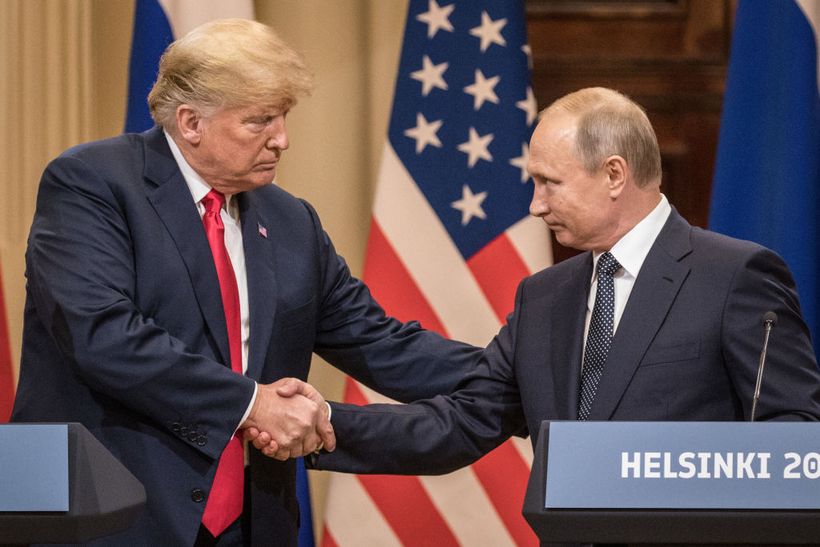
Trump-Putin Talks in Alaska: Randall Stone Available for Expert Commentary
President Donald Trump and Russian President Vladimir Putin are scheduled to meet today in Alaska to discuss an end to the war in Ukraine, which Russia invaded in 2022. But Ukraine, whose president wasn’t invited to the talks, and its European allies, whose representatives were also kept out of the conversation, have expressed fears that a deal could be struck without Kyiv’s involvement. Randall Stone, a political scientist and director of the Skalny Center for Polish and Central European Studies at the University of Rochester, has been following the developments in the war closely and is available to lend insight to reporters covering the high-stakes summit. “The war has shifted Russian strategy and economic ties away from the West and toward China, Iran, and India,” Stone told Newsweek last year. “If he succeeds in Ukraine, he will probably seeks to challenge U.S. NATO allies Estonia, Latvia, and Lithuania, whose membership in NATO he has always seen as a threat to Russia.” Trump has downplayed his expectations for a possible breakthrough, voicing frustration with what he has described as Putin’s “meaningless” gestures toward resolving the conflict, and referring to the talks as a chance for him to see what Putin has in mind. The two leaders are expected to hold a joint news conference at the conclusion of their talk. Contact Stone for fresh perspective on the high-stakes summit.



President Trump Plans Call to Putin
Dr. Meena Bose talked to Fox News Radio stations around the country about President Donald Trump’s planned call with Russian President Vladimir Putin to help negotiate a ceasefire and an eventual end to the war in Ukraine. Dr. Bose spoke to: WRVA in Richmond, VA; WBAP in Dallas, TX; and WFRK in Florence, SC; WHO in Des Moines, IA; and KURV in McAllen, TX. Dr. Bose is a Hofstra University professor of political science, executive dean of the Public Policy and Public Service program, and director of the Kalikow Center for the Study of the American Presidency.

